This article contains advertising. Booking links on this site can be turned into paid links automatically by our partner Travelpayouts: if you book through one, we earn a commission from the provider, at no extra cost to you. It never affects what we recommend. Affiliate disclosure
Florence has a reputation as Italy’s most expensive cultural city, and a typical museum-heavy week can run €150 per person in admissions. What that reputation hides: dozens of Florence’s most extraordinary churches, cloisters, oratories and monthly state-museum days are completely free. This 2026 guide maps every free museum, church and cultural site in Florence, the official free-Sunday programme, the cenacoli (Last Supper frescoes hidden in former monasteries), the always-free civic spaces, and the smartest free-museum itinerary you can put together.
Free entry days fill up fast, so treat them as one part of a wider budget plan — our Florence on a budget guide and the free things to do list cover the rest. Among the city’s churches, some cost nothing (the basilica of Santo Spirito is free) while the big monumental complexes charge, Santa Croce €10.
Domenica al Museo: Free First Sundays
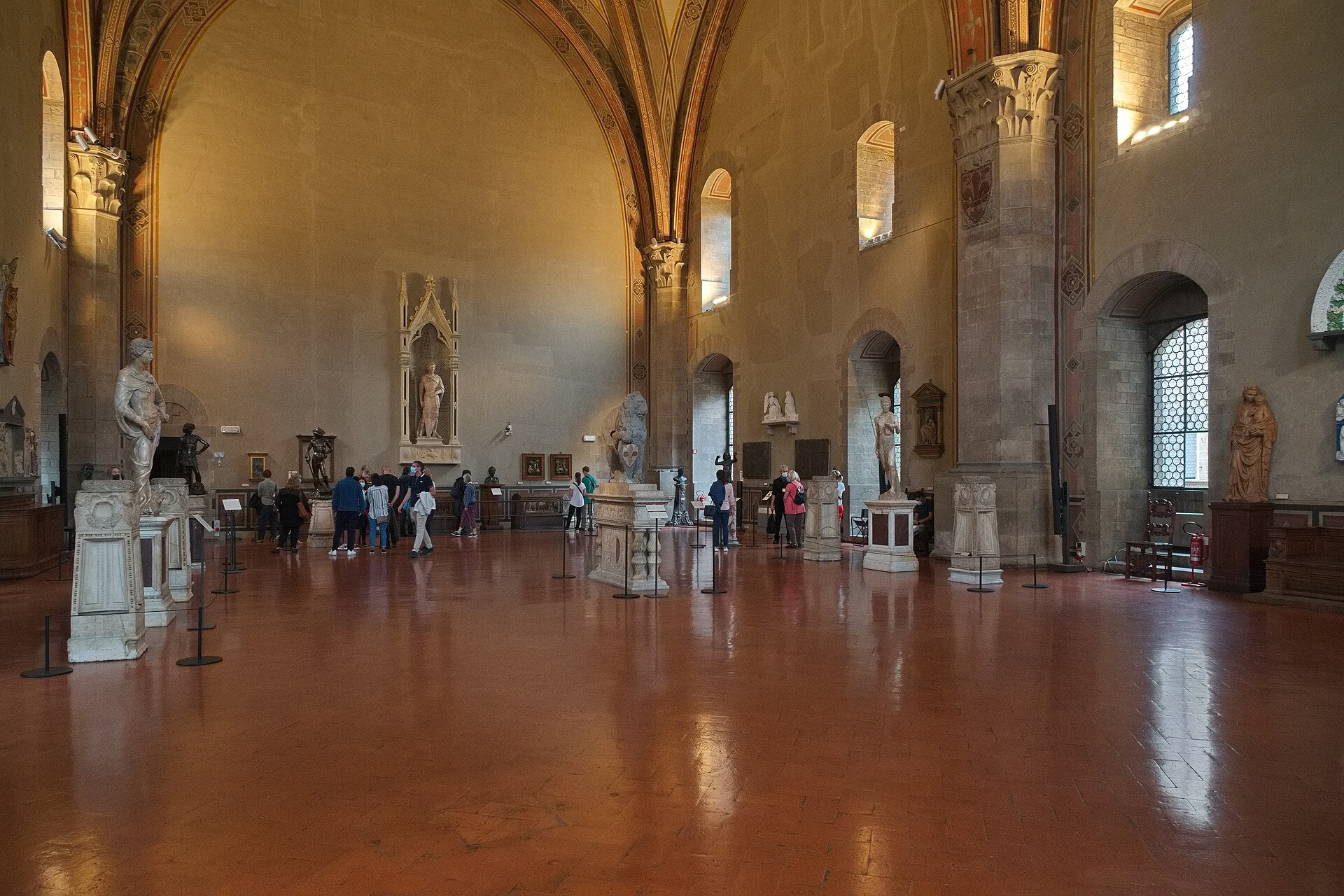
The Italian Ministry of Culture’s Domenica al Museo initiative makes every state-run museum and archaeological site in Italy free on the first Sunday of each month. In Florence that means free entry to the Uffizi Gallery, Galleria dell’Accademia (Michelangelo’s David), Palazzo Pitti and Boboli Gardens, the Bargello, Medici Chapels, San Marco Museum, Cenacolo di Sant’Apollonia, Cenacolo di Andrea del Sarto, the Archaeological Museum, and a dozen smaller venues. No booking — entry is first-come, first-served from opening time.
2026 Domenica al Museo Dates
The remaining 2026 dates are Sunday 1 November and Sunday 6 December. The rule carries on into 2027, on the first Sunday of every month: 3 January, 7 February, 7 March, 4 April, 2 May, 6 June, 4 July, 1 August, 5 September, 3 October, 7 November and 5 December.
Free Sunday Strategy: The Smart Play
Don’t fight for the Uffizi or Accademia on free Sundays unless you’re willing to queue. Neither museum takes advance bookings on free days, so entry is first-come, first-served and nobody can tell you how long the wait will be. The smart move is to spend the day at the smaller venues that are also free on Domenica al Museo: San Marco Museum (Fra Angelico’s frescoed cells), the Bargello (Donatello and Michelangelo sculpture), the Medici Chapels (Michelangelo’s New Sacristy), and the city’s two main cenacoli. You’ll see roughly €40 of art for free.
If you really want the Uffizi or Accademia free, arrive well before opening and bring a book. With no reservations on free days, an early place in the line is the only advantage you can give yourself, though it can’t promise an entry time.
Other National Free-Entry Days in 2026
Italy’s Ministry of Culture announces several additional free-entry days each year. For 2026 expect free state-museum entry on:
- 4 November 2026 — Italian Armed Forces Day (Orsanmichele is free that day; check other state venues)
Several other days come round every year: the International Day for Monuments and Sites on 18 April, International Museum Day on or around 18 May, the European Heritage Days in late September and Family Day at the Museum in October (it fell on Sunday 11 October in 2026). None of them brings automatic free entry, so check the Ministero della Cultura and the individual museums for each year’s announcements and admission terms.
Always-Free Museums in Florence
Several Florence museums charge no admission year-round.
Museum and Church of Orsanmichele
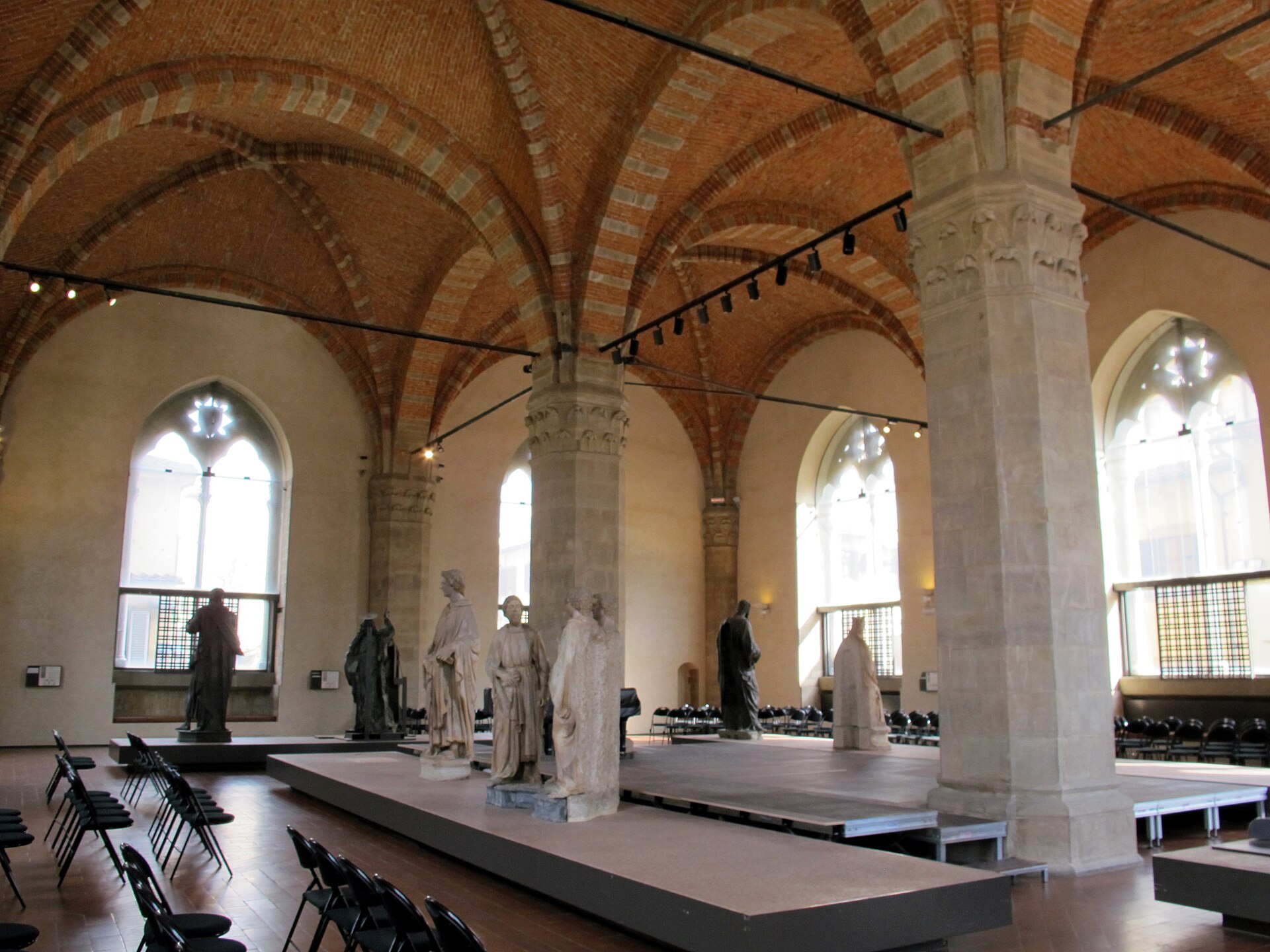
Orsanmichele, halfway between the Cathedral and Piazza della Signoria, is one of Florence’s strangest and most rewarding buildings — a 14th-century grain warehouse converted into a church, with sculpture niches around the exterior commissioned by the city’s medieval guilds. Fourteen of these niches contain (or contained) masterpieces by Donatello, Ghiberti, Verrocchio and Nanni di Banco — Donatello’s St. George and St. Mark, Verrocchio’s Christ and St. Thomas, Ghiberti’s St. Matthew.
The exterior sculptures you see today are bronze and marble copies; the originals are displayed in the museum on the upper floors of the building, accessed by stairs at the rear. Church and museum open Tuesday to Sunday, 08:30–18:30 (closed Mondays), with full admission at €10. Entry is free on the first Sunday of the month and on 25 April, 2 June and 4 November; check the Musei del Bargello calendar for exceptional openings. Given the calibre of the sculptors, it is one of the best-value tickets in Florence on the days you do pay.
The Major Basilicas (Free Inside)
Several of Florence’s parish basilicas are free to enter, at least outside their ticketed areas, and Mass costs nothing anywhere. The Cathedral (Duomo) interior is free, open to sightseers Monday to Saturday, 10:15–15:45, except on religious holidays. The paid monuments are sold on three passes: the €30 Brunelleschi Pass covers the Dome, Bell Tower, Baptistery, Santa Reparata and Museum; the €20 Giotto Pass drops the Dome, and the €15 Ghiberti Pass drops the Bell Tower as well. Inside the free Cathedral you get the Last Judgement frescoes in the Dome, begun by Vasari and finished by Federico Zuccari, and the marble pavement; allow 30 minutes.
Santa Trinita on Via de’ Tornabuoni is free and contains the Sassetti Chapel, frescoed by Domenico Ghirlandaio (1482–85) — Renaissance Florence’s daily life painted onto the walls of a banker’s family chapel.
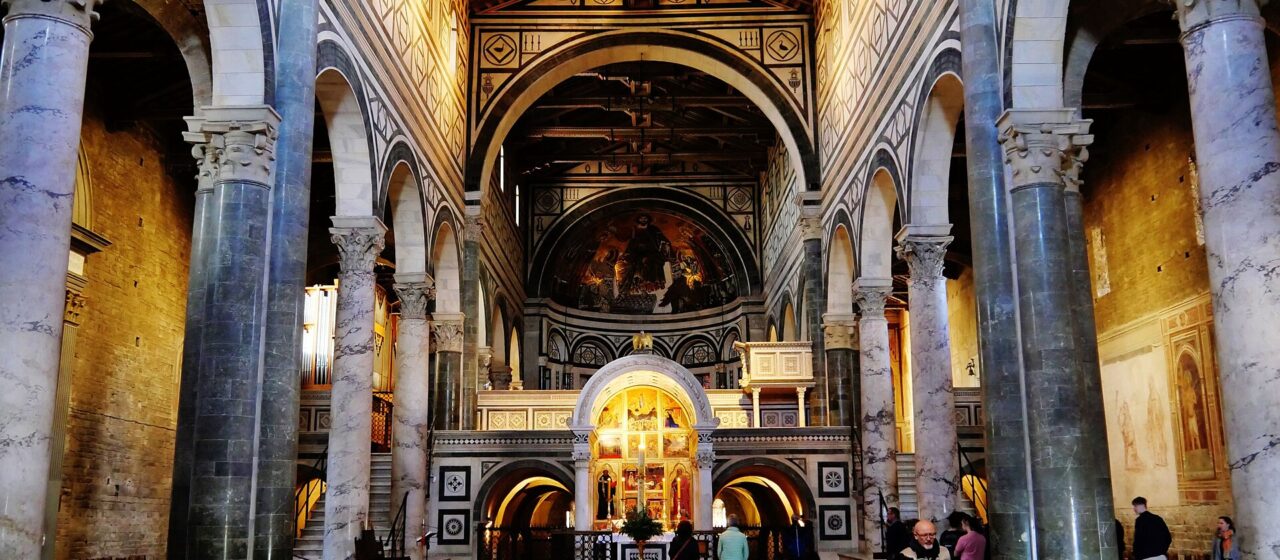
Santo Spirito in Oltrarno is free and is Brunelleschi’s last great church, with a Filippino Lippi Madonna in the Nerli Chapel. San Miniato al Monte, on the hill above Piazzale Michelangelo, is free; the basilica’s 11th-century geometric facade and inlaid-marble pavement are arguably more beautiful than the more famous Santa Maria Novella. Vespers in Gregorian chant, sung by the monks every day at 18:30, are free and one of the most affecting experiences in the city; the Gregorian-chant Mass is at 18:00 on weekdays and 17:30 on Sundays and holidays.
Note: two of the great basilicas charge admission: Santa Maria Novella (€7.50) and Santa Croce, where one €10 ticket (plus €1 if you book online) covers the whole monumental complex — basilica, cloisters, museum and the Pazzi Chapel. Attending Mass in either remains free.
Oratory of the Buonomini di San Martino
One of Florence’s hidden free gems — a tiny medieval confraternity oratory just south of Piazza San Martino, with a fresco cycle attributed to Domenico Ghirlandaio’s workshop depicting the Seven Acts of Mercy in 15th-century Florentine costume. Open afternoons, donation-suggested. The Buonomini society still operates as a charity from this building, as it has since 1442, so coins in the donation box are gratefully received.
Chiesa di Ognissanti
Free, with Botticelli’s tomb in the south aisle and Domenico Ghirlandaio’s St. Jerome in His Study opposite Botticelli’s St. Augustine in His Study on the nave walls. The adjoining refectory, home to Ghirlandaio’s Last Supper, is temporarily closed while the church stays open; reopening news appears on the CoopCulture page for the Cenacolo.
English Cemetery
Officially the Cimitero Protestante on Piazzale Donatello, the “English Cemetery” is the resting place of Elizabeth Barrett Browning. The hilltop garden is a peaceful, atmospheric escape from museum crowds and includes Walter Savage Landor and Theodore Parker among the buried.
The Free Cenacoli (Last Supper Frescoes)
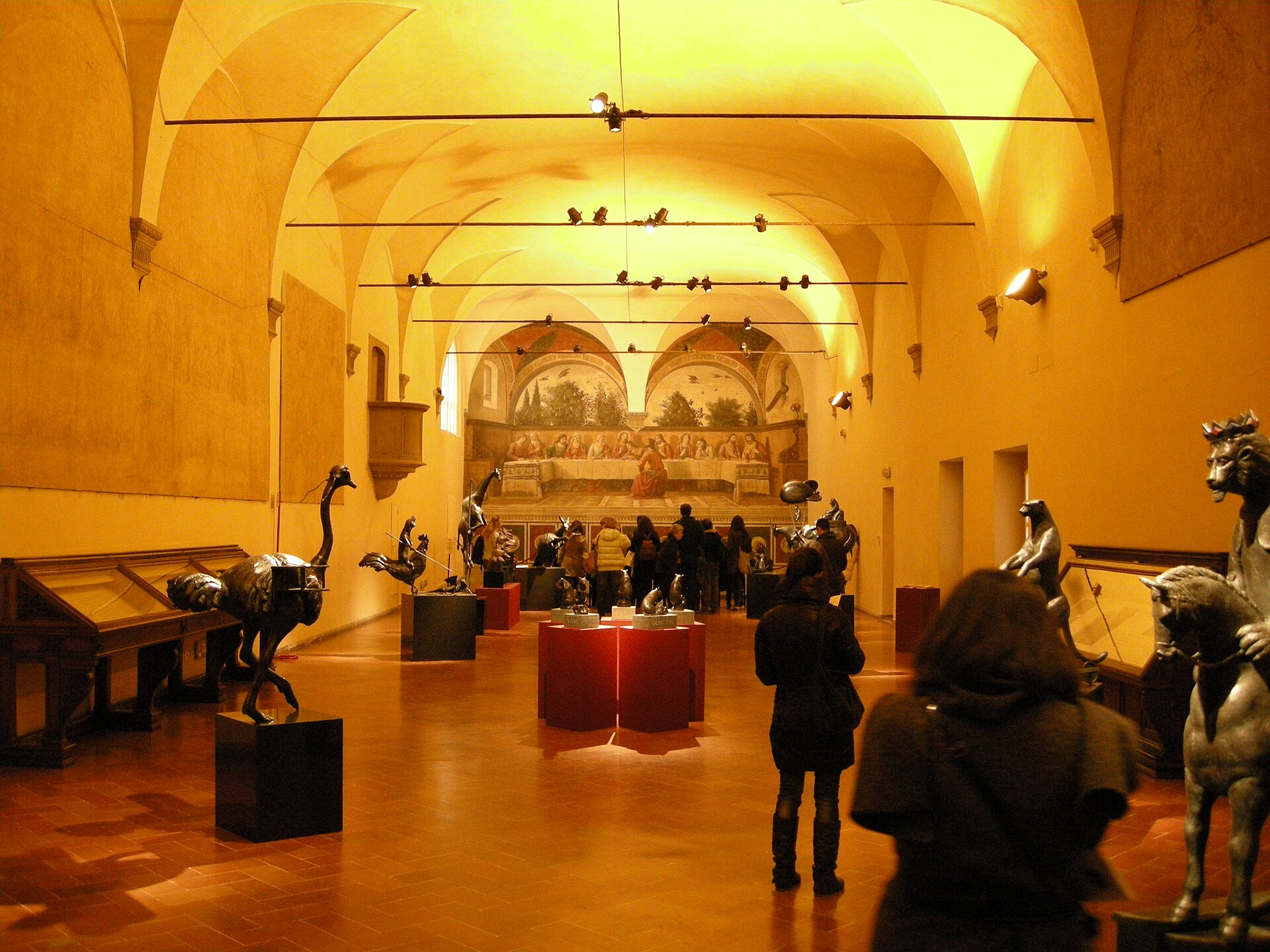
The single best-kept free-art secret in Florence is the cenacoli — the city’s collection of monumental Last Supper frescoes painted on the end walls of monastic refectories. Florence has nine surviving Renaissance cenacoli, and several are free or cost only a few euros.
Cenacolo di Sant’Apollonia (Andrea del Castagno, c. 1445–1450)
Admission is €5, in a former Benedictine convent on Via XXVII Aprile near San Marco. Andrea del Castagno’s Last Supper is one of the most original of the Renaissance series — Castagno gives Judas a separate side of the table and uses red marble panelling that visually divides the betrayer from the apostles. Open mornings only, 08:30–13:50; it closes on the second, fourth and fifth Sundays of the month and on the Mondays after the first and third Sundays, so check the city’s current museum timetable before you go. Combine with San Marco Museum five minutes away.
Cenacolo di Andrea del Sarto (Andrea del Sarto, 1526)
In the former Vallombrosan monastery of San Salvi, east of the historic centre; standard admission is €5. Andrea del Sarto’s High Renaissance Last Supper is widely considered the second-finest in Italy after Leonardo’s, and several visitors find it more emotionally subtle. The detour is worth it; the entire complex is rarely visited.
Cenacolo del Conservatorio di Fuligno (Perugino, c. 1495)
Free, on Via Faenza near the Mercato Centrale. Pietro Perugino’s tender, almost dream-like Last Supper hides in a former Franciscan convent that’s now a girls’ school. Perugino was Raphael’s teacher, and his soft sfumato style is unmistakable. Open Tuesday and Saturday mornings only. Ring the bell beside the wooden door — a custodian opens it.
Cenacolo di Santo Spirito (Andrea Orcagna, c. 1360–1365)
Free with the Foundation Romano collection in the former refectory of Santo Spirito convent, Oltrarno. Orcagna’s fragmentary Last Supper is among the oldest in Florence (only Taddeo Gaddi’s at Santa Croce, from about 1355, is earlier) and a key transition fresco between Giotto and the Early Renaissance. The space also displays the Salvatore Romano sculpture collection (Donatello school).
Domenica Metropolitana (Civic Museums Free for Florence Residents)
Florence runs a parallel free-museum scheme called Domenica Metropolitana, which makes the city-administered (not state-run) civic museums free on the first Sunday of each month — but only for residents of the Florence Metropolitan Area. Visitors from outside the area pay normal admission.
Civic museums in this scheme include Palazzo Vecchio (€18 normally), Museo Novecento (20th-century art, €13 normally), Cappella Brancacci (€15 — Masaccio’s revolutionary frescoes, normally booked separately), Museo Stefano Bardini (€10), Santa Maria Novella complex (€7.50), Palazzo Medici Riccardi (€15), and Forte Belvedere when contemporary exhibitions are open.
Tourists can’t use Domenica Metropolitana, so visitors should plan around Domenica al Museo at the state museums instead.
Free Galleries, Academies & Cultural Spaces
Biblioteca Medicea Laurenziana
Michelangelo’s vestibule and staircase at the Biblioteca Medicea Laurenziana, attached to the Basilica of San Lorenzo (entry from the cloister), are seen on the library’s ticketed monumental visit, which also takes in the reading room. During the exhibition running from 9 October 2026 to 9 January 2027, full admission is €7; on weekdays it opens 10:00–13:30, last entry 13:00. Michelangelo’s audaciously theatrical vestibule — the staircase that flows like lava down to the door — is worth the ticket on its own.
Palazzo Strozzi Courtyard
The courtyard of Palazzo Strozzi, Florence’s grandest 15th-century private palace, is free. Major contemporary-art exhibitions inside the Strozzina basement and piano nobile are ticketed (for the show running 25 September 2026 to 24 January 2027, €15 for a dated entry or €20 open-date), but the courtyard’s bookshop, café and several free pop-up installations make it a worthwhile free pause on Via de’ Tornabuoni.
British Institute Library
The Harold Acton Library on Lungarno Guicciardini is open to members, and daily, monthly and annual memberships all give access to the collections and reading rooms. The reading rooms occupy a historic Oltrarno palace facing the Ponte Santa Trinita. Cultural lectures, film screenings and exhibitions are free or low-cost.
Le Murate
A former 15th-century convent that became a prison, then was converted into a contemporary cultural complex in the 2000s. Public art, contemporary photography exhibitions, and a literary café in the courtyard. All exhibitions are free.
Free Views & Outdoor “Museum” Spaces
Florence’s open-air “museums” — squares dressed with monumental sculpture — cost nothing.
Piazza della Signoria & Loggia dei Lanzi
Florence’s outdoor sculpture gallery. The Loggia dei Lanzi houses Cellini’s Perseus with the Head of Medusa, Giambologna’s Rape of the Sabine Women, Roman copies of antique sculptures and the original Hercules and Centaur. There is no entry fee: the loggia opens straight onto the square.
Piazzale Michelangelo
The single most photographed view of Florence — the panoramic terrace overlooking the Ponte Vecchio, Cathedral and Arno valley. The bronze copy of Michelangelo’s David at the centre. Free to visit; sunset is the best 30 minutes of any Florence day.
Giardino delle Rose
The Rose Garden, free and open daily all year, just below Piazzale Michelangelo on the way back into the city. Its wide collection includes about 350 ancient rose varieties. Includes a small Japanese-style oasis garden, a Folon sculpture park (free), and the same panoramic Florence view as Piazzale Michelangelo from a less crowded angle.
Giardino dell’Iris
Open free for three weeks each year (late April–mid-May) when the city’s symbolic flower blooms. Located uphill of Piazzale Michelangelo. The garden keeps a permanent collection of the irises entered in Florence’s international iris competition.
Forte Belvedere
The fort opens for a seasonal exhibition programme: the 2026 season ran from 6 June to 16 October, with admission at €8 for non-residents and free entry for residents of the Metropolitan City of Florence. Dates and tickets for the next season appear on the MUS.E site. From its panoramic terraces the whole city spreads out below you.
Free by Age or Status
Beyond the calendar-based free days, Italian state museums offer permanent free entry to several categories of visitor:
- Children 0–17 of any nationality enter free at all state museums (Uffizi, Accademia, Pitti, Bargello, Medici Chapels, San Marco, Boboli, Cenacoli) every day of the year.
- EU citizens 18–25 pay €2 reduced entry — not free, but a meaningful discount.
- Disabled visitors and one accompanying carer enter free at all state and most civic museums; bring an EU disability card or equivalent documentation.
- EU teachers with valid ID enter free at state museums (limited to teaching-profession use).
- ICOM members, journalists with press cards, and tour guides with valid licence enter free at most museums.
- Italian school groups enter free with prior reservation; international school groups generally pay reduced rates.
Free Walking Tours & Free Public Spaces
Several companies run pay-what-you-want walking tours starting from Piazza Santa Maria Novella, Piazza della Signoria or Piazzale Michelangelo. Tip €10–15 for a 2-hour tour; the guides are generally local art-history graduates supplementing income. Search “Florence free walking tour” for the current rota — operators and start times rotate, so check the day’s departures with the company before you set out.
Florence also has plenty of free public space — the streets of the historic centre, its bridges and squares, the river embankments, the Mercato Centrale ground floor, the Boboli north gate viewpoints (visible without entering), and the Cascine park beside the Arno are free to enter.
A Free Day in Florence: Sample Itinerary
Built for any first Sunday of the month, this single day sees roughly €60 of museum admissions for €0.
09:00 — Bargello Museum (Domenica al Museo, free): Donatello’s David and Bargello’s full Renaissance sculpture collection. 60–90 minutes.
11:00 — Cathedral interior (free, Monday to Saturday): the Last Judgement in the dome, begun by Vasari and completed by Federico Zuccari, and the marble pavement. 30 minutes. The interior is closed to sightseers on Sundays, so on a free first Sunday give this slot to a longer stay at the Bargello.
11:45 — Orsanmichele exterior + Piazza della Signoria sculpture (free): Walk past the guild niches and into the Loggia dei Lanzi.
12:30 — Cenacolo di Sant’Apollonia (free, Domenica al Museo): Andrea del Castagno Last Supper. 30 minutes. It closes at 13:50, so keep it before lunch, and check the current schedule first.
13:00 — Lunch: Pick a tripe sandwich or pizza al taglio (€7–10).
15:15 — San Marco Museum (Domenica al Museo, free): Fra Angelico’s frescoed cells, Savonarola’s quarters. 90 minutes.
17:00 — Sunset at Piazzale Michelangelo (free to visit): Walk up via the Rose Garden (also free).
18:30 — San Miniato al Monte (free): Vespers in Gregorian chant, sung daily at 18:30, then the walk back down into the city.
Free-Museum Passes That Aren’t Worth It
Some travel sites promote a “Florence Free Museum Pass” or similar branded products. Before paying for one, check exactly what it includes: none of the free-entry schemes in this guide needs a pass. Domenica al Museo opens the state museums on first Sundays, Domenica Metropolitana opens the civic museums and Palazzo Medici Riccardi to residents of the Metropolitan City of Florence, and the Ministry announces the occasional extra free day.
If you’re sold a “free museum pass” by a hotel concierge or tour-bus rep, it’s probably the Firenze Card under another name. Compare prices before buying.
Free Museums Florence FAQ
Is the Uffizi free?
The Uffizi is free on the first Sunday of every month (Domenica al Museo), and any extra free days are announced on the gallery’s own site. On free days you cannot book in advance — entry is first-come, first-served, so be ready to queue. Otherwise the Uffizi costs €25–29.
Can I see Michelangelo’s David for free?
The original David, in the Galleria dell’Accademia, is free on Domenica al Museo dates (with long queues). A bronze copy stands on Piazzale Michelangelo, and a marble copy stands in Piazza della Signoria — neither is the original, but both are outdoors and cost nothing to see.
Are children free at Florence museums?
Yes. Children aged 0–17 of any nationality enter all Italian state museums free year-round — Uffizi, Accademia, Pitti, Boboli, Bargello, Medici Chapels, San Marco. Adults still pay full price. Bring a passport for the child as proof of age.
Are Florence churches free?
Most parish churches are free during Mass times: Cathedral, Santa Trinita, Santo Spirito, Ognissanti, San Miniato al Monte. The “complex” basilicas — Santa Croce, Santa Maria Novella, San Lorenzo’s cloister and the Brancacci Chapel — charge entry to their monumental areas (Santa Croce €10, the Brancacci Chapel €15). Mass attendance is always free everywhere.
Are all the cenacoli free?
Some of them. Fuligno (Perugino) and Santo Spirito (Orcagna) are free; Sant’Apollonia and Andrea del Sarto’s at San Salvi cost €5, and Ghirlandaio’s at Ognissanti is temporarily closed. Opening hours are limited and differ from one cenacolo to the next, so check each before visiting. Two smaller cenacoli at Foligno and at Santa Maria Maddalena dei Pazzi require advance booking but are also free.
Are there free nights at Florence museums?
Evening visits are mostly paid. From 3 July to 20 November 2026 the Vasari Corridor opens every Friday from 19:00 to 23:00; free evening events, when museums hold them, appear on each museum’s own events page, so watch local programming.
Best free museum in Florence?
For free-Sunday visitors, Orsanmichele’s sculpture museum (Donatello, Verrocchio, Ghiberti; €10 on other days), San Marco and the Bargello are the smartest plays — first-rate art for nothing. For atmosphere, the Cenacolo di Sant’Apollonia plus Andrea del Sarto’s San Salvi cenacolo are unmatched.
Florence rewards travellers who plan around free-museum dates rather than fight against them. Time a visit to coincide with one of the monthly Domenica al Museo Sundays, and your museum bill drops to almost nothing while still seeing the city’s greatest masterpieces. Add the free churches and cenacoli, the civic outdoor spaces and the Orsanmichele museum, free on the same first Sundays, and you can fill a week of culture in Florence for the price of an espresso.