This article contains advertising. Booking links on this site can be turned into paid links automatically by our partner Travelpayouts: if you book through one, we earn a commission from the provider, at no extra cost to you. It never affects what we recommend. Affiliate disclosure
Florence fits more art, history, and serious eating into two square miles than just about anywhere on earth — and that density is exactly what makes a first trip easy to get wrong. Give it three rushed days and you will tick off Michelangelo’s David, the Duomo, and the Ponte Vecchio, but you will also spend half your time in ticket queues and miss the version of the city Florentines actually love.
This guide sorts the best things to do in Florence by the kind of traveler you are and the time you have got. We cover the headline sights — and the exact hours to turn up so you are not stuck in a two-hour line — alongside the quiet cloisters, sunset terraces, neighbourhood trattorias, and artisan workshops that rarely make a Top 10 list. Prices and opening hours are checked for 2026, and where something genuinely needs booking ahead, we say so plainly.
First time here? Start with the Duomo complex and the big galleries below, then build in one viewpoint and a long, unhurried lunch. Been before? Skip straight to the hidden gems, the Oltrarno, and a day trip into Tuscany. Either way, the city rewards people who slow down — so plan a little less than you think you can manage, and leave room to get lost.
Table of Contents
- major Museums and Galleries
- The Florence Cathedral Complex (Duomo)
- famous Bridges and the Arno River
- Historic Piazzas and Public Spaces
- Churches and Basilicas
- Gardens and Outdoor Spaces
- Panoramic Viewpoints
- Shopping and Markets
- Food and Culinary Experiences
- Day Trips from Florence
- Practical Tips for Visiting Florence
- Frequently Asked Questions
renowned Museums and Galleries
No list of things to do in Florence would be complete without its extraordinary museums. The city’s galleries hold some of the great collections of Renaissance painting and sculpture, including works that changed the course of art history. Here are the museums you absolutely cannot miss.
The Uffizi Gallery
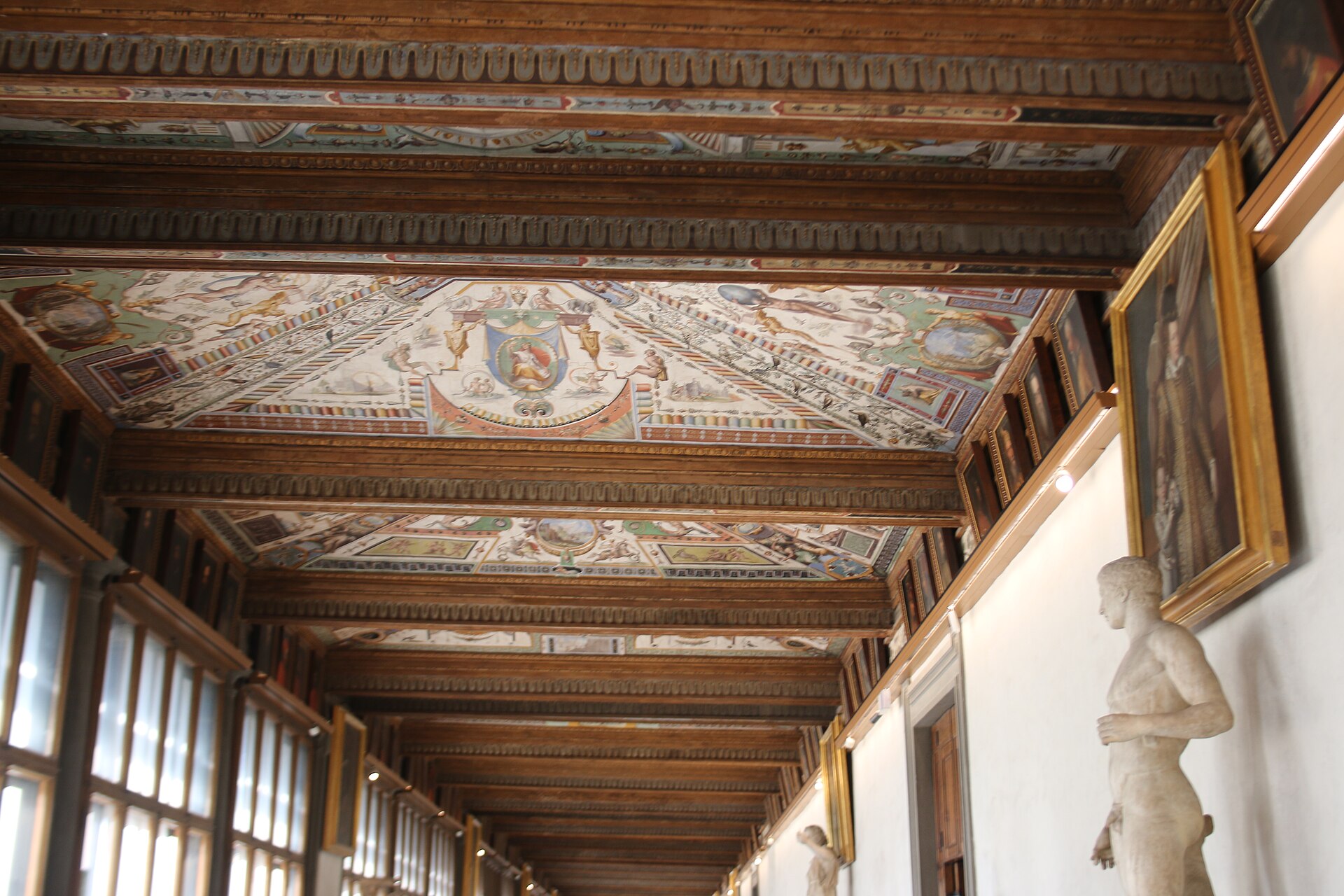
The Uffizi Gallery is Florence’s crown jewel and one of the most important art museums in the world. Housed in a sweeping building designed by Giorgio Vasari for Cosimo I de’ Medici and built between 1560 and 1580, the gallery holds an outstanding collection of Italian Renaissance paintings.
Highlights you should not miss include Botticelli’s The Birth of Venus and Primavera, Leonardo da Vinci’s Annunciation, Michelangelo’s Doni Tondo, Raphael’s Madonna of the Goldfinch, Titian’s Venus of Urbino, and Caravaggio’s Medusa and Bacchus. The collection is enormous — plan at least three to four hours for a thorough visit, or two hours if you want to hit the highlights.
Practical details for the Uffizi Gallery in 2026:
- Admission: €25 general admission; €16 with the after-4pm discount ticket (an excellent value if you are short on time)
- Hours: Tuesday to Sunday, 8:15am to 6:30pm (the ticket office closes at 5:30pm)
- Closed: Every Monday, plus January 1 and December 25
- Skip-the-line tip: Book timed-entry tickets online at least two weeks in advance, especially during peak season (April through October). Morning slots between 8:15am and 9:00am are the least crowded.
- Pro tip: The after-4pm discount ticket is a local favorite. The galleries thin out considerably in the late afternoon, and you get two and a half unrushed hours at a lower price.
The Galleria dell’Accademia (Home of Michelangelo’s David)
If the Uffizi is Florence’s most comprehensive museum, the Accademia is its most focused — and most emotionally powerful. The star attraction is Michelangelo’s David, a 17-foot marble sculpture that has been astonishing visitors since 1504. No photograph prepares you for seeing it in person. The scale, the detail, the sheer audacity of carving something this perfect from a single block of marble — it is genuinely breathtaking.
Beyond David, the Accademia houses Michelangelo’s unfinished Prisoners (or Slaves), which line the corridor leading to the statue and are fascinating studies in the sculptor’s process. The museum also holds an important collection of early Renaissance paintings, including works by Botticelli, Ghirlandaio, and Perugino, as well as a notable collection of musical instruments.
Practical details for the Accademia Gallery in 2026:
- Admission: €20 for a single entry (plus a €4 booking fee if you reserve), or €26 for a 48-hour combined ticket with the Bargello Museum (a significant saving worth considering)
- Hours: Tuesday to Sunday, 8:15am to 6:50pm (arrive by 6:10pm to be sure of getting in)
- Closed: Every Monday
- Time needed: Plan 1.5 to 2 hours, though you could see the highlights in about an hour
- Tip: Arrive right at opening or after 4pm to avoid the worst of the crowds. The queue for walk-up tickets can stretch to two hours in summer — pre-booking is essential.
The Bargello National Museum
Vastly underrated and blissfully uncrowded compared to the Uffizi and Accademia, the Bargello is a must-visit for sculpture lovers. Housed in a public palace founded in 1255 and later used as a prison and police headquarters, the museum holds an exceptional collection of Renaissance sculpture.
Key works include Donatello’s bronze David (the first free-standing nude sculpture since antiquity), his marble St. George, Verrocchio’s bronze David, and competition panels by Ghiberti and Brunelleschi for the Baptistery doors. The building itself, with its austere medieval courtyard and open-air staircase, is worth the visit alone.
If you are purchasing the combined Accademia-Bargello ticket at €26, the Bargello is essentially included at a steep discount — making it one of the best value Florence attractions for art enthusiasts.
Palazzo Pitti and the Palatine Gallery
Across the Arno River in the Oltrarno district sits Palazzo Pitti, a colossal Renaissance palace that served as the residence of the Medici grand dukes and later the Italian royal family. The palace houses several museums, but the Palatine Gallery on the first floor is the main draw.
The Palatine Gallery features a superb collection of Renaissance and Baroque paintings displayed in lavishly decorated rooms exactly as the Medici intended — stacked frame-to-frame on silk-covered walls. Highlights include Raphael’s Madonna of the Chair, Titian’s Mary Magdalene and The Concert, Caravaggio’s Sleeping Cupid, and several works by Rubens and Andrea del Sarto.
The palace also houses the Gallery of Modern Art (19th- and 20th-century Italian art) and the Costume Gallery. The Treasury of the Grand Dukes (the former Silver Museum, with the Medici treasures) is closed until further notice, and the Porcelain Museum is closed for refurbishment. One Pitti Palace ticket covers the palace’s collections; the Royal Apartments need a separate time-slot reservation, at no extra charge.
Museo dell’Opera del Duomo
One of the most underappreciated museums in Florence, the Museo dell’Opera del Duomo (Museum of the Works of the Cathedral) sits just behind the Duomo and houses the original artworks removed from the cathedral complex for preservation. The museum reopened in October 2015 after expansion, and the result is striking.
The centerpiece is a full-scale reconstruction of the original facade of the cathedral, complete with the original statues by Arnolfo di Cambio. Other highlights include Ghiberti’s original Gates of Paradise baptistery doors (the ones on the Baptistery today are replicas), Donatello’s harrowing wooden Mary Magdalene, Michelangelo’s Bandini Pieta (one of his final works, intended for his own tomb), and Donatello’s famous Cantoria (singing gallery).
The museum is included in the Brunelleschi Pass (€30), making it essentially free if you are already planning to climb the dome — which you absolutely should. Our Florence Duomo tickets guide breaks down which pass covers what.
The Florence Cathedral Complex (Duomo)
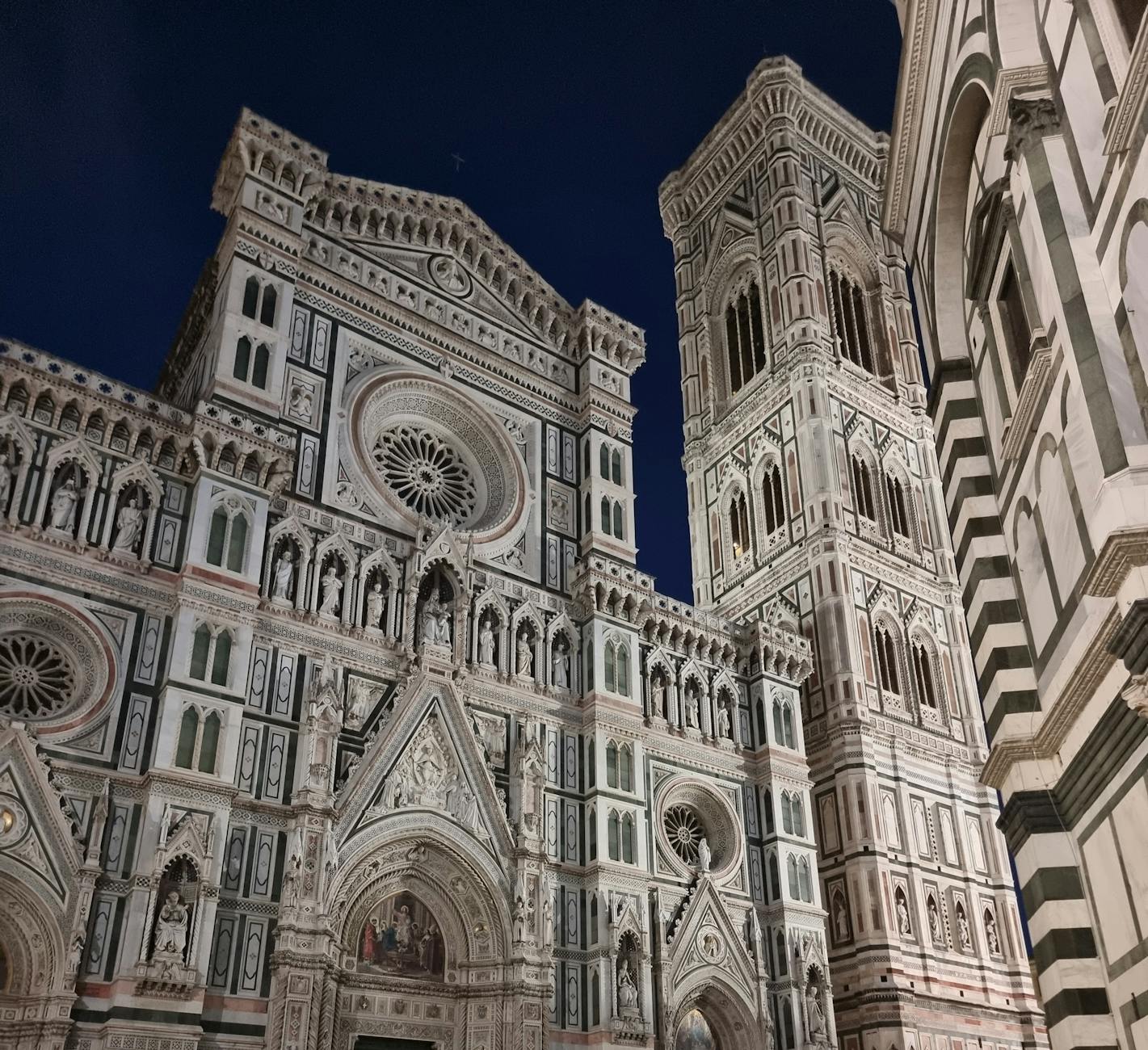
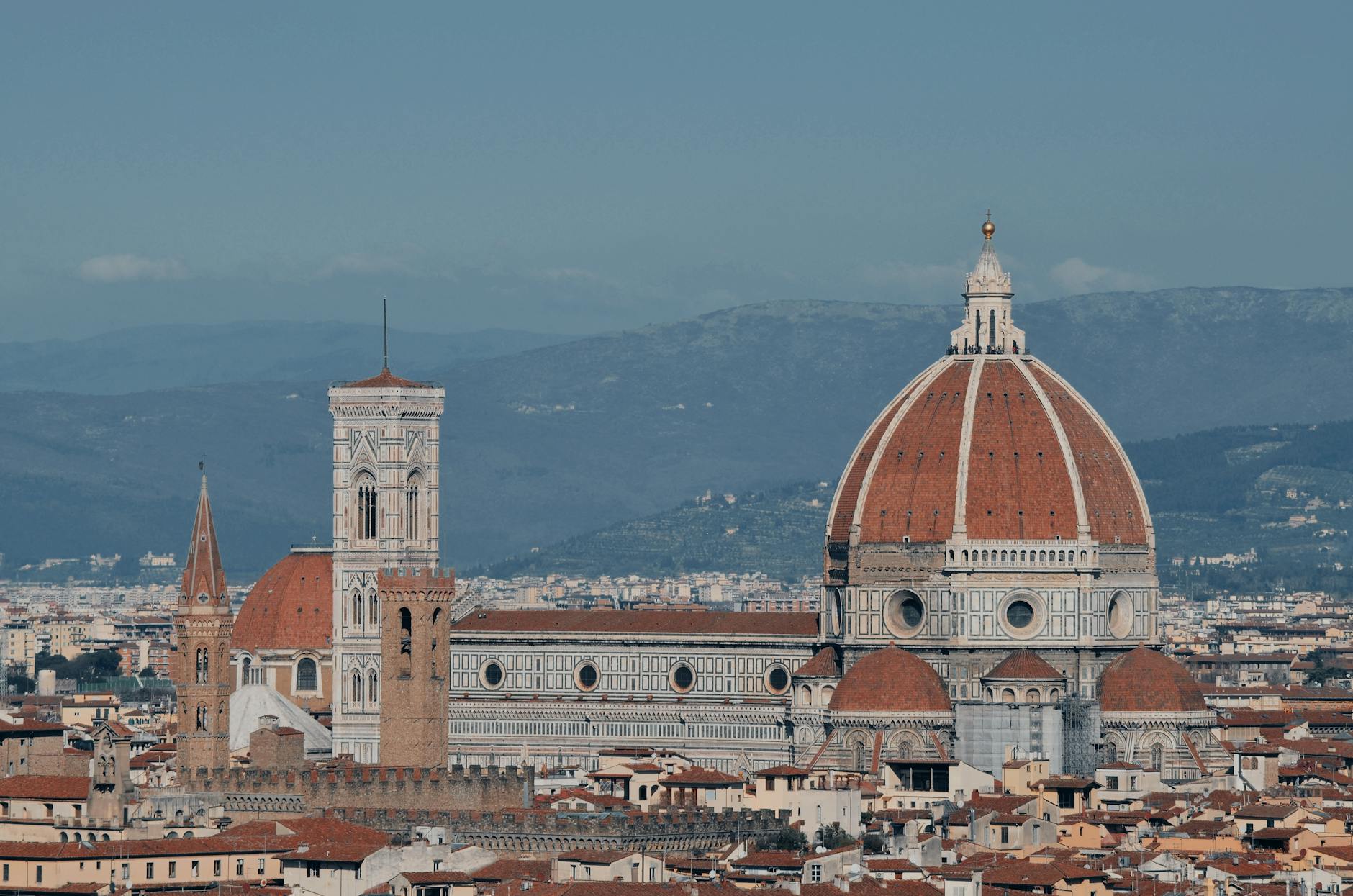
The Cathedral of Santa Maria del Fiore — universally known as the Duomo — is not just one of the top things to do in Florence; it is Florence. Its terracotta dome, designed by Filippo Brunelleschi and built between 1420 and 1436, dominates the city’s skyline and remains the largest masonry dome ever built. The entire cathedral complex, including the Baptistery of San Giovanni, Giotto’s Bell Tower, the crypt of Santa Reparata, and the cathedral museum, could easily fill an entire day.
The Cathedral Exterior and Interior
The exterior of the Duomo is clad in a distinctive polychrome marble — white from Carrara, green from Prato, and pink from Siena — creating one of the most recognizable facades in the world. While the cathedral was begun in 1296, the current neo-Gothic facade was only completed in 1887.
The interior is surprisingly austere compared to the ornate exterior, but it holds several important works: Paolo Uccello’s memorial fresco of Sir John Hawkwood, a monumental clock face with portraits of prophets by Uccello, and most dramatically, the Last Judgment fresco covering the interior of the dome, painted by Giorgio Vasari and Federico Zuccari.
Entering the cathedral is free, making it one of the most accessible Florence Italy activities. Dress code is enforced — shoulders and knees must be covered.
Climbing Brunelleschi’s Dome
Climbing the 463 steps to the top of the dome is one of the most unforgettable experiences in Florence. The ascent takes you through the narrow passageways between the inner and outer shells of the dome, offering a close-up view of the memorable Last Judgment fresco as you spiral upward. The view from the top — a panorama over Florence’s rooftops and the surrounding hills — is staggering.
The climb is moderately strenuous and involves very narrow, claustrophobic passages and steep stairs. It is not recommended for those with mobility issues, severe claustrophobia, or vertigo. Allow about 45 minutes for the full ascent and descent.
Practical details for the dome climb:
- Cost: Included in the Brunelleschi Pass at €30 (also covers the Baptistery, Bell Tower, Santa Reparata crypt, and Museo dell’Opera del Duomo)
- Reservations: A timed reservation is mandatory. Book online well in advance — popular time slots sell out weeks ahead in peak season.
- Best time: The dome opens at 8:15am Monday to Saturday; check the booking calendar for the slots on your date and take an early one if you like to start the day climbing.
Giotto’s Bell Tower (Campanile)
Standing next to the cathedral, Giotto’s Bell Tower offers an arguably better view than the dome climb — because from here, you get the dome in your photograph. The 414 steps are divided into several platforms with rest areas, and the climb feels less claustrophobic than the dome. The top platform offers sweeping views over the rooftops of Florence, with the dome looming magnificently right beside you.
The bell tower is also covered by the Brunelleschi Pass. If you only have time for one climb, the dome is the more unique experience; if you have time for both, do the bell tower first for that perfect dome photograph, then climb the dome itself for the interior frescoes and the higher vantage point.
The Baptistery of San Giovanni
The octagonal Baptistery, directly across from the cathedral, is one of the oldest surviving religious buildings in Florence. The building you see is generally dated to the 11th and 12th centuries, though earlier origins have been proposed. It is famous for its three sets of bronze doors, most notably the eastern doors by Lorenzo Ghiberti — dubbed the “Gates of Paradise” by Michelangelo.
Inside, the ceiling is covered in spectacular Byzantine-style gold mosaics dating to the 13th and 14th centuries, depicting scenes from the Old and New Testaments. The mosaic of Christ in Judgment at the center, with a fearsome depiction of Hell below, is awe-inspiring. The Baptistery is included in the Brunelleschi Pass.
Santa Reparata (The Underground Crypt)
Beneath the cathedral floor lie the excavated remains of Santa Reparata, the earlier church that stood on this site before the current Duomo was built over it. The underground area reveals the remains of Roman houses, an early Christian pavement, and — most notably — the tomb of Brunelleschi himself. It is a fascinating and often overlooked stop, also included in the Brunelleschi Pass.
Money-saving tip: The Brunelleschi Pass at €30 is one of the best value tickets in Florence. It covers five separate attractions (dome climb, bell tower, Baptistery, Santa Reparata, and the Museo dell’Opera del Duomo), and the pass is valid for three calendar days starting on your dome date, so you can spread the visits across multiple days.
signature Bridges and the Arno River
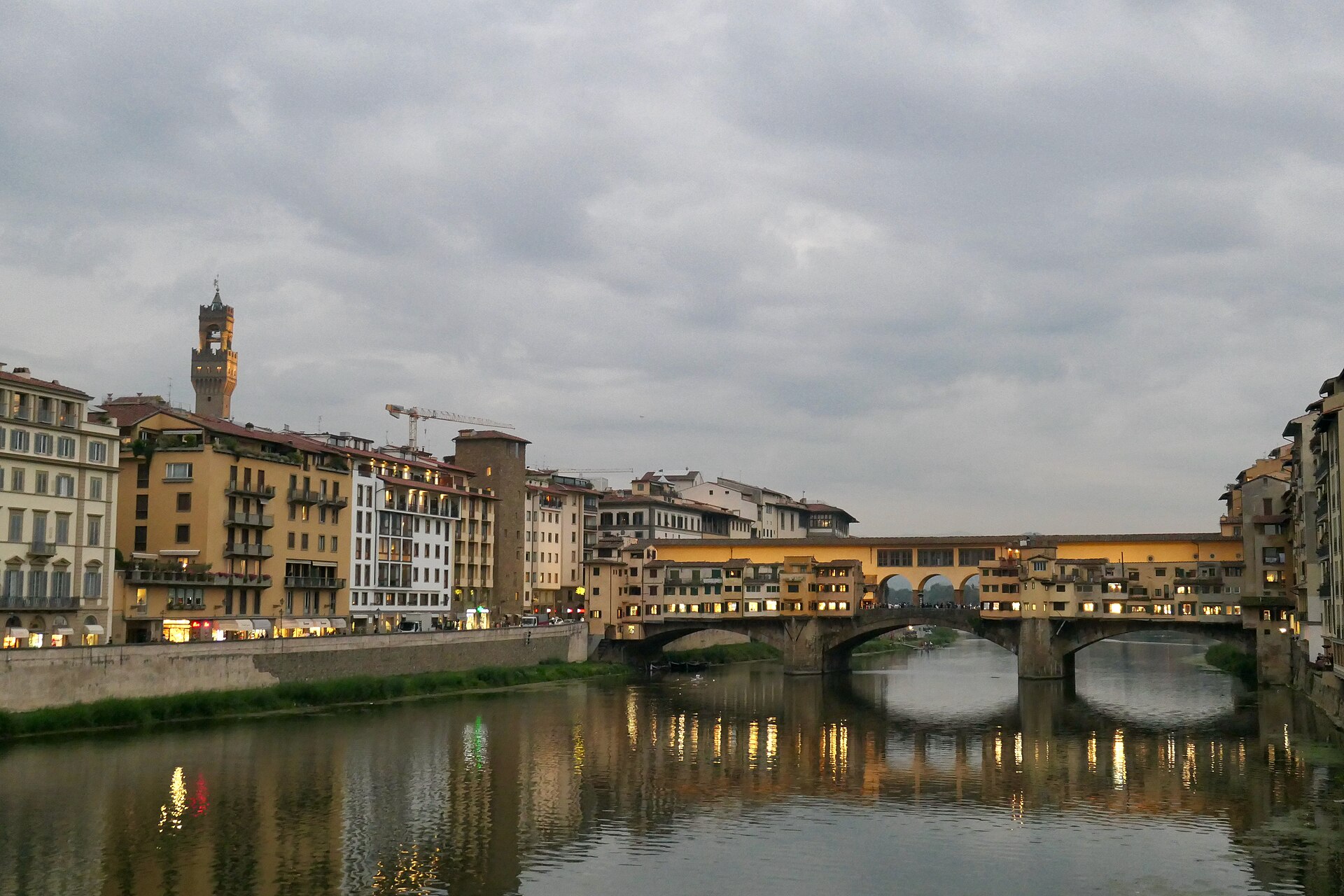
The Arno River divides Florence into two distinct halves, and the bridges that connect them are among the city’s most well-known landmarks. A walk along the riverbanks, especially at sunset, is one of the most romantic and memorable Florence sightseeing experiences you can have.
Ponte Vecchio
The Ponte Vecchio (“Old Bridge”) is Florence’s most famous landmark after the Duomo. This medieval stone arch bridge, dating to 1345, is noted for the shops built along both sides. The bridge originally housed butchers, tanners, and other tradespeople, but in 1593, Grand Duke Ferdinand I decreed that only goldsmiths and jewelers could operate there, a tradition that continues to this day.
Walking across the Ponte Vecchio is one of those quintessential things to do in Florence that costs nothing and requires no reservation. It is a pedestrian crossing, so you can simply stroll over. The shop windows glitter with gold jewelry and gemstones, and the views from the small openings between the shops — looking up and down the Arno — are picture-perfect.
Insider tips for the Ponte Vecchio:
- Visit early in the morning (before 8am) or late at night to experience the bridge without heavy crowds.
- The best photographs of the bridge itself are taken from the Ponte Santa Trinita to the west or from the elevated terrace next to the Uffizi.
- Look up as you cross — above the shops on the eastern side runs the Vasari Corridor, a private elevated passageway built in 1565 for the Medici to walk between Palazzo Pitti and Palazzo Vecchio without mixing with the public. It is open to visitors again, in booked groups accompanied by Uffizi staff, who do not give a guided tour.
- At sunset, the bridge and surrounding buildings glow with warm Tuscan light — this is peak photo-opportunity time.
Ponte Santa Trinita
Just one bridge west of the Ponte Vecchio, the Ponte Santa Trinita is considered the most elegant bridge in Florence and possibly all of Italy. Designed by Bartolomeo Ammannati (reportedly with input from Michelangelo) in 1567, it features graceful elliptical arches and statues representing the four seasons at each corner.
The bridge was destroyed by retreating German forces in 1944 and painstakingly rebuilt after the war using the original stones, which were dredged from the Arno. Standing on the Ponte Santa Trinita at sunset, looking east toward the Ponte Vecchio with the tower of Palazzo Vecchio rising behind it, is one of the most photographed views in Florence.
Riverside Walks and the Lungarni
The tree-lined streets running along both banks of the Arno — known as the Lungarni — offer some of the most pleasant walking in Florence. The southern bank (Lungarno Torrigiani and Lungarno Serristori) is generally quieter and offers lovely views back across to the main city. In the evening, several bars and restaurants along the Arno set up outdoor seating right along the water.
For a longer walk, follow the Arno west from the Ponte Vecchio toward the Cascine Park, or east toward the peaceful neighborhood around Piazza Demidoff. The stretch between Ponte alle Grazie and the weir near Piazza Poggi is particularly scenic and leads directly to the stairs up to Piazzale Michelangelo.
Historic Piazzas and Public Spaces
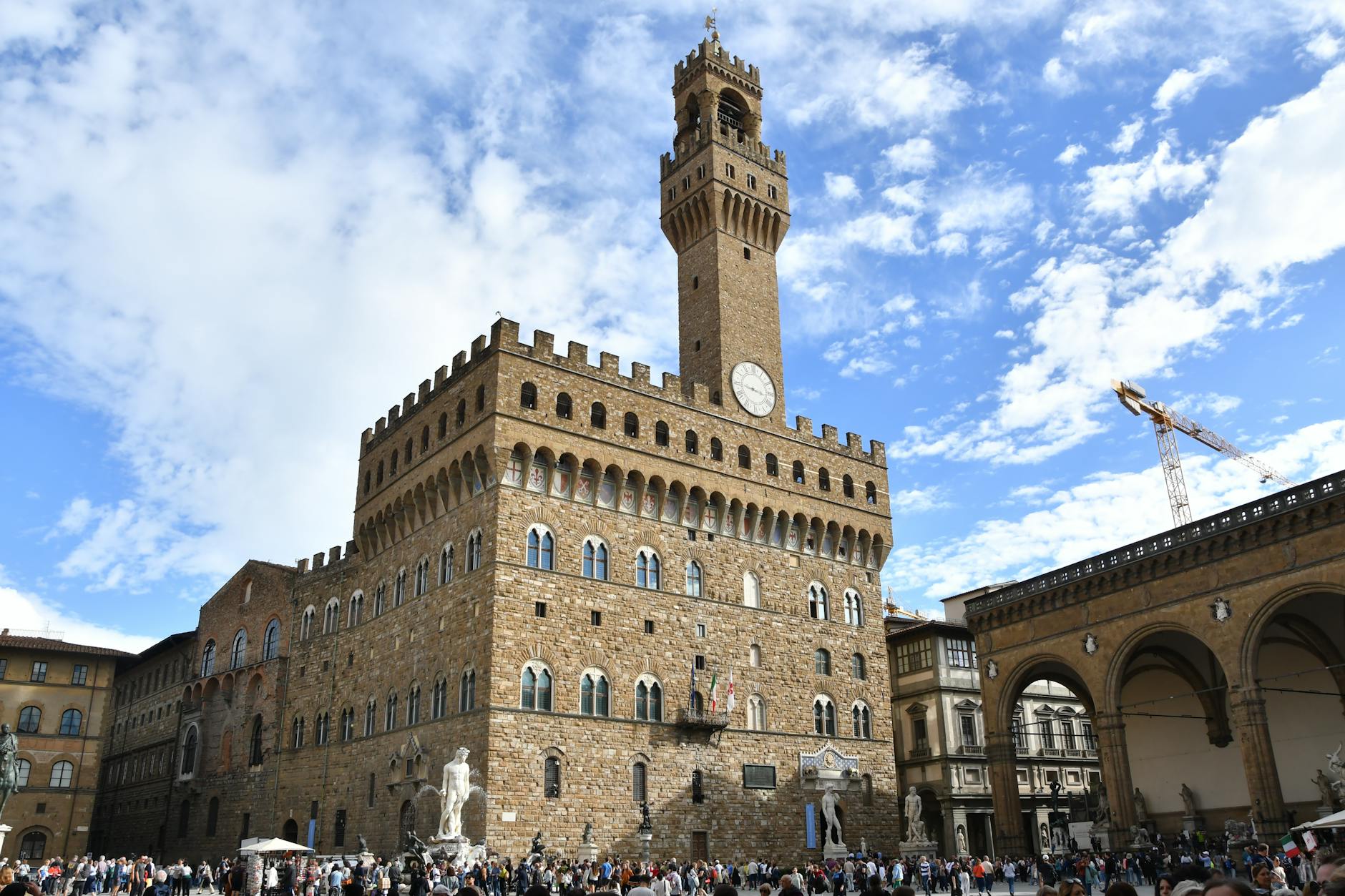
Florence’s piazzas are its living rooms — open-air gathering places where locals and visitors alike come to sit, people-watch, eat gelato, and soak in centuries of history. Spending time in these squares, rather than rushing between museums, is one of the best things to do in Florence and is essential for understanding the city’s character.
Piazza della Signoria
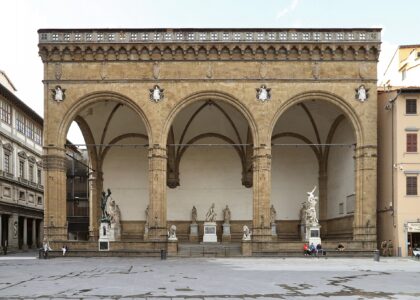
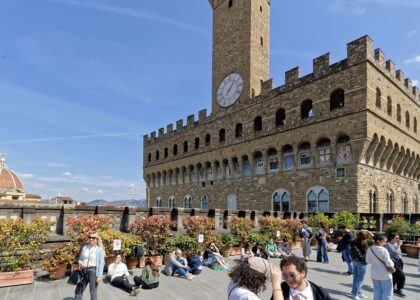
Florence’s most important square has been the political heart of the city since the 14th century. Dominated by the fortress-like Palazzo Vecchio — still the seat of Florence’s city government — the piazza is an open-air sculpture gallery. The Loggia dei Lanzi, a graceful arched gallery on the south side, holds major sculptures including Giambologna’s Rape of the Sabine Women, Cellini’s bronze Perseus with the Head of Medusa, and a Roman-era marble lion.
In front of Palazzo Vecchio stands a replica of Michelangelo’s David (the original was moved to the Accademia in 1873), along with Bandinelli’s Hercules and Cacus and Ammannati’s Fountain of Neptune. A round marble plaque in the pavement marks the spot where the Dominican friar Girolamo Savonarola was hanged and burned on 23 May 1498.
The piazza and its outdoor sculptures cost nothing to see, and lingering here with a coffee at one of the historic cafes (Rivoire, on the square itself, is the classic choice, though pricey) is a quintessential Florence experience.
Piazza della Repubblica
This large, elegant square sits on the site of the ancient Roman forum and was Florence’s old market area for centuries. It was demolished and rebuilt in grand 19th-century style between 1885 and 1895, in the years after Florence’s brief spell as the capital of unified Italy (1865-1871). The triumphal arch inscription declares the “ancient center of the city restored from age-old squalor to new life.”
Today the piazza is known for its historic literary cafes — Cafe Giubbe Rosse (a gathering place for Futurist artists and writers), Cafe Paszkowski, and Cafe Gilli (founded in 1733, one of the oldest in the city). The piazza also hosts a vintage carousel that delights children and adults alike, and serves as the hub for many of Florence’s major events and festivities.
Piazza Santo Spirito
Cross the Arno into the Oltrarno district and you will find Piazza Santo Spirito, the bohemian heart of Florence’s “left bank.” This tree-shaded square, fronted by the plain, unfinished facade of the Basilica of Santo Spirito (designed by Brunelleschi), has a distinctly local atmosphere that the more touristy central piazzas sometimes lack.
In the mornings, a daily market sells fresh produce, clothing, and household goods. In the evenings, the surrounding restaurants and bars come alive with a mix of students, locals, artisans, and visitors. The restaurants lining the square — many with outdoor seating — are among the best in Florence for authentic Tuscan cuisine at reasonable prices. Try Trattoria Borgo Antico or Gusta Pizza (famous for its enormous, delicious, and very affordable pizzas).
Piazza Santa Croce
This grand rectangular piazza in front of the Basilica of Santa Croce is one of the largest in Florence and has long served as a venue for public events and markets. It hosted a famous match of historic football (Calcio Storico) during the siege of 1530, and the tournament, revived in 1930, is still played here. The piazza is flanked by handsome palaces and makes for a wonderful spot to sit and admire the ornate neo-Gothic facade of the basilica.
From 14 November to 20 December 2026, Piazza Santa Croce hosts a Christmas market of more than fifty wooden stalls selling crafts, food, and seasonal goods. In June, the piazza is transformed for Calcio Storico — a violent, no-rules precursor to modern football played in Renaissance costume. It is one of the most extraordinary (and brutal) sporting events in Italy.
Churches and Basilicas
Beyond the Duomo, Florence is home to a remarkable constellation of churches and basilicas, many of which contain artworks that would be the star attraction in any other city. Visiting Florence’s churches is one of the most rewarding Florence Italy activities, and many are free or require only a small donation.
Basilica of Santa Croce
Often called the “Temple of Italian Glories,” Santa Croce is the largest Franciscan church in the world and the final resting place of some of history’s greatest figures: Michelangelo, Galileo Galilei, Machiavelli, the composer Rossini, and the poet Ugo Foscolo. A cenotaph honors Dante Alighieri (though his remains are in Ravenna).
The church also contains Giotto’s 14th-century frescoes in the Bardi and Peruzzi chapels, as well as a wooden crucifix by Donatello and Cimabue’s famous Crucifix (damaged in the catastrophic 1966 flood). The adjacent museum, set in a beautiful cloister, includes the Pazzi Chapel, a masterwork of early Renaissance architecture by Brunelleschi.
Admission is €10 (plus a €1 booking fee online). The church is open Monday to Saturday from 9:30am to 5:30pm, and on Sundays and religious holidays from 2pm to 5:30pm, with last admission at 5pm.
Basilica of San Miniato al Monte
Perched on one of the highest points in Florence, the Romanesque Basilica of San Miniato al Monte is one of the most beautiful churches in Tuscany and one of the finest examples of Florentine Romanesque architecture in existence. The green-and-white marble facade, dating to the 11th century, is beautiful, and the interior features exquisite medieval mosaics, a 13th-century marble floor, and the Chapel of the Cardinal of Portugal with its Renaissance frescoes and glazed terracotta ceiling by Luca della Robbia.
The church is free to enter, and visiting it can be combined with a trip to Piazzale Michelangelo, which sits just below. Time your visit for Mass (6pm on weekdays, 5:30pm on Sundays and holidays) or Vespers at 6:30pm and you can hear the Olivetan monks sing Gregorian chant — a hauntingly beautiful experience.
Basilica of Santa Maria Novella
Directly across from the main train station (which takes its name from the church), Santa Maria Novella is the principal Dominican church of Florence and a treasure trove of art. The striking green-and-white marble facade, designed by Leon Battista Alberti, is one of the masterpieces of Renaissance architecture.
Inside, you will find Masaccio’s Holy Trinity — one of the first paintings to use mathematically precise linear perspective, a revolutionary breakthrough in the history of art — along with frescoes by Ghirlandaio (the teacher of Michelangelo), Filippino Lippi, and a painted crucifix by Giotto. The cloisters, accessible through the museum, include the knockout Spanish Chapel with its cycle of frescoes by Andrea di Bonaiuto.
Orsanmichele
This unique building started as a grain market, became a church, and now serves as one of Florence’s most fascinating architectural sites. The exterior niches hold statues by the greatest Renaissance sculptors — Donatello, Ghiberti, Verrocchio, and Giambologna — representing the patron saints of Florence’s powerful trade guilds. The originals of several statues have been moved to the museum on the upper floors (free to visit on certain days), but the overall effect of this outdoor sculpture gallery is remarkable.
The church interior contains a imposing Gothic tabernacle by Andrea Orcagna, encrusted with gold, colored marble, and religious reliefs. Orsanmichele is often overlooked by visitors rushing between the Duomo and Piazza della Signoria, which is a shame. Admission to the church and museum is €10 at the full rate, with reductions and free-entry days.
Gardens and Outdoor Spaces
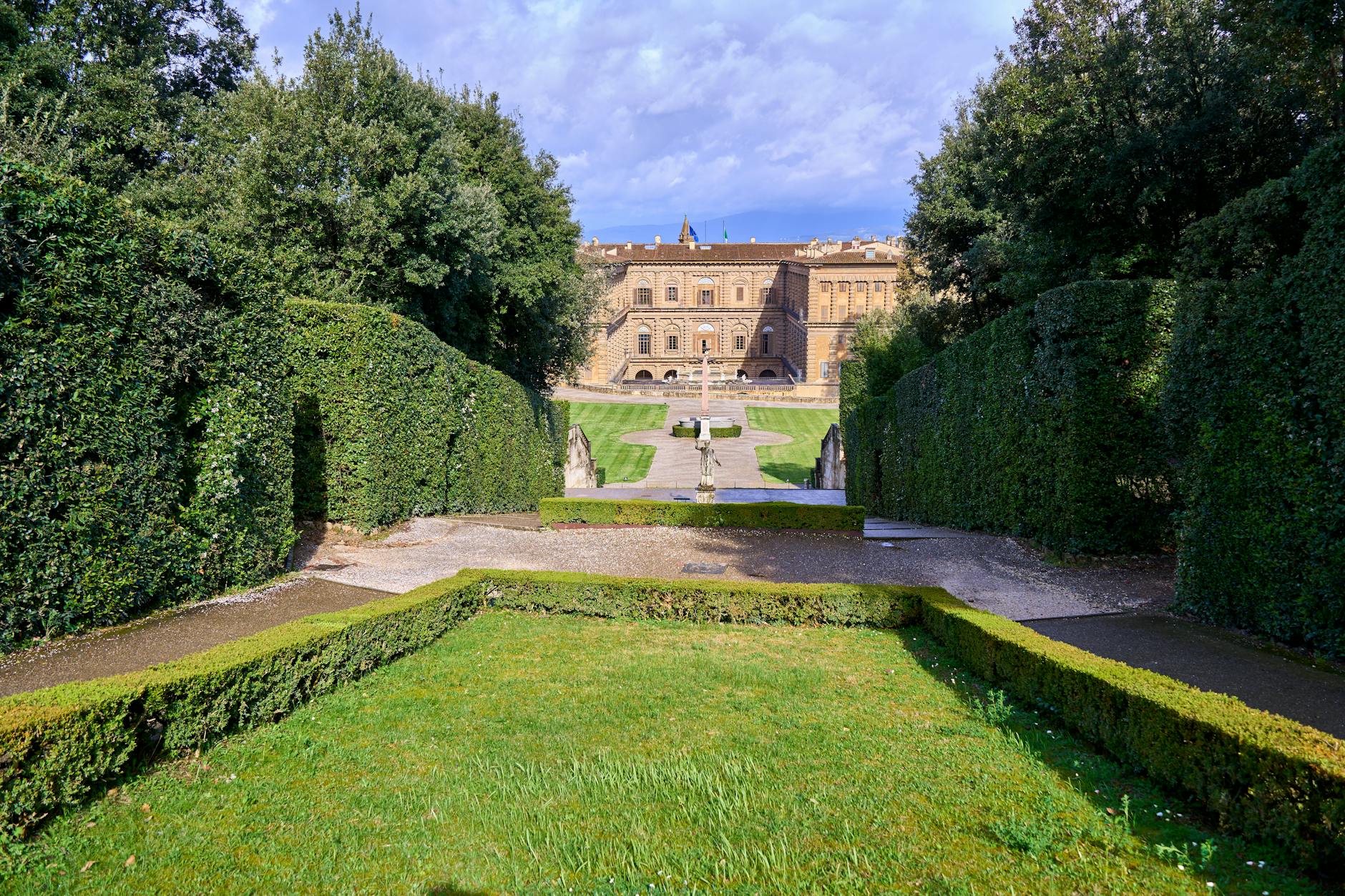
Florence can be intense — the crowds, the cobblestones, the sensory overload of so much beauty. When you need a break, the city’s gardens and green spaces offer the perfect antidote. From formal Renaissance gardens to hidden hillside oases, these outdoor spaces are among the most refreshing Florence attractions and should not be overlooked.
Boboli Gardens
Stretching behind Palazzo Pitti across a steep hillside, the Boboli Gardens are one of the earliest and most influential examples of the Italian formal garden. Covering more than 33 hectares (over 81 acres), the gardens were begun in 1549 for Eleonora di Toledo, wife of Cosimo I de’ Medici, to a design by Tribolo, and have been expanded and embellished by successive generations.
Highlights include the amphitheater behind the palace (with an Egyptian obelisk at its center), the Grotta Grande (a fantastical artificial cave with stalactites and copies of Michelangelo sculptures), the Neptune Fountain (fenced off for restoration, but visible from outside), the Kaffeehaus (a charming 18th-century pavilion with panoramic views), and the Isolotto — a garden island at the far end featuring Giambologna’s Fountain of the Ocean.
The gardens are large enough to lose the crowds entirely if you venture beyond the main paths. The upper reaches, around the Porcelain Museum building (closed for refurbishment), offer spectacular views over the Florentine hills and the rear of the Palazzo Pitti.
Practical details for Boboli Gardens in 2026:
- Admission: €10
- Hours: Opens at 8:15am. Closes at 4:30pm in January, February, November and December; 5:30pm in March and October before the clocks go forward or after they go back, 6:30pm otherwise; 6:30pm in April, May and September; and 7:10pm from June to August. Last entry is an hour before closing. Closed on the first and last Monday of each month and on December 25.
- Time needed: 1.5 to 3 hours depending on how much you explore
- Tip: Wear comfortable shoes — the gardens are hilly and the gravel paths can be uneven. Bring water, especially in summer, as shade is limited in some areas.
Bardini Garden (Giardino Bardini)
Connected to the Boboli Gardens but with a separate entrance on Via dei Bardi, the Bardini Garden is smaller, quieter, and in many ways more charming than its famous neighbor. It features a remarkable baroque staircase, an English-style woodland garden, an agricultural section with fruit trees and a vegetable garden, and a panoramic belvedere looking out over Florence.
The Bardini terrace, perched on a hillside overlooking the city, offers a panoramic view that rivals Piazzale Michelangelo but with a fraction of the visitors. In late April and May, the garden’s famous wisteria tunnel bursts into bloom — creating one of the most photographed scenes in Florence.
Admission is around €10, or you can sometimes access it with a combined Boboli ticket. The garden closes on the first and last Monday of each month, and hours vary by season.
Rose Garden (Giardino delle Rose)
Tucked into the hillside below Piazzale Michelangelo, the Rose Garden is a free public garden that blooms spectacularly in May and June. Created in 1865 by the architect Giuseppe Poggi, the garden contains over 350 varieties of roses, as well as a dozen bronze sculptures and plaster casts by the Belgian artist Jean-Michel Folon, whose whimsical figures sit among the flowers and hedges.
It is a perfect stop on the walk up to or down from Piazzale Michelangelo, and its terraces offer lovely views over the city. The garden opens daily at 9am and closes at 5pm from November to February, 6pm in March and October, 7pm in April, and 8pm from May to September; admission is free.
Cascine Park (Parco delle Cascine)
Florence’s largest public park stretches for about 3.5 kilometers along the north bank of the Arno, west of the historic center. Once the Medici’s dairy farm and hunting reserve, it is now the city’s main green lung — a popular spot for joggers, cyclists, and families.
Every Tuesday morning, the park hosts a large open-air market selling clothing, household goods, and food at bargain prices. In summer, the park becomes a venue for outdoor concerts and events. It is an excellent place to experience Florence as locals do, away from the tourist center.
Panoramic Viewpoints
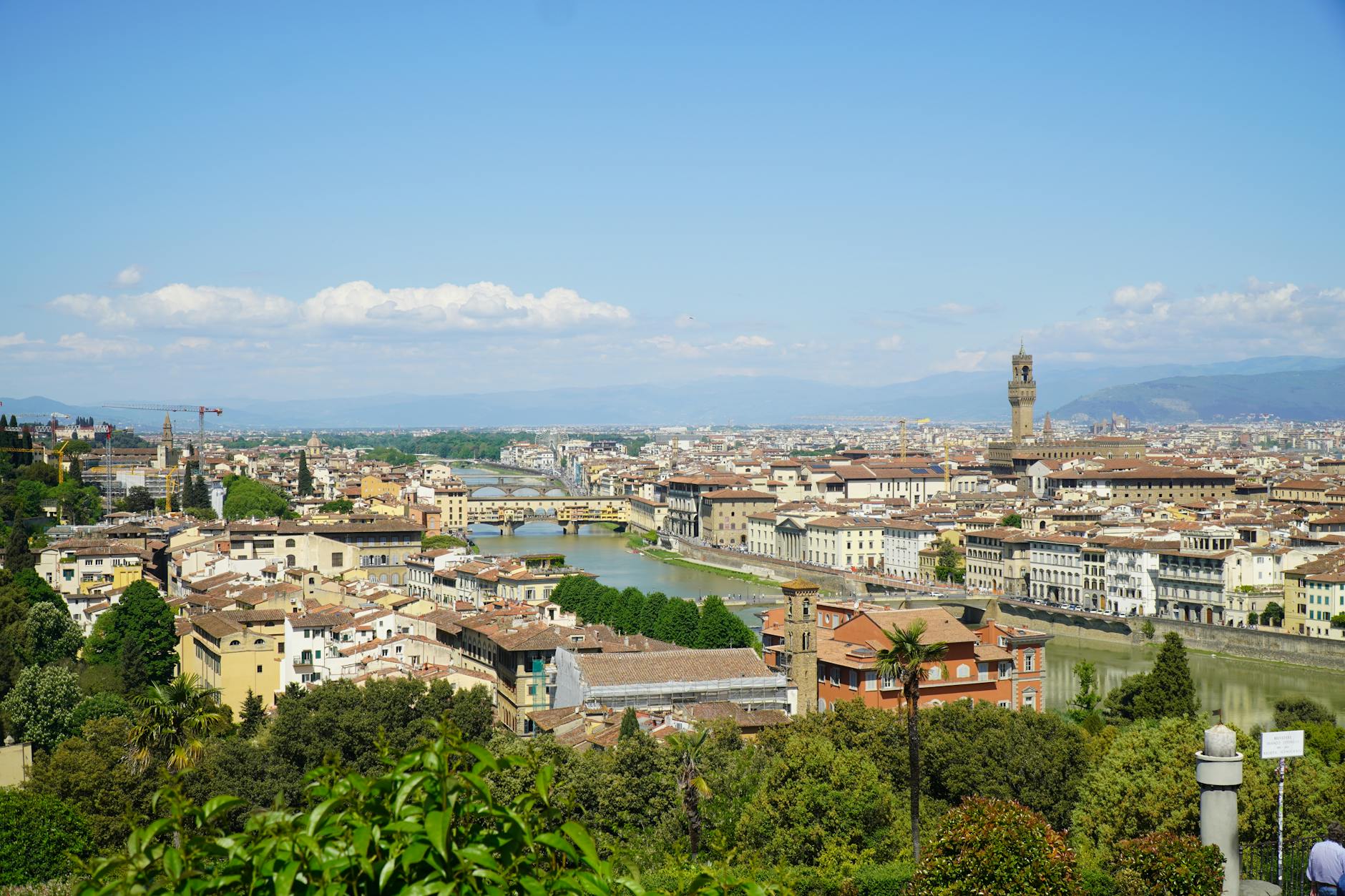
Florence is a city made to be seen from above. Nestled in a bowl-shaped valley surrounded by hills, the terracotta-roofed cityscape punctuated by domes and towers looks like a Renaissance painting from every elevated vantage point. Seeking out the best things to do in Florence at sunset inevitably means heading uphill.
Piazzale Michelangelo
The undisputed king of Florence viewpoints, Piazzale Michelangelo is a large panoramic terrace on the south bank of the Arno, perched on a hill overlooking the entire city. The view is soaring — the Duomo, Palazzo Vecchio, Ponte Vecchio, Santa Croce, and the hills beyond are all laid out before you in a sweeping panorama.
The piazzale features a bronze replica of Michelangelo’s David and is surrounded by cafes and street vendors. It is free to visit. The most popular time is sunset, when hundreds of visitors gather to watch the city glow in the fading light — bring a bottle of wine and some snacks for the ultimate experience.
How to get to Piazzale Michelangelo:
- On foot: It is an uphill walk from the center by way of San Niccolò. The most scenic route follows the Arno east to Piazza Poggi, then climbs a series of staircases through the Rose Garden — steep but beautiful.
- By bus: Bus number 12 from the train station area stops right at the piazzale, and line 13 runs the same loop in the other direction; check journey times on Autolinee Toscane’s timetables.
- Best time: Arrive 30 to 45 minutes before sunset to secure a good spot. Early morning is also magical and nearly deserted.
Fiesole
The hilltop town of Fiesole, about 5 kilometers northeast of Florence center as the crow flies, was an important Etruscan town before the Romans founded Florence, and offers a completely different perspective on the city. From the terrace of the main piazza, you can see Florence spread out in the valley below, with the Duomo looking almost small from this distance.
Fiesole is also worth visiting for its own attractions: a remarkably well-preserved Roman amphitheater and archaeological area, the Bandini Museum, an 11th-century cathedral, and several excellent restaurants with panoramic terraces. The town has a peaceful, village-like atmosphere that makes for a welcome contrast to bustling Florence.
Bus number 7 runs from Libertà (Porta San Gallo) in Florence to Piazza Mino, Fiesole’s main square, on the regular city bus fare. It is one of the easiest and most rewarding half-day excursions from the city.
The Dome Climb and Bell Tower
As covered in the cathedral section above, climbing either Brunelleschi’s Dome (463 steps) or Giotto’s Bell Tower (414 steps) provides extraordinary elevated views of Florence’s rooftops. The dome is the higher of the two, but the bell tower offers the advantage of including the dome itself in the view. Both are included in the Brunelleschi Pass (€30), but only the dome needs an advance timed reservation; the bell tower can be climbed at any point while the pass is valid, and it is also on the Giotto Pass.
Forte Belvedere and San Nicolo Tower
For less well-known viewpoints, Forte Belvedere — a Medici fortress designed by Bernardo Buontalenti in 1590 — offers panoramic views when open for exhibitions. Its 2026 season ended on 16 October, so check the MUS.E programme on musefirenze.it for the next openings. Nearby, the Porta San Nicolo gate tower occasionally opens for free rooftop access, providing a wonderful vantage point over the Arno and the eastern part of the city.
Shopping and Markets
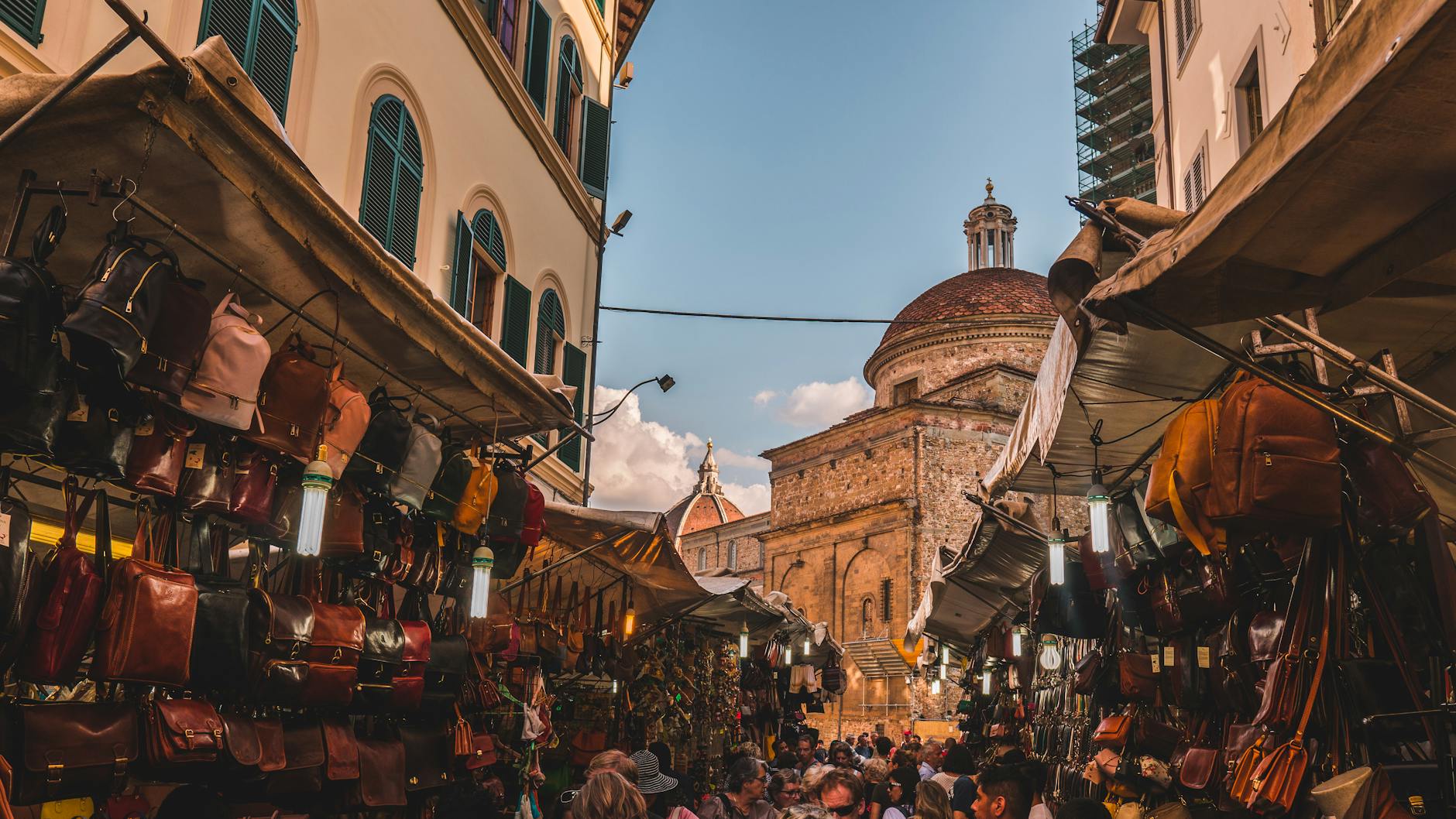
Shopping in Florence is not just retail therapy — it is a cultural experience. This is a city with unbroken artisan traditions stretching back centuries: leatherwork, goldsmithing, paper marbling, bookbinding, mosaic inlay, and textile weaving. Alongside these traditional crafts, you will find first-rate fashion houses, vibrant food markets, and quirky independent boutiques. Exploring Florence’s markets and workshops is one of the most enjoyable Florence sightseeing activities, even if you do not buy a thing.
San Lorenzo Market (Mercato di San Lorenzo)
The outdoor San Lorenzo Market sprawls through the streets surrounding the Basilica of San Lorenzo and is Florence’s most famous street market. Hundreds of stalls sell leather goods (jackets, bags, wallets, belts), clothing, scarves, souvenirs, and gifts. It is free to browse and open most days, but the stalls are cleared on set Mondays through the year, not only in winter, and on some holidays, so check the city’s calendar before a Monday visit.
Tips for shopping at San Lorenzo Market:
- Quality varies enormously. Look for stalls displaying the “Vera Pelle” (genuine leather) label, and use your nose — real leather has a distinctive smell.
- Bargaining is expected for leather goods and souvenirs, though not as aggressively as in some markets. A discount of 10 to 20 percent off the asking price is reasonable.
- For the best quality leather, skip the cheapest stalls and look for sellers who can tell you about the type of leather and where it was tanned (Florentine leather from the Santa Croce tanning district is the gold standard).
- Mornings are less crowded than afternoons.
Mercato Centrale (Central Market)
Inside the striking 19th-century iron-and-glass building at the heart of the San Lorenzo area, the Mercato Centrale is Florence’s answer to modern food halls — though the ground floor retains its traditional role as a fresh food market. The ground floor sells fresh meat, fish, cheese, produce, pasta, bread, truffles, wine, and other Tuscan specialties, and is the place to shop if you have cooking facilities.
The renovated upper floor, opened in 2014, is a modern food court featuring individual stalls run by local producers and chefs. Here you can eat everything from fresh pasta and lampredotto (Florentine tripe sandwich) to sushi, vegetarian dishes, and craft beer. It is a great lunch option — casual, relatively affordable, and with something for every palate. The upper floor is open daily from 9am to 11pm.
Oltrarno Artisan Workshops
The Oltrarno neighborhood, on the south side of the Arno, is the traditional home of Florence’s artisan craftspeople. Walking through streets like Via Maggio, Borgo San Frediano, Via Santo Spirito, and Sdrucciolo de’ Pitti, you will find workshops where bookbinders, picture framers, furniture restorers, goldsmiths, shoemakers, and leather workers practice their crafts much as they have for generations.
Many workshops welcome visitors — you can watch artisans at work and purchase directly from the maker. Highlights include:
- Scuola del Cuoio (Leather School): Located inside the Basilica of Santa Croce complex, this leather school has been training artisans since 1950 and sells beautiful handcrafted leather goods. You can watch the artisans working and even take a leather-making workshop.
- Il Papiro and Giulio Giannini & Figlio: Two of the best-known makers of traditional Florentine marbled paper, offering beautiful stationery, journals, and desk accessories.
- Officina Profumo-Farmaceutica di Santa Maria Novella: Operating from the 14th-century Chapel of San Niccolò near the basilica of the same name, this historic pharmacy opened to the public in 1612, though the friars’ documented production goes back to 1381; it still makes perfumes, soaps, and herbal remedies. The frescoed interior is worth visiting even if you do not make a purchase.
Fashion and Designer Shopping
Florence is one of Italy’s major fashion capitals, and the streets between the Duomo and the Arno form a compact luxury shopping district. Via de’ Tornabuoni is the main designer strip, lined with flagships from Gucci (founded in Florence in 1921), Ferragamo, Roberto Cavalli, Emilio Pucci, Prada, Louis Vuitton, and others.
For more accessible fashion, explore Via dei Calzaiuoli (the main pedestrian shopping street between the Duomo and Piazza della Signoria) and the streets around Piazza della Repubblica. For vintage and independent boutiques, head to the Oltrarno or the area around Via dei Neri and Borgo degli Albizi.
Food and Culinary Experiences
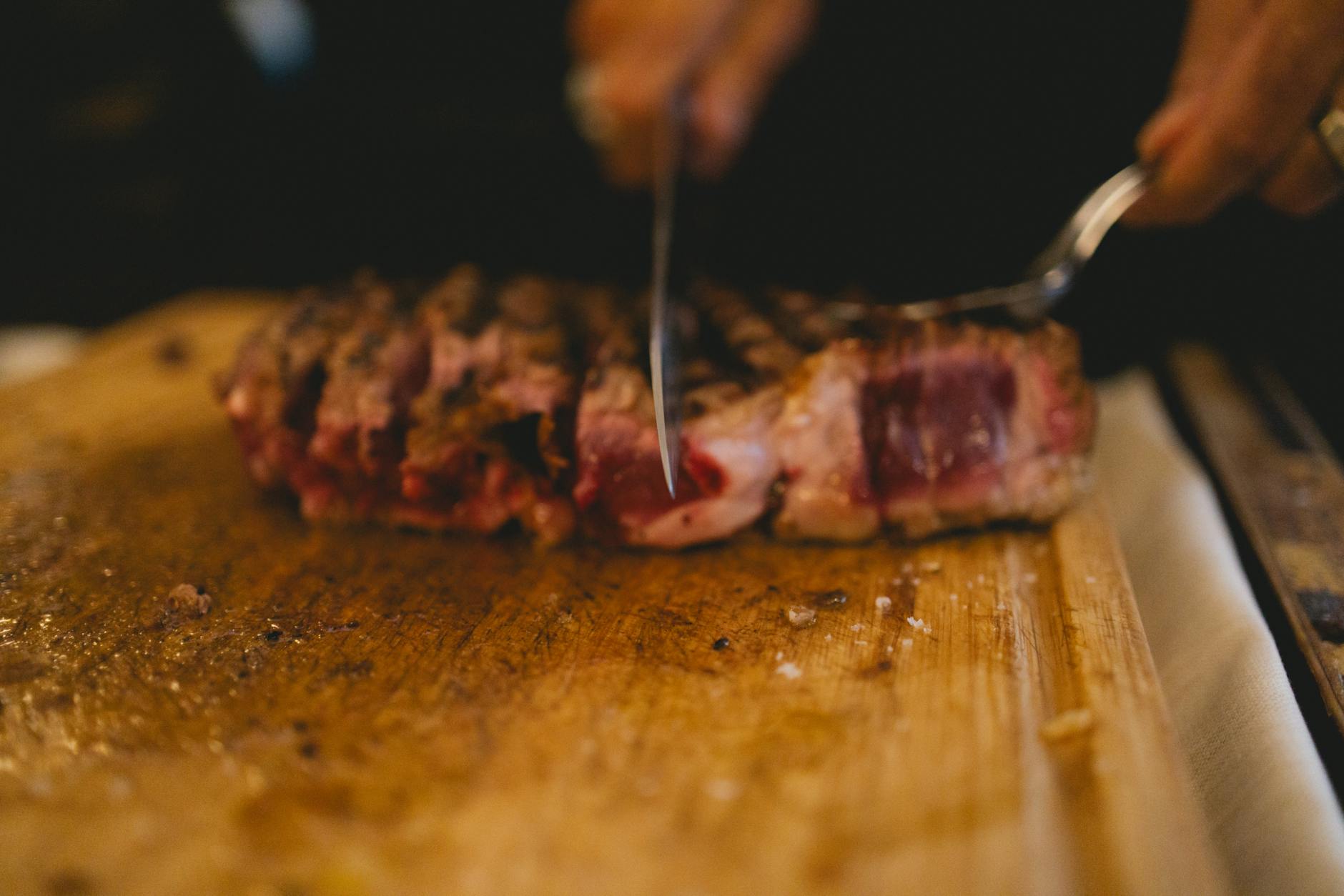
Eating in Florence is one of the great pleasures of travel. Tuscan cuisine is rooted in simplicity — the best possible ingredients, prepared with minimal fuss, and served without pretension. From a perfect plate of ribollita in a neighborhood trattoria to a transcendent gelato on the steps of a Renaissance church, food is central to the Florence experience. For many visitors, the culinary experiences are among the most memorable things to do in Florence.
Bistecca alla Fiorentina
The undisputed king of Florentine cuisine is the bistecca alla fiorentina — a massive, thick-cut T-bone steak (usually 5 to 6 centimeters thick, so the weight varies with the cut), traditionally from Chianina cattle, grilled over very hot charcoal, and served rare with nothing but salt, pepper, and a drizzle of extra virgin olive oil. Ordering it well-done is considered an insult — if you prefer your meat cooked through, order something else.
Bistecca is priced by weight (typically €50 to €70 per kilogram) and is usually shared between two people. Expect to pay €40 to €60 for a steak for two, depending on the restaurant.
Where to eat bistecca alla fiorentina:
- Trattoria Mario: No-frills, shared tables, legendary. Cash only. Near San Lorenzo Market — arrive before noon to avoid the queue.
- Buca Mario: Operating since 1886, this atmospheric basement restaurant is one of the classic bistecca destinations.
- Trattoria Sostanza (Il Troia): A tiny, beloved institution known for its bistecca and its famous butter-poached chicken breast.
- Perseus (in Fiesole): Worth the bus ride for the steak and the terrace views over Florence.
Lampredotto — Florence’s landmark Street Food
If bistecca is the fine-dining signature of Florence, lampredotto is its street-food soul. This distinctly Florentine sandwich is made from the fourth stomach of a cow, slow-simmered in a herbed broth, sliced, and served on a crusty roll (semelle) dipped in the cooking broth and topped with salsa verde (parsley sauce) and spicy sauce. It sounds challenging, but it is utterly delicious — tender, savory, and deeply flavorful.
You will find lampredotto at mobile food carts (called trippai) stationed throughout the city. Some of the best include the cart in Piazza dei Nerli (Santo Spirito area), the stand at the corner of Via dei Macci and Borgo la Croce, and Lupen e Margo near Piazza della Signoria. A lampredotto sandwich typically costs €4 to €5 — one of the best and cheapest meals in Florence.
Classic Tuscan Dishes to Try
Beyond bistecca and lampredotto, Florence’s trattorias serve a wealth of traditional Tuscan dishes that deserve attention:
- Ribollita: A thick, hearty bread soup made with cannellini beans, cavolo nero (Tuscan kale), vegetables, and stale bread, served drizzled with olive oil. The ultimate Tuscan comfort food, especially in cooler months.
- Pappa al pomodoro: Another bread soup — this one made with tomatoes, garlic, basil, and olive oil. Simple, vibrant, and quintessentially Tuscan.
- Pappardelle al cinghiale: Wide ribbon pasta with wild boar ragu — a robust, gamey pasta dish found on virtually every traditional menu.
- Crostini neri: Toasted bread spread with chicken liver pate — a classic Tuscan antipasto.
- Schiacciata: Florentine flatbread, similar to focaccia but thinner and crispier. Often filled with prosciutto, mortadella, or other cured meats. Schiacciata alla fiorentina is the sweet version — a soft sponge cake flavored with orange and dusted with powdered sugar, traditionally eaten around Carnival.
- Fagioli all’uccelletto: Cannellini beans stewed in tomato sauce with sage and garlic. Tuscans are known throughout Italy as mangiafagioli (bean eaters), and this is one of their defining dishes.
Gelato
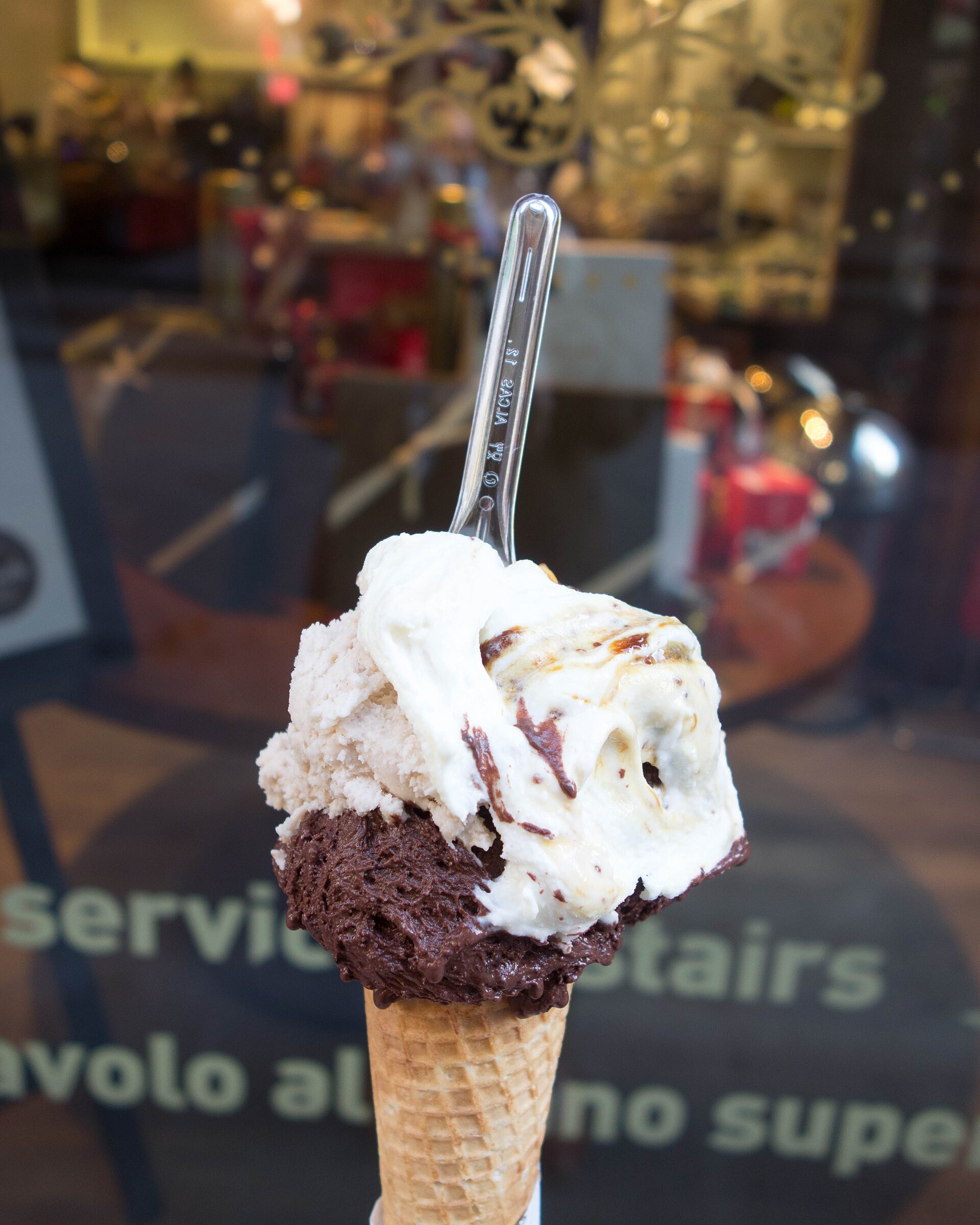
Florence has a legitimate claim to being the birthplace of gelato — the Medici court architect Bernardo Buontalenti is credited with creating the first modern frozen dessert in the 16th century. Today, the city is home to some of the finest gelaterias in Italy, though you need to know where to look. The tourist-trap shops with mountains of neon-colored, artificially flavored gelato are easy to spot (and avoid).
How to identify genuine artisan gelato:
- Look for natural, muted colors — pistachio should be grayish-green, not bright green; banana should be gray, not yellow.
- The gelato should be stored in covered metal containers (pozzetti), not piled high in dramatic mounds.
- Check if they list “produzione propria” (own production) or display a sign indicating homemade products.
- Fruit flavors should taste intensely of the fruit, not of sugar.
Best gelaterias in Florence (2026):
- Vivoli: One of the oldest gelaterias in Florence (it began as a dairy in 1929 and has made gelato since 1932), on Via Isola delle Stinche near Santa Croce. Classic flavors, rich texture, traditional style.
- Gelateria della Passera: A tiny gem in Piazza della Passera in the Oltrarno, known for creative flavors and superb quality.
- My Sugar: Artisan gelato, dense and flavorful.
- La Sorbettiera: In the Oltrarno (Piazza Tasso area), this spot is adored by locals for its sorbets and fruit-based gelato.
- Gelateria dei Neri: A traditional Florentine gelateria, one to add to your gelato crawl.
Wine Bars (Enoteche) and Aperitivo
Tuscany is one of the world’s great wine regions, and Florence is the ideal place to explore its wines. The city is dotted with enoteche (wine bars) ranging from centuries-old cellar bars to sleek modern wine lounges.
Essential wine bar experiences:
- Le Volpi e l’Uva: A small, beloved wine bar just behind Ponte Vecchio, specializing in wines from small Italian producers. Excellent cheese and cured meat pairings.
- Il Santino (and its sister restaurant Il Santo Bevitore): A tiny, atmospheric enoteca in the Oltrarno with a superb wine list and inventive small plates.
- Enoteca Pitti Gola e Cantina: Facing Palazzo Pitti, this cozy wine bar offers an expertly curated selection of Tuscan wines with views of the palace.
- Fuori Porta: At Via del Monte alle Croci 10, on the way up to Piazzale Michelangelo, this long-established enoteca (open since 1987) serves excellent crostoni (open-faced toasted sandwiches) with a vast wine selection.
The aperitivo tradition is strong in Florence. From around 6pm to 9pm, many bars offer generous buffets of snacks, salads, and small dishes included with the price of a drink (typically €8 to €12 for a cocktail). This is an affordable and very local way to eat — some Florentines make aperitivo their dinner. Popular aperitivo spots include the bars around Piazza Santo Spirito, Piazza della Repubblica, and the Lungarno Corsini area.
Cooking Classes and Food Tours
For a deeper immersion into Tuscan cuisine, a cooking class or food tour is one of the most rewarding what to see in Florence experiences — though in this case, it is what to taste. Many cooking schools offer half-day classes that typically begin with a visit to the Mercato Centrale or Sant’Ambrogio market to buy ingredients, followed by hands-on preparation of a multi-course Tuscan meal that you then sit down and enjoy.
Expect to pay €70 to €150 per person for a group cooking class. Private classes cost more but offer a more personalized experience. Food tours, typically lasting three to four hours and including multiple stops at local eateries, cost €80 to €120 per person and are an excellent way to discover neighborhood restaurants you might never find on your own.
Day Trips from Florence
Florence’s location at the heart of Tuscany makes it the perfect base for exploring one of Italy’s most beautiful regions. While you could easily spend a week in Florence itself and not run out of things to do in Florence, the surrounding countryside and hill towns are equally compelling. Here is a brief overview of the best day trips — we will cover each in greater detail in our dedicated day trips from Florence guide.
Tuscany Wine Country (Chianti, Montepulciano, and Montalcino)
The rolling hills of Chianti, stretching between Florence and Siena, are the image most people conjure when they think of Tuscany — vineyard-covered hills, cypress-lined roads, medieval villages, and stone farmhouses. A day trip through Chianti with stops at two or three wineries for tastings is one of the most popular excursions from Florence.
For serious wine enthusiasts, the hill towns of Montepulciano (home of Vino Nobile) and Montalcino (home of Brunello di Montalcino, one of Italy’s greatest wines) are slightly further afield but absolutely worth the journey. Guided wine tours from Florence typically cost €100 to €200 per person and include transportation, multiple tastings, and often a Tuscan lunch.
Siena
Florence’s historic rival, Siena is a beautifully preserved medieval city about 70 kilometers to the south. Its shell-shaped main square, the Piazza del Campo, is one of the most striking public spaces in Europe — and the site of the famous Palio horse race held twice each summer (July 2 and August 16). The striped marble cathedral, the Palazzo Pubblico, and the panoramic Torre del Mangia are all must-sees.
Siena is easily reached by bus (Autolinee Toscane’s fast 131R takes about 75 minutes from the bus station beside Santa Maria Novella) or by car (about an hour or a little more via the superstrada). A day is sufficient to see the highlights, though Siena rewards a longer stay.
Cinque Terre
The five colorful fishing villages clinging to the Ligurian coast are one of Italy’s most famous sights. While technically not in Tuscany, Cinque Terre is reachable as a (long) day trip from Florence — about 2.5 hours by train to La Spezia, then a change onto the Cinque Terre line for Riomaggiore or Monterosso, the two most accessible villages, so allow around 3 hours in all. It makes for a very full day, but the combination of dramatic coastal scenery, hiking trails, and fresh seafood is hard to beat.
Pisa
Most visitors come to Pisa for one thing — the Leaning Tower — and it does not disappoint. The Piazza dei Miracoli, with the tower, the cathedral, the Baptistery, and the Camposanto (monumental cemetery), is a UNESCO World Heritage Site and genuinely spectacular. Pisa is just one hour from Florence by train, making it one of the easiest day trips.
San Gimignano
Known as the “Medieval Manhattan” for its skyline of 14 surviving medieval towers (originally there were 72), San Gimignano is a stunningly picturesque hill town southwest of Florence. The towers, the Piazza della Cisterna, the Collegiate Church, and the sweeping views over the Tuscan countryside make it one of the most popular day trips from Florence. It can be combined with a stop in the wine town of Vernaccia di San Gimignano.
Practical Tips for Visiting Florence
A bit of planning goes a long way in Florence. These practical tips will help you make the most of your time, avoid common pitfalls, and save money.
Best Time to Visit Florence
The ideal times to visit Florence are April to mid-June and September to October. During these shoulder seasons, the weather is usually pleasant (average daytime highs climb from about 20°C / 68°F in April to about 27°C / 81°F in September), and the light is beautiful.
- Summer (July-August): The hottest time of the year. However, summer brings extended museum hours, outdoor concerts, and festivals. If you visit in summer, plan your museum visits for early morning, take a long lunch break during the hottest hours, and enjoy the cooler evenings.
- Winter (November-February): Cool and sometimes rainy, but museums are far less crowded, hotel prices drop significantly, and the city feels more authentically Italian. November can be gray and damp, but December brings Christmas markets and festive atmosphere. January and February are the quietest months.
- Spring (March-May): Gorgeous — the gardens are in bloom, the days are long, and the weather is ideal for walking. Easter week and May are busy, but early April is often perfect.
Getting Around Florence
Florence’s historic center is compact and best explored on foot. Many of the major sights sit close together, and walking is the simplest way to get between them.
- Walking: The historic center is a ZTL (Zona Traffico Limitato) — a restricted traffic zone where private vehicles are largely prohibited. This makes walking safe and pleasant. Wear comfortable shoes — the cobblestones are charming but unforgiving.
- Buses: Autolinee Toscane (AT) buses, formerly ATAF, are useful for reaching outlying areas (Piazzale Michelangelo, Fiesole, Cascine Park) and connecting to the train station. A single ticket costs €2.00 and is valid for 90 minutes on buses and trams. Buy tickets from newsstands or tobacco shops before boarding.
- Taxis: Available at designated ranks (train station, Piazza della Repubblica, Piazza Santa Croce) or by phone. Rides within the center typically cost €8 to €15. Uber operates in Florence through its Uber Black service.
- Bicycles and e-scooters: Several bike-sharing and scooter-sharing services operate in Florence. Cycling is becoming more popular, though the cobblestone streets and narrow sidewalks require confidence.
Skip-the-Line Strategies
Lines at major Florence attractions can be brutal, especially between April and October. Here is how to minimize waiting:
- Book timed-entry tickets online for the Uffizi, Accademia, and Dome Climb. This is non-negotiable in peak season — walk-up queues can exceed two hours.
- Visit major museums during off-peak hours: first thing in the morning (8:15am) or in the last two hours before closing. The Uffizi’s ticket from 4pm costs €16 instead of €25 on the day.
- Visit on weekdays: Weekends and Mondays (when the Uffizi and Accademia are closed, pushing crowds to other attractions) are the busiest.
- Consider the Firenze Card (currently around €85, valid for 72 hours) if you plan to visit many museums. It gives priority entry (museums that require a reservation still need one) and covers most state and city museums. The math only works in your favor if you visit plenty of paid attractions in those three days.
Money-Saving Tips
- Free museum days: State museums (including the Uffizi and Accademia) are free on the first Sunday of each month. However, they are extremely crowded — arrive before opening.
- Free attractions: Many of Florence’s best experiences cost nothing: entering the Duomo, crossing the Ponte Vecchio, visiting Piazzale Michelangelo, browsing the San Lorenzo Market, admiring the sculptures at Piazza della Signoria and the Loggia dei Lanzi, visiting the Rose Garden, and wandering the Oltrarno artisan quarter.
- Eat like a local: Skip the restaurants directly facing major piazzas (marked up for tourists) and walk two streets back. A lampredotto sandwich from a street cart costs under €5 and is one of the best meals in the city. Aperitivo buffets offer a full meal for the price of a drink.
- Buy wine at enoteche, not restaurants: A bottle of excellent Chianti Classico costs €10 to €20 at a wine shop versus €30 to €50 at a restaurant.
Safety in Florence
Florence is generally very safe for tourists, but standard city precautions apply:
- Pickpockets: Active in crowded areas, especially around the Duomo, Ponte Vecchio, train station, and on buses. Wear a cross-body bag, keep valuables in front pockets, and be alert in crowds.
- Scams: Beware of unauthorized “guides” at major attractions, street vendors trying to place bracelets on your wrist, and clipboard petition scams. A polite but firm “no” is sufficient.
- Traffic: While the center is largely car-free, watch out for aggressive scooters and bicycles on narrow streets. Look both ways — Florentine scooter drivers do not always respect pedestrian crossings.
Where to Stay in Florence
Florence’s accommodation ranges from budget hostels to top-tier luxury hotels. The city is compact enough that you can walk to most attractions from any central neighborhood, but each area has its own character:
- Duomo / Centro Storico: Maximum convenience, steps from everything, but can be noisy and the most expensive.
- Santa Croce: Slightly east of center, more residential feel, excellent restaurants, walking distance to the Uffizi and Accademia.
- Oltrarno / Santo Spirito: Across the river, artisan atmosphere, best neighborhood restaurants, close to Palazzo Pitti and Boboli Gardens. Our top pick for first-time visitors who want authentic character with easy access.
- San Lorenzo / San Marco: Near the central market and train station, convenient and slightly more affordable, though less charming at night.
- Santa Maria Novella: Near the main train station, convenient for arrivals and departures, mix of modern hotels and historic residences.
We will cover accommodation in much more detail in our upcoming where to stay in Florence guide. For now, our top advice is to book early for peak season (April through October), look for apartments if you are staying more than three nights (better value and the ability to shop at markets), and prioritize location over luxury — in Florence, being central means saving time and bus fares while being immersed in the atmosphere.
Frequently Asked Questions About Things to Do in Florence
How many days do you need in Florence?
We recommend a minimum of three full days to see Florence’s highlights without feeling rushed. This gives you enough time for the Uffizi, the Accademia, the Duomo complex, a riverside walk, and some leisurely meals. With four to five days, you can explore the Oltrarno artisan quarter, visit Palazzo Pitti and the Boboli Gardens, make a day trip to Chianti or Siena, and truly soak in the atmosphere. A full week allows you to see virtually everything on this list at a relaxed pace, including a couple of day trips. Even two weeks would not exhaust Florence’s offerings — many visitors return year after year and still discover new favorites.
Is Florence expensive to visit?
Florence is moderately expensive compared to other Italian cities, roughly on par with Rome and less expensive than Milan or Venice. Museum admissions can add up quickly (the Uffizi at €25, Accademia at €20 plus €4 to book, Brunelleschi Pass at €30), but there are many free attractions including the Duomo interior, Ponte Vecchio, Piazzale Michelangelo, and numerous churches. Dining ranges from €4 lampredotto sandwiches to €100+ fine dining meals. A mid-range budget of €150 to €200 per person per day (including accommodation, meals, and attractions) is realistic for a comfortable visit. Budget travelers can manage on €80 to €100 per day with hostels, market lunches, and selective museum visits.
What is the best time of year to visit Florence?
The best time to visit Florence is during the shoulder seasons: April to mid-June and September to October. During these periods, the weather tends to be mild to warm, with average highs of about 20°C (68°F) in April rising to about 27°C (81°F) by September, and the gardens are in bloom or showing autumn colors. July and August are very hot and extremely crowded. Winter (November through February) is the least crowded and cheapest time to visit, with cool, damp weather (average daytime highs of about 11-16°C / 52-61°F and overnight lows of about 2-6°C / 36-43°F) and more rain. The Christmas season adds a festive atmosphere and markets.
Should I buy a Florence Card or Firenze Card?
The Firenze Card (approximately €85, valid for 72 hours from your first museum entry) includes access to more than 60 museums and attractions, plus priority entry, though museums that require a reservation still need one. It only pays for itself if you pack plenty of paid museums into three days — for example, the Uffizi (€25), Accademia (€20) and Palazzo Pitti (€16) come to €61 at individual prices, and the Duomo monuments are not included (they need their own pass). However, if you are selective and only planning to visit two or three museums, buying individual timed-entry tickets online is more economical. The card does not include guided tours or special exhibitions. Consider your itinerary carefully before deciding.
Can you visit Florence with kids?
Absolutely. Florence is a wonderful destination for families. Children under 18 get free admission to all state museums (including the Uffizi and Accademia). The dome climb and bell tower are exciting adventures for older children, the Boboli Gardens offer space to run and explore, Piazzale Michelangelo has a playground nearby, and the gelato alone will win over any reluctant young traveler. The city’s compact size means minimal public transport is needed, and the pedestrian-friendly center is safe and stroller-accessible (though cobblestones can be bumpy). Consider renting an apartment for family stays — the extra space and kitchen access make a big difference with children.
What should I not miss in Florence if I only have one day?
If you have just one day in Florence, prioritize these experiences: Start with the Duomo (enter the cathedral for free, and climb the dome if you have pre-booked). Then walk to the Uffizi Gallery (pre-book a timed-entry ticket, spend two hours on the highlights). Have lunch at the Mercato Centrale or a lampredotto cart near the San Lorenzo Market. After lunch, walk across the Ponte Vecchio and through the Oltrarno to Piazza Santo Spirito. In the late afternoon, walk up to Piazzale Michelangelo for sunset views over the entire city. End the day with a traditional Tuscan dinner in the Oltrarno. If time allows, add a quick visit to Piazza della Signoria and the Loggia dei Lanzi (free, open-air sculptures) between the Duomo and the Uffizi.
Is Florence safe for solo travelers?
Florence is very safe for solo travelers, including solo women. The historic center is well-lit, heavily frequented even at night, and serious crime against tourists is rare. The main concerns are petty pickpocketing in crowded tourist areas and the occasional pushy street vendor. Standard precautions — keeping valuables secure, being aware of your surroundings in crowds, and avoiding poorly lit backstreets late at night — are sufficient. Solo dining is perfectly normal and comfortable in Florence; many trattorias have communal tables where you might end up sharing a meal with fellow travelers or friendly locals.
What are the best free things to do in Florence?
Florence offers an impressive number of free experiences. You can enter the Florence Cathedral (Duomo) for free, walk across the Ponte Vecchio at any time, visit Piazzale Michelangelo for panoramic views, browse the San Lorenzo Market, admire the sculptures at Piazza della Signoria and the Loggia dei Lanzi, explore the Rose Garden below Piazzale Michelangelo, visit the church of Orsanmichele, wander the Oltrarno artisan quarter, and enter many of Florence’s churches (including San Miniato al Monte). On the first Sunday of each month, state museums like the Uffizi and Accademia offer free admission. Simply walking through Florence’s historic center is itself a free, open-air museum experience.
Do I need to book Uffizi and Accademia tickets in advance?
Yes, we strongly recommend booking timed-entry tickets online in advance for both the Uffizi Gallery and the Galleria dell’Accademia. During peak season (April through October), walk-up queues can exceed two hours, and popular time slots sell out days or weeks ahead. In 2026, Uffizi tickets are €25 on the day or €29 booked (or €16 from 4pm), and Accademia tickets are €20 plus a €4 booking fee (or €26 for a 48-hour ticket combined with the Bargello). Book through the official museum websites or authorized resellers. Even in the quieter winter months, advance booking saves significant time and guarantees your preferred visiting window.
What is the dress code for churches in Florence?
A modest dress code is enforced at the Florence Cathedral (Duomo) and most churches in the city. Both men and women must have shoulders covered and knees covered — no tank tops, sleeveless shirts, short shorts, or mini skirts. The rule is taken seriously at the Duomo, where guards will turn you away if you are not properly dressed. In summer, carry a light scarf or shawl in your bag that you can drape over your shoulders when entering churches. Some smaller churches may be less strict, but it is respectful to follow the dress code everywhere.
If there is one mistake to avoid in Florence, it is trying to see everything. The city’s best moments tend to be the unplanned ones — a side-street bottega you wandered into, vespers drifting out of San Miniato at dusk, a second glass of Chianti you had not meant to order. Build each day around two or three anchors, book those tickets in advance, and leave the rest loose.
Use the sections above to match the things to do in Florence to your trip: museums and the Duomo for first-timers, viewpoints and the Oltrarno for return visitors, a Tuscan day trip when you have more than a couple of days. Comfortable shoes, a scarf for church visits, and an early start will do more for your trip than any single attraction on the list.
The single sight no visitor skips is the cathedral complex — our Florence Duomo guide covers the dome climb, the baptistery and how to sequence all five tickets.