This article contains advertising. Our booking links are routed through a partner that adds commission tracking automatically, so if you book through one we earn a commission from the provider, at no extra cost to you. It never affects what we recommend. Affiliate disclosure
Florence Food Guide: What & Where to Eat in Florence
You could spend a week in Florence visiting every museum, crossing every bridge, and photographing every rooftop at golden hour — and still leave feeling like you missed the point. Because in Florence, the truest art isn’t hanging on a gallery wall. It’s simmering in a pot of ribollita, pressed into a schiacciata sandwich, or drizzled over a slab of Chianina beef that’s been grilled over a wood fire and served still blushing at the bone.
Food in Florence Italy isn’t simply sustenance — it’s culture, history, and identity compressed into every bite. This is the city that gave the world Catherine de’ Medici, who is often credited (with varying degrees of historical accuracy) with bringing refined cooking to France. It’s a city where grandmothers still make pasta by hand on Sunday mornings, where market vendors have known their suppliers for generations, and where a perfectly pulled espresso is considered a matter of civic pride.
This guide is your complete companion to navigating Florentine food culture. Whether you’re hunting down the city’s best lampredotto cart, decoding a wine list full of Sangiovese-based reds, or simply trying to figure out why ordering a cappuccino after noon will earn you a look of quiet horror from a local barista — we’ve got you covered.
This is not a list of tourist-friendly restaurants that serve pasta with cream sauces and charge €22 for it. This is the real Florence food guide: the dishes that have sustained this city for centuries, the neighborhoods where real Florentines actually eat, the markets that have been operating since before your country may have existed, and the practical knowledge that separates a first-time visitor from someone who actually understands this cuisine.
Ready? Let’s eat.
In This Guide
- Understanding Florentine Cuisine
- Must-Try Florentine Dishes
- Best Food Neighborhoods
- Florence’s Historic Food Markets
- The Art of Gelato in Florence
- Wine & Aperitivo Culture
- Coffee Culture: Order Like a Local
- Dining Etiquette & Practical Tips
- Florence Food Budget Guide 2026
- Cooking Classes & Food Tours
- Seasonal Food Calendar
- Frequently Asked Questions
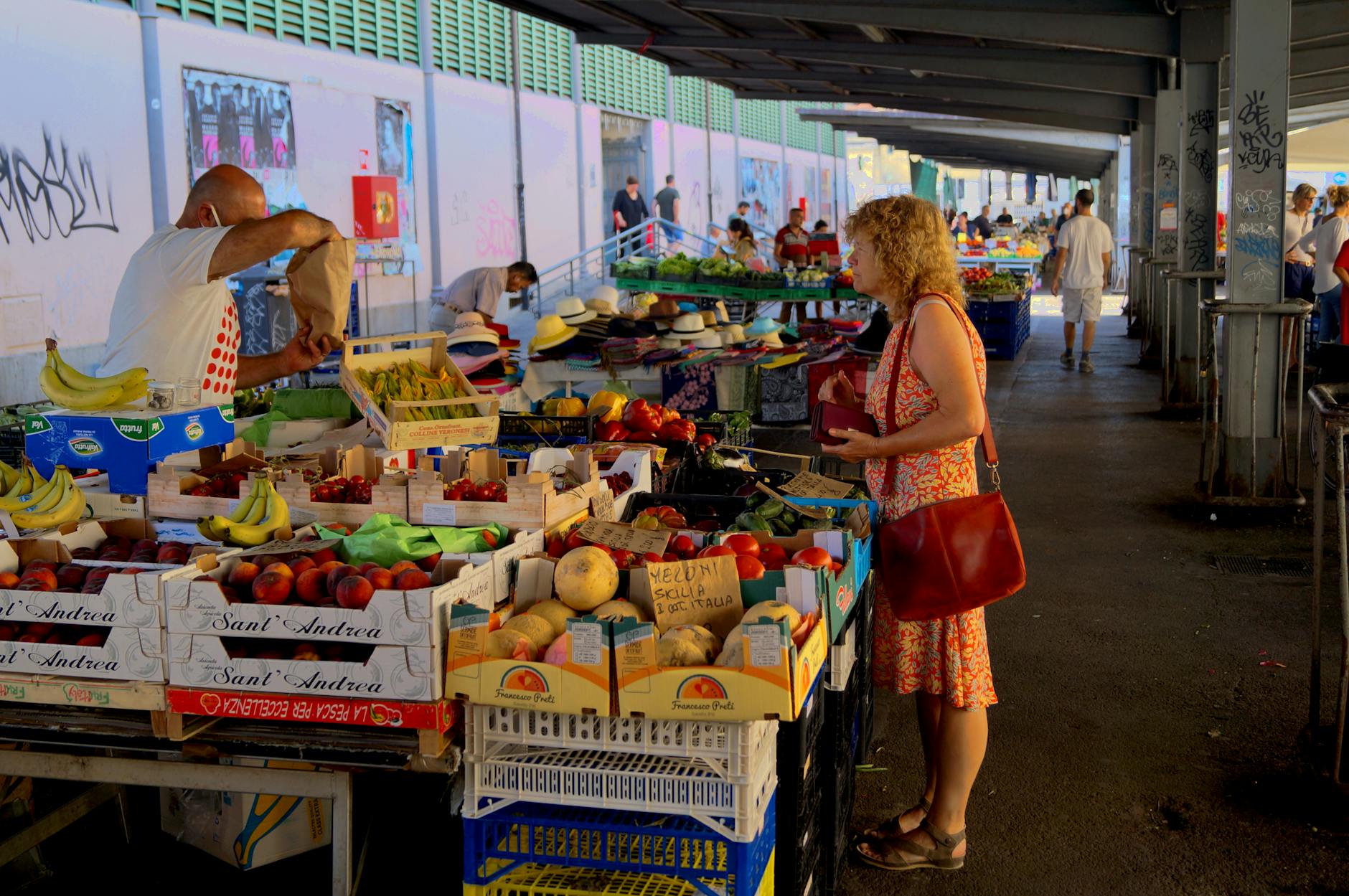
Eating well in Florence is less about finding one perfect restaurant than about knowing the rhythm of the day — a standing espresso at the bar in the morning, a lampredotto roll from the street food carts at lunch, and a slow aperitivo before dinner while the light goes gold over the rooftops.
If you would rather have somebody explain the salumi counter than guess at it, our Florence food tours guide compares the tours worth booking — and the ones that are an expensive walk with snacks.
Understanding Florentine Cuisine: The Philosophy Behind the Food
Before you can truly appreciate food in Florence Italy, you need to understand the philosophy that underpins it. And that philosophy has a name: cucina povera.
Translated literally as “poor cooking” or “peasant cooking,” cucina povera is the culinary tradition born of necessity in Tuscany’s agrarian past. When your pantry is limited — stale bread, dried beans, whatever vegetables grew in the garden this week, scraps of meat — you learn to transform humble ingredients into something extraordinary. You don’t waste. You reinvent. You make a virtue of simplicity.
The result is a cuisine that is, paradoxically, both completely straightforward and deeply sophisticated. Every dish on a traditional Florentine table arrives with the confidence of something that doesn’t need to prove itself. There are no elaborate sauces masking inferior ingredients, no fusion flourishes, no unnecessary complexity. When a dish is just tomatoes, bread, and good olive oil, those three ingredients had better be spectacular — and in Florence, they are.
Why Tuscan Bread Has No Salt
One of the first things visitors notice about Florentine food is the bread: it’s completely unsalted. Take a bite of pane sciocco (literally “silly bread”) and your immediate reaction is that something has gone wrong in the kitchen. It hasn’t.
The origins of salt-free Tuscan bread are debated. Some historians trace it to a tax on salt imposed in the Middle Ages that made the ingredient prohibitively expensive for ordinary people. Others argue it was simply a practical decision — unsalted bread keeps longer, and it doesn’t compete with the strong, salty flavors of cured meats and aged cheeses that accompany it. Whatever the reason, this bread is now deeply embedded in Florentine food culture.
More importantly, unsalted bread is essential to Florentine cooking. It’s what makes ribollita work — the bread absorbs the broth and thickens the soup without adding salt to an already carefully seasoned dish. It’s what gives pappa al pomodoro its particular texture. It’s perfect for soaking up the juices from a bistecca or dragging through a puddle of good olive oil. Once you understand this, the bread makes complete sense.
The Seasonal Imperative
Florentine cuisine is fundamentally seasonal in a way that most Western food cultures have largely abandoned. A traditional Florentine restaurant doesn’t serve the same menu year-round. In autumn, expect ribollita and mushroom dishes. In summer, fresh tomatoes and cold cuts dominate. Spring brings artichokes and fresh peas. Winter is for hearty bean soups and braised meats.
This isn’t a marketing strategy — it’s simply how Tuscan cooking has always worked. Ingredients are used when they are best, which is when they’re at their cheapest and most abundant locally. The result is that the simplest dish, eaten in the right season, can be transcendent.
When you’re planning what to eat, think about what month you’re visiting. A summer trip means eating differently than a winter one — and that’s not a constraint, it’s an opportunity.
Tuscan Olive Oil: The Foundation of Everything
If there’s a single ingredient that ties all Florentine cooking together, it’s extra virgin olive oil from Tuscany. Cold-pressed from olives grown in the hills around Florence, good Tuscan olive oil is grassy, peppery, and slightly bitter in a way that distinguishes it immediately from the bland, anonymous olive oils sold in supermarkets worldwide.
Fettunta — literally “greased slice” — is the purest expression of this: a thick slice of unsalted bread grilled over a wood fire, rubbed with raw garlic, and flooded with new-season olive oil. It is served in November when the olive oil harvest begins, and it is essentially perfect. Don’t overlook it if you visit in autumn.
The Medici Legacy
Florence’s culinary identity was also shaped significantly by the Medici family, who ruled the city for much of the Renaissance. The Medicis were patrons of agriculture as well as art — they encouraged the cultivation of diverse crops across their estates, experimented with new vegetables brought back from the Americas (tomatoes, beans), and maintained a court cuisine that combined luxury with restraint.
Catherine de’ Medici’s move to France in 1533 as the wife of the future Henry II is often cited, perhaps with some exaggeration, as the moment that introduced French cuisine to proper culinary technique. Whatever the truth of that claim, Florence’s food culture has always been confident enough in itself not to need external validation.
Must-Try Florentine Dishes: A Complete Guide
The following dishes represent the core of Florentine cuisine — the foods that locals actually eat, that have been on menus here for generations, and that you simply cannot leave without trying. We’ve organized them the way an Italian meal is structured: antipasti (starters), primi (first courses), secondi (main courses), street food, and desserts.
Antipasti & Starters
Crostini di Fegato (Chicken Liver Crostini)
Before you recoil at the words “chicken liver,” understand that crostini di fegato are as fundamental to a Florentine meal as bread and olive oil. Thin slices of toasted bread are spread with a smooth, savory paste made from chicken livers, capers, anchovies, and a splash of Vin Santo — and the result is deeply umami, rich without being heavy, and completely unlike what you might expect from liver.
This is the quintessential Florentine antipasto and it appears on virtually every traditional trattoria menu in the city. Order it first, with a glass of whatever local red the waiter recommends, and let it set the tone for the meal.
Schiacciata (Florentine Flatbread)
Schiacciata — from the Italian word for “squashed” — is Florence’s answer to focaccia, though any Florentine will tell you (correctly) that they are not the same thing. This olive oil-rich flatbread is dimpled, salted, and can be eaten plain or stuffed with prosciutto, finocchiona (fennel salami), or fresh vegetables as a sandwich.
In autumn, look for schiacciata con l’uva (with wine grapes), a sweet seasonal version made during the grape harvest that is one of the city’s great autumnal treats. In February and March, schiacciata alla fiorentina appears — a soft, sponge-like sweet cake dusted with powdered sugar that is traditional during Carnival.
Primi (First Courses)
Ribollita
If there is one dish that embodies cucina povera more completely than any other, it’s ribollita. The name means “reboiled” — because this soup was traditionally made in large batches, refrigerated overnight, and then boiled again the next day, which actually improves it considerably.
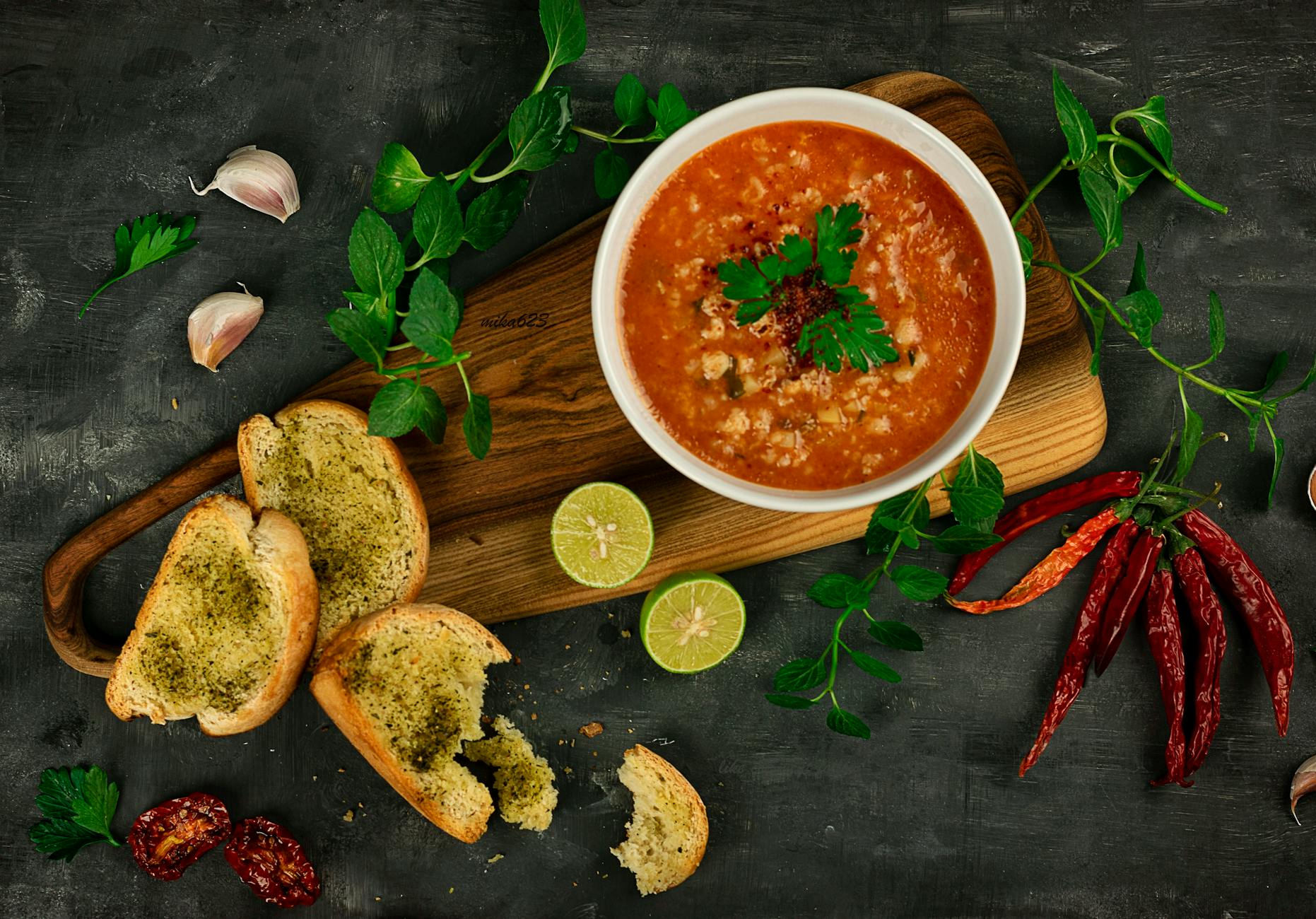
At its core, ribollita is a thick soup of cannellini beans, cavolo nero (Tuscan black kale), carrots, celery, onions, and thick slices of day-old unsalted bread. The bread breaks down and thickens the broth, giving the soup a dense, stew-like consistency that is deeply warming. A generous pour of raw olive oil goes on top just before serving.
This is quintessentially winter food — best eaten from November through March. If you’re visiting in summer and find ribollita on the menu, it will still be good, but eating it in a Florentine trattoria on a cold November evening, with the city streets dark and the windows fogged, is a different experience entirely.
Pappa al Pomodoro
Another cucina povera classic, pappa al pomodoro is the dish that turns stale bread and ripe tomatoes into something genuinely comforting. Chunks of yesterday’s bread are simmered in a tomato broth with garlic, fresh basil, and olive oil until they break down completely into a thick, porridge-like consistency — pappa actually means “mush” or “baby food,” which tells you something about the texture.
Like ribollita, the quality of this dish depends entirely on the quality of its ingredients. Watery supermarket tomatoes will give you watery soup. The sweet, deeply flavored tomatoes of the Tuscan summer will give you something you’ll think about for years. This is a summer dish at its best — but good versions appear year-round in quality restaurants.
Pappardelle al Cinghiale (with Wild Boar)
Wild boar (cinghiale) roams the hills of Tuscany in significant numbers, and Florentine chefs have been cooking it for centuries. The most classic preparation is a rich, slow-cooked ragù — boar braised with red wine, juniper berries, rosemary, and sometimes a touch of dark chocolate — served over wide, flat pappardelle pasta.
The result is intensely savory, with a depth of flavor that takes hours to achieve and can’t be rushed. This is autumn and winter food, best when the boar has been fattening on chestnuts and acorns in the forest.
Pasta e Fagioli (Pasta and Beans)
Another expression of the cucina povera tradition, pasta e fagioli is a thick soup of dried cannellini beans, short pasta (typically ditalini), and vegetables. It’s deeply satisfying, filling, cheap to make, and absolutely delicious when done properly — which requires good beans (dried, not canned), a rich base of soffritto, and plenty of time.
Don’t mistake simplicity for insignificance here. A bowl of this in a good Florentine trattoria will be one of the most memorable things you eat.
Secondi (Main Courses)
Bistecca alla Fiorentina
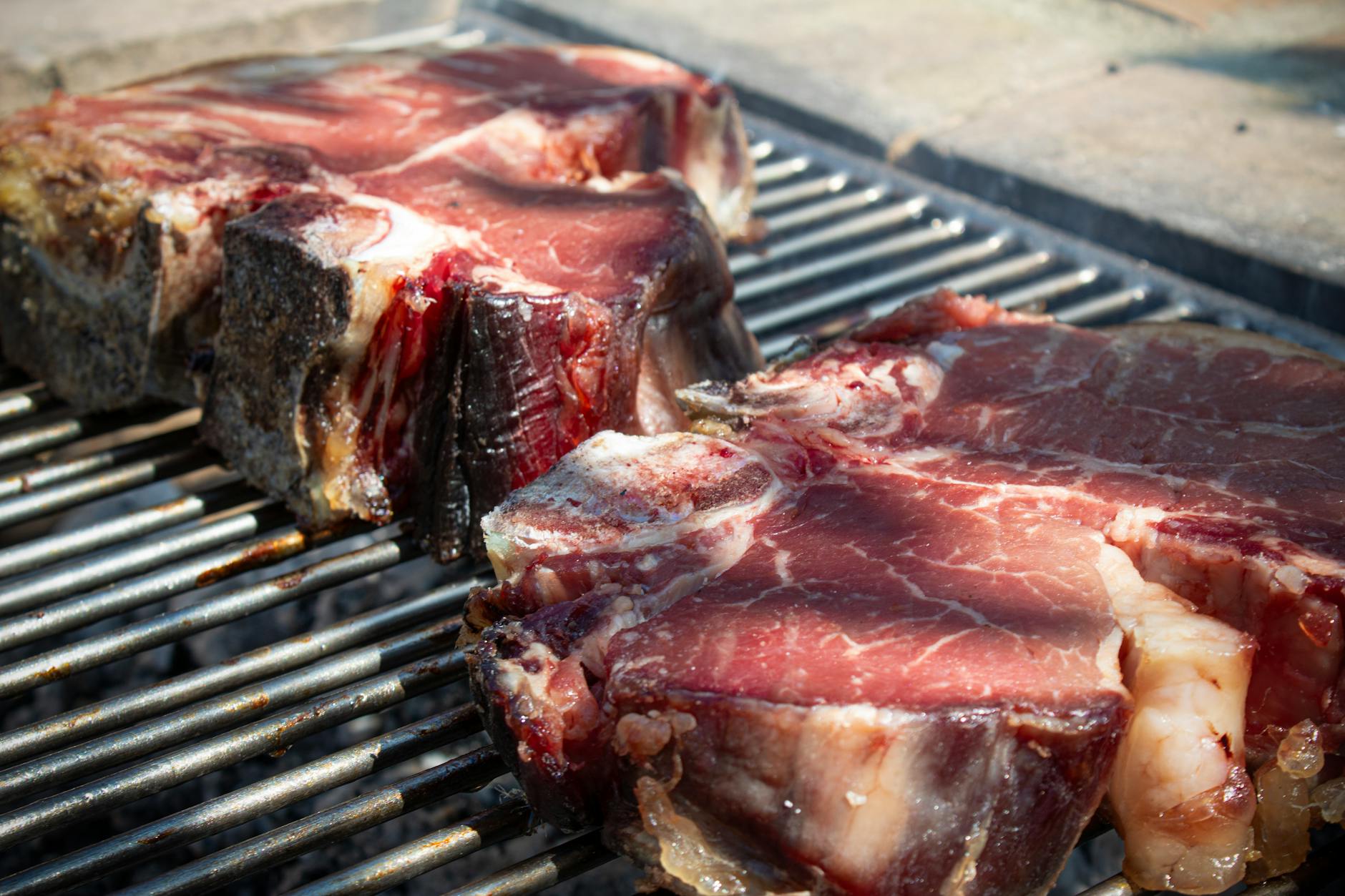
This is the king of Florentine cuisine, the dish that puts Florence on the global culinary map, and one of the truly great preparations of beef anywhere in the world. A bistecca alla Fiorentina is a T-bone steak cut from the loin of a Chianina or Maremmana cattle — massive, ancient Tuscan breeds that produce beef with extraordinary flavor and texture.
The cut must be at least 600 grams, though portions of 800g to 1kg are common. It’s grilled over a wood or charcoal fire at extremely high heat, quickly seared on both sides, and served al sangue — rare, with the center still cool and deeply pink. This is not negotiable. If you ask for it well-done, you will almost certainly be refused. At minimum, your waiter will explain, with patience born of long experience, that you’re making a mistake.
Seasonings are minimal: coarse salt, black pepper, a drizzle of olive oil, and perhaps some fresh rosemary. The quality of the beef does the work. Bistecca is usually priced by weight — expect to pay €50-80 for a full steak, often listed as €5-8 per 100 grams.
Eat it with a glass of Chianti Classico or Brunello di Montalcino. Everything else on the table is supporting cast.
Trippa alla Fiorentina (Florentine Tripe)
Offal — the internal organs of animals — is central to genuine Florentine cucina povera. When poor families historically slaughtered an animal, nothing was wasted. The city’s love of offal persists today in two dishes you’ll see everywhere: trippa and lampredotto.
Trippa alla Fiorentina is beef tripe (specifically honeycomb tripe) slow-cooked in a tomato sauce with celery, carrots, and onion, finished with Parmigiano-Reggiano. It’s rich, savory, and has a tender-but-slightly-chewy texture that trips people up only when they overthink what they’re eating. Focus on the sauce, and you’ll be fine.
Tripe is serious comfort food for Florentines — it’s the kind of dish that grandfathers talk about nostalgically and that upscale restaurants now serve on small plates for three times what a local trattoria charges.
Lampredotto
If trippa is the gateway drug to Florentine offal culture, lampredotto is the deep end of the pool. This is the fourth stomach of a cow — the abomasum — boiled in a broth of tomatoes, onion, parsley, and celery until very tender, then sliced and loaded into a semella roll (a round, soft bread that has been dipped in the cooking broth to moisten it) and topped with a green herb sauce (salsa verde) or a spicy red sauce (salsa piccante).
Lampredotto is street food in its truest sense — it’s sold from carts (trippai) around the city, particularly in market areas. The smell alone is enough to tell you you’ve found the real thing. This is not beautiful food. It is serious, direct, honest food — the kind that has been feeding Florentine workers since the Middle Ages.
If you are going to eat one challenging thing in Florence, make it lampredotto. Go to a trippaio cart (not a tourist restaurant), stand at the counter, and eat it with both hands. You will understand something about this city that no museum can teach you.
Arista di Maiale (Roast Pork Loin)
A Florentine Sunday classic: pork loin rolled with rosemary, garlic, fennel seeds, and black pepper, then roasted slowly until the skin is crackling-crisp and the meat is judiciously pink. The name arista is said to derive from the Greek word for “best” — supposedly exclaimed by Greek bishops attending the Council of Florence in 1439 when they first tasted it.
Whether or not that story is true, it’s a magnificent piece of pork. Find it at traditional family trattatorie on Sundays, or at the Mercato Centrale prepared food counters any day of the week.
Street Food
Lampredotto Sandwich (recap)
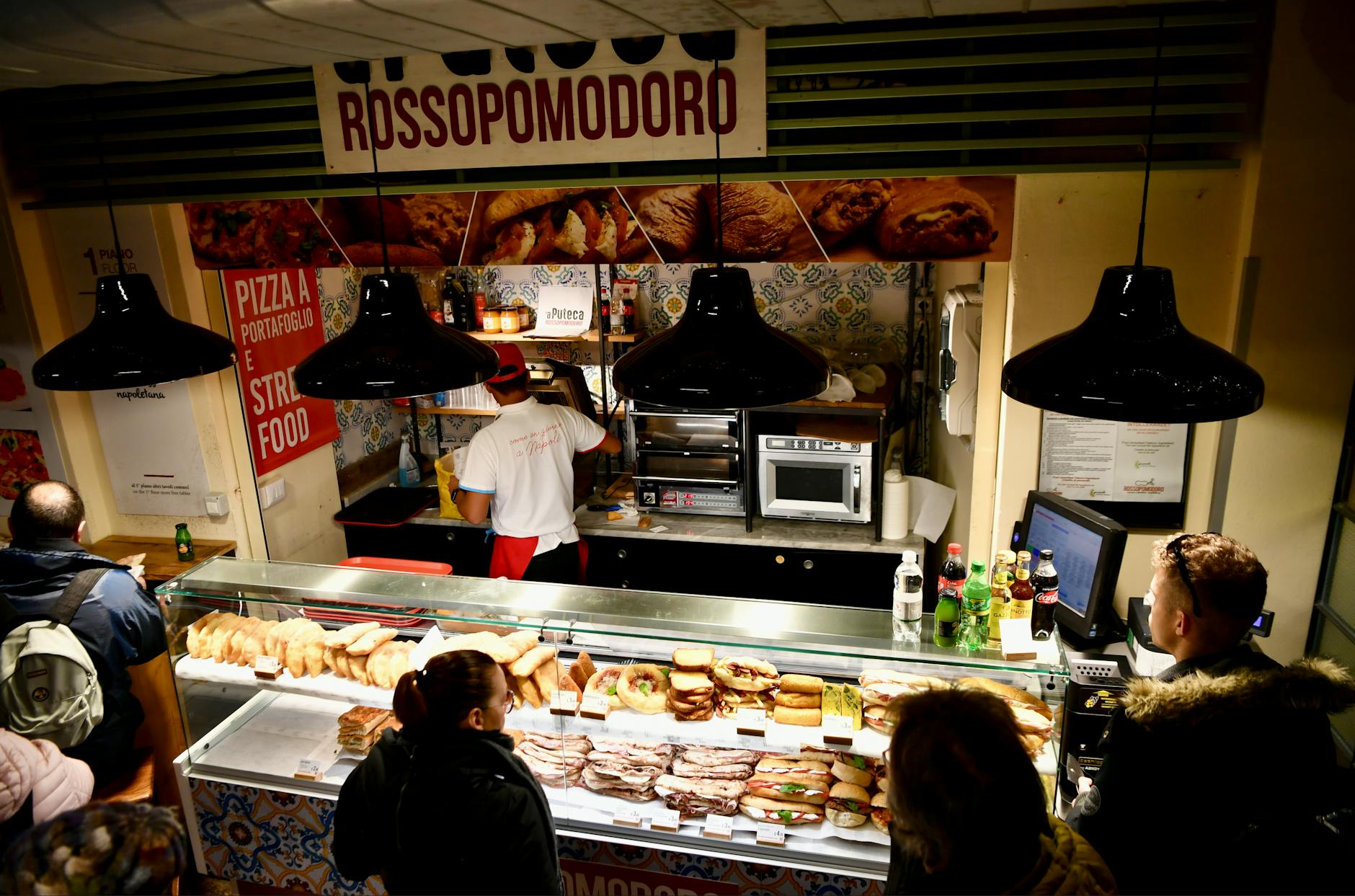
Already described above, but worth reinforcing: the lampredotto sandwich from a good trippaio cart is one of the defining street food experiences in Italy. Nerbone in the Mercato Centrale is among the most accessible entry points; the Trippaio di San Frediano in the Oltrarno is favored by locals.
Schiacciata Sandwiches
Bakeries and small sandwich shops (alimentari) across Florence stuff schiacciata with everything from Tuscan prosciutto and pecorino to mortadella and fig jam. This is the Florentine version of the lunch sandwich — eaten standing up, very quickly, usually accompanied by a sparkling water.
Coccoli con Stracchino
Coccoli — literally “cuddles” — are fried dough balls, light and crispy on the outside, pillow-soft inside, served hot and piled in a paper cone. The classic accompaniment is stracchino cheese (creamy and slightly tangy) and ribbons of speck or prosciutto crudo. They’re bar food, aperitivo food, street fair food — simple, indulgent, and addictive.
Desserts & Sweet Things
Cantucci e Vin Santo
The traditional Florentine dessert is not a slice of cake or a pastry — it’s a handful of almond-studded biscotti (cantucci) and a small glass of amber-colored Vin Santo (holy wine), a sweet, nutty dessert wine made from dried Trebbiano and Malvasia grapes that are pressed late in the season.
The ritual is to dip the crunchy biscotto into the Vin Santo until it has absorbed just enough wine to soften without falling apart. It’s a perfect end to a meal — not too heavy, pleasantly sweet, and a wonderful excuse to stay at the table a little longer.
Budino di Riso (Rice Pudding)
Florence’s version of rice pudding is vastly different from the wan, institutional versions you may have encountered elsewhere. Here, it’s baked in individual tart shells with a crispy pastry base, scented with vanilla and lemon zest, and usually sold in bakeries as a mid-morning snack. Find it in any decent pasticceria — it’s a genuinely distinctive local thing.
Gelato
Covered in detail in its own section below, but it belongs on this list as an essential Florentine food experience. There are several dozen good gelaterias in Florence. There are also several hundred bad ones. Knowing the difference matters.
| Dish | Category | Best Season | Where to Find It | Average Price |
|---|---|---|---|---|
| Bistecca alla Fiorentina | Secondo | Year-round | Traditional trattatorie, steakhouses | €50–80 (per steak) |
| Ribollita | Primo | Autumn–Winter | Trattatorie, market restaurants | €9–14 |
| Lampredotto sandwich | Street food | Year-round | Trippaio carts, Mercato Centrale | €4–6 |
| Pappa al Pomodoro | Primo | Summer | Trattatorie | €9–13 |
| Crostini di Fegato | Antipasto | Year-round | Any traditional trattoria | €6–10 |
| Trippa alla Fiorentina | Secondo | Year-round | Trattatorie, market counters | €10–16 |
| Pappardelle al Cinghiale | Primo | Autumn–Winter | Trattatorie, osterias | €12–16 |
| Arista di Maiale | Secondo | Year-round | Sunday trattatorie, deli counters | €12–18 |
| Schiacciata | Street food / snack | Year-round | Bakeries, alimentari | €3–6 |
| Cantucci e Vin Santo | Dessert | Year-round | All restaurants | €6–10 |
| Budino di Riso | Dessert / snack | Year-round | Bakeries, pasticcerie | €2–3 |
| Coccoli con Stracchino | Street food / aperitivo | Year-round | Bars, enotecas, trattatorie | €7–10 (shared) |
Where to Eat in Florence: Best Food Neighborhoods
Florence is not a large city — the historic center is only a few kilometers across — but different neighborhoods have very different culinary personalities. Eating in the right neighborhood for your goals makes a meaningful difference to the quality of your experience.
Sant’Ambrogio: The Most Authentic Food Quarter
If you want to eat where actual Florentines eat — not tourists, not expats on Instagram, but the kind of people who’ve been coming to the same table for thirty years — Sant’Ambrogio is where you want to be. This neighborhood in the eastern part of the city center, clustered around the Piazza Sant’Ambrogio and its market, is arguably Florence’s most genuine food destination.
The area’s anchor is the Mercato di Sant’Ambrogio (covered in its own section below), which has supplied local households and restaurants since 1873. The trattatorie around the market are the kind of places where lunch is still the main event of the day — long, multi-course, accompanied by house wine in unlabeled carafes.
What to eat here: Traditional Tuscan cooking at its most straightforward — ribollita, bistecca, lampredotto, house pasta. No fusion, no menu in five languages, no tableside theatrics.
Price range: Budget to mid-range. A full lunch with wine rarely tops €25 per person.
Best for: Visitors who want authentic Florentine dining without the tourist-center pricing.
Oltrarno & Santo Spirito: Hip, Local, and Excellent Value
Cross the Ponte Vecchio or Ponte Santa Trinita and you’re in the Oltrarno — literally “the other side of the Arno” — a neighborhood that has always maintained a distinct identity from the centro storico. This is where Florentine artisans, students, and young professionals live, and the food scene reflects that: slightly more creative, deeply local, and very good value.
The area around Piazza Santo Spirito is particularly lively, with outdoor seating (weather permitting) that fills with a genuinely mixed crowd of locals and in-the-know visitors. The nearby streets — Via dei Serragli, Borgo San Frediano, Via Romana — are full of trattatorie, wine bars, and buchi (literally “holes” — tiny wine bars that serve food).
What to eat here: Traditional Florentine cooking with some modern interpretations, good cheese and salumi boards, natural wines, excellent aperitivo culture. Also home to some of the city’s best gelaterias.
Price range: Budget to mid-range, with some higher-end spots as well.
Best for: Evening meals, aperitivo, exploring independently. Great for solo travelers and couples who want a local atmosphere without formality.
San Frediano: Working-Class Food at Its Best
Adjacent to the Oltrarno, San Frediano is one of Florence’s oldest working-class neighborhoods, and it retains a gritty authenticity that more visited areas have largely lost. This is where you find the Trippaio di San Frediano — one of the city’s best lampredotto carts — along with old-school trattatorie that have been serving the same uncomplicated menu for decades.
San Frediano is less polished and more genuine than anywhere else in Florence. There are fewer tourists, the restaurants have no reason to coddle you, and the food is straightforwardly excellent.
What to eat here: Offal, market cooking, simple pasta, grilled meats. The kind of food that’s been feeding workers in this neighborhood for a century.
Price range: Among the cheapest in the city for a genuine meal.
San Lorenzo & the Mercato Centrale Area
The area around the Mercato Centrale (Florence’s main covered market) is a study in contrasts. The market itself — and the food stalls and trattatorie immediately inside or adjacent to it — is excellent. The streets outside, particularly Via dell’Ariento and the surrounding market stalls, are unfortunately among the most tourist-trap-heavy in the city.
Exercise judgment here: anything with a trilingual menu board on the street, photographs of pasta dishes, and aggressively friendly staff calling you in from the pavement is best avoided. Go directly to the market itself, or to the established trattatorie and trippai that locals use rather than the tourist-oriented places lining the main thoroughfares.
What to eat here: Everything the Mercato Centrale offers (see below), quick lunches, street food from the market area.
Price range: Varies enormously — from extremely affordable (€4-6 for lampredotto) to tourist-inflated (€18 for a bowl of pasta at a street-side restaurant).
Centro Storico: Proceed with Caution
The area immediately around the Duomo, Piazza della Repubblica, and Via dei Calzaiuoli is the most visited part of Florence — and the least reliable for food. This is where tourist menus, substandard gelato, and overpriced mediocrity concentrate most heavily.
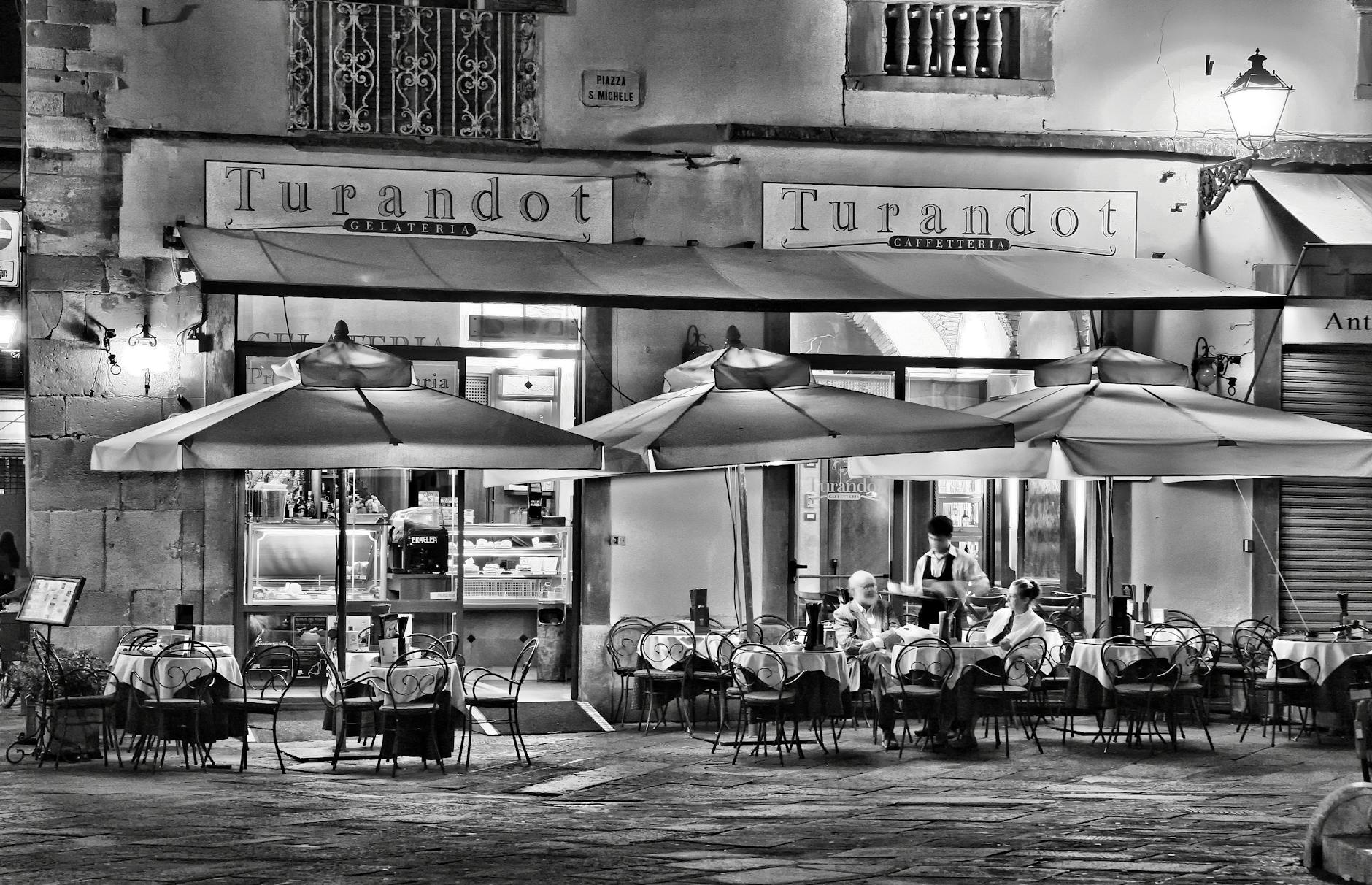
That said, there are exceptions. Historic caffès like Caffè Gilli and Caffè Rivoire on Piazza della Repubblica are worth visiting for their atmosphere and history, even if the prices reflect their location. And some excellent wine bars and restaurants do exist in the centro storico — they’re just harder to find amid the tourist infrastructure.
Rule of thumb: If a restaurant is within 100 meters of the Duomo and has a menu in English, Japanese, Chinese, and German, you are probably about to be charged €18 for mediocre pasta. Keep walking.
Florence’s Historic Food Markets
Florence has two great food markets, and both are worth visiting even if you have no intention of cooking anything. These are living institutions — places where the city’s relationship with its food is most directly visible, where vendors and customers have often known each other for years, and where the best quality ingredients in the city are concentrated.
Mercato Centrale: The Grand Market
The Mercato Centrale di San Lorenzo is one of the most beautiful food markets in Europe, housed in a spectacular iron-and-glass structure designed by architect Giuseppe Mengoni and opened in 1874. Mengoni was also responsible for the Galleria Vittorio Emanuele II in Milan — and the architectural DNA is immediately apparent.
The ground floor is devoted entirely to raw ingredients: butchers selling Chianina beef and Cinta Senese pork, cheesemongers with wheels of aged Parmigiano-Reggiano and young Marzolino, fishmongers (somewhat surprising for a landlocked city, but fresh fish from Livorno arrives daily), pasta vendors, olive oil producers from the surrounding hills, and a famous trippaio stall called Nerbone that has been operating since 1872 and is one of the best places in the city to try lampredotto or a simple Florentine lunch.
The first floor, renovated and reopened in 2014, is a rather different proposition: a modern food hall with multiple vendors selling everything from pizza and pasta to Japanese cuisine and craft beer, plus a cooking school. The upstairs is conveniently accessible, air-conditioned, and accepts credit cards — which makes it popular with tourists. The ground floor is where the genuine market life happens.
Opening hours: Ground floor Monday–Saturday 7am–2pm (some stalls until 3pm). First floor daily 10am–midnight (varies by vendor).
Location: Via dell’Ariento 14, San Lorenzo
Best for: Morning market visits, a quick lunch at Nerbone, buying provisions for a picnic, or taking a cooking class.
Mercato di Sant’Ambrogio: The Local’s Market
If the Mercato Centrale is the grand dame of Florentine markets — a destination in itself, photographed from every angle — Sant’Ambrogio is its less photogenic but arguably more authentic sibling. Opened in 1873 and housed in a more modest 19th-century building, this is the market that actual Florentines shop at for their weekly provisions.
You’ll find the same quality of ingredients — good cheese, excellent produce, well-raised meats — but in an atmosphere that is noticeably less curated and tourist-facing. The vendors here are serving their regulars. There are fewer English-language signs, prices are slightly lower, and the sense that you’re participating in something genuine rather than observing it is much stronger.
Inside the market building, there’s a simple trattoria called Da Rocco that serves a changing daily menu of Florentine classics — ribollita, pasta, grilled meats — at prices that seem implausibly low. Locals queue here for lunch. Go early, be prepared to share a table, and bring cash.
Opening hours: Monday–Saturday 7am–2pm (Da Rocco closes around 2:30pm)
Location: Piazza Lorenzo Ghiberti, Sant’Ambrogio
Best for: The most authentic market experience in Florence, lunch at Da Rocco, watching how locals actually shop.
Mercato delle Cascine: Sunday Market
Held every Tuesday morning along the Cascine park by the Arno river, the Mercato delle Cascine is Florence’s largest outdoor market — though it sells clothing, household goods, and plants alongside food. The produce section, particularly in summer, is excellent, and the prices are the lowest in the city. Worth visiting if you’re around on a Tuesday morning and interested in a non-tourist-facing Florentine experience.
The Art of Gelato in Florence: Authentic vs. Tourist Trap
Florence takes its gelato very seriously. The city has reasonable claims to being the birthplace of modern gelato — Bernardo Buontalenti, a Renaissance artist and architect who worked for the Medicis, is often credited with creating an early form of the frozen dessert in the 16th century. Whether or not that claim survives historical scrutiny, there is no question that the Florentine gelato tradition is deep and proud.
There is also no question that for every genuinely excellent gelateria in Florence, there are several more selling an inferior product that has been industrially produced, artificially colored, and piled in enormous, photogenic mounds in the display case. Learning to tell the difference will transform your gelato experience in this city.
Signs of Authentic Gelato (Artigianale)
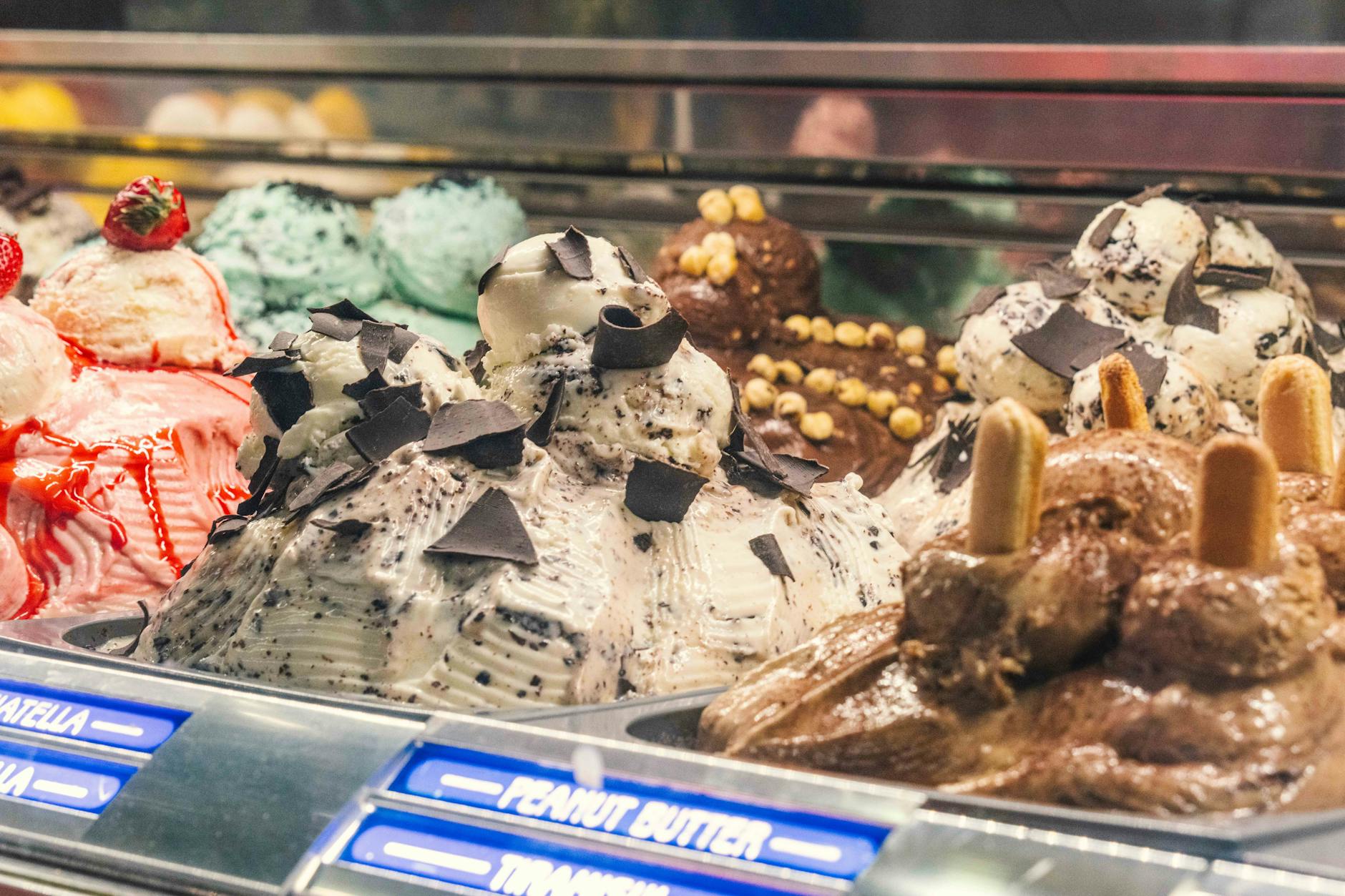
It’s stored in covered metal containers (pozzetti). This is the single most reliable indicator of quality gelato. Good gelato is temperature-sensitive and degrades in flavor and texture when exposed to air. Authentic gelaterias keep their gelato in covered containers that are pulled out and served from directly. If you see gelato piled in elaborate mountains above the counter, that’s a sign of industrial product designed to be photographed, not consumed at its best.
The pistachio is dull green, not bright. Natural pistachio paste produces a muted, army-green color. Bright, vivid green pistachio gelato has been made with artificial food coloring. Similarly, natural banana is a pale cream color, not yellow; natural stracciatella is white with chocolate chips, not beige.
The colors are generally muted. Real fruit produces subtle colors. Strawberry is a dusty pink, not vivid red. Lemon is pale cream-yellow, not bright. The moment colors look like they’ve been dialed up for social media appeal, take note.
The menu is short and seasonal. A good gelateria offers maybe 12-20 flavors, some of which change with the season. A tourist-trap gelateria has 40+ flavors year-round, which tells you the product is industrially sourced.
The pricing is visible and reasonable. Good gelato in Florence costs €2.50-€4 for a small cup or cone. Be skeptical of places that add the price after they’ve filled your cone based on the flavors chosen (a known tourist trap practice in some areas).
How to Order Gelato in Florence
At most gelaterias, you first tell the server what size you want (piccolo/small, medio/medium, grande/large) — this determines the price — then choose your flavors. Two or three flavors per serving is normal. More than three tends to muddle the experience.
Ask for a cono (cone) or coppetta (cup). The cone is usually included in the price; an especially fancy cone might cost slightly more.
Don’t feel obligated to choose exotic flavors. The simplest flavors — fior di latte (pure cream), cioccolato (chocolate), pistacchio, nocciola (hazelnut), fragola (strawberry in season) — are often where the quality of the product is most clearly evident. A gelateria that can’t make a good fior di latte isn’t worth your time.
Classic Florentine Gelato Flavors to Try
Fior di Latte: Pure milk cream — no vanilla, no flavoring. The taste of the base product. A gelateria with mediocre fior di latte has nowhere to hide.
Crema: Egg-custard base, richer and more yellow than fior di latte. Traditional and excellent.
Nocciola: Hazelnut. In a good gelateria using Piedmontese hazelnuts or Gianduja paste, this is extraordinary. In a bad one, it tastes like Nutella.
Pistacchio di Bronte: Made from pistachios from the Bronte region of Sicily — small, intensely flavored, and producing that distinctive army-green color. The gold standard.
Cioccolato: Chocolate. The best versions use high-percentage dark chocolate and are deeply, bitterly intense. Try one made with 70%+ cacao from a quality source.
Cantucci: Gelato incorporating the crumbled almond biscotti that are a Florentine specialty. An excellent local interpretation.
Seasonal fruits: In summer, fragola (strawberry), pesca (peach), albicocca (apricot), and fico (fig) made with local fruit are superb. In winter, look for marron glacé, pear, and citrus flavors.
Wine & Aperitivo Culture in Florence
Tuscany is one of the world’s great wine regions, and Florence sits at the geographic and cultural center of it. Understanding the region’s wines — even at the most basic level — will transform your experience of eating in this city. Wine here is not a luxury accessory to a meal; it is an integral part of the meal itself, as essential as the bread and olive oil on the table.
The Essential Tuscan Wines
Chianti Classico
Chianti Classico is the wine of Florence — made from Sangiovese grapes grown in the hills between Florence and Siena, in a zone that has been producing wine since at least the 13th century. The Chianti Classico DOCG (Denominazione di Origine Controllata e Garantita) is the top designation, requiring minimum 80% Sangiovese and aging requirements that vary by sub-category.
Look for the gallo nero — the black rooster symbol — on the neck label. This is the mark of the Chianti Classico Consorzio and a guarantee of authenticity.
Good Chianti Classico has flavors of sour cherry, dried violet, leather, and spice, with a characteristic tannic structure that cuts through the fat of grilled meats beautifully. It’s the natural pair for bistecca alla Fiorentina, ribollita, and virtually any traditional Florentine dish.
The classification system, from youngest to most aged: Chianti Classico (minimum 12 months aging), Chianti Classico Riserva (minimum 24 months), Chianti Classico Gran Selezione (minimum 30 months, from a single vineyard). A good Riserva at a trattoria will cost €30-50 by the bottle; a simple Chianti Classico by the glass (calice) runs €5-8.
Brunello di Montalcino
Brunello is arguably Italy’s greatest red wine — certainly its most age-worthy — produced from 100% Sangiovese Grosso (locally called Brunello) grown around the hilltop town of Montalcino, about 90km south of Florence. It requires a minimum of five years aging (six for Riserva) and at its best produces wines of immense complexity, structure, and longevity.
This is a special-occasion wine rather than an everyday table wine. Restaurant prices start at €70-100 per bottle and rise steeply for prestigious producers and older vintages. If you’re planning a major dinner — a full bistecca experience at a serious restaurant, for example — it’s worth asking about the Brunello list.
Vino Nobile di Montepulciano
Produced around the medieval hilltop town of Montepulciano (also easily day-trippable from Florence), Vino Nobile is another DOCG Sangiovese-based wine of high quality, with a gentler, more approachable style than Brunello. Very good value at mid-range restaurant prices (€35-60 per bottle).
Vernaccia di San Gimignano
Tuscany’s most distinguished white wine, made from the ancient Vernaccia grape grown around the iconic tower-town of San Gimignano west of Florence. Good Vernaccia is crisp and minerally with notes of almond and green apple — it pairs beautifully with the region’s fish dishes, fresh pasta, and lighter starters. Italy’s first DOCG white wine, designated in 1993.
Super Tuscans
In the 1970s and 1980s, some Tuscan winemakers began experimenting with international grape varieties — Cabernet Sauvignon, Merlot, Syrah — that were not permitted under the existing DOC regulations. The resulting wines were technically demoted to simple table wine (vino da tavola) status but quickly commanded the highest prices of any wines in Italy. These became known as “Super Tuscans.”
Famous examples include Sassicaia, Ornellaia, Masseto, and Tignanello. You’ll see them on wine lists at more serious Florence restaurants — expect to pay €80-300+ per bottle for current vintages.
Enotecas: The Wine Bar Culture
Florence has a vibrant enoteca (wine bar) culture that serves as the bridge between formal restaurant dining and casual bar culture. A good enoteca offers an extensive wine list by the glass, a rotating selection of local producers, and a food menu of boards (cheese, salumi, crostini) that make proper accompaniments without requiring a full meal commitment.
This is the ideal format for exploring Tuscan wines without committing to a bottle — you can try a Chianti Classico, a Vermentino, and a glass of Brunello side by side and begin to understand the differences. Many enotecas have knowledgeable staff who genuinely want to help you explore.
Look for enotecas in the Oltrarno and Sant’Ambrogio neighborhoods for the best combination of selection, price, and local atmosphere.
The Negroni: Florence’s Greatest Cocktail
The Negroni — one of the world’s great cocktails — was invented in Florence. Specifically, it was created in 1919 at the Caffè Casoni (now the Roberto Cavalli-owned Caffè Giacosa at Via de’ Tornabuoni 83) by bartender Fosco Scarselli at the request of Count Camillo Negroni, who wanted a stronger version of his usual Americano cocktail (Campari, sweet vermouth, soda water).
Scarselli replaced the soda water with gin, and the Negroni was born: equal parts gin, Campari, and sweet vermouth, stirred with ice and garnished with an orange slice. It remains one of the most perfectly balanced cocktails ever devised — bitter, sweet, strong, and aromatic all at once.
Drinking a Negroni at Caffè Giacosa, standing at the bar on Via de’ Tornabuoni, is a small pilgrimage that any cocktail enthusiast owes themselves. The setting is elegant in a slightly faded Florentine way, the cocktail is made properly, and knowing the history makes it taste better.
Aperitivo: The Evening Ritual
The aperitivo is one of Italy’s most civilized institutions: a predinner period (typically 7-9pm) when you drink a moderately alcoholic, often bitter cocktail that stimulates appetite while socializing. Florence takes this seriously.
Standard aperitivo drinks:
- Negroni — the local classic (gin, Campari, sweet vermouth)
- Spritz — Aperol or Campari with Prosecco and a splash of soda
- Americano — the Negroni’s milder predecessor (Campari, vermouth, soda)
- Prosecco — straightforward and always appropriate
Many bars offer a buffet aperitivo with your drink: a spread of bruschetta, crostini, olives, chips, and small snacks. Some Florentine bars (particularly in the Oltrarno) offer quite generous aperitivo buffets that function effectively as a light meal if you eat strategically.
Aperitivo is not just about the drink — it’s about the transition from daytime to evening, the loosening of the working day’s formality, and the gathering of friends before dinner. Participate in the spirit of it rather than treating it as simply a cheap pre-dinner snack opportunity.
Coffee Culture: How to Order Like a Local in Florence
Italy takes its coffee culture seriously, and Florence is no exception. Ordering coffee incorrectly won’t get you thrown out of a café, but it will mark you immediately as a tourist — and more importantly, it might mean you don’t get what you actually want. A few minutes of education here will pay dividends throughout your trip.
The Fundamental Rules
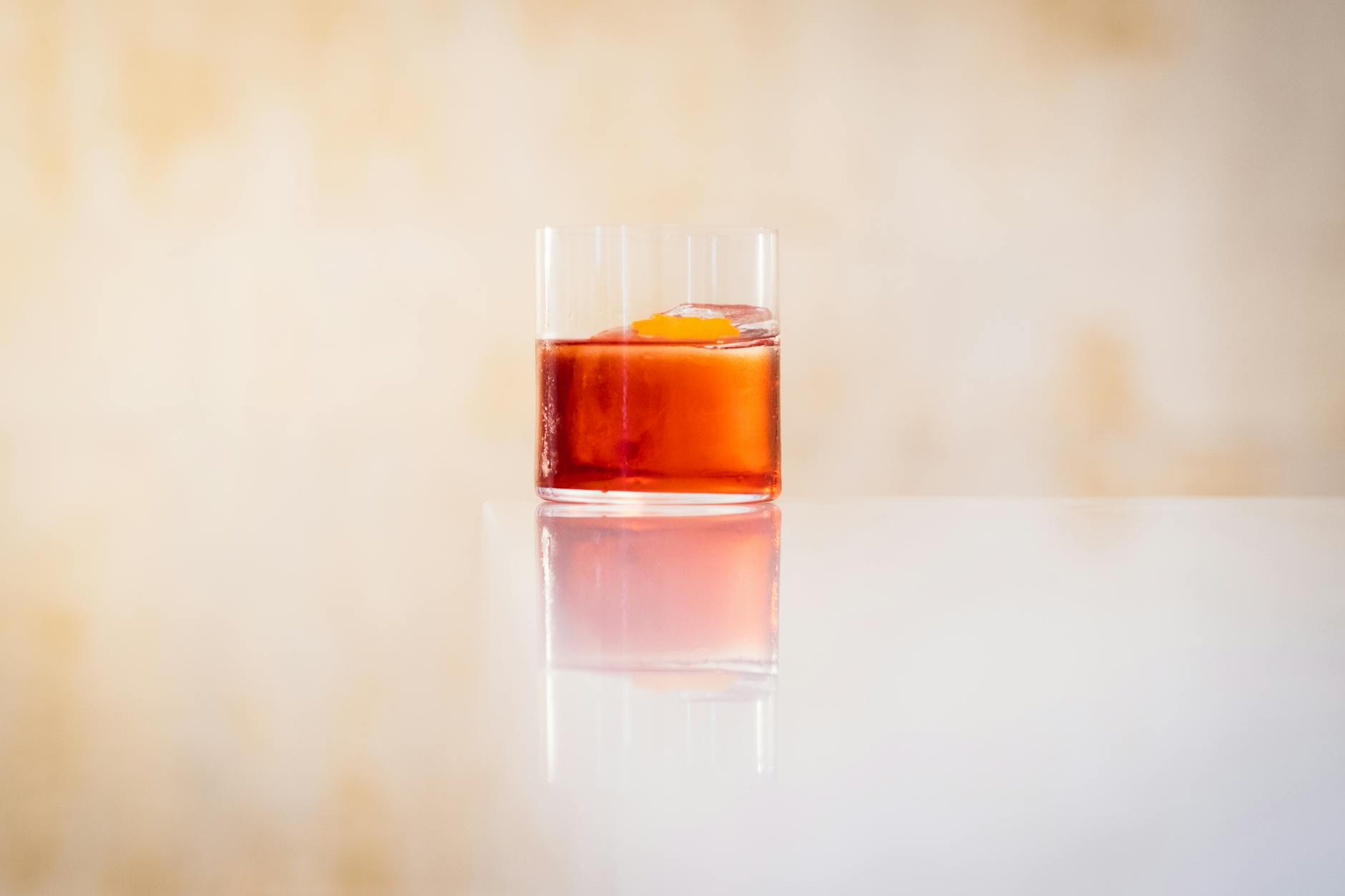
Caffè means espresso. When an Italian orders “un caffè,” they mean a single shot of espresso. Not a filter coffee. Not an Americano. Not anything served in a large cup. A small, intense, excellent espresso, consumed standing at the bar in two or three sips. If you want espresso, say “un caffè.”
Cappuccino is a breakfast drink. This is not a rigid law enforced by the carabinieri, but ordering a cappuccino after 11am or with or after a meal will raise eyebrows. Italians consider milky coffee incompatible with a stomach that already has food in it. The logic is reasonable once you think about it. If you want a cappuccino at 3pm, you will be served one — no one will refuse you — but you will be identified as a tourist.
Coffee is drunk at the bar, standing up. This is partly culture and partly economics: table service (servizio) costs significantly more than bar service at most cafés. Locals stand at the counter, drink their espresso in a minute or two, and leave. Sitting down for coffee is something you do when you’re meeting someone and staying a while — and you’ll pay 50-100% more for the privilege of the seat.
Coffee is served with a glass of water. Not everywhere, but in most good cafés, your espresso comes with a small glass of still or sparkling water. Drink it before the coffee to cleanse your palate, or after — it’s personal preference. Either is fine.
Florentine Coffee Vocabulary
- Caffè / Espresso — Single shot espresso. The standard.
- Caffè doppio — Double espresso. Two shots.
- Caffè macchiato — Espresso “stained” with a small amount of frothed milk. For those who want a touch of dairy without a full cappuccino.
- Caffè corretto — Espresso “corrected” with a shot of grappa or other spirit. Morning medicine.
- Cappuccino — Espresso with steamed and frothed milk, roughly equal parts. Breakfast drink.
- Caffè latte — Espresso with more steamed milk, less foam than a cappuccino. Also a morning drink.
- Marocchino — Espresso in a small glass, with a layer of foam and cocoa powder. Rich and indulgent.
- Caffè freddo — Iced espresso, shaken until cold and frothy. A lifesaver in July and August.
- Granita di caffè — Frozen coffee slush, often topped with whipped cream. A Sicilian import but available in many Florence cafés in summer.
- Americano — Espresso diluted with hot water. Closer to filter coffee in volume. Available but mildly exotic from an Italian perspective.
The Best Historic Cafés in Florence
Florence has several historic cafés that are worth visiting as destinations in their own right, even accounting for the tourist premium they charge:
Caffè Gilli (Piazza della Repubblica, since 1733) — Florence’s oldest café, housed in gorgeous Belle Époque surroundings. The bar service coffee is fairly priced; the table service is an expensive tourist experience best avoided if you’re watching your budget.
Caffè Rivoire (Piazza della Signoria) — Famous for its hot chocolate and the incomparable view of the Palazzo Vecchio. You’re paying for the location, and it’s worth it for a morning coffee with that view.
Caffè Giacosa / Roberto Cavalli (Via de’ Tornabuoni 83) — Historical home of the Negroni’s invention. Worth a visit for cocktail history reasons, though it now operates primarily as a bar rather than a traditional café.
Ditta Artigianale (Multiple locations, founded 2013) — Florence’s best specialty coffee shop, for those who want third-wave filter coffee, pour-overs, and meticulously sourced single-origin espresso alongside a genuinely Italian café experience.
Ordering Tip: Paying First vs. Ordering First
In many traditional Florentine bars, the system works like this: you go to the cashier (cassa), pay for what you want, receive a receipt (scontrino), then take the receipt to the bar counter and order. In other places, you order at the bar and pay after. When in doubt, observe what other customers are doing before you approach the counter.
Dining Etiquette & Practical Tips for Eating in Florence
A few pieces of practical knowledge will help you navigate Florentine restaurants with more confidence — and avoid the small awkwardnesses that mark an unprepared tourist.
The Coperto (Cover Charge)
Almost every sit-down restaurant in Florence charges a coperto — a cover charge per person that typically ranges from €2 to €4. This is not a service charge, not a gratuity, and not a scam. It’s a longstanding Italian tradition that covers the bread, olive oil, and the use of the table setting. It will appear as a line item on your bill.
Occasionally you’ll see pane e coperto (bread and cover charge) listed separately. Either way, expect it to appear on your bill and don’t treat it as an error. In 2026, standard coperto in Florence runs €2-4; restaurants in premium locations near major tourist sites sometimes charge up to €5.
Tipping in Florence
Tipping in Italy is genuinely optional in a way that it is not in North America. Service is included in the prices you pay (and the coperto contributes to overhead costs). Italian diners typically leave a small tip — rounding up the bill, or leaving €1-3 per person — if the service was good. They do not leave 15-20% of the bill as a matter of course.
Leaving a generous tip is not offensive, but neither is leaving nothing. If the service was excellent, leave €2-5 per person as a token of appreciation. If the service was indifferent, don’t feel obligated to leave anything beyond the coperto that’s already on the bill.
Meal Times in Florence
Italian meal times are different from Northern European and American norms, and attempting to eat on your home schedule will cause frustrations:
- Breakfast (colazione): 7:30-10am. Usually standing at a bar: espresso and a pastry (cornetto). Hotels offer larger buffet breakfasts, but locals eat light.
- Lunch (pranzo): 12:30-2:30pm. The main meal of the day for traditional Florentines. Restaurants are fully operational; kitchen closes around 2:30pm or 3pm. Arriving after 2pm may limit your options.
- Aperitivo: 7-9pm. Pre-dinner drinks.
- Dinner (cena): 7:30pm (for tourists) to 9:30pm (for locals). Many restaurants don’t fill up until 8:30 or 9pm. Arriving at 7pm for dinner is fine — you’ll eat without crowds. Arriving at 9:30pm is normal for locals.
Florentine kitchens between about 3pm and 7pm may be closed or serving only bar food. Don’t expect a full restaurant meal at 5pm unless you’re in a tourist-oriented establishment.
Reservations
For popular restaurants — particularly those known for bistecca, those with outdoor seating, and any restaurant you’ve seen recommended widely — reservations are strongly advised, especially for dinner on Thursday, Friday, and Saturday. Many Florence restaurants can be booked via phone, email, or increasingly through their websites.
For lunch at a traditional trattoria, walk-ins are generally fine on weekdays. Weekend lunch at a popular trattoria may require a reservation.
For cooking classes, reserve at least a week in advance.
The Structure of an Italian Meal
Traditional Italian meals are structured in courses that you are under no obligation to follow completely, but which make sense of restaurant menu organization:
- Antipasto — Starter/appetizer. Optional.
- Primo — First course: pasta, soup, or risotto. Many locals eat only a primo for lunch.
- Secondo — Main course: meat or fish. Usually ordered separately from accompaniments.
- Contorno — Side dish: vegetables, salad, potatoes. Ordered separately from the secondo.
- Dolce — Dessert. Often the cantucci e Vin Santo set.
- Caffè — Espresso. Always at the end, never during the meal.
- Digestivo — After-dinner spirit: grappa, limoncello, amaro. Optional but traditional.
You are not required to order through all courses. At lunch, many Florentines eat a primo and skip everything else. Ordering just a secondo without a primo is slightly unconventional but entirely acceptable. Ordering only a salad at a traditional trattoria will cause confusion.
Dress Code
Florence’s restaurants have no strict dress code, but dress standards in Italy are noticeably smarter than in many tourist destinations. For dinner at a mid-range or higher restaurant, smart casual is appropriate — no beachwear, no athletic wear, no flip-flops. For a proper dinner at a higher-end restaurant, dressing well shows respect for the establishment and the food.
At lunch, trattatorie, markets, and street food spots, anything goes. Florence is not uptight about this for daytime eating.
Florence Food Budget Guide 2026
One of the great pleasures of eating in Florence is that you can eat extremely well on a surprisingly modest budget — as long as you know where to go. The city’s street food and market culture, its traditional lunch menus (pranzo di lavoro), and its working-class trattoria heritage mean that excellent food is available at virtually every price point.
The following table gives you realistic expectations for 2026 pricing across different meal types and budget levels.
| Meal / Item | Budget (€) | Mid-Range (€) | Splurge (€) |
|---|---|---|---|
| Breakfast (bar espresso + cornetto) | €2–3 | €4–6 (sit down) | €8–12 (historic café) |
| Street food (lampredotto sandwich) | €4–6 | — | — |
| Schiacciata sandwich | €3–6 | — | — |
| Gelato (small) | €2.50–3.50 | €3.50–5 | — |
| Quick lunch (pasta / pizza) | €10–12 | €14–18 | — |
| Worker’s set lunch (pranzo di lavoro) | €12–18 | — | — |
| Trattoria main course (secondo) | €12–15 | €16–22 | €25–35 |
| Full 3-course trattoria meal (excl. wine) | €20–30 | €30–45 | €55–90 |
| Bistecca alla Fiorentina (whole steak) | — | €45–65 | €70–120 |
| House wine (quarter litre) | €4–6 | — | — |
| Glass of Chianti Classico | €5–7 | €8–12 | — |
| Bottle of Chianti Classico (restaurant) | €22–35 | €35–60 | €70–150+ |
| Negroni cocktail | €8–10 | €10–14 | €15–20 (historic bar) |
| Aperitivo with snacks | €8–12 (drink+buffet) | €12–18 | — |
| Coperto (cover charge) | €2–3 | €3–4 | €4–5 |
The Pranzo di Lavoro: Florence’s Best Lunch Deal
The pranzo di lavoro (worker’s lunch) is one of the best deals in Italian dining. Most traditional trattatorie offer a set lunch menu on weekdays aimed at local workers: a fixed price (usually €12-18 in Florence in 2026) that includes a primo, secondo, side dish, bread, and house wine or water. It’s the same food the restaurant serves in the evening — no substitutions, no choices beyond what’s on today’s slate — but at a fraction of the evening price.
These menus are usually written on a chalkboard, in Italian only, changed daily based on what’s available. This is both the challenge and the appeal. You might get ribollita and braised beef. You might get pasta al ragù and roasted chicken. Whatever it is, it will be genuinely made and excellent value. Ask “c’è il pranzo di lavoro?” when you enter a trattoria at lunchtime.
Daily Food Budget Examples
Tight budget (€30-40/day): Bar breakfast (€2.50), lampredotto sandwich for lunch (€5), gelato mid-afternoon (€3), a pizza or simple pasta dinner with house wine (€16-20). Totally viable and genuinely delicious.
Comfortable budget (€60-80/day): Bar breakfast (€4), pranzo di lavoro at a good trattoria (€15-18), aperitivo with Negroni (€10-12), mid-range dinner with wine and dessert (€35-45).
Special experience (€100-150+/day): Café breakfast with view (€10), full trattoria lunch (€35-45), quality enoteca aperitivo (€15-20), bistecca dinner with Chianti Classico Riserva (€80-120).
Cooking Classes & Food Tours in Florence
For visitors who want to engage more deeply with Florentine food culture than simply eating it — though eating it is a perfectly valid and excellent approach — cooking classes and food tours offer a more structured way in.
Cooking Classes
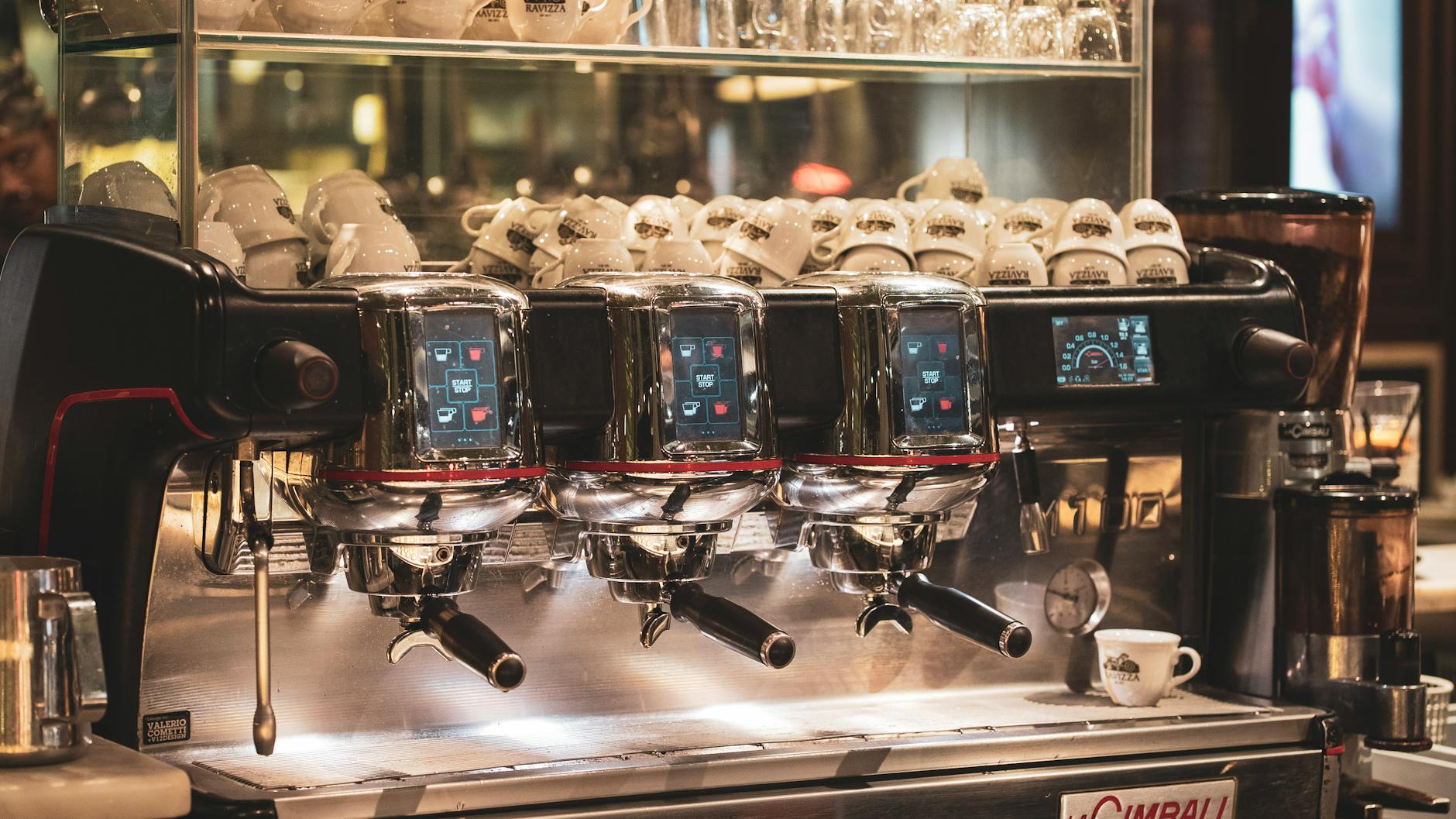
Florence has a wide range of cooking classes, from brief two-hour introductions to full-day immersive experiences. The best ones take you shopping at a market before cooking — typically the Mercato Centrale or Sant’Ambrogio — to select ingredients alongside your instructor. This combination of market visit and cooking session gives you context that a standalone cooking class can’t provide.
What you’ll learn varies by class, but common formats include:
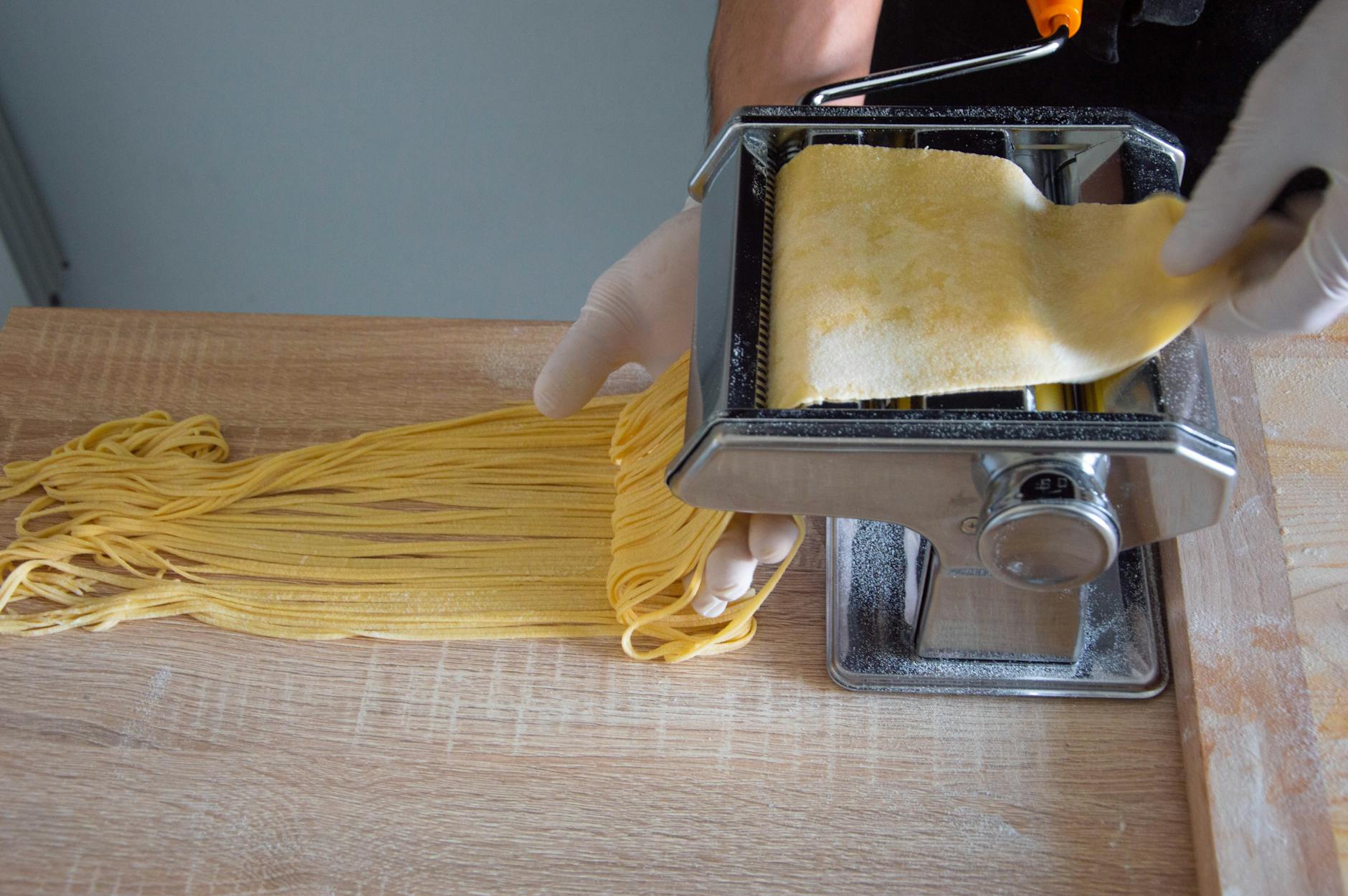
- Fresh pasta making: Pappardelle, tagliatelle, tortellini. Learning to roll pasta by hand gives you a visceral appreciation for how much time traditional cooks invested in everyday meals.
- Full Florentine menu class: Crostini di fegato, ribollita or pappa al pomodoro, fresh pasta, and a dessert. Full day, market visit included, eat everything you make with wine.
- Gelato making: Some gelaterias and cooking schools offer gelato-focused classes that explain the science of emulsification and freezing alongside the practical techniques.
- Bread and pastry: Schiacciata, cantucci, and Florentine sweet breads.
- Wine and food pairing: Guided tastings that teach you to match Tuscan wines with Tuscan food, often offered by enotecas or wine estates near Florence.
The Mercato Centrale cooking school on the first floor of the market is the most accessible option — centrally located, well-organized, and can be booked online. Prices typically run €60-120 per person for a 2-3 hour class, or €150-200 for a full-day experience with market visit.
Booking advice: Reserve at least a week in advance for popular classes, two weeks ahead for weekend sessions in high season (April-October). All reputable schools have English-speaking instructors.
Food Tours
A well-guided food tour offers the best introduction to Florence’s food scene for first-time visitors — an efficient way to eat widely across multiple stops in a compressed time, with context from someone who knows the city’s food culture properly.
The best food tours in Florence typically cover three to six stops over three to four hours and include some combination of: market visit (Centrale or Sant’Ambrogio), street food tasting (lampredotto being a common challenge), wine bar stop, pasta stop, and gelato. They’re usually capped at small groups of 8-12.
Key questions to ask when booking a food tour:
- Does it include the Mercato di Sant’Ambrogio or only the Mercato Centrale? (Sant’Ambrogio is more authentic.)
- Does it include lampredotto? (The best ones do. It’s a test of quality.)
- What’s the group size? (Smaller is better.)
- How long has the guide been operating? (Local food guides with real knowledge vs. general tour guides who’ve added food to their portfolio.)
Prices for food tours run €65-120 per person. Budget options exist but often sacrifice the quality of food included or the depth of the guiding.
Truffle Hunting Experiences
Day trips from Florence for truffle hunting in the Tuscan countryside — typically to the Crete Senesi or Mugello areas — are available from April through December. White truffles (tartufo bianco, peaking October-December) are among the world’s most prized ingredients; black truffles are available most of the year. Going with a truffle hunter and his dogs through the oak forests, then eating what you find with pasta at a farmhouse, is one of the more extraordinary food experiences available within easy reach of Florence.
Full-day truffle experiences cost €150-300 per person and typically include transport, the hunt, and a truffle-focused meal.
Seasonal Food Calendar: What to Eat When in Florence
Food in Florence Italy follows the seasons more closely than almost anywhere else in Europe. Knowing what’s in season during your visit will help you order smarter, find the best versions of classic dishes, and eat the way locals actually eat.
| Month | Season | Key Ingredients | Seasonal Dishes to Order | Food Events |
|---|---|---|---|---|
| January | Winter | Cavolo nero, cannellini beans, root vegetables, aged cheeses | Ribollita, pasta e fagioli, braised meats | — |
| February | Winter / Carnival | Cavolo nero, artichokes (early), citrus | Ribollita, schiacciata alla Fiorentina (Carnival sweet bread), cenci (fried Carnival pastries) | Carnival di Firenze |
| March | Late Winter / Early Spring | Artichokes, early asparagus, lambs | Artichoke-based antipasti, lamb dishes, schiacciata alla Fiorentina | — |
| April | Spring | Artichokes, asparagus, fresh peas, fava beans, spring lamb | Vignarola (spring vegetable stew), frittata with asparagus, pasta with fresh peas and pecorino | Tuscany’s food festivals begin |
| May | Spring | Asparagus, strawberries, fresh peas, fava beans, new season olive oil (last year’s harvest, bottles running out) | Pappa al pomodoro (with greenhouse tomatoes), asparagus risotto | — |
| June | Early Summer | Tomatoes (early), zucchini flowers, stone fruit, fresh herbs | Bruschetta with fresh tomato, pasta with zucchini flowers, pappa al pomodoro begins returning to menus | — |
| July | Summer | Tomatoes (peak), peppers, eggplant, peaches, figs, basil | Pappa al pomodoro (best of year), panzanella (bread salad), cold meats and vegetables | — |
| August | Summer | Tomatoes, peppers, eggplant, fresh figs, late peaches | Panzanella, cold dishes, grilled fish, gelato with fresh fruit sorbets | Many restaurants close mid-August |
| September | Early Autumn | Grapes (harvest), early mushrooms, figs, late tomatoes | Schiacciata con l’uva (grape flatbread, the great seasonal treat), mushroom pasta begins | Grape harvest festivals across Tuscany |
| October | Autumn | Porcini mushrooms (peak), chestnuts, truffles, persimmons, cavolo nero begins | Pappardelle al porcini, chestnut desserts, cinghiale (wild boar) appears on menus, fettunta (new olive oil) | Truffle fairs, chestnut festivals |
| November | Autumn / Early Winter | New-season olive oil (pressing!), truffles, chestnuts, cavolo nero, porcini | Fettunta with new oil (unmissable), ribollita returns to menus, bistecca season in full swing, truffle dishes | Olive oil harvest; new oil tastings at many farms and restaurants |
| December | Winter | Cavolo nero, root vegetables, truffles (white truffle season ends), citrus | Ribollita, pasta e fagioli, slow-braised meats, Christmas market treats | Christmas markets; panettone season |
High Season vs. Low Season Food Experience
Spring (April-June): Excellent time for food. Markets are full of artichokes, asparagus, and new vegetables. Tourist crowds building but not yet overwhelming. Good restaurant availability.
Summer (July-August): Peak tourist season brings peak tomatoes, stone fruit, and panzanella — but also queues at popular restaurants and some businesses closing in August. Heat makes heavy dishes like ribollita feel wrong; embrace the cold dishes, gelato, and aperitivo culture. Book ahead.
Autumn (September-November): The finest season for food in Florence. Mushrooms, truffles, chestnuts, new olive oil, grape harvest schiacciata, cinghiale. The city is slightly quieter, the light is magnificent, and everything you eat will be at its very best. Strongly recommended.
Winter (December-March): Cold weather is perfect for ribollita, pappa al pomodoro, braised meats, and all the warmest, most comforting dishes in the Florentine repertoire. Tourist crowds minimal outside Christmas week. An underrated time to visit for serious food lovers.
For more ideas on timing your visit, see our guide to things to do in Florence throughout the year.
Frequently Asked Questions About Food in Florence, Italy
What is the most famous food in Florence, Italy?
Bistecca alla Fiorentina is arguably Florence’s most iconic dish — a massive T-bone steak from Chianina or Maremmana cattle, grilled over wood fire and served rare. Beyond that, ribollita (thick bean and bread soup), lampredotto (cow stomach sandwich), crostini di fegato (chicken liver crostini), and pappa al pomodoro (bread and tomato stew) are the dishes most closely associated with Florentine food identity. All are rooted in the cucina povera tradition that defines Tuscan cooking.
Where should I avoid eating in Florence?
Avoid restaurants immediately around the Duomo, Piazza della Repubblica, and along Via dei Calzaiuoli — these areas are heavily tourist-oriented and offer poor quality at inflated prices. Specific red flags include: menus displayed in five or more languages outside the door, photographs of food on the menu or in the window, staff outside calling you in, and any place advertising “traditional Italian pizza and pasta” in English. Instead, seek out the Sant’Ambrogio, Oltrarno, and San Frediano neighborhoods, where locals actually eat.
How do I find authentic gelato in Florence?
The most reliable indicators of authentic, artisan gelato are: gelato stored in covered metal containers (pozzetti) rather than piled in mountains above the counter; muted, natural colors (pistachio should be dull army green, not bright green; strawberry should be dusty pink, not vivid red); a short, seasonal menu of 12-20 flavors; and visible pricing before your cone is filled. If gelato is mounded high in artistic peaks, displayed under bright lights in a tourist area, it is almost certainly industrial product rather than artisan gelato artigianale.
What is lampredotto and should I try it?
Lampredotto is the fourth stomach (abomasum) of a cow, slow-boiled in a herbed broth and served in a semella roll moistened with cooking juices, topped with green herb sauce or spicy red sauce. It is deeply embedded in Florentine street food culture and has been feeding the city’s workers for centuries. Yes, you should try it — specifically from a trippaio cart (not a tourist restaurant). The best-known accessible option is Nerbone inside the Mercato Centrale. It tastes rich, savory, and tender, and is far less challenging in practice than it sounds in description.
How much does food cost in Florence in 2026?
Florence is affordable if you eat as locals do. Budget options: espresso and cornetto for €2.50-3, lampredotto sandwich €4-6, pasta or pizza lunch €10-12, a full pranzo di lavoro (set worker’s lunch) €12-18. Mid-range: main course at a good trattoria €15-22, full 3-course dinner without wine €30-45, glass of good Chianti €5-12. Splurge: bistecca alla Fiorentina €50-80 per steak, fine dining with wine €80-150+ per person. Most restaurants charge a coperto (cover charge) of €2-4 per person. Tipping is genuinely optional — rounding up or leaving €1-3 per person is the local norm.
Can I order a cappuccino after noon in Florence?
You can order a cappuccino at any time of day — no one will refuse to serve you one. However, it is distinctly un-Italian to do so. Italians drink cappuccino and other milk-based coffees only in the morning (typically before 11am), as they consider milky coffee inappropriate after a meal or on a full stomach. If you order a cappuccino after lunch, you will be identified immediately as a tourist. After 11am, order a caffè (espresso), caffè macchiato (espresso with a small amount of milk), or caffè corretto (espresso with grappa) if you want coffee in the Italian fashion.
What wine should I drink in Florence?
For red wine, Chianti Classico is the essential Florence wine — made from Sangiovese grapes in the hills between Florence and Siena, with flavors of sour cherry, leather, and spice that pair perfectly with Florentine food. Look for the gallo nero (black rooster) symbol on the label. For a special occasion, Brunello di Montalcino is Italy’s most prestigious red. For white wine, Vernaccia di San Gimignano (crisp, minerally, slightly almond-tinged) is the local classic. A simple house wine (vino della casa) at a trattoria is often perfectly serviceable and very affordable at €4-6 per quarter litre.
Who invented the Negroni cocktail?
The Negroni was invented in Florence in 1919 at the Caffè Casoni (now Caffè Giacosa, at Via de’ Tornabuoni 83). Bartender Fosco Scarselli created it at the request of Count Camillo Negroni, who wanted a stronger version of his usual Americano (Campari, sweet vermouth, soda water). Scarselli replaced the soda water with gin, creating the equal-parts gin-Campari-sweet vermouth cocktail that remains one of the world’s great drinks over a century later. You can drink a Negroni at the original location today.
What is the best food market in Florence?
Florence has two outstanding food markets. The Mercato Centrale (San Lorenzo, opened 1874) is the grander and more famous — a magnificent iron-and-glass structure housing butchers, cheesemongers, fishmongers, and pasta vendors on the ground floor, plus a modern food hall upstairs. The Mercato di Sant’Ambrogio (opened 1873) is smaller, less touristic, and arguably more authentically Florentine — this is where locals actually shop. For an authentic experience, visit Sant’Ambrogio in the morning and have lunch at Da Rocco trattoria inside the market. For a more accessible introduction, the Mercato Centrale’s ground floor is the best food market experience in central Florence.
What is the best time of year to visit Florence for food?
Autumn (September through November) is widely considered the finest season for food in Florence. This is when porcini mushrooms, truffles, and chestnuts are at their peak; when the grape harvest brings schiacciata con l’uva (grape flatbread) to every bakery; and when November’s olive oil pressing season produces fresh oil for fettunta. The city is quieter than summer, the weather is pleasant, and the seasonal ingredients are exceptional. Spring (April-June) is also excellent for artichokes, asparagus, and fresh peas. Winter is perfect for ribollita, braised meats, and all the warming dishes of cucina povera.
Your Florence Food Adventure Awaits
Food in Florence Italy is one of the great pleasures of travel in Europe — and one of the most accessible. This isn’t a cuisine that requires a fat wallet or advance reservations at impossible-to-get tables. The best Florentine food experiences are often the most straightforward: a lampredotto sandwich eaten standing at a market cart, a bowl of ribollita in a trattoria that’s been there longer than your grandparents were alive, a glass of Chianti in the long evening light of a Santo Spirito piazza, an espresso drunk in three sips at a marble bar counter.
What makes Florentine food special isn’t technique or innovation — though both exist here at their finest. It’s conviction: the absolute certainty that the right ingredients, treated with respect and restraint, will produce something extraordinary. That conviction is woven into the bread (unsalted, impractical, perfect), the wine (from the same hills for eight centuries), and the bistecca (no sauce, no garnish, just fire and beef and time).
Come hungry. Leave converted.
Planning your trip? See our complete guide to things to do in Florence for everything beyond the table, and our Florence accommodation guide to find the right neighborhood base for your food adventures.


