This article contains advertising. Booking links on this site can be turned into paid links automatically by our partner Travelpayouts: if you book through one, we earn a commission from the provider, at no extra cost to you. It never affects what we recommend. Affiliate disclosure
Florence Museums & Art Guide: Renaissance Masterpieces (2026 Edition)
Florence is the art capital of the world. No city on earth concentrates so many Renaissance masterpieces in so small an area — Botticelli’s Birth of Venus, Michelangelo’s David, Leonardo da Vinci’s Annunciation, Donatello’s bronze David, and Fra Angelico’s luminous frescoes are all within walking distance of one another. This comprehensive guide to Florence museums covers every major collection, every ticket price, every hidden gem, and every practical detail you need to visit with confidence — whether you have one day or one week.
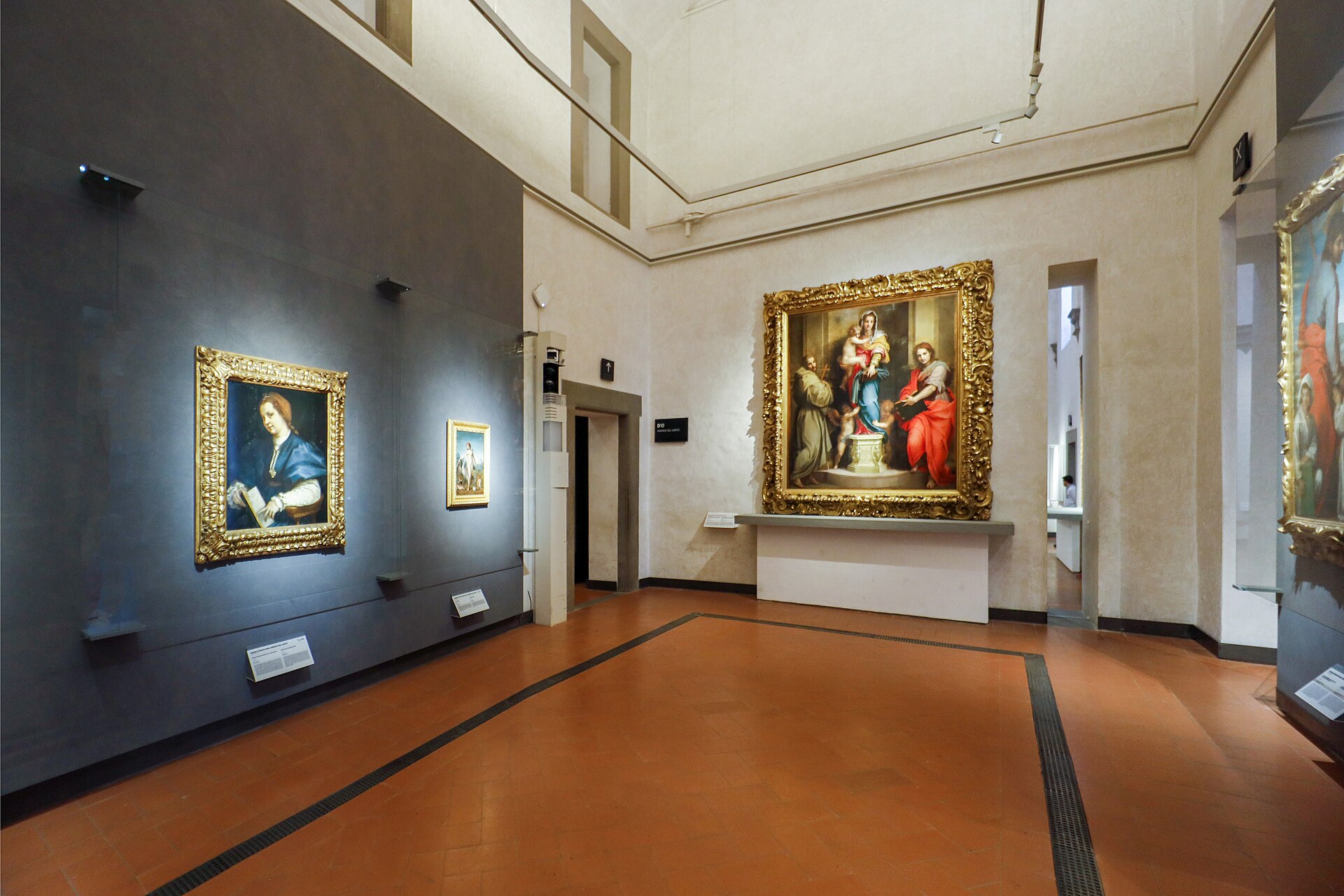
Florence’s museums reward planning more than stamina. Book the big two ahead, then use the quieter collections as breathing room: the sculpture halls of the Bargello, Michelangelo’s architecture at the Medici Chapels, and Fra Angelico’s frescoed cells at the San Marco Museum are rarely crowded even in July.
The Accademia sells out earlier than the Uffizi, because it is far smaller and the whole visit is one room. See our Accademia tickets guide for booking windows, the best entry slots and whether the guided David upgrade is worth anything.
If it comes down to one museum and one morning, our Uffizi versus Accademia comparison settles it on time needed, crowds, cost and what you would genuinely regret missing.
April is when casual booking stops working: the Accademia moves to roughly a month’s notice and the Uffizi to two or three weeks. Our guide to Florence in April lists the windows museum by museum, and which ones still need none.
Why Florence Is the Cradle of the Renaissance
In the early fifteenth century, something unprecedented happened in a small Tuscan city on the banks of the Arno. Painters stopped making flat, gilded icons and started making windows into three-dimensional worlds. Sculptors abandoned the elongated, symbolic forms of the Middle Ages and returned to the nude human body — muscular, idealized, alive. Architects measured and rebuilt the mathematical harmonies of ancient Rome. That city was Florence, and the movement it ignited became the Renaissance — the “rebirth” that reshaped Western civilization.
The Florence museums of today are the direct custodians of that revolution. The Uffizi Gallery alone holds more canonical Renaissance paintings than any other museum on earth. The Galleria dell’Accademia houses what many consider the single greatest sculpture ever carved. The Bargello contains Donatello’s bronze David — the first freestanding nude since antiquity. These are not dusty relics; they are the originals, in the city where they were made.
Visiting the museums in Florence Italy is unlike visiting any other museum city. Paris has the Louvre; Rome has the Vatican. But Florence is different in scale and intensity: almost every piazza, church, and street corner contains art of museum quality. This guide will help you navigate that abundance — to choose wisely, book correctly, and experience masterpieces the way they deserve to be experienced.
Top Florence Museums at a Glance
The table below summarises the essential facts for the major Florence museums and art galleries, so you can plan your itinerary at a glance. Prices are full adult rates. Book all tickets in advance wherever possible — walk-up availability is unreliable for the top venues.
| Museum | Don’t-Miss Highlights | Suggested Time | Ticket Price | Best For |
|---|---|---|---|---|
| Uffizi Gallery | Botticelli’s Birth of Venus, Leonardo’s Annunciation, Michelangelo’s Doni Tondo | 2–3 hours | €25 (€16 after 4pm) | First-time visitors; Renaissance painting lovers |
| Galleria dell’Accademia | Michelangelo’s David, the Prisoners/Slaves, musical instruments collection | 1–1.5 hours | €20 (+€4 booking) | Sculpture enthusiasts; everyone |
| Palazzo Pitti | Palatine Gallery (Raphael, Titian, Caravaggio), Royal Apartments | 2–4 hours | €16 (Boboli Gardens €10) | Repeat visitors; Medici history fans |
| Bargello Museum | Donatello’s bronze David, Michelangelo’s Brutus, Giambologna’s Mercury | 1.5–2 hours | €12 (combined tickets available) | Sculpture lovers; crowd-avoiders |
| Vasari Corridor | 1km elevated walkway over Ponte Vecchio, restored to its original bare walls | ~45 minutes | €43 on the day, €47 booked (includes Uffizi) | Architecture lovers; Medici history |
| Palazzo Vecchio | Salone dei Cinquecento, Francesco I’s studiolo, Secret Passages tours | 1.5–2 hours | €18 (Secret Passages €8 extra; €4 for metropolitan-city residents) | Families; history enthusiasts |
| Museo dell’Opera del Duomo | Ghiberti’s Gates of Paradise (originals), Donatello’s Magdalene, Michelangelo’s Pietà Bandini | 1.5–2 hours | €20 (Giotto Pass; the €15 Ghiberti Pass also covers it) | Sculpture; Cathedral complex visitors |
| San Marco Museum | Fra Angelico cell frescoes, the monumental Annunciation | 1–1.5 hours | Free on the first Sunday of the month; check the museum’s official page for the current price | Off-peak explorers; Fra Angelico devotees |
| Medici Chapels | Michelangelo’s Night & Day, Dawn & Dusk | 1 hour | €11 (+€3 optional booking) | Michelangelo fans; short visits |
| Museo Galileo | Galileo’s original telescopes, armillary spheres, scientific instruments | 1–1.5 hours | €14 | Families; science enthusiasts |
The Uffizi Gallery — The Complete Visitor Guide
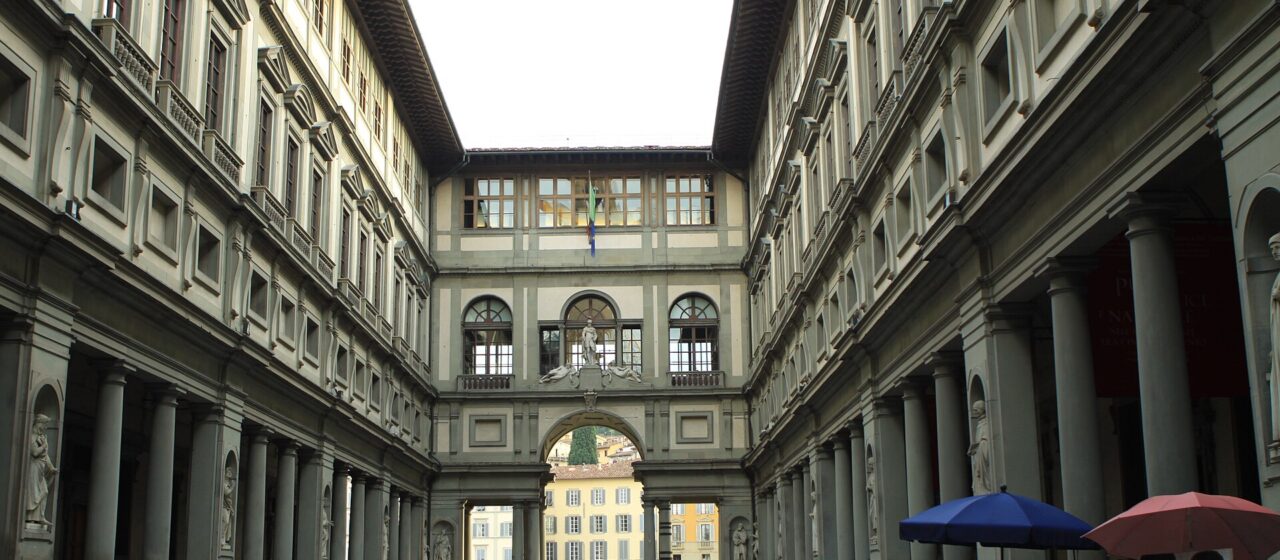
There is no museum more important to the history of Western art than the Uffizi Gallery. Begun in 1560 to Giorgio Vasari’s design for Cosimo I de’ Medici — originally as administrative and judicial offices (uffizi means “offices”) — and continued after Vasari’s death in 1574 by Alfonso Parigi and Bernardo Buontalenti, the building was gradually converted into one of the world’s first public art museums. Today, its two floors hold an outstanding collection of Italian Renaissance painting.
The Uffizi Gallery is the single most essential stop among all the Florence museums, and it demands respect in the form of advance planning. In July and August, tickets sell out weeks ahead. Book a timed entry through the official Uffizi ticket service as early as you can, and select the first slot of the day at 8:15am. The museum is quietest in the first hour; by 10am, the Botticelli rooms are densely crowded.
How the Uffizi Is Organized
The Uffizi unfolds chronologically across two main floors and a corridor level, moving from Medieval and Byzantine art on the second floor through High Renaissance, Mannerism, and Baroque on the first floor. Rooms carry letter-prefixed numbers (A rooms upstairs, D and E rooms on the first floor), and major works hang on both floors, so follow the current gallery map. The layout rewards visitors who resist the urge to skip ahead — the progression from Cimabue and Duccio’s gilded Madonnas to Botticelli’s explosively naturalistic Venus is one of the great narrative journeys in all of art history.
The Must-See Masterpieces
Room A9: Botticelli
This is the beating heart of the Uffizi and the single room most visitors travel to Florence specifically to stand in. Sandro Botticelli’s La nascita di Venere (Birth of Venus), painted around 1485, is among the most recognised images in art history — the goddess rising from the sea on a scallop shell, blown towards shore by Zephyr and, perhaps, Aura, while a woman often identified as the Hora of Spring rushes to clothe her. The painting’s pale, luminous quality and the impossibly graceful curve of Venus’s body — anatomically impossible but aesthetically perfect — make it one of the most arresting objects you will ever stand before.
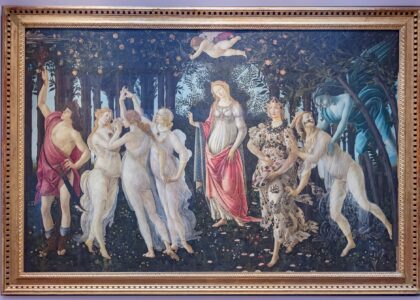
On the opposite wall hangs Botticelli’s even larger Primavera (Spring), a mysterious allegory of approximately nine figures set in an orange grove. Art historians have argued about its precise meaning for over a century; the three Graces dancing on the left, Mercury on the right, and the central figure of Venus presiding over the scene are clear, but the full iconographic programme remains wonderfully open to interpretation. Together, these two paintings represent the high-water mark of Florentine Renaissance secular painting.
Room A35: Leonardo da Vinci
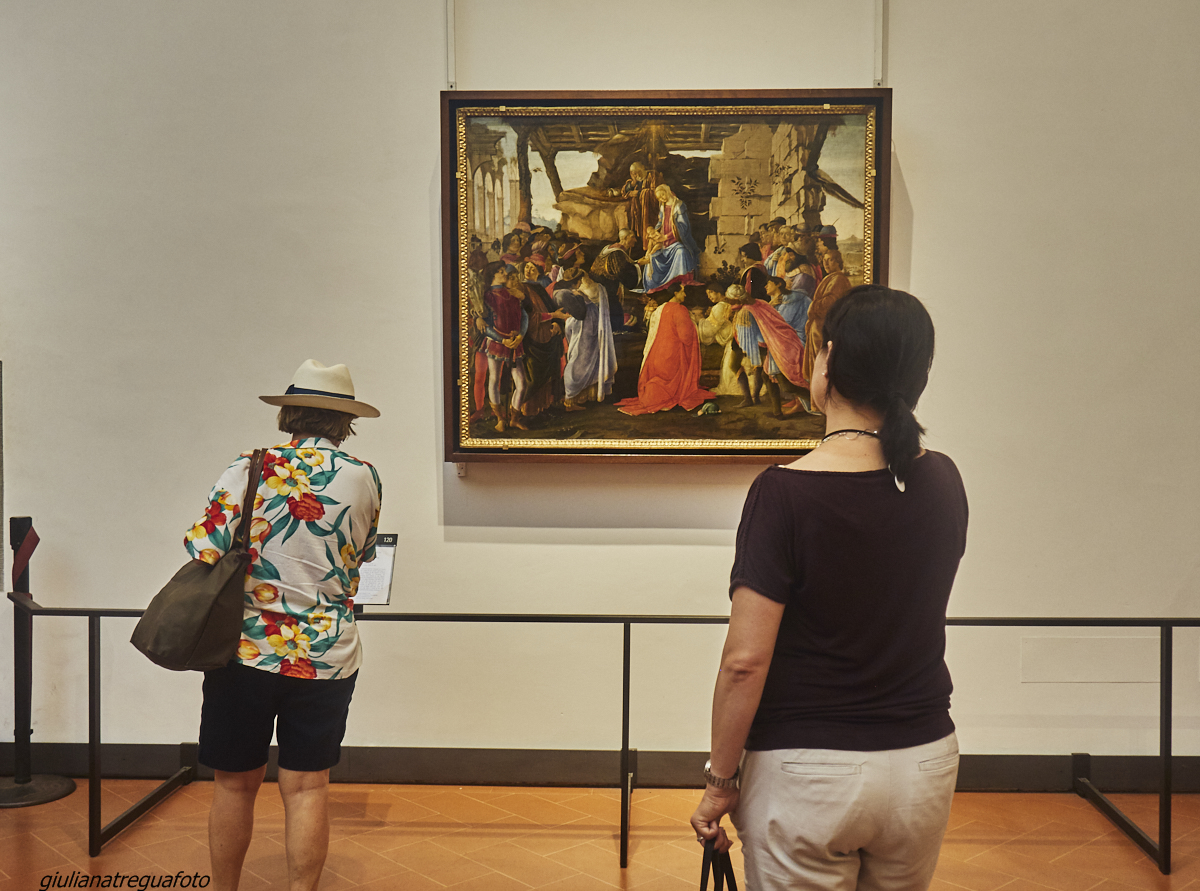
Room A35 holds the Uffizi’s Leonardo holdings, including the large Annunciation (c. 1472–1475), painted when Leonardo was barely twenty years old and still working in Verrocchio’s workshop. The Angel Gabriel’s wings, the distant landscape rendered in atmospheric perspective, and the extraordinary softness of the figures’ faces already signal a mind of unprecedented observational power. Also here is Leonardo’s unfinished Adoration of the Magi — a swirling, complex composition in brown underpaint that, despite being abandoned, shows Leonardo’s extraordinary ability to arrange dozens of figures into psychological relationship with one another.
Room A38: Michelangelo’s Doni Tondo
The Uffizi contains only one painting by Michelangelo, but it is a spectacular one. The Doni Tondo (c. 1507), commissioned for the Doni family, is a circular panel (tondo) showing the Holy Family in an extraordinary, writhing composition. Mary twists to receive the infant Christ from Joseph behind her, while in the background groups of male nudes lounge — their purpose debated, possibly representing the pre-Christian world awaiting redemption. The colours are almost aggressive in their brilliance: acid greens, vivid oranges, and cool blues that seem to vibrate. The carved frame, probably designed by Michelangelo himself and made by Francesco del Tasso, is also on display.
The E Rooms: Caravaggio
At the far end of the Uffizi’s first floor, the Baroque rooms contain two celebrated Caravaggios. The Bacchus (c. 1598) — the god of wine rendered as a fleshy, slightly seedy young man with a basket of bruised fruit — and the Medusa, painted on a convex shield (tondo), showing the severed gorgon’s head mid-scream. Both demonstrate Caravaggio’s revolutionary use of chiaroscuro (extreme light and shadow) and his unflinching, unsentimental naturalism.
Other Key Rooms
- Rooms A3–A4: thirteenth-century painting, then Cimabue and Giotto — the precursors who set the stage
- Room A8: Paolo Uccello’s Battle of San Romano, alongside Masaccio and Beato Angelico — early experiments in linear perspective
- Filippo Lippi: gentle, domestic Madonnas
- Room A38: Raphael’s Madonna of the Goldfinch and self-portrait
- Room D23: Titian’s Venus of Urbino — the most brazenly sensual painting of the sixteenth century
- Rooms A17–A20 and E7: Northern European masters — Renaissance art from beyond the Alps, including Dürer, in A17–A20; Rembrandt, Rubens and Van Dyck in E7
Uffizi Tickets & Booking Strategy
- Standard adult ticket: €25 on the day, €29 booked in advance
- After 4pm ticket: €16 — excellent value, with up to two and a half hours before the regular 6:30pm closing
- Book at: uffizi.it (official site only — avoid third-party resellers with inflated markups)
- First slot: 8:15am — the ideal entry time
- Closed: Mondays
- Summer booking: as far ahead as you can
How to Navigate the Uffizi Efficiently
Enter at 8:15am and walk directly to the Botticelli room (A9 on the current map). You will have approximately 20–30 minutes alone or nearly alone with the Birth of Venus and Primavera before the museum fills up. From there, double back briefly to see Rooms A3–A8 (Medieval through early Renaissance), then continue chronologically to Leonardo (Room A35), and on to Michelangelo (Room A38). If your time is limited, prioritise the upstairs rooms with the Botticelli, Leonardo and Michelangelo. Caravaggio and the later rooms on the floor below, while excellent, are the last to visit — and the ones to skip if energy flags. Download the free Uffizi app before you go; the audio commentary is genuinely informative.
Galleria dell’Accademia & Michelangelo’s David
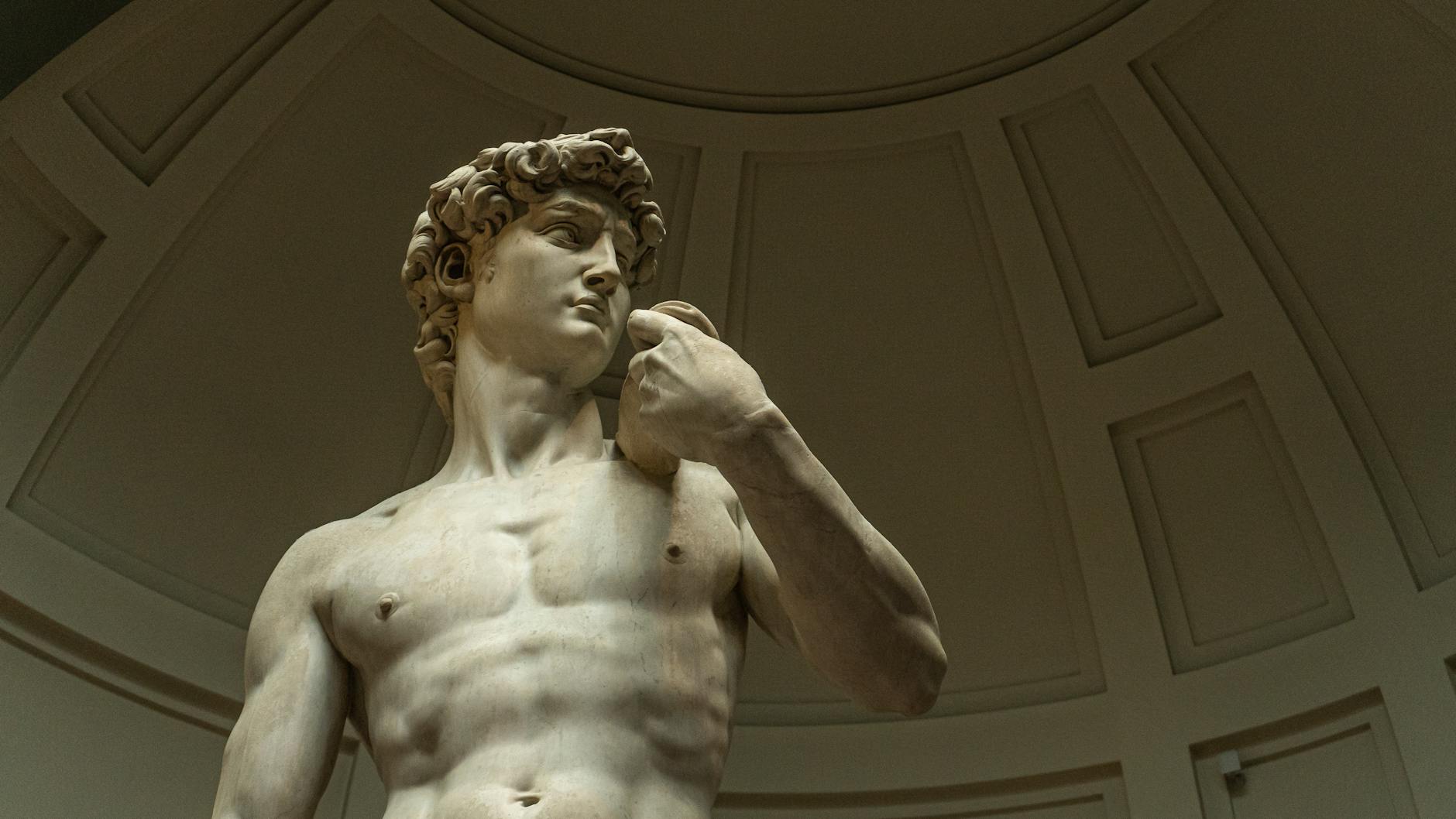
The Galleria dell’Accademia is one of the most visited of all Florence museums, and for one overwhelming reason: it is home to Michelangelo’s David. Everything else in the museum — the Prisoners, the musical instruments, the Byzantine panel paintings — exists in the orbit of that single statue. If you visit only one museum in Florence, and if choosing between the Uffizi and the Accademia is genuinely difficult for you, know this: the David is an object of a different order of magnitude. People weep standing in front of it. Not because they are sentimental, but because being in its physical presence is genuinely overwhelming in a way that reproductions cannot prepare you for.
Michelangelo’s David: Everything You Need to Know
Michelangelo began work on the David in 1501, when he was just twenty-six years old, and completed it in 1504, at twenty-nine. The statue stands 5.17 metres tall (approximately 17 feet) and was carved from a single block of white Carrara marble that had been abandoned as defective after two previous sculptors — Agostino di Duccio and Antonio Rossellino — had failed to work with it. Michelangelo famously said he simply removed everything from the marble that was not David.
The subject is the biblical shepherd David, but the moment chosen is unusual: not the triumph after slaying Goliath — the conventional subject — but the instant before, as David contemplates his enormous enemy. His brow is furrowed, his eyes are slightly wide, the sinews of his neck are taut. In his right hand he holds the sling casually; the stone is ready in his left. The entire figure vibrates with coiled tension — a psychological and physical masterpiece of what the Italians call terribilità, a sublime, awesome power.
David was originally intended for a buttress of Florence Cathedral, and his slightly oversized head and hands may have been meant to read clearly from far below. When the statue was completed, a commission including Leonardo da Vinci and Botticelli decided it was too good to be placed so high, and instead installed it in front of Palazzo Vecchio in Piazza della Signoria, where it stood until 1873. The copy there today was installed in 1910; the original has been in the Accademia since 1873.
The David stands at the end of the long Tribune hall — a purpose-built vaulted gallery. You see him from the moment you enter the corridor, growing steadily as you walk towards him. The experience is intentional and theatrical. Stand to his left side to see his famous concentrated gaze most clearly.
Michelangelo’s Prisoners (Slaves)
Lining the walls of the Tribune corridor are Michelangelo’s four Prisoners (also called the Slaves), carved between 1519 and 1534 for the tomb of Pope Julius II in Rome, but left unfinished when the commission was repeatedly altered. They are among the most moving works in all of Michelangelo’s output precisely because they are unfinished: massive human figures struggling to emerge from the rough marble, half-realized torsos and limbs pressing outward while the stone still holds them. Michelangelo’s concept of sculpture as liberation — releasing the form imprisoned within the block — is nowhere more literally visible.
Musical Instruments Collection
The Accademia also houses one of Italy’s finest collections of historical musical instruments, including a rare viola by Antonio Stradivari and instruments made for the Medici court. This is a frequently overlooked section and almost always uncrowded — a pleasant contrast to the intensity of the sculpture rooms.
Accademia Tickets & Practical Details
- Standard adult ticket: €20, plus €4 if you book
- New 2026 combined ticket: Accademia + Bargello Museum = €26 (valid 48 hours)
- Book at: galleriaaccademiafirenze.it
- Time to budget: 1–1.5 hours is sufficient for most visitors
- Best strategy: Book the first morning slot; go to David immediately
- Closed: Mondays
Palazzo Pitti & Boboli Gardens
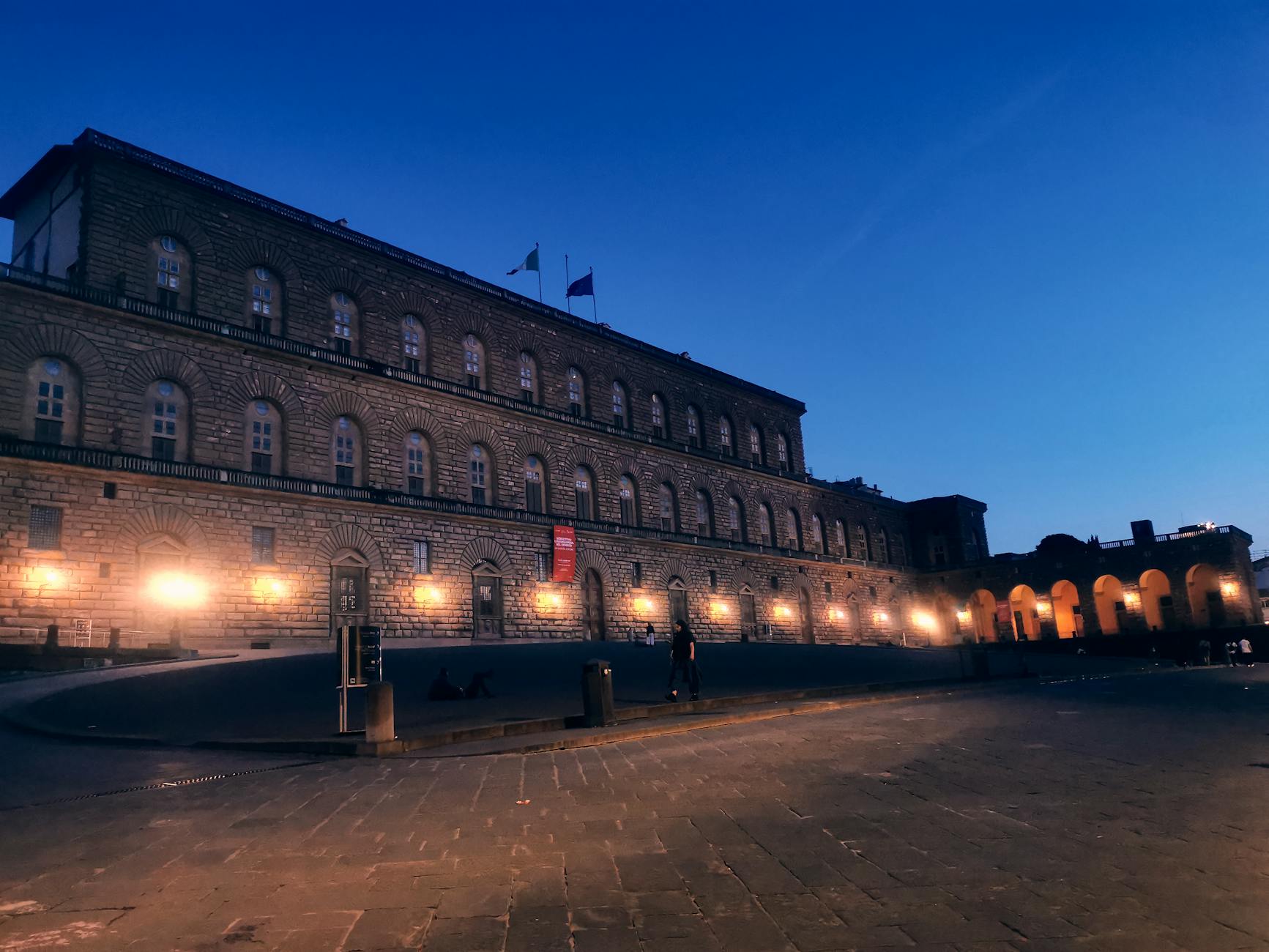
Across the Arno in the Oltrarno neighbourhood, Palazzo Pitti is Florence’s grandest palace and one of the most astonishing complexes in the city. Built originally for the Pitti banking family in the fifteenth century and later acquired by the Medici, it served as the grand ducal residence for three centuries. Today it houses five separate museums across its vast rooms, making it a full-day destination in its own right.
Palatine Gallery (Galleria Palatina)
The Palatine Gallery on the first floor is the artistic highlight of Palazzo Pitti. Unlike the Uffizi’s scholarly chronological arrangement, the Palatine Gallery hangs its paintings the way the Medici actually lived with them: densely, floor to ceiling, grouped by aesthetic impact rather than historical period. The effect is overwhelming in the best sense — every room is a salon fit for a prince, hung with works by Raphael, Titian, Rubens, Caravaggio, and Tintoretto.
Raphael’s works here are exceptional, including the Madonna della Seggiola (Madonna of the Chair) — one of his most beloved circular compositions — and the large Portrait of a Pregnant Woman (La Gravida). Titian’s portraits are magnificent: the Portrait of a Gentleman (The Grey-Eyed Man) and the Portrait of Pietro Aretino are among his finest. Look also for Caravaggio’s Sleeping Cupid and Rubens’s enormous Four Philosophers.
Royal Apartments & Other Collections
Beyond the Palatine Gallery, Palazzo Pitti’s other museums include the Royal Apartments (lavishly decorated nineteenth-century state rooms) and the Costume and Fashion Museum, both included in the standard Pitti ticket. The Medici treasury, the Treasury of the Grand Dukes (formerly the Silver Museum), with its cameos, gems, rock crystals and goldsmiths’ work, has been closed since 3 February 2026 until further notice, and the Porcelain Museum is shut for refurbishment; reopening notices appear on uffizi.it.
Boboli Gardens
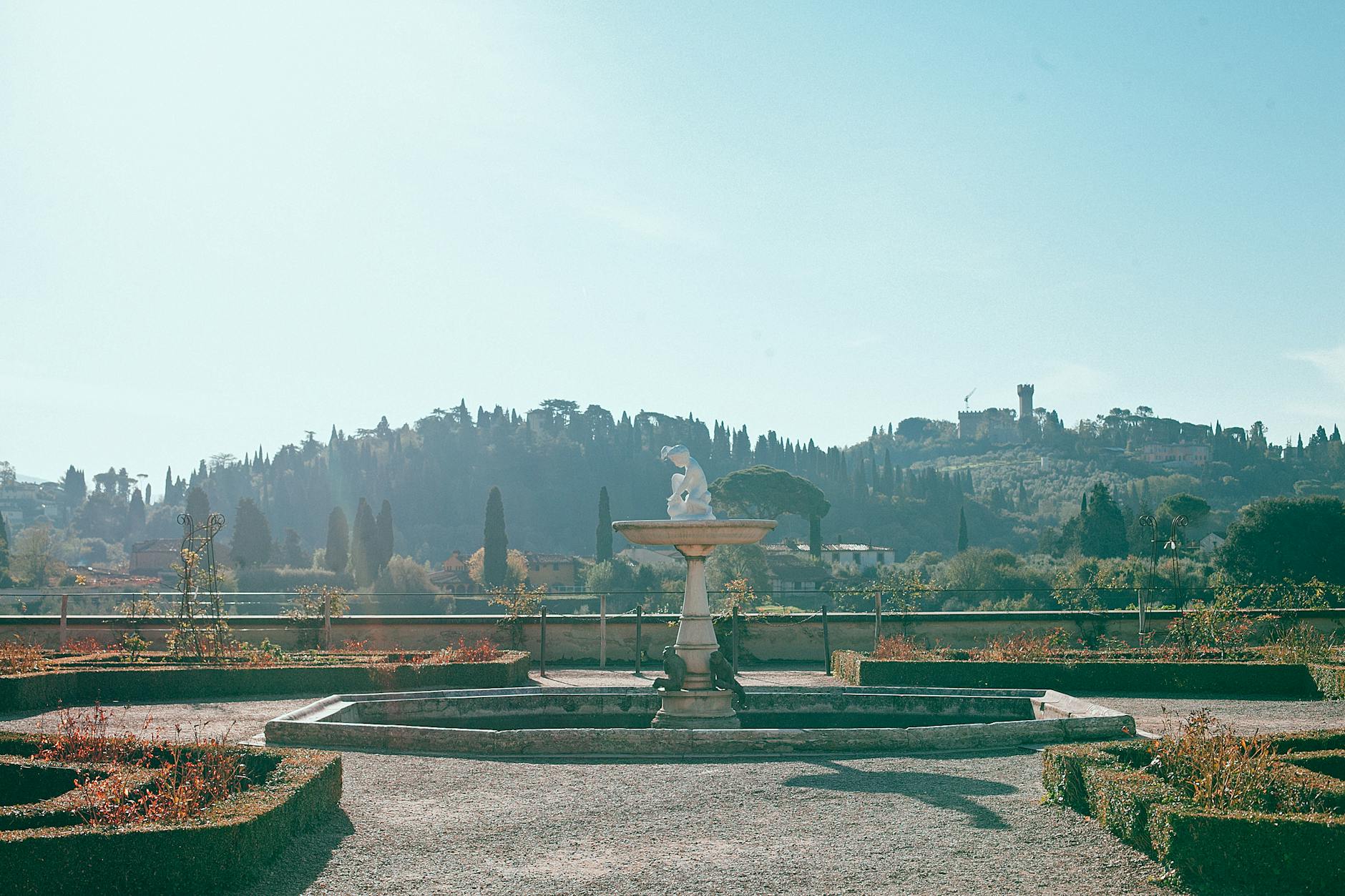
Behind Palazzo Pitti, the Boboli Gardens extend across eleven acres of terraced hillside — one of Italy’s finest examples of Renaissance and Baroque garden design. Laid out from 1549 under the supervision of Niccolò Tribolo and later extended by the Medici grand dukes, Boboli is a formal landscape of gravel paths, clipped hedges, grottos, fountains, and statuary. Palazzo Pitti itself hosted the premiere of Jacopo Peri’s Euridice, the earliest opera to survive, on 6 October 1600.
Highlights of Boboli include the extraordinary Grotta del Buontalento (Buontalento’s Grotto) — a mannerist fantasy of artificial stalactites, embedded shells and pebbles, and painted plaster creatures, which once housed four of Michelangelo’s Prisoners, moved to the Accademia in 1909 — the Fontana del Nettuno (fenced off for restoration, though you can still see it from outside the works), and the views from the upper terrace across Florence’s rooftops to the dome of Santa Maria del Fiore. On a warm afternoon, Boboli is also one of the most pleasant green spaces in the city — heavily visited, but large enough to find quieter corners.
Palazzo Pitti Tickets
- Palatine Gallery + Royal Apartments: €16
- Boboli Gardens: €10 on the day, €13 booked
- Combined 5-day Uffizi + Pitti + Boboli pass: €40 — excellent value if you plan to visit all three
- Closed: Palazzo Pitti on Mondays; Boboli Gardens on the first and last Monday of the month
Museo Nazionale del Bargello — The Sculpture Lover’s Secret
Ask most Florence visitors if they have been to the Bargello and a significant proportion will look blank. Ask a curator, art historian, or repeat visitor, and they will tell you it is essential — arguably the greatest collection of Renaissance sculpture in the world. The Bargello is the hidden gem of Florence museums, and visiting it is one of the most consistently rewarding decisions you can make.
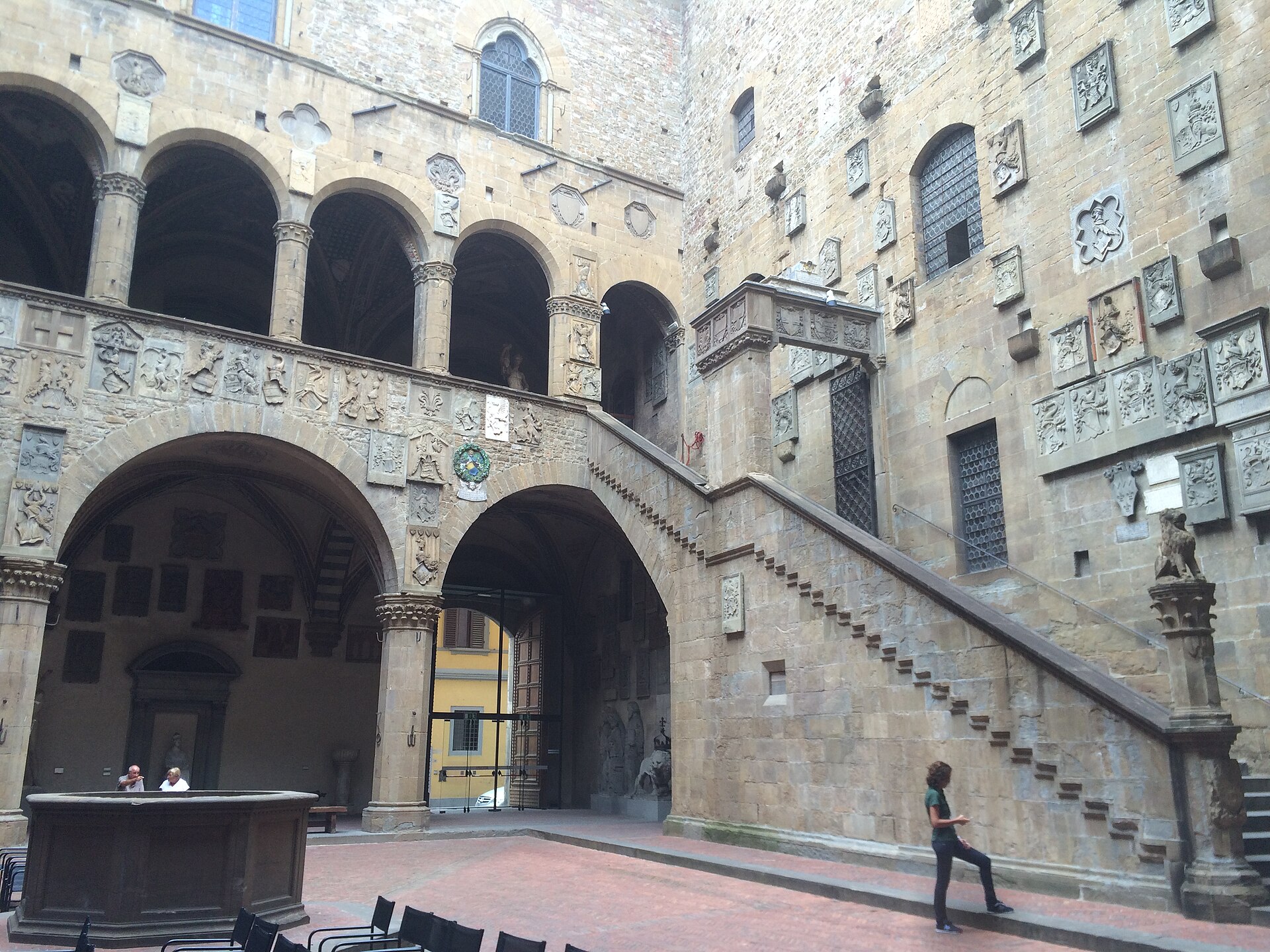
The Bargello building itself dates from 1255 and is one of Florence’s oldest surviving public buildings, originally serving as a government palace and later as the city’s main prison and the residence of the police chief (bargello). Its austere exterior gives way to a beautiful vaulted courtyard hung with the coats of arms of the podestà (chief magistrates) who served here — a perfect medieval scene. The courtyard contains sculpture by Giambologna and Ammanati, and the staircase and loggia are lined with works by Donatello’s school.
Donatello’s Bronze David
The centerpiece of the first-floor Donatello room is his extraordinary bronze David, cast around 1440. This is the first freestanding bronze nude since antiquity — a revolutionary work that marks one of the decisive turning points of the Renaissance. Where Michelangelo’s David is heroic, tense, monumental, Donatello’s David is something altogether stranger and more ambiguous: a slight, adolescent figure, hat tilted at a coquettish angle, standing casually on the severed head of Goliath with an expression of dreamy indifference. Art historians have argued for centuries about the meaning of its eerie, sensual quality; whatever that meaning, the figure’s technical and conceptual achievement is staggering.
Other Bargello Masterpieces
The same Donatello room contains the sculptor’s marble Saint George (the original, removed from Orsanmichele), several magnificent versions of Saint John the Baptist, and the twin bronze relief panels that Brunelleschi and Ghiberti submitted for the famous 1401 competition to design the Baptistery doors — the moment conventionally cited as the start of the Renaissance. Seeing both panels side by side, understanding why Ghiberti’s won, is one of the great connoisseurship exercises in art history.
On the ground floor, the Michelangelo room contains his early Bacchus (c. 1497) — flushed, unsteady, genuinely drunk in a way no classical Bacchus ever was — his penetrating marble Brutus, and the charming Pitti Tondo. Also here are Cellini’s spectacular gilded bronze Bust of Cosimo I de’ Medici and his preliminary model for the Perseus that stands in the Loggia dei Lanzi. Upstairs, Giambologna’s elegant bronze Mercury — seemingly suspended on a single toe — and Verrocchio’s bronze David (the one for which the young Leonardo da Vinci may have modelled) complete an astonishing survey.
Bargello Tickets (2026)
- Standard ticket: €12 (optional booking €4)
- Bargello + Accademia combined (new 2026): €26 — valid 48 hours; excellent value
- Accademia and Bargello museums combined: €38 — valid 72 hours; covers the Accademia, Bargello, Medici Chapels, Orsanmichele and Palazzo Davanzati (not the Uffizi or San Marco)
- Closed: Mondays
The Vasari Corridor — Florence’s Most Exclusive Experience
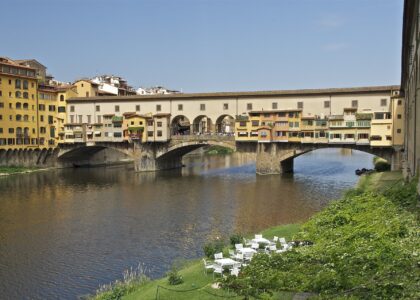
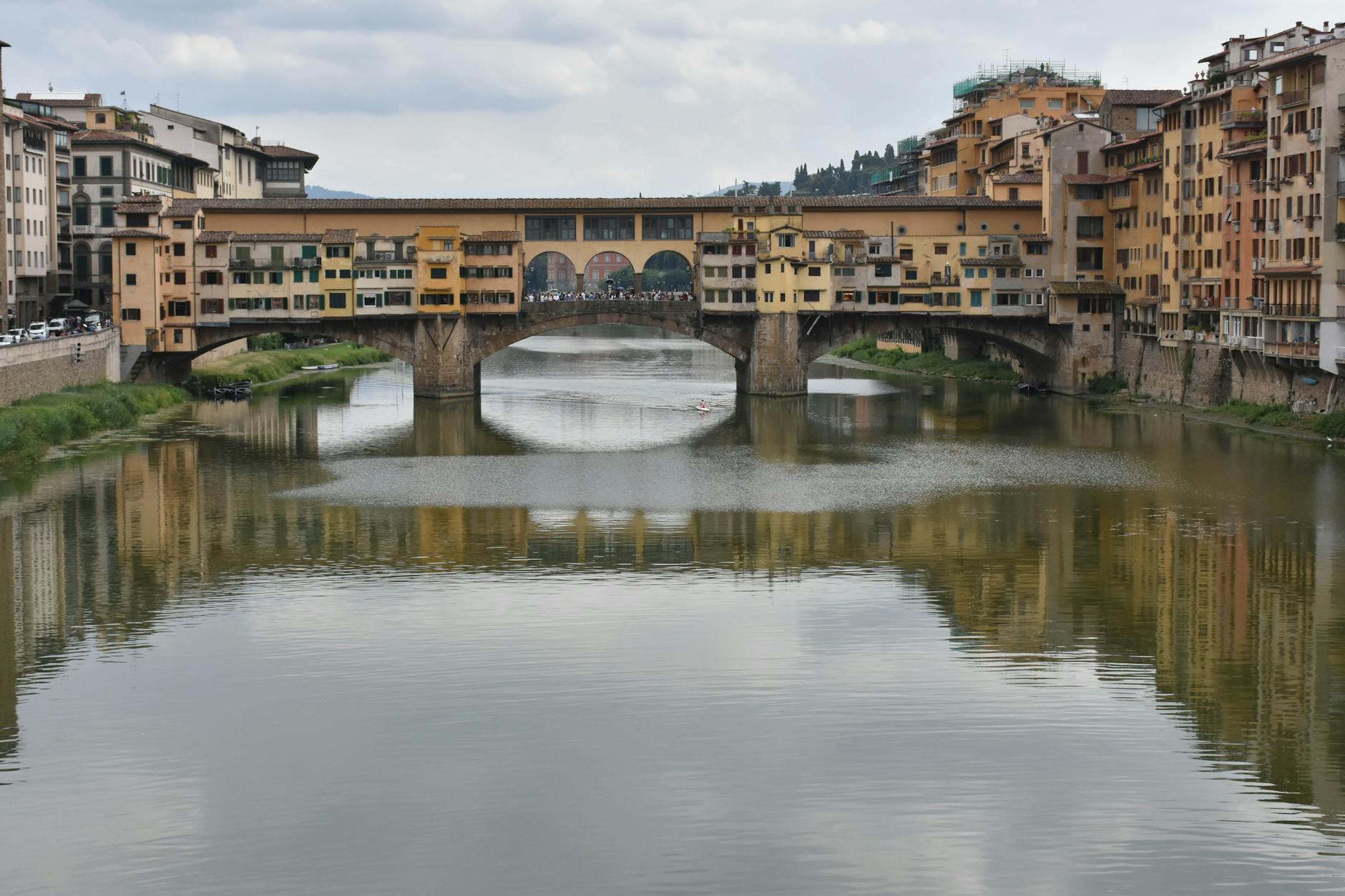
One of the most extraordinary things about Florence is that it contains an elevated, enclosed kilometre-long passageway — a private aerial street — running from the Uffizi Gallery, across the Ponte Vecchio, and ending at Palazzo Pitti. The Vasari Corridor (Corridoio Vasariano) was built in just five months in 1565 by Giorgio Vasari for Cosimo I de’ Medici, allowing the grand duke and his court to move between their official residence at Palazzo Pitti and their seat of power at Palazzo Vecchio without ever descending to street level — and without mixing with the Florentine populace.
After being closed for over eight years for extensive restoration work, the Vasari Corridor reopened to the public in late 2024. Access remains strictly limited, and the experience is unlike anything else in the Florence art galleries system. Our Vasari Corridor guide covers how the limited booking actually works, what hangs there now, and whether the supplement is worth paying.
What You See Inside
A selection from the Uffizi’s famous self-portrait collection, which runs to more than 2,000 works, once hung on the corridor’s walls; since the restoration the walls are back to their original bareness, and the self-portraits are shown in the gallery itself. The architectural journey itself is at least as compelling: the passageway runs above the shops of Ponte Vecchio (where windows cut into the wall offer views down to the Arno), through the interior walls of a church, and along the exterior wall of the Oltrarno neighbourhood before arriving at Palazzo Pitti.
When Cosimo I commissioned the corridor in 1565, the butchers’ shops on Ponte Vecchio were still trading below it; in 1593 Grand Duke Ferdinando I ordered them replaced with goldsmiths and jewellers — considered more appropriate neighbours for a ducal passageway. The tradition continues: Ponte Vecchio today remains lined exclusively with goldsmiths.
Booking the Vasari Corridor
- Ticket price: €43 on the day, €47 booked — includes full Uffizi admission plus corridor access
- Entry point: Room D19 in the Uffizi Gallery
- Operating days: Tuesday through Sunday
- First group: 10:15am
- Visit duration: Approximately 45 minutes in the corridor itself (about 35 minutes on the special Friday-evening opening)
- Ticket type: Strictly nominative (your name is on the ticket); non-transferable; bring your ID
- Book at: uffizi.it
Palazzo Vecchio & the Secret Passages Tour
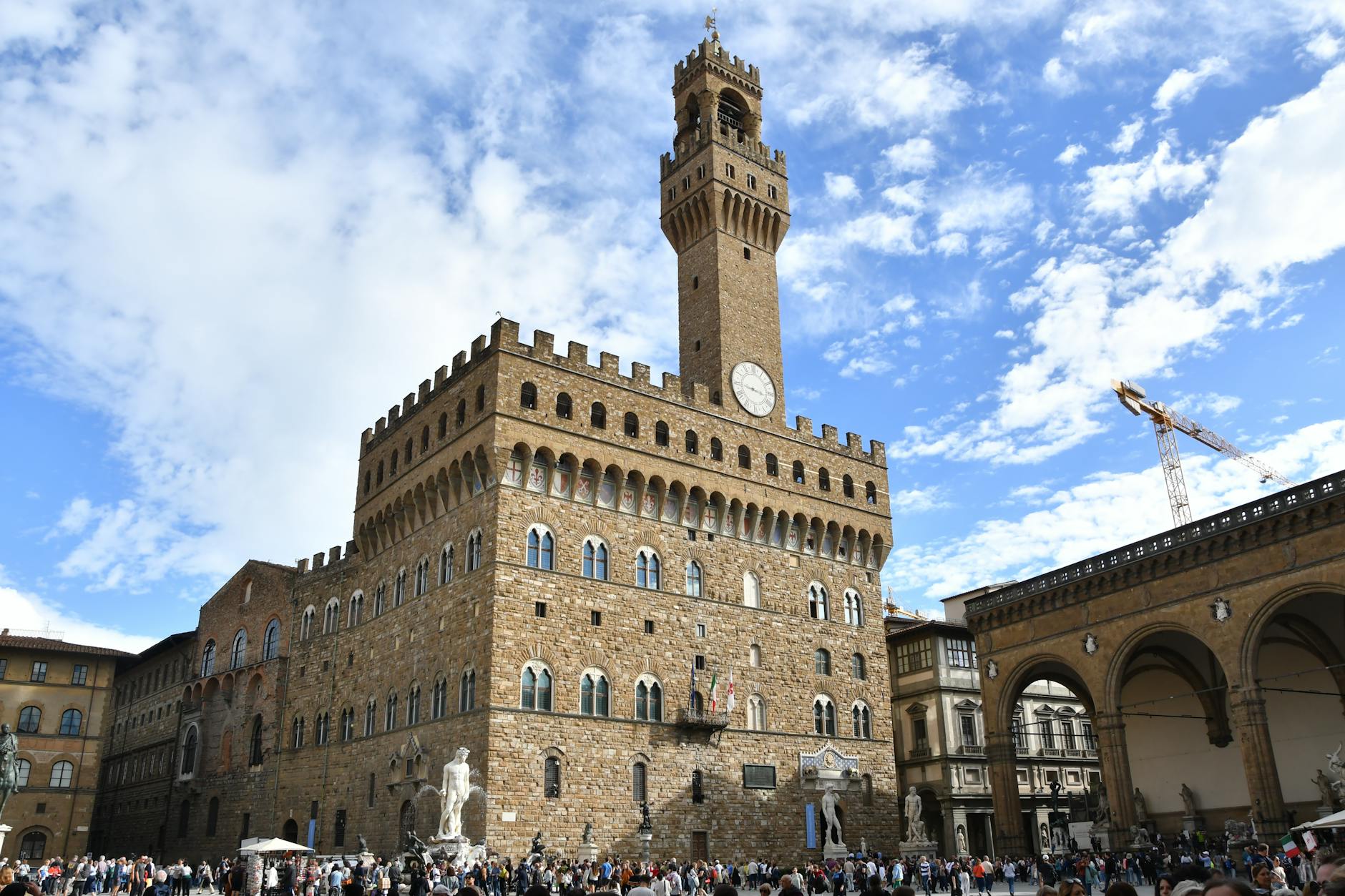
Begun in 1299, Florence’s town hall has been the seat of civic power since 1302 — and remarkably, it still functions as the headquarters of the city government. Palazzo Vecchio’s crenellated tower (Torre di Arnolfo) defines the Florence skyline from Piazzale Michelangelo; its interior, redesigned by Vasari for Cosimo I in the 1540s, is among the most spectacular of all Florentine interiors.
The Salone dei Cinquecento
The great Hall of the Five Hundred (Salone dei Cinquecento) was built in 1494 to house the new republican government of 500 elected citizens after the expulsion of the Medici. It is an overwhelming room: 54 metres long, 23 metres wide, with a coffered ceiling 18 metres above the floor, every surface of the walls covered with Vasari’s enormous battle frescoes celebrating Florentine military victories over Pisa and Siena.
The Salone dei Cinquecento carries one of the great unsolved mysteries of art history. The new Florentine Republic commissioned two enormous battle paintings for opposing walls: one from Leonardo da Vinci in 1503, and one from Michelangelo in 1504. Both produced full-size cartoons (preparatory drawings); neither finished the actual painting. Leonardo’s Battle of Anghiari was partially begun on the wall but then apparently abandoned or covered. The question of whether a lost Leonardo still exists beneath Vasari’s frescoes has motivated significant scientific investigation — including controversial probes by art diagnostician Maurizio Seracini, who reported pigment traces behind Vasari’s fresco, near the words “cerca trova” (“seek and you will find”) inscribed in a Vasari banner flag, and linked them to Leonardo’s lost mural. The mystery remains officially unresolved.
Francesco I’s Studiolo — The Alchemist’s Secret Room
Just off the Salone dei Cinquecento, Francesco I’s studiolo is one of the most extraordinary small rooms in Italy. Commissioned by Cosimo I’s reclusive son Francesco for himself and completed in 1570–1572 under Vasari’s supervision, it is a tiny windowless room — almost a cabinet — entirely decorated with paintings by the leading Mannerist artists of the Florentine court. The subject matter is deliberately arcane: alchemical allegories, natural history, the transformation of matter. The room functioned as a personal laboratory and treasury where Francesco kept his collection of minerals, curiosities, and chemical apparatus. It was dismantled by 1590 and only partially reconstructed in the twentieth century. Seeing it requires a guided tour and feels genuinely like opening a secret door.
Secret Passages Tours
Palazzo Vecchio offers dedicated “Secret Passages” tours that take visitors through concealed staircases in the walls, hidden mezzanine spaces above the Salone dei Cinquecento, and other areas normally inaccessible to regular ticket holders. These tours are excellent — genuinely illuminating about how the building functioned as a working palace and seat of power — and are especially appealing for families with children who enjoy the slightly theatrical conceit of hidden rooms.
- Standard entry: €18 (reduced €12)
- Secret Passages tour supplement: €8 extra (€4 for residents of the metropolitan city); book in advance
- Time to budget: allow 1.5–2 hours including a tour (the Secret Passages route itself takes 75 minutes)
- Check availability at: Musei Civici Fiorentini
Florence Museum Tickets, Passes & Money-Saving Tips
Understanding the Florence museum ticketing system is genuinely important — it is more complex than most major tourism cities, and getting it wrong means standing in long queues or, in summer, being turned away entirely. Here is everything you need to know.
Individual Museum Tickets
Most state museums (Uffizi, Accademia, Bargello, Medici Chapels, San Marco) are managed by the Uffizi Galleries system and sell tickets through uffizi.it. Civic museums (Palazzo Vecchio, Brancacci Chapel) are managed by Musei Civici Fiorentini. The Duomo complex has its own booking system. Keeping these three systems straight is the key to avoiding frustration.
Combined Tickets (2026 Prices)
| Pass / Combination | Museums Included | Price | Validity |
|---|---|---|---|
| Uffizi + Vasari Corridor | Uffizi Gallery + Vasari Corridor walkway | €47 | Single visit |
| Uffizi + Pitti + Boboli | Uffizi, Palazzo Pitti (all museums), Boboli Gardens | €40 | 5 days |
| Accademia + Bargello | Galleria dell’Accademia + Bargello Museum | €26 | 48 hours |
| Accademia + Bargello Museums Pass | Accademia, Bargello, Medici Chapels, Orsanmichele, Palazzo Davanzati | €38 | 72 hours |
| Giotto Pass (Duomo complex) | Baptistery, Campanile di Giotto, Opera del Duomo Museum, Santa Reparata (the Cathedral itself is free) | €20 | 3 calendar days |
The Firenze Card
The Firenze Card covers 72 hours of access to more than 60 Florence museums and attractions for €85. It is the most comprehensive pass available and makes financial sense if you plan to visit five or more museums in three days. However, holding a Firenze Card does not exempt you from mandatory timed reservations at the Uffizi, Accademia, Palazzo Vecchio, and Brancacci Chapel — you still need to book time slots for these venues separately (there is no extra charge for card holders, but the booking is required).
In March 2026, the Firenzecard Restart launched at €28: rather than a separate pass, it adds 48 hours to an expired Firenzecard, valid at the circuit museums you have not yet visited. Check the current museum list at the official Firenze Card website as the included venues are subject to change.
Free Museum Days
- First Sunday of every month: All Italian state museums (including Uffizi, Accademia, Bargello) are free. This is a wonderful opportunity but results in extreme crowds — arrive at opening time. The Uffizi on the first Sunday of August is not for the faint-hearted.
- Under 18: Free admission to all state museums at all times. Children simply join the ticket queue with an adult; no advance booking required for children, though the adult still needs a reservation.
- EU citizens aged 18–24: Reduced €2 ticket at state museums — bring your passport or ID.
Booking Strategy: The Right Order
- Decide your dates. Fix your travel dates before doing anything else.
- Book Uffizi first. Even before flights in peak season. Go to uffizi.it and select the 8:15am slot for your preferred day.
- Book Accademia second. On a different day from the Uffizi — two major museum visits in one day is exhausting.
- Book Vasari Corridor if desired, coordinating with your Uffizi visit.
- Book Brancacci Chapel — booking ahead is recommended, with limited slots.
- Everything else (Bargello, San Marco, Opera del Duomo, Museo Galileo, Palazzo Vecchio) can be booked much closer to your visit or even walk-in depending on season.
Practical Tips for Visiting Florence Museums
What to Bring
- Your booking confirmation (digital or printed) and the credit card used for booking — some venues verify both
- Photo ID — mandatory for Vasari Corridor tickets (nominative)
- Water bottle — especially in summer; the Uffizi in July can be warm despite climate control
- Comfortable shoes — marble and stone floors are hard; you will walk several kilometres in the Uffizi alone
- A small backpack or day bag — but note that large bags and suitcases must be checked at the cloakroom (usually free)
- Headphones if using the museum apps — the audio guides are excellent and work offline
Photography Rules
Photography policies vary by museum and have tightened in recent years. The general rules across Florence museums:
- No flash photography at the Uffizi Galleries — and leave it off elsewhere too, following each museum’s posted rules
- Uffizi: Photography permitted without flash in most rooms; some temporary exhibitions are no-photo zones
- Accademia: Photography of the David and Prisoners is permitted without flash
- Brancacci Chapel: No photography inside the chapel
- Vasari Corridor: Photography permitted along the walkway
- Tripods: Not permitted anywhere; selfie sticks banned in most venues
Dress Code
Florence’s civic and state museums have no formal dress code — unlike the churches, which require covered shoulders and knees. However, if your Palazzo Vecchio visit involves viewing the attached chapel, or your Opera del Duomo ticket takes you into the Cathedral itself, cover up. Bring a light scarf or cardigan as a versatile solution.
Best Times to Visit
- April–May and September–October: The ideal months — pleasant temperatures, manageable crowds, full opening hours
- November–March: Quietest period; some rooms may be closed for maintenance
- June–August: Peak season; maximum crowds, maximum heat; book the major museums as far ahead as you can; visit museums in the morning and rest in the afternoon
- Best time of day: Opening time (8:15am at the Uffizi, Tuesday to Sunday)
- Worst time: 11am–2pm on any summer day; cruise ship days (check Florence port schedules) bring additional crowds
Accessibility
Accessibility varies significantly across the Florence museums. The Uffizi has lifts to all floors and wheelchair-accessible routes through most rooms, though the building’s age means some areas are difficult. The Accademia is largely accessible. The Bargello has an accessible entrance but the medieval building presents some challenges. The Vasari Corridor is not accessible for wheelchair users due to the nature of the elevated passageway. Always contact museums directly to confirm current accessibility arrangements — standards have improved significantly in recent years and continue to develop.
Guided Tours
A good guide transforms museum visits — particularly in the Uffizi, where understanding the Medici patronage context and the chronological development of style makes individual works far more resonant. Private tours in the Uffizi typically cost €60–100 per person on top of the entry ticket, but for a first visit, the investment is substantial. Group tours (8–12 people) cost around €30–50 per person. Alternatively, Rick Steves’ free audio tours for the Uffizi and Accademia (available on his app) are genuinely useful and free.
Suggested Florence Museum Itineraries
Itinerary 1: The One-Day Art Lover (Florence in a Day)
If you have only one day, this is how to make the most of it. You will be tired by the end, but you will have seen the essential masterpieces.
- 8:15am: Uffizi Gallery — first slot; spend 2.5 hours; prioritise Botticelli (Room A9), Leonardo (Room A35), Michelangelo (Room A38). Stop at the terrace café for a coffee at 9:45am when the crowds begin to arrive.
- 11:00am: Walk through Piazza della Signoria; see the copy of Michelangelo’s David outside Palazzo Vecchio and Cellini’s Perseus in the Loggia dei Lanzi (free, though the Loggia asks for a free ticket, issued on site)
- 11:30am: Museo dell’Opera del Duomo — see Ghiberti’s Gates of Paradise originals and Donatello’s Magdalene (1.5 hours)
- 1:30pm: Lunch near San Marco; try one of the simple trattorie on Via Cavour or Via San Gallo. See our Florence food guide for recommendations.
- 2:30pm: Galleria dell’Accademia — book an early-afternoon slot; spend 1.5 hours with the David and the Prisoners
- 4:30pm: Medici Chapels — 1 hour with Michelangelo’s Night, Day, Dawn and Dusk
- Evening: Aperitivo in the Oltrarno neighbourhood and dinner near Ponte Vecchio
Itinerary 2: Three-Day Comprehensive Art Programme
Day 1 — Uffizi Focus Day:
- 8:15am: Uffizi Gallery (3 hours, full chronological walk)
- 12:00pm: Vasari Corridor (if booked — you need the Uffizi + Corridor ticket and a reserved slot; entry is from Room D19)
- 1:30pm: Lunch on Ponte Vecchio area
- 3:00pm: Palazzo Pitti — Palatine Gallery (2 hours)
- 5:00pm: Boboli Gardens (1.5 hours, sunset from the upper terrace)
Day 2 — Sculpture Day:
- 9:00am: Galleria dell’Accademia (1.5 hours)
- 11:00am: San Marco Museum (1.5 hours)
- 1:00pm: Lunch in the San Marco neighbourhood
- 3:00pm: Bargello Museum (2 hours)
- 5:00pm: Medici Chapels (1 hour)
Day 3 — History & Hidden Gems:
- 9:00am: Museo dell’Opera del Duomo (2 hours)
- 11:00am: Palazzo Vecchio + Secret Passages tour (2 hours)
- 1:30pm: Lunch near Piazza della Repubblica
- 3:00pm: Brancacci Chapel (30-minute timed visit — book ahead)
- 4:00pm: Museo Galileo (1.5 hours)
- Evening: Dinner in the Oltrarno
Itinerary 3: Family-Friendly Florence Museums
Florence with children requires a different strategy — targeting the most engaging experiences over comprehensive coverage.
- Morning Day 1: Galleria dell’Accademia — children are universally awed by the sheer scale of the David. Focus on this and the Prisoners; skip the upper floors unless your children are patient.
- Afternoon Day 1: Palazzo Vecchio Secret Passages tour — this is the most child-friendly museum experience in Florence. Hidden stairwells, secret rooms, the story of the alchemist prince Francesco I — it plays like an adventure story.
- Morning Day 2: Museo Galileo — genuinely excellent for children; interactive displays, Galileo’s actual telescopes, the severed finger reliquary (a guaranteed hit with 8-14 year olds).
- Afternoon Day 2: Boboli Gardens — let children run in the amphitheatre and explore the grottos. Carry a picnic.
- Day 3 (if available): Uffizi — 90 minutes maximum; target Botticelli, Leonardo, and the portrait of Lorenzo de’ Medici. Under-18s enter free.
Itinerary 4: Off-the-Beaten-Path Florence Art Galleries
For the repeat visitor or the traveller who wants to experience Florence museums without the crowds.
- Bargello Museum — the greatest sculpture collection most visitors never see; rarely crowded even in August
- San Marco Museum — Fra Angelico’s frescoes in monastic quiet; genuinely peaceful even in high season
- Museo Stibbert — the most eccentric collection in the city; almost always uncrowded; a full sensory experience
- Brancacci Chapel — timed entry keeps this permanently manageable; the art is genuinely revolutionary
- Museo Novecento — for modern art; a complete contrast to Renaissance immersion; nearly always quiet
- Museo dell’Opera del Duomo — routinely overlooked despite its extraordinary contents; rarely as crowded as it should be
Florence Museums — Frequently Asked Questions
Do I need to book Florence museum tickets in advance?
Yes — for the Uffizi Gallery and the Galleria dell’Accademia, advance booking is essential, particularly from April through October. In July and August, book as far ahead as you can. The Uffizi does sell tickets on the day, with a cheaper €16 rate from 4pm, but counting on a walk-up slot is a significant gamble. For other Florence museums such as the Bargello, San Marco, and Medici Chapels, check availability and book ahead where you can. The Brancacci Chapel admits small groups for timed visits, so booking ahead is wise year-round.
How many days do I need to see all the main Florence museums?
To see the main Florence art galleries and museums at a comfortable pace, three to four days is ideal. This allows a full morning in the Uffizi, a separate half-day in the Accademia, an afternoon in the Bargello, and time for Palazzo Pitti, the Opera del Duomo, and at least one or two smaller museums. With one day, you can cover the Uffizi and Accademia (with the David) and perhaps one additional venue. It is worth noting that museum fatigue is real — most visitors find that two major museum visits per day is the comfortable maximum.
Is the Firenze Card worth buying?
The Firenze Card (€85 for 72 hours, covering more than 60 museums and attractions) can pay off if you plan to visit five or more museums in three days; add up the prices of the museums you actually want before buying. For a typical focused visitor doing the Uffizi, Accademia, Bargello, Palazzo Vecchio, and two or three smaller museums, it pays for itself. The Firenzecard Restart (€28, from March 2026) is not a smaller pass: it adds 48 hours to an expired card, for the circuit museums you have not yet visited. Critically, the Firenze Card does not exempt you from mandatory timed reservations at the Uffizi, Accademia, Palazzo Vecchio, and Brancacci Chapel — you must still book your time slots even as a card holder.
Which is better — the Uffizi or the Accademia?
They are different in character and both are essential if time permits. The Uffizi holds a major collection of Renaissance painting, with medieval works before it and Baroque after — a journey through five centuries of Italian art. The Accademia is much smaller and more focused, built around Michelangelo’s David. If you can visit only one: the Uffizi offers more breadth and depth. But if standing before what is arguably the greatest sculpture ever carved is your priority, choose the Accademia. Ideally, visit both on separate days — ideally with the Accademia in the morning and a smaller museum in the afternoon of that same day.
Are museums in Florence free on the first Sunday of the month?
Yes — Italian state museums, including the Uffizi, Accademia, Bargello, San Marco, and Medici Chapels, are free to enter on the first Sunday of every month. However, you still need to book a timed entry slot in advance for the Uffizi and Accademia even on free Sundays — the booking is for access management, not payment. These free Sundays are extremely popular and the museums are significantly more crowded than on normal days. Arrive at opening time to manage the crowds. Children under 18 are free every day at state museums.
What is the Vasari Corridor and how do I visit it?
The Vasari Corridor is a one-kilometre elevated passageway built in 1565 connecting the Uffizi Gallery to Palazzo Pitti, crossing the Arno via Ponte Vecchio. It was built for Cosimo I de’ Medici so the ducal family could move between palace and government offices without using public streets. Closed for eight years for restoration, it reopened in late 2024. To visit, book the combined Uffizi + Corridor ticket (€47) at uffizi.it. Entry is from Room D19 in the Uffizi, Tuesday through Sunday, with the first group at 10:15am. Tickets are nominative (your name is on them) and non-transferable; bring photo ID. The daytime corridor visit takes approximately 45 minutes, and the special Friday-evening visit about 35.
What is the best hidden gem museum in Florence?
The Bargello Museum is the single most underrated major museum in Florence. It holds a major collection of Renaissance sculpture: Donatello’s bronze David (the first freestanding nude since antiquity), Michelangelo’s Bacchus and Brutus, Cellini’s bust of Cosimo I, and Giambologna’s Mercury. It is also one of the most beautiful buildings in Florence. For a more eccentric choice, the Museo Stibbert on the northern edge of the city is an extraordinary Victorian-era collection of arms, armour, paintings and decorative arts that almost no tourist visits — genuinely surprising and wonderful.
Can I take photographs in Florence museums?
Photography policies vary by museum. In general, non-flash photography for personal use is permitted in most state museums including the Uffizi and Accademia. The Brancacci Chapel prohibits photography entirely. Selfie sticks and tripods are banned across all Florence museums. Some temporary exhibition rooms within otherwise photo-permitted museums may have specific no-photography rules — look for signage or ask staff. Leave the flash off everywhere: the Uffizi Galleries ban it, and other museums post their own rules.
Which Florence museums are open on Mondays?
Most major state museums in Florence — including the Uffizi, Accademia, Bargello, San Marco, and Medici Chapels — are closed on Mondays. Exceptions include Palazzo Vecchio (open daily, with shorter Thursday hours), the Museo dell’Opera del Duomo (open daily except the first Tuesday of the month), Museo Galileo (open daily, Tuesdays 09:30–13:00 only), and the Museo Novecento (closed Thursdays). If Monday is your only museum day in Florence, plan around Palazzo Vecchio, the Opera del Duomo, and Museo Galileo — all excellent choices.
How early should I arrive at the Uffizi Gallery?
Book the first available timed slot — 8:15am — and arrive five to ten minutes before the doors open. The Uffizi is at its most peaceful in the first hour: the Botticelli rooms (A9 on the current map) are often nearly empty from 8:15am to around 9:15am. By 10am the museum becomes significantly busier, and by 11am the Botticelli rooms in particular are densely crowded. Arriving at opening time and going directly to the Botticelli rooms gives you a fundamentally different — and immeasurably better — experience of those paintings than arriving mid-morning or after lunch.
Final Thoughts: Making the Most of Florence’s Art
There is a temptation, when visiting Florence museums, to treat them as a checklist — the Uffizi, the Accademia, the Bargello, ticked off in sequence. Resist that. The greatest art demands slowness. Stand in front of the Birth of Venus for fifteen minutes, not three. Sit on the bench in the Accademia’s Tribune and simply look at the David from different distances. In the San Marco Museum, spend time alone in Fra Angelico’s cells, understanding that these frescoes were never meant to be admired but to be prayed with. The Renaissance art Florence produced was made for contemplation, not consumption.
That said, planning matters enormously. Book your Uffizi and Accademia tickets the moment your travel dates are confirmed. Build your itinerary around those timed slots. Leave room for serendipity — a church you duck into for shelter from rain, a small museum you find by accident, a view from a terrace you weren’t expecting. Florence rewards both preparation and wandering, in roughly equal measure.
If you are staying more than three days, consider renting an apartment in the Oltrarno — the south bank neighbourhood that gives you Palazzo Pitti and Boboli Gardens as a morning walk. If you are visiting in summer and can manage the logistics, the 4pm discounted Uffizi slot on a hot July evening — the crowds thinning, the light changing through the windows — is one of the great museum experiences available anywhere in the world.
The museums in Florence Italy are the reason this city exists as a destination. Every other pleasure — the food, the wine, the piazzas, the light — is real and wonderful. But it is the art that makes Florence irreplaceable.