This article contains advertising. Booking links on this site can be turned into paid links automatically by our partner Travelpayouts: if you book through one, we earn a commission from the provider, at no extra cost to you. It never affects what we recommend. Affiliate disclosure
North of the Duomo, the San Lorenzo and San Marco neighbourhoods form a different Florence than the centro storico postcard. Anchored by Brunelleschi’s deliberately unfinished basilica of San Lorenzo, the cast-iron-and-glass Mercato Centrale (1874), the Medici Chapels, and Fra Angelico’s frescoed Museum of San Marco, this is the city’s market quarter — full of locals shopping, students at the nearby university, and travellers who’ve discovered that staying here puts them in walking range of the Duomo for 20–30% less than centro storico hotel pricing. This 2026 guide covers everything to know about the San Lorenzo Florence and adjacent San Marco neighbourhoods — sights, food, hotels, the markets, and how to use the area as a city base.
For broader context see our Where to Stay in Florence pillar and Oltrarno Florence Guide for comparison.
The quarter’s quietest treasure is the friary at its northern edge: our Museo di San Marco guide covers Fra Angelico’s frescoed cells.
San Lorenzo & San Marco overview
San Lorenzo and San Marco sit immediately north of the Duomo and west of the Accademia. Bounded roughly by Via dei Cerretani / Via dei Pucci to the south, Piazza San Marco to the north, Via dei Servi to the east and Via Faenza to the west, this is a tightly packed quarter where every street has either a market stall, a basilica, a museum or a trattoria. Walking from the Duomo to Mercato Centrale takes 4 minutes; to the Accademia (David), 6 minutes; to Piazza San Marco (Fra Angelico’s frescoes), 7 minutes.
The neighbourhood split: San Lorenzo is the southern half (basilica, Medici Chapels, Mercato Centrale, the leather-stall market). San Marco is the northern half (the Accademia for David, Museum of San Marco, Piazza San Marco). The two flow into each other; most travellers treat them as one extended quarter.
Mercato Centrale & the outdoor market
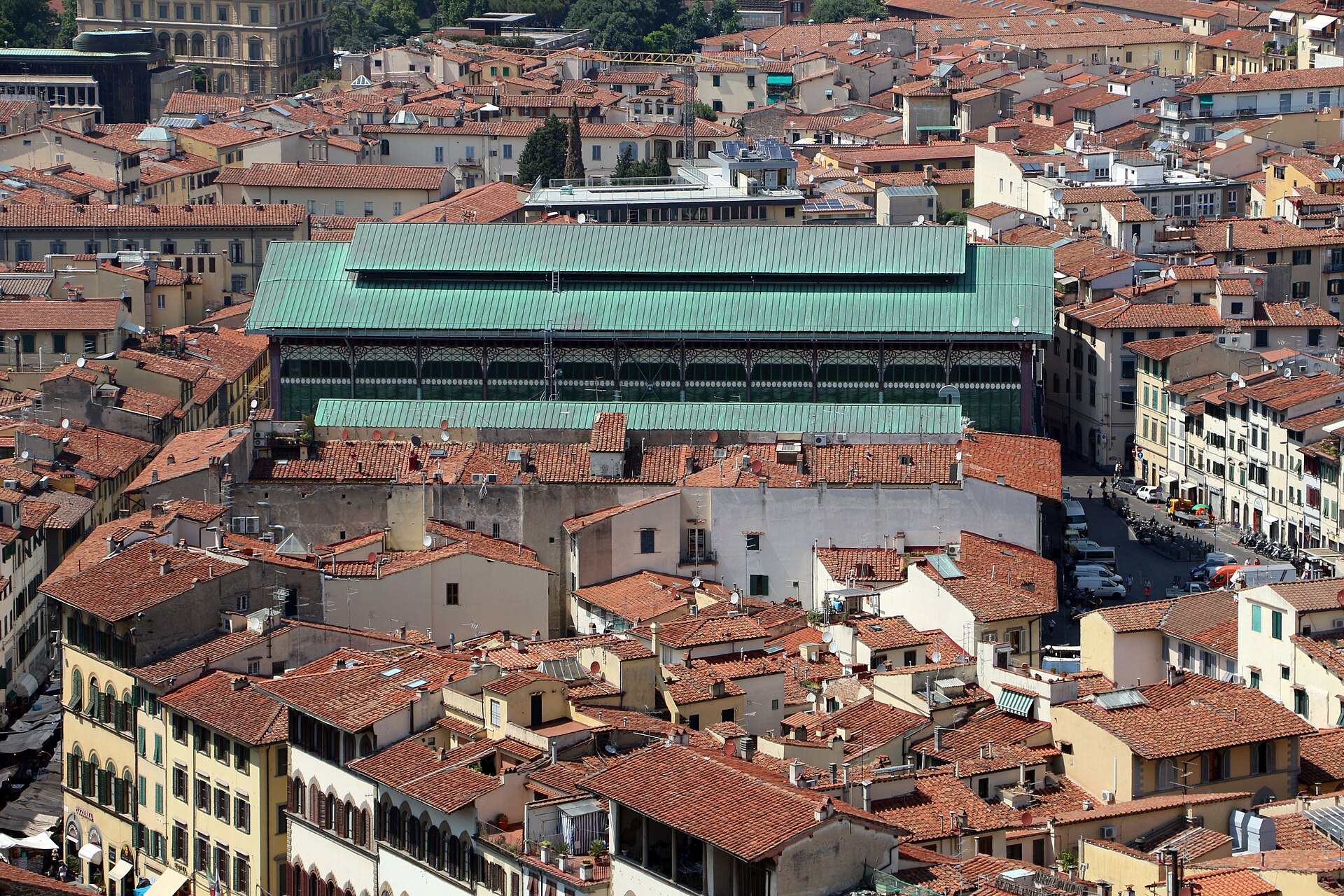
The Mercato Centrale, designed by Giuseppe Mengoni and built 1870–74, is Florence’s main food market. Cast-iron and glass construction with a squat pietra-serena base; loggias and 10 arches on each side. The format you see today: ground floor open Mon–Fri 07:00–15:00 and Sat 07:00–17:00 (closed Sunday) with butchers, fishmongers, fruit and vegetable vendors, plus small specialty shops selling olive oils, cheeses and cured meats. Upstairs food hall open daily 09:00–23:00 with 19 shops plus a bar, brewery, pizzeria, grill and cooking school: fresh pasta, Tuscan cuisine, pizza, sushi, tartufo specialties, gelato, wine bars, craft beer.
The communal upstairs format works like this: order from any counter, pay there, sit at long shared tables. Loud, lively, undeniably Italian. Best for travellers wanting a single meal-spot with multiple options for picky eaters or families. Average upstairs lunch: €12–€18 per person.
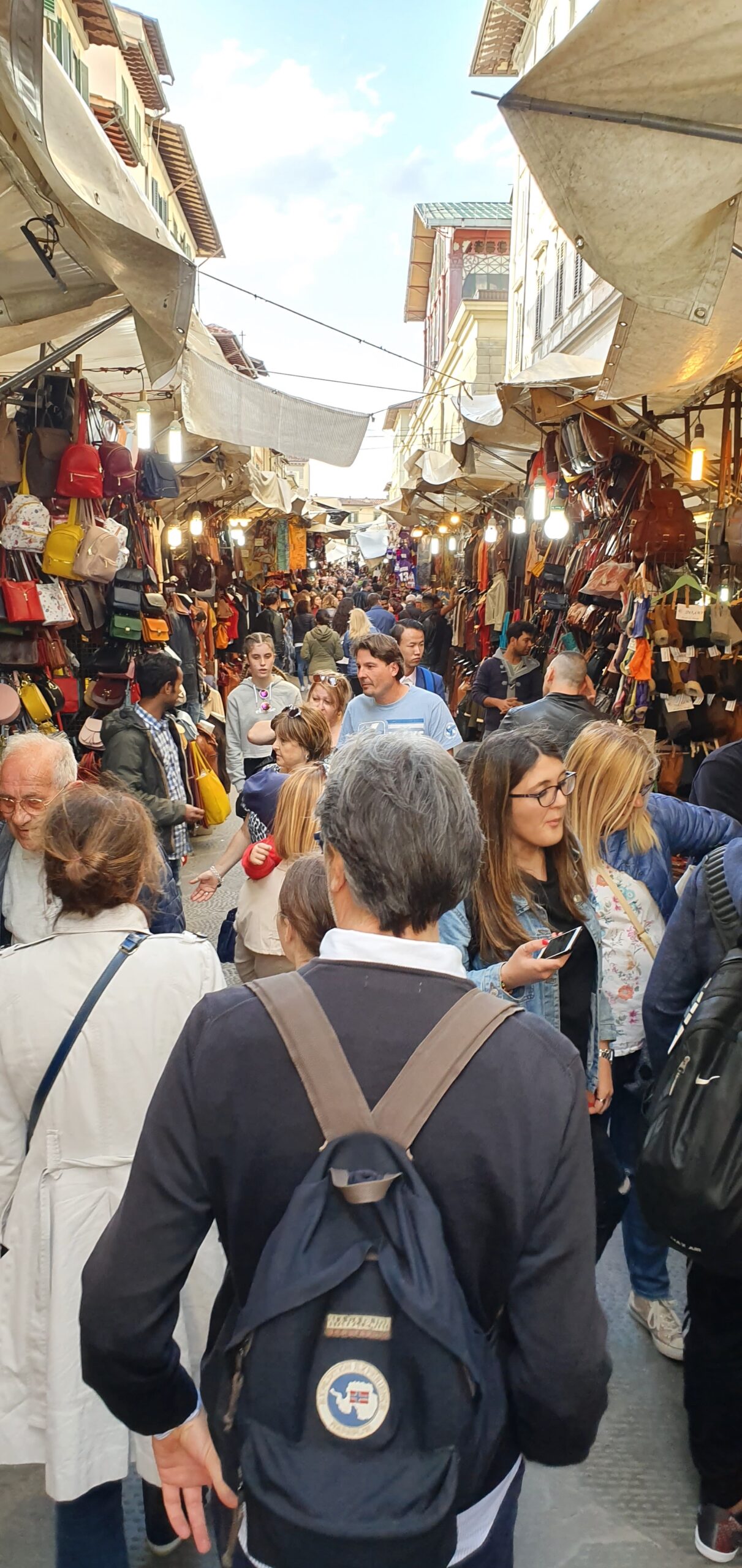
Outside, the San Lorenzo open-air market wraps around the Mercato Centrale building. Leather stalls (jackets, bags, wallets, belts), souvenirs, scarves. Open 09:00–19:00 daily. Quality varies — real leather alongside obvious synthetic; the Scuola del Cuoio behind Santa Croce is significantly better quality and price for actual leather purchases.
Basilica di San Lorenzo & the Medici Chapels
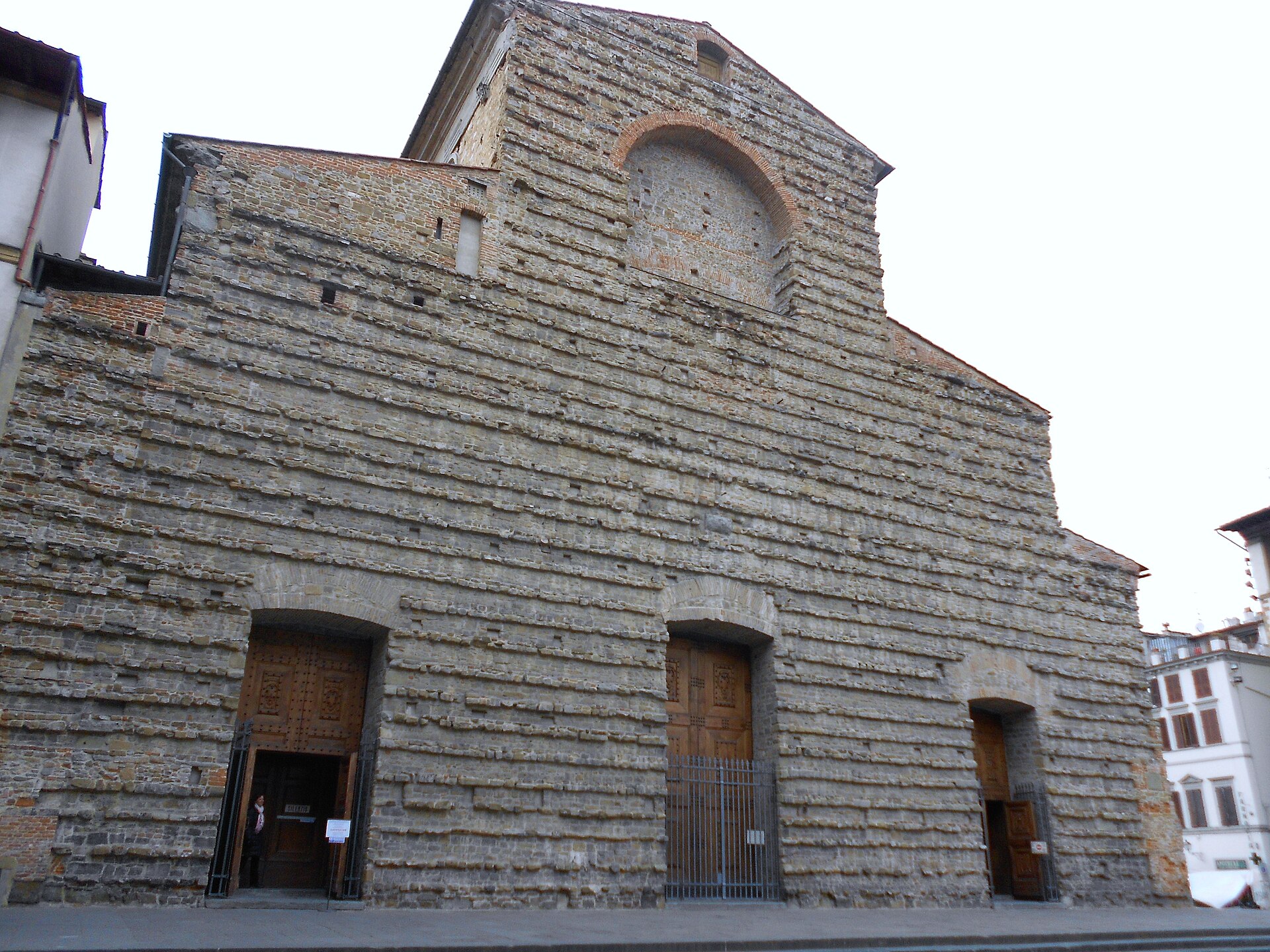
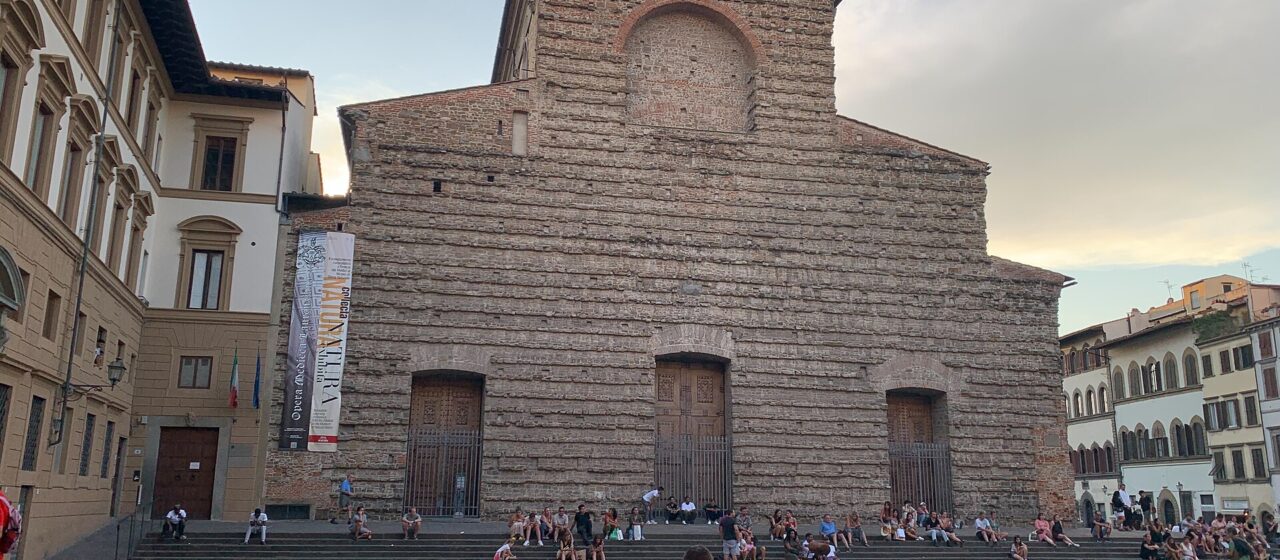
The Medici parish church, designed by Brunelleschi between 1419 and 1469, sits two blocks from the Duomo. Its bare-brick façade is famously unfinished — Michelangelo designed an elaborate white-marble façade that was never built. Inside, Brunelleschi’s geometric perfection: nine grey-stone arched bays, a coffered ceiling, two pulpits by Donatello (his last works). The Old Sacristy by Brunelleschi is one of the first proper Renaissance interiors. €9 entry.
The adjacent Medici Chapels are a separate ticket but a single complex. The Princes’ Chapel is a riot of colour — semi-precious stones inlaid floor to ceiling. The Sagrestia Nuova (New Sacristy), by Michelangelo, contains the sculptural tombs of Lorenzo and Giuliano de’ Medici — the famous Dawn, Dusk, Day and Night allegorical figures. €9 entry. Often quieter than the Accademia.
The Biblioteca Medicea Laurenziana, accessed via the basilica’s cloister, contains another Michelangelo architectural masterpiece — the dramatic curved staircase rising into the reading room. Free to view from the cloister; library admission €4 if open.
Museum of San Marco — Fra Angelico’s frescoed cells
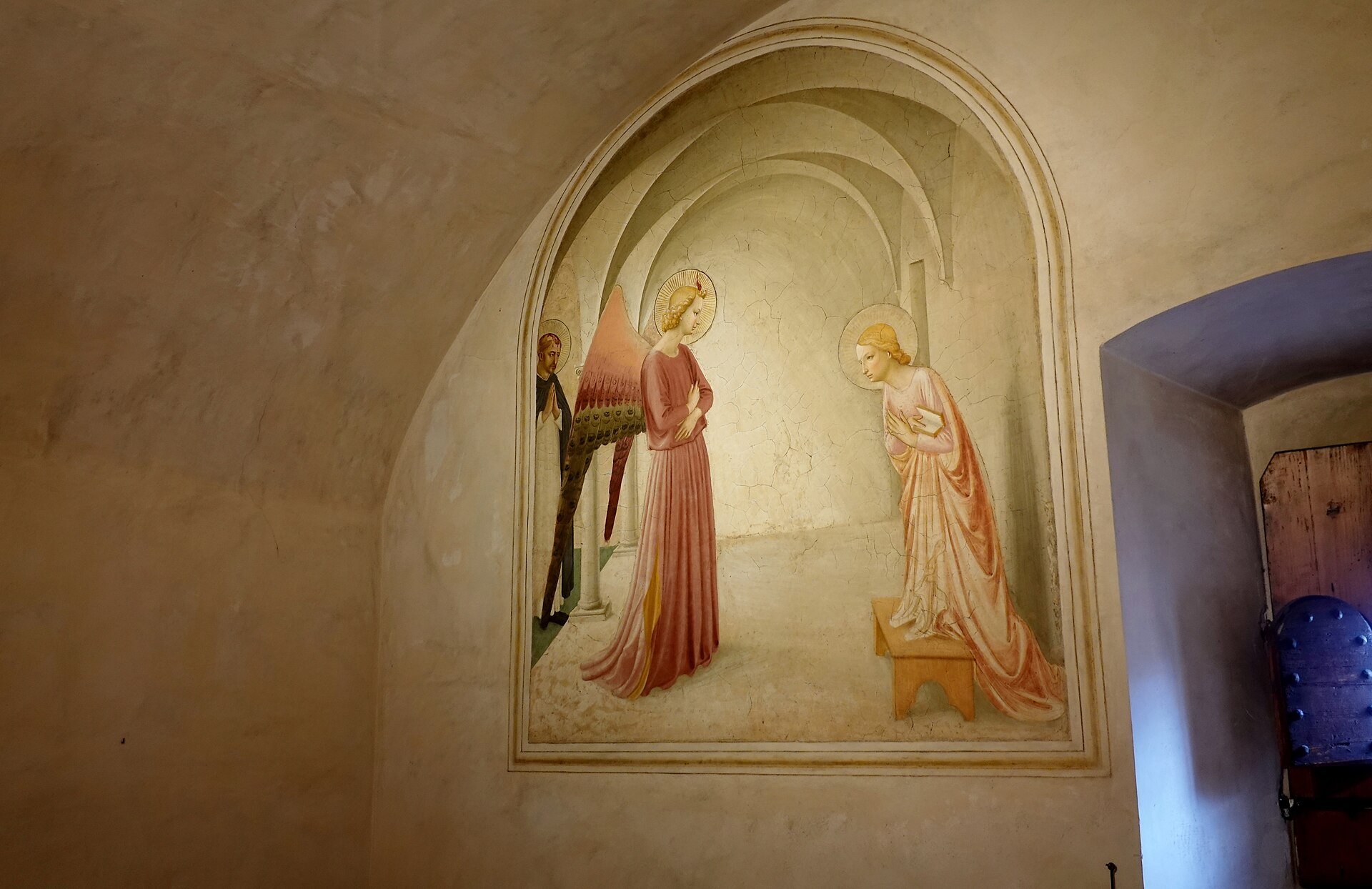
The Dominican monastery turned national museum at Piazza San Marco. Every monk’s cell on the upper floor is decorated with a meditative fresco by Fra Angelico (1438–45). It’s the only place in the world to see an entire artist’s body of work in its original setting. The Crucifixion fresco in the chapter house is a Renaissance landmark. Savonarola lived (and preached fire-and-brimstone sermons) in the prior’s quarters here before his 1498 execution; his cell is preserved. €8 full price; closed Wednesdays. Often very quiet — Florence’s most underrated major museum.
Other sights in San Lorenzo & San Marco
Galleria dell’Accademia (David)
Strictly speaking on the San Marco edge of the neighbourhood. The home of Michelangelo’s David, plus the four unfinished Prisoners, the Gipsoteca and the Museum of Musical Instruments. €16 full price; book online.
Palazzo Medici Riccardi
The Medici family’s home from 1444 to 1540. Benozzo Gozzoli’s exquisite Procession of the Magi fresco (1459) covers every wall of the family chapel. Real Medici family members appear as the Magi. €10; book a fixed slot.
Cenacolo di Sant’Apollonia
Andrea del Castagno’s 1447 Last Supper fresco — the first dramatic-perspective version in Western painting. Free entry; closed Mondays. 5-minute walk from Mercato Centrale.
Cenacolo del Fuligno
Perugino’s quiet Last Supper. Free; irregular hours — check the Polo Museale website.
Giardino dell’Orticoltura
10 minutes north, a 19th-century botanical-society garden with a striking cast-iron-and-glass Tepidarium (1880). Free, often empty.
Eating in San Lorenzo & San Marco
Inside Mercato Centrale upstairs
The food-hall counters change occasionally but reliably include:
- Pasta Fresca da Eugenio — fresh pasta, hand-rolled.
- Trattoria Burro & Acciughe — anchovies-and-butter Tuscan pasta classics.
- Pizza al Taglio — Roman-style square pizza by the slice.
- Fishmonger Conti — tuna, salmon and seafood plates.
- Tartufi Savini — truffle pasta and bruschetta.
- Schiacciatina — Florentine flatbread sandwiches.
- Brindisi Wine Bar — Tuscan wines by the glass.
- Gelateria della Galleria — gelato.
Trattorias around the market
- Trattoria Mario (Via Rosina 2r) — Florence’s most famous lunch trattoria. Cash only; book by phone or email. Lunch Mon–Sat, plus dinner on Fridays (not in July); closed Sundays. €15 for pasta + main + house wine.
- Trattoria Sergio Gozzi (Piazza San Lorenzo 8r) — old-school working-class trattoria; €18 mains.
- Trattoria Zà Zà (Piazza del Mercato Centrale) — touristy but reliable; family-friendly; €25–€35.
- Lo Skipper — informal Tuscan-and-pizza spot popular with students.
Café & gelato
- Pasticceria Robiglio (Via dei Servi 112r) — old-school Florentine pasticceria, since 1928.
- Caffè Cellini at Hotel Cellai — boutique-hotel café open to non-guests.
- Gelateria Carabe (Via Ricasoli 60r) — Sicilian-Tuscan gelato.
- Pasticceria Sieni — old-school morning cornetti.
Shopping in San Lorenzo & San Marco
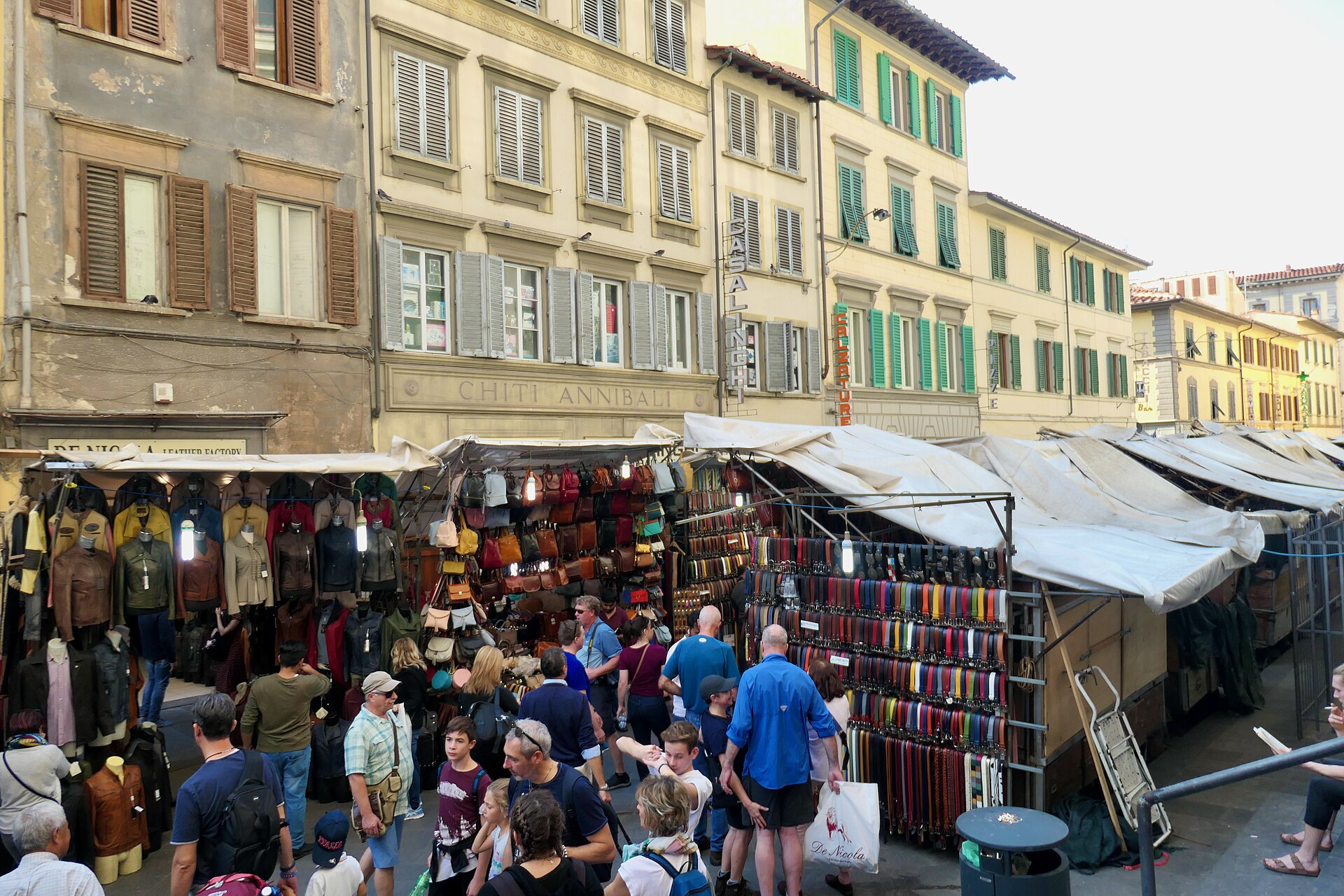
- Outdoor leather market — wraps around the basilica and Mercato Centrale. Quality varies; haggling expected.
- Mercato Nuovo’s Porcellino loggia — technically outside this neighbourhood but a 5-minute walk; covered loggia of leather and souvenirs.
- The bookshop strip on Via Ricasoli — small specialised art and travel bookshops.
- Pegna deli (Via dello Studio 8) — Florence’s premium deli since 1860; perfect for gourmet souvenirs.
- Eataly on Via dei Martelli — Italian-food superstore; cooking classes, tasting bars.
Where to stay in San Lorenzo & San Marco
- Hotel Cellai (Via 27 Aprile) — family-run since 1945; rooftop terrace; complimentary aperitivo. €180–€220.
- Hotel Casci (Borgo Pinti) — family-run inside a palazzo. €140–€180.
- Hotel California Firenze — modern 4-star inside a renovated palazzo on Via Ricasoli. €240+.
- Hotel L’Orologio — watch-themed boutique near Santa Maria Novella (technically just to the west). €260+.
- Hotel Centrale — 43 rooms one street north of the Duomo. €130–€180.
- Hotel Cardinal of Florence — historic palazzo on Via dei Pucci. From €230.
A self-guided San Lorenzo & San Marco walk
- Piazza del Duomo — start at the cathedral.
- Palazzo Medici Riccardi — 4-minute walk north on Via Cavour; visit Gozzoli’s Magi fresco (€10).
- Basilica di San Lorenzo — Brunelleschi’s interior, Donatello’s pulpits.
- Medici Chapels — Michelangelo’s Sagrestia Nuova tombs.
- Mercato Centrale upstairs — lunch.
- Outdoor leather market walk-through.
- Cenacolo di Sant’Apollonia — Andrea del Castagno’s Last Supper (free).
- Museum of San Marco — Fra Angelico’s frescoed cells.
- Galleria dell’Accademia — David (book a fixed-slot ticket).
- Piazza Santissima Annunziata — finish at Brunelleschi’s Ospedale degli Innocenti (the first true Renaissance building, 1419).
Practical info
- Walking from Duomo: 4–7 minutes.
- Public transit: bus 1, 7, 14 cross the area.
- Mercato Centrale opening hours: ground floor Mon–Fri 07:00–15:00, Sat 07:00–17:00, closed Sunday; upstairs daily 09:00–23:00.
- Bathrooms: free at Mercato Centrale upstairs (for buyers), at the major museums (for ticket-holders), at Eataly.
- Pharmacies: Farmacia San Lorenzo on Borgo San Lorenzo; Farmacia Comunale at Santa Maria Novella station (24/7) is a 5-min walk west.
- ZTL: most of the area is inside the historic-centre traffic-restricted zone.
- Best time of day: mornings 09:00–13:00 for the market; afternoons for museums; evenings for the upstairs food hall.
- Best season: October has the most local atmosphere with autumn produce at the market; April–May for ideal weather.
San Lorenzo & San Marco with kids
This is one of central Florence’s most family-friendly neighbourhoods. Specifically:
- Mercato Centrale upstairs — kids choose what they want from any of 24 counters. Long shared tables; loud, lively atmosphere.
- Accademia (David) — even small kids react to the 5.17-metre statue. Stay 30–45 minutes.
- Medici Chapels — short, dramatic, kid-tolerable; the Princes’ Chapel’s stone inlay holds attention.
- Museum of San Marco — quieter than the Accademia; the Fra Angelico cells are short corridors that suit short attention spans.
- Pasticceria Robiglio — hot chocolate and pastries, since 1928.
- Outdoor leather market — kids enjoy the sensory overload; haggling lessons in real time.
A short history of San Lorenzo
San Lorenzo’s story is essentially the story of the Medici family’s Florence. Cosimo de’ Medici (the Elder) commissioned Brunelleschi in the 1420s to rebuild the family’s parish church on the site of a 4th-century basilica — and over the next two centuries the family poured resources into the complex: Donatello’s pulpits and bronze doors, Michelangelo’s New Sacristy with its tomb sculptures, the elaborate Princes’ Chapel of inlaid semi-precious stones, and the Biblioteca Medicea Laurenziana to house the family’s manuscript collection.
The basilica’s unfinished façade tells a story. Pope Leo X (a Medici) commissioned Michelangelo to design a marble front in 1518; Michelangelo prepared a wooden model that survives in Casa Buonarroti, but the project was abandoned in 1520 and never completed. The bare-brick façade became San Lorenzo’s signature.
The Mercato Centrale opened in 1874, designed by Giuseppe Mengoni (also responsible for Milan’s Galleria Vittorio Emanuele II) during the brief period (1865–71) when Florence was capital of unified Italy. The cast-iron-and-glass construction was deliberately modern, contrasting with the surrounding medieval and Renaissance architecture. The market replaced an earlier outdoor market that had operated on this site since the 14th century.
The Museum of San Marco began as a Dominican monastery in the 13th century. Cosimo the Elder funded its rebuilding by Michelozzo (the same architect who designed Palazzo Medici Riccardi). Fra Angelico, a friar himself, painted the cells and corridors between 1438 and 1445. Two centuries later Savonarola became prior and used the monastery as the base for his fundamentalist reform of Florence — until his 1498 execution.
Mercato Centrale shopping deep-dive — what to actually buy
If you’re cooking in your apartment or shopping for genuine Tuscan ingredients to take home, the Mercato Centrale ground floor is a destination. The standout vendors:
- Macelleria Soderi — proper bistecca alla fiorentina cuts, tagliata, salumi.
- Macelleria Bigi — long-running Tuscan butcher; ask for finocchiona salami.
- Pescheria Conti — fresh fish from Viareggio; daily catch sashimi-grade.
- Pasta Fresca da Eugenio — handmade tagliatelle, ravioli, gnocchi by 09:30 each morning.
- Pegna Mini — branch of the famous Pegna deli; cheeses, oils, vacuum-packed cured meats good for travel.
- Spezieria Erboristeria San Lorenzo — herbs, spices, oils.
- Caseificio Porcari — Tuscan pecorino at every aging stage.
- Truffle Stand Savini — fresh truffles in season (Oct–Dec for white; spring for black).
Most stalls accept cards, but small purchases under €10 still go faster with cash. Vacuum-sealed cured meats and aged cheeses can travel home in checked luggage; many vendors will sealed-pack them on request.
A perfect San Lorenzo / San Marco day
Morning (08:30–13:00)
08:30 — espresso at Pasticceria Robiglio. 09:00 — Mercato Centrale ground floor while it’s still working-market mode (open Mon–Sat). 10:30 — Basilica di San Lorenzo (€9). 11:30 — Medici Chapels (€11, plus an optional €3 booking fee). 12:30 — lunch at Trattoria Mario (cash only; book ahead by phone or email) or upstairs Mercato Centrale.
Afternoon (14:00–18:00)
14:00 — Cenacolo di Sant’Apollonia (free). 15:00 — Museum of San Marco for Fra Angelico’s frescoed cells. 16:30 — Accademia (€20, plus a €4 booking fee) for David — book the late slot. 17:30 — espresso break at Caffè Cellini.
Evening (18:30–22:00)
18:30 — aperitivo at Hotel Cellai’s rooftop or Caffè Cellini. 20:00 — dinner upstairs at Mercato Centrale (informal, picky-eater-friendly). 22:00 — passeggiata back through the Duomo at night.
San Lorenzo through the year
Spring (March–May)
Mercato Centrale’s spring vegetables (artichokes, fava beans, asparagus) come in from March; the Cenacolo di Sant’Apollonia’s free entry feels especially lovely on April mornings.
Summer (June–August)
Hot, busy with tourists at the basilica and Accademia. The Mercato Centrale upstairs gets crowded on summer evenings — book a table at Hotel Cellai for a quieter dinner. Many smaller artisans close mid-August.
Autumn (September–November)
October is San Lorenzo’s prime month — autumn produce floods the market, the basilica’s afternoon light is dramatic, restaurant terraces still open early in the month. Truffle festivals begin in November (in nearby San Miniato village, an hour west).
Winter (December–February)
Quiet, atmospheric. Christmas market on Piazza San Lorenzo (early December). The Mercato Centrale upstairs runs winter Tuscan menus (ribollita, bollito, cinghiale). Hotel pricing 25–40% off summer.
Why locals like San Lorenzo & San Marco
San Lorenzo is one of central Florence’s most everyday-used neighbourhoods. Florentines come here for the Sant’Ambrogio market alternative (Mercato Centrale ground floor), for the lampredotto cart at Trippaio’s San Lorenzo branch, for cheap lunch at Trattoria Mario or Trattoria Sergio Gozzi, for late dinners at Mercato Centrale upstairs. The Accademia, the Basilica di San Lorenzo and the Cenacolo di Sant’Apollonia mostly attract tourists — but the streets and food scene around them remain genuinely local.
For travellers, the implication is straightforward: stay north of the Duomo, walk south for sightseeing, eat north for value and authenticity. The 4-minute walk between the Duomo and Mercato Centrale is one of Florence’s most efficient circulation patterns.
San Lorenzo vs other Florence neighbourhoods
| Factor | San Lorenzo | Centro storico (Duomo) | Oltrarno | Santa Croce |
|---|---|---|---|---|
| Distance to Duomo | 4–7 min | 0–5 min | 10–15 min | 8–10 min |
| Hotel pricing | €140–€280 | €280–€500 | €220–€400 | €220–€350 |
| Markets & food halls | Best in the city | None | Piazza Santo Spirito (small) | Sant’Ambrogio |
| Major museums | Accademia, Medici Chapels, San Marco | Duomo complex | Pitti, Brancacci | Bargello, Casa Buonarroti |
| Tourist density | High around the basilica; lower north | Very high | Moderate | Moderate |
| Late-night life | Mercato Centrale until midnight | Quiet | Santo Spirito to 01:30 | Cocktail bars |
San Lorenzo Florence — FAQ
Where is San Lorenzo in Florence?
San Lorenzo is the neighbourhood immediately north of the Duomo, anchored by the Basilica di San Lorenzo, the Mercato Centrale and the Medici Chapels. San Marco is its northern extension, anchored by the Accademia (David) and the Museum of San Marco. Walking from the Duomo to Mercato Centrale takes 4 minutes.
Is San Lorenzo a good neighbourhood to stay in Florence?
Yes — for travellers who want walking distance to the Duomo, the Accademia and the Mercato Centrale food hall, plus 20–30% lower hotel pricing than centro storico. The downside is more daytime crowds around the market and basilica, and slightly grittier streets after dark.
What’s at the Mercato Centrale?
Two floors. Ground floor (Mon–Fri 07:00–15:00, Sat 07:00–17:00, closed Sunday) is the working market: butchers, fishmongers, fruit, vegetables, cheese, salumi, fresh pasta. Upstairs food hall (daily 09:00–23:00) has 19 shops plus a bar, brewery, pizzeria and grill: pasta, pizza, sushi, truffles, wine bars, gelato. The communal long-table format makes it ideal for picky-eater families.
Is the outdoor San Lorenzo market worth visiting?
Yes for the atmosphere; mixed for actual purchases. Leather quality varies wildly — the Scuola del Cuoio behind Santa Croce is significantly better quality and price for real leather. Scarves and souvenirs are reasonable. Haggling is expected.
Should I see the Medici Chapels or just the Accademia?
If you have time, both. Accademia for David (€20 plus a €4 booking fee; book ahead). Medici Chapels for Michelangelo’s tomb sculptures (€11, booking optional at €3, often quieter). Together they give a complete Michelangelo Florence experience — the chapels often beat the Accademia for atmosphere because they’re less crowded.
What’s the best meal in San Lorenzo?
For a budget classic: Trattoria Mario’s lunch (cash only, €15; reserve by phone or email). For a market lunch: Mercato Centrale upstairs. For a quieter dinner: Hotel Cellai’s restaurant. For old-school working class: Trattoria Sergio Gozzi.
How do you get to San Lorenzo from the Duomo?
Walk. It’s 4 minutes north on Via dei Cerretani / Via Cavour. Most travellers don’t realise how close it is.