This article contains advertising. Booking links on this site can be turned into paid links automatically by our partner Travelpayouts: if you book through one, we earn a commission from the provider, at no extra cost to you. It never affects what we recommend. Affiliate disclosure
Florence for art lovers is the world’s most concentrated Renaissance art experience. The serious art-history visitor has a dramatically different itinerary from the standard 3-day tourist plan — extended Uffizi visits, the Bargello and Brancacci Chapel as priorities, the cenacoli (Last Supper frescoes by Andrea del Castagno, Andrea del Sarto, Ghirlandaio), Casa Buonarroti, Santa Felicita’s Pontormo Deposition, and the Cathedral Museum’s Donatello holdings. This 2026 itinerary covers the comprehensive 5–6 day Florence-for-art-lovers plan: museum-by-museum scheduling, the smaller Renaissance treasures most travellers miss, and how to experience Florence’s art chronologically from Giotto to Mannerism.
This is the deepest of our themed Florence itineraries, built around the Uffizi and the Accademia. For the art-historical background behind the route, read our Florence Renaissance art guide.
Book the David first and build the rest around it: the Accademia has the tightest slot allocation of the big three. Our Accademia tickets guide covers prices, timings and the combined tickets that pick up the Bargello and the Medici Chapels.
A day built around one painter or one workshop is exactly what a licensed private guide is for, and no group tour will do it. See our guide to hiring a private guide in Florence for costs and how to brief one properly.
The Art Lover’s Florence
Florence has roughly 80 places where serious Renaissance art is on display. Casual tourists see 5–8 of them. Art-history visitors should aim for 15–20+. The structure of a serious art-focused trip:
- Day 1: Cathedral complex + Bargello (sculpture focus)
- Day 2: Uffizi (extended 4–5 hour visit, with afternoon return)
- Day 3: Accademia + San Marco + Medici Chapels (Michelangelo + Fra Angelico day)
- Day 4: Pitti + Bardini + smaller museums (deeper Renaissance painting)
- Day 5: Brancacci Chapel + cenacoli + churches (frescoes day)
- Day 6 (optional): Casa Buonarroti + Santa Felicita Pontormo + return Uffizi visit + Tuscan day trip to Siena (Sienese painting)
Approach the art chronologically: Day 1 starts with Romanesque-Gothic Cathedral and proto-Renaissance sculpture (1300–1400), Day 2 covers Renaissance painting peak (1400–1525), Day 3 covers Michelangelo’s late period and contemporaries, Day 4 covers Mannerism and beyond, Day 5 returns to fresco origins.
Pre-Trip Bookings
- Brunelleschi Pass (€30) — Cathedral complex including Dome climb. Day 1 first slot.
- Uffizi Gallery — multiple bookings if needed. Day 2 first slot AND a Day 6 or late afternoon slot for re-visit.
- Accademia Gallery — Day 3 first slot.
- Brancacci Chapel — €15 (reduced €10), online booking recommended (musefirenze.it), Day 5 morning.
- Firenze Card — €85 for 72 hours. Worth it for serious art-lover trips that hit 8+ museums.
- Firenze Card Restart — €28 for additional 48 hours. Useful for 5+ day trips.
- Hotel — Cathedral block or Santa Croce for proximity to museums.
Day 1: Cathedral + Bargello (Sculpture)
- 08:15 — Brunelleschi Dome climb — view from above first, then descend
- 09:30–10:30 — Cathedral interior with Vasari frescoes inside dome
- 10:30–12:30 — Cathedral Museum — extended visit. Donatello’s Habakkuk, Mary Magdalene, and the Cantoria. Michelangelo’s late Pietà Bandini. Ghiberti’s Gates of Paradise originals (the doors on the Baptistery are reproductions). Allow 2 hours; this museum is undervisited.
- 12:30–14:00 — Lunch at Mercato Centrale
- 14:00–16:30 — Bargello — extended 2.5-hour visit. Donatello’s bronze David (1440s) and marble David (1408), the 1401 Baptistery competition panels (Brunelleschi vs Ghiberti — both originals on display), Michelangelo’s Bacchus and Brutus, Cellini’s Mercury, Giambologna’s Mercury, Verrocchio’s David. The deepest Renaissance sculpture experience.
- 16:30–17:30 — Free entry to Orsanmichele Saturday museum if visiting on Saturday — Donatello, Verrocchio and Ghiberti’s original guild sculptures
- 17:30 — Coffee and walk to Piazza della Signoria + Loggia dei Lanzi outdoor sculpture
- 19:30 — Dinner at Trattoria Sostanza
Day 2: Uffizi Extended
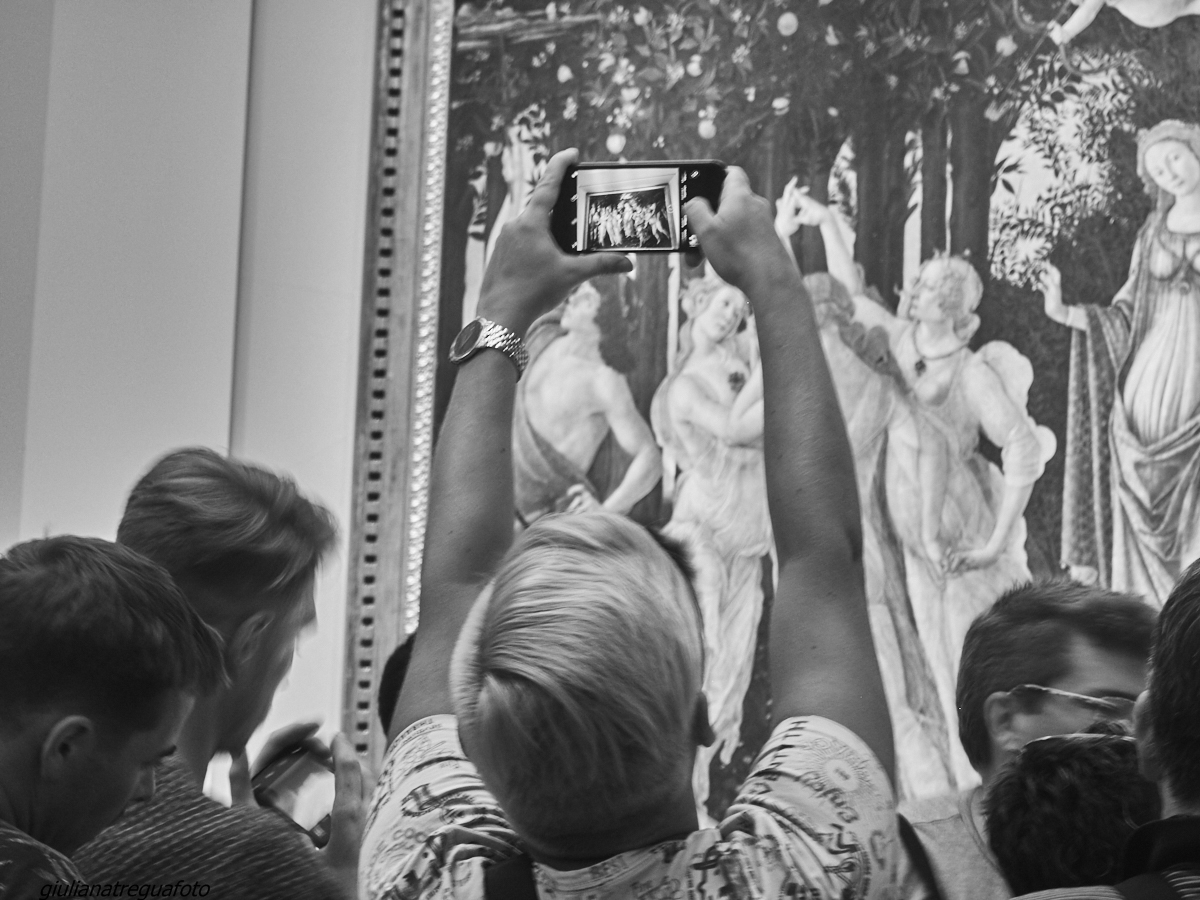
The full Uffizi day. Allow 4+ hours minimum.
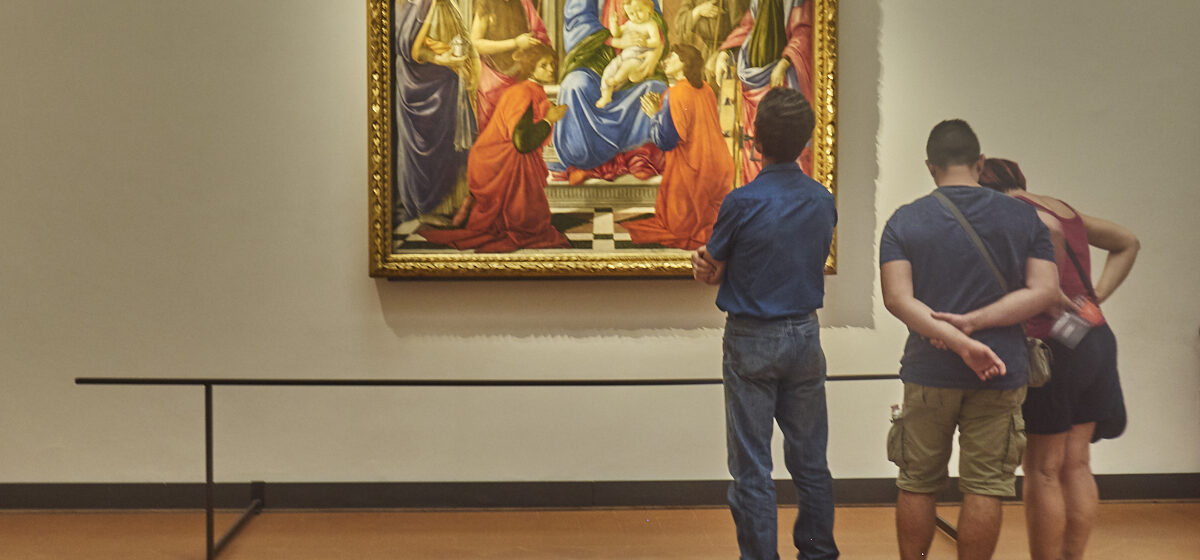
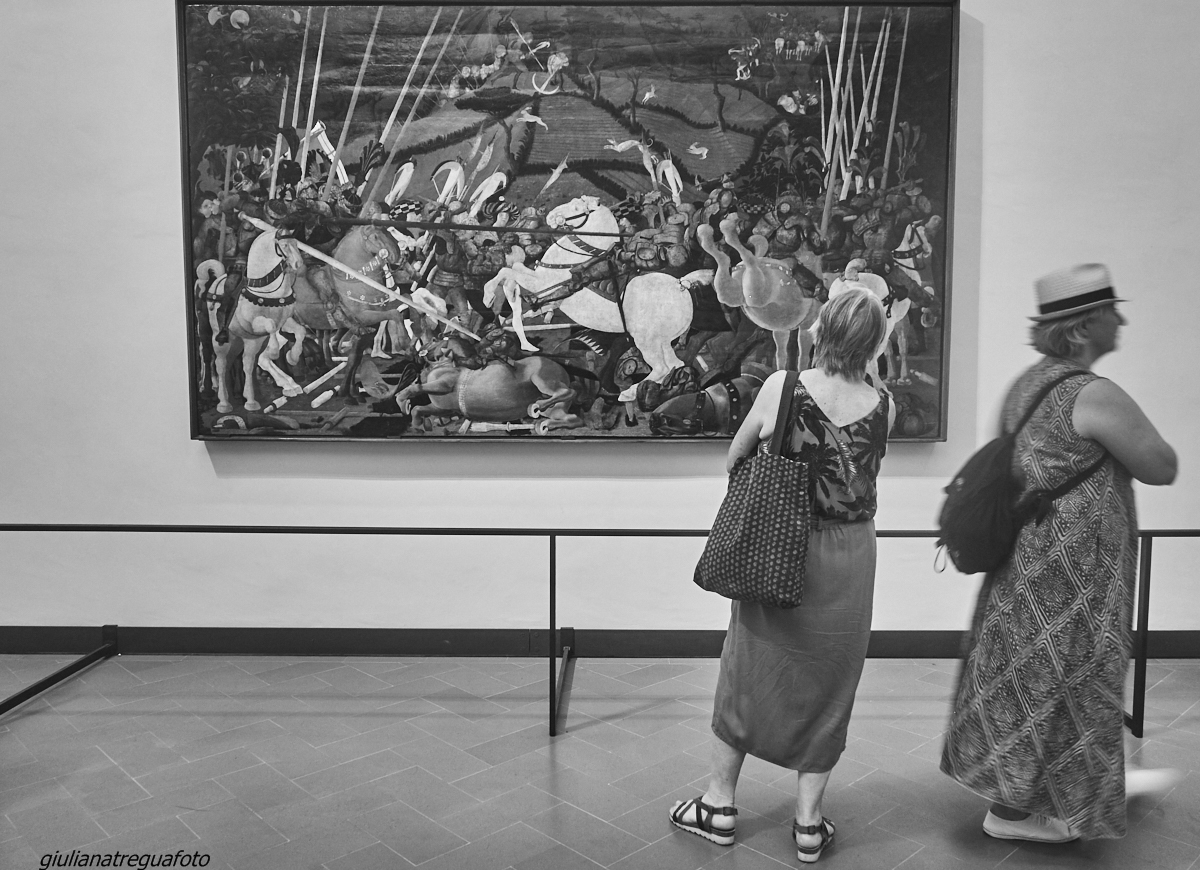
- 08:30 — Uffizi Gallery first slot. The Uffizi has 60+ rooms — a serious art-lover spends 4+ hours and still misses content.
- Walk chronologically: Rooms 1–4 (Cimabue, Giotto, Sienese 14th century — Duccio, Simone Martini, Lorenzetti)
- Rooms 5–6 (early 15th century)
- Rooms 7–8 (Filippo Lippi, Piero della Francesca’s Duke of Urbino diptych)
- Rooms 10–14 (Botticelli — extended time at Birth of Venus, Primavera, the Calumny of Apelles)
- Room 15 (Leonardo’s Annunciation, the unfinished Adoration of the Magi)
- Tribuna (the Medici Venus and the cabinet-of-curiosities room)
- Rooms 25 (Michelangelo’s Doni Tondo)
- Rooms 26–28 (Raphael)
- Rooms 29–34 (Mannerism: Pontormo, Bronzino, Rosso Fiorentino)
- Rooms 35+ (Caravaggio’s Bacchus, Medusa, Sacrifice of Isaac)
- Vasari Corridor if accessible (currently has limited access; book ahead via Uffizi)
- 13:00 — Lunch break. Café in the Uffizi or quick lunch outside.
- 14:00 — Return to Uffizi for second pass — focus on rooms you didn’t fully cover. Many serious visitors do 4 hours morning + 90 minutes afternoon.
- 16:00 — Walk to Casa Buonarroti (€10, 1 hour). Michelangelo’s house, with his early sculptures (Madonna of the Stairs, Battle of the Centaurs, made when he was 14–17), drawings and notebooks.
- 17:30 — Coffee at Caffè Gilli or Procacci
- 19:30 — Dinner at Trattoria Cammillo or Cibreo
Day 3: Accademia + San Marco + Medici Chapels
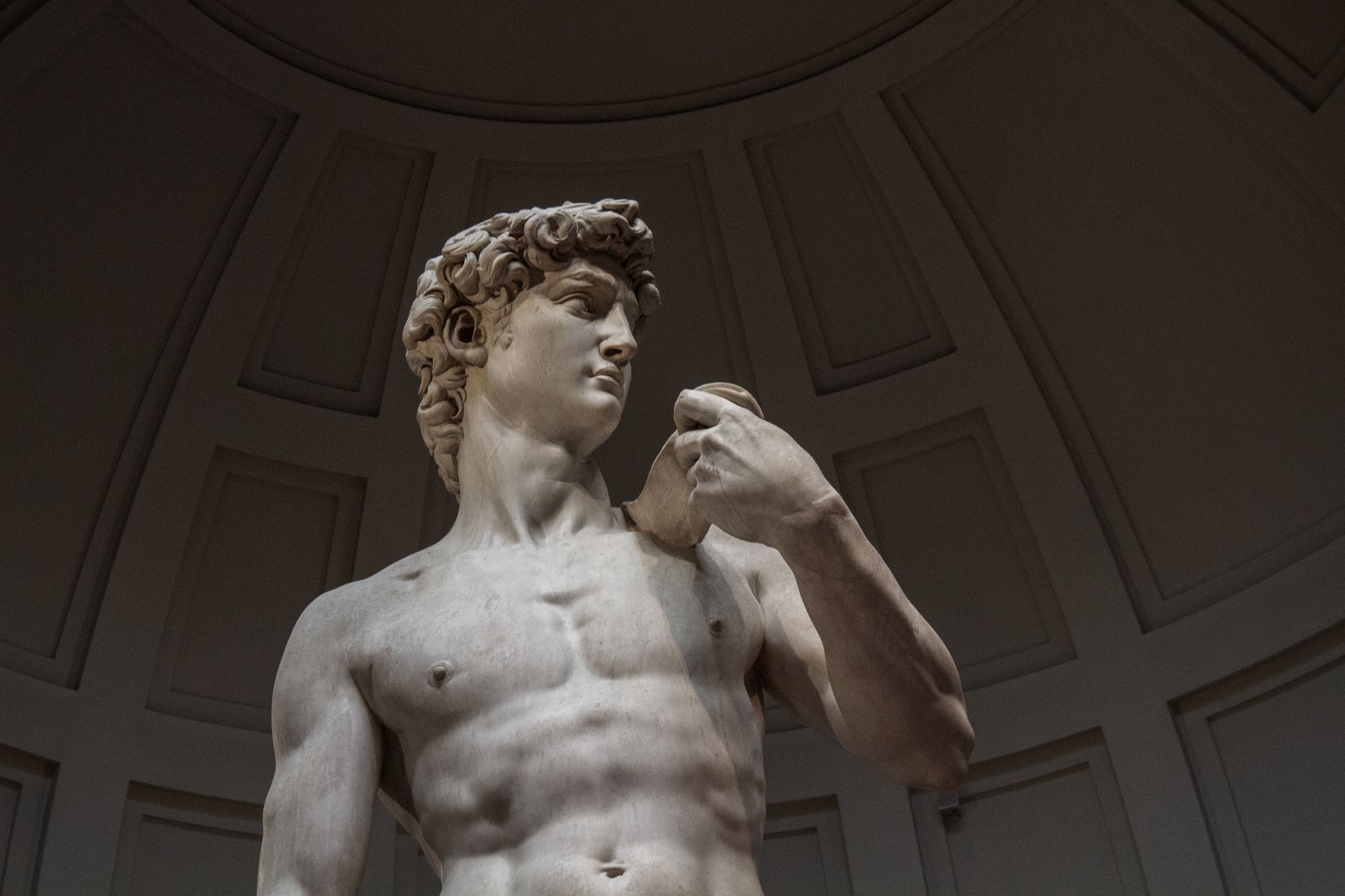
- 08:15 — Accademia Gallery first slot. The David is the icon, but the Prisoners (Michelangelo’s unfinished sculptures emerging from stone) are arguably more important art-historically. The Gipsoteca Bartolini plaster cast collection and the Museum of Musical Instruments round out the visit.
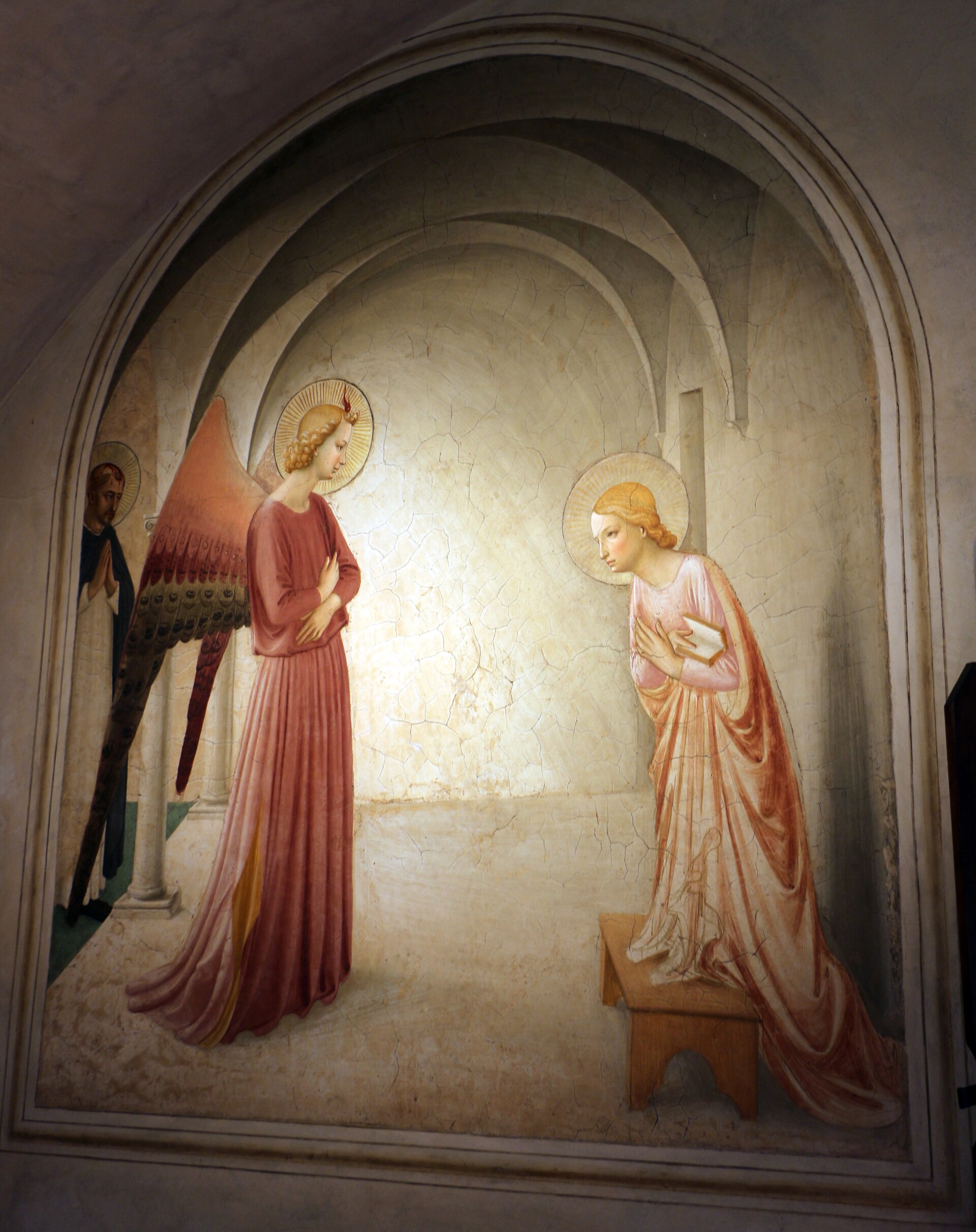
- 09:45 — Walk to San Marco Museum (5 min). Fra Angelico’s frescoed dormitory cells — 43 individual frescoes painted on the cells of the friars (1440s). The Annunciation at the top of the dormitory stairs is unmissable. Savonarola’s preserved quarters. Michelozzo library. €10, 90+ min for serious visit.
- 11:30 — Cenacolo di Sant’Apollonia (free, closes 13:50). Andrea del Castagno’s 1447 Last Supper — one of the great Renaissance fresco cycles, undertouristed.
- 12:30 — Lunch at Trattoria Mario (€15 prix-fixe Tuscan working trattoria)
- 14:00 — Medici Chapels — Michelangelo’s New Sacristy with Day, Dusk, Dawn, Night sculptures, plus the Princes’ Chapel pietre dure mausoleum. €15. The recently rediscovered “secret room” (€32 supplement, advance booking) is for serious Michelangelo enthusiasts.
- 15:30 — Walk to Palazzo Medici Riccardi (€10) — Benozzo Gozzoli’s Magi Chapel, one of Florence’s great fresco cycles. The chapel itself is a small jewel-box room with extraordinary 15th-century frescoes.
- 16:30 — Walk to San Lorenzo basilica (€9 — Brunelleschi’s Old Sacristy with Donatello reliefs and Donatello’s bronze pulpits). The Laurentian Library (€7 while the exhibition runs, 9 October 2026 to 9 January 2027) — Michelangelo’s vestibule and theatrical staircase.
- 18:00 — Aperitivo at Le Volpi e l’Uva or Procacci
- 19:30 — Dinner at Trattoria 4 Leoni or Buca dell’Orafo
Day 4: Pitti + Bardini + Smaller Museums
- 09:00 — Palazzo Pitti complex. Extended visit. Palatine Gallery (Raphael’s Madonna of the Chair, Madonna of the Grand Duke, the Doni double portrait — same patrons as Uffizi’s Doni Tondo, painted simultaneously by Raphael), Modern Art Gallery (Macchiaioli landscapes and Italian 19th-century painting). 3 hours.
- 12:30 — Lunch in Oltrarno
- 14:00 — Bardini Museum (€10, 90 min). Stefano Bardini’s eclectic 19th-century collection — sculpture from Donatello school, paintings, decorative arts, an unusual wedding-gift setting. Florence’s quirkiest small museum.
- 15:30 — Stibbert Museum (€12, 90 min, 3km from centre — bus or 30-min walk). Frederick Stibbert’s 19th-century private collection of armour, weapons, decorative arts. Specialist museum but rewarding for armour and decorative-art interests.
- 17:30 — Climb to Bardini Garden (about €10) for sunset over the city — quieter alternative to Piazzale Michelangelo
- 19:30 — Dinner at La Giostra or any working Oltrarno trattoria
Day 5: Brancacci + Cenacoli + Churches (Fresco Day)
- 09:00 — Brancacci Chapel (Santa Maria del Carmine, Oltrarno). €15 (reduced €10), online booking recommended, 30 minutes inside but you’ll want longer to study Masaccio’s revolutionary 1420s frescoes — the painting cycle that started the Renaissance.
- 10:00 — Walk to Santa Felicita (free) for Pontormo’s Deposition (1525–28) — one of the great Mannerist paintings, in the Capponi Chapel.
- 10:45 — Walk to Santa Trinita (free) for Domenico Ghirlandaio’s Sassetti Chapel frescoes (1485) — Renaissance Florence’s daily life painted into a banker family’s chapel.
- 11:30 — Walk to Santa Maria Novella (€7.50, 90 min). Masaccio’s Trinity (1425, the original demonstration of linear perspective in painting), Ghirlandaio’s Tornabuoni Chapel frescoes, Filippino Lippi’s Strozzi Chapel.
- 13:00 — Lunch in San Frediano area
- 14:30 — Santa Croce basilica (€10, plus €1 if booked online, 2+ hours). Italian “Pantheon” — tombs of Michelangelo, Galileo, Machiavelli, Rossini. Giotto frescoes in the Bardi and Peruzzi chapels, Donatello’s Annunciation, Cimabue’s Crucifix in the museum. Pazzi Chapel by Brunelleschi.
- 16:30 — Walk to Cenacolo di Andrea del Sarto (San Salvi) — 25-minute walk east. Andrea del Sarto’s High Renaissance Last Supper (1526), considered Italy’s second-finest after Leonardo’s Milan Last Supper. Admission €5.
- 17:30 — Walk back via Sant’Ambrogio to centre
- 19:00 — Final dinner at Cibreo or Enoteca Pinchiorri (the splurge dinner)
Day 6: Siena Day Trip (Sienese Painting)
For the most serious art-history visitors, an additional day in Siena complements Florence’s Renaissance focus with the Sienese 14th-century tradition (Duccio, Simone Martini, the Lorenzetti brothers).
- 09:00 — Bus from Florence to Siena (1h15, €9 each way)
- 10:30 — Siena Cathedral — OPA SI Pass (€15) covers Cathedral, Crypt, Baptistery, Cathedral Museum, Piccolomini Library
- 13:00 — Lunch at Trattoria Papei or Hosteria Il Carroccio
- 14:30 — Palazzo Pubblico Museo Civico (€10) — Ambrogio Lorenzetti’s Allegory of Good and Bad Government (1338), Simone Martini’s Maestà (1315). Plus Torre del Mangia climb.
- 16:30 — Pinacoteca Nazionale (€4) — the world’s best Sienese painting collection: Duccio, Simone Martini, the Lorenzetti brothers, Sassetta, Giovanni di Paolo.
- 18:00 — Bus back to Florence
Firenze Card Strategy
For art lovers, the €85 Firenze Card breaks even at 5+ paid museums in 72 hours. This 5-day itinerary visits 12+ paid museums (Brunelleschi Pass + Uffizi + Accademia + Bargello + Pitti + Boboli + San Marco + Medici Chapels + Brancacci + Casa Buonarroti + Bardini + Stibbert + Santa Maria Novella + Santa Croce + Palazzo Medici Riccardi + Laurentian Library) — single tickets total €175+. The Firenze Card saves €90+ across the trip plus skip-the-line at the major museums.
Buy the €85 card on Day 1. Add the €28 Firenze Card Restart for the additional 48 hours covering Days 4–5. Total card cost €113 vs €175+ in single tickets.
Art Lover Trip Cost
- Museum tickets (Firenze Card + Restart): €113
- Brancacci Chapel: €15
- Casa Buonarroti: €10
- Other smaller venues: €30–50
- Lunch + dinner + drinks (5 days): €350–500
- Local transit: €10–25
- 5 nights central Florence accommodation: €600–1,400
- Day trip Siena: €30 transport + €25 OPA SI + €10 Museo Civico + €4 Pinacoteca + lunch
- Total per person: €1,205–2,205 excluding international flights
Art Lover Tips
Tip 1: Buy a serious art-history reference book before the trip. Frederick Hartt’s History of Italian Renaissance Art remains the comprehensive single-volume reference. Andrew Graham-Dixon’s Renaissance is shorter and accessible. Vasari’s Lives of the Artists (1568) is the original primary source.
Tip 2: The Vasari Corridor (the elevated passageway connecting the Uffizi to Pitti via Ponte Vecchio) reopened to limited public access in 2024. Book at tickets.uffizi.it 4+ weeks ahead.
Tip 3: Take a private guide for at least one major museum (Uffizi, Bargello, or Brancacci). €150–250 for 2 hours, but the depth of commentary on specific paintings or sculptures is worth more than 8 audio guides.
Tip 4: Visit major museums in chronological order — Cathedral and Bargello (1300s sculpture) before Uffizi (1400–1525 painting) before Accademia (Michelangelo late period) before Pitti (Mannerism). The artistic narrative builds.
Tip 5: Don’t skip the cenacoli — the Last Supper frescoes by Andrea del Castagno, Andrea del Sarto (€5 at San Salvi), Ghirlandaio (Ognissanti, temporarily closed though the church stays open), Perugino (Fuligno), and Orcagna (Santo Spirito) are world-class undertouristed art.
Tip 6: The “secret room” at the Medici Chapels with Michelangelo’s wall drawings reopened to limited public access in late 2023. Book 2+ months ahead — slots are limited to 4 visitors per 15-minute slot, €32 supplement.
Tip 7: Schedule a return Uffizi visit — most serious art-lovers want to see specific paintings twice with knowledge gained from the rest of the trip. The €25–29 entry is worth it twice.
Florence Art Lover FAQ
How many days for an art-focused Florence trip?
5 days minimum, 6 days optimal (with Siena day trip). Standard 3-day trips are too short for serious art-history visitors who want to see beyond the headline museums.
Is the Firenze Card worth it for art lovers?
Yes — €85 card + €28 Restart (€113 total) for 5-day visit covers 12+ museums. Single tickets total €175+, plus skip-the-line access at the major museums. Significant time and money savings.
What’s the must-see for art lovers?
Beyond the obvious (Uffizi, Accademia): the Bargello (Renaissance sculpture), Cathedral Museum (Donatello + Michelangelo), Brancacci Chapel (Masaccio frescoes), San Marco (Fra Angelico), Medici Chapels (Michelangelo’s New Sacristy), and the cenacoli (Last Supper frescoes by Renaissance masters).
Should I hire a private guide?
For at least one major museum, yes — €150–250 for 2 hours of expert commentary on specific paintings is worth more than 8 audio guides. Particularly valuable at the Uffizi (60+ rooms is overwhelming without guidance) and the Brancacci Chapel.
Should I add a Siena day trip?
Yes for serious art-history visitors — Siena’s Pinacoteca holds the world’s best Sienese 14th-century painting collection (Duccio, Simone Martini, the Lorenzetti brothers), complementing Florence’s Renaissance focus.
Can I visit the Vasari Corridor?
Yes — the corridor reopened to limited public access in 2024. Book at tickets.uffizi.it 4+ weeks ahead. Connects the Uffizi to Pitti via Ponte Vecchio with extensive Renaissance painting collections along the route.
How much does an art-focused trip cost?
€1,200–2,200 per person for 5–6 days excluding international flights. The Firenze Card saves significantly vs single tickets; the rest is accommodation + dining + private guides if used.
When is the best time?
Late September–October or late April–May. The major museums are quieter than peak summer, climate is comfortable for the cumulative 25+km of museum walking, and natural light through museum windows is at its best in shoulder seasons.
Florence for art lovers is the most concentrated Renaissance art experience in the world — but only if you plan a serious 5–6 day trip with the Firenze Card, advance bookings for major museums, and a chronological art-history approach. Beyond the headline Uffizi and Accademia visits, the deeper rewards are at the Bargello, Cathedral Museum, Brancacci Chapel, San Marco, Medici Chapels, the cenacoli, and the smaller venues most tourists miss. Done well, the trip leaves you with a complete picture of Florentine art from Giotto to Mannerism — three centuries of European visual culture in one walkable city.