This article contains advertising. Booking links on this site can be turned into paid links automatically by our partner Travelpayouts: if you book through one, we earn a commission from the provider, at no extra cost to you. It never affects what we recommend. Affiliate disclosure
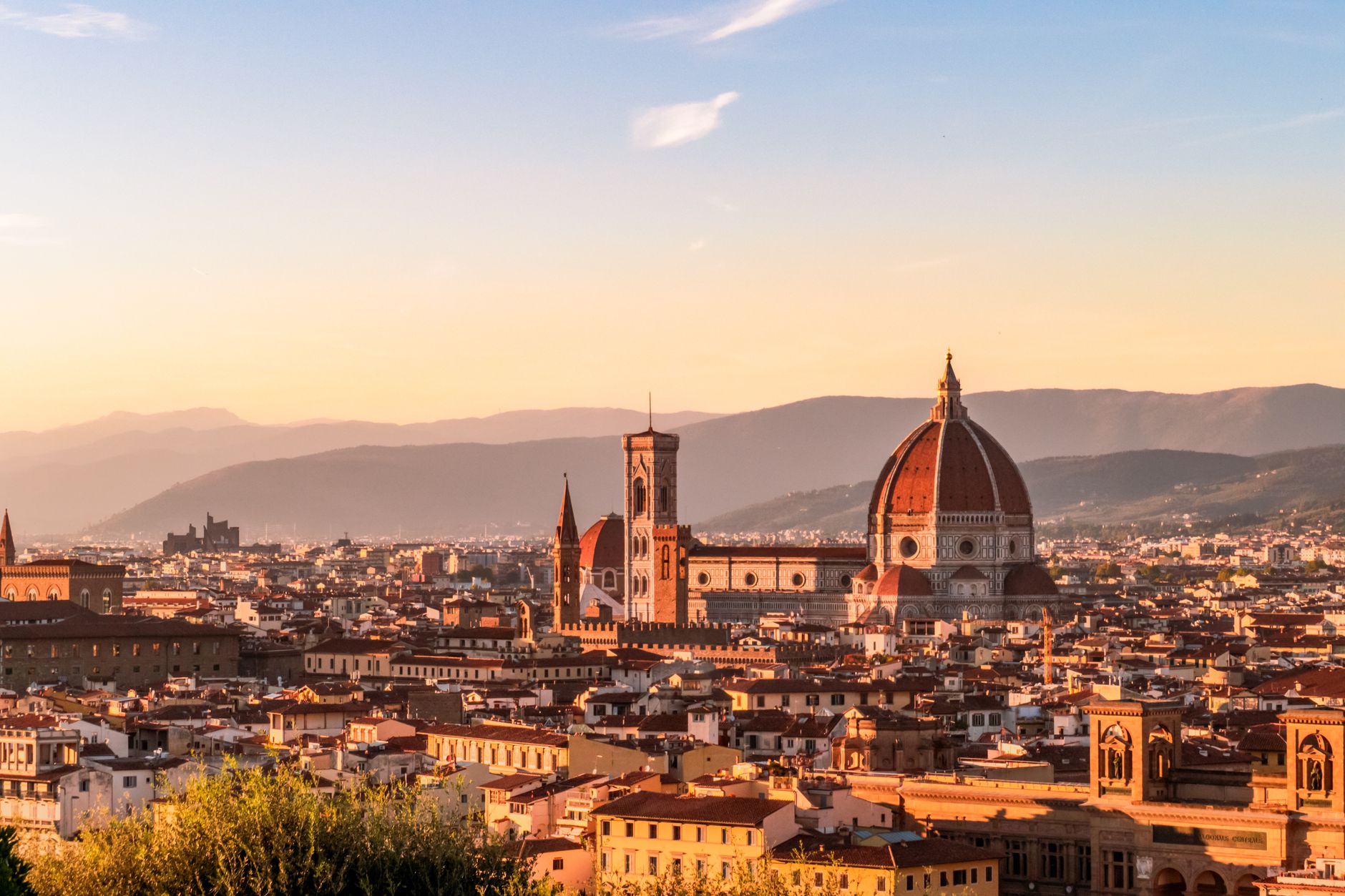
There’s no getting around it: Florence can be pricey. An Uffizi ticket, a night at a three-star hotel, dinner for two on a piazza, and a gelato afterwards, and you’ve burned through €250 without noticing. The good news is that an awful lot of what makes Florence magical costs nothing at all — frescoed churches, the best skyline view in Italy, medieval palazzi you can walk into for free, market mornings, old gardens, sculpture galleries that charge zero admission. This 2026 guide gathers 20 free things to do in Florence into one itinerary-ready reference, with a few low-cost add-ons of €15 or less at the end for rainy days and weary feet.
Nearly everything listed below is free — not “free-with-a-donation” or “free-if-you-buy-a-coffee-first”. We’ve flagged the rare exceptions so you always know what you’re signing up for.
For the wider money-saving picture, read our Florence budget travel tips, and check which state collections open their doors for nothing in free museums in Florence.
1. Sunsets from Piazzale Michelangelo
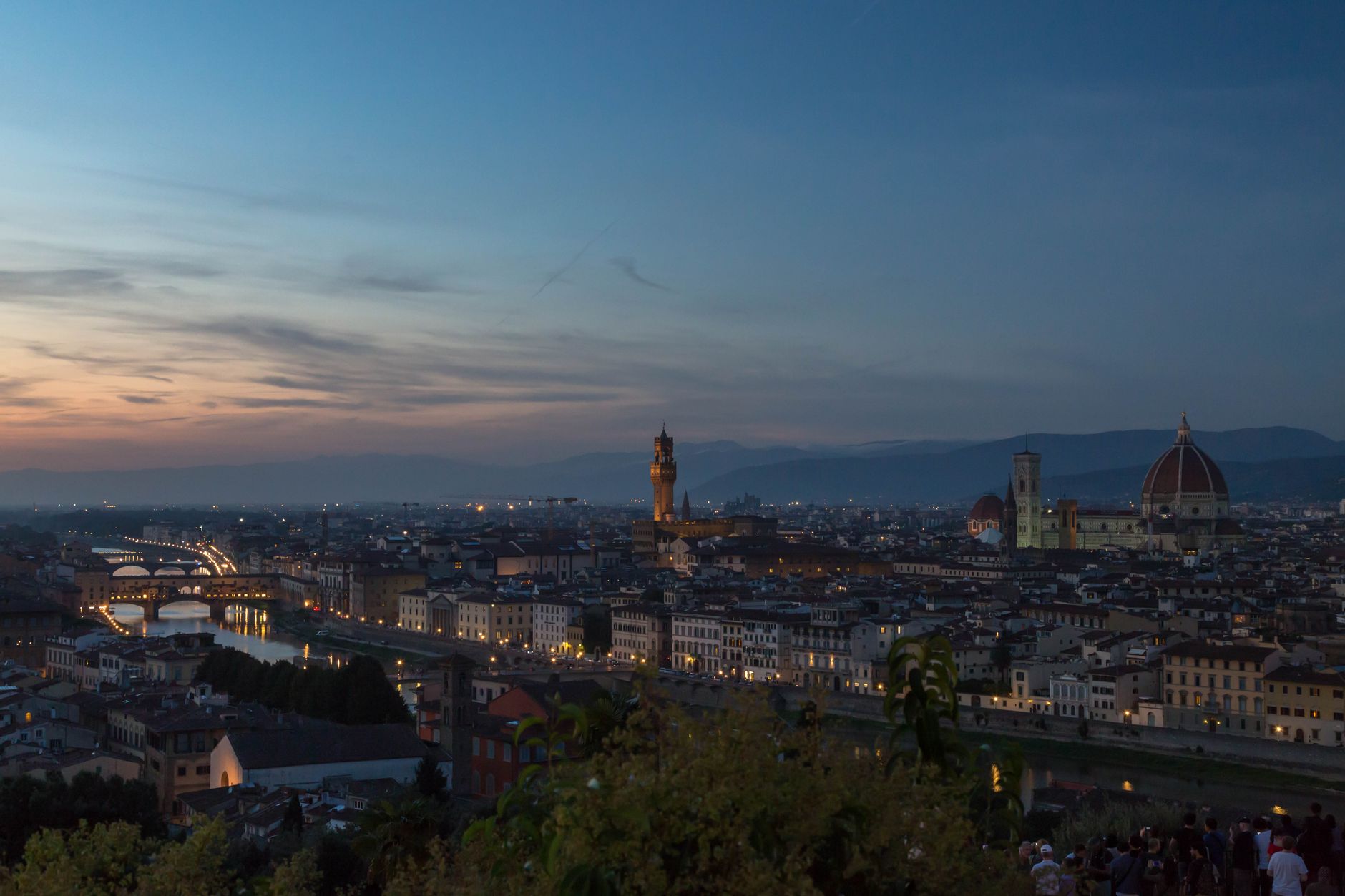
The 19th-century panorama terrace laid out to Giuseppe Poggi’s design from 1869 is free to visit, and always worth it. Take bus 12 from the centre or climb the Rampe up from Ponte alle Grazie. Arrive 45 minutes before sunset for the best spot on the southern edge. Grab a bottle of Chianti and two plastic cups from a supermarket in the centre on your way — the piazza has its own kiosk bar, but prices are easily double.
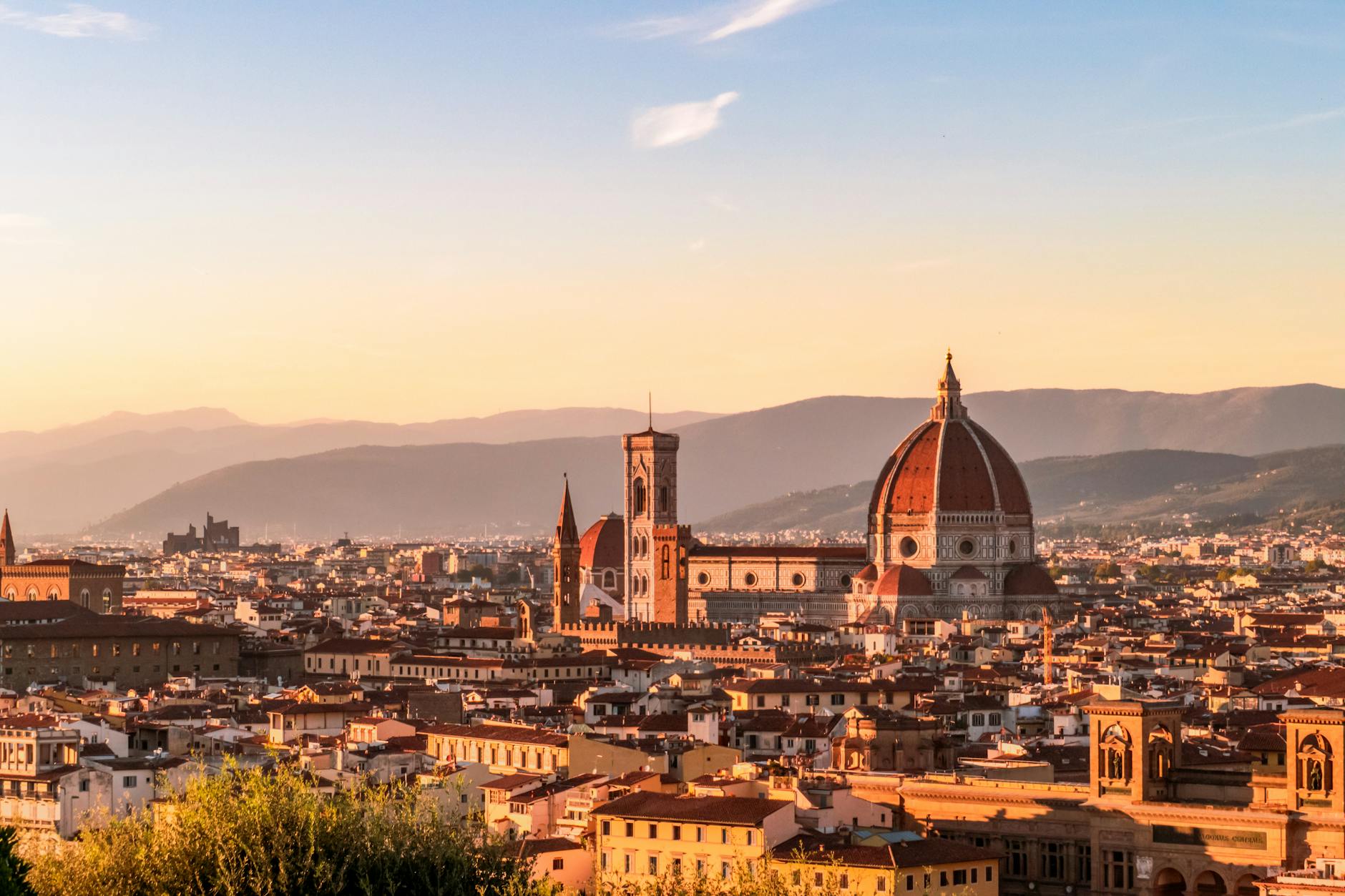
Five minutes later, the bronze David and the panorama turn a thousand heads. Linger an hour past dusk and Brunelleschi’s dome glows a specific peach-pink you will not forget.
2. The Abbey of San Miniato al Monte
Five minutes up the hill behind Piazzale Michelangelo, San Miniato al Monte is the city’s most underrated free attraction. Built between the 11th and 13th centuries on a site linked by legend to the martyrdom of St Minias, its geometric green-and-white façade is one of Italy’s finest Romanesque landmarks.
The real reason to come: every day at 18:30, the Benedictine monks sing Gregorian vespers. Free, unforgettable, and completely unchanged for a thousand years. The cemetery behind the abbey is a sombre, atmospheric stroll, and the crypt lies below the altar.
3. The Giardino delle Rose
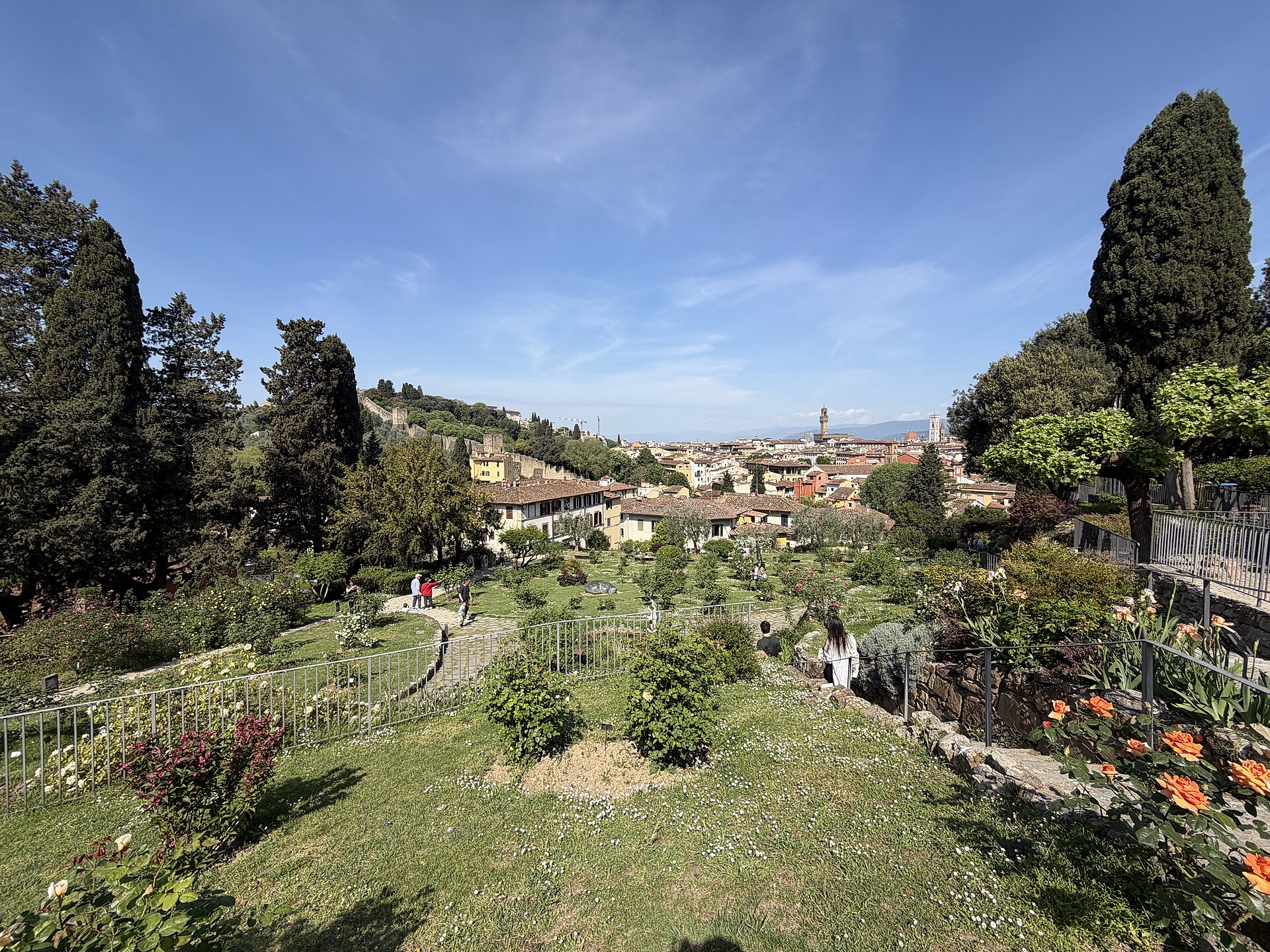
A terraced rose garden that steps down the hillside below Piazzale Michelangelo. Hundreds of varieties of rose, framed dome views, ten bronze sculptures and two plaster works by Belgian artist Jean-Michel Folon, and a quiet Japanese garden donated by Kyoto in 1998. Free, open daily, spectacular in late May.
4. The Giardino dell’Iris (iris garden)
A lesser-known companion to the rose garden, open only around two weeks in late April to mid-May. The iris is Florence’s emblem (the red fleur-de-lys on the city coat of arms). Irises entered in Florence’s international iris competition bloom in terraced rows with Duomo views behind them. Free, no ticket needed. Check irisfirenze.it for exact annual dates.
5. The Duomo nave & exterior
The outside of Santa Maria del Fiore is free and, honestly, the most memorable part. Walk right round it: the building alone is 153 m long. The east side, along Via del Proconsolo, is quietest; the north façade faces the Baptistery and displays Giotto’s bell tower.
The cathedral itself is free to visit Monday to Saturday, 10:15–15:45; it closes to sightseeing on Sundays and religious holidays, and Mass follows its own timetable. The Last Judgement inside the dome, painted by Vasari and Zuccari, Paolo Uccello’s trompe-l’œil equestrian mural and the 44 stained-glass windows are all visible without a ticket — but you need a Duomo pass to climb the dome, enter the crypt or go into the Baptistery, whose vault mosaics are currently hidden by restoration works.
6. The Baptistery’s gold-mosaic ceiling (under restoration)
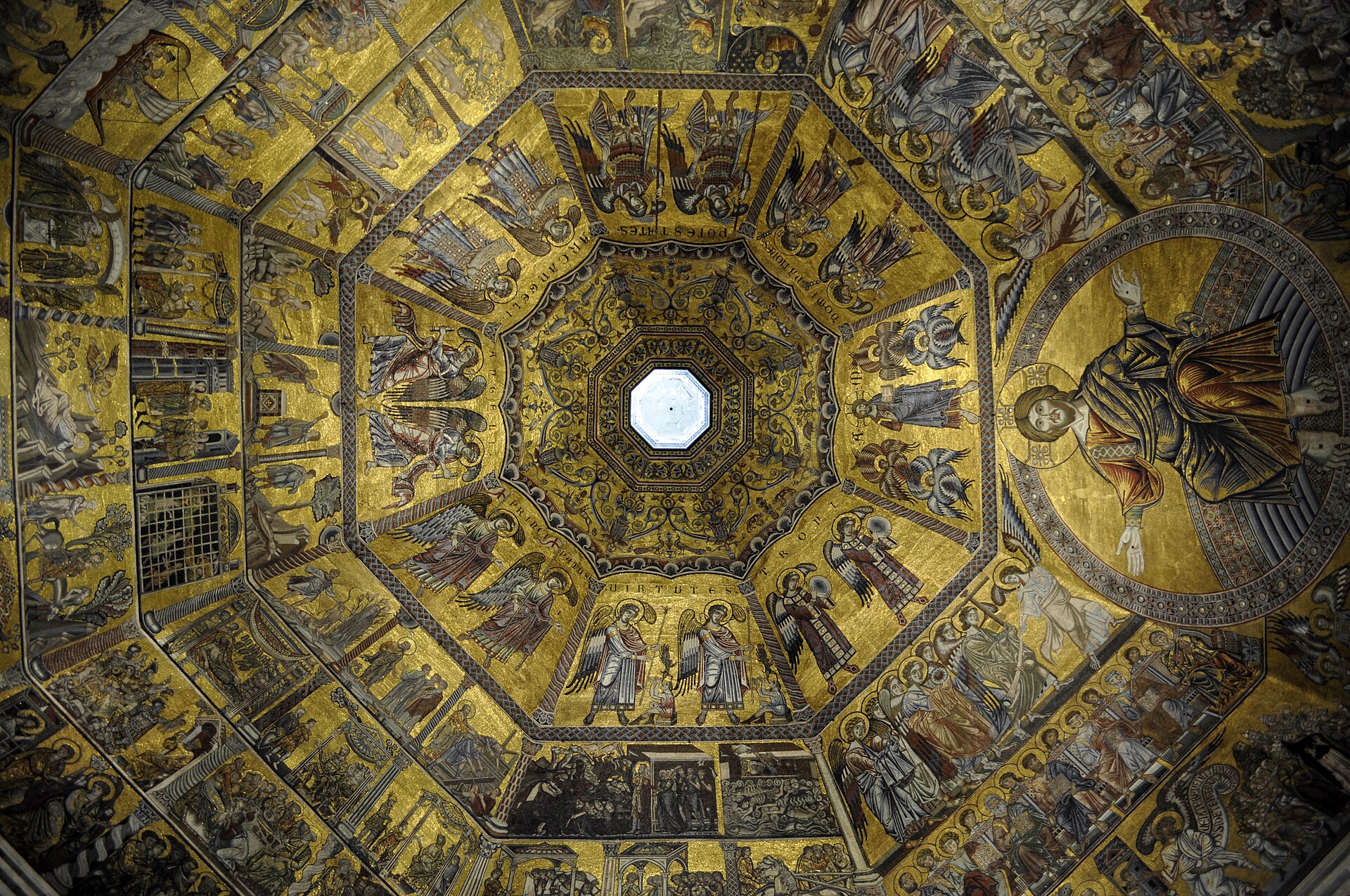
The octagonal Baptistery of San Giovanni is ticketed (€15 as part of the Ghiberti Pass), and for now its famous Last Judgement mosaic ceiling is hidden by restoration works, so there is no glimpse of the gold to be had, free or paid. Check the Duomo’s ticket site for progress before you buy a pass for the ceiling alone. Dante was baptised here.
7. Basilica di Santo Spirito
Brunelleschi’s last and purest Renaissance church, in the heart of the Oltrarno. Its aisles and transepts are lined with 38 side chapels. The Michelangelo wooden crucifix (carved around 1492–1493, when he was about 18, and hung in the sacristy) is the quiet highlight. Free to enter (donation welcomed), open Monday, Tuesday and Thursday–Saturday 10:00–13:00 and 15:00–18:00, Sundays and holidays 11:30–13:30 and 15:00–18:00; closed Wednesdays, and services take priority. The sacristy with the Michelangelo requires a €2 ticket; the basilica itself is completely free.
Pair it with a morning espresso on Piazza Santo Spirito — the neighbourhood square is itself one of the best hangouts in Florence.
8. The San Lorenzo cloister
San Lorenzo’s deliberately unfinished façade hides two treasures. The inner cloister (accessible through the church ticket office even if you don’t buy a ticket) is a peaceful Renaissance quadrangle with citrus trees and reliefs. The Laurentian Library staircase designed by Michelangelo, built by Ammannati in 1559, stands inside the library vestibule, so seeing it takes a ticket for the monumental area: €7 full price during the exhibition running from 9 October 2026 to 9 January 2027. Donations accepted for the cloister.
9. Piazza & Basilica of Santissima Annunziata
A stunning square anchored by Brunelleschi’s Ospedale degli Innocenti (begun in 1419, an early landmark of Renaissance architecture) and the Basilica of Santissima Annunziata. Entrance to the basilica is free. The Chiostrino dei Voti entry courtyard contains early-16th-century frescoes by Andrea del Sarto, Rosso Fiorentino and Pontormo — a mini Mannerism gallery you can walk through for no charge. Don’t miss Giambologna’s tomb inside.
10. The Loggia dei Lanzi open-air sculpture gallery
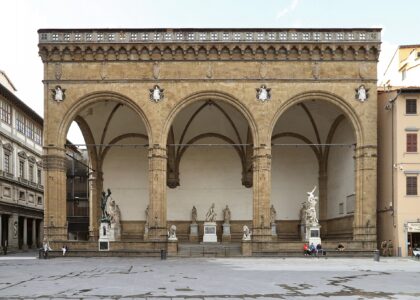
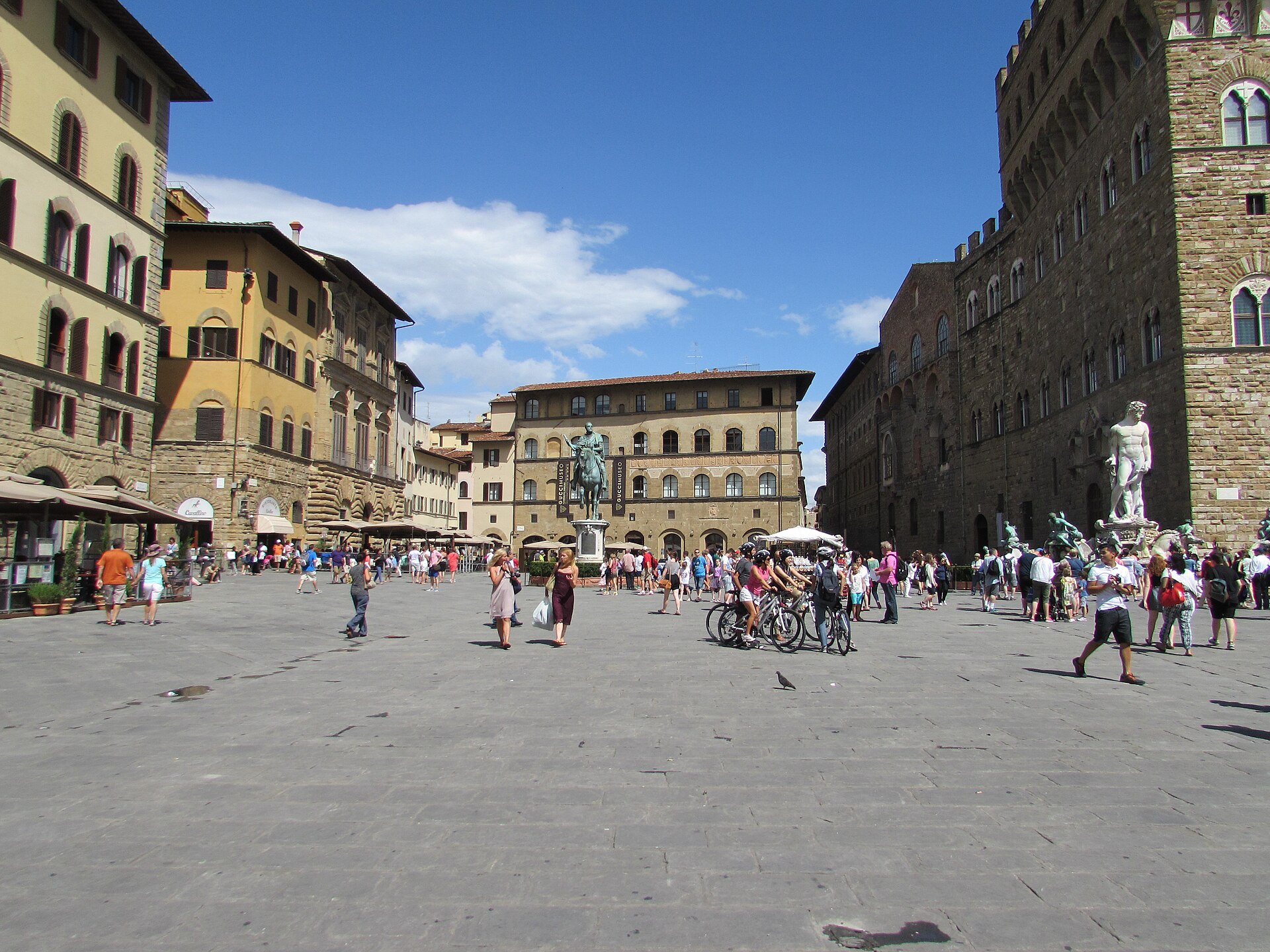
Adjacent to Palazzo Vecchio in Piazza della Signoria. Under the arches, built in 1376–1382: Cellini’s bronze Perseus holding Medusa’s severed head (1554), Giambologna’s twisting Rape of the Sabine Women (installed in 1583) and his Hercules and Nessus, an ancient Roman group of Menelaus supporting Patroclus, after a Hellenistic original, and more. A free, rain-sheltered sculpture museum: stepping inside the Loggia takes a free ticket, issued on site, while the statues can be admired from the piazza. Arrive before 09:00 or after 20:00 for fewer tourists.
11. A sunset walk over Ponte Vecchio

Florence’s oldest surviving bridge (1345) is free to cross, but the trick is when. At 17:30–18:30 in summer the light washes the Arno in amber. The middle of the bridge, beneath the windows of the Vasari Corridor, is the photograph; Ponte Santa Trinita (the next bridge downstream) is the spot from which to photograph it.
12. The evening passeggiata along the Arno
Italy’s nightly ritual walk. From Ponte Vecchio, cross north to Lungarno degli Acciaioli, walk east along the river, cross Ponte alle Grazie and return on the south bank through San Niccolò. An hour, free, and the best street-life snapshot Florence offers. Aperitivo bars line the route if you want a €8–€10 paid interlude.
13. Oltrarno’s Clet Abraham street art
French artist Clet Abraham has been humorously reimagining Florence’s road signs since 2010 — little stickers that turn no-entry signs into crucifixes, “stop” signs into chess pieces. His workshop is on Via dell’Olmo; the signs themselves are everywhere in the Oltrarno between Piazza Santo Spirito and Ponte alle Grazie. A self-guided, zero-cost scavenger hunt.
14. Mercato Centrale’s ground floor
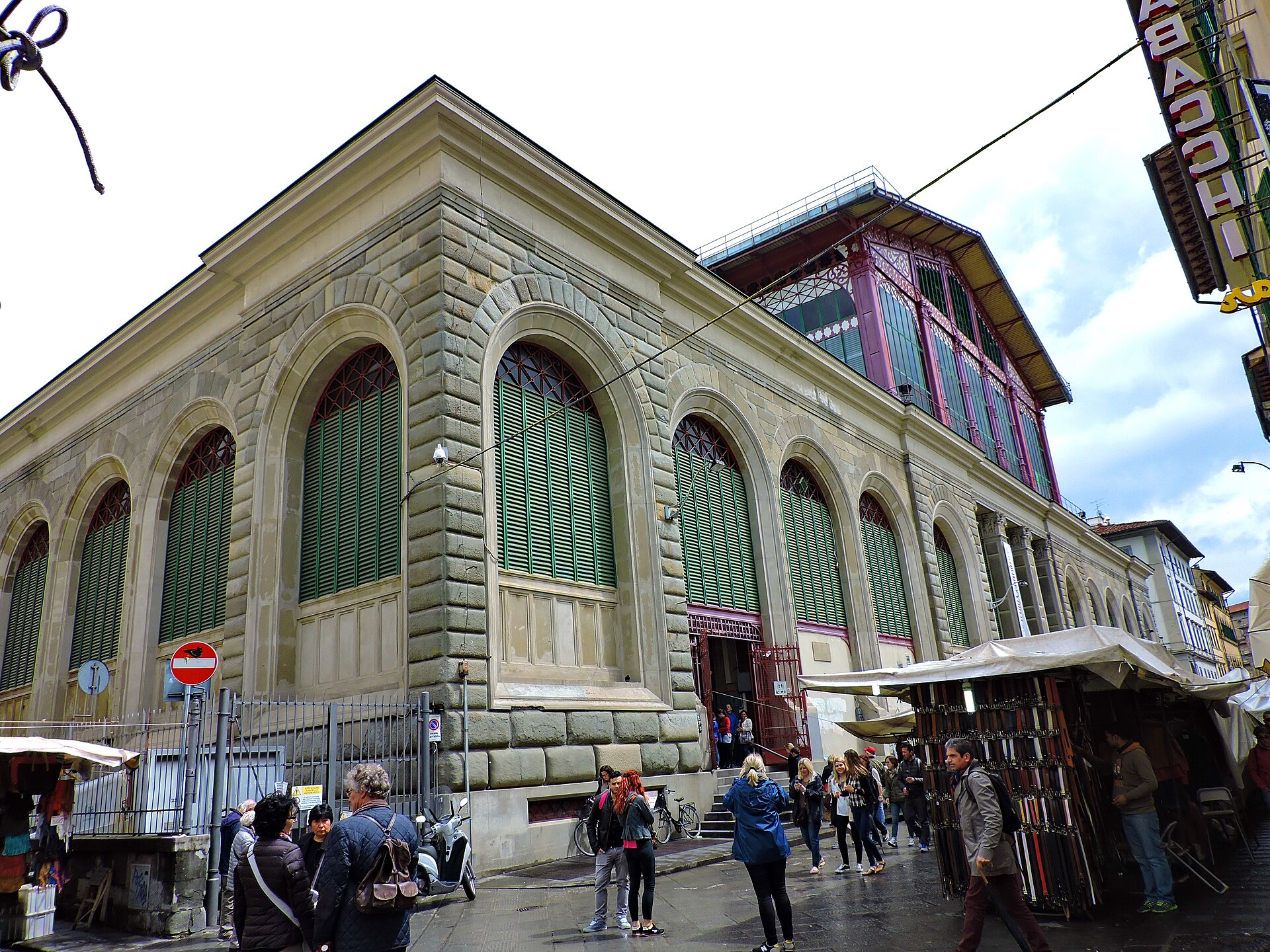
The 1874 cast-iron-and-glass market hall in San Lorenzo is free to wander and genuinely beautiful. The ground floor is the working market — butchers, cheesemongers, pasta-makers, fruit and vegetable vendors — open Monday–Friday 07:00–15:00 and Saturday 07:00–17:00, closed on Sunday. The upstairs food hall (open daily 09:00–23:00) is free to walk through; you pay only for the food and drink you buy.
15. The Mercato San Lorenzo outdoor stalls
Florence’s open-air leather market unfolds around the Mercato Centrale in a grid of stalls selling leather jackets, bags, wallets, belts and Pinocchio marionettes. Haggle-friendly, always busy, always free to browse. Real leather ranges from €40 wallets to €300 jackets; obvious synthetics cost a fraction and are also freely admitted as such.
16. Boboli Gardens on the first Sunday of the month
Normally €10, but entry is free on the first Sunday of every month (Domenica al Museo). Laid out by Tribolo for Eleonora di Toledo in 1549, the garden set the Italian style that became a model for many European courts. It runs up the hill behind Palazzo Pitti through cypress alleys, the Kaffeehaus pavilion and the grotto Buontalenti added later; Peri’s Euridice, the earliest surviving opera, premiered in the palace itself in 1600. More than 33 hectares of peaceful walking. Expect bigger crowds on free Sundays.
17. Orsanmichele sculpture museum — free on first Sundays
On Via dei Calzaiuoli between the Duomo and Signoria. The church and the upstairs sculpture museum (showing the original 14th–15th-century niche statues from the guild façade — Ghiberti, Donatello, Verrocchio) normally open Tuesday–Sunday, 08:30–18:30, and close on Mondays. A full ticket is €10, but entry is free on the first Sunday of the month and on 25 April, 2 June and 4 November; the Bargello museums’ calendar lists any exceptional openings. A pilgrimage for Renaissance-sculpture nerds and a pleasant 40-minute detour for everyone else.
18. Domenica al Museo (first Sunday of the month)
On the first Sunday of every month, all state museums open free of charge. That includes the Uffizi, Accademia, Bargello, Medici Chapels, San Marco, Palazzo Pitti, Boboli Gardens, Orsanmichele and La Specola. The catch: on free Sundays the Uffizi and Accademia take no reservations, so everyone joins the entrance queue, and the queues are dramatic. Plan to arrive at opening or focus on the less-busy museums (Bargello, San Marco, Medici Chapels).
19. Self-guided walking routes
Florence’s historic centre is compact and lends itself to several free walking routes:
- Renaissance highlights: SMN → Duomo → Baptistery → Orsanmichele → Piazza Signoria → Uffizi façade → Ponte Vecchio → Oltrarno → Pitti → back over Ponte Santa Trinita (2.5 hours).
- Oltrarno artisan walk: Ponte Vecchio → Santo Spirito → Palazzo Pitti → San Frediano → Brancacci Chapel (€15, reduced €10) → Ponte Vespucci (1.5 hours).
- Dante’s Florence: the poet’s baptism church (Baptistery), his old house area (Casa di Dante), Beatrice’s church (Santa Margherita de’ Cerchi), and his grave-less cenotaph at Santa Croce (1 hour).
For full routes, maps and printable PDFs, see our walking tours of Florence guide. Several downloadable audio tours are free on Rick Steves’ app and GPSmyCity.
20. Free cultural events — concerts, festivals, Mass at the Duomo
Florence runs a steady stream of free cultural events:
- Estate Fiorentina (every summer): free outdoor cinema, concerts and theatre in piazze across the city. Check the city’s
estatefiorentina.itcalendar for the coming season’s dates. - Festa della Rificolona: a children’s lantern festival, weirdly adorable. The 2026 edition gathered in Piazza Santa Felicita on the evening of 7 September; FeelFlorence, the city’s tourism site, posts the next programme.
- San Giovanni (June 24): Florence’s patron saint day. The Calcio Storico final is ticketed, but the evening fireworks over the Arno are seen free from Piazzale Michelangelo, Ponte Santa Trinita or the Lungarni.
- Mass at the Duomo lets you experience the cathedral as a living church, not a ticketed monument; the cathedral’s own site publishes the current service times.
- Free museum first Sundays (see above).
- International Women’s Day (March 8): in 2026 Italy’s state museums admitted women free on the day. The Ministry of Culture and the museums’ own sites announce each year’s arrangements.
- European Heritage Days (a September weekend each year): special openings across the city; in 2026 the Florence programme on 26–27 September took in the Galleria dell’Accademia and the Bargello group of museums. Watch the museums’ websites for the next dates.
Bonus: 10 more Florence experiences for €15 or less
Not free, but cheap enough to feel like it:
- Gelato at Vivoli (€3.50 for two scoops) — one of Florence’s oldest gelaterias, a dairy from 1929 that began making gelato in 1932.
- Lampredotto sandwich from Nerbone at Mercato Centrale (€5–€6) — the authentic Florentine tripe panino.
- Espresso standing at a bar (€1.20 — half the sitting price).
- Museo Galileo (€14) — science-history museum with Galileo’s telescopes, a favourite with kids.
- Museo di Palazzo Davanzati (€8) — a restored medieval merchant palazzo, rarely crowded.
- Brancacci Chapel (€15, or €10 reduced) — Masaccio’s Adam and Eve, the frescoes Michelangelo copied.
- A bus or tram ticket (€2, valid 90 minutes) — enough for bus 12 up to Piazzale Michelangelo or bus 7 to Fiesole.
- Spritz aperitivo with buffet (€8–€10) at Ditta Artigianale or Caffè Rivoire.
- La Cité bookshop live music (pay-what-you-want, often a €2–€5 donation). Some of the best local jazz and indie sets in town.
- Farmers’ market at Piazza Santo Spirito (2nd Sunday of each month) — free to browse, cheap organic produce.
Budget Florence tips
- Stand at the bar, sit at the piazza. A coffee al banco is €1.20–€1.50; the same coffee at a table can be €4–€6.
- Picnic lunches from Pegna (Via dello Studio, since 1860) or Sant’Ambrogio market are €5–€8 per person for better food than most €20 restaurants.
- Drink tap water — it’s safe. Refill for free at the city’s public drinking-water fountains.
- Under-18s are free at state museums — bring passport or ID for children.
- Take bus 7 to Fiesole from Libertà (€2 one way) — up the hill for a Roman theatre, the cathedral and spectacular free city views.
- Travel in shoulder season (March–April, October–November). Hotels are usually cheaper, crowds thinner and the weather mostly great.
- Planning a museum-heavy 3 days? Add up the individual tickets and booking fees first: the Firenze Card (€85 for 72 hours) only saves money when they come to more than that, and under-18s already get into state museums free.
Free things to do in Florence — FAQ
Can you visit Florence for free?
You can have a rich Florence experience without paying a single museum ticket. Piazzale Michelangelo, San Miniato, the Rose Garden, Piazza della Signoria’s Loggia dei Lanzi, the Duomo nave, Santo Spirito, Santissima Annunziata, Ponte Vecchio and the Mercato Centrale are all free. Pair those with the first-Sunday free-museum day and you can see the top 15 Florentine sights for almost nothing.
Which museums in Florence are free?
The Orsanmichele sculpture museum (€10, closed Mondays) is free on first Sundays and on 25 April, 2 June and 4 November. The Casa Buonarroti museum has occasional free openings. All state museums (Uffizi, Accademia, Pitti, Bargello, San Marco, Medici Chapels, Boboli Gardens) are free on the first Sunday of the month. Visitors under 18 are free year-round. Women went free at state museums on International Women’s Day in 2026; check the Ministry of Culture’s site for the next March 8.
Is the Duomo free in Florence?
Yes: sightseeing in the cathedral is free Monday–Saturday, 10:15–15:45, though it is closed to visitors on Sundays and religious holidays. Climbing Brunelleschi’s dome, the Baptistery, Giotto’s bell tower, the crypt and the Museo dell’Opera del Duomo all require a ticket (€15–€30 depending on pass). The cathedral exterior and the piazza around it are, of course, free.
What are the best free views of Florence?
Piazzale Michelangelo is the classic free sunset viewpoint. San Miniato al Monte, above it, offers a quieter version. The Forte di Belvedere’s terrace is free when exhibitions aren’t running. The rooftop café at La Rinascente department store isn’t free, but an Aperol or Campari spritz (€14, plus 10% for terrace service) buys you the view. Ponte Santa Trinita at golden hour gives the best photograph of Ponte Vecchio.
Can you walk across Ponte Vecchio for free?
Yes — Ponte Vecchio is simply a pedestrian bridge and it costs nothing to cross. The jewellery shops along it are obviously for sale only. The Vasari Corridor running above the shops is ticketed and bookable through the Uffizi.
Is Piazzale Michelangelo free?
Piazzale Michelangelo is completely free to visit. Bus 12 from the city centre (€2 single ticket, valid 90 minutes) is the easiest way up; the Rampe walking path is free but a steep climb.
Are Florence churches free to enter?
Most Florentine churches are free (Duomo nave, Santo Spirito, Santissima Annunziata, San Lorenzo courtyard, Orsanmichele ground floor). The ones that charge entry are the major “museum churches”: Santa Croce (€10, plus €1 to book online) and Santa Maria Novella (€7.50). San Miniato, crypt included, costs nothing. Even these are usually free during Mass — arrive 15 minutes early, stay for the service, be quiet.
When are Florence museums free?
Every first Sunday of the month (Domenica al Museo) state museums are free — that’s the big one. Some museums add free days of their own: Orsanmichele, for one, also opens free on April 25 (Liberation Day), June 2 (Republic Day) and November 4, so check each museum’s calendar. Under-18s are always free at state museums.
How much money do I need for a day in Florence?
A fully free Florence day (viewpoints, churches, markets, Ponte Vecchio, passeggiata) is achievable with just meal costs — budget €25–€40 for groceries and one casual meal. Adding one paid museum (Uffizi €25 or Accademia €20) plus gelato and aperitivo pushes it to €70–€90 per person. For the full Florence experience with two paid sights, two restaurant meals and a sunset aperitivo, plan on €120–€160 per person per day.
Keep exploring Florence on a budget
This article is part of our free/cheap Florence series. Companion reads: