This article contains advertising. Booking links on this site can be turned into paid links automatically by our partner Travelpayouts: if you book through one, we earn a commission from the provider, at no extra cost to you. It never affects what we recommend. Affiliate disclosure

Florence Italy practical travel information comes down to a few essentials: the euro, a working SIM or eSIM, cash for the coperto and the pharmacy, a passport that matches your entry rules, a few Italian phrases, and a respectful sense of the country’s rhythms. This 2026 pillar pulls every loose thread — money, language, WiFi, safety, tipping, shopping hours, accessibility, opening times, emergency numbers, etiquette and more — into one comprehensive reference you can consult before you fly and screenshot before you go out.
Everything below is written for the way Florence actually works in 2026: a compact UNESCO city of roughly 360,000 residents that draws millions of visitors a year and still runs many shops on a lunchtime riposo. Use the table of contents to jump directly to what you need, or read it end-to-end before your first trip.
A little preparation removes most of the friction from a Florence trip: check what the weather actually does month by month, sort data and WiFi before you land, and learn the handful of Italian phrases that change how shopkeepers and waiters treat you.
1. Money, ATMs & payments in Florence

Italy’s currency is the euro (€). On 19 October 2026 the European Central Bank’s reference rates put one euro at US$1.1225, £0.84205, A$1.6068 and C$1.5798; the rate you actually get, and the fees on top, vary, so check a live converter before you travel. Cards are the norm in Florence: since 30 June 2022 shops and professionals can be fined for refusing a debit or credit card payment, whatever the amount, unless it is technically impossible. That said, always carry €30–€80 in cash for a handful of situations that still favour banknotes: espresso bars that dislike card taps under €5, taxi top-ups when terminals go down, public toilets, church donation boxes, tipping porters, and a few old-school trattorie that still post a “cash preferred” sign.
Getting euros in Florence
The cheapest way to get cash is a bank ATM (Bancomat) attached to a major Italian bank — look for Intesa Sanpaolo, UniCredit, Banco BPM, Monte dei Paschi di Siena or Banco di Napoli. They charge no foreign fee and give you the Visa/Mastercard interbank rate. Avoid Euronet machines — they push “dynamic currency conversion” that typically marks the rate up 6–12%.
At any ATM anywhere in Europe, always decline the offer to “lock” the rate and bill you in dollars or pounds. Choose “continue in euros / without conversion” and your home bank will apply a better rate. Cap withdrawals at €250–€400 per transaction rather than several small ones to minimise per-withdrawal fees.
Currency-exchange kiosks near the Duomo and Santa Maria Novella station (Ria, Change Group, Forexchange) post rates that look generous but bake in a wide spread. Use them only for small denominations in emergencies.
Cards, contactless & Apple/Google Pay
Florence accepts Visa, Mastercard and most contactless wallets almost everywhere. American Express acceptance is patchier — most large hotels, museums, department stores and high-end restaurants take it, but neighbourhood trattorie and markets often do not. Carry a backup Visa or Mastercard. Discover and JCB acceptance is rare outside of hotels. Most terminals ask whether to charge in euros or your home currency; always pick euros — see the dynamic-currency-conversion warning above.
Daily spending estimates for budgeting:
- Shoestring: €55–€80/day — hostel dorm, a market lunch, one church and one picnic dinner.
- Mid-range: €150–€250/day — 3-star hotel, two restaurant meals, one top museum and a gelato.
- Upper mid: €300–€450/day — boutique 4-star, table service lunches, a guided tour and wine with dinner.
- Luxury: €600+/day — 5-star hotel, private driver, Michelin dinner, chauffeured Chianti day-trip.
2. Tipping & the coperto — the single most misunderstood topic
In Italy tipping is optional, a thank-you rather than part of the bill. The American habit of adding 18–22% is not the local custom.
What you will see on a restaurant bill in Florence:
- Coperto (€1.50–€4 per person): a cover charge for bread, water service and place settings. It is not a tip — it goes to the house. You pay it when the amount was shown, on the menu or a sign, before you ordered.
- Servizio (usually 10–12%): a service charge some restaurants add to the bill; like the coperto, it should be stated before you order. If servizio is on the bill, you do not need to tip further.
If there’s no servizio charge and the meal was good, round up or leave €1–€2 per person in cash on the table. At a café, a few coins of change is plenty. For hotel porters, €1–€2 per bag. For taxi drivers, round up to the nearest euro. Guides and drivers on a half-day group tour typically receive €5–€10 per person if you enjoyed yourself. Bathroom attendants appreciate small change.
Never hand a pile of cash to a waiter and ask them to work out the tip — it looks clumsy and obligates them to argue with you. Settle the bill, then leave a small extra amount when you stand to go.
3. WiFi, SIM cards & eSIMs in Florence
Florence has excellent 4G/5G across the entire historic core and the Oltrarno. Municipal free WiFi is widely available in piazze (Signoria, Santissima Annunziata, San Marco), at Santa Maria Novella station, in the Uffizi and Accademia cafés and inside most hotel lobbies. Sign-in usually requires an Italian mobile number or an email verification link — bring patience.

eSIMs for visitors from outside the EU
The simplest option in 2026 is a prepaid travel eSIM — you scan a QR code, activate when your plane lands and you never touch a physical SIM. For a one-week Florence trip, providers such as Airalo, Holafly, Nomad, Saily and Italian ones like Very Mobile sell EU data packages sized for a short stay. Check that your phone is carrier-unlocked and supports eSIM; most recent iPhone, Google Pixel and Samsung Galaxy models do, but confirm your exact model in its settings. Data-only eSIMs work fine for WhatsApp, Apple FaceTime and Google Meet calls.
Physical prepaid SIMs
If you prefer a local SIM with an Italian number, walk into a Vodafone, WindTre or TIM store with your passport — SIM registration is legally required. The 2026 “tourist” plans cost €10–€20 for 4–8 weeks with 100–200 GB of data. Stores near Florence travellers most often use:
- Vodafone: Via de’ Martelli (between the Duomo and San Lorenzo)
- TIM: Piazza della Stazione, across from the SMN train station
- WindTre: Via dei Cerretani (near the Duomo)
EU and UK visitors
If you have an EU roaming-included plan, Italy counts as a domestic zone — use your usual mobile data with no extra charge. UK travellers should check whether post-Brexit roaming caps apply; several UK carriers now charge £2–£3/day in the EU unless you’re on a premium tariff.
4. Language & essential Italian phrases
English is widely spoken in hotels, museums, taxis and tourist-facing restaurants. Once you step two streets from the Duomo, though, it fades quickly. A handful of Italian phrases transforms every interaction — shopkeepers, nonne at the market, barmen and bus drivers all respond warmly to even a stumbling attempt.
The 20 phrases that earn you a smile
- Buongiorno / Buonasera — good morning / good evening (swap at roughly 4 pm).
- Per favore — please.
- Grazie mille — thank you so much.
- Prego — please / you’re welcome / go ahead.
- Mi scusi — excuse me / I’m sorry.
- Parla inglese? — do you speak English?
- Non parlo italiano — I don’t speak Italian.
- Un caffè, per favore — a coffee please (that’s an espresso).
- Un cappuccino — only ordered before 11 am by locals.
- Il conto, per favore — the bill please.
- Quanto costa? — how much does it cost?
- Dov’è il bagno? — where is the bathroom?
- Posso pagare con la carta? — can I pay by card?
- Vorrei… — I would like…
- Un tavolo per due — a table for two.
- Senza ghiaccio — without ice.
- Un bicchiere di vino rosso/bianco — a glass of red/white wine.
- Aiuto! — help!
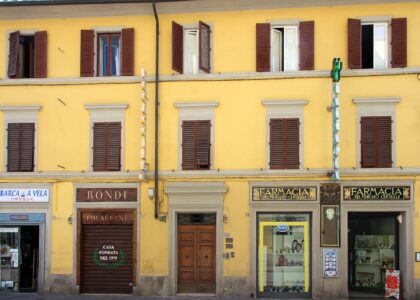
- Farmacia — pharmacy (the green cross). Our guide to pharmacies, public toilets and emergency numbers covers where to find them when you need one.
- Arrivederci — goodbye (formal).
For deeper language coverage — menus, pronunciation, taxi conversations and emergency vocabulary — see our guide to Italian Phrases for Tourists: Essential Florence Survival Guide.
5. Visas, passports & entry rules (2026)
Italy is a Schengen member. Citizens of the US, UK, Canada, Australia, New Zealand, Japan, South Korea and the other visa-exempt countries on the EU’s visa list can enter for up to 90 days in any 180-day period for tourism without a visa, provided they meet the Schengen short-stay conditions.
Two important changes you should know about:
- EES — the Entry/Exit System: phased in from 12 October 2025 and fully operational since 10 April 2026, the EES records non-EU short-stay visitors at the border with fingerprints and a facial image. Children under 12 give no fingerprints, and holders of a long-stay visa or residence permit are not registered. Enrolment is free. Plan for extra time at Rome Fiumicino (FCO), Milan Malpensa (MXP) or Florence’s Peretola (FLR) airport on your first EES entry.
- ETIAS: the EU’s electronic travel authorisation for visa-exempt non-EU travellers is not in operation yet and will not start before 2027; the EU will announce the start date several months ahead. Once it runs, the fee is €20 (with some exemptions), an authorisation lasts up to three years or until your passport expires, and you apply online before travel. Check the official
travel-europe.europa.euportal a few weeks before your trip.
Your passport must be valid for at least three months beyond your planned date of departure from the Schengen area and issued within the past ten years. Photocopy or photograph the main page and keep it separately — useful if you lose the original.
6. Opening hours, holidays & the riposo
Florentine life runs on a rhythm that can surprise first-time visitors:
- Shops typically open in the morning, close for a long lunch break and reopen in the late afternoon. Larger boutiques and chain stores stay open continuously (orario continuato).
- Museums often close on Monday — plan Uffizi and Accademia for another day. The Duomo complex follows its own schedule; see our Florence museums guide for current ticket windows and skip-the-line tips.
- Restaurants serve lunch and dinner in two separate sittings. Between those windows, kitchens are closed; only bars, enoteche and takeaway places stay open.
- Markets (San Lorenzo’s outdoor stalls, Sant’Ambrogio) start early and are best visited in the morning. The Mercato Centrale ground floor opens Monday–Friday 07:00–15:00 and Saturday 07:00–17:00, closed Sunday; the upstairs food hall is open daily 09:00–23:00.
- Sundays are quieter — many small family shops close entirely.
National holidays to plan around (check each attraction’s own holiday opening calendar): January 1, January 6, Easter Sunday & Monday, April 25, May 1, June 2, August 15, October 4 (St Francis, a national holiday again from 2026), November 1, December 8, 25, 26. Florence’s own patron saint day, June 24 (San Giovanni), is an added local holiday with fireworks over the Arno and the Calcio Storico final; some shops and offices close.
7. Electricity, plugs & gadgets
Italy runs on 230 V, 50 Hz. Sockets accept type F (Schuko) and type L (Italian three-pin) plugs. Bring an adapter that takes both types; buy one before you go or pick one up in the city for €5–€8. Laptop, phone and camera chargers are virtually all dual-voltage — check the small print on the power brick. Hair dryers, straighteners and curling tongs bought in North America are often not dual-voltage and will burn out on 230 V; borrow the hotel’s or buy a dual-voltage travel model.
8. Tap water, fountains & bathrooms
Tap water in Florence is safe, tested and excellent — many locals drink straight from the tap. Restaurants will still sell you bottled water (naturale still, frizzante sparkling); if you want tap water, ask for “acqua del rubinetto“. Refill a reusable bottle at the city’s free public fontanelli — decorative iron drinking fountains scattered across the centre (Piazza della Signoria, Piazza dei Ciompi, the Oltrarno gardens). Some dispense chilled still and sparkling water for free.
Public restrooms (bagni pubblici, WC) are scarce and usually cost €0.50–€1 in coins. The best-kept rule is “use the bar’s bathroom when you buy a coffee” — every espresso bar has one and, as a paying customer, you’re welcome. Museums, department stores (COIN, La Rinascente) and large restaurants have free facilities.
9. Safety, scams & emergency numbers
Violent crime against visitors to Florence is rare. The real risks are pickpockets, dishonest taxi drivers and souvenir-stall scams.
Pickpocket hotspots
- Santa Maria Novella station platforms and ticket machines.
- City buses, including the C1 and C2 minibuses.
- The Mercato San Lorenzo outdoor leather stalls during high-season rush hours.
- Around the Duomo entrance queue.
Wear a cross-body bag zipped on the side closest to your body; keep phones inside, not in a back pocket; skip neck wallets (they scream “tourist” and tangle under jumpers).
Common scams to ignore politely
- The “free” friendship bracelet tied onto your wrist and then demanded to be paid for — step back and say “no grazie”.
- Rose sellers at restaurants. They’ll hand a rose to one person in your party hoping someone pays.
- Clipboards and “petitions for the deaf” — distractions while an accomplice lifts your wallet.
- Unmetered taxis. Use only white official taxis with the taxameter running; agree a ballpark before long-distance rides.
Emergency numbers
- 112 — European single emergency number (police, ambulance, fire).
- 113 — Polizia di Stato.
- 115 — Vigili del Fuoco (fire).
- 118 — Ambulanza / medical emergency.
- 1515 — Forestry/environmental emergencies.
- 1530 — Coastguard.
Dialling 112 from any mobile in Italy is free. Operators speak Italian, English and usually several other European languages.
10. Health, pharmacies & hospitals

Pharmacies (farmacie)
Pharmacies display a luminous green cross. Staff are pharmacists, not cashiers: they can diagnose minor problems, recommend over-the-counter treatments and advise when you need a doctor. Opening hours vary from one pharmacy to the next. Every district has a rotating after-hours pharmacy (farmacia di turno); the schedule is posted on every door.
Pharmacies in the centre (confirm opening hours before relying on one late at night):
- Farmacia Comunale — inside Santa Maria Novella train station.
- Farmacia Molteni — Via de’ Calzaiuoli 7r (near the Duomo; check its current hours before relying on it late at night).
- Farmacia All’Insegna del Moro — Piazza San Giovanni 20r (next to the Baptistery).
Hospitals & English-speaking doctors
- Ospedale di Santa Maria Nuova (Piazza Santa Maria Nuova 1) — the hospital closest to the Duomo. In an emergency, call 112.
- Azienda Ospedaliero-Universitaria Careggi — Florence’s teaching hospital, north of the centre.
- Ospedale Santa Maria Annunziata (Bagno a Ripoli) — regional ER for south Florence.
English-speaking general practitioners include Dr Stephen Kerr (Piazza Mercato Nuovo 1), who sees patients by appointment only, and Medical Service Firenze (Via Roma 4), which takes walk-in patients for a fee during its published clinic sessions. EU citizens with an EHIC/GHIC card receive state healthcare at Italian-citizen rates. Everyone else should carry travel insurance that covers emergency evacuation; a policy is cheap and saves four- to five-figure bills in edge cases.
11. Etiquette & dress code
Florence is a devout, fashionable, slightly formal city. Basic etiquette goes a long way:
- Churches enforce a dress code: no bare shoulders, no shorts or skirts above the knee, and hats off for men. The Duomo gives out disposable paper shawls; other churches may turn you away. This includes Santa Croce, Santa Maria Novella, San Lorenzo, Santa Trinita and the Medici Chapels. See our Florence dress code guide for a detailed breakdown.
- Greet before you ask. Walk into a shop with “buongiorno” before “where are the leather wallets?” — this is considered basic courtesy.
- Cappuccino after lunch is fine in tourist cafés but will raise an eyebrow in a classic bar. After-meal coffee is espresso. An espresso macchiato (espresso with a spot of milk) is the acceptable compromise.
- Don’t eat while walking in the historic centre during peak hours — the narrow streets around the Uffizi are crowded at midday, so sit on a step or a wall to eat.
- Bread is Tuscan, salt-free, and served for dipping or scarpetta (mopping sauce). It is never buttered.
- Dress up for dinner in better restaurants. Italian sensibilities skew smart-casual in the evening — closed shoes, a collared shirt or a nice top. Gym clothes outside the gym read as deeply strange.
- Tip in cash, even if the bill is on a card. Some card terminals don’t support adding a tip.
12. Transport quick reference
Florence is a walking city. The UNESCO-listed historic centre covers 505 hectares (about 5 square kilometres), small enough that the main sights are an easy walk apart. For everything else:
- Buses & trams: run by Autolinee Toscane (formerly ATAF). A single ticket costs €2.00 and is valid for 90 minutes (€3.00 if you buy it from the driver). There is no day pass; for several rides, the 10-ride carnet costs €18.20. Validate your ticket as soon as you board: riding without one costs €40 plus €3 costs if paid within 15 days, €80 plus €3 from day 16 to day 60, and €240 plus €3 after that. Tram T1 Leonardo runs from Villa Costanza via SMN station to Careggi hospital; T2 Vespucci links the centre with Florence Peretola airport (FLR). See our Florence transportation guide for every route.
- Taxis: white, with a yellow “TAXI” sign. To get one, call +39 055 4242, +39 055 4390 or use the appTaxi / itTaxi apps. Tariff 1 is the urban rate and Tariff 2 the suburban one; night and holiday trips have their own starting and minimum fares.
- Trains: Firenze Santa Maria Novella (SMN) is the main station for day trips and intercity travel. Trenitalia and Italo run frequent high-speed services to Rome, Bologna, Milan and Venice. Book early online for the cheapest rates.
- Driving: not recommended in the historic centre. It’s ZTL (Zona a Traffico Limitato), meaning unauthorised vehicles are automatically fined Monday–Friday 07:30–20:00 and Saturday 07:30–16:00, except on public holidays. A summer night ZTL adds Thursday, Friday and Saturday nights, 23:00–03:00 (in 2026 from 2 April to the night of 3–4 October); the dates are set each year by city ordinance, so check the city’s mobility pages before you drive. If you must drive in, park at Parcheggio Beccaria or Parterre and walk or tram in.
- Airport: Florence Peretola (FLR) is a few kilometres north-west of the centre. The T2 tram runs from the airport to Unità, by SMN station, in about 20 minutes on the standard €2.00 urban ticket; see the tram timetables. Taxis charge a fixed fare between the airport and anywhere inside the ring roads (viali): €28 on weekdays by day, €30 on Sundays and holidays by day and €32 at night (22:00–06:00), plus €1.20 per bag.
13. Accessibility & families
Florence is a cobblestoned medieval city — no amount of modernisation fully fixes that. Still, 2026 is a better year than ever for visitors with mobility needs or young children.
- Wheelchair access: the Uffizi, Accademia, Palazzo Pitti, Palazzo Vecchio, Museo Galileo and most major galleries are wheelchair-accessible via dedicated entrances. The Duomo cupola, Giotto’s bell tower and San Miniato are not.
- Strollers: manageable everywhere except the bell towers and domes. A sturdy umbrella stroller handles cobbles; a lightweight chassis may struggle. Restaurants welcome children but don’t expect high chairs in every small trattoria.
- Family-friendly museums: the Museo Galileo (interactive), Palazzo Vecchio’s “Secret Passageways” tour and the Specola’s stuffed animals and wax anatomical models are all worth considering with children.
- Public transport discounts: one child under 11 rides free on Florence buses and trams with each accompanying adult; any further children pay the ordinary fare. Under-18s get free entry at the Uffizi Galleries and the Accademia.
There is more detail in our dedicated guides to accessibility in Florence and Things to Do in Florence with Kids.
14. Weather, packing & seasons
Florence sits in a valley, which means hot humid summers and damp cold winters. Averages:
- Spring (Mar–May): average highs climb from about 16°C in March to 24°C in May, and average lows from about 5°C to 12°C. Ideal touring weather, though April brings scattered rain.
- Summer (Jun–Aug): hot and humid, with the year’s highest temperatures. Museums are blessedly air-conditioned; churches are not.
- Autumn (Sep–Nov): average highs fall from about 27°C in September to 16°C in November (lows from 15°C to 6°C), and the rain increases. Grape and olive harvests make late September and October the connoisseur’s pick.
- Winter (Dec–Feb): cool days and cold nights. Occasional snow in December and January. Crowds thin out; museum queues are short.
Packing essentials regardless of season: cobble-friendly walking shoes (leather, rubber sole), a light rain jacket, a modest wrap or scarf for churches, and a reusable water bottle. Summer adds a wide-brimmed hat and light linen; winter adds a proper coat and an umbrella.
See our deeper dive in Florence weather by month.
15. Shopping, VAT & customs
Florence is a shopping destination in its own right — leather, gold, paper, Tuscan wine, olive oil and high fashion. Two practical points for non-EU visitors:
- VAT refunds: Italy’s VAT (IVA) is 22% on most luxury goods. Non-EU residents can reclaim VAT on eligible goods when a single invoice comes to more than €70, VAT included; the refund company deducts its fee from what you get back. Ask for a “tax-free” form at the till, present receipts and unused goods at the Dogana customs desk at your EU exit airport, then process the refund with Global Blue, Planet or Tax Refund Italia counters.
- Customs on your way home: US travellers should check the current personal exemption on the US Customs and Border Protection site; UK travellers arriving in Great Britain can bring other goods worth up to £390 (£270 by private plane or boat; Northern Ireland has its own rules); Canadians returning after ≥48 hours have CA$800. Declare anything more on arrival. Food restrictions apply — cured meats and fresh cheese are typically not allowed into the US; sealed commercial cheeses and wine are fine for personal amounts.
For a complete shopping itinerary including The Mall outlets, San Lorenzo leather markets and Via de’ Tornabuoni luxury, see our Florence shopping guide.
16. Tourist tax, ZTL & the tax di soggiorno
Florence, like every major Italian tourist city, charges a tassa di soggiorno (overnight tourist tax). Your hotel or apartment host collects it, unless the booking platform has already charged it when you booked, so check your booking to see which applies. The amount depends on the type and star rating of the property, so ask your host for the rate or look at the city’s tourist-tax page before you book.
Charged for a maximum of 7 consecutive nights. Children under 12 are exempt. If you pay at the property, ask at check-in how it takes the tax.
The ZTL (Zona a Traffico Limitato) is the restricted-vehicle zone covering the entire historic centre. Rental cars and taxis entering without a permit are automatically fined via licence-plate cameras. If your hotel sits inside the ZTL, email them your plate number on arrival day and they will register it with the municipality for free.
17. Solo & LGBTQ+ travel
Florence is welcoming to solo travellers of every background. The city is compact, easily navigated on foot and studded with communal dining options (enoteche with counter seating, Mercato Centrale’s upstairs food hall, aperitivo bars where standing alone is standard). Solo female travellers generally feel safe late into the evening on the main piazze; avoid quiet side streets north of SMN station after midnight.
LGBTQ+ travellers enjoy a broadly welcoming environment. Italy recognised same-sex civil unions in 2016. The Tuscan Rainbow Pride is held each summer (typically June/July) and Piccolo Caffè, YAB and Queer Florence events draw a mixed international crowd.
See our dedicated guide Solo Travel in Florence for itineraries, group-tour recommendations and neighbourhood safety notes.
18. Sustainability & overtourism tips
Overtourism is a real strain on Florence. Small acts add up — do your bit:
- Book refillable-bottle-friendly hotels and carry your own bottle. The city has free public drinking fountains (fontanelli).
- Travel in shoulder season (March–April, October–November). The weather is great, museums are half empty and the city breathes.
- Stay more than 48 hours. A two-day trip contributes mainly to foot traffic; a week lets your spending spread into neighbourhood businesses.
- Eat and shop outside the golden triangle (Duomo–Signoria–Ponte Vecchio). San Frediano, Sant’Ambrogio and Santa Croce keep artisan businesses alive.
- Use public transport and trams instead of taxis whenever possible.
- Skip the selfie-only cruise through the Uffizi; book a slower 90-minute tour that respects other visitors’ sightlines.
19. One-page Florence cheat sheet
Screenshot these essentials before you fly:
- Currency: euro (€); ATMs at Italian banks only; decline “home currency” on every terminal.
- Emergency: 112 (all-in-one).
- Tipping: optional; round up or add €1–€2 per person in cash.
- Coperto: €1.50–€4 per person where the menu shows it.
- Plugs: Type F/L, 230 V. Bring an EU adapter.
- Tap water: safe and excellent; refill at public fountains.
- Dress code: covered shoulders and knees for churches.
- ZTL: don’t drive into the centre without a permit.
- Tourist tax: charged per person per night by type of accommodation, collected by your host unless the booking platform already took it.
- Greeting: “Buongiorno” on entering a shop; “Grazie” on leaving.
- Phones: eSIM, or a local SIM (bring your passport); dial 112 in an emergency.
- Cards: Visa/Mastercard/Apple/Google Pay accepted almost everywhere; Amex patchy.
- Church hours: vary from church to church and around services; check each one’s visiting times before you go.
- Museum closure: most state museums closed Mondays.

20. Florence practical travel information FAQ
Is Florence expensive to visit?
Mid-range visitors should budget €150–€250 per person per day in 2026 — that covers a 3-star hotel, two restaurant meals, one top museum entry and incidental costs. Shoestring backpackers can trim that to €60–€90 by sleeping in a hostel, picnicking from Sant’Ambrogio market and walking everywhere.
What is the coperto charge on my bill?
The coperto (€1.50–€4 per person) is a cover fee for bread, place settings and table service. It is not a tip; it goes to the restaurant. You pay it when the amount is shown on the menu before you order.
Do I need cash in Florence?
Card payments are widely accepted, and since 30 June 2022 merchants can be fined for refusing a card payment of any amount. Still carry €30–€80 in cash for taxis in emergencies, public toilets, the coperto, small bars, church donations and the tourist tax if your accommodation asks for cash.
Is the tap water safe in Florence?
Yes — tap water is tested, clean and perfectly drinkable. Free public fountains throughout the city will refill a reusable bottle, including some with chilled sparkling water.
How much is tipping in Florence?
Tipping is optional. In a restaurant without a service charge, round up or add €1–€2 per person in cash. For hotel porters, €1–€2 per bag. For taxis, round up. Leave more only if the service earned it.
What’s the best SIM card or eSIM for a week in Florence?
For non-EU visitors, a travel eSIM from Airalo, Holafly or Saily gives you mobile data in Italy without a store visit; buy it before you fly and switch it on when you land. If you want an Italian phone number, pop into a Vodafone or TIM store with your passport; prepaid tourist plans start around €14.99.
What’s the emergency number in Italy?
Dial 112 — it works for police, ambulance and fire. It’s free from any mobile, and operators speak English.
Do I need to dress up for churches in Florence?
You need to cover your shoulders and knees. That means a scarf or light wrap for sleeveless tops and either trousers, a longer skirt or knee-length shorts. Hats off for men inside. The Duomo provides disposable paper shawls; smaller churches may turn you away.
Do I need a visa to visit Florence?
Citizens of the US, UK, Canada, Australia, New Zealand and other visa-exempt countries don’t need a visa for stays up to 90 days in 180 within the Schengen area. ETIAS, the EU’s electronic travel authorisation, will not start before 2027; once it does, it costs €20 and lasts up to three years, so check the official ETIAS site before you book.
Is Florence safe at night?
Yes. Apply the same common sense you would in any European city: keep valuables zipped away, stick to well-lit streets, and stay alert around Santa Maria Novella late at night.
What is the tourist tax in Florence?
Known as the tassa di soggiorno, it’s charged per person per night according to the type of accommodation, for up to 7 consecutive nights. Your accommodation collects it unless the booking platform has already charged it. Children under 12 are exempt.
What’s a riposo and will it affect my trip?
Many neighbourhood shops close for a long lunch break in the early afternoon. Museums stay open; large chain stores usually do too. Plan shopping for the morning or the late afternoon.
Do people speak English in Florence?
Hotels, major museums, taxi dispatchers and most mid-range or upper restaurants have English-speaking staff. Small neighbourhood bars, artisan workshops and older market vendors may not. Twenty Italian phrases (above) close 95% of gaps.
Keep planning your Florence trip
This is the practical information pillar — the dull-but-important infrastructure that makes the rest of your Florence trip smooth. From here, dive into the beautiful parts: