This article contains advertising. Booking links on this site can be turned into paid links automatically by our partner Travelpayouts: if you book through one, we earn a commission from the provider, at no extra cost to you. It never affects what we recommend. Affiliate disclosure
If you’re mapping out a first-time trip to the Tuscan capital, these are the Florence tourist attractions that deserve non-negotiable slots on your itinerary — the Renaissance-defining masterpieces, the photographed-into-oblivion piazze, and the quieter corners that keep locals coming back. We’ve ranked them by cultural weight and practical visitor experience rather than Instagram clout, and each entry includes 2026 opening hours, ticket costs, skip-the-line advice and the most common mistake we see first-timers make.
Florence’s historic centre is a UNESCO-protected World Heritage Site covering 505 hectares, and the 25 attractions below sit in and around it, from Santa Maria Novella station to the hills across the Arno. Work through this list strategically — book the biggest three (Uffizi, Accademia, Duomo complex) at least four weeks ahead — and you’ll spend less time in queues and more time actually looking.
1. The Duomo — Santa Maria del Fiore & Brunelleschi’s dome

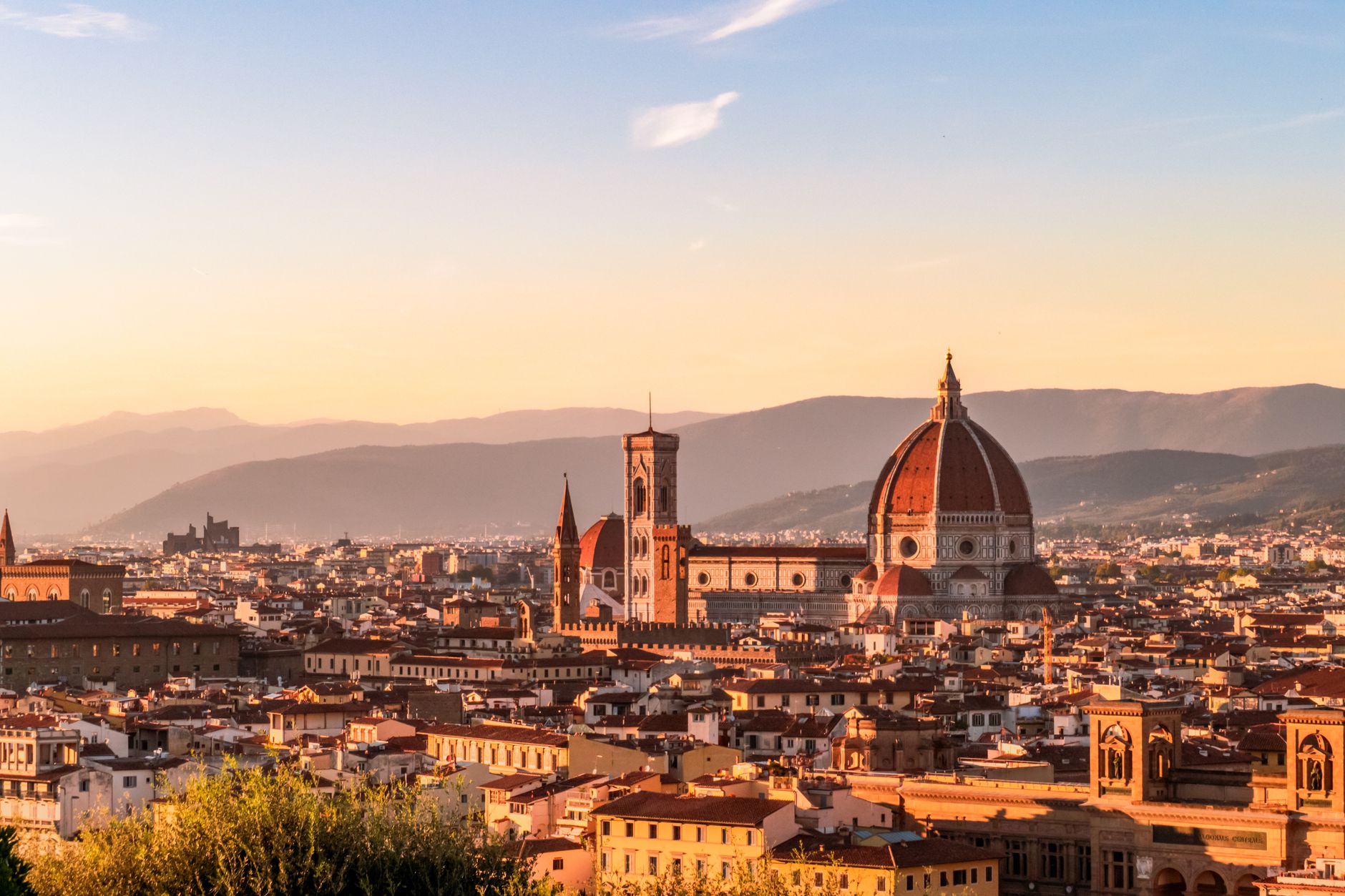
The Cathedral of Santa Maria del Fiore is the 15th-century masterwork that gave Renaissance Florence its skyline. Its pink, green and white marble façade isn’t original — it dates from the 19th century — but Brunelleschi’s dome behind it (1436) is the engineering feat everyone comes to see.
Entry to the cathedral nave is free; the Vasari fresco inside the dome, the dome climb (463 steps), Giotto’s bell tower, Baptistery, crypt and Museo dell’Opera del Duomo are covered by the combined Duomo ticket (Giotto Pass €20, Brunelleschi Pass including the dome €30, Ghiberti Pass €15 — 2026 prices). Our Florence Duomo tickets guide explains which pass to buy and how far ahead the dome slots go.
Practical tip: book a fixed-slot dome climb at least four weeks ahead, and check the official booking calendar, as availability varies through the year. The dome normally opens at 08:15 Monday–Saturday and at 12:45 on Sundays and religious holidays. The climb is 463 steps with no lift; children up to 6 go free, and under-18s must be accompanied by an adult.
2. The Uffizi Gallery
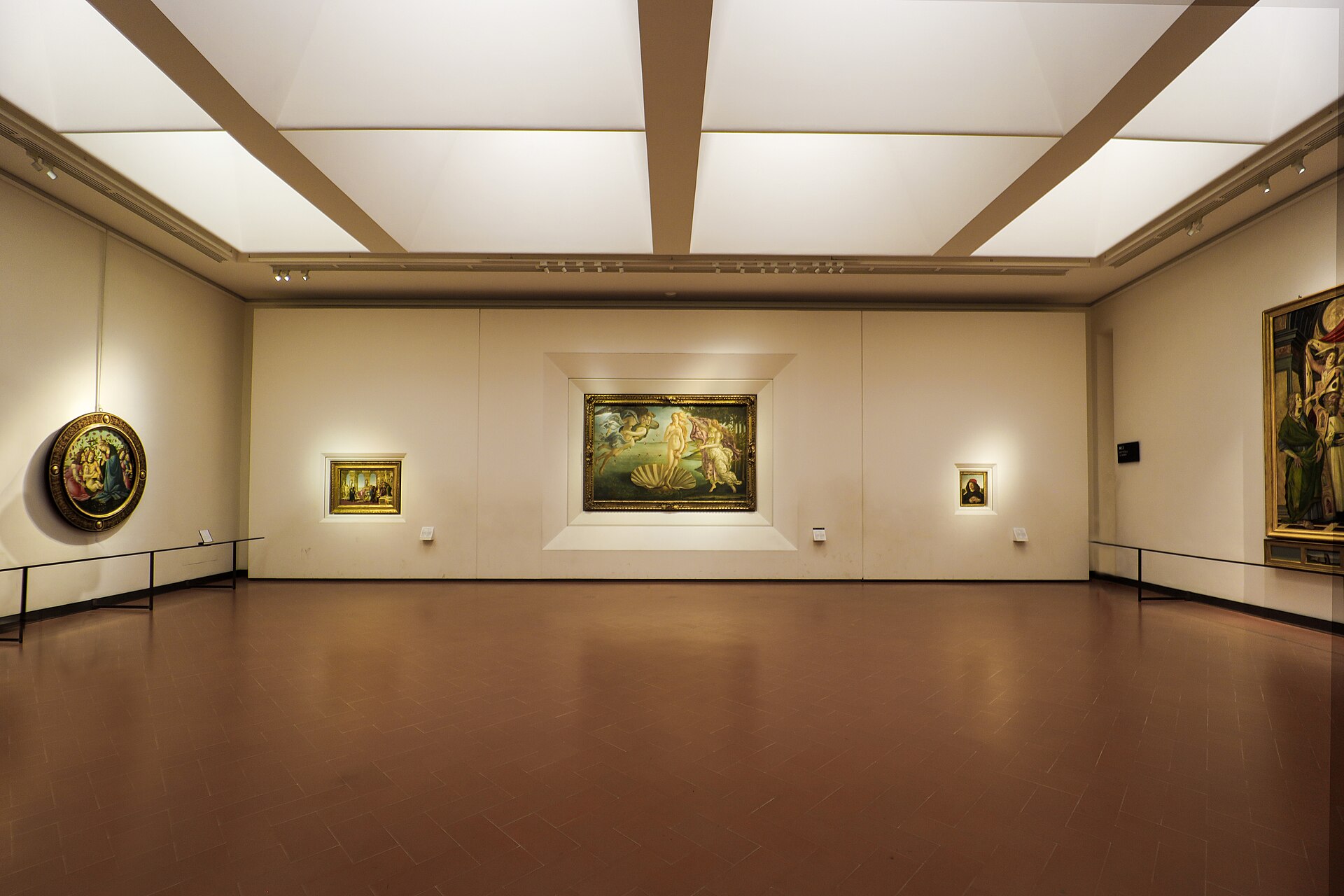
The Uffizi, built between 1560 and 1580 to a design by Giorgio Vasari, was originally the administrative offices (hence uffizi) of the Medici grand dukes. In the 18th century the last Medici heiress, Anna Maria Luisa, gifted the entire collection to the city on condition that it could never leave Florence. Today’s galleries hold Botticelli’s Birth of Venus and Primavera, Leonardo’s Annunciation, Michelangelo’s Doni Tondo, and defining works by Giotto, Caravaggio, Titian, Raphael, Dürer and Artemisia Gentileschi.
2026 tickets: €25 on the day or €29 booked in advance, the same all year; entry from 16:00 costs €16. Book the official ticket on the uffizi.it portal; avoid third-party resellers. First Sunday of the month is free but the queue wraps around the building — not worth it. The best times to visit are Tuesday or Wednesday at 08:15 opening, or after 17:00.
Allow at least 3 hours. For a highlights-only visit, follow the current visitor map: Botticelli is in room A9, Leonardo in A35, Raphael and Michelangelo’s Doni Tondo in A38, Caravaggio in E4 and Titian’s Venus of Urbino in D23. Save time for the breathtaking Corridoio di Levante, lined with ancient sculpture from the Medici collections.
3. Galleria dell’Accademia — Michelangelo’s David
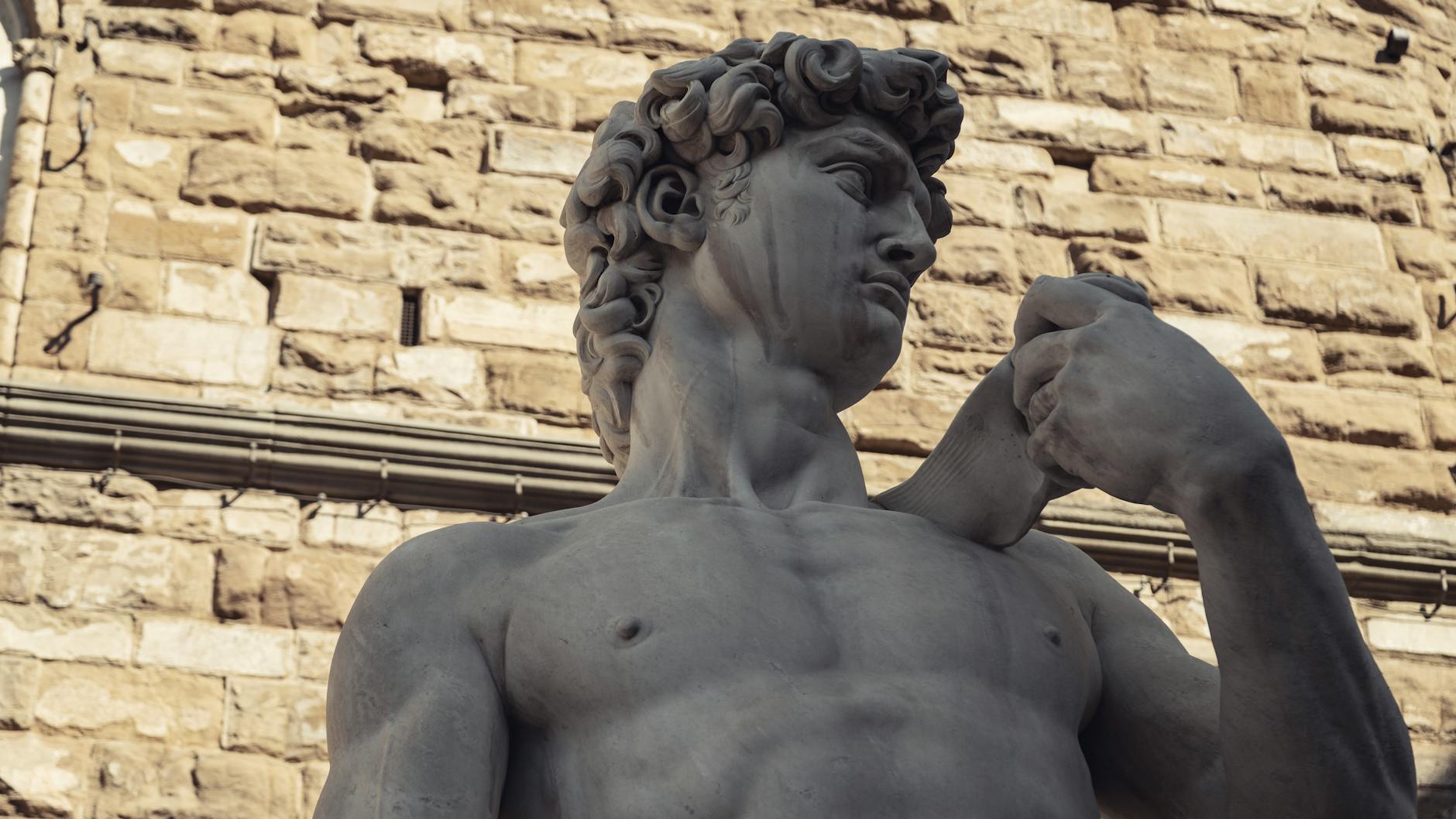
The entire point of the Accademia is Michelangelo’s David — and he does not disappoint. The 5.17-metre (17-foot) marble colossus stands at the end of a long Tribune where his four unfinished Prisoners (or Slaves) appear to wrench themselves out of raw stone. It’s the single most moving room in any Italian museum.
Also here: the Gipsoteca, a packed hall of 19th-century plaster casts, and the excellent Museum of Musical Instruments (included in the ticket) with Stradivari and Amati violins. Allow 1.5–2 hours. 2026 price: €20 full, €2 for EU citizens aged 18–24, free for under-18s, plus €4 if you reserve. Book online; without a reservation the wait can be long.
4. Ponte Vecchio

Florence’s oldest surviving bridge (1345) is one of the city’s great landmarks. The three stone arches and overhanging wooden shops survived the German retreat in 1944, when every other bridge in Florence was destroyed. Today it’s known for its gold and silver jewellers, a tradition dating to 1593 when Grand Duke Ferdinando I evicted the butchers and tanners. Running above the shops is the Vasari Corridor, Cosimo I’s private elevated walkway between Palazzo Vecchio and Palazzo Pitti. It reopened on 21 December 2024, and visits are booked through the Uffizi in reserved time slots.
Cross it at sunset for the light; come back at midnight to photograph it empty from Ponte Santa Trinita.
5. Piazza della Signoria & the Loggia dei Lanzi

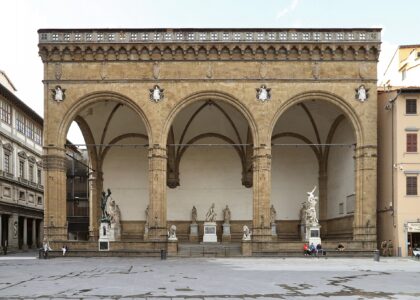
The medieval nerve-centre of Florentine politics. Savonarola was burned here in 1498 (a small marble plaque marks the spot). The square holds a copy of Michelangelo’s David, Ammannati’s Neptune fountain, a mounted Cosimo I, and the marvellous Loggia dei Lanzi — a 14th-century arched gallery displaying Cellini’s bronze Perseus with the Head of Medusa and Giambologna’s Rape of the Sabine Women. You can see the sculptures from the square; stepping inside the Loggia is free, but you need a ticket from the desk on site.
6. Palazzo Vecchio
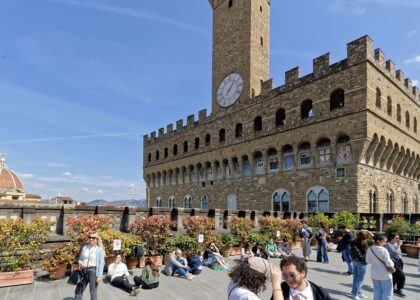
The fortified town hall (1299) dominates Piazza della Signoria with its 94-metre Arnolfo Tower. Inside, the Salone dei Cinquecento is a 54-metre frescoed hall where Leonardo and Michelangelo were given rival commissions for battle murals: Michelangelo never got beyond the preparatory drawings, and Leonardo’s unfinished painting is lost, with no proof that any of it survives behind Vasari’s frescoes. The “Secret Passageways” guided tour reveals hidden rooms, the tiny Studiolo of Francesco I, and rooftop walks along the wall-walk. Allow 2 hours; 2026 tickets are €18 for the museum, with the Arnolfo Tower and walkway sold separately at €20.
7. The Baptistery — Ghiberti’s Gates of Paradise
The octagonal Baptistery is a medieval Romanesque building whose origins go back to the 11th or 12th century. Its dazzling 13th-century gold-mosaic ceiling depicts the Last Judgement, though the vault mosaics are currently hidden by restoration work. Outside, the east doors — Ghiberti’s Gates of Paradise — are reproductions; the originals are inside the Museo dell’Opera del Duomo. Dante was baptised here as an infant. Included in every Duomo combined ticket.
8. Giotto’s Campanile
The bell tower designed by Giotto in 1334 and completed after his death by Pisano and Talenti. The climb is 414 steps; views down onto Brunelleschi’s dome reveal its double-shell construction — arguably a better photo than from the dome itself. Part of the Giotto Pass (€20) and Brunelleschi Pass (€30). The tower is closed 9–13 November 2026 for restoration work.
9. Basilica di Santa Croce
Florence’s “Temple of the Italian Glories”. Inside, tomb monuments honour Michelangelo, Galileo, Machiavelli, Rossini, Foscolo and a cenotaph to Dante. Also here are Giotto’s frescoes in the Bardi and Peruzzi chapels, Brunelleschi’s perfect Pazzi Chapel and a leather school (Scuola del Cuoio) that operated as a Franciscan trade academy after WWII. Entry €10, plus a €1 booking fee if you buy online.
10. Palazzo Pitti & Boboli Gardens
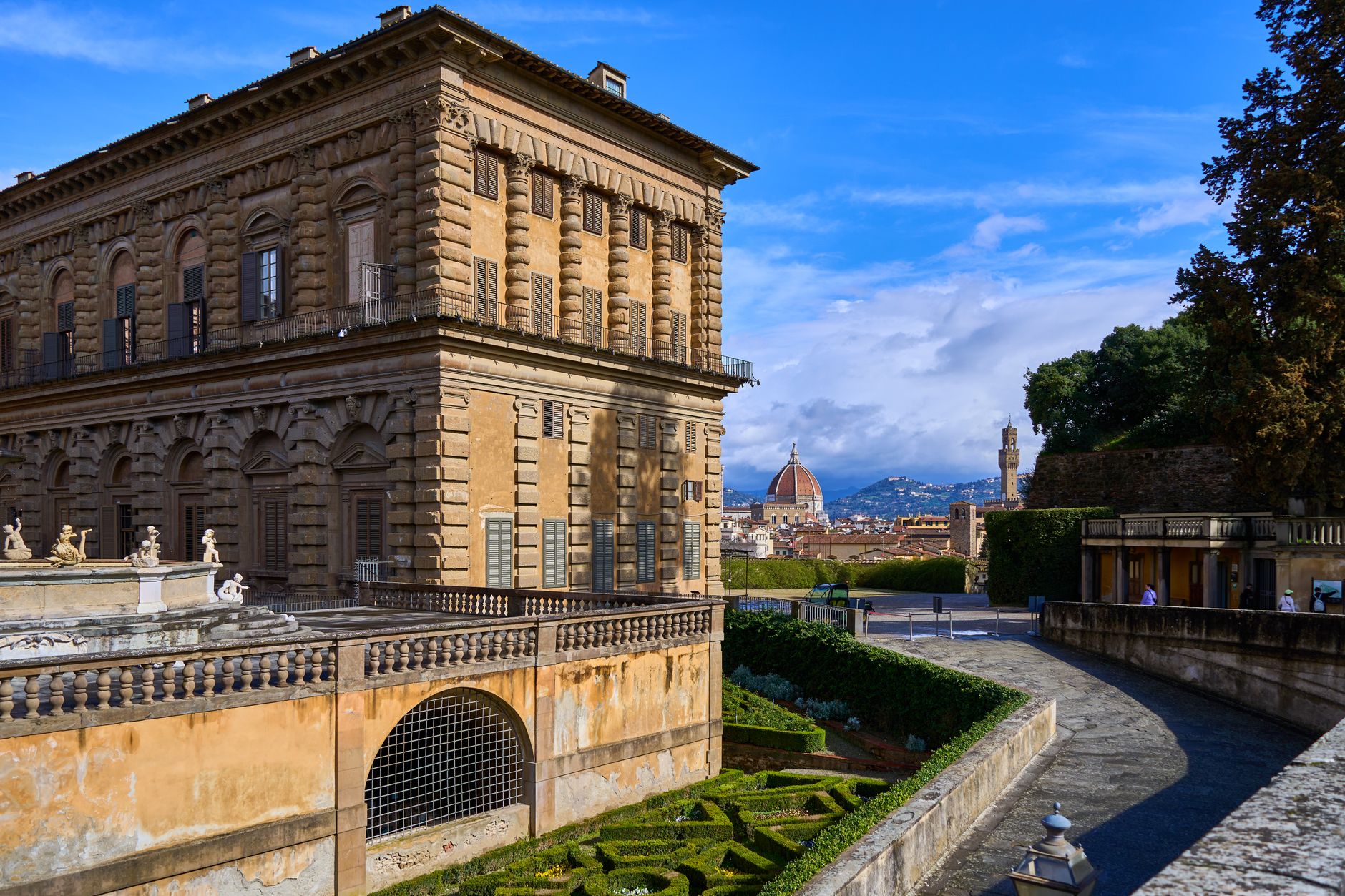
Across the Arno in the Oltrarno, Palazzo Pitti holds five museums — the Palatine Gallery (Raphael, Titian, Caravaggio), the Modern Art Gallery (Macchiaioli landscapes), the Museum of Costume and Fashion, plus the Treasury of the Grand Dukes and the Porcelain Museum, both closed at present. Behind the palace, the Boboli Gardens cascade uphill through cypress avenues, the lemon house and the Buontalenti Grotto. 2026 combined ticket €22 on the day or €25 booked; skip the Pitti + Boboli walk-up queues with the five-day Uffizi–Pitti–Boboli PassePartout for €40.
11. Piazzale Michelangelo
The 19th-century panorama terrace laid out by architect Giuseppe Poggi. Bus 12 or the walk up the Rampe from San Niccolò delivers the postcard view of Florence — the whole UNESCO core, Brunelleschi’s dome front-and-centre, the Arno snaking through. Free to visit, best at sunset and again after dark.

12. Abbey of San Miniato al Monte
A five-minute climb above Piazzale Michelangelo sits San Miniato — an 11th-century Romanesque jewel most visitors skip. Gregorian chant accompanies Mass at 18:00 on weekdays and 17:30 on Sundays and holidays, and Vespers at 18:30 every day: unforgettable. Free; open Monday–Saturday 09:30–13:00 and 15:30–19:00, Sunday 08:15–13:00 and 15:30–19:00, with sightseeing paused during services.
13. Basilica di Santa Maria Novella
The Dominican basilica facing SMN station holds Masaccio’s revolutionary Trinity (1425–1426) — one of the first major examples of Renaissance perspective — plus Ghirlandaio’s Tornabuoni chapel frescoes and Filippo Brunelleschi’s crucifix. Ticket €7.50.
14. San Lorenzo & the Medici Chapels
The Medici parish church, left unfaced on Brunelleschi’s orders. The attached Medici Chapels contain Michelangelo’s Sagrestia Nuova (New Sacristy) with the sculptural tombs of Lorenzo and Giuliano de’ Medici — Dawn, Dusk, Day and Night. The adjacent Biblioteca Medicea Laurenziana staircase is a Michelangelo architectural landmark. The basilica costs €9; the Medici Chapels are ticketed separately at €11, plus €3 if you choose to book.
15. Museo dell’Opera del Duomo
Our quiet recommendation for anyone who loves sculpture. The cathedral museum holds the originals of Ghiberti’s Gates of Paradise, Michelangelo’s Bandini Pietà, Donatello’s Mary Magdalene and Brunelleschi’s wooden model of the dome. Included in every Duomo pass.
16. Museo Nazionale del Bargello
The Bargello holds Florentine sculpture’s “second round” — Donatello’s two Davids (marble and bronze — the latter the first freestanding male nude since antiquity), Verrocchio, Luca della Robbia, and the two competing relief panels by Ghiberti and Brunelleschi from the 1401 Baptistery doors commission. €12 full. Grotesquely undervisited.
17. Mercato Centrale (San Lorenzo)
The cast-iron-and-glass market hall (1874). Ground floor: butchers, cheesemongers, fishmongers, lampredotto vendors and fresh pasta. Upstairs (since 2014): an open-plan food hall full of counters, open daily 09:00–23:00. Free to walk through, good for coffee, lunch, dinner or just ogling the produce.
18. Museo di San Marco
A Dominican convent turned museum. The friars’ cells hold a cycle of meditative frescoes by Fra Angelico and his assistants, still in situ where they were painted for the friars to pray before. Savonarola lived (and preached) here before his execution in 1498. Check the current admission price when you book. Staggeringly beautiful.
19. Palazzo Medici Riccardi
Commissioned by Cosimo the Elder in 1444, this was the Medici family home before their move to Palazzo della Signoria. Benozzo Gozzoli’s exquisite Procession of the Magi fresco (begun 1459), covering the walls of the family chapel, is the highlight — look for Cosimo, Piero and other Medici among the riders in the procession. €15 full, €10 reduced; book a fixed slot.
20. Museo Galileo
History of science, beautifully curated. Galileo’s telescopes, the lens he used to discover the moons of Jupiter (and his mummified middle finger, a bit macabre). On the Arno, a short walk from the Uffizi. €14. Fantastic with older kids.
21. La Specola — natural history museum
Born from the public natural-history museum founded in 1775, La Specola fills Palazzo Torrigiani, a short walk from Palazzo Pitti. Zoological specimens and — the reason to come — the 18th-century wax anatomical models, commissioned to teach anatomy without corpses; the historical wax collection is seen on a guided visit, with a €3 supplement. Surreal, beautiful, mildly unsettling. €10.
22. Orsanmichele
Originally a grain market, later a church. The outside niches hold copies of the statues the guilds commissioned from Donatello, Ghiberti, Verrocchio and Nanni di Banco — sculpture’s “open-air textbook” of early Renaissance naturalism. The originals are in the first-floor museum, which puts them in context. Church and museum normally open Tuesday–Sunday 08:30–18:30 and close on Mondays; full admission is €10, free on first Sundays, 25 April, 2 June and 4 November. Exceptional openings appear on the Bargello museums’ calendar.
23. Giardino Bardini
The Boboli Gardens’ quieter, prettier neighbour. The wisteria tunnel in April is jaw-dropping; the Belvedere terrace gives the best dome-skyline photo in the city. Combined ticket with Boboli €15, sold only at the ticket offices.
24. Museo Stibbert
North of the centre and rarely crowded. Frederick Stibbert’s eccentric 19th-century collection of European, Oriental, Islamic and Japanese arms and armour, samurai gear included, crammed into the villa’s 57 rooms. €12. From SMN station take tram T1 towards Careggi to Muratori, then walk; worth the trip.
25. Calcio Storico Fiorentino
Not a place, but an event: Florence’s medieval football tournament, played every June in Piazza Santa Croce. Four neighbourhood teams (Bianchi, Azzurri, Rossi, Verdi) in period costume fight 50-minute matches on a sand-covered pitch. Two semi-finals come first, and the final is played on June 24 (San Giovanni); the organisers publish each edition’s match dates and ticket sales on the city’s official channels. See our deep dive in the Florence nightlife & entertainment guide.
How to see all 25 in a single trip
Realistically, you’ll want 5–7 days to do this list justice. A tight 4-day attempt looks like this:
- Day 1: Duomo complex (cathedral, cupola, museum, Baptistery, bell tower).
- Day 2: Uffizi morning, Piazza della Signoria, Palazzo Vecchio, Ponte Vecchio sunset.
- Day 3: Accademia, San Lorenzo + Medici Chapels, San Marco, Santa Maria Novella.
- Day 4: Oltrarno — Palazzo Pitti, Boboli + Bardini, San Miniato and Piazzale Michelangelo at sunset.
- Add day 5 for Bargello, Museo Galileo, Orsanmichele, Santa Croce and La Specola.
For full day-by-day routing and timing see our Florence itinerary guide, or compare walking-only versions in our self-guided walking tours.
Skip-the-line and saving money
- Book the Uffizi, Accademia and dome climb well ahead, each through its own official channel: Uffizi tickets on
tickets.uffizi.itcost €29 booked against €25 on the day, while the Accademia and the Duomo run their own booking sites. - For multi-museum visits, the Firenze Card (€85 for 72 hours) covers more than 60 participating sites, including the Uffizi, Accademia, Pitti, Bargello and San Marco; several museums still ask cardholders to reserve. Break-even is about 5 paid museums in three days.
- Under-18s are free at all state museums (Uffizi, Accademia, Pitti, Bargello, San Marco, Medici Chapels). Bring ID.
- On Domenica al Museo (first Sunday of the month), state museums are free but booking is still required for the Uffizi and Accademia — and capacity is tight.
- Shoulder-season visits in March, early April, late October and November usually mean shorter queues and lower hotel prices.
Practical tips before you visit
- Museum tickets are time-slotted — miss your slot and you usually have to rebook. Arrive 15 minutes early.
- Security is airport-style at the Uffizi, Pitti, Accademia and Palazzo Vecchio. Large backpacks must go in the free cloakroom.
- Churches enforce a dress code — shoulders and knees covered. Carry a light scarf.
- Photography is allowed without flash or tripod at the Uffizi, Accademia, Pitti, Bargello and San Marco. It is forbidden inside the Sistine Chapel of Florence (the Brancacci Chapel).
- In summer, crowds peak from late morning into the afternoon. Either open them or close them — never arrive mid-morning.
Florence tourist attractions FAQ
What is the top tourist attraction in Florence?
The Duomo complex (Santa Maria del Fiore cathedral with Brunelleschi’s dome) is Florence’s signature attraction. The Uffizi Gallery is a very close second for art lovers, and the Accademia (for Michelangelo’s David) rounds out the top three.
How many days do you need to see the main attractions in Florence?
You need at least three full days to cover the Duomo, Uffizi, Accademia, Palazzo Vecchio, Ponte Vecchio and Santa Croce without feeling rushed. Five days comfortably covers all 25 of our list, including Oltrarno, Pitti Palace, Boboli Gardens, Piazzale Michelangelo and the second-tier museums (Bargello, San Marco, Galileo).
How much do Florence tourist attractions cost in 2026?
Big-ticket pricing: Uffizi €25 on the day (€29 booked), Accademia €20 (plus €4 to reserve), Duomo passes €15–€30, Palazzo Vecchio €18, Pitti + Boboli €22. Budget roughly €100–€150 per person for the four headline museums plus one deep dive like the Bargello or Museo Galileo.
Which Florence museums close on Monday?
The Uffizi, Galleria dell’Accademia, Pitti Palace, Bargello, Medici Chapels and San Marco all close on Mondays. The Duomo complex, Palazzo Vecchio, Santa Croce, Museo Galileo and the Boboli Gardens stay open. Plan your Monday around those, and book the state museums for Tuesday–Sunday.
Is the Firenze Card worth buying?
Price the Firenze Card (€85 for 72 hours) against individual tickets for your own itinerary. Booked tickets for the Uffizi, Accademia, Pitti and the Medici Chapels alone come to €86, so those four in three days already cover it, and every extra museum you add widens the gap. How much you save depends on the admissions and booking charges of the sites you pick. For slower travellers doing two or three sights, individual tickets are cheaper.
Can you see David without paying?
The original Michelangelo David is inside the Galleria dell’Accademia (€20 entry plus a €4 booking fee, €2 for EU citizens aged 18–24, free under-18s). Free full-size copies stand outside Palazzo Vecchio in Piazza della Signoria and on top of Piazzale Michelangelo — both are excellent photo ops even if you can’t get an Accademia ticket.
Do I need to book Uffizi tickets in advance?
Yes — especially from April to October. Same-day walk-up tickets are not guaranteed, and queues build quickly. Book online on the official uffizi.it portal for a fixed entry slot. The booking fee is €4 on top of the ticket price.
What Florence tourist attractions are free?
Piazza della Signoria is free, and the Loggia dei Lanzi sculptures can be admired from the square; entry to the Loggia itself is free with a ticket picked up on site. Ponte Vecchio is free to walk across. The Duomo nave is free outside Mass hours. Piazzale Michelangelo and the Rose Garden are always free. The first Sunday of each month is free for state museums (booking still required). See our companion article Free Things to Do in Florence for a complete list.
Where is the best view of Florence?
Piazzale Michelangelo (free) for the sunset panorama; Brunelleschi’s dome climb for the aerial view of the cathedral; Giotto’s bell tower for the best photograph of the dome; the Abbey of San Miniato, a climb above Piazzale Michelangelo, for a panorama from one of the highest points in the city.
Keep planning
This article is the top-attractions companion to our ultimate Things to Do in Florence pillar. From here, dig deeper into specific categories:
- Florence Museums & Art Guide
- Florence Itineraries: 1 to 7 Days
- Self-Guided Walking Tours of Florence
- Best Views & Photo Spots in Florence
- Free Things to Do in Florence
- Hidden Gems in Florence
The cathedral deserves a guide of its own: see our dedicated Florence Duomo guide for tickets, the dome climb and the best time of day to go.