This article contains advertising. Booking links on this site can be turned into paid links automatically by our partner Travelpayouts: if you book through one, we earn a commission from the provider, at no extra cost to you. It never affects what we recommend. Affiliate disclosure
Florence Nightlife & Entertainment Guide: Bars, Clubs, Music & Festivals (2026 Edition)
Florence nightlife is not Milan or Ibiza — it is something better. This is the complete, local-led guide to what Florence actually does after dark: aperitivo in Santo Spirito, rooftop cocktails over the Duomo, jazz in medieval wine cellars, Calcio Storico in Santa Croce, opera at the Maggio Musicale, late-night dancing in Novoli and the Cascine, and the sunset ritual at Piazzale Michelangelo that still defines a Florentine evening. Fully updated for 2026 with hours, bookings, and the practical details you need.


Florentine evenings run late but rarely rowdy. The usual arc is aperitivo, then a cocktail at one of the city’s better bars or a set at a jazz and live music venue, and only after midnight do the clubs and dance floors fill up.
In the weeks around Christmas the evening walk becomes the main event, when the city’s winter light festival plays across Palazzo Vecchio, Ponte Vecchio and other landmarks (the last edition ran from 6 December to 6 January; MUS.E publishes each new programme). Our Christmas in Florence guide maps the best free hour of it.
One night of the year the whole city is outdoors at once. Our New Year’s Eve in Florence guide covers where to spend the night, and is blunt about what the club packages are actually selling.
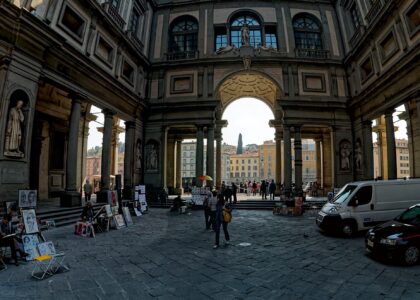
Between June and September the whole after-dark map moves outdoors — free films in the Uffizi courtyard, concerts in a Roman theatre, bars on the riverbank. Our guide to Florence summer events has the season in full.
What Florence Nightlife Is (and Isn’t)
It is worth calibrating expectations immediately: Florence nightlife is not a club-first, bottle-service, 4am-scene city. Florence is a compact university town of about 360,000 residents, and its defining nocturnal ritual is an aperitivo in a piazza, not a warehouse rave. This is a genuinely good thing. Florence does evenings the way Italians do evenings — slowly, around food and wine, in beautiful places, with plenty of real conversation. The city has a live music scene, rooftop bars with views over the Duomo and the Arno, an opera house that runs one of Europe’s oldest music festivals, and a small club scene, mostly outside the tourist zone.
Understanding the city’s nightlife structure helps you plan:
- Early evening — Aperitivo. The social opening of the Florentine evening. Spritz, cocktail, or glass of wine with free buffet snacks or small plates. Every neighbourhood has its aperitivo epicenter; Santo Spirito is the most famous.
- Later — Dinner. Florence eats dinner later than northern Europeans but earlier than most other southern Italian cities. Kitchens close well before the bars do, so ask about last orders when you book.
- After dinner — Second-act bars. Cocktail bars, wine bars, and pubs pick up the post-dinner crowd. Rooftop bars are at their best hours.
- Late — Clubs. The proper clubs fill late and stay open into the small hours at weekends. Most are outside the historic centre.
The city’s energy is noticeably higher between April and October, quieter in winter (though December brings Christmas markets and a brief surge around New Year). Students drive the academic-year scene (September to May); tourists dominate the summer scene. The best Florence evenings mix both.
The Aperitivo Hour: Florence’s Real Night Out

Aperitivo is the defining Florentine social ritual. The idea — a pre-dinner drink accompanied by savoury snacks in the early evening — is pan-Italian, but each city has its own version. For the price of a single drink (usually €8–12), you get your cocktail or glass of wine plus access to a buffet that can range from simple olives and crisps at a neighbourhood bar to lavish spreads of cold pasta, cured meats, cheeses, mini-pizzas, risotto, and seasonal salads at the more serious aperitivo places. Many a Florentine student “dinner” is, functionally, an ambitious aperitivo.
Where to Aperitivo
- Piazza Santo Spirito (Oltrarno) — the city’s most atmospheric aperitivo scene. Volume (Piazza Santo Spirito 5r) is the best known, with vintage furnishings, occasional live music, and a generous buffet. Il Santino and Pitta M’Ingozzo are also excellent here.
- Santa Croce / Piazza Sant’Ambrogio — student-heavy and good value. Rex Cafè (Via Fiesolana 25r) is a longstanding Florence cocktail and aperitivo bar.
- Via de’ Benci & Piazza dei Peruzzi — the narrow streets east of the Uffizi house several classic cocktail spots. Gilli at Piazza della Repubblica, founded 1733, is the grand-café option.
- Sant’Ambrogio Market area — for a neighbourhood feel, Cibrèo Caffè (Via Andrea del Verrocchio 5r) runs an excellent aperitivo in the orbit of the Fabio Picchi restaurant empire.
- San Niccolò (east Oltrarno) — Zoè (Via dei Renai 13r) and Negroni (Via dei Renai 17r) define this slightly-off-centre, locals-favoured aperitivo zone.
- Piazza della Passera — a tiny Oltrarno square; Caffè degli Artigiani and Il Rifrullo keep it busy all evening.
What to Order
- Aperol Spritz — the ubiquitous choice, orange, bitter-sweet, low in alcohol. €7–10.
- Hugo Spritz — elderflower, mint, prosecco, soda. Lighter than the Aperol.
- Negroni — invented in Florence around 1919 at Caffè Casoni (now Giacosa 1815). Gin, Campari, and sweet vermouth. The city’s signature cocktail; order it here and you are drinking history.
- Negroni Sbagliato — the “mistaken” Negroni with prosecco instead of gin. Lighter and slightly sweeter.
- Americano — the Negroni’s predecessor: Campari, vermouth, soda. Session-strength.
- Vermentino, Vernaccia, or Chianti by the glass — wine is always a reasonable choice at aperitivo. €5–8 for a good glass.
- Chinotto, Crodino, or an alcohol-free spritz — all serious non-alcoholic options widely available.
Aperitivo Etiquette
Order at the bar, pay up front, then help yourself to the buffet — the bartender typically won’t bring food to your table, and returning for multiple plates is normal. Don’t overload the first plate (it looks greedy), don’t bring food back to the bar, and in most places it is polite to order a second drink if you are staying past an hour. Service charge is included; small coins left on the counter when you leave are a nice gesture but not expected.
Rooftop Bars with a View
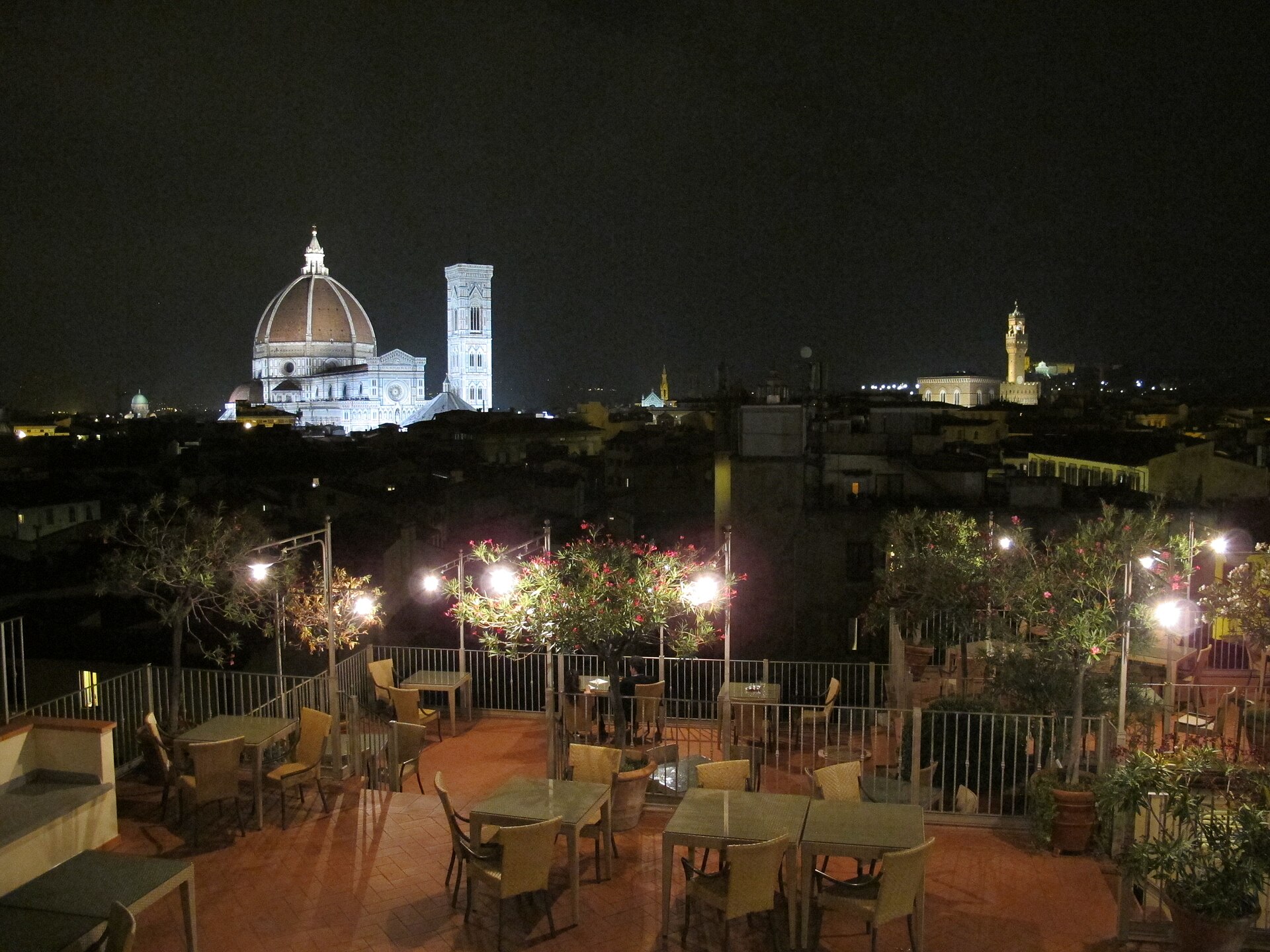
Florence’s skyline — the Duomo, the Campanile, Palazzo Vecchio’s tower, and the hills rising beyond the Arno — rewards every rooftop that can frame it, and a dozen hotels and restaurants now compete for the best perspective. These are the rooftops that matter:
The Classics
- La Terrazza (Hotel Continentale) — Vicolo dell’Oro 6r. Lungarno Collection’s rooftop has one of the tightest, most direct views of Ponte Vecchio; the bar sits on the north bank looking east and south. Open daily roughly 5pm–11pm; cocktails €16–22. Booking recommended; walk-ups possible mid-week.
- Cosimo Rooftop Restaurant & Bar (The Excelsior) — Piazza Ognissanti 3. Sixth-floor rooftop restaurant and bar at The Excelsior, a Luxury Collection Hotel, with a 360° panorama over the city and the Arno. Dinner is expensive but the bar before or after works well; the sunset view across the Arno to the Oltrarno hills is the signature. Terrace open April to October.
- Loggia Roof Bar (Hotel Palazzo Guadagni) — Piazza Santo Spirito. A terrace in the Renaissance Palazzo Guadagni. The terrace is set in the piazza rather than above it, with the Santo Spirito façade and the Oltrarno rooftops as the view. More relaxed and much cheaper than the luxury hotel rooftops; drinks from €10.
- Divina Terrazza (Grand Hotel Cavour) — Via del Proconsolo 3. The closest rooftop bar to the Duomo, with the best direct view of the cathedral from street level of any rooftop in the city. Popular with architects and photographers. Expect to queue on a warm evening.
- B-Roof (Grand Hotel Baglioni) — Piazza Unità Italiana 6. Seventh-floor garden bar near Santa Maria Novella station. View of Cupolone Brunelleschi and the hills behind. Relaxed, good service.
- ToscaNino Rooftop (Rinascente) — Piazza della Repubblica. The panoramic top-floor venue of Florence’s department store, with the piazza and the rooftops below. Daytime and early evening. Open during store hours.
- Empireo Bar (Hotel Plaza Lucchesi) — Lungarno della Zecca Vecchia 38. On the north bank east of the centre; seasonal rooftop with a pool and direct view of Santa Croce.
Newer Entrants
- Palagio Terrace (Four Seasons) — Borgo Pinti 99. Not technically in the centre but the hotel garden and rooftop are among the most beautiful in the city.
- View on Art (Hotel Medici) — Via dei Medici 6. Quiet sixth-floor rooftop in the heart of the centre with a serious cocktail program.
Tips for Rooftop Visits
- Book at least two days ahead for peak season (May–September) at the hotel rooftops.
- Aim for 7pm in summer to catch the golden hour; aim slightly earlier (around 6pm) in winter.
- Dress for the breeze. Evenings above roof-level can be noticeably cooler than the street.
- Most hotel rooftops have a smart-casual dress code — beach-casual will draw stares but rarely rejection.
- A single cocktail plus 45 minutes is a fair guideline; staying longer expects a second drink or a food order.
See our dedicated rooftop bars in Florence guide for full opening hours and booking links.
Best Cocktail & Wine Bars
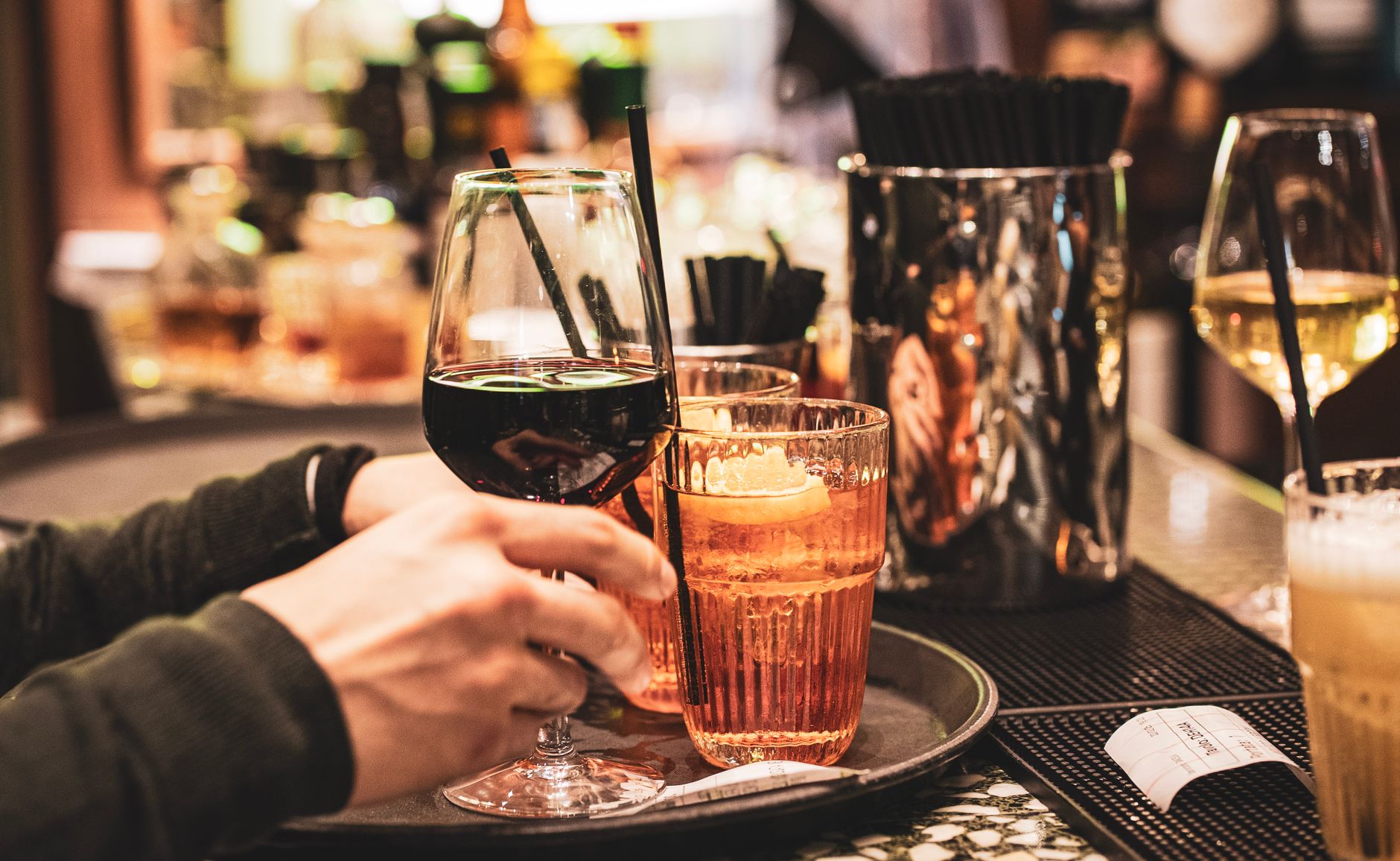
The Serious Cocktail Bars
- Locale — Palazzo Concini. The main floor dates from the sixteenth century and was built over a thirteenth-century dwelling, now the basement. Tasting-menu cocktails served in the courtyard (summer) or the frescoed rooms (winter). Booking essential. Think €16–22 per drink.
- Manifattura — Piazza San Pancrazio 1. All-Italian cocktails: only Italian spirits, Italian methods, Italian glassware. Elegant bar across from the Pucci flagship. €13–17.
- Mad Souls & Spirits — Borgo San Frediano 36r. Small, intense, Oltrarno cocktail bar with a cult following. Frequent menu changes.
- Rasputin — Borgo Tegolaio 21r. Florence’s best-kept speakeasy; entry requires a password-text protocol. Once inside, 1920s-style cocktails in a candlelit salon.
- The Blob Club — Via Vinegia 21r. Hidden cocktail room near Piazza della Signoria; retro interior, excellent classic cocktails. Always lively.
- Giacosa 1815 — Via della Spada 15r. The successor to Caffè Casoni, where the Negroni is traditionally said to have been invented in 1919. Have yours as an aperitivo ritual before dinner.
Wine Bars & Enoteche
- Le Volpi e l’Uva — Piazza dei Rossi 1 (just south of Ponte Vecchio). Tiny, excellent wine bar specialising in small Italian producers. Great cheese and salumi board. Arrive early.
- Enoteca Pitti Gola e Cantina — Piazza Pitti. Exactly opposite the Pitti Palace; serious wine list, proper food menu. Book.
- Il Santino — Via di Santo Spirito 60r. A one-room Oltrarno wine bar; you will make friends with whoever sits next to you. A Florence classic.
- All’Antico Vinaio — Via dei Neri 65r. Not a wine bar per se but Florence’s most famous panino shop runs a small wine bar (Antica Vineria) opposite — good for a glass and a snack mid-afternoon.
- Coquinarius — Via delle Oche 11r. A historic wine bar and restaurant behind the Duomo; broad Tuscan list.
- Rasputin and Locale also carry excellent natural-wine lists alongside their cocktails.
Pubs & Beer Bars
Florence has a legitimate craft-beer scene, driven partly by the city’s student population. Essential stops:
- Archea Brewery — Via dei Serragli 44r. Their own brews plus Italian craft guests.
- Mostodolce — Via Nazionale 114. Florentine-owned microbrewery with a central taproom.
- Red Garter — Via de’ Benci 33r. A short walk from Santa Croce and popular with students.
- Kikuya Pub — Via de’ Benci 43r. British-style pub with extensive beer list.
- Beer House Club — Corso dei Tintori. Serious beer focus.
Live Music, Jazz & Blues
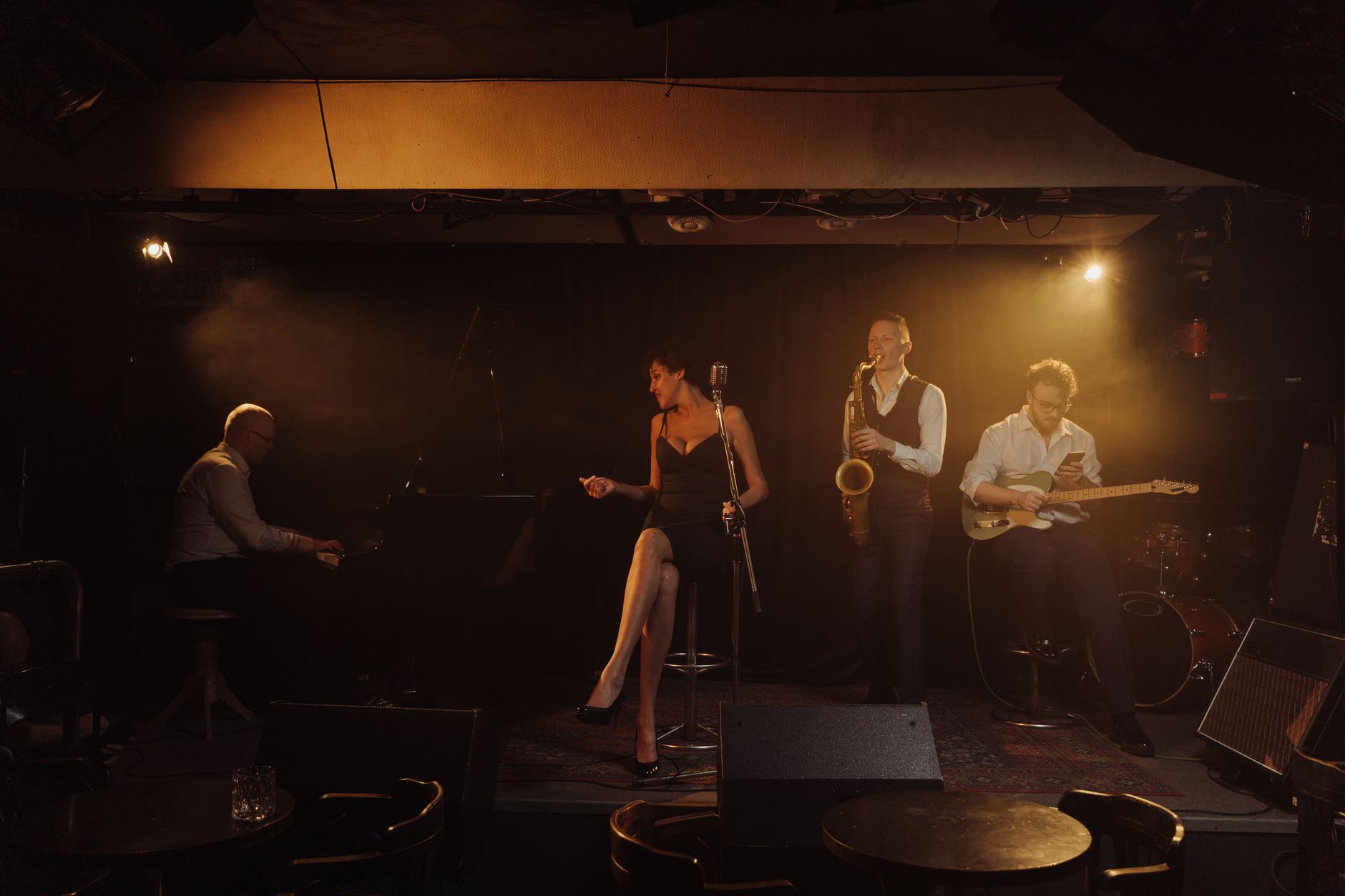
Jazz
- Jazz Club Firenze — Via Nuova de’ Caccini 3. The city’s dedicated jazz club, in a 14th-century cellar. Open Tuesday to Sunday from 10pm; entry is by membership card, listed at €7.
- La Cité — Borgo San Frediano 20r. Bookshop-bar-live-music venue in the Oltrarno; jazz, folk, singer-songwriters, and poetry readings. Free entry.
- Volume (Piazza Santo Spirito 5r) — not a dedicated jazz club but regular Thursday and Sunday live sessions are a neighbourhood institution.
Rock, Indie & Alternative
- Tenax — Via Pratese 46 (northwest of the centre). A Florence club since 1981, known for electronic music and house nights; its own event listings give the current programme and how late each night runs.
- Viper Theatre (Viper-X at Tenax) — Via Pratese 46. Live-music venue for Italian and international indie acts. A fire in August 2025 left its own building on Via Lombardia unusable, so the 2026–27 season runs at Tenax under the Viper-X name.
Traditional Italian & World Music
- Piazza Santo Spirito and Piazza Santa Croce — summer open-air concerts are common during the Estate Fiorentina festival season (June–September); programmes range from Italian singer-songwriters to tango orchestras.
- Arena di Marte & Palazzo dei Congressi — larger venues for Italian pop acts and international tours that don’t fit in the dedicated rock venues.
For current listings see our live music in Florence guide, updated weekly during concert season.
Clubs & Late-Night Dancing
Florence’s club scene is smaller than Milan’s or Rome’s but active, and operates on a pattern familiar to every Italian university town: the action starts late and runs into the small hours. Most clubs are outside the historic centre, which means a taxi back. Entry is generally €10–20, which includes one drink; men sometimes pay slightly more than women at mainstream clubs.
Main Clubs
- Tenax — Via Pratese 46. A Florence institution since 1981, Saturday nights especially. International DJs; indie, techno, and alternative-rock nights depending on the schedule. Check Tenax’s event listings for each night’s hours.
- Space Club — Via Palazzuolo 37. Central but mostly tourist-oriented; easy entry, Top 40 and Italian pop. Busy Friday and Saturday.
- YAB (You Are Beautiful) — Via Sassetti 5r. Hip-hop, R&B, Italian mainstream. Heavy student crowd.
- Otel Variete — Viale Generale Dalla Chiesa 9. Cabaret-style nightclub with live performances and DJ sets; mixed crowd including theatre regulars.
- Volume, Rex Café, and Red Garter operate as half-club, half-bar in the centre, with small dance floors and later closing times; useful as a centre-city option when the centre quiets down.
Practical Club Notes
- ID required — carry a passport or driving licence; a passport is the safest choice.
- Most clubs are cashless; card acceptance is nearly universal.
- Smart-casual dress is the standard; no sportswear or beachwear. Men in shorts are often refused entry.
- Clubs outside the centre are difficult to leave without a taxi; arrange a return via the Free Now or itTaxi app in advance, or ask the bouncer to call one for you (standard practice).
- The scene is notably quieter in mid-August, around ferragosto, when many clubs close.
See our dedicated Florence clubs & dancing guide for weekly schedules.
Opera, Classical & the Maggio Musicale
Florence is not a city of pop-music stadiums, but it is a serious classical and operatic capital. The Teatro del Maggio Musicale Fiorentino (at Piazzale Vittorio Gui 1) is the principal opera house — a modern complex opened in 2011. It took over from the old Teatro Comunale, inaugurated in 1862, whose building has since given way to redevelopment. The company runs a full season of opera, ballet, and symphonic concerts from roughly October through June, plus the famous summer festival.
The Maggio Musicale Festival
The Maggio Musicale Fiorentino is one of the oldest music festivals in Europe — founded in 1933, it followed only the Salzburg Festival. The 2027 edition (the 89th) opens on 18 April 2027, and the Maggio’s website lists the date of every performance. Expect a mix of major operatic productions (Verdi, Wagner, Mozart, Puccini), symphonic concerts, and contemporary commissions. The published 2026 opera tariff put standard seats at €35–130, with limited-view places at €15 and listening-only places at €10; concert and ballet prices differ, so check the performance you want.
Classical Music Venues
- Teatro del Maggio Musicale Fiorentino — main opera house; official website sells direct.
- Teatro della Pergola — Via della Pergola 12–32. Built as a wooden theatre in 1656 and one of Italy’s oldest theatres, now specialising in prose theatre and chamber concerts.
- Teatro Verdi — Via Ghibellina. 19th-century theatre hosting opera, ballet, and concerts. Some of the best acoustics in the city.
- Saint Mark’s English Church (Via Maggio) — hosts regular concerts aimed at tourists, opera favourites among them. Short programmes (80–90 min) of the greatest hits; inexpensive (€20–30) and an easy option when major productions are booked out.
- Santo Stefano al Ponte — a deconsecrated church near the Uffizi, now an auditorium hosting regular classical concerts.
- Orchestra da Camera Fiorentina — runs a concert season at venues around the city; good value.
See our opera and classical music guide for the complete schedule and booking details.
Florence Festivals & Events Calendar
Annual Festival Calendar
These are the dates to know for a Florence festivals calendar:
- January 6 — Cavalcata dei Magi. Epiphany procession from Piazza Pitti to Piazza del Duomo, with hundreds of participants in 15th-century Medici-court costume. A lay confraternity linked to the Cavalcata is documented from 1417; the modern procession was revived in 1997 for the cathedral’s 700th anniversary. Free to watch; the cathedral’s events page confirms each year’s procession.
- March 25 — Capodanno Fiorentino. Traditional Florentine New Year, marking the Feast of the Annunciation, with a procession through the historic centre to the Basilica della Santissima Annunziata at the heart of a week of Florentine events. The city’s official tourism site, Feel Florence, carries each year’s programme.
- Easter Sunday — Scoppio del Carro. The “Explosion of the Cart” — a cart laden with fireworks is set off in front of the Duomo at 11am, ignited by a mechanical dove flown from the altar. Its origin story goes back to the First Crusade of 1099.
- From April 18, 2027 — Maggio Musicale Fiorentino (89th edition). Opera, ballet, and classical concerts.
- April 25 — Festa della Liberazione. Italian Liberation Day; the city’s commemorations in 2026 centred on Piazza dell’Unità Italiana and the arengario of Palazzo Vecchio in Piazza della Signoria. The City of Florence publishes each year’s ceremony programme.
- Mid to late June — Calcio Storico. The medieval football tournament (see next section). Semifinals and final in Piazza Santa Croce.
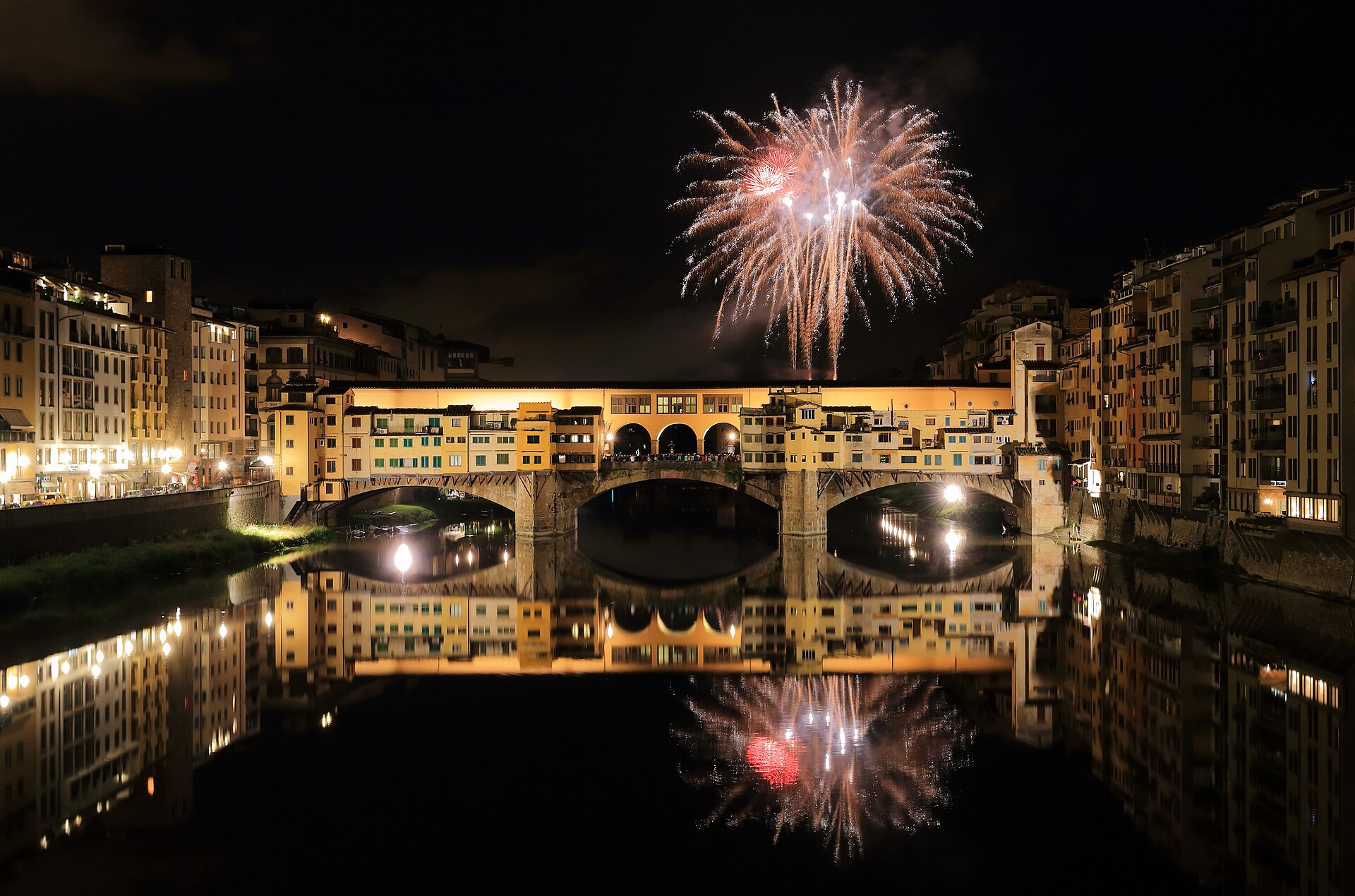
- June 24 — Festa di San Giovanni. Florence’s patron saint day. Ceremonies in the historic centre, the Calcio Storico final, and fireworks from Piazzale Michelangelo over the Arno (set for 10pm in 2026; the year’s programme gives the running order).
- Summer — Estate Fiorentina. Umbrella festival hosting outdoor concerts, open-air cinema, theatre, dance, and exhibitions in the city’s piazzas, gardens, and cloisters. The 2026 programme ran from 1 June to 30 September; watch the city’s listings for the next one.
- July — Firenze Jazz Fringe Festival. Citywide jazz takeovers; also Musart and the Lucca Summer Festival nearby.
- September 7 — Festa della Rificolona. Lantern festival on the eve of the Nativity of the Virgin Mary. Children carry paper lanterns in a procession from Piazza Santa Felicita through the centre to Piazza Santissima Annunziata. Feel Florence posts the evening’s timings each year.
- September 10 — Rificolona procession in Novoli. A smaller neighbourhood lantern procession through the parish streets from the church of Santa Maria a Novoli, held at 8:30pm on 10 September in 2026.
- October — Florens Festival & Festival delle Religioni. Heritage and interfaith events.
- November 1 — Tutti i Santi. All Saints’ Day; cemeteries and churches busy.
- November–December — Natale a Firenze. The Santa Croce Christmas market runs from 14 November to 20 December in 2026; markets also in Piazza dei Ciompi; Christmas concerts in the major churches; New Year’s Eve events are announced late in the year, so check the city’s listings on Feel Florence.
Biennale and Big Exhibitions
- Biennale dell’Antiquariato — a world-class antiques fair held every two years at Palazzo Corsini, most recently from 26 September to 4 October 2026; the organisers announce the next dates on biaf.it.
- Pitti Immagine Uomo / Bimbo / Filati — international menswear, childrenswear, and textile trade fairs at the Fortezza da Basso; Pitti Immagine’s calendar gives each edition’s dates. Trade-only, but the city fills with international buyers and fashion events spill into public venues.
- Florence Biennale — contemporary art biennial, odd years.
Full details: Florence festivals & events calendar.
Calcio Storico & the San Giovanni Fireworks
Calcio Storico Fiorentino is one of Italy’s most extraordinary annual events — part sporting tournament, part medieval spectacle, part genuinely dangerous contact game. The game has medieval roots, and its most famous match came on 17 February 1530, when Florentines played in Piazza Santa Croce during the siege by Imperial forces, in defiance of the besiegers. The modern tournament, revived in 1930, is normally held in June.
The Game
Four teams — one from each historic Florentine neighbourhood — compete: Bianchi (the Whites, from Santo Spirito), Azzurri (Blues, from Santa Croce), Rossi (Reds, from Santa Maria Novella), and Verdi (Greens, from San Giovanni). Each team fields 27 players. The game is a legal hybrid of football, rugby, wrestling, and boxing. A ball must be carried or thrown into a long net (the caccia) at the opposite end of a sand-filled Piazza Santa Croce. The tournament normally has two semifinals in June and a final on June 24, the feast day of San Giovanni, Florence’s patron saint.
Tickets and Viewing
Tickets are distributed through a mix of channels — most go to members of the four quartieri (neighbourhood associations) and to sponsors; some are released publicly via the city’s official Calcio Storico website, typically in May. Prices run €25–100 depending on seat. For visitors without tickets, the parade beforehand (Corteo della Repubblica Fiorentina — the historic costumed procession through the centre) can be watched from the street.
The San Giovanni Fireworks (Fochi)
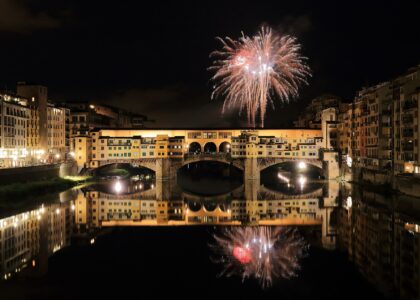
On the night of the final, June 24, a fireworks show is fired from Piazzale Michelangelo; in 2026 it was scheduled for 10pm, and each year’s programme confirms the time. It is the traditional close of Florence’s biggest civic celebration, the feast of its patron saint. Best viewing points: Ponte alle Grazie and Ponte Santa Trinita (the fireworks reflect on the Arno); any restaurant or bar with a south-facing terrace on the north bank; the Pitti side of Ponte Vecchio; or — for free and the best view — the north side of the Arno between Ponte alle Grazie and Ponte San Niccolò. Crowds are enormous; arrive by 9pm for a good spot.
See our Calcio Storico guide for ticket information, history, and match-day logistics.
Sunset Spots: Piazzale Michelangelo & Beyond
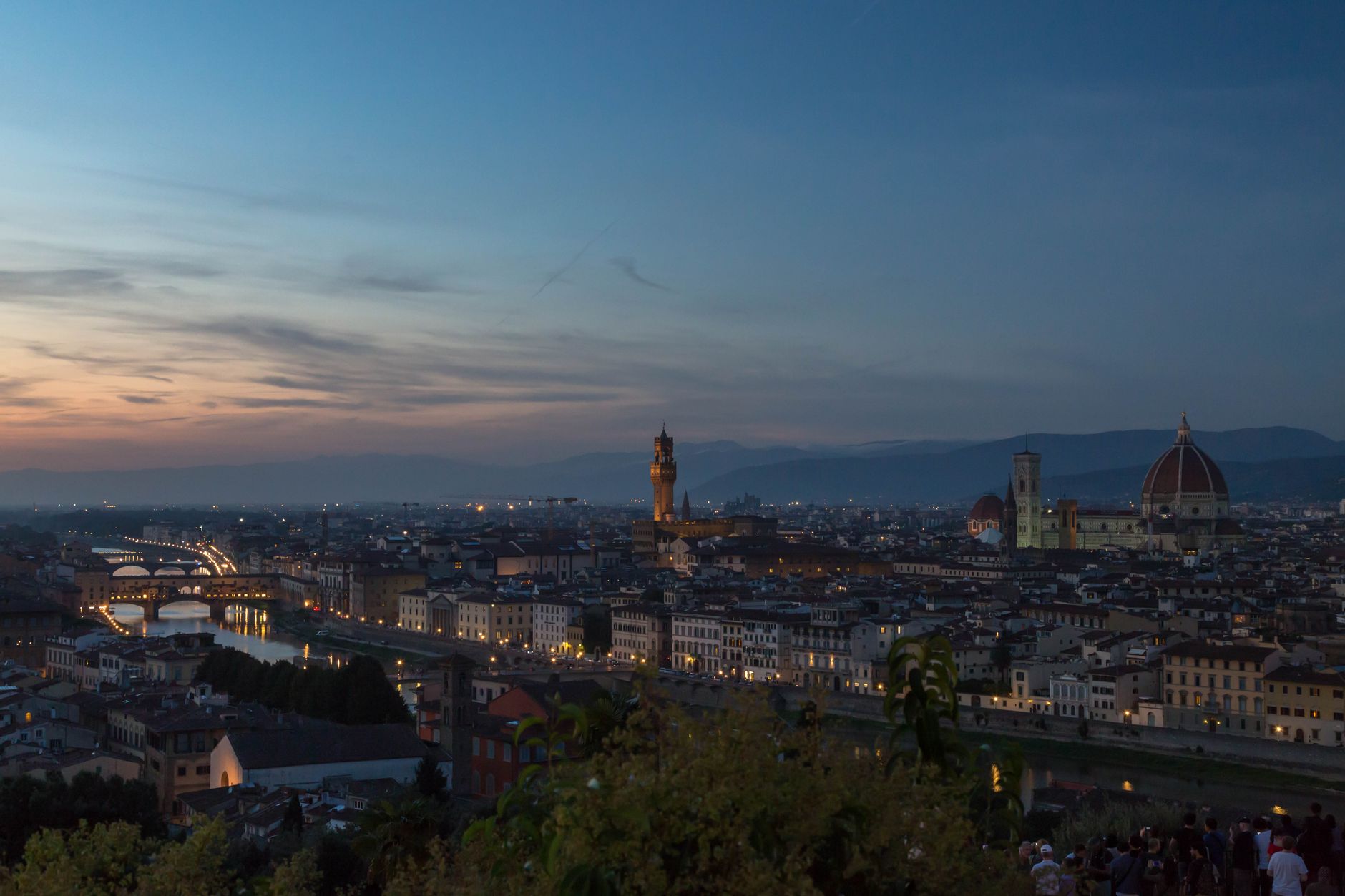
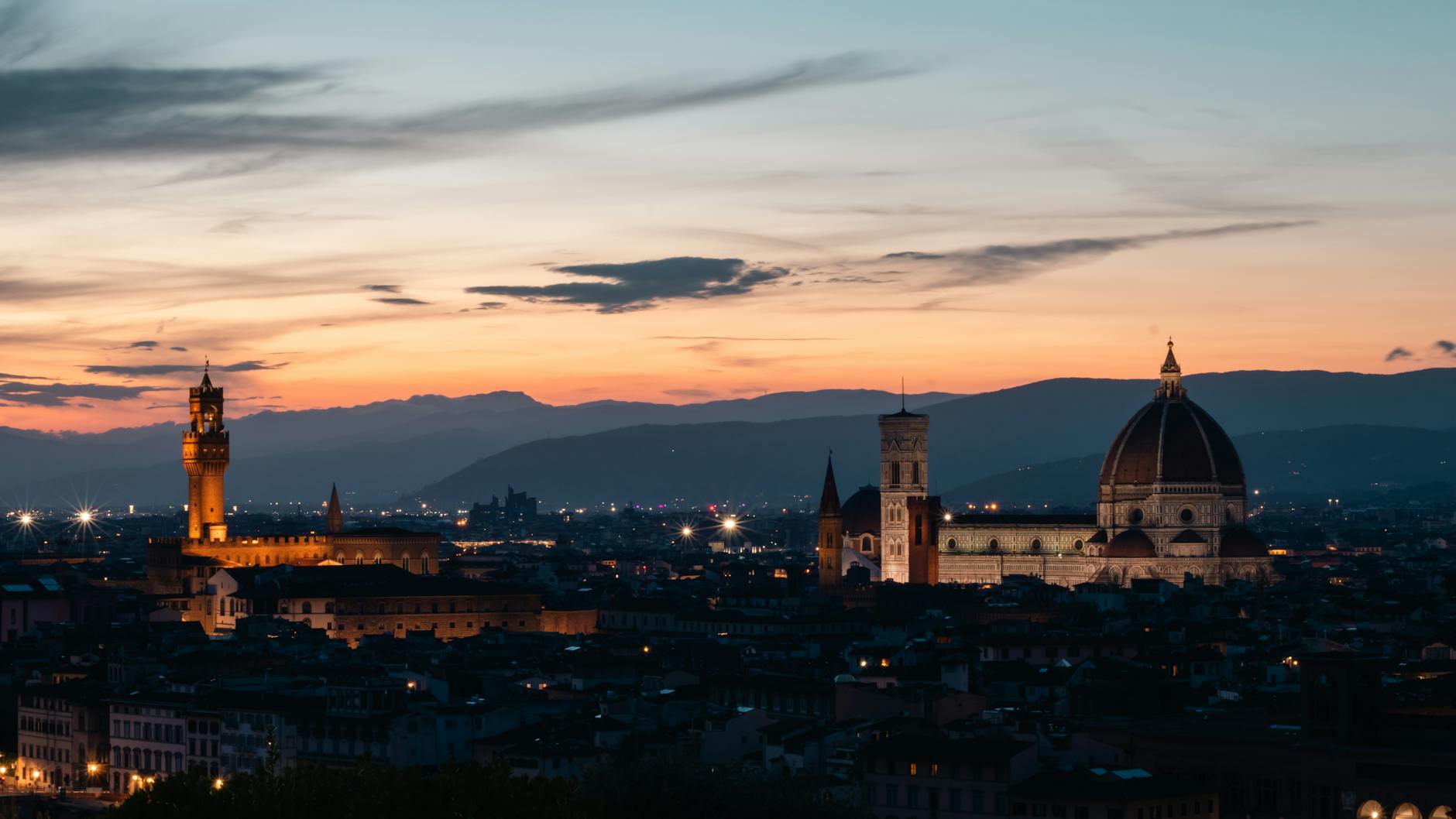
If Florence has a single universally shared nightlife ritual, it is sunset at Piazzale Michelangelo — a terrace on the hillside south of the Arno, with the broadest panorama of the city. A bronze replica of Michelangelo’s David stands in the centre; buskers play; tourists and Florentines alike gather in an hour-long twilight concert of clinking wine bottles, guitar music, and camera shutters. Arrive 45 minutes before sunset to get a spot on the terrace wall; stay for the blue hour after sunset, when the city’s lights come up one by one and the Duomo is silhouetted.
Other Sunset Options
- San Miniato al Monte — a short climb further up the hill from Piazzale Michelangelo. The Romanesque basilica’s terrace is higher and quieter. The monks sing Gregorian chant vespers daily at 6:30pm (free), and on summer evenings, when the sun sets later, you can follow them with the sunset outside.
- Forte di Belvedere — 16th-century Medici fortress above the Pitti Palace. Opens for a summer-to-autumn season of exhibitions and events (6 June to 16 October in 2026; MUS.E announces each new season). When open, one of the most dramatic views in the city.
- Bardini Gardens — Villa Bardini’s terraced gardens, midway up to Piazzale Michelangelo. The wisteria is famous in April–May.
- Piazzale Donatello — a lesser-known hilltop near the English Cemetery, with the Monteoliveto hills beyond. Almost no tourists.
- Rooftop bars (see above) are an obvious alternative — drink included.
- The Arno bridges. Ponte Santa Trinita has the best postcard view of Ponte Vecchio at sunset; Ponte alle Grazie faces directly up the river to San Miniato.
- Ponte Vecchio itself — crowded but photogenic. Stand at the central opening, a gap between the shops, and look west.
For a full comparison of sunset viewpoints with walking directions, see our Florence sunset spots guide.
Nightlife by Neighborhood
Santo Spirito / Oltrarno
The city’s most atmospheric nightlife district. Aperitivo in the piazza, artisan-style cocktail bars, live music at Volume, and a mix of old Florentine residents and young artists. A favourite of the aperitivo-then-dinner-then-one-more-drink crowd.
Santa Croce / Sant’Ambrogio
Lively student-heavy area; pubs, cheap aperitivo, and spillover from the clubs around Via de’ Benci and Via dei Neri. The cheapest and most energetic of the centre’s neighbourhoods.
Duomo / Via de’ Tornabuoni
The centre. Luxury hotel rooftops, fine cocktail bars, tourist-facing live music. More upscale than Santa Croce, less atmospheric than Oltrarno.
San Frediano / Borgo San Frediano
Adjacent to Santo Spirito but more working-class and local. Excellent cocktail bars (Mad Souls & Spirits), the Brewery Archea, and independent wine bars. Gentrifying quickly.
San Niccolò
The east end of the Oltrarno below Piazzale Michelangelo; romantic, walking-the-Arno territory; bars and restaurants like Zoè and Negroni. Combine with a post-dinner walk up to the Piazzale.
Santa Maria Novella
Around the station and train quarter. Good rooftop hotels; some international crowd from the station. Less atmospheric than further east or across the river.
Cascine and the Northwest
Outside the centre, reached by taxi or tram. The main open-air summer club district — the venues along Viale degli Olmi. For proper clubbing, this is the zone.
Practical Tips: Hours, Dress, Getting Home
Opening Hours
- Most centre bars and cocktail spots open in the early evening and stay open late; each bar sets its own closing time.
- Clubs open late, fill later still, and stay open longest on Friday and Saturday nights.
- Restaurant kitchens close well before the bars, so check last orders when you book.
- Supermarkets and corner shops close in the evening. After-hours: Carrefour Express near the main stations, and Zucchero (Via Vagellai 34r) open until late.
- Sunday is noticeably quieter; many kitchens close on Monday.
Dress Code
Italians dress up for evenings — considerably more than northern Europeans or North Americans tend to. In the centre, smart-casual is the baseline: a collared shirt for men or a blouse or dress for women will be appropriate anywhere except the most casual student pubs. For clubs, shoes matter; sneakers are acceptable at Tenax and the alternative venues but not at mainstream clubs. For rooftop hotel bars and the Maggio Musicale, lean smart; a jacket for men fits right in.
Getting Home
- Walking is safest. The centre is compact and well-lit.
- Buses: the small C1–C4 city-centre lines run until midnight; check Autolinee Toscane’s timetables for later services.
- Taxis: book through a taxi app or call a radio-taxi line; city trips run on the meter. From the Cascine to the centre runs €15–20.
- Uber Black operates but not Uber X.
- Tram line T1: the last trams leave the termini at 00:12 Sunday to Thursday; on Friday and Saturday nights they leave at 01:38 from Villa Costanza and 01:41 from Careggi. On T2, the last airport tram leaves San Marco at 00:20 Sunday to Thursday (arriving 00:53) and at 01:50 on Friday and Saturday (arriving 02:23).
Safety
Florence is among the safer European cities at night. The main risks are pickpocketing (keep valuables secure in crowded bars) and, occasionally, overzealous promoters in the Piazza della Repubblica area. Solo-traveller safety is generally excellent in the centre; the Cascine park at 3am is best avoided on foot.
Frequently Asked Questions
Does Florence have good nightlife?
Florence has excellent nightlife if your idea of a great night out involves aperitivo in a 15th-century piazza, cocktails with a view of the Duomo, live jazz in a medieval wine cellar, or sunset drinks followed by a long Tuscan dinner. It has less to offer for a pure clubbing trip — Milan, Rome, and Berlin are better served — but for an evening-and-atmosphere city, Florence is among Italy’s best. The scene is strongest April through October and during the university year (September to May).
Is Florence safe at night?
Yes. Florence’s historic centre is among the safer nightlife zones in European cities. Crime against tourists is mostly limited to pickpocketing in crowded areas; violent crime is very rare. Solo travellers — including solo women — routinely walk home late without incident. Outside the centre and particularly in Cascine park after midnight, take normal precautions, but inside the walls the main risk is a heavy bar tab, not safety.
What is aperitivo in Florence?
Aperitivo is the Italian pre-dinner tradition of an early-evening drink accompanied by small bites or a buffet. In Florence, €8–12 typically buys you a cocktail or glass of wine plus access to a spread of snacks that can, at better places, serve as a light dinner. The key Florence aperitivo neighbourhoods are Piazza Santo Spirito, Piazza Sant’Ambrogio, and San Niccolò.
Where was the Negroni invented?
The Negroni is traditionally traced to Florence in 1919, at Caffè Casoni, where the bartender Fosco Scarselli strengthened Count Camillo Negroni’s Americano by substituting gin for the soda water. The bar’s successor is Giacosa 1815, at Via della Spada 15r. The ingredients — equal parts gin, Campari, and sweet vermouth — have been standard ever since. Ordering a Negroni in Florence is one of the small pleasures of a visit.
What are the best rooftop bars in Florence?
Popular rooftop bars in Florence include La Terrazza at Hotel Continentale (beside Ponte Vecchio), Cosimo Rooftop Restaurant & Bar at The Excelsior (360° view), Loggia Roof Bar at Hotel Palazzo Guadagni (in Piazza Santo Spirito), and Divina Terrazza at Grand Hotel Cavour (near the Duomo). Book ahead in summer, and aim for the hour before sunset.
What time do clubs close in Florence?
Florence clubs stay open latest on Friday and Saturday nights, and the crowd arrives well after dinner. Tenax is northwest of the centre, so taxis are the usual way home from there; Space and YAB are in the centre.
When is Calcio Storico 2026?
Calcio Storico 2026 was played in Piazza Santa Croce, with the semifinals on 13 and 14 June and the final on 24 June. The tournament normally has two June semifinals and a final on June 24, the feast day of San Giovanni, Florence’s patron saint. Exact dates and ticket releases are announced on the city’s official Calcio Storico website in April or May each year.
What is there to do at night in Florence for free?
Watching the sunset from Piazzale Michelangelo, listening to the Gregorian chant vespers at San Miniato al Monte, watching the Scoppio del Carro on Easter morning, and catching the parade for the Festa di San Giovanni on June 24 and the fireworks that follow, all from the street and at no cost. In summer, the Estate Fiorentina festival adds outdoor concerts; check which are free. Florence also has a strong street-musician culture in summer, especially along the Arno bridges.
What should I wear at night in Florence?
Italians dress up in the evening. Smart casual is the baseline: collared shirt or polo for men, blouse or dress for women, closed shoes. Sneakers are fine at bars and cafés but may be refused at mainstream clubs. At rooftop hotel bars or the Maggio Musicale, dress smartly. In summer, bring a light layer for rooftop evenings — the breeze cools noticeably after sundown.
Is Florence nightlife expensive?
Moderate. Aperitivo is one of Europe’s great values at €8–12 for drink plus food. A classic cocktail at a good bar runs €10–14; rooftop hotel cocktails €15–22. Wine by the glass at a wine bar is €5–10. Club entry is €10–20 including a drink; further drinks €10–15. A proper night out — aperitivo, dinner, one serious cocktail — runs about €50–80 per person. Cheaper than London or Paris, roughly in line with Milan and Rome.
Is Florence nightlife good for solo travellers?
Yes, very much so. The aperitivo tradition is naturally social; wine bars and small cocktail rooms are good for conversation; and the historic centre is safe and walkable. Piazza Santo Spirito, Santa Croce, and San Niccolò are particularly friendly for solo visitors. Many Florentine bars have English-speaking staff and mixed local-and-visitor crowds, so starting a conversation is easier than in many European cities.