This article contains advertising. Booking links on this site can be turned into paid links automatically by our partner Travelpayouts: if you book through one, we earn a commission from the provider, at no extra cost to you. It never affects what we recommend. Affiliate disclosure

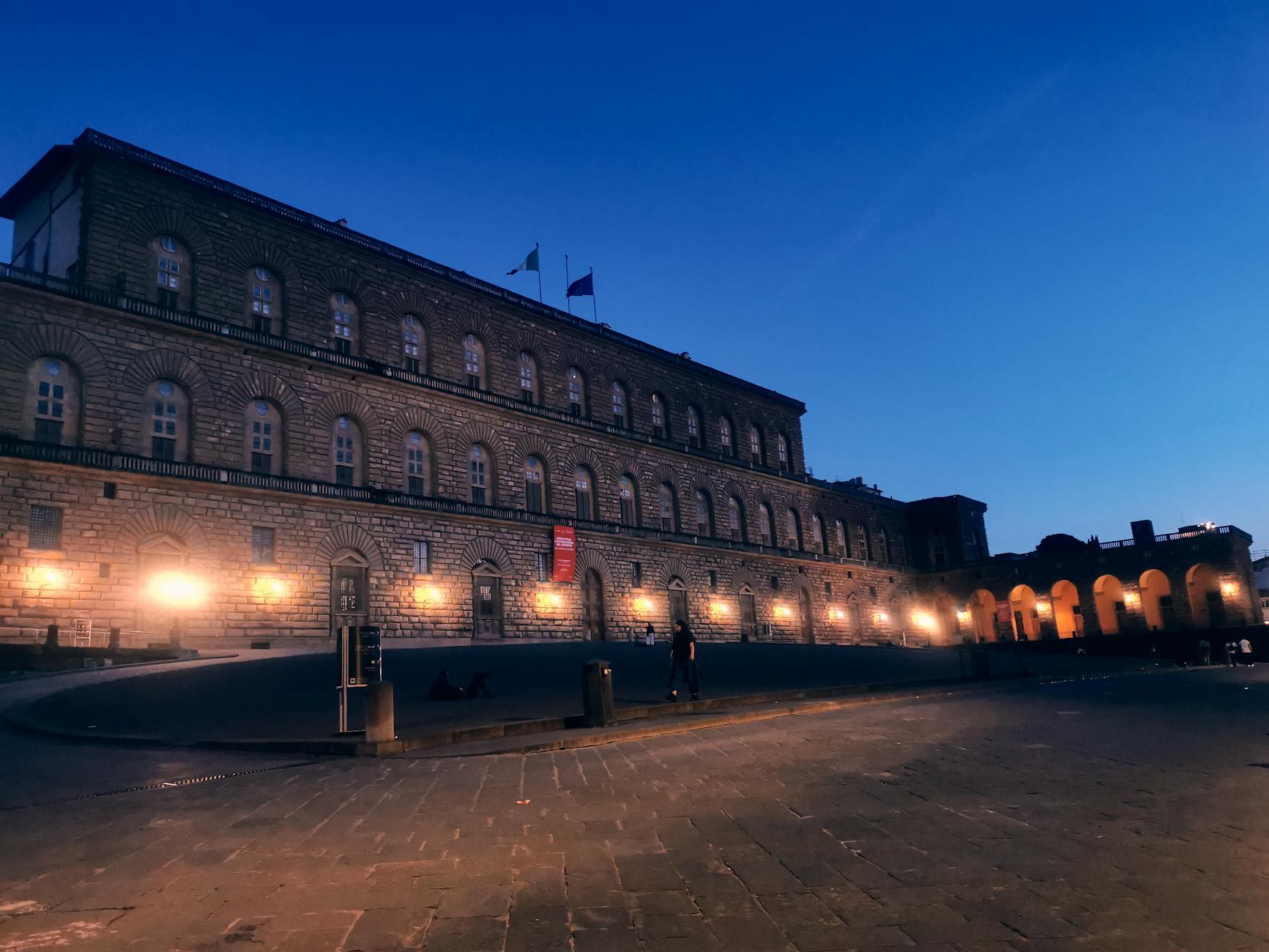
Palazzo Pitti Florence is the largest palace in the city — a single 15th-century palazzo that holds five separate museums (the Palatine Gallery, Royal Apartments, Modern Art Gallery, Museum of Costume and Fashion, Treasury of the Grand Dukes, which is closed until further notice) plus more than 33 hectares of Boboli Gardens behind it. The building was begun for the banker Luca Pitti in 1458; the Medici bought it in 1550 and made it the grand-ducal residence, and it stayed theirs until the dynasty ended in 1737 and the Habsburg-Lorraine succeeded them. This 2026 guide covers everything you need to plan a Pitti visit — tickets, hours, what’s in each of the five museums, the Boboli Gardens layout, what you can see in 2 hours vs a full day, and how to combine it with the Uffizi or Accademia.
For broader museum context see our Florence Museums & Art Guide. For the Boboli specifically as a garden see Outdoor Activities in Florence.
Pitti is really several museums plus a garden, which makes it a full day rather than a stop. It also anchors the Oltrarno, so you can follow it with the artisan workshops on the surrounding streets or the climb to the viewpoints above Boboli.
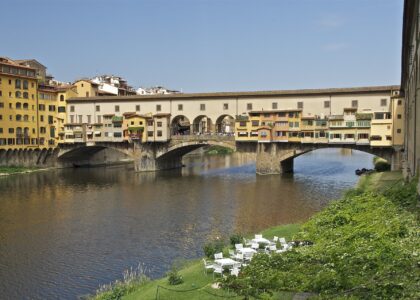
The corridor ends here — the Medici could walk from their offices in the Uffizi to their bedrooms at Pitti without once touching a public street. Our Vasari Corridor guide has the tickets, the group rules and an honest verdict on the walk.
What is Palazzo Pitti?
Palazzo Pitti is a Renaissance palace on the south bank of the Arno, in the Oltrarno neighbourhood. Built originally for the Pitti family in 1458 (architect: Luca Fancelli, possibly to a Brunelleschi design), the structure was relatively modest until Eleonora di Toledo, wife of Cosimo I de’ Medici, bought it in 1550 and made it the family’s official residence. The Medici enlarged it dramatically, turning a small palazzo into a vast court residence; the two front wings, known as the Rondò, came later, under the Habsburg-Lorraine.
The Medici lived here until the dynasty ended in 1737. The Habsburg-Lorraine grand dukes followed, and the palazzo remained the Tuscan grand-ducal residence until it passed to the Crown in 1860; Vittorio Emanuele II lived here while Florence was Italy’s capital, 1865–71. In 1919 King Vittorio Emanuele III donated the building to the Italian state. Its galleries opened at different times; the Palatine Gallery dates from the late 18th and early 19th centuries.
Today the palazzo functions as a five-museum complex housing collections gathered under the Medici, Habsburg-Lorraine and Savoy dynasties. The Boboli Gardens behind were begun by the Medici in 1549 for Eleonora di Toledo, and successive rulers enlarged and reshaped them over the following centuries.
Tickets and prices in 2026
Standard tickets
- Pitti Palace + Palatine Gallery + Royal Apartments: €16 on the day, €19 booked (including the €3 reservation fee), the same price all year.
- Boboli Gardens: €10 on the day, €13 booked. A separate €15 Boboli + Bardini ticket covers both gardens and is sold only at the ticket offices on the day of your visit.
- Pitti + Boboli combined: €22 on the day (€25 booked), saving €4 against separate €16 and €10 tickets.
- Modern Art Gallery + Costume & Fashion: included in the standard Pitti ticket; no separate ticket needed.
- Under-18s: free with proof of age; booking is optional, at €3.
- EU citizens 18–25: reduced admission rather than free entry; check the current youth price on the Uffizi Galleries’ reduced-ticket page when you book.
- First Sunday of the month: free for all; book ahead.
Combined & multi-museum passes
- PassePartout 5 Days: €40 (€58 with the Vasari Corridor) covers one entry each to the Uffizi, Pitti and Boboli, valid 5 consecutive days; visit the Uffizi first. Best multi-museum value.
- Firenze Card: €85 for 72 hours, 60+ museums. Whether it pays depends on your plan: booked tickets for the Uffizi (€29), Accademia (€24), Pitti (€19) and Medici Chapels (€14) come to €86, just over the card’s price.
Note: the Porcelain Museum (within the Boboli grounds) remains closed for refurbishment as of 2026.
Hours and best times to visit
Pitti Palace: Tuesday–Sunday, 08:15–18:30; the ticket office closes at 17:30. Closed Mondays, January 1 and December 25. Boboli Gardens: opens at 08:15 and closes at 16:30 in November–February; 17:30 in March and October on standard time; 18:30 in March and October once the clocks go forward, and in April, May and September; 19:10 in June–August. Last admission is an hour before closing. Closed the first and last Mondays of each month and December 25.
Best time slots
- 08:15 (opening) — go straight to the Palatine Gallery and give the paintings your freshest hour.
- 15:00–16:00 — second-best window. Tour groups have left; light through the Palatine windows is golden.
- Avoid 10:30–13:00 in peak season — when group tours and cruise-ship crowds peak.
- First Sundays of the month are free but mob-crowded; book months ahead or skip.
How to book tickets
Official portal — uffizi.it handles Pitti bookings (the Uffizi-Pitti-Boboli complex is administered together). €3 booking fee on top of the standard ticket, so €19 for the palace. Choose a date and entry time; the guided tours of the Royal Apartments need their own reservation and leave every 30 minutes. Tickets sent as email PDFs.
How far ahead: 2–4 weeks in peak season; 1 week in shoulder; 3–5 days in low season. The Pitti is significantly less booking-pressured than the Uffizi or Accademia.
The Palatine Gallery
The Pitti’s flagship museum. 28 rooms of Renaissance and Baroque paintings in the arrangement the Habsburg-Lorraine gave them between the late 18th century and 1834 — an extraordinary “salon-style” hang where paintings stack floor to ceiling rather than the modern single-row layout. The collection includes 11 Raphaels, 15 Titians, 3 Caravaggios, 16 Andrea del Sartos, 10 Rubens, plus Tintoretto, Veronese, Pontormo and dozens more.
Must-see Palatine works
- Raphael’s Madonna della Seggiola (c. 1512) — the famous round Madonna in a chair.
- Raphael’s Madonna del Granduca (c. 1505) — the early Florentine Madonna.
- Raphael’s La Velata (1516) — the veiled woman portrait, possibly Raphael’s mistress.
- Titian’s Portrait of a Man (the Englishman) (1530–40) — one of Titian’s most celebrated portraits.
- Titian’s La Bella (1536–38) — a portrait whose sitter has never been firmly identified.
- Caravaggio’s Sleeping Cupid — late, dark, haunting.
- Andrea del Sarto’s Holy Family series.
- Filippo Lippi’s Madonna and Child — late-Quattrocento masterpiece.
- Rubens’s Consequences of War (c. 1637–38) — large allegorical canvas.
Allow 90 minutes minimum for the Palatine; 2 hours for completists. The frescoed ceilings (Pietro da Cortona) deserve attention as well — don’t just look at the paintings on the walls.
The Royal Apartments
The 14 rooms used by the Medici, Lorraine and Savoy as private royal living quarters. Decorated in 17th-, 18th- and 19th-century styles (each successive royal family redecorated). The rooms include the throne room, the audience chamber, the ballroom, and several formal dining rooms. The original furniture, tapestries and decorative arts are largely preserved.
The Royal Apartments are accessed from the Palatine Gallery via a connecting corridor. Allow 45–60 minutes. They’re often included in the standard Pitti ticket but treated as a separate attraction by visitors.
The Modern Art Gallery
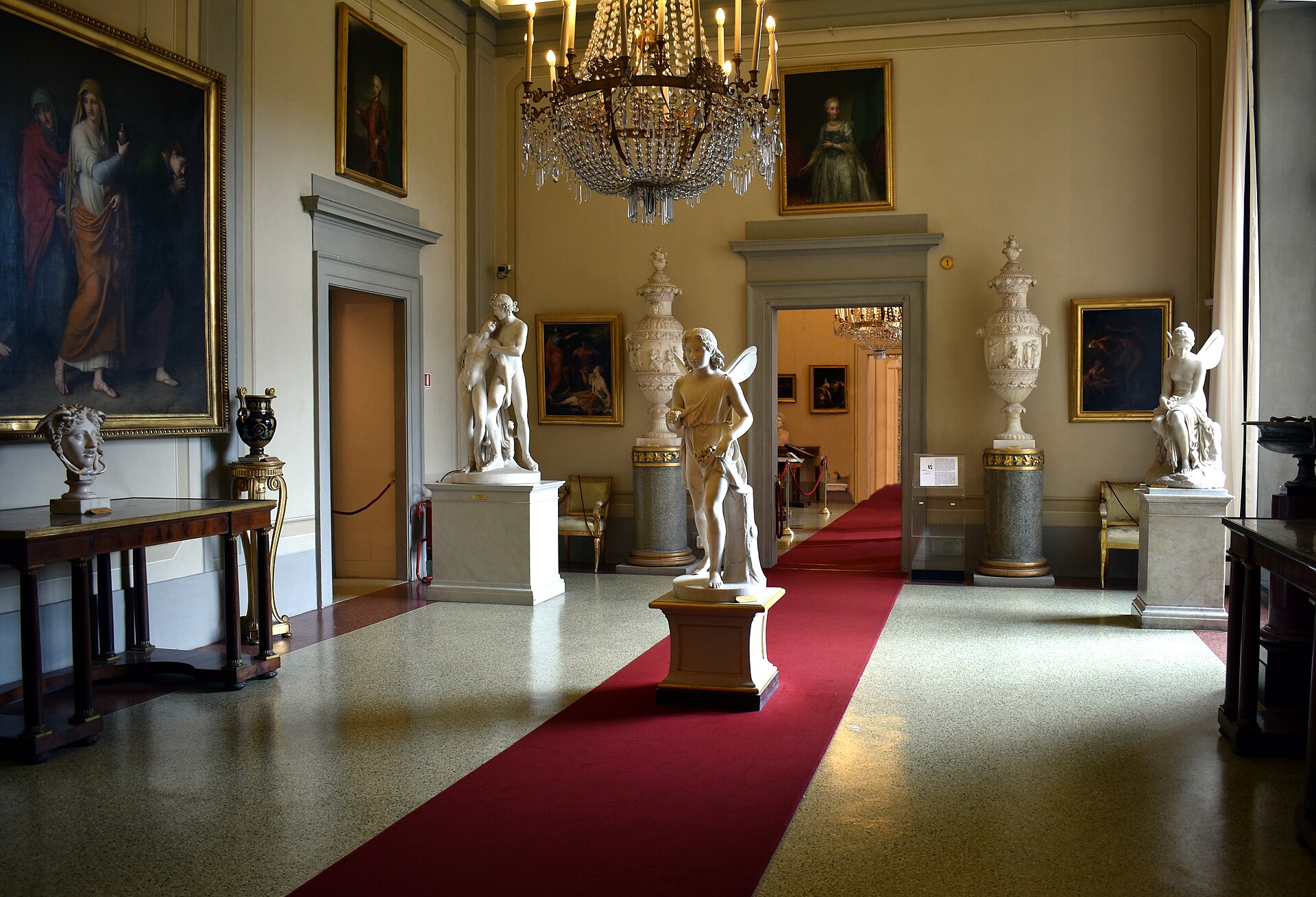
The Pitti’s second-floor gallery covering 19th-century Italian art. The standout collection is the Macchiaioli — a Tuscan painting movement of the 1850s and 1860s that is often compared to French Impressionism. Macchiaioli (“spotters” in Italian) painted with patches of colour rather than blended tones; their landscapes of Tuscan countryside, Florentine streetscapes and rural Italian life are some of Italy’s most distinctive 19th-century works.
Macchiaioli artists to know
- Giovanni Fattori — the movement’s central figure; military and rural Tuscan scenes.
- Silvestro Lega — domestic interiors and family scenes.
- Telemaco Signorini — urban Florentine streetscapes.
- Giuseppe Abbati — landscapes of the Maremma.
The Modern Art Gallery is small (smaller than the Palatine) but rewarding for travellers interested in the transition from Renaissance to modern Italian art. Allow 45–60 minutes.
Museum of Costume and Fashion
Founded in 1983, this was Italy’s first state museum dedicated to the history of fashion. The collection runs from 18th-century clothing and accessories to the present day. Notable holdings include the restored funeral garments of Eleonora di Toledo (Cosimo I’s wife) and her son Garcia, which are on permanent display.
The collection rotates exhibits regularly because of textile preservation requirements. Allow 30–45 minutes.
Treasury of the Grand Dukes
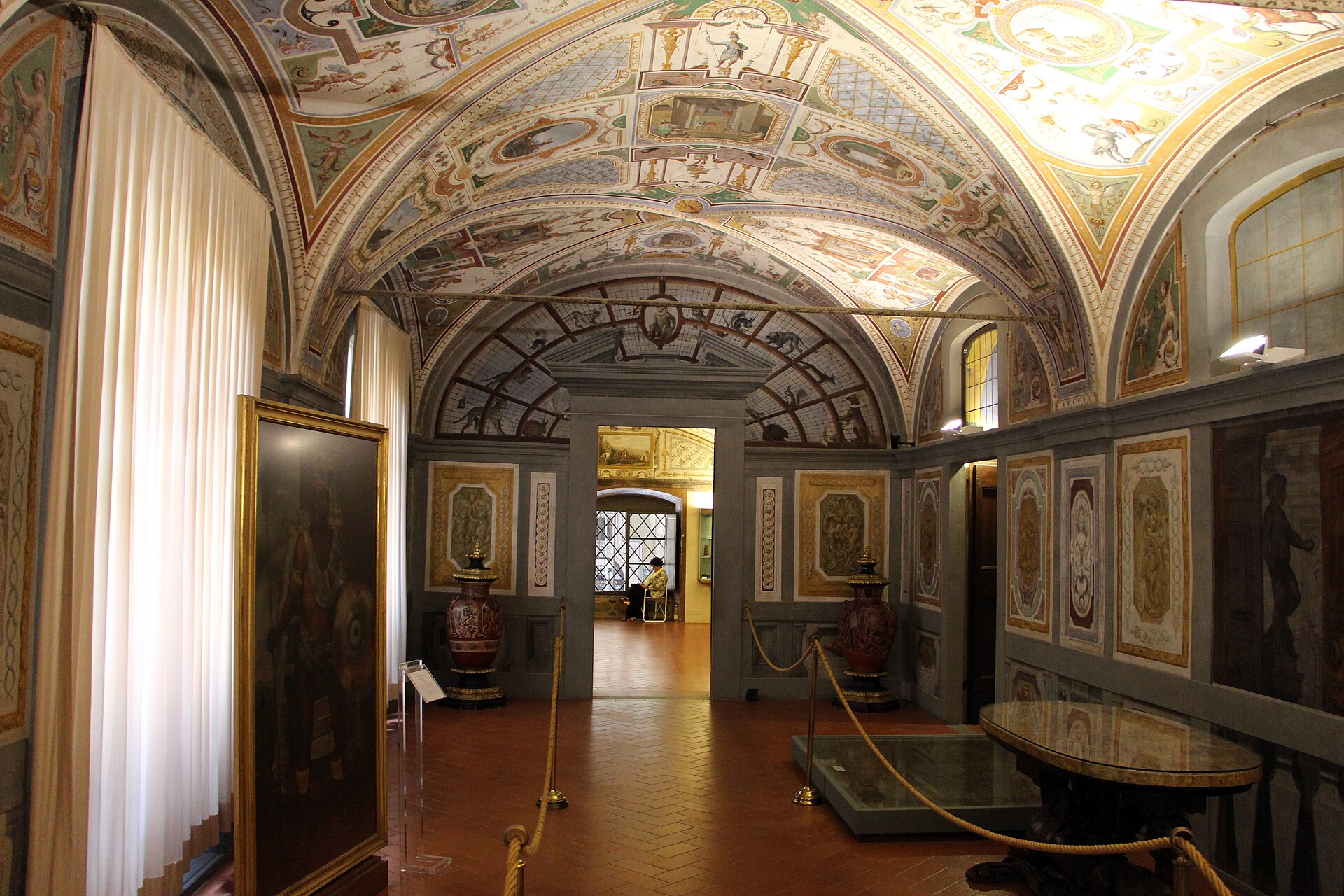
On the ground floor — the Medici family’s collection of decorative arts. Includes Lorenzo de’ Medici’s celebrated cameos and ancient Roman vases, his collection of carved gemstones and rock-crystal vessels, plus jewellery, silver, ceramics from across the Renaissance and Baroque periods.
The Treasury has been closed since 3 February 2026 until further notice. Check the Uffizi website for news of its reopening before you plan around it.
Boboli Gardens
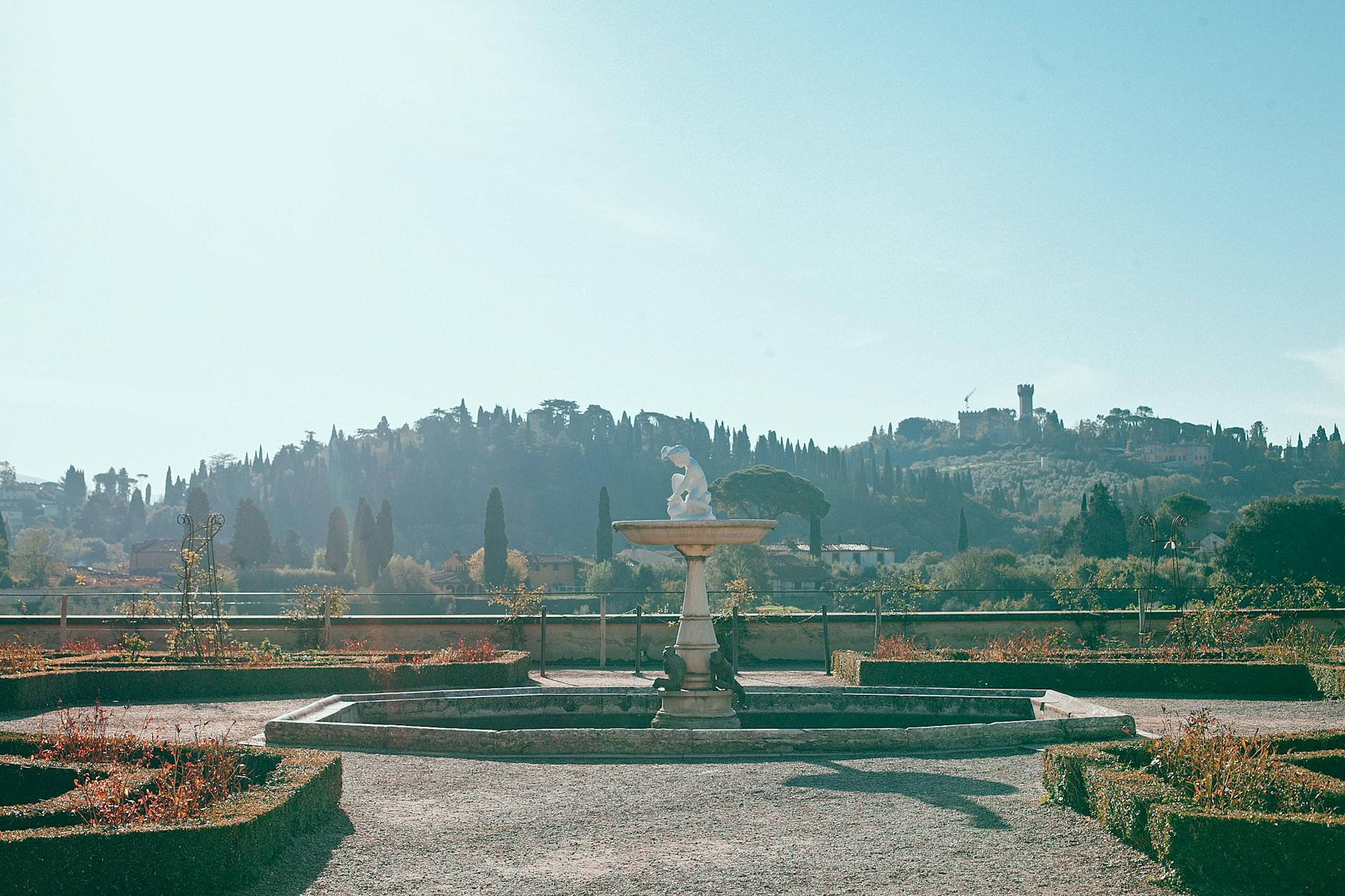
More than 33 hectares of formal garden behind the palace. Laid out by Niccolò Tribolo for Eleonora di Toledo starting in 1549; expanded by successive Medici generations through the 17th century. Boboli helped establish the Italian garden style that became a model for many European courts.
Garden highlights
- The Buontalenti Grotto (1583–1593) — Mannerist artificial grotto with stalactites, frescoes and originally containing Michelangelo’s Prisoners (now in the Accademia). The room reads as part architecture, part theatre.
- The Amphitheatre — modelled on Roman antiquity. The palace itself has a place in music history: Peri’s Euridice, the earliest opera to survive, had its premiere at Palazzo Pitti on 6 October 1600.
- The Cypress Avenue (Viottolone) — long avenue of cypresses leading from the upper gardens to Piazzale dell’Isolotto.
- Piazzale dell’Isolotto — small island in a circular pond at the garden’s southern end; Renaissance fountains and citrus trees.
- The Kaffeehaus (1774–75) — pink rococo pavilion at the garden’s highest point; panoramic free dome view.
- The Lemon House (Limonaia) — the citrus-storage building; in winter, the gardens’ citrus trees move indoors.
- The sculpture collection — more than 300 statues from the Classical, Renaissance and Baroque periods, which turn the whole garden into an open-air sculpture museum.
Allow 90 minutes minimum for the gardens; 2–3 hours for full exploration. The garden is hilly, with sloping gravel paths and some steady climbs to the upper terraces.
Suggested 4-hour Pitti route
0:00–0:15 — Entry and orientation
Arrive 15 min before slot. Bag check; large bags free in cloakroom. Pick up museum map.
0:15–1:45 — Palatine Gallery (90 min)
Walk the 28 rooms in sequence. Linger at the Raphael, Titian and Caravaggio rooms; brief stops elsewhere.
1:45–2:30 — Royal Apartments (45 min)
The throne room, audience chamber, ballroom, dining rooms.
2:30–3:00 — Modern Art Gallery (30 min)
Macchiaioli landscapes; Italian 19th-century painting.
3:00–3:30 — Boboli entry and amphitheatre
Walk through the formal gardens; pause at the Amphitheatre and Buontalenti Grotto. (Skip the upper gardens unless you have additional 60–90 min.)
Total visit time: 3.5 hours. Costume and Fashion Museum and the upper Boboli (Kaffeehaus, Cypress Avenue, Isolotto) need additional 90–120 minutes for full coverage. Most travellers split this across 1.5 days or skip parts.
Combining Pitti with other Florence sights
PassePartout: Uffizi + Pitti + Boboli (1 day)
The €40 PassePartout ticket. 08:15 Uffizi (until 11:30); walk over Ponte Vecchio (5 min) to Pitti; lunch in Oltrarno (Trattoria 4 Leoni); 13:30 Pitti palace; 17:00 Boboli, which closes between 16:30 and 19:10 depending on the month, so save this plan for spring and summer. Aggressive but doable.
Pitti + Bardini Gardens (1 day)
Both gardens included in the €15 combined Boboli ticket. Pitti morning; lunch; Bardini Garden afternoon (the Bardini’s Belvedere terrace gives a quieter alternative to Piazzale Michelangelo’s panorama).
Pitti + Brancacci Chapel (Oltrarno art day)
Pitti Palatine in the morning; lunch in Oltrarno; Brancacci Chapel (Masaccio frescoes) afternoon. Renaissance-painting-deep day.
Pitti through the year
Spring (March–May)
Boboli’s wisteria pergola peaks late April; rose garden in May. Pitti palace galleries are at peak crowd levels.
Summer (June–August)
Hot but the Pitti is air-conditioned; Boboli’s shaded cypress avenue is a relief from city heat.
Autumn (September–November)
Possibly the best season. Crowds halve; the Boboli’s autumn colours are spectacular through October.
Winter (December–February)
Ticket prices stay the same all year (€16 on the day, €19 booked for the palace); reduced tickets are for eligible visitors only. Boboli citrus trees move indoors to the Limonaia. Quieter; bookings rarely needed.
Pitti with kids
The Pitti is more child-friendly than expected. Boboli Gardens is the family-friendly anchor — more than 33 hectares of paths to run on. The Buontalenti Grotto fascinates kids. The amphitheatre and Isolotto pond are both engaging. The Palatine Gallery is challenging for under-10s; an express 30-minute “Raphael only” visit works better than a full tour.
A short history of Palazzo Pitti
Luca Pitti was a 15th-century Florentine banker; his palazzo was started in 1458 (architect: Luca Fancelli). The Pitti family ran into financial difficulties, the building was still unfinished when Luca Pitti died, and in the mid-16th century it was sold to Eleonora di Toledo, wife of Cosimo I de’ Medici.
The Medici expanded the palazzo over two centuries — Bartolomeo Ammannati enlarged it for Cosimo I and Eleonora di Toledo, who commissioned the Boboli Gardens (enlarged again under Cosimo II and Ferdinando II), and Ferdinando II commissioned Pietro da Cortona’s frescoes in the rooms that now hold the Palatine Gallery. It is still the largest palace in Florence.
The Medici extinction in 1737 transferred the palace to the Lorraine grand-ducal family; the Lorraines further redecorated, particularly the Royal Apartments. The Lorraines also created the Palatine Gallery. In 1860 the palace passed to the Crown and housed Vittorio Emanuele II during Florence’s capital years, 1865–71; in 1919 King Vittorio Emanuele III gave it to the Italian state.
Common Pitti myths
- “Pitti is just smaller-Uffizi” — false. Different collection (more Raphael, Titian, Andrea del Sarto; less Botticelli; more 17th-19th century). Different layout (salon-style hang vs Uffizi’s modern single-row). Pitti is a different category of museum.
- “You can do Pitti and Uffizi in a single day” — possible with the PassePartout but exhausting. Most travellers find separate days more rewarding.
- “Boboli is just a garden” — false. The historical importance (a model for the gardens of many European courts) makes it as significant as the palazzo itself. The Buontalenti Grotto alone is a Mannerist masterwork.
- “The Modern Art Gallery is small and skippable” — partially true. The gallery is small but the Macchiaioli collection is internationally significant; allow 30–45 min if you have art-history interest.
- “Costume and Fashion is just for fashion fans” — overstated. The historical garments include funeral clothes from the Medici Chapels — direct material connection to the family’s tombs. Worth 30 minutes for travellers interested in material culture.
Practical visiting tips
- Wear comfortable shoes. The Palatine alone involves walking through 28 rooms; Boboli Gardens add hilly gravel paths and steady climbs.
- Cloakroom is free; large bags must be checked.
- Photography allowed without flash or tripod throughout.
- Audio guide €6 from the entry; covers the Palatine highlights.
- Café in the Boboli Gardens at the Kaffeehaus: ask at the Boboli ticket office whether it is open on your day.
- Bathroom on the ground floor of the palazzo and at multiple Boboli locations.
- Children under 11 get bored in the painting galleries; the Boboli is the family-friendly section.
- Don’t try to see all 5 museums in one visit. Most travellers split — Palatine + Royal Apartments + Boboli on day one, Modern Art + Costume on day two if returning.
Palazzo Pitti — FAQ
What is Palazzo Pitti?
A 15th-century Renaissance palace on the south bank of the Arno that holds five museums (Palatine Gallery, Royal Apartments, Modern Art Gallery, Museum of Costume and Fashion, Treasury of the Grand Dukes) plus more than 33 hectares of Boboli Gardens behind it. The Medici grand-ducal residence from 1550 onwards.
How much does Palazzo Pitti cost?
2026: €16 on the day or €19 booked for Pitti + Palatine + Royal Apartments, with no seasonal prices. Boboli €10, or €13 booked; the Boboli + Bardini ticket is €15, on the day at the ticket offices only. Combined Pitti + Boboli €22 (€25 booked). PassePartout (Uffizi + Pitti + Boboli) €40 for 5 days. Free for under-18s, with an optional €3 reservation; first Sunday of month free.
What’s the must-see at Pitti?
The Palatine Gallery — 28 rooms with 11 Raphaels, 15 Titians, 3 Caravaggios, plus Andrea del Sarto, Rubens and Tintoretto. The Boboli Gardens are the must-see outdoor companion.
How long do I need at Palazzo Pitti?
Express visit (Palatine + brief Boboli): 2.5 hours. Standard visit (Palatine + Royal Apts + Boboli): 4 hours. Comprehensive (all 5 museums + full Boboli): 6–8 hours, often split across 2 days.
Should I do Pitti or Uffizi?
Both. They’re complementary. Uffizi for Botticelli, Leonardo, Michelangelo, Caravaggio, Titian. Pitti for Raphael, Andrea del Sarto, more Titian and the salon-style historic hang. The PassePartout (€40) covers both for 5 days.
Is Boboli Gardens worth visiting?
Yes — it helped set the Italian garden style that many European courts copied. More than 33 hectares of paths, fountains, sculptures, the Buontalenti Grotto and the panoramic Kaffeehaus terrace. Great for kids; great for couples.
Are Boboli Gardens free?
Boboli costs €10 on the day or €13 booked. Under-18s go free (the €3 reservation is optional), and everyone gets in free on the first Sunday of the month. For the Bardini Gardens next door as well, buy the €15 Boboli + Bardini ticket, sold only at the ticket offices on the day.
What’s closed at Pitti in 2026?
The Porcelain Museum (within the Boboli grounds) remains closed for refurbishment, and the Treasury of the Grand Dukes has been closed since 3 February 2026 until further notice. Some sections of the Royal Apartments occasionally close for restoration; check the Uffizi website before visiting.