This article contains advertising. Booking links on this site can be turned into paid links automatically by our partner Travelpayouts: if you book through one, we earn a commission from the provider, at no extra cost to you. It never affects what we recommend. Affiliate disclosure
Via dei Tornabuoni is Florence’s luxury fashion district — the city’s equivalent of Milan’s Via Montenapoleone or Paris’s Rue Saint-Honoré, but more compact and more historic. The 350-metre street between Piazza Antinori and Piazza Santa Trinita houses the world’s most prestigious Italian luxury houses (Gucci, Salvatore Ferragamo, Bottega Veneta, Prada, Roberto Cavalli) plus international designers (Cartier, Bulgari, Burberry, Hermès), all set in 14th-15th century Renaissance palazzi. This 2026 guide covers the must-visit Florentine luxury houses, what to expect from the shopping experience, and the historic context that makes Tornabuoni different from any other luxury shopping street.
Via de’ Tornabuoni is the luxury end of our Florence shopping guide; the same brands appear discounted at the Tuscan outlet malls. If you are shopping this street, the luxury hotels of Florence are mostly within two minutes of it.
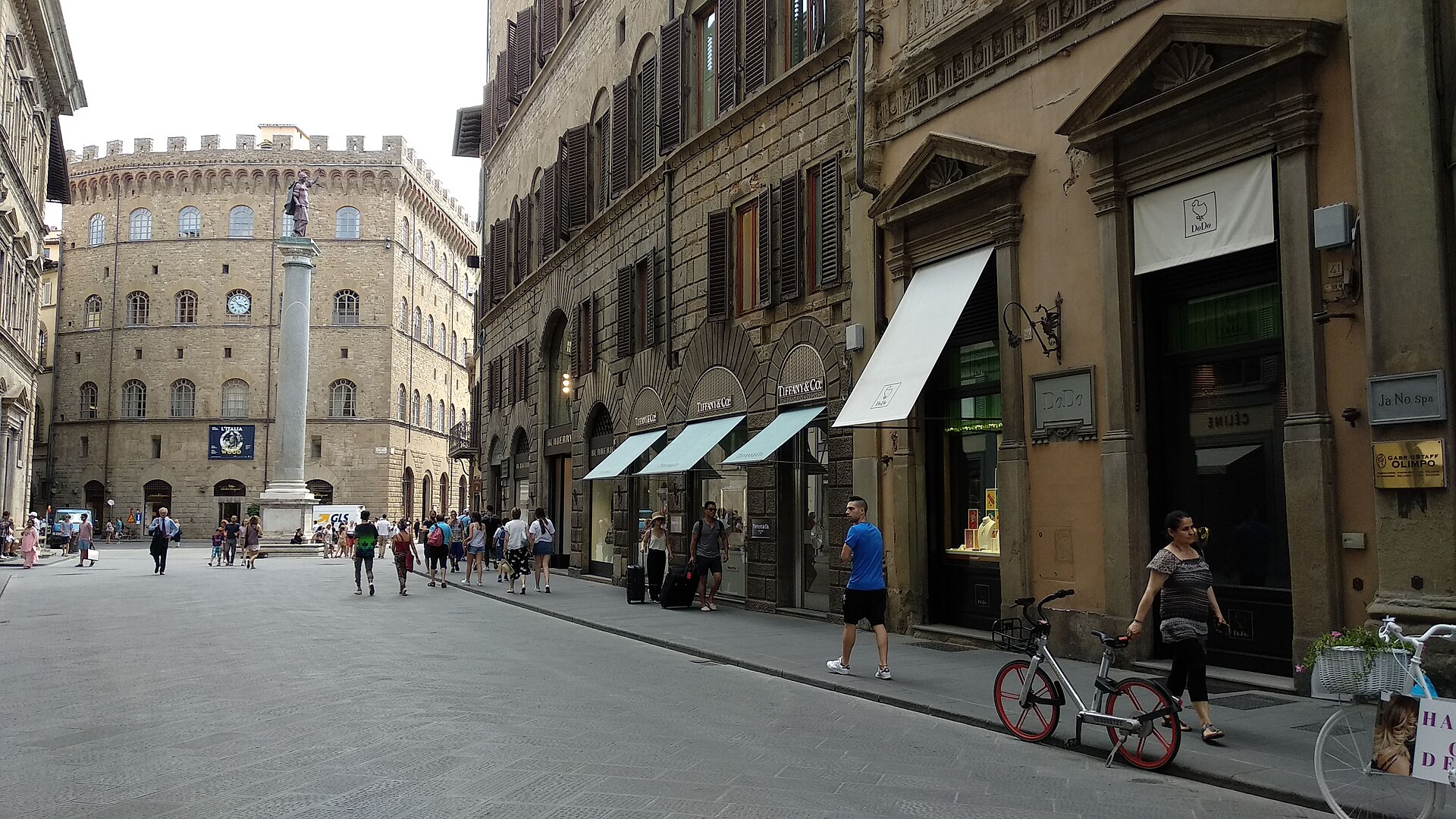
Via dei Tornabuoni: The Florentine Fashion Boulevard
Via dei Tornabuoni runs north-south through central Florence, connecting Piazza Antinori (where the historic Cantinetta Antinori restaurant has operated since 1957) to Piazza Santa Trinita and the Lungarno embankments. The 350-metre stretch is dense with 14th–15th century Renaissance palazzi housing modern luxury fashion stores.
The street’s modern reputation as a fashion district dates to Salvatore Ferragamo’s 1938 acquisition of Palazzo Spini Feroni at the south end (now the Ferragamo flagship and museum). Other luxury houses followed throughout the 20th century — Gucci (founded in Florence in 1921), Roberto Cavalli, Patrizia Pepe — making Tornabuoni Florence’s natural luxury home rather than just a tourist district.
Today the street is anchored by Italian luxury houses (most are Florentine-founded) alongside international designers. The shopping experience is more historic than modern luxury — the Renaissance facades, the palazzi interiors, the Ferragamo Museum at Palazzo Spini Feroni — provide a context that Milan’s purpose-built fashion blocks lack.
Italian Luxury Houses on Tornabuoni
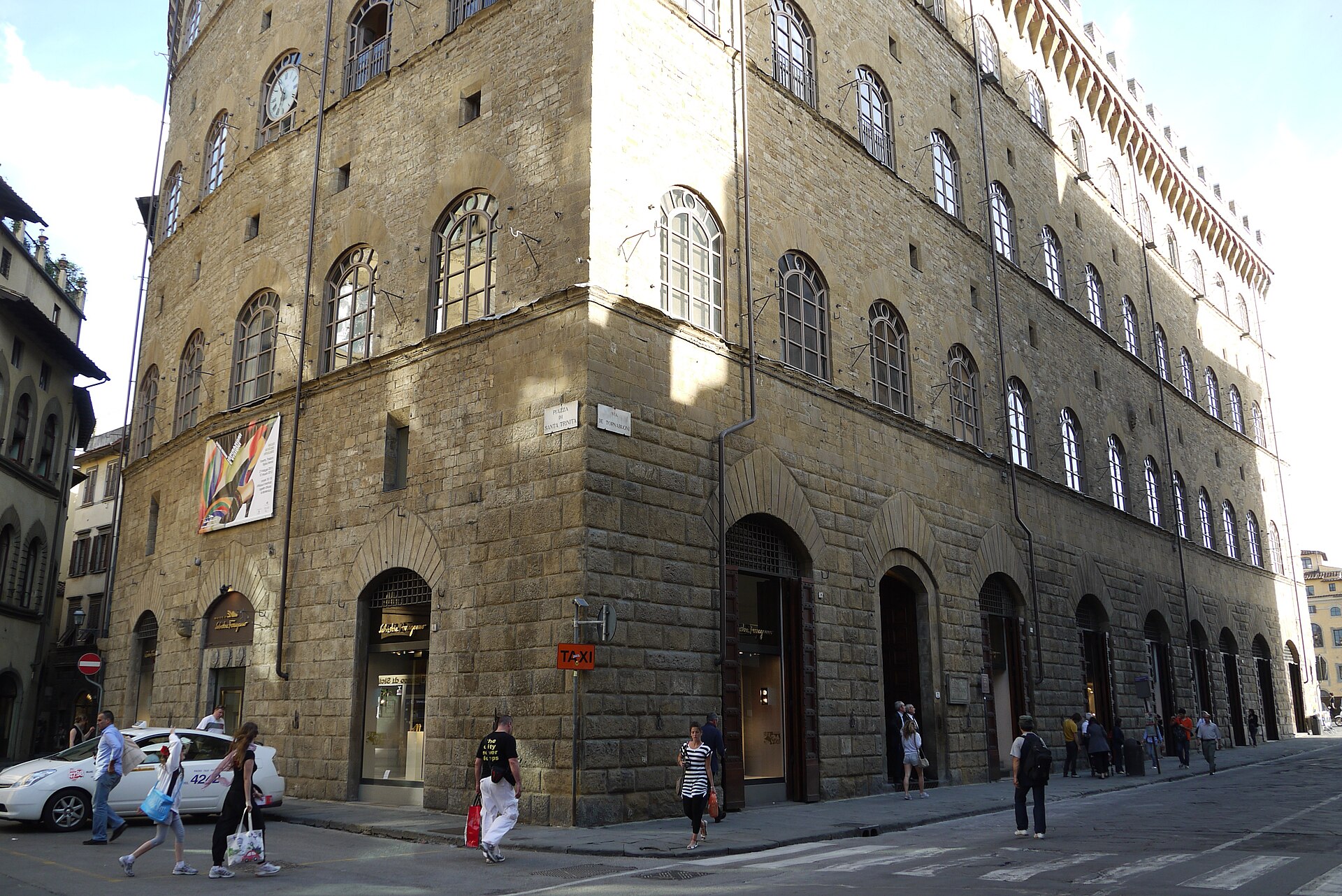
Salvatore Ferragamo (Palazzo Spini Feroni, Via dei Tornabuoni 14r)
The Florentine luxury house, founded in 1928. Salvatore Ferragamo started as a Hollywood shoe-maker (designed shoes for Marilyn Monroe, Audrey Hepburn, Sophia Loren) and returned to Florence to expand into bags, accessories, and ready-to-wear.
- Building: Palazzo Spini Feroni, 13th-century Florentine palace bought by Ferragamo in 1938
- Floors 1-2: Flagship store with full collection (shoes, bags, ready-to-wear, accessories)
- Lower level: Salvatore Ferragamo Museum (€8 admission, Mon-Sun 11:00–19:30) — exhibits the founder’s life, historic shoe designs, archival pieces
- Prices: Shoes €450–1,200; bags €700–3,500; ready-to-wear €1,500–5,000
The Ferragamo flagship is the standout experience on Tornabuoni — combines the shopping with a serious museum about Italian fashion history.
Gucci (Via dei Tornabuoni 73-81r)
Florence-founded in 1921 by Guccio Gucci as a leather goods workshop. Today’s largest Italian luxury house globally, owned by Kering since 1999.
- Florence flagship: Multiple Tornabuoni storefronts plus the Gucci Garden (Piazza della Signoria 10) with archive collection and on-site Osteria restaurant
- Prices: Bags €1,000–4,000; shoes €500–1,200; ready-to-wear €1,500–5,000+
- Mid-range alternative: Gucci outlet at The Mall Firenze offers 30–50% off retail
Bottega Veneta (Via dei Tornabuoni 7r)
Vicenza-based but with a flagship Florence presence. Famous for the intrecciato woven-leather technique. Premium pieces €2,000–6,000+.
Prada (Via dei Tornabuoni 53r)
Milanese house with Florence flagship. Bags, ready-to-wear, accessories. Prices similar to Gucci. Outlet alternative at Space Prada near Florence.
Other Italian Luxury Houses
- Roberto Cavalli (Via dei Tornabuoni 83r) — Florentine designer house, distinctive prints and animal patterns
- Patrizia Pepe — Florence-based mid-range fashion
- Fendi (Via degli Strozzi) — Roman luxury house, Florence flagship nearby
- Etro — Italian luxury textiles and ready-to-wear
- Dolce & Gabbana (Via dei Tornabuoni 11r) — Milan-based luxury, Florence flagship
- Versace — Italian-Greek heritage house
- Tod’s, Hogan, Stuart Weitzman — premium Italian footwear brands
- Brioni — premium Italian menswear
- Stefano Ricci — premium Italian menswear (Florence-based)
- Loro Piana — premium cashmere
- Brunello Cucinelli — Italian luxury knitwear
International Luxury on Tornabuoni
- Hermès (Piazza degli Antinori) — French luxury, leather goods, scarves
- Louis Vuitton (Piazza Santa Trinita 1r) — French luxury, bags and ready-to-wear
- Cartier — French luxury jewelry and watches
- Bulgari — Italian-Greek jewelry house
- Bvlgari — alternate Bulgari boutique
- Boucheron — French luxury jewelry
- Tiffany & Co. — American luxury jewelry
- Buccellati (Via dei Tornabuoni 93) — Italian luxury jewelry house
- Burberry — UK luxury fashion
- Saint Laurent — French luxury
- Tom Ford — premium menswear and beauty
Tornabuoni Jewelry Houses
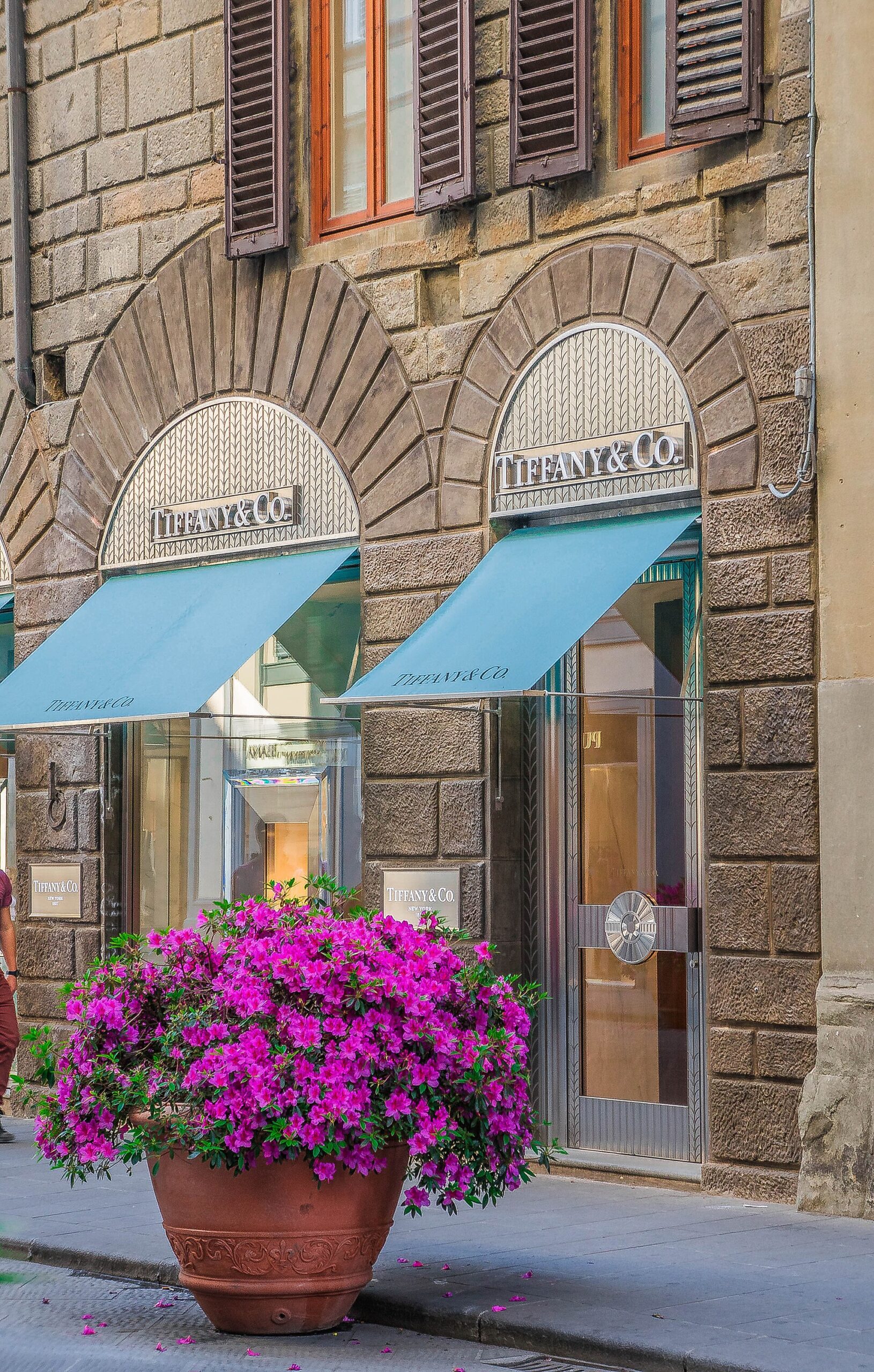
Tornabuoni offers a different jewelry experience from Ponte Vecchio — international luxury brand jewelry rather than family goldsmiths:
- Buccellati (Via dei Tornabuoni 93) — Italian luxury jewelry house, Renaissance-inspired textured gold
- Bulgari — Italian-Greek heritage house, the iconic snake (Serpenti) bracelets and rings
- Cartier — French luxury, the Trinity ring, Love bracelet
- Tiffany & Co. — American luxury, classic engagement rings
- Boucheron — French luxury jewelry
For ranges €5,000+, Tornabuoni’s international jewelry houses offer comparable quality to Ponte Vecchio at similar price points but with global brand prestige. For ranges €500–5,000, Ponte Vecchio’s family goldsmiths typically offer better value with more distinctive Italian craftsmanship.
The Tornabuoni Shopping Experience
- Spacious flagship stores with full collections (vs smaller boutiques elsewhere)
- Multilingual sales staff (Italian, English, French, Russian, Chinese, Japanese)
- Personal shopping available at most flagships — appointments give private viewing of new collections
- Tax-free shopping — all major Tornabuoni shops handle Global Blue VAT refund
- Personalisation services — Ferragamo monogramming on shoes, Hermès Twilly scarf customisation, etc.
- International shipping — most shops ship purchases home for €30–80, insured
Etiquette: Tornabuoni stores are generally welcoming to all visitors regardless of buying intent — browse freely, but be prepared for friendly sales engagement. If you’re not in the market, a polite “solo guardando, grazie” (just looking, thank you) is fine.
Best Time to Shop Tornabuoni
- Weekday mornings (10:00–12:00) — calmest, attentive sales staff
- Weekday afternoons (15:00–18:00) — moderate crowds, good service
- Saturday mornings (10:00–13:00) — busy but manageable
- Saturday afternoons (15:00–19:30) — peak local Italian shopping crowd
- Sundays — most luxury shops closed; some open in summer
Italian sales periods: early January (winter saldi) and July (summer saldi) offer 30–50% discounts on previous-season pieces. The single best buying windows of the year on Tornabuoni.
Tornabuoni vs The Mall Outlet
The two main luxury shopping options near Florence:
- Via dei Tornabuoni — current-season pieces at full retail, all sizes/colors, the prestige boutique experience, Renaissance palazzi setting
- The Mall Firenze (Leccio, 40 min south) — 30–60% off retail, mostly previous-season, limited size selection on some items
For specific current-season pieces in your exact size: Tornabuoni boutique. For accumulating multiple luxury pieces with savings: The Mall. Many travelers do both — a flagship for the iconic piece, the outlet for everyday additions.
VAT Refund
Non-EU residents claim 12–14% VAT refund on purchases over €70 per invoice (VAT included). All Tornabuoni boutiques participate:
- Ask for the tax-free form at purchase (“Mi può dare il modulo Tax Free?”)
- Bring your passport when shopping (mandatory for the form)
- Get the form stamped at airport customs when leaving the EU
- Submit at the airport Global Blue / Premier Tax Free desk for refund (cash or card credit)
For a €2,000 Ferragamo bag, the refund saves approximately €240 after Global Blue fees. Worth processing for any significant Tornabuoni purchase.
Restaurants Near Tornabuoni
- Procacci (Via dei Tornabuoni 64r) — historic 1885 wine bar with truffle sandwiches and a refined aperitivo experience. €15–25 for spritz with food.
- Cantinetta Antinori (Piazza Antinori) — historic 1957 wine bar from the Antinori wine family. Lunch €30–60.
- Caffè Gilli (Via Roma 1r, off Tornabuoni) — historic 1733 café with outdoor seating on Piazza della Repubblica.
- Caffè Concerto Paszkowski — historic 1846 café and restaurant.
- Trattoria Coco Lezzone (Via del Parioncino) — working trattoria steps off Tornabuoni, classic Tuscan.
Tornabuoni Shopping Tips
Tip 1: Visit the Salvatore Ferragamo Museum (€8) inside Palazzo Spini Feroni — even if not buying, the museum is one of Florence’s most important fashion-history sites.
Tip 2: Italian sales periods (early January and July) offer 30–50% off — the best time to shop Tornabuoni for the quality-conscious.
Tip 3: Consider booking a personal shopping appointment at Ferragamo or Gucci flagships — private viewing of new collections, no other customers, sometimes a glass of champagne.
Tip 4: Ask about archival pieces at Ferragamo — the brand’s archive of historic shoes is sometimes available for re-edition orders.
Tip 5: The Gucci Garden at Piazza della Signoria 10 (5-minute walk from Tornabuoni) houses the brand’s archive collection plus a Massimo Bottura-conceived restaurant — worth visiting beyond the regular Gucci flagships.
Tip 6: Window-shopping Tornabuoni at night is one of Florence’s romantic experiences — the Renaissance palazzi are lit, the streets are quieter, the displays are theatrical.
Tip 7: For comparable Italian luxury at lower prices, visit The Mall outlet (40 min south of Florence, 30–60% off retail) the day after browsing Tornabuoni — you’ll know what specific pieces you want.
Tip 8: Some Tornabuoni shops offer in-store cobbler/repair services — useful if you want vintage Ferragamo or Gucci pieces refurbished.
The Renaissance Palazzo Context
What distinguishes Tornabuoni from Milan’s Quadrilatero della Moda or Paris’s Avenue Montaigne is the Renaissance setting:
- Palazzo Strozzi (Piazza degli Strozzi, off Tornabuoni) — 1489–1538, one of Florence’s finest Renaissance palaces; now an exhibition centre
- Palazzo Antinori (Piazza Antinori) — 1461, the Antinori wine family’s palace
- Palazzo Spini Feroni (south end) — 13th century, now Ferragamo flagship
- Palazzo Ferroni / Tornabuoni — 14th-century palace giving the street its name
- Palazzo Larderel — historic palace housing modern luxury stores
Walking Tornabuoni between shops, you’re passing through 500+ years of Florentine architectural history. The luxury houses themselves operate within these Renaissance interiors — Ferragamo’s flagship spreads across multiple floors of a 13th-century stone palace; Gucci stores occupy frescoed Renaissance halls.
Tornabuoni Shopping FAQ
Where is Via dei Tornabuoni?
Florence’s central shopping street running 350 metres north-south between Piazza Antinori and Piazza Santa Trinita. 5-minute walk from the Cathedral, 3-minute walk from Ponte Vecchio. The street is the heart of the city’s luxury fashion district.
Which luxury brands are on Tornabuoni?
All major Italian luxury houses (Ferragamo, Gucci, Bottega Veneta, Prada, Roberto Cavalli, Versace, Fendi, Etro, Tod’s, Brioni, Stefano Ricci, Loro Piana, Brunello Cucinelli) plus international designers (Hermès, Louis Vuitton, Cartier, Bulgari, Tiffany, Buccellati, Burberry, Saint Laurent, Tom Ford).
Tornabuoni or The Mall outlet?
Tornabuoni for current-season pieces at full retail, full size/color range, the prestige experience. The Mall (40 min south of Florence) for 30–60% off retail, mostly previous-season pieces, less polished setting. Many travelers visit both — flagship for the iconic piece, outlet for everyday additions.
Can I claim VAT refund?
Yes for non-EU residents on purchases over €70 per invoice (VAT included). 12–14% refund after Global Blue fees. All major Tornabuoni boutiques participate. Get the tax-free form at purchase, stamp at airport customs, claim refund.
Should I visit the Ferragamo Museum?
Yes — €8 admission to the museum inside Palazzo Spini Feroni (the Ferragamo flagship building). Exhibits Salvatore Ferragamo’s life, historic Hollywood shoe designs (Marilyn Monroe, Audrey Hepburn, Sophia Loren clients), and the development of Italian luxury fashion. One of Florence’s most important fashion-history sites.
When is the best time to shop?
Weekday mornings (10:00–12:00) for calmest browsing. Italian sales periods (early January and July) offer 30–50% off previous-season pieces — the best buying windows of the year. Most luxury shops closed Sundays.
Can I book personal shopping?
Yes — most flagship boutiques (Ferragamo, Gucci, Prada, Bottega Veneta) offer personal shopping appointments. Private viewing of collections, no other customers, sometimes champagne. Book 1–2 weeks ahead through the boutique website or by phone.
Which Italian luxury house is most prestigious?
Subjective. By global revenue: Gucci. By Florentine heritage: Salvatore Ferragamo (the city’s most identified luxury house, in Palazzo Spini Feroni since 1938). By craft prestige: Buccellati (Italian luxury jewelry, Renaissance-inspired textured gold).
Via dei Tornabuoni is Florence’s most prestigious shopping experience — Italian luxury houses operating in 14th-15th century Renaissance palazzi, with flagships of Ferragamo (the standout combining shopping with the founder’s museum), Gucci, Bottega Veneta, plus all major international designers. For specific current-season pieces in your exact size, Tornabuoni’s flagships are the right choice. For accumulating multiple pieces with savings, combine a Tornabuoni browsing day with The Mall outlet visit. Italian sales periods (January and July) offer the best discounts of the year.