This article contains advertising. Booking links on this site can be turned into paid links automatically by our partner Travelpayouts: if you book through one, we earn a commission from the provider, at no extra cost to you. It never affects what we recommend. Affiliate disclosure
Florence’s market culture extends far beyond the famous San Lorenzo leather market. The city has 7+ distinct daily and weekly markets — flea markets for antiques and bric-a-brac, neighbourhood food markets where Florentines actually shop, the historic Mercato Nuovo (Pig Market), Tuesday’s Cascine Park giant outdoor market, and the dedicated Sant’Ambrogio working-class food market. This 2026 guide covers all major Florence markets, what each is best for, opening hours, and how to fit them into a Florence shopping day.
Florence’s markets are covered street by street in our Florence shopping guide. The two you should not skip are San Lorenzo for leather and Mercato Centrale for food.
Guided market walks run €55–75 and live or die on whether they include Sant’Ambrogio. Our Florence food tours guide explains what to look for before booking one.

Florence’s Market Categories
Florence has multiple distinct market types:
- Daily covered food markets — Mercato Centrale (San Lorenzo) and Mercato Sant’Ambrogio
- Daily outdoor markets — San Lorenzo (leather and souvenirs), Mercato Nuovo (Porcellino, leather and souvenirs), Mercato delle Pulci (flea market)
- Weekly markets — Cascine Park Tuesday market (mixed goods), Santa Spirito monthly antique market
- Specialty markets — Christmas markets in December, Easter food markets, August Ferragosto markets
Each market has a distinct character — leather and tourist souvenirs at San Lorenzo, working-class food at Sant’Ambrogio, antiques at Ciompi, broad merchandise at Cascine on Tuesdays.
San Lorenzo Market & Mercato Centrale
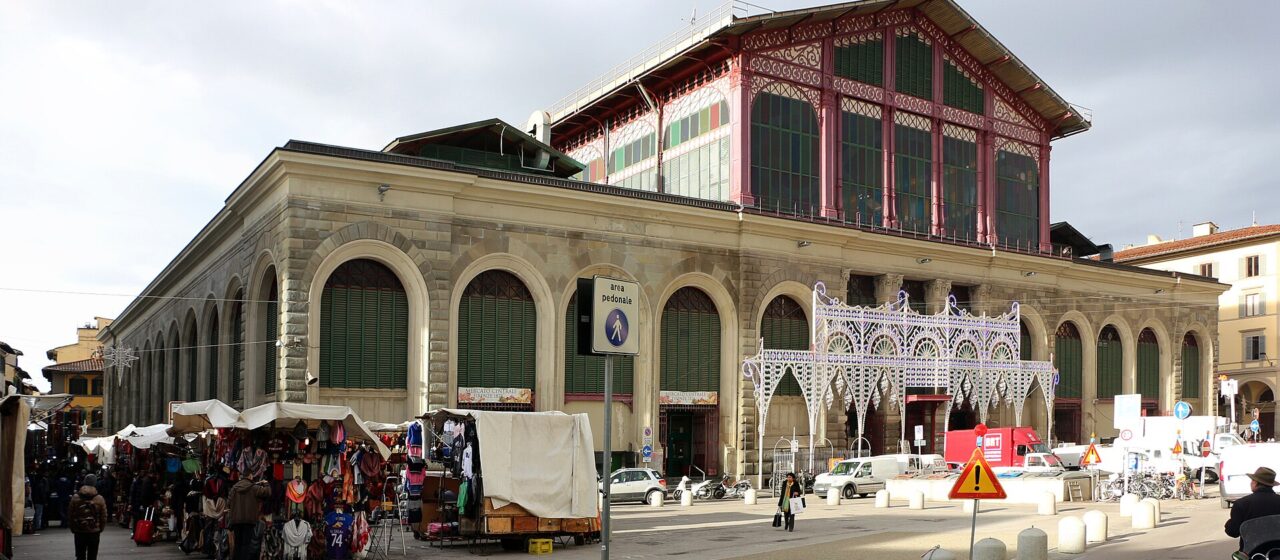
An outdoor market of leather goods, clothing, accessories and souvenirs, set beside the covered Mercato Centrale food market. Detailed in our dedicated San Lorenzo Market guide. Quick recap:
- San Lorenzo outdoor market — open-air stalls around the covered Mercato Centrale. Leather, scarves, ceramics, souvenirs. Some Mondays are stall-free under the city’s yearly calendar, so check before you go.
- Mercato Centrale — covered food market with two floors. Ground floor (Mon–Fri 07:00–15:00, Sat 07:00–17:00, closed Sunday): working market with butchers, cheesemongers, fish, vegetables. Upper floor (daily 09:00–23:00): food hall with 19 shops plus a bar, brewery, pizzeria and grill, selling €8–14 sit-down meals.
- Bargaining: expected at outdoor stalls (start 60–70%, settle 75–85%). Not at Mercato Centrale fixed-price food vendors.
Mercato di Sant’Ambrogio
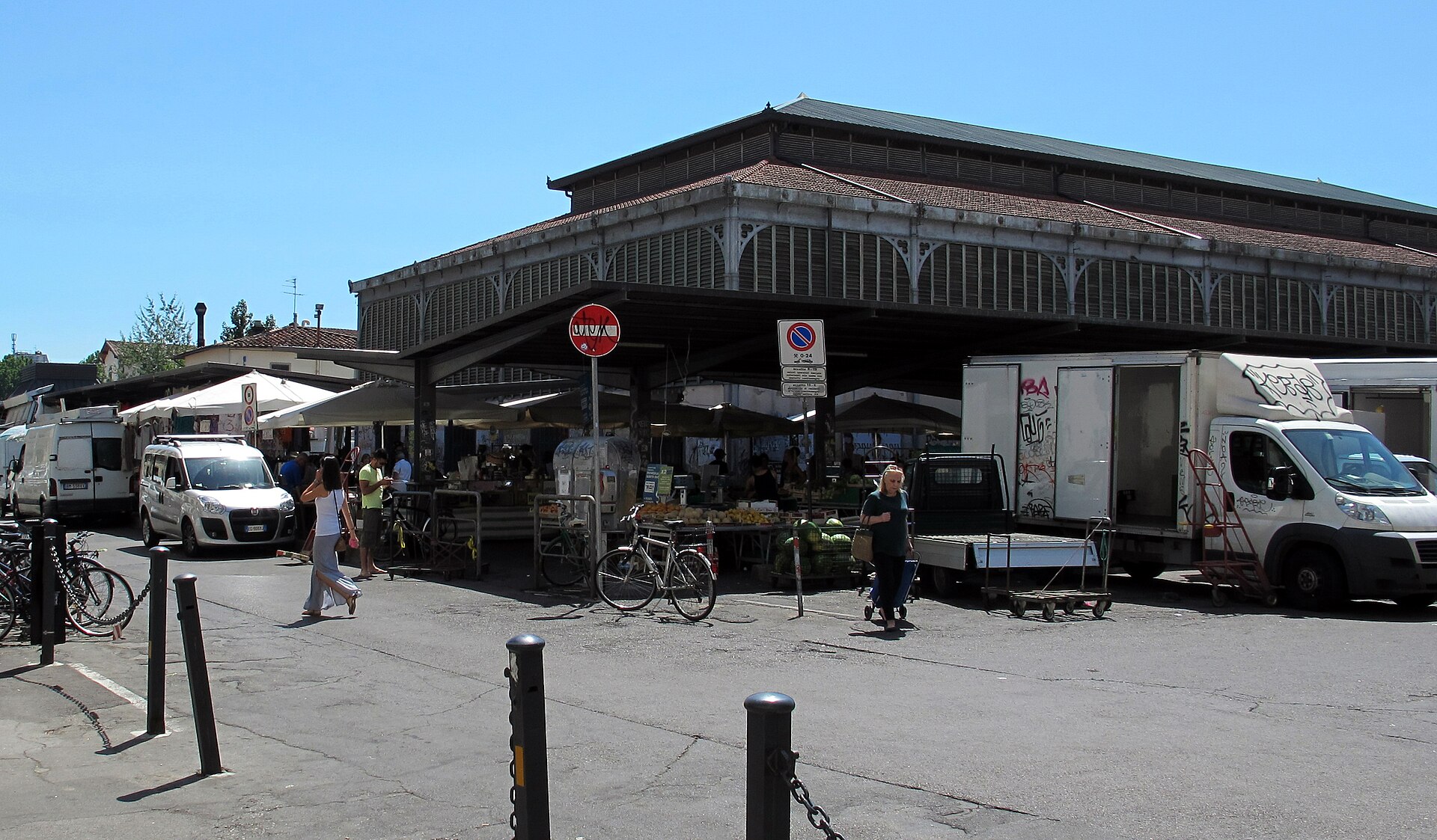
Florence’s most authentic working-class food market — where Florentines actually shop. Less touristy than San Lorenzo or Mercato Centrale.
- Address: Piazza Lorenzo Ghiberti (eastern Florence, near Santa Croce basilica)
- Hours: Mon-Sat 07:00–14:00 (closes 14:00 daily, closed Sundays)
- Layout: Covered indoor market (food: butchers, cheesemongers, bakers, fishmongers, fresh pasta) plus outdoor produce market on the surrounding piazza
- What to buy: Fresh produce, Tuscan cheese (pecorino, parmigiano), prosciutto and salami counters, fresh-pasta makers, butchers with Bistecca alla Fiorentina cuts
- Cafes/restaurants: Da Rocco (working trattoria inside the market, €15 lunch) and Il Pizzaiuolo nearby
Sant’Ambrogio is for travelers who want the real Florence market experience — locals doing their morning shopping, working-class food prices (no tourist markup), and authentic atmosphere. Perfect morning visit before lunch at one of the surrounding trattorias.
Mercato Nuovo (Porcellino)
Smaller leather and souvenir market with the famous bronze “Pig Fountain” (Il Porcellino) at one corner. Touch the pig’s snout for good luck (and toss a coin into its mouth).
- Address: Via Porta Rossa / Loggia del Mercato Nuovo, central Florence
- Hours: Daily 09:00–18:30, except 25–26 December and 1 January
- Layout: Covered loggia (16th-century arcade)
- What to buy: Leather wallets, scarves, t-shirts, souvenirs (similar to San Lorenzo but smaller)
- Bargaining: Expected, similar levels to San Lorenzo
- Iconic feature: The Porcellino fountain, a bronze copy of Pietro Tacca’s seventeenth-century boar (the original is in the Museo Stefano Bardini)
Mercato Nuovo is for visitors who want a quicker market experience than San Lorenzo. The Porcellino fountain alone justifies a 5-minute stop even if you don’t shop.
Mercato delle Pulci (Flea Market)
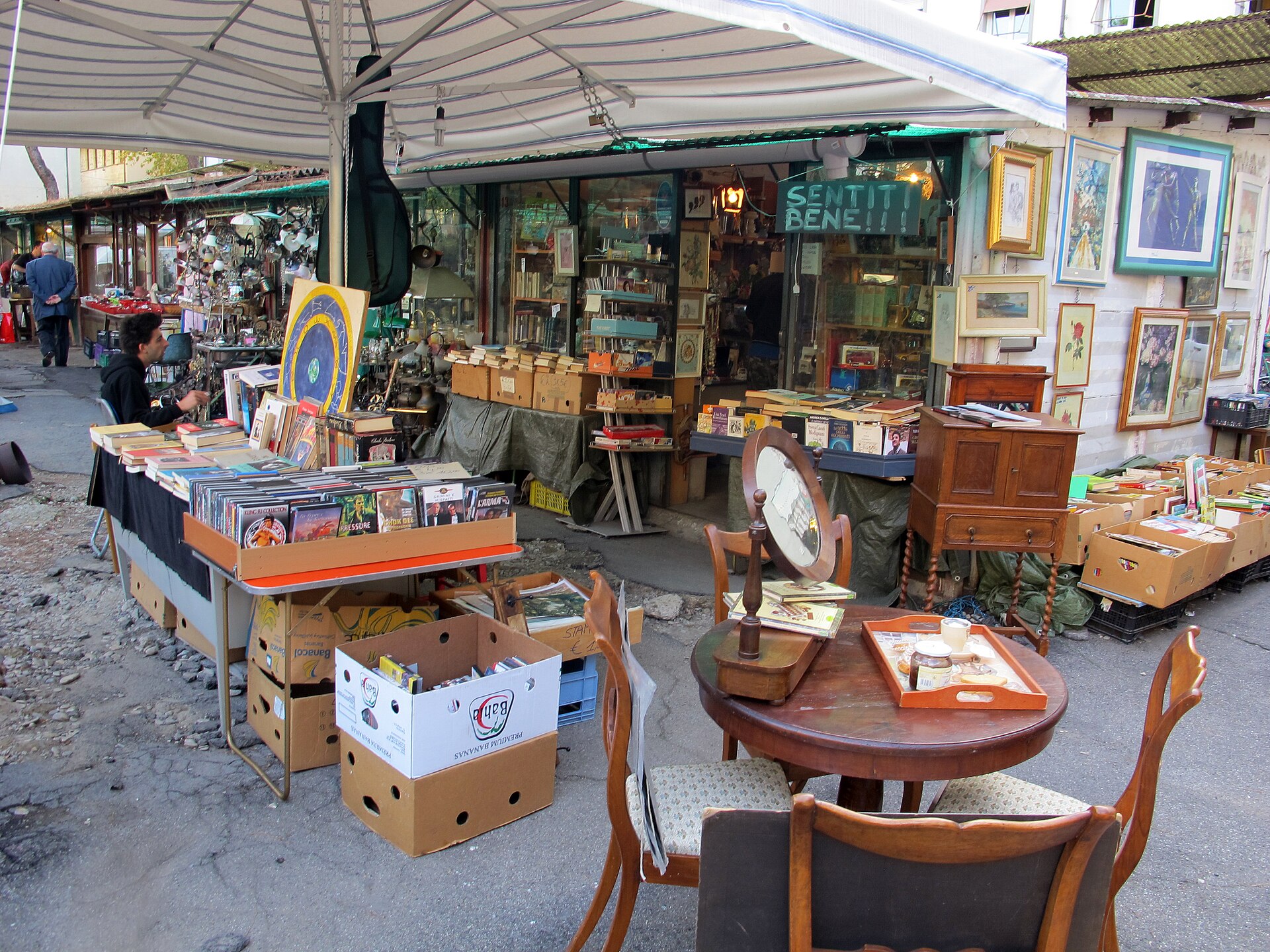
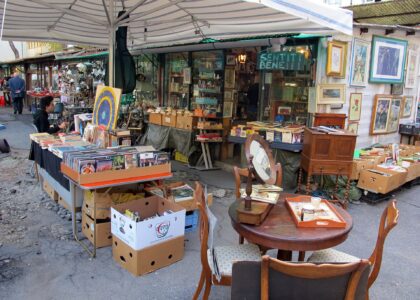
Florence’s main flea market — antiques, vintage clothing, books, art, bric-a-brac. Quirky and authentic.
- Address: Piazza Annigoni
- Hours: Open every day; on the last Sunday of each month the larger Mercato Antiquario extends into the surrounding streets
- What to find: Vintage Italian fashion, antique furniture (small pieces), old prints and maps, vintage jewelry, religious art, Tuscan ceramics, postcards, books, kitsch
- Prices: Wide range — from €5 postcards to €1,000+ antique pieces
- Bargaining: Expected, especially on antique pieces (start at 50–60%, settle at 70–80%)
The Last Sunday Mercato Antiquario expansion (every last Sunday of each month) extends antiques stalls into the surrounding streets.
Watch out: not all “antiques” are antique. Reproductions and modern decorative pieces are common. If buying serious antiques, ask for documentation.
Cascine Park Tuesday Market
A large weekly market — Tuesday mornings only, in Cascine Park (Florence’s largest public park), with mixed merchandise.
- Address: Cascine Park (Parco delle Cascine)
- Day: Tuesday mornings only; check the city’s markets page for current trading hours
- Getting there: Tram T1 to the Cascine stop
- What to find: Clothing (mid-range Italian and imported), shoes, household goods, Italian food specialties, plants, fabric, leather goods, books, vintage clothing
- Prices: Lower than central markets — Cascine is for working Florentines, not tourists
- Bargaining: Some, but most prices are already low
Cascine is for the patient market-explorer — a vast, sprawling experience with no obvious focus. Worth doing once during a Florence trip if you’re comfortable with broader merchandise hunting.
Santo Spirito Monthly Market
Monthly outdoor market on Piazza Santo Spirito (Oltrarno), with antiques, second-hand goods, and crafts. Held the second Sunday of each month.
- Address: Piazza Santo Spirito (Oltrarno)
- Day: Second Sunday of each month
- What to find: Antiques
- Prices: Negotiable; mostly affordable
Combine with a Sunday Oltrarno walk and lunch at one of Piazza Santo Spirito’s restaurants.
Other Florence Markets
La Fierucola
Monthly slow-food / artisanal-craft market on Piazza Santo Spirito (alternating with the antique market). Third Sunday of each month except August, 09:00–19:00. Tuscan artisanal food producers, organic products, soap, candles, ceramics, textiles, all from local producers.
Florence Flower Market
Thursday morning flower market under the Loggia del Pesce on Piazza della Repubblica. Smaller than other markets but a Florentine tradition. Cut flowers, plants, gardening supplies. €5–25 per bunch.
Christmas Markets (December)
Florence has two December Christmas markets:
- Mercatino di Natale on Piazza Santa Croce — German-themed, gluhwein, sausages, ornaments, gifts. Late November–end December.
- Smaller Christmas market on Piazza Santissima Annunziata — Italian crafts, panforte, cantucci, more refined Florentine character.
Easter and Festival Markets
Smaller seasonal markets can appear around religious festivals such as Easter (Scoppio del Carro) and San Giovanni (June 24), with local food and crafts.
Best Time to Visit
- Mercato Centrale ground floor: 09:00–11:00 — vendors fully stocked, less crowded
- Mercato Centrale upstairs food hall: 12:30 lunch or 19:00 dinner
- San Lorenzo outdoor leather market: 14:30–18:00 — vendors more willing to discount
- Sant’Ambrogio: mornings — it closes at 14:00
- Mercato Nuovo: 11:00–17:00 — covered space, comfortable any weather
- Mercato delle Pulci: open daily; the last Sunday of the month adds antiques stalls in the surrounding streets
- Cascine Park Tuesday: 09:00–12:00 — peak hours, full vendor presence
- Santo Spirito monthly: Second Sunday 11:00–14:00
A Florence Markets Shopping Day
For market enthusiasts, a single day covering 4–5 markets:
- 09:00–10:30 — Mercato Sant’Ambrogio (working food market, Florentine atmosphere). Buy fresh produce, taste cheese.
- 10:30–11:30 — Mercato delle Pulci (Piazza Annigoni). Antiques and bric-a-brac.
- 11:30–12:00 — Walk to Mercato Centrale via the historic centre.
- 12:00–13:30 — Mercato Centrale upstairs lunch. Browse outdoor San Lorenzo Market.
- 13:30–15:00 — San Lorenzo Market (leather, souvenirs).
- 15:00–16:00 — Mercato Nuovo (Porcellino) — quick browse.
- 16:00 — Coffee break and final purchases.
Insider Tips
Tip 1: The first hour of opening at any Florence market is the calmest — vendors are setting up, willing to engage, and patient with browsers.
Tip 2: Sant’Ambrogio for the most authentic food-market experience. Bring a small reusable shopping bag and Italian cash.
Tip 3: On the last Sunday of each month the antiques stalls of Mercato delle Pulci spread into the surrounding streets — book accommodation accordingly if antiques are a priority.
Tip 4: The Tuesday Cascine Park market is for travelers comfortable with broader merchandise — not for visitors wanting curated, high-quality items.
Tip 5: Pickpocket awareness — Florence’s busy markets are pickpocket zones. Front-of-body crossbody bag, zipped pockets, no phone in back pocket. Especially at San Lorenzo and Sant’Ambrogio.
Tip 6: Cash is preferred at most outdoor markets — bring small bills (€5, €10, €20). Some larger stalls accept cards.
Tip 7: Compare prices across markets before buying. Items at San Lorenzo are sometimes 30% cheaper at Mercato Nuovo or Sant’Ambrogio.
Markets vs Fixed-Price Shops
- Markets: Lower base prices, bargaining culture, broader range. Quality varies; need to apply checks (leather quality, silk vs polyester, etc.). No VAT refund typically.
- Fixed-price shops (Tornabuoni, Scuola del Cuoio, Officina Santa Maria Novella): Higher base prices, fixed prices, guaranteed quality. Non-EU residents can claim a VAT refund on eligible goods costing over €70 per invoice, VAT included (refund-company fees may be deducted).
For everyday souvenirs, scarves, ceramics: markets win on price. For premium quality (leather jackets, jewelry, perfume, gifts): fixed-price shops are safer.
Florence Markets FAQ
What are Florence’s best markets?
San Lorenzo (outdoor leather and souvenir stalls), Mercato Centrale (covered food market upstairs and ground floor), Sant’Ambrogio (working Florentine food market), Mercato Nuovo (Porcellino leather and souvenir market), Mercato delle Pulci (flea market in Piazza Annigoni), Cascine Park Tuesday market (large weekly mixed market).
Which is the most authentic?
Mercato Sant’Ambrogio — working-class Florentine food market with locals doing their morning shopping. Less touristy than San Lorenzo or Mercato Centrale. Mon-Sat mornings only.
When are Florence markets open?
Daily: Mercato Nuovo (09:00–18:30, closed 25–26 December and 1 January) and Mercato delle Pulci. San Lorenzo’s outdoor stalls skip some Mondays under the city’s yearly calendar, so check before you go. Mornings only: Sant’Ambrogio (Mon-Sat 07:00–14:00). Weekly: Cascine Park (Tuesday mornings). Monthly: Santo Spirito antique market (second Sunday) and Fierucola slow-food market (third Sunday).
Should I bargain at all markets?
At outdoor markets (San Lorenzo, Mercato Nuovo, Cascine, Mercato delle Pulci), yes — start at 60–70% of asking price, settle at 75–85%. Not at Mercato Centrale (fixed-price food vendors) or Sant’Ambrogio (working food market with set prices).
Are markets safe?
Generally safe but pickpockets work the busy markets. Crossbody bag worn front-of-body, zipped pockets, phone in zipped bag (never back pocket). Especially at San Lorenzo and Sant’Ambrogio’s busiest hours.
When is the best flea market day?
The last Sunday of each month, when Mercato delle Pulci in Piazza Annigoni spreads antiques stalls into the surrounding streets. Plus the second Sunday Santo Spirito antique market.
Where do Florentines actually buy food?
Mercato Sant’Ambrogio is the locals’ working food market. Mercato Centrale’s ground floor (Mon–Fri 07:00–15:00, Sat 07:00–17:00, closed Sunday) also has working butchers, cheesemongers, fish, vegetables — the upstairs food hall is more touristy. Smaller neighbourhood markets exist in San Frediano and other Oltrarno districts.
Is Cascine Tuesday market worth it?
For broad merchandise hunting (clothing, household goods, books, fabric), yes. For curated quality, no. The market is large but mostly working-class merchandise. Worth doing once during a Florence trip if you’re comfortable with broader market exploration.
Florence’s market culture extends well beyond San Lorenzo’s tourist-focused leather. Mercato Sant’Ambrogio is the locals’ working food market, Mercato delle Pulci houses Florence’s flea-market and antique scene, Cascine Park’s Tuesday weekly market is vast and working-class, and the seasonal Christmas markets bring December atmosphere. Combine 4–5 markets in a single shopping day or distribute across your trip — markets are Florence’s most authentic shopping experience, with Italian market culture in full daily operation.