This article contains advertising. Booking links on this site can be turned into paid links automatically by our partner Travelpayouts: if you book through one, we earn a commission from the provider, at no extra cost to you. It never affects what we recommend. Affiliate disclosure
Florence Shopping Guide: Markets, Leather, Designer Boutiques & Artisan Workshops (2026 Edition)
The complete, honest guide to shopping in Florence, Italy — from the legendary leather market at San Lorenzo and the artisan workshops of the Oltrarno to the luxury houses of Via de’ Tornabuoni, the Ponte Vecchio goldsmiths, and The Mall designer outlet. Learn how to tell authentic Italian leather from tourist-grade substitutes, what to bring home that you actually cannot buy elsewhere, and how to navigate Florence’s shopping scene like someone who lives here rather than someone working from a cruise-ship excursion sheet. Fully updated for 2026.
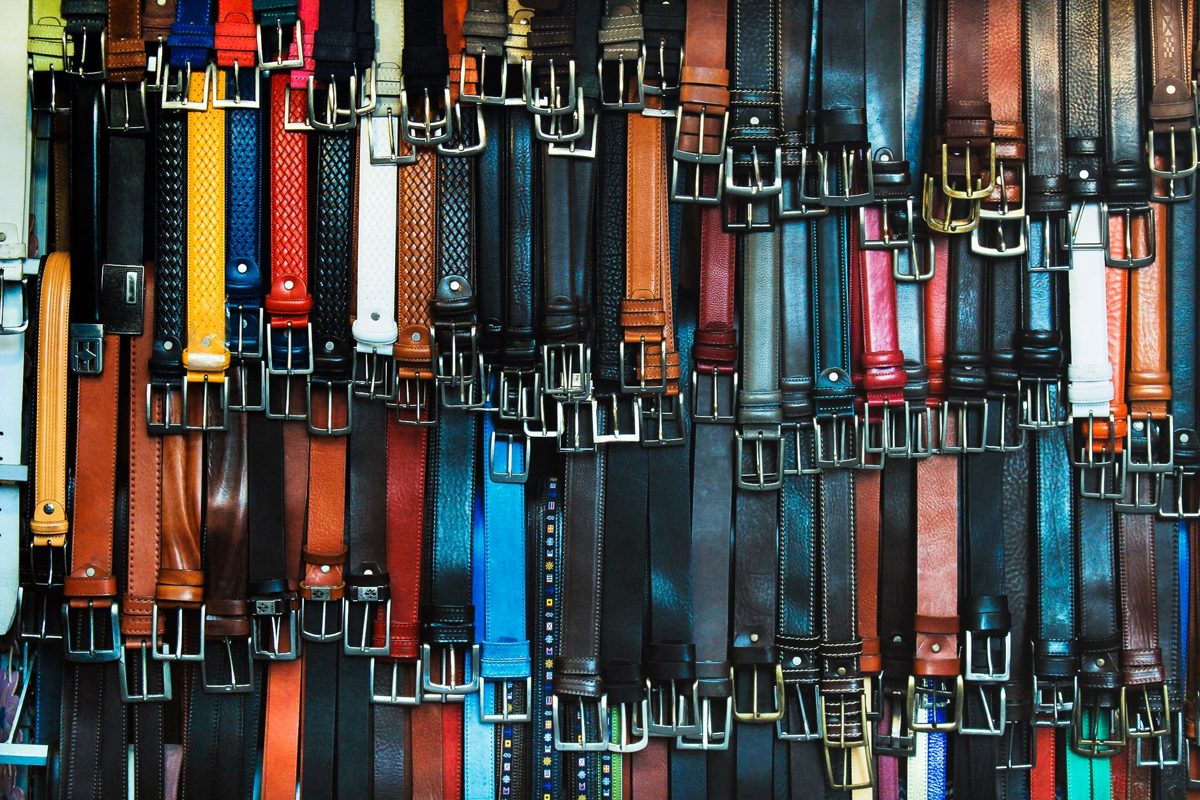
Florence’s shopping strengths are the crafts it has practised for six centuries: leather, gold and paper. Learn to spot real vegetable-tanned hide in our leather buying guide, browse the goldsmiths still trading on the Ponte Vecchio, and see the marbling done by hand in our Florentine paper guide.
Italian sale dates are set by regional government, so the Tuscan saldi start on the same day in every shop and everyone knows when. Our guide to Florence in January has the timing and where the reductions are real.
By February the Tuscan saldi are into their back half, and the rails are thinner. Our guide to Florence in February explains when that is a bargain and when it is too late.
The Tuscan summer sales open on a date fixed by regional decree in the first week of July — the same day in every shop, with promotional discounting banned for the thirty days before. Our guide to Florence in July has the timing and the rules.
August is the deep-discount end of the Tuscan summer sales — steepest reductions, thinnest rails, better for leather than for finding your size. Our guide to Florence in August covers the timing and what else is shut.
What Florence Is (and Isn’t) for Shopping
Shopping in Florence, Italy is not like shopping in Milan or Rome, and understanding that difference is the key to a satisfying trip. Milan is the engine of Italian fashion — a shiny global showroom where the newest collections appear first. Rome is simply enormous; its shopping is scattered, often touristy, and you can easily waste a day searching for something specific. Florence, by contrast, is concentrated, intensely artisanal, and built around crafts the city has practised for centuries: leather, gold, silk, decorated paper, and the produce of the Tuscan countryside.
If you want the newest Gucci collection on the day of its drop, Milan is a better bet. If you want a hand-stitched Florentine leather bag made by the third generation of a family that has been cutting vachetta leather in the same workshop since your grandparents were born — that is Florence, and only Florence. The city’s medieval guilds (Arti) divided the population by craft, and several of those crafts survive today almost entirely because tourists keep asking for them. You are, whether or not you realise it, part of the reason these workshops still exist.
The Seven Shopping Worlds of Florence
It helps to think of Florence’s shopping not as a single experience but as seven overlapping scenes, each with its own rhythm, price range, and cultural meaning:
- The leather-market Florence — San Lorenzo’s outdoor stalls and Mercato Nuovo, aimed squarely at tourists. Wildly variable quality, moderate prices, and an atmosphere that is itself part of what you are buying.
- The luxury-fashion Florence — Via de’ Tornabuoni, Via della Vigna Nuova, Via Roma. The same Italian and French houses you would find in Milan or Paris, presented in Renaissance palazzi.
- The artisan Florence — Oltrarno workshops where goldsmiths, leatherworkers, bookbinders, and frame-makers still work by hand. Generally the best value for serious purchases.
- The Ponte Vecchio goldsmith Florence — the bridge has been the city’s goldsmith row since 1593, and its shops specialise in Italian gold and jewellery.
- The paper Florence — marbled paper, bookbinding, letterpress. Marbling reached Europe from the Middle East, and Florence made decorated paper one of its signature crafts.
- The outlet Florence — The Mall Firenze, Space Outlet, Prada Space. Past-season designer stock at discounted prices, a trip out of the city.
- The edible Florence — Mercato Centrale, wine shops, olive oil producers, and the Consortium-certified specialities you cannot legally call by their name outside Tuscany.
This guide covers all seven. You do not need to do all seven in one trip, but you should know they exist — because the most common shopping mistake visitors make is assuming that the stall at San Lorenzo is Florence shopping, when in fact it represents perhaps the most tourist-oriented ten percent of it.
How Much Time Do You Need for Shopping?
A dedicated shopper can cover Florence’s essentials in a focused half-day: one morning for the leather market and artisans of San Lorenzo, or one afternoon for Via de’ Tornabuoni and the Ponte Vecchio goldsmiths. A committed trip — fittings, bespoke work, visits to workshops in the Oltrarno — wants two to three days. The Mall outlet adds half a day. During the traditional saldi (sales) periods in January and July, factor in extra time for queues at the major designer boutiques.
Florence Leather: The Honest Guide
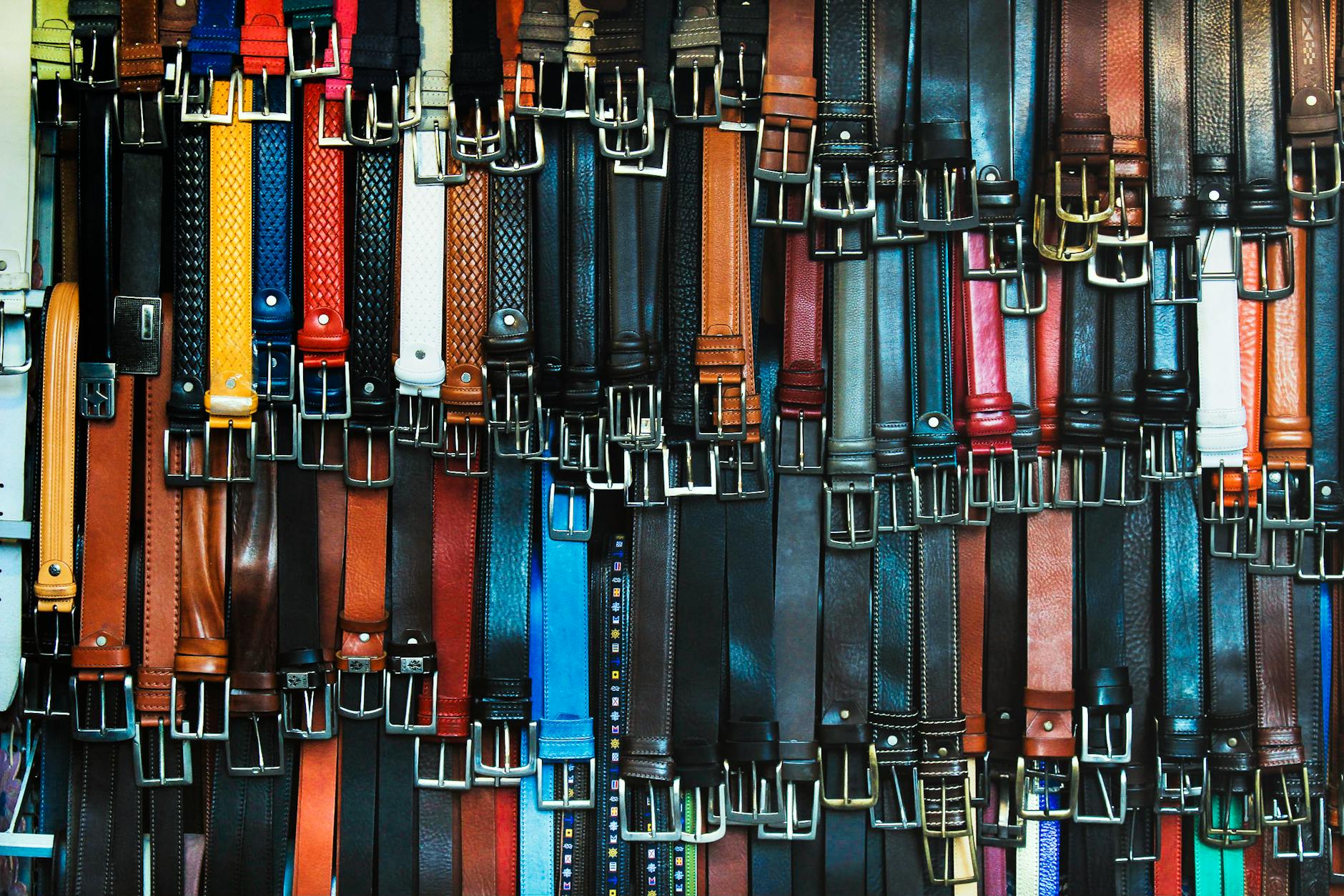
Leather shopping in Florence is the number one shopping reason travellers cite for coming here, and it is simultaneously the shopping category in which they are most likely to be fleeced. The problem is not that Florentine leather is bad — it is that Florentine leather ranges from some of the finest in the world to some of the most aggressively mis-labelled tourist goods in Europe, and the two sit on stalls a metre apart.
Why Florence, of All Places?
Florence sits at the head of the Arno valley, and the river was the original reason the leather trade settled here: tanners needed large quantities of running water. The city’s curriers and tanners had their own medieval guild, the Arte dei Cuoiai e Galigai (the Guild of Tanners and Leatherworkers), already on Florence’s guild list in 1236. Today the tanning happens downriver, west of Florence along the Arno: Santa Croce sull’Arno is the heart of Tuscany’s leather-tanning district, and the vegetable-tanning consortium has members there and in Ponte a Egola and San Miniato.
This matters because vegetable-tanned leather (cuoio al vegetale) is the premium Tuscan product. Unlike chrome-tanned leather — the standard global method, which is fast and uses heavy-metal salts — vegetable tanning uses plant extracts (chestnut, mimosa, quebracho) and takes weeks. The result is a firmer, longer-lasting leather that develops a distinctive patina with age and is fully biodegradable. It is the material used for the bags, belts, and saddles that last forty years.
How to Identify Authentic Italian Leather
A trained eye can assess a leather piece in about ten seconds. You can learn much of the same in a morning. Key signs of quality:
- The “Vera Pelle” stamp means little. It simply states the item contains real leather — which is true of almost all Florentine leather goods, good or bad. Look for the much more specific “Pelle Conciata al Vegetale in Toscana” mark, a consortium-certified trademark that guarantees genuine Tuscan vegetable-tanned leather. This is the stamp you want on a quality piece.
- Smell it. Real vegetable-tanned leather has a distinctive, slightly sweet, earthy odour. Chemical or plastic smells are a red flag — that is likely chrome-tanned bonded or split leather.
- Check the edges. On a quality bag or belt, cut edges are burnished and sealed by hand, often in a contrasting colour, and feel smooth. Raw, rough-painted, or obviously glued edges indicate mass production.
- Examine the stitching. Even hand-stitching with small, uniform stitches is what you want. Giant industrial-machine stitches, uneven tension, or obviously glued seams signal a cheaper piece.
- Press the surface. Full-grain leather (the best) shows natural variations — tiny scars, grain patterns — because it is a single top slice of hide. “Genuine leather” in American labelling usually means split leather, a lower-quality layer. In Italy the equivalent term to avoid is pelle ricostruita (reconstituted leather), effectively leather particle board.
- Feel the weight. A full-sized leather jacket from genuine hide weighs noticeably — a kilo and a half for a medium is normal. Extremely lightweight jackets are usually split leather or pigmented PU.
Best Places to Buy Authentic Florence Leather
These are the shops and workshops we recommend without reservation. None of them pay for inclusion; they are here because their reputation in the city is sustained.
- Scuola del Cuoio (Via San Giuseppe 5r) — the Leather School of Florence, founded by Franciscan friars after WWII to teach orphaned boys a trade. Located in the former dormitory of the Santa Croce monastery, you can watch artisans at work and buy directly. Prices vary by model and leather, and the school’s online catalogue lists the current ones. A Florence institution.
- Il Bisonte (Via del Parione 31r) — founded in 1970 by Wanny Di Filippo. Their signature is cream-coloured naturale leather that darkens beautifully with age. Florence-born brand, still made in Tuscany. Bags €250–800.
- Madova (Via Guicciardini 1r, at the foot of Ponte Vecchio) — a historic glove specialist; the Donnini family has made gloves since 1919. Every pair is cut and sewn on site. Cashmere-lined leather gloves €80–150.
- Benheart (multiple locations; flagship at Via della Vigna Nuova 97r) — contemporary handmade leather jackets and shoes in Tuscan leather. Jackets €400–900. Popular with designers and chefs.
- Cellerini (Via del Sole) — small family workshop making bespoke bags and small leather goods since the late 1950s. Classical proportions, extraordinary craft. Expect €600+ for a signature piece.
- Cuoieria Fiorentina — multiple locations around the centre. Contemporary designs, entry-level artisanal pricing; bags from around €180.
- Pierotucci (Via Lungo L’Ema 17, Ponte a Ema, Bagno a Ripoli, outside the centre) — family leather workshop founded in 1972; guided visits let you watch artisans at work, and the showroom sells its own goods direct.
What Pieces Are Actually Worth Buying?
Not everything leather is a better deal in Florence than at home. The pieces that genuinely outperform:
- Classic handbags and totes in vegetable-tanned leather. A piece that would cost €500–900 at a designer boutique in London or New York sells for €200–400 direct from a Florentine workshop, at equal or better quality. This is the single best category to buy here.
- Leather jackets in lambskin or lightweight cow. Expect €350–900 for a quality jacket; similar imported goods abroad cost 1.5–2x.
- Belts. Solid Italian belts in vegetable-tanned leather with real brass buckles sell for €60–120. They last decades.
- Gloves. Florence is the city for leather gloves. Madova, Sermoneta, and their peers sell work far superior to any global retailer.
- Small leather goods: wallets, card cases, passport covers, agenda covers. Easy to pack, relatively affordable (€60–180), high-quality options widely available.
Be more cautious about shoes (harder to fit on a trip), large suitcases (expensive to transport), and anything bought under time pressure at a market stall.
San Lorenzo Market: The Iconic Street Market
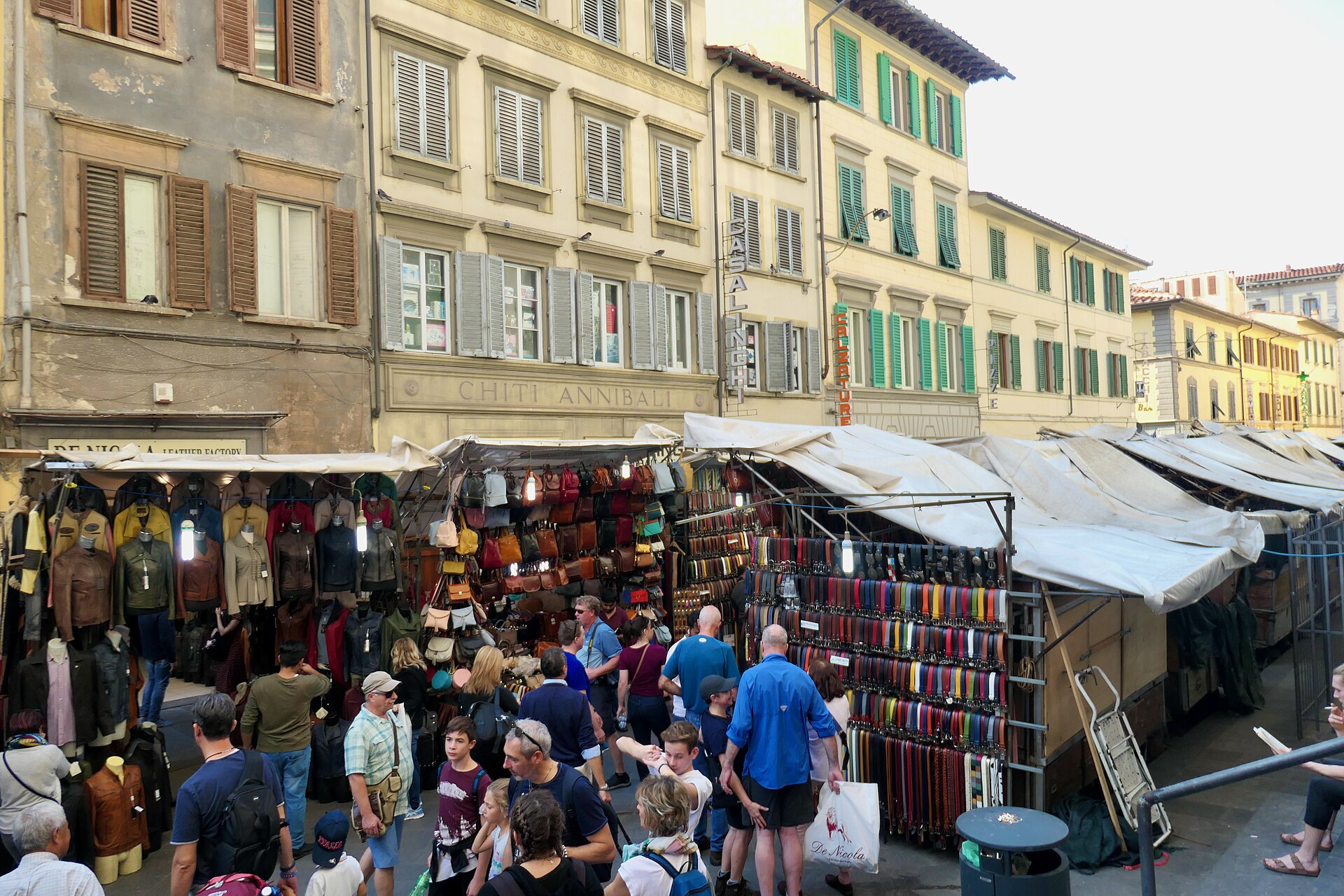
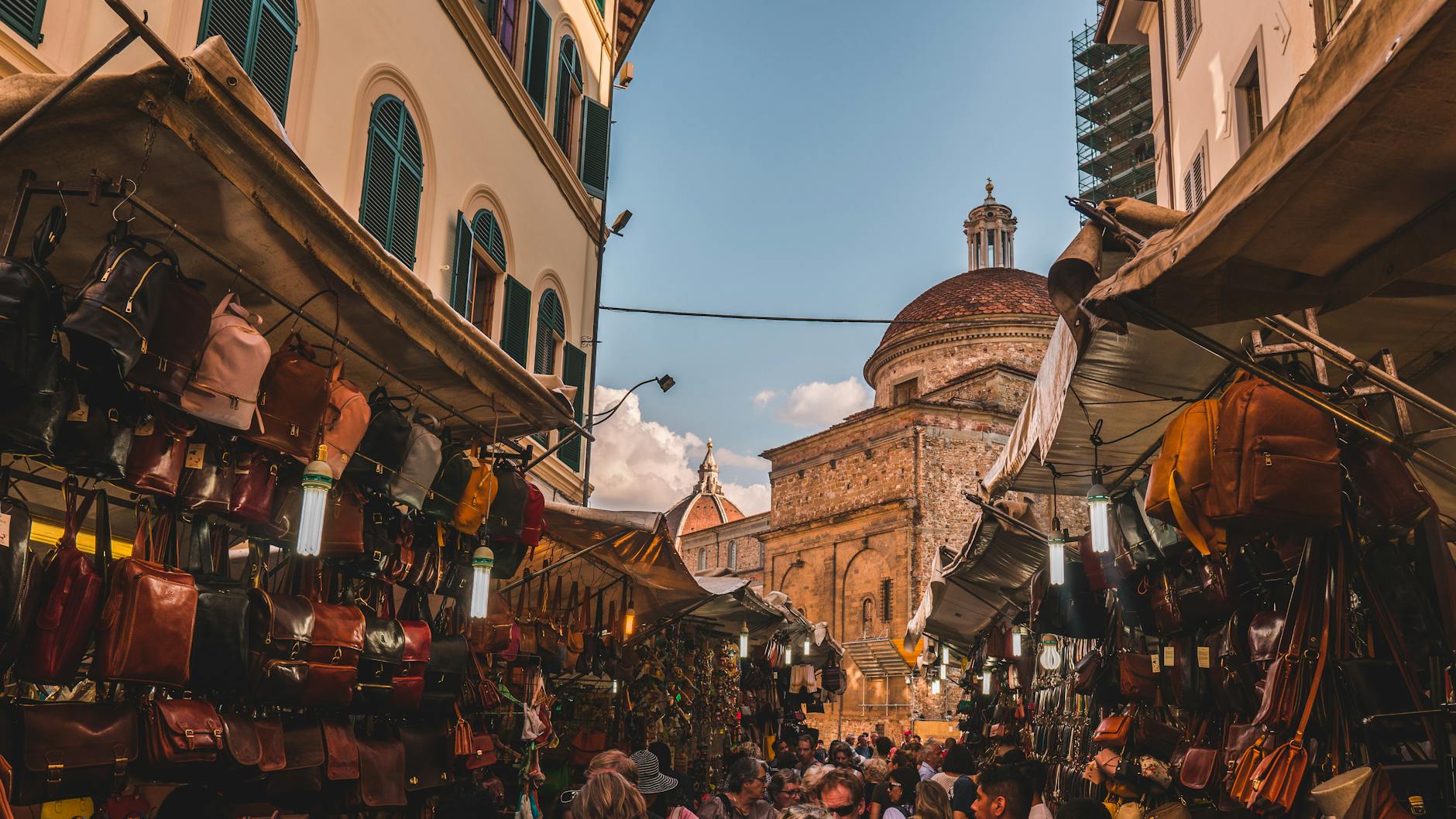
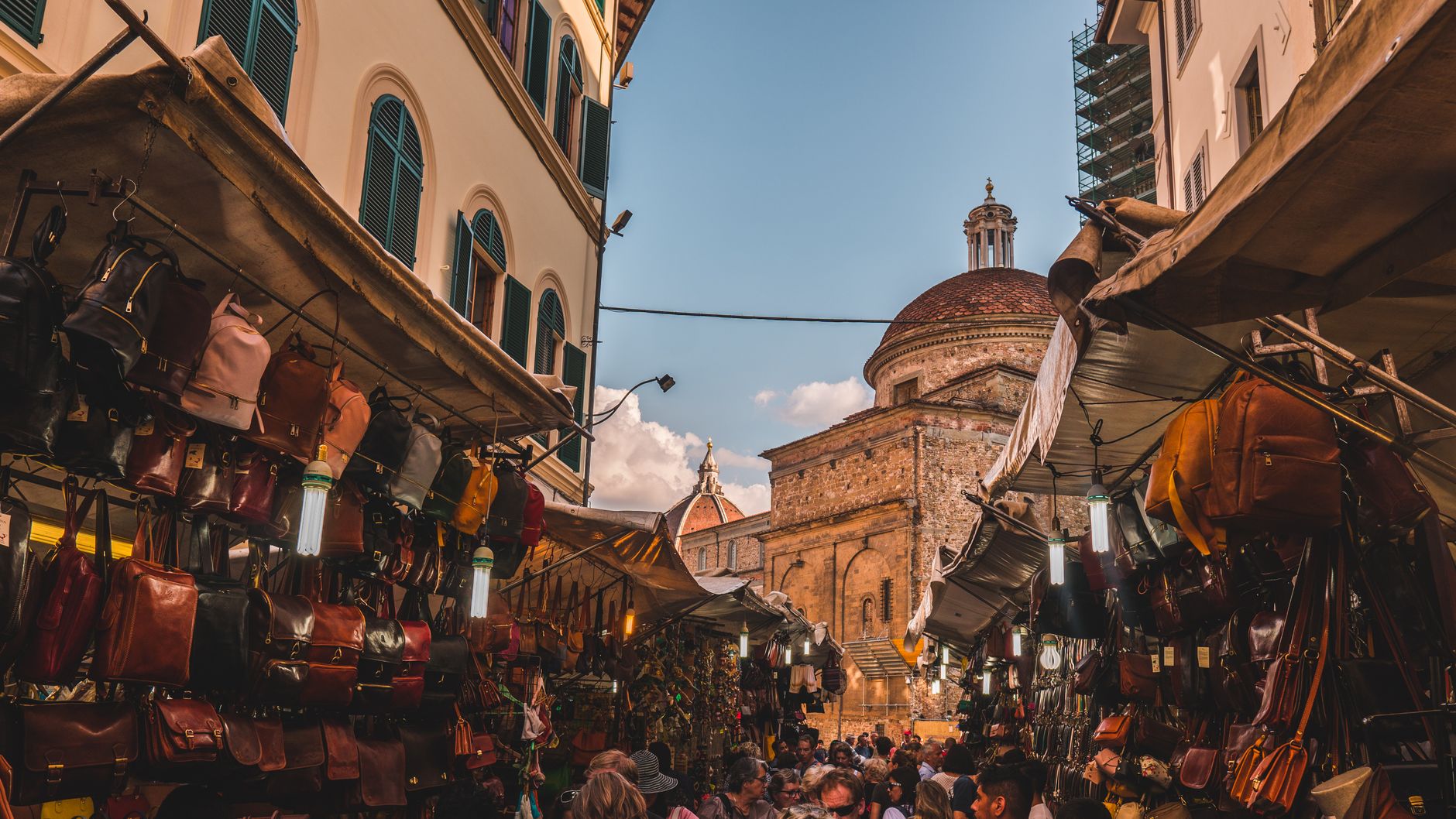
The San Lorenzo Market is the most famous — and most contested — shopping experience in Florence. The outdoor market stretches around the Basilica di San Lorenzo and along Via dell’Ariento. The city clears the stalls on set Mondays through the year, so check the comune’s current closure calendar before planning a Monday visit. It is separate from, though adjacent to, the indoor Mercato Centrale food hall, which is a different experience entirely and one we cover further down.
What You Can Actually Find Here
Stalls specialise in leather jackets, handbags, belts, wallets, and small leather goods; scarves and pashminas (mostly cotton-wool blends, often mislabelled as cashmere); T-shirts and tourist-branded textiles; costume jewellery; ceramics; and the occasional higher-quality vendor selling work from small workshops in the surrounding region. The range of quality is vast. A €40 leather bag at San Lorenzo may have perfectly adequate chrome-tanned cow leather, machine stitching, and no lining, while a €200 bag one stall over may be a genuine hand-stitched vegetable-tanned piece from a family workshop in Santa Croce sull’Arno.
How to Bargain at San Lorenzo
Bargaining is expected, but within polite limits. A starting counter-offer of 60–70% of the asking price is reasonable for unbranded leather goods. Walk away at least once; offers often improve dramatically at that moment. Cash gets the best prices (some stalls will simply refuse card for a discounted item). If a vendor is not willing to discount much, the item may actually be priced close to fair — this is not always a negative signal.
That said, do not expect to negotiate a €200 bag down to €50. A bag built to last needs expensive raw materials. Radical discounts almost always indicate radically compromised quality.
How to Avoid the Common Scams
- “Cashmere” that is not cashmere. Most €15–30 “pashminas” at San Lorenzo are viscose with a trace of wool. Real cashmere begins around €80–100 for a light scarf and nearer €300 for a genuine full pashmina. If the label or seller is vague, assume it is blend.
- Ask where the “Italian leather” was made. Legitimate Italian production will carry specific marks (brand names, workshop addresses, Made in Italy embossing). With no origin mark, or only a sewn-in paper tag, you cannot tell where the piece was made, so ask the vendor before you pay.
- Mobile card machines that “don’t quite work”. A vendor who invites you to try the card machine three times and then asks for cash has likely already charged you. Check receipts and transaction notifications immediately.
- “Special price for you”. Traditional banter, and not dishonest in itself, but it is not a real discount. The “special price” is usually the starting position for negotiation.
Mercato Centrale: The Indoor Food Hall
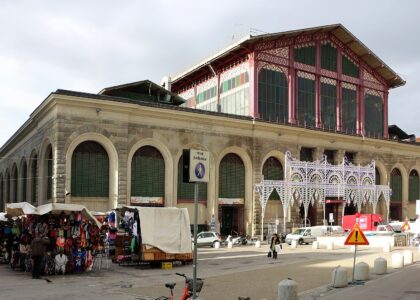
Just beyond the leather stalls is the Mercato Centrale, a cast-iron-and-glass market hall from 1874. The ground floor is Florence’s principal fresh-produce market — butchers, cheesemongers, fishmongers, fresh pasta, olive oil, wine, tripe stands where Florentines have lunched for generations. The upper floor (renovated 2014) is a modern food hall with artisan pizza, gelato, wine bars, fresh seafood, and a cooking school, open daily 9am to 11pm. The ground-floor market keeps shorter hours: 7am to 3pm Monday to Friday, 7am to 5pm on Saturday, closed on Sunday. For visitors, it is the single easiest place in Florence to try regional specialities, buy gourmet gifts, and eat well for €15–25 per person. It also makes an excellent pairing with a morning of leather shopping.
Via de’ Tornabuoni: Luxury Row
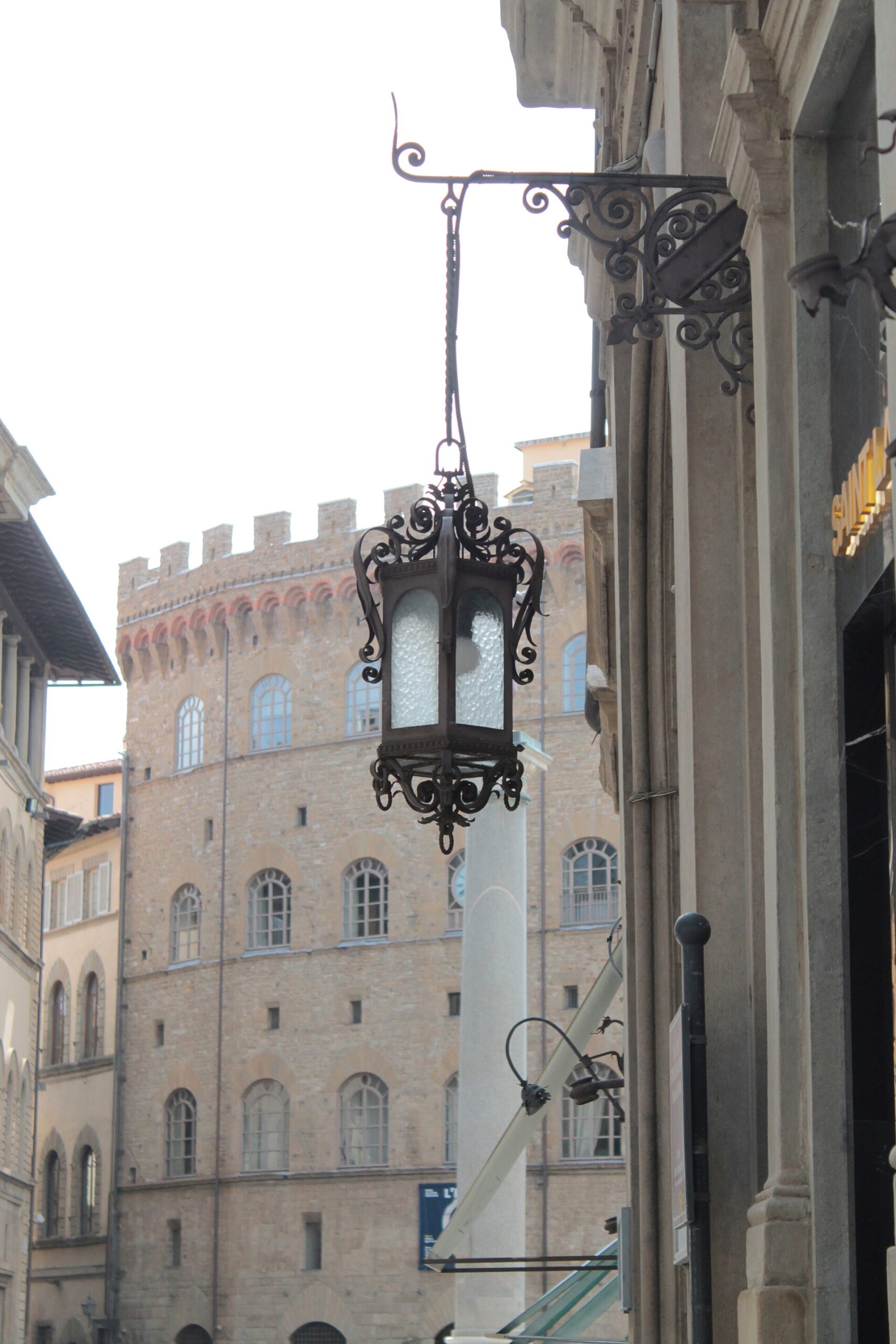
Via de’ Tornabuoni is Florence’s answer to Milan’s Via Monte Napoleone and Paris’s Avenue Montaigne. Running between Piazza Santa Trinita and Piazza Antinori, it is a parade of fashion-house flagships housed inside Renaissance palazzi, along with a handful of the best of Florentine tradition — most notably Salvatore Ferragamo, whose museum sits inside Palazzo Spini Feroni at the street’s southern end, on Piazza Santa Trinita.
Who You Will Find Here
The line-up shifts as leases rotate, so check a store’s hours before you go out of your way. Many of the big luxury houses have shops here, alongside names such as Bulgari at no. 56/r, the jeweller Buccellati at no. 93 and Procacci at no. 64/r. Via della Vigna Nuova branches west from Tornabuoni and extends the luxury strip with more Italian-led boutiques.
When Tornabuoni Is Worth the Trip
The frank truth: if you can shop at a Gucci or Prada flagship in London, New York, or Tokyo, the collection in Florence is similar and the prices are broadly similar. What differs:
- VAT refund. Non-EU residents can reclaim part of the VAT on purchases over €70 (more on this in the practical section below). On a big-ticket item such as a designer bag the refund takes a useful slice off the price, though the amount depends on the shop, the refund company and its fees.
- Local capsule collections. Some Italian houses release special editions for their Florence stores. Ask whether the shop has any Firenze-exclusive pieces.
- Atmosphere. Shopping in a Renaissance palazzo is not a functional argument, but it is a real one. The Gucci flagship, in particular, makes sense as an experience.
- Saldi season. Italy’s sale dates are set region by region. In Tuscany the 2026 winter sales began on 3 January and the summer sales on 4 July, each set to run for 60 days; the Regione Toscana announces each new season’s dates. Reductions vary from shop to shop.
Lesser-Known but Worth a Visit
Mixed among the global houses are a handful of distinctly Florentine boutiques most visitors walk past:
- Loretta Caponi (Piazza degli Antinori 4r) — hand-embroidered linens and nightwear beloved by Italian brides and interior designers. Sheets that take three months to embroider.
- Farmacia di Santa Maria Novella (Via della Scala 16) — not on Tornabuoni but a short walk away. Its roots go back to the Dominican convent founded in 1221, and it has been a public pharmacy since 15 October 1612. Still selling the same rose water, orris-root powders, and potpourri formulas. Essential visit even if you do not buy.
- Richard Ginori (Via Rondinelli 17r) — the storied Florentine porcelain house, in business since 1735, now under Kering ownership. Their Museo Richard Ginori is in Sesto Fiorentino.
Ponte Vecchio & Florentine Gold

The shops that line the Ponte Vecchio are not a tourist invention: the bridge has been Florence’s goldsmith row since 1593, when Grand Duke Ferdinando I expelled the butchers and tanners (whose waste was going straight into the Arno) and reserved the bridge for gold and silver workers. The medieval shop-fronts with their wooden shutters — called sportelli — are preserved almost unchanged, and a number of the current businesses are run by direct descendants of 17th- and 18th-century bridge goldsmiths.
What Florentine Goldsmiths Are Known For
- Italian 18-karat gold — the Italian gold standard is 750 (75% pure), marked “750”. 14-karat and below are uncommon in serious Italian jewellery; so-called “Italian gold” at 10k sold abroad is not representative.
- Florentine finishes — the hand-engraved, matte-textured finish known as fiorentino originated here in the 16th century. You can still see hand-graving being done in a few workshops.
- Cameo and intaglio — carved shell and hard-stone cameos, once made in volume in Torre del Greco, are sold in finer bridge shops. A real cameo is carved from a single shell, not moulded.
- Mosaic jewellery — commesso fiorentino (Florentine mosaic) is a traditional Florentine craft that builds pictures from precisely cut pieces of hardstone such as lapis, malachite and agate, here set as jewellery.
Buying Fine Jewellery on the Bridge: What to Know
The Ponte Vecchio is not cheap. What you are buying is the provenance, the workshop tradition, and the guarantee. Paperwork matters: any serious piece should come with a full garanzia (certificate of authenticity and origin), a detailed receipt identifying the metal karat and stone characteristics, and a maker’s mark (the Italian identification mark is a five-pointed star, the maker’s registration number and the abbreviation of its province, “FI” for Florence). Look on the piece itself for that mark and a fineness mark that matches the metal: on gold, “750” means 18 carat.
Recommended bridge shops with long family traditions include U. Gherardi, Cassetti Ponte Vecchio, Fratelli Piccini (on the bridge since 1903), and Torrini (who trace their goldsmith lineage to the 14th century). Prices on the bridge generally run 20–40% higher than you might find at workshops off-bridge; for a statement piece, most buyers find the provenance and the setting justify it.
Oltrarno Artisan Workshops
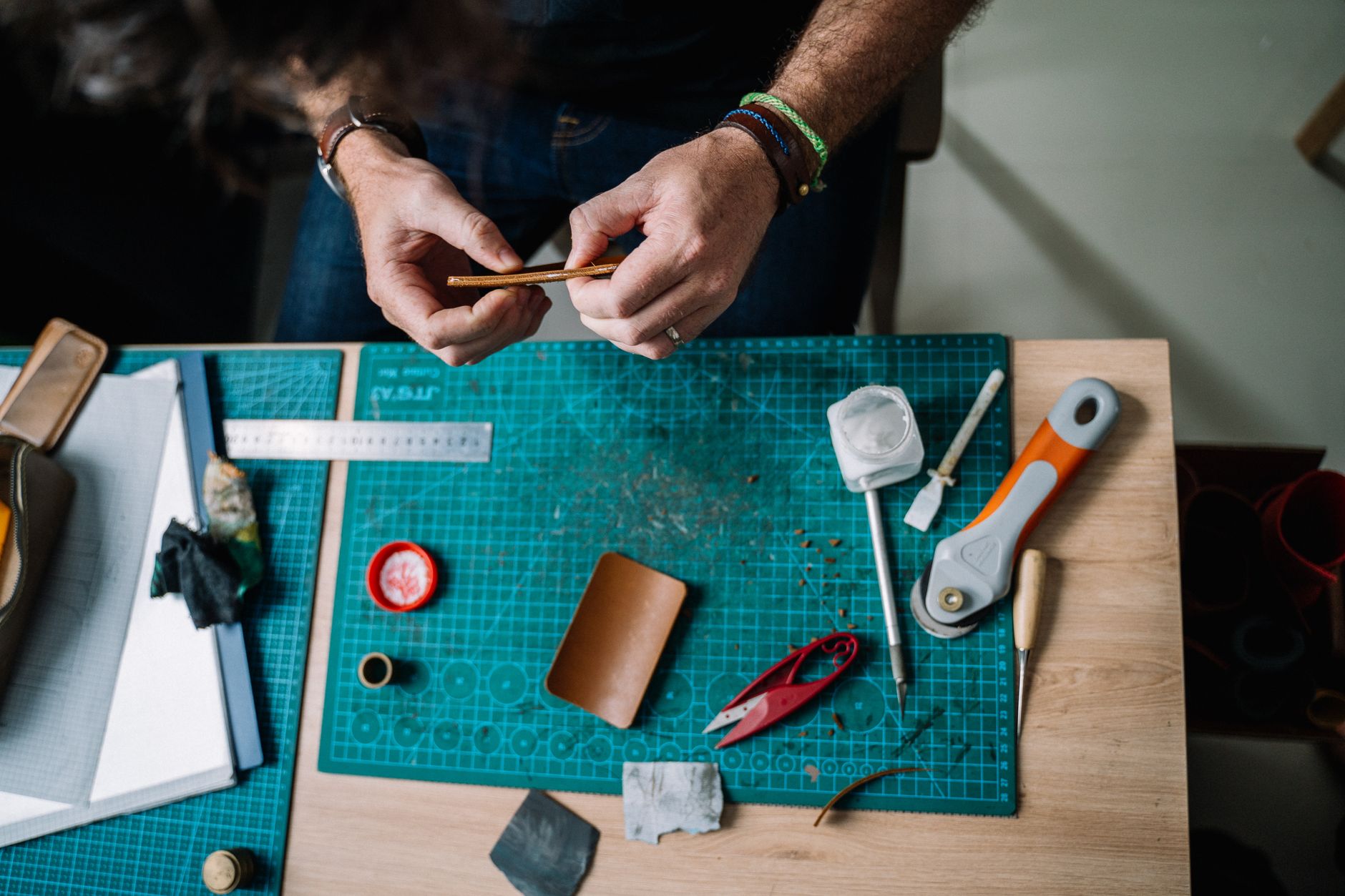
Cross the Ponte Vecchio or the Ponte alla Carraia to the south bank of the Arno and you enter the Oltrarno — literally “beyond the Arno” — the historical artisan quarter of Florence. Here, the narrow streets of Santo Spirito and San Frediano are lined with traditional craft workshops. Goldsmiths, bookbinders, frame gilders, stone inlayers, furniture restorers, ceramicists, weavers, paper marblers, milliners, bronze casters, stringed-instrument makers — hundreds of them still work here, often in the same workshop for generations.
Streets Worth Wandering
- Via Maggio — the antique dealers’ row. Dozens of serious antique shops selling Renaissance, Baroque, and 19th-century Italian furniture, paintings, and objects. Expect museum-quality inventory.
- Via dei Serragli — leather workshops, book-binders, and frame-makers. A working artisan street, not a tourist strip.
- Via di Santo Spirito and Borgo San Jacopo — goldsmiths and silversmiths in direct lineage from Ponte Vecchio, often with identical craftsmanship at lower prices because they are not on the bridge.
- Via Toscanella and Via Sguazza — tiny side streets full of stone carvers, gilders, and restorers. Wander slowly.
- Piazza Santo Spirito — the neighbourhood’s social heart, with its own Tuesday morning market (antique-bricolage) and second-Sunday market (organic produce and artisans).
Workshops Open to Visitors
Several Oltrarno workshops actively welcome visitors and sell directly. A small, evergreen selection of highlights:
- Alberto Cozzi (Via del Parione 35r) — third-generation marbled-paper and bookbinding workshop; demonstrations by appointment.
- Castorina (Via Santo Spirito 15/r) — picture framers and wood carvers since 1895. Their gilded frames and carved decorative objects are museum-grade.
- Scarpelli Mosaici (Via Ricasoli 59r — technically north of the river but part of the same tradition) — pietra-dura (hardstone mosaic) workshop, opened by Renzo Scarpelli in 1972. Three generations still cutting and setting stones by hand.
The Artex Artigianato Artistico consortium publishes a free map of Florence’s certified artisan workshops — ask at any tourist information point, or pick one up at the Palazzo Pitti visitor centre. For serious buyers, this map is the single most useful document for the city.
Florentine Paper, Stationery & Bookbinding
Florence is the European home of marbled paper (carta marmorizzata), a decorative technique in which pigments are floated on a bath of thickened water, patterned with a comb, and transferred to paper with a single dip. The technique came from Persia and the Ottoman world in the 16th century; Florentine craftsmen refined it and, by the 17th century, marbled paper was being used across Europe for book endpapers, wrapping, and decorative objects. Florence’s paper-marbling tradition survived industrialisation because of the city’s robust book-binding industry and continues today in several excellent workshops.
What to Buy in Florentine Paper
- Sheets of marbled paper (€8–25 each) for framing or lining drawers.
- Marbled-paper notebooks and journals — the classic Florentine souvenir. €20–80 depending on size and binding.
- Pencil cups, pen boxes, photo albums, agenda covers, desk blotters — marbled paper applied to board or leather-and-board constructions.
- Letterpress stationery — many Florentine workshops still operate 19th-century presses and will print custom stationery during your stay.
- Hand-bound blank books — leather spines, marbled boards; some with paper made on-site.
Where to Go
- Il Papiro (multiple locations; classic Via Cavour 49 and Piazza del Duomo 24r) — the most recognised name; several shops are within two blocks of the Duomo. Wide range at all price points.
- Giulio Giannini & Figlio (Via dei Velluti 1r, next to Piazza Pitti) — the family firm grew from the workshop Pietro Giannini opened in 1856, and it remains one of the names to know for Florentine marbled paper. Demos by appointment.
- Alberto Cozzi (see above) — smaller, more hands-on, closer to traditional bookbinding.
- Il Torchio (Via dei Bardi 17) — Erin Ciulla’s bookbinding workshop, marbled paper and hand-bound books on the south bank.
The Mall & Designer Outlets

If your Florence shopping priority is designer pieces at the lowest possible prices, the outlets around Florence are the place to look. Past-season collections from the big Italian houses are sold there at discounted prices.
The Mall Firenze (Leccio, Reggello)
The Mall Firenze is a luxury outlet village in Leccio, about 35 km south-east of Florence, with dozens of designer boutiques from the big fashion houses. Hours are typically 10am to 7pm daily.
Getting there:
- The Mall Shuttle Bus, run by Busitalia, leaves from Piazzale Montelungo, near the Fortezza da Basso, several times a day. Adult fares are €9.50 single or €18 for a same-day return; times are on The Mall’s visitor page. Book ahead in peak season.
- Car — easiest if you have one, with free parking at the outlet.
- Taxi or private driver — about €90 each way from the city.
Other Outlets Near Florence
- Space Outlet (Prada) — a separate Prada outlet at Levanella, near Montevarchi.
- Barberino Designer Outlet — at Barberino di Mugello, north of Florence off the A1 towards Bologna (exit Barberino). More mid-market than luxury (Coach, Michael Kors, Ralph Lauren, Nike, Adidas) but extensive and well-discounted.
- Fashion Valley (Dolce & Gabbana Outlet) — a smaller, specialised outlet.
Outlet Shopping Strategy
- Bring a large, almost-empty suitcase. The most common regret is under-packing outbound.
- Go mid-week if you can — weekends are packed, especially in July and August.
- Check each brand’s returns policy before buying. Sale items are often final sale with no returns.
- Ask about VAT refund at each store. Get the VAT refund forms stamped on departure from the EU.
- Sizes run Italian; bring a conversion chart or the Gucci size-guide app.
Other Florence Markets Worth Visiting
Beyond San Lorenzo, Florence hosts a rotating calendar of markets worth seeking out:
- Mercato Nuovo (Loggia del Porcellino) — the small covered market near Ponte Vecchio, named for the bronze boar (il porcellino) whose snout you rub for luck and return to Florence. Similar goods to San Lorenzo but smaller, more concentrated. Open daily 9am–6:30pm, except 25–26 December and 1 January.
- Mercato di Sant’Ambrogio — Florentine’s favourite food market; almost no tourists. Fresh produce, meat, fish, wine, and specialty grocers. Monday–Saturday mornings. Piazza Lorenzo Ghiberti.
- Mercato delle Cascine — Florence’s big Tuesday morning market in Cascine Park, its stalls following one another for kilometres along the Arno: clothes, fruit and vegetables, and plenty more besides.
- Mercato delle Pulci (Piazza Annigoni) — the Florentine flea market, which moved here from Piazza dei Ciompi. Daily; larger on the last Sunday of each month. Vintage, antiques, curios.
- Fierucola in Piazza Santo Spirito — second Sunday of the month. Organic produce, artisans, handmade soaps, small-batch cheesemakers.
Souvenirs Worth Bringing Home
The best Florence souvenirs are specific — things Florence is known for that travel well and tell a story. Skip the Eiffel-Tower-style Duomo magnets (all made in Asia) and think in these categories:
Food & Drink
- DOP Tuscan extra-virgin olive oil — single-estate bottles from a Chianti producer are magnitudes better than supermarket Italian oil. Expect €15–35 per 500ml for a serious oil.
- Chianti Classico DOCG or Brunello di Montalcino — from a good wine shop, not a tourist gift store.
- Cantuccini almond biscuits and a bottle of Vin Santo — a classic Tuscan dessert pairing; compact and airport-safe if sealed.
- Truffle products — preserved truffle paste, truffle honey, truffle olive oil. Truffle salt is the most travel-friendly.
- Tuscan pecorino cheese — aged versions travel well; vacuum-sealed by any Mercato Centrale vendor.
- Aceto balsamico tradizionale — true aged balsamic (not “balsamic vinegar of Modena”) in its distinctive squared bottle. €40–100 for a 100ml bottle of 12-year; worth it.
Craft & Beauty
- Santa Maria Novella pharmacy products — rose water, pot-pourri, almond paste (for hands), and the famous Acqua di Santa Maria Novella cologne (supposedly made for Catherine de’ Medici).
- Florentine marbled-paper notebooks and journals.
- Small leather goods — card cases, wallets, passport covers.
- Italian hand-blown glass — not quite Murano territory, but Florence has excellent small studios.
- Ceramics from Montelupo Fiorentino — the classic Tuscan majolica pottery, produced just outside the city since the 14th century.
- Bottega of silk — Antico Setificio Fiorentino (Via L. Bartolini 4) weaves silk on 18th-century looms. Not cheap, but a small silk scarf or fabric remnant is a real heirloom purchase.
Books & Prints
- Antique prints and engravings — map prints of Florence sell beautifully and travel flat.
- Art-book publishers Giunti and Mandragora produce the best illustrated books on Tuscan art.
- Second-hand and antiquarian booksellers in the Oltrarno sell 18th- and 19th-century volumes at surprisingly reasonable prices.
Tuscan Wine, Olive Oil & Gourmet
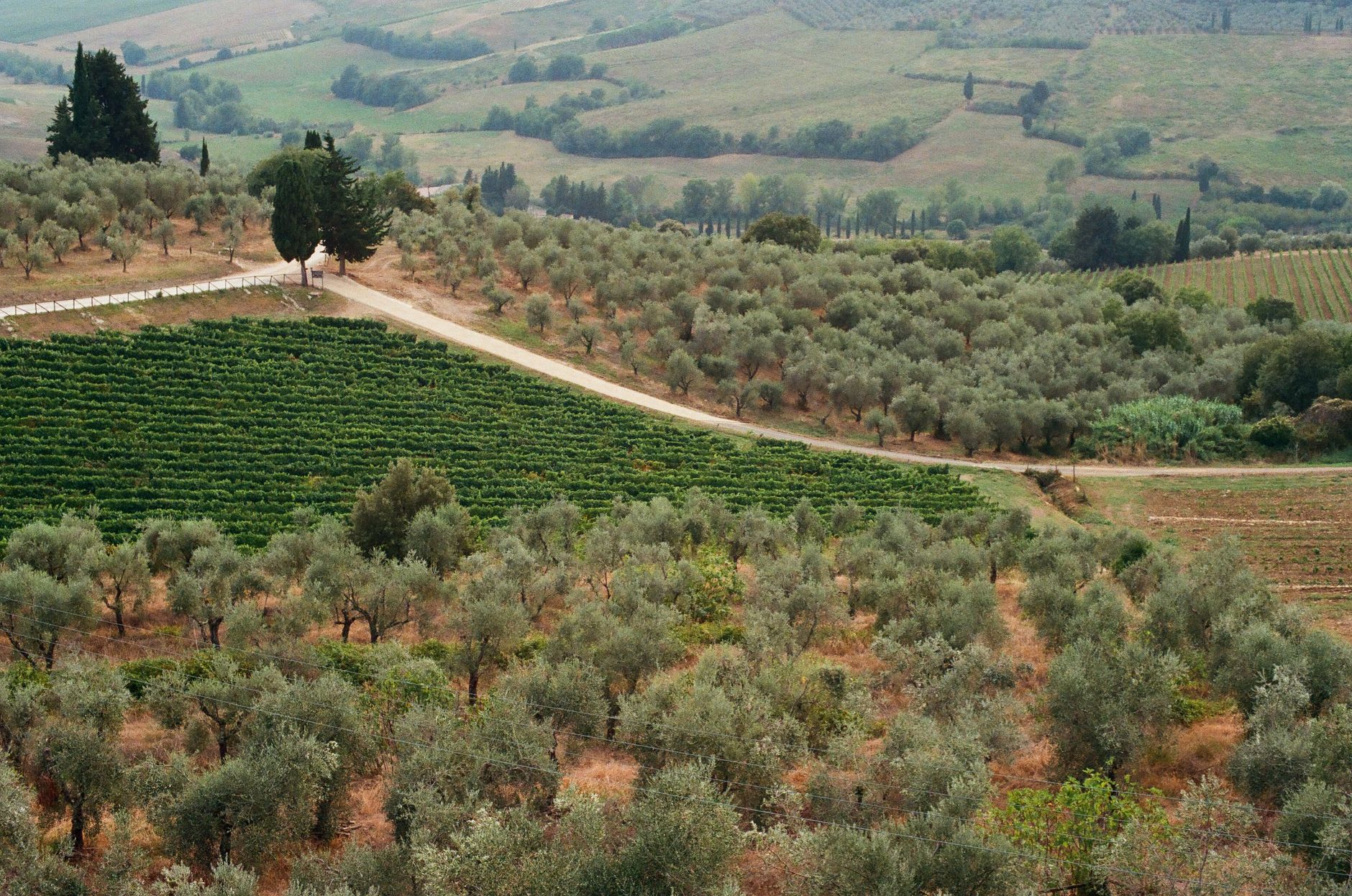
Where to Buy Wine
Do not buy wine from a souvenir shop or from a tourist-priced enoteca on the main drag. Buy from a proper wine shop. The best in the centre:
- Enoteca Alessi (Via delle Oche 27/29) — serious wine list and a large cellar focused on Tuscany. Shipping available.
- Enoteca Obsequium (Borgo San Jacopo 17/39) — in the Oltrarno; ask the shop about packing bottles for your flight.
- Signorvino (Via dei Bardi 46r) — mid-range chain, good for gift packaging and quick purchases with English-speaking staff.
- Mercato Centrale vendors — several wine specialists inside; good for picking up a bottle to take to dinner.
What to Bring Home
- Chianti Classico DOCG (the one with the black rooster seal — Gallo Nero). €15–40 for a very good bottle; €50–80 for top estates.
- Brunello di Montalcino DOCG — the king of Tuscan reds. €40–150 for a quality bottle; buys that age beautifully.
- Super Tuscans — IGT wines like Sassicaia, Tignanello, Ornellaia. High prices; expect €80–400 for current-vintage bottles.
- Vernaccia di San Gimignano — the one serious Tuscan white, from the hill town about an hour south.
- Vin Santo — sweet, aged dessert wine; €20–60 for a good 500ml bottle.
Shipping vs. Flying With Wine
Within the EU, wine bought for your own use generally carries no further VAT or excise duty when you take it home; the indicative guideline is 90 litres, of which no more than 60 litres sparkling, and your airline’s baggage limits apply separately. Non-EU passengers should check their own country’s duty-free allowance (US: 1 litre; Canada 1.5 litres; UK 18 litres; Australia 2.25 litres). These are allowances, not import limits: bring more and you have to declare it and may pay tax, so larger quantities are often better shipped through a specialist. Wine shops in Florence can arrange international shipping for about €60–120 per six-bottle case depending on destination — worthwhile for collectors.
Olive Oil
Real Tuscan extra-virgin olive oil is peppery, grassy, and sharp — a fresh bottle from Laudemio Frescobaldi, Fontodi, or Capezzana is a different product from supermarket “Italian” oil, which is usually a blend of oils from multiple Mediterranean countries. Look for:
- A harvest date on the bottle — olive oil is best used within about a year of the harvest.
- DOP Chianti Classico or IGP Toscano designations — legal geographic guarantees.
- Dark glass bottles — oil oxidises in light.
- The name of a specific estate, not a supermarket brand.
Balsamic Vinegar
Tuscany’s official balsamic culture is Modenese rather than Florentine (true balsamic comes from Modena and Reggio Emilia in Emilia-Romagna), but Florence’s specialist shops stock the best of it. Two categories matter:
- Aceto Balsamico Tradizionale DOP — the true, aged product. €40–300 depending on age. Extraordinary with aged parmesan, strawberries, or plain vanilla gelato.
- Aceto Balsamico di Modena IGP — the everyday version, usually a year or two old, more acidic. €10–25 for a litre. Fine for salads.
Practical Shopping Tips: Tax Refund, Bargaining, Hours
VAT Tax-Free Shopping for Non-EU Visitors
If you live outside the EU, you can claim back Italian VAT on shop purchases when a single invoice is over €70, subject to the export conditions and any processing fees. How it works:
- At checkout, ask the shop for a tax-free form. Have your passport ready.
- Keep the goods unused, with tags attached, until you leave the EU. Pack them in an accessible part of your luggage.
- Before checking in at your final EU airport, take the goods and forms to customs for a stamp. For Florence travellers departing from a non-final airport (you transit through Frankfurt, Paris, or Amsterdam), customs stamps must happen at your final EU airport.
- After the stamp, drop the forms in the dedicated collection box or redeem at a refund counter (Global Blue, Planet) for cash or credit back to your card.
- Expect less than the full VAT back: what you receive depends on the shop, the refund company and its fees.
Shops at airports often operate a “tax-free instant refund at point of sale” scheme; the retailer advances the refund and holds your credit card as security until the customs-stamped form returns. Works smoothly if you are organised.
Opening Hours
Italian shop hours are increasingly variable but the traditional pattern persists in much of Florence:
- Monday: many independent shops open only in the afternoon, and some stay shut all day.
- Tuesday–Saturday: independent shops usually open in the morning, close for a long lunch and reopen in the afternoon until the early evening. Lunch closure is widespread outside the immediate historic centre.
- Sunday: most shops on Via de’ Tornabuoni, Via Calzaiuoli, and around the Duomo are open. The Oltrarno is quieter on Sundays. The Mall outlet opens 7 days.
- August: many artisan workshops close for part of the month for ferie (summer holidays). Plan accordingly.
Payment & Pricing
- Cards are accepted almost universally in boutiques; market stalls often prefer cash. ATMs (bancomat) are plentiful in the centre.
- Bargaining is expected at open-air market stalls, not in boutiques. Trying to negotiate at a luxury flagship is genuinely rude.
- Receipts (scontrino fiscale) are legally required — keep them. Customs officers may spot-check against your VAT refund paperwork.
- Prices are typically 10–15% higher in the immediate Ponte Vecchio / Duomo tourist bubble than 10 minutes’ walk away in less-trafficked streets.
Packaging and Shipping
Many boutiques will professionally box, wrap, and ship your purchase internationally. For leather jackets, bulky ceramics, framed prints, and wine cases, this is often a better option than trying to fit everything into a carry-on. Shipping typically runs €40–150 depending on weight and destination, and the shop handles customs paperwork. Ask how long delivery takes to your country before you pay.
Frequently Asked Questions
Is Florence good for shopping?
Florence is among the best cities in Europe for shopping, particularly for hand-made leather goods, gold jewellery, marbled paper, artisan ceramics, and Tuscan food and wine. It is also strong for Italian luxury fashion (Gucci, Prada, Ferragamo, Pucci, and others have flagship stores here), and the designer outlets outside the city sell luxury labels at reduced prices. Florence is not the best city for cutting-edge streetwear (try Milan) or ultra-budget shopping (try larger Italian cities), but for quality craft and Italian heritage goods, it is unrivalled.
What is Florence famous for shopping?
Florence is most famous for leather — the city has been a centre of Italian leather craft since the 13th century — along with gold jewellery on Ponte Vecchio, marbled paper, Florentine silk, and artisan workshops in the Oltrarno district. The city is also the flagship home of Gucci, Ferragamo, Pucci, and Roberto Cavalli, and hosts luxury shopping on Via de’ Tornabuoni comparable to Milan’s Via Monte Napoleone or Paris’s Avenue Montaigne.
Where is the best place to buy leather in Florence?
For serious purchases, buy from established workshops and shops rather than market stalls: Scuola del Cuoio (the Leather School inside Santa Croce monastery), Il Bisonte, Madova (gloves), Benheart, and Cellerini are all long-standing names. For budget-conscious buyers who know what to look for, the San Lorenzo Market offers decent leather at negotiable prices — but quality varies widely, so inspect carefully and ensure the piece carries proper Italian origin marks. The Oltrarno district (Via dei Serragli, Borgo San Jacopo) houses many smaller artisan workshops where you can buy directly from the maker.
How much should I spend on leather in Florence?
A quality vegetable-tanned Florentine handbag from a legitimate workshop starts around €200 and typically runs €300–600 for mid-range pieces, €700–1,500 for high-end. A proper leather jacket costs €400–900 artisanal, €1,200+ for designer labels. Belts are €60–120; wallets and small leather goods €60–180; leather gloves €80–150. Bags priced below €80 or jackets below €250 are almost certainly lower-grade leather or cheaper imports with Florentine labels.
Is leather cheaper in Florence than at home?
Typically yes, for equivalent quality. A hand-stitched vegetable-tanned bag that retails at €500–700 in a European or North American boutique often sells for €200–350 direct from a Florentine workshop. The gap narrows at the highest end — a Gucci or Ferragamo bag in Florence costs roughly the same as anywhere else — but grows with artisan pieces, which are typically bought from small workshops that never distribute outside Italy. Non-EU visitors can also reclaim VAT on purchases over €70, which improves the deal further, though the amount that comes back depends on the shop, the refund company and its fees.
What should I buy in Florence as a souvenir?
The best Florence souvenirs are things the city is specifically known for: a leather wallet or belt, a marbled-paper notebook, a bottle of single-estate Tuscan olive oil or Chianti Classico, Santa Maria Novella pharmacy products (the potpourri or rose water are classics), a small piece of 18-karat Italian gold from a Ponte Vecchio goldsmith, or a jar of aged balsamic vinegar. Skip generic magnets and Duomo keychains — they are made in Asia and have nothing to do with Florentine craft.
Is the San Lorenzo Market worth visiting?
Yes, but with realistic expectations. The San Lorenzo Market is aimed squarely at tourists and quality is highly variable. It is the easiest place in the city to pick up an affordable leather bag, belt, or small gift; it is also the easiest place to be overcharged for mediocre goods. Go for the atmosphere and price-check — then consider a workshop purchase for anything you want to last. Combine the market visit with the adjacent Mercato Centrale food hall for lunch.
Are Florence’s outlet malls worth the trip?
For designer-label buyers, yes — The Mall Firenze at Leccio houses dozens of luxury boutiques selling past-season stock at discounted prices. Past-season Gucci, Prada, Bottega Veneta, and Saint Laurent can be found at prices not available anywhere else. Budget half a day for the round trip including shopping time, bring an empty suitcase, and visit mid-week if you can — weekends are extremely crowded, especially in summer.
When are the sales in Florence?
Italy has two sale periods a year, with the dates set by each region. In Tuscany the 2026 winter saldi began on 3 January and the summer saldi on 4 July, each set to run for 60 days; check the Regione Toscana announcement for the next season. Outside these periods, individual boutiques occasionally discount but the major sales are those two. Outlet malls operate year-round at their own reduced pricing.
Can I bargain in Florence?
Bargaining is expected at outdoor market stalls (San Lorenzo, Mercato Nuovo, flea markets) and is acceptable at most small non-branded shops if you are buying multiple items or paying cash. It is not appropriate at luxury boutiques, department stores, or chain stores. As a rule of thumb, expect a modest discount on a market stall’s first asking price, and a better one if you buy several items. Always bargain in good humour — Italians value the exchange itself as much as the final price.
How do I claim the VAT refund?
Non-EU residents can claim back Italian VAT when a single shop invoice is over €70. At the shop, request a tax-free form and show your passport. Keep goods unused with tags. Before leaving the EU (at the final EU airport, not any intermediate transit), present goods and forms at customs for a stamp. Redeem the stamped form at a refund counter (Global Blue, Planet) for cash or card credit. Fees come off first, so the sum you get back depends on the refund company. Large purchases justify the paperwork; small ones often do not, because the processing fees are fixed.
Where do locals shop in Florence?
Florentine residents shop at the Mercato di Sant’Ambrogio for food, at the Mercato delle Cascine on Tuesday mornings for general goods, at neighbourhood alimentari in their own sestieri, and at the Coop and Esselunga supermarkets for everyday groceries. For clothes, locals patronise smaller boutiques in the Oltrarno and streets like Borgo degli Albizi and Via Sant’Antonino, where prices are closer to Italian rather than tourist levels. The Mall and Barberino outlets are also heavily frequented by locals at sale times.