This article contains advertising. Booking links on this site can be turned into paid links automatically by our partner Travelpayouts: if you book through one, we earn a commission from the provider, at no extra cost to you. It never affects what we recommend. Affiliate disclosure
Ponte Vecchio is Florence’s best-known place to buy jewelry — a medieval bridge lined with goldsmiths and jewelers, a tradition that dates to 1593, when Grand Duke Ferdinand I evicted the butchers and replaced them with goldsmiths. The bridge specialises in 18-karat Italian gold (75% pure, vs US 14-karat at 58.3% pure), with prices from €200 for simple rings to €100,000+ for serious diamond pieces. This 2026 guide covers the bridge’s jewelry shopping — the history, the major shops, what to look for, gold quality marks, prices to expect, and how to navigate Italy’s most prestigious goldsmith district.
Ponte Vecchio’s goldsmiths are covered in context in our Florence shopping guide. If a bracelet is beyond budget, our Florence souvenirs guide has cheaper alternatives, and the bridge itself features on most Florence walking tours.

Why Jewelry on Ponte Vecchio?
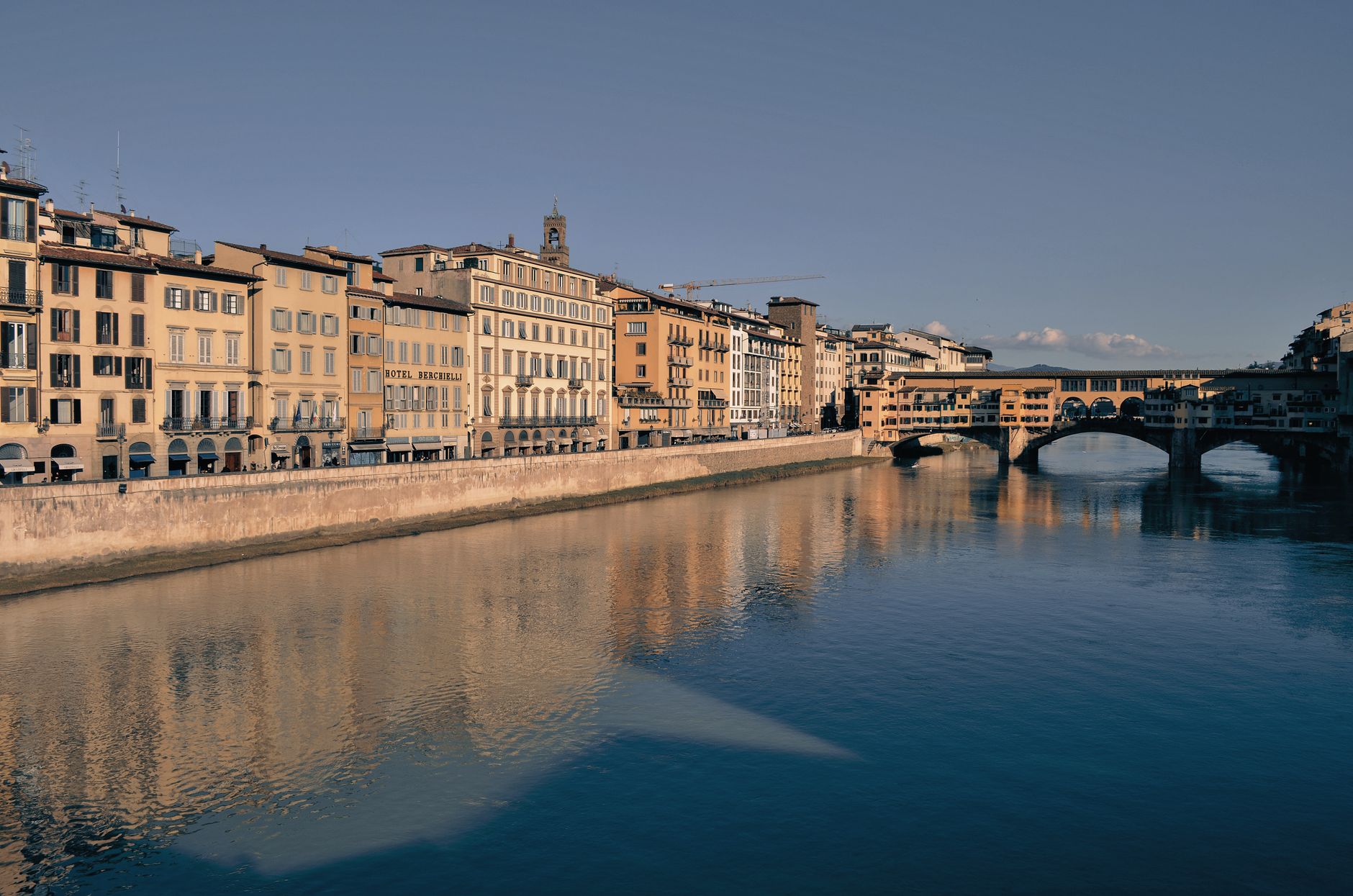
The present Ponte Vecchio was built in 1345, after the 1333 flood swept away its medieval predecessor, with shops along both sides whose rents brought income to the city. The original tenants were butchers, fishmongers, and tanners, whose unpleasant smells offended the Medici Grand Dukes who used the bridge to commute between Palazzo Pitti and the Uffizi via the Vasari Corridor running over the shops.
In 1593, Grand Duke Ferdinand I issued a decree evicting all butcher and tanner shops and explicitly limiting Ponte Vecchio commerce to gold and silver work. More than 430 years later, Ponte Vecchio is still known for its goldsmiths and jewelers.
The Ponte Vecchio bridge survived World War II — the only Florence bridge spared by retreating Germans in August 1944 (reportedly on Hitler’s personal order, though this is debated). The shops have been altered repeatedly over the centuries: owners expanded them after the 1495 sale, and Vasari’s corridor transformed the look of the bridge in 1565.
The Major Ponte Vecchio Jewelers
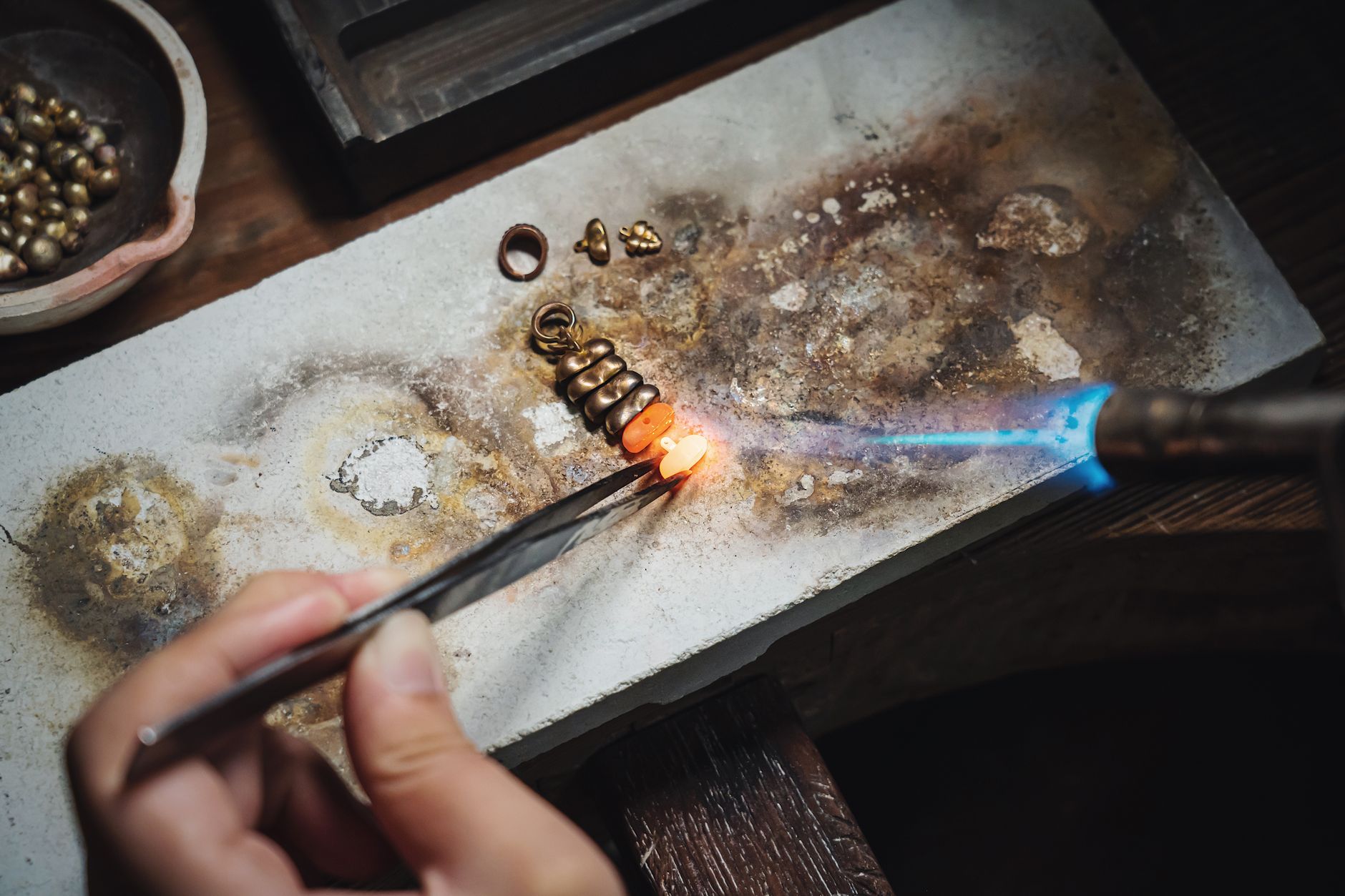
- Fratelli Piccini (Ponte Vecchio 23r) — family shop since 1903, with its own goldsmith atelier. Premium pieces, custom commissions.
- Dante Cardini — goldsmith tradition dating to 1888, now run by the fifth generation of the family
- Cassetti Gioielli (Ponte Vecchio 33r/52r) — multi-generational family business with two shops on the bridge
- Faraone — Italian high-jewelry house
- Boutiques del Ponte Vecchio — an independent online boutique that works with workshops on the bridge
Shops range from artisan jewelers to international brands, each focused on its own style and price range. Window-shopping the entire bridge takes 30–45 minutes; serious shopping at one or two shops with consultation takes 1–2 hours.
Italian 18-Karat Gold
The Italian gold standard is 18-karat (75% pure gold, 25% other metals). This contrasts with the US 14-karat standard (58.3% pure) and the UK 9-karat standard (37.5% pure). Italian 18-karat gold:
- Stamped “750” — the European hallmark for 75% pure gold (18-karat)
- Richer yellow color — the higher gold content shows visibly
- Softer than lower-karat gold — more easily scratched, but more workable for fine detail
- More valuable per gram — about 28% more gold content than 14-karat at equivalent weight
Other karat options at Ponte Vecchio:
- 14-karat (stamped “585”) — for travelers used to US standard, available at some shops
- 22-karat (stamped “917”) — premium pure gold, less common
- White gold (Italian style) — 18-karat gold with palladium/silver alloy, often coated with rhodium
- Rose gold — 18-karat gold with copper alloy
What to Buy at Ponte Vecchio
- 18-karat gold rings — €200–500 simple, €500–2,000 with stones
- Gold necklaces and chains — €150–400 simple, €300–1,500 with pendants
- Gold earrings — €100–800
- Gold bracelets — €300–1,500 simple, €500–4,000 with diamonds
- Italian-style cameos — engraved shell or stone with profile portraits
- Antique jewelry — Renaissance-style and Liberty (Art Nouveau) reproductions
- Custom designs — some jewelers, Fratelli Piccini among them, offer bespoke work; ask the atelier for a written production schedule
Price Ranges by Category
| Item | Entry-Level | Mid-Range | Premium |
|---|---|---|---|
| Gold ring (simple band) | €200–400 | €500–1,500 | €1,500–10,000+ |
| Gold ring (with stones) | €500–1,500 | €1,500–8,000 | €8,000–50,000+ |
| Gold pendant | €150–400 | €500–2,000 | €2,000–15,000+ |
| Gold necklace | €300–1,000 | €1,000–5,000 | €5,000–30,000+ |
| Earrings | €100–500 | €500–3,000 | €3,000–20,000+ |
| Bracelet | €300–1,200 | €1,200–8,000 | €8,000–50,000+ |
Diamond pieces add significant cost, and the price depends heavily on stone quality, setting and seller. Larger center stones can push a piece well beyond the ranges above.
Bargaining and Discounts
Bargaining at Ponte Vecchio is different from outdoor markets — any discount is the seller’s call, and it is worth asking only on substantial purchases:
- Under €500: Don’t bargain. Pay the asking price.
- €500–2,000: Polite request for “uno sconto” (a discount) might earn 5% off, especially if paying cash
- €2,000+: 5–10% discount possible for cash; some shops offer 10–15% during sales periods
- Multi-piece purchases: Buying 2+ pieces at one shop is a fair moment to ask whether a combined discount is possible
- Sales periods (early January, July–August): Some shops mark down previous-season pieces
Don’t aggressive-bargain at Ponte Vecchio — these are family-run premium shops, not market stalls. Polite negotiation is acceptable; haggling is not.
Verifying Quality
Italian gold jewelry is regulated and stamped:
- Karat hallmark (750 = 18kt, 585 = 14kt, 917 = 22kt)
- Maker’s mark — small stamp identifying the producing workshop
- Italian assayer’s mark — diamond-shaped stamp with Italian state ID number
All reputable Ponte Vecchio shops sell only fully-stamped genuine Italian gold. Counterfeit-stamped jewelry is rare on the bridge (the consortium polices its members) but exists at side-street shops in tourist areas. Always verify the stamps before purchase.
Diamonds and gemstones are typically certified — ask for the GIA (or equivalent) certificate for any diamond purchase over €1,000. The certificate confirms the carat, clarity, color and cut grades.
VAT Refund
Eligible non-EU residents can claim VAT back on purchases over €70 per invoice, less the refund agency’s fees, so ask the shop what you will actually get back. Most Ponte Vecchio shops participate in Global Blue or Premier Tax Free:
- Ask for the tax-free form at purchase (“Mi può dare il modulo Tax Free?”)
- Bring your passport when shopping (mandatory for the form)
- Get the form stamped at customs at the airport when leaving the EU
- Submit at the airport Global Blue desk for refund (cash or card credit)
For a €2,000 ring, the refund saves approximately €240 after Global Blue fees. Worth processing for any purchase over €500.
Custom Commissions
Some Ponte Vecchio jewelers accept custom orders; Fratelli Piccini, for one, offers a bespoke service:
- Initial consultation — bring sketches, photos, or design references; the goldsmith provides a price quote
- Design phase — preliminary drawings or wax models for approval
- Production — depends on complexity; ask for a written schedule before you commit
- Pickup or international shipping — pieces are insured for shipping
- Custom prices — typically 20–40% premium over equivalent pre-made pieces
Engagement and wedding rings are common custom orders — the bridge has a reputation for romantic-occasion jewelry. Plan 5+ days in Florence for the consultation if you want to fit and approve before leaving.
Best Time to Shop
- Weekday mornings: Check each shop’s opening hours, and arrive early if you prefer a quieter browse
- Weekday afternoons (15:00–18:00): Less crowded than midday
- Weekday evenings: Shops set their own closing times, so check before you plan a consultation
- Weekends: Packed, more difficult to consult quietly
- Sundays: Most shops closed; some open in summer
- Italian sales periods (early January, July–August): Best discounts of the year
For serious shopping, an early visit is the easier way to get a quiet consultation.
Insider Tips
Tip 1: Browse the entire bridge before committing. The 40 shops have distinct styles — some classic, some modern, some contemporary. Walking the bridge twice helps clarify your taste.
Tip 2: If commissioning custom work, allow 5+ days in Florence for the initial consultation, design approval, and fitting. Final piece can be shipped if production extends beyond your trip.
Tip 3: Fratelli Piccini keeps a working atelier and Dante Cardini has a historic upstairs workshop; ask whether you can see the craft, even if you are not buying.
Tip 4: Always check stamp marks (750 for 18-karat, maker’s stamp, Italian assayer’s mark) before purchase. Reputable shops display these openly.
Tip 5: Diamond purchases over €1,000 should include a GIA or equivalent certificate. Ask before paying.
Tip 6: Off-bridge alternatives include Buccellati (Via dei Tornabuoni 93), Bulgari, and smaller goldsmiths in nearby streets — often 5–15% cheaper than Ponte Vecchio for equivalent pieces, with less prestigious address.
Tip 7: Italian wedding/engagement traditions: matching rings (fede sarda, vera, vera classica) are popular. Many bridges shops specialise in these.
Tip 8: Bring measurements: ring sizes (US/UK conversion to Italian sizing), neck length for necklaces, wrist measurements for bracelets. Italian sizing is in millimeters; US/UK in numbers.
What to Watch Out For
- Counterfeit-stamped pieces at side-street shops near the bridge (not on the bridge itself)
- “Antique” pieces at suspicious prices — most are reproductions or restorations
- Unverified diamonds sold without certification on pieces over €1,000
- Pickpockets on the busy bridge — especially during peak crowd hours
- Aggressive sales tactics at some smaller shops — walk away if pressured
- “Today only” or “this is the only piece” tactics — Florence has many jewelry shops; if one piece is sold, another similar will be available
Ponte Vecchio vs Other Florence Jewelry Districts
- Ponte Vecchio — historic prestige, premium prices, the iconic shopping experience
- Via dei Tornabuoni — international luxury (Bulgari, Cartier, Buccellati). Branded designer jewelry.
- Via dei Calzaiuoli — mid-range jewelry shops with broader selection
- Borgo Santi Apostoli + Borgo Pinti — smaller goldsmiths with often better prices than Ponte Vecchio
- San Lorenzo Market stalls — costume jewelry, plated pieces, low-cost reproductions (verify stamps)
For premium serious purchases at the highest prestige location, Ponte Vecchio remains the standard. For comparable quality at slightly lower prices, the off-bridge goldsmiths along Via dei Calzaiuoli and Borgo Santi Apostoli are worth visiting.
Ponte Vecchio Jewelry FAQ
Why is Ponte Vecchio famous for jewelry?
Grand Duke Ferdinand I issued a 1593 decree evicting all butcher and tanner shops on Ponte Vecchio (whose smells offended the Medici dukes commuting via the Vasari Corridor above) and reserving the bridge for goldsmiths and silversmiths only. The decree has held for 430+ years.
What does Ponte Vecchio jewelry cost?
Simple 18-karat gold rings start at €200–400; gold pendants €150–400; bracelets €300–1,200. Diamond pieces range €1,000–50,000+ depending on stones. Custom commissions add 20–40% premium over equivalent pre-made pieces.
Why is Italian gold different?
Italian gold standard is 18-karat (75% pure, stamped “750”), vs US 14-karat (58.3% pure) and UK 9-karat (37.5%). Italian 18kt gold is richer-yellow, softer (better for fine detail), more valuable per gram, and dramatically more “gold” in pure content.
Should I bargain at Ponte Vecchio?
Lightly. A discount on a substantial purchase is sometimes possible, so ask the individual jeweler. Don’t aggressive-bargain — these are family-run premium shops. Italian sales periods (January, July–August) are the time to look for reductions on previous-season pieces.
How do I verify gold quality?
Look for stamps: karat hallmark (750 for 18kt), maker’s mark, and Italian assayer’s mark (diamond shape). All reputable Ponte Vecchio shops sell stamped genuine Italian gold; counterfeit-stamped pieces are rare on the bridge but exist at side-street shops.
Can I claim VAT refund?
Yes for eligible non-EU residents on purchases over €70 per invoice. The refund agency deducts its fees, so ask the shop what you will actually get back. Get the tax-free form at purchase, stamp at airport customs.
Can I commission custom jewelry?
Yes — some Ponte Vecchio shops accept custom orders, and Fratelli Piccini offers a bespoke service. Ask the atelier for a written production schedule after design approval. Allow 5+ days in Florence for consultation, design approval, and fitting. Custom prices typically 20–40% premium over pre-made pieces.
Which shops are best?
The historic family-run shops: Fratelli Piccini (1903), Dante Cardini (1888), Cassetti Gioielli. Browse the entire bridge to compare styles before committing — the shops have distinct aesthetics from classic to contemporary.
Ponte Vecchio jewelry shopping rewards travelers willing to spend serious money for the prestige location and Italian craftsmanship. The bridge has carried the goldsmithing tradition since 1593, and the historic family-run jewelers (Fratelli Piccini, Dante Cardini, Cassetti) keep that craft alive. Browse the entire bridge before committing, verify quality stamps, claim VAT refund on purchases over €70 per invoice, and consider custom commissions if your trip allows 5+ days for consultation. The pieces bought here have provenance — Florence’s most iconic location for Italian 18-karat gold.