This article contains advertising. Booking links on this site can be turned into paid links automatically by our partner Travelpayouts: if you book through one, we earn a commission from the provider, at no extra cost to you. It never affects what we recommend. Affiliate disclosure
Estate Fiorentina: Florence’s Summer Events Season
The best of the Florence summer events programme is a deckchair in the Uffizi courtyard at ten at night, watching a film for nothing while the Vasari colonnade goes dark above you. That is not a special occasion — it runs most nights for six weeks. Florence in July and August is punishingly hot and half-empty of locals, and the city’s answer is to move everything outdoors after sunset and charge almost nothing for it.
The summer half of the Florence festivals and events calendar — and where a lot of the city’s live music moves to once the heat arrives.
When the summer programme closes on 30 September, the harvest calendar has already started outside the city. Our guide to Tuscan wine festivals picks the season up from there.
The summer programme opens on 1 June and the city’s own festival falls three weeks later. Our guide to Florence in June has the 24 June running order hour by hour, and the one mistake almost everyone makes with the fireworks.
The programme is at its fullest in July — films in the Uffizi courtyard until the 26th, concerts in the Roman theatre at Fiesole, and Musart out at the Medici park. Our guide to Florence in July sorts out what is free and what needs booking.
The programme thins in August but does not stop: Estate Fiorentina runs to the end of September and the Fiesole theatre shows films from its stone tiers. Our guide to Florence in August has what is still on, and the free feast on the 10th.
What Estate Fiorentina Actually Is
Estate Fiorentina is the city council’s umbrella for everything that happens outdoors between 1 June and 30 September. It is not a festival with a headline act and a wristband. It is a funding and coordination framework: independent promoters, cultural associations, cinemas, theatres, neighbourhood groups and community centres apply, get supported, and put things on. The 2026 edition carried 1,268 events from 162 different organisers.
The consequence of that structure is worth understanding, because it explains why the programme feels the way it does. There is no single venue, no central box office and no coherent brand. Events are scattered across the city, including a good number well outside the historic centre, in parks and district squares where visitors never go. Quality ranges from world-class to a man with a keyboard in a car park. Most of it is free or costs under fifteen euros.
It also means the programme is only published shortly before it starts, usually late May, and it changes as things get added. Anyone promising you a June 2027 line-up in October 2026 is guessing. Check the city’s own cultural pages a fortnight before you travel, and pick up a printed programme when you arrive — the paper version is genuinely more useful than the website.
The short version of the summer
- June — San Giovanni on the 24th, Calcio Storico, fireworks. The best single week.
- July — the fullest programme, hot but survivable, everything open.
- August — hottest and emptiest. Ferragosto on the 15th closes a lot. Fiesole picks up the slack.
- September — the Rificolona on the 7th, the heat breaking, the best month of the four.
Apriti Cinema: Films in the Uffizi Courtyard
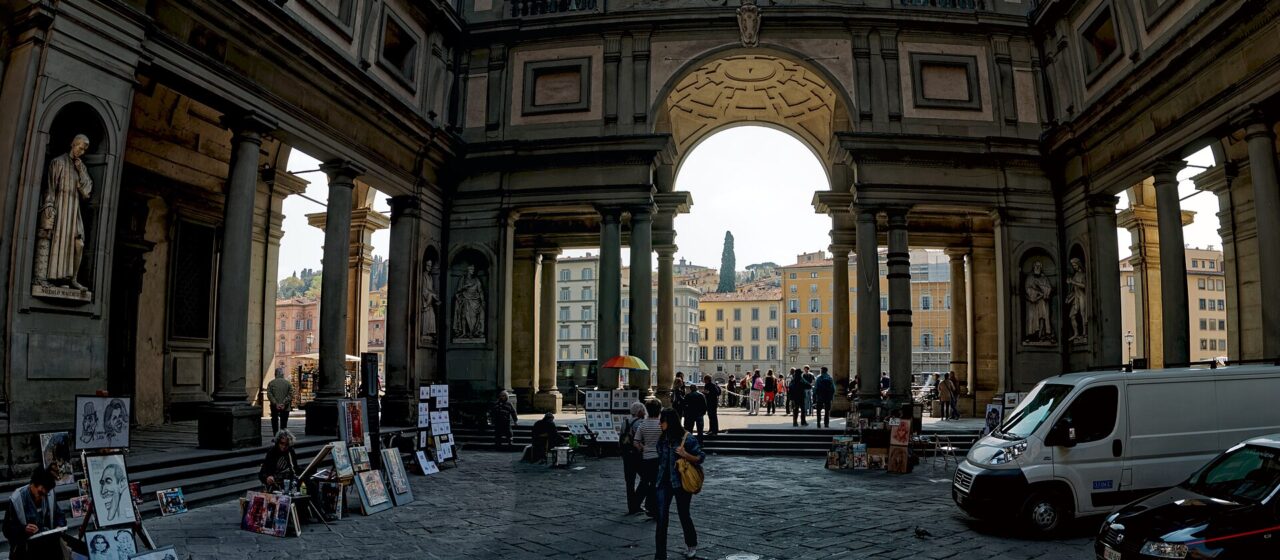
If you take one thing from this page, take this one. Apriti Cinema puts a screen and about two hundred seats in the Piazzale degli Uffizi — the long colonnaded courtyard between the two wings of the gallery, with the arch at the end framing the Arno — and shows a film there almost every night from roughly 15 June to 26 July.
Screenings start at 22:00. Entry is free and unticketed, on a first-come basis until the seats run out. Films are shown in the original language with Italian subtitles, so an English-language film needs nothing from you at all, and a Japanese or French one gives you a workout. The programme is curated properly — restorations, retrospectives, festival titles — rather than assembled from whatever was cheap.
A parallel strand runs in Piazza de’ Pitti, in front of the Pitti Palace, on a similar model. Both are organised by local cultural associations with programming from La Compagnia, the city’s art-house cinema.
Arrive at 21:15
Two hundred seats sounds like a lot and is not. On a Friday with a well-known title the seats go well before ten and people end up standing at the back or sitting on the stone. Turn up three quarters of an hour early, take a bottle of water, and use the wait to look at the statues in the niches — they are the Florentines the courtyard was built to honour and nobody ever reads them.
There is something genuinely absurd about watching a film in that courtyard. You are sitting in Vasari’s corridor of offices, with the Palazzo Vecchio tower behind you and the river through the arch in front, at an event that costs nothing, in a city that charges twenty-nine euros to walk through the building on either side of you. Take the win.
Estate Fiesolana and the Roman Theatre
Twenty minutes uphill from the centre, Fiesole runs its own summer season and has done since 1948. The Estate Fiesolana reached its 79th edition in 2026, running from 21 June to 12 September, and it is a serious programme: music across genres, theatre, dance, and an open-air cinema season folded in during August.
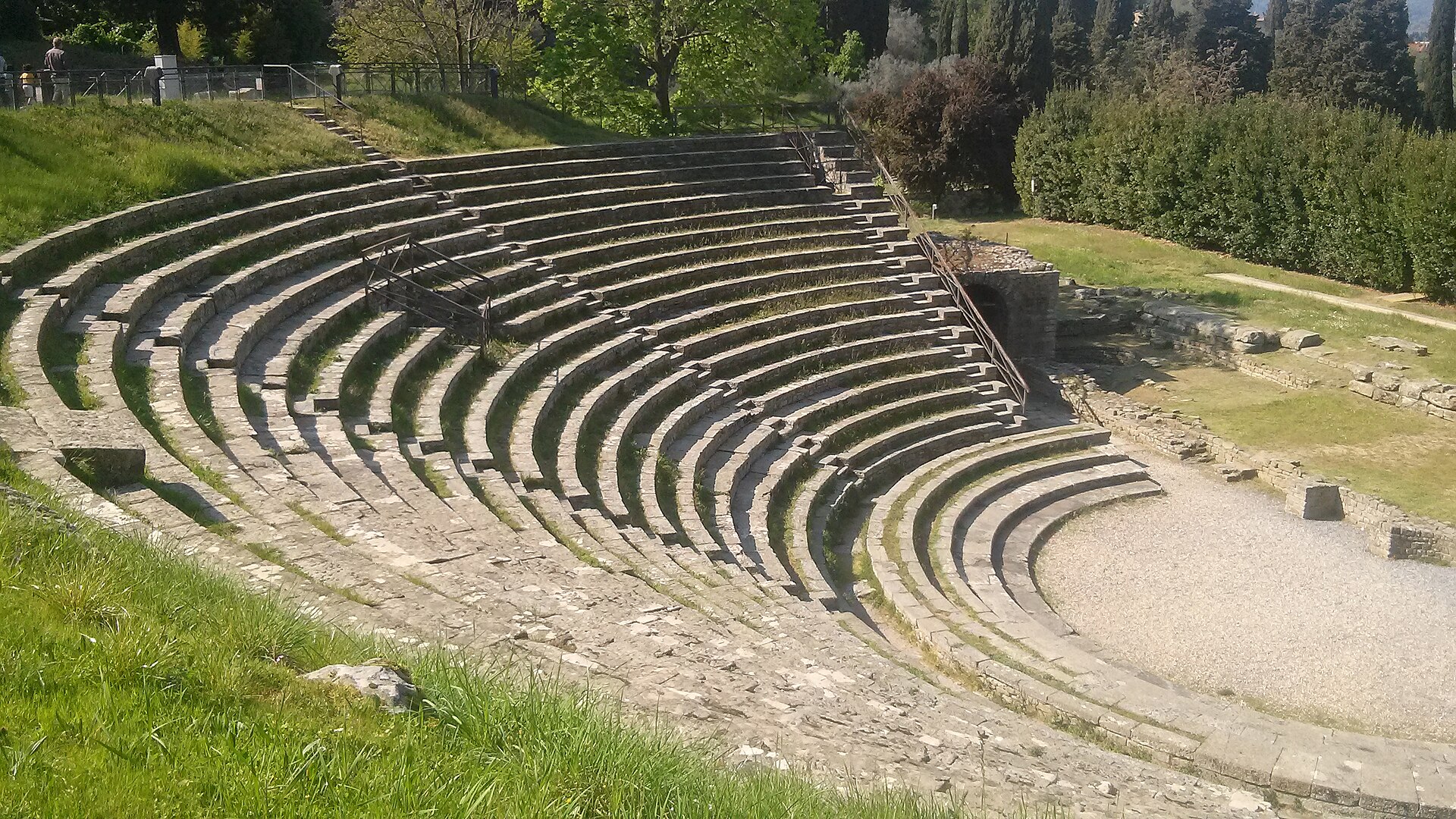
The venue is the point. The Teatro Romano was built in the first century BC, holds around three thousand, and sits in an archaeological park on the hillside with the whole of Florence laid out below it. It is cooler up there than in the city by a useful few degrees, the acoustics are what a Roman theatre’s acoustics are, and the interval view is unmatched by any concert hall anywhere.
Practicalities: bus 7 runs from Santa Maria Novella station and Piazza San Marco, takes twenty to thirty-five minutes, and goes roughly every twenty minutes. Check the last bus down before you go up, because a taxi from Fiesole at midnight is expensive and often unavailable. Take something warm — the hillside is genuinely chilly after eleven, even in August, and people underdress for it every year.
Ticket prices vary by act and are usually in the €15–45 range, with some free events. Book the bigger names; the smaller ones you can usually walk up to.
June: San Giovanni and the Calcio Storico
24 June is the feast of San Giovanni, Florence’s patron saint, a local public holiday, and the single best day of the Florentine year to be in the city. Two things happen.
The first is the Calcio Storico Fiorentino, a sixteenth-century game played by four teams representing the historic quarters, in a Piazza Santa Croce filled with sand. It is a combination of football, rugby and licensed assault, played by men in period breeches, watched by a partisan and extremely loud crowd. The semi-finals run in the days before; the final is on the 24th. Tickets sell out and the atmosphere is unlike anything else on the Italian calendar.
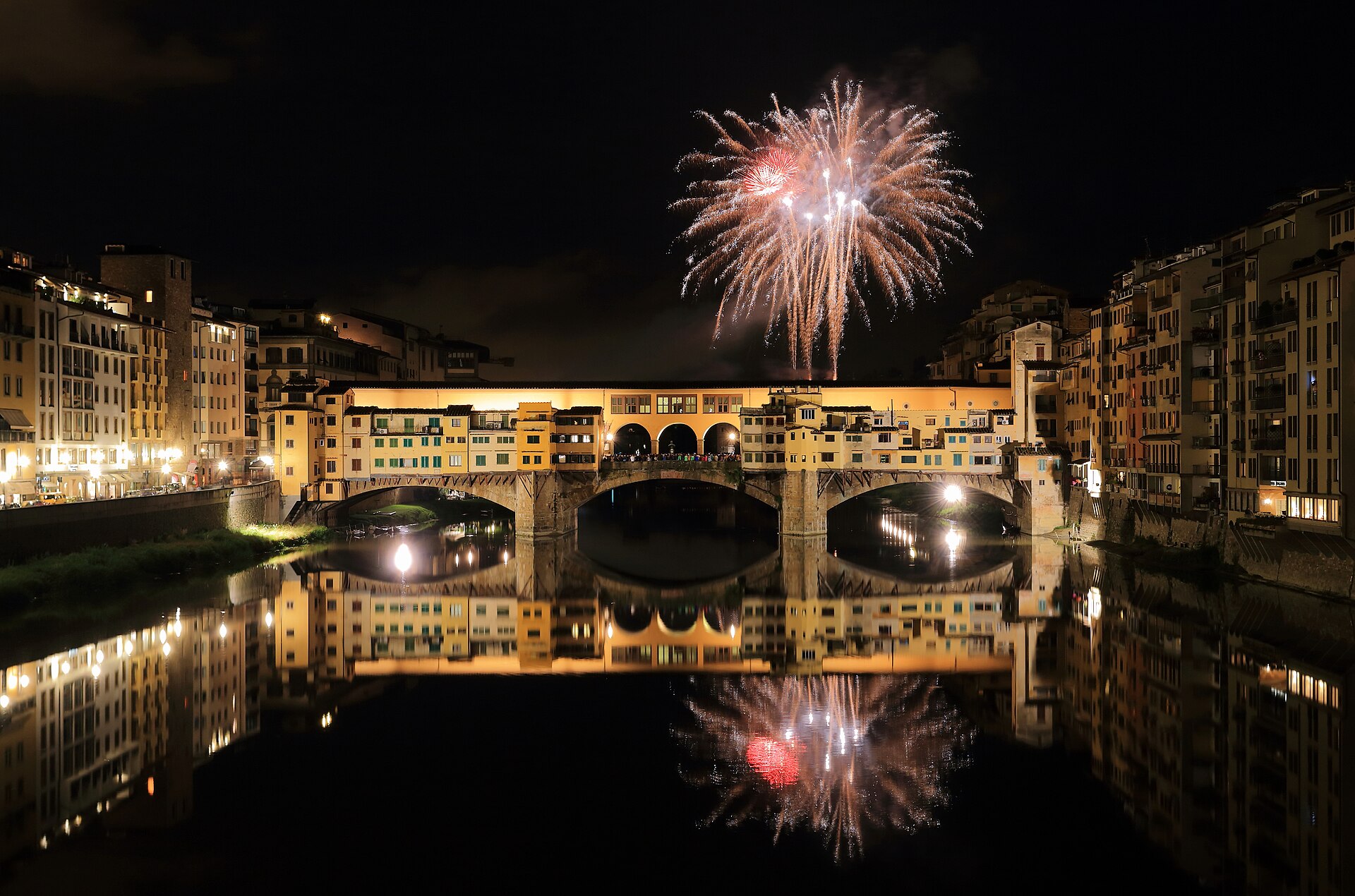
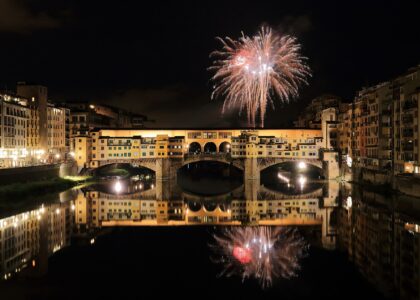
The second is the fireworks, fired from Piazzale Michelangelo over the river at around ten in the evening. This is Florence’s real firework display — properly staged, properly funded and considerably better than anything the city does at New Year. The lungarni fill up from about eight. The classic viewpoints are the bridges and the north bank between Ponte alle Grazie and Ponte Vecchio; get there early or accept a view through other people’s arms.
June also carries the tail of the Maggio Musicale Fiorentino, Italy’s oldest music festival, which runs through spring into early summer at the Teatro del Maggio. That is a proper opera-house programme with proper prices, and it is a different animal from the free stuff.
July: The Peak of the Programme
July is when Estate Fiorentina is at full stretch. Apriti Cinema is running at the Uffizi, Fiesole is in full swing, and the neighbourhood programmes — concerts in the Parco delle Cascine, events in the Oltrarno squares, open-air stages in the outer districts — are all going at once.
The pattern to understand: nothing happens between two and six in the afternoon. The city shuts down into the heat, the streets empty, and the programme picks up again at seven or eight in the evening. Restaurants that would be full at one in April are empty at one in July, and packed at half nine at night. Adjust your day to this rather than fighting it.
Rooftop bars and hotel terraces come into their own here, and they are where a lot of the actual social life of a Florentine July takes place — our Florence bars guide covers the ones worth the money. The riverside chioschi, temporary bars set up along the Arno for the summer, are the cheaper and better-tempered version.
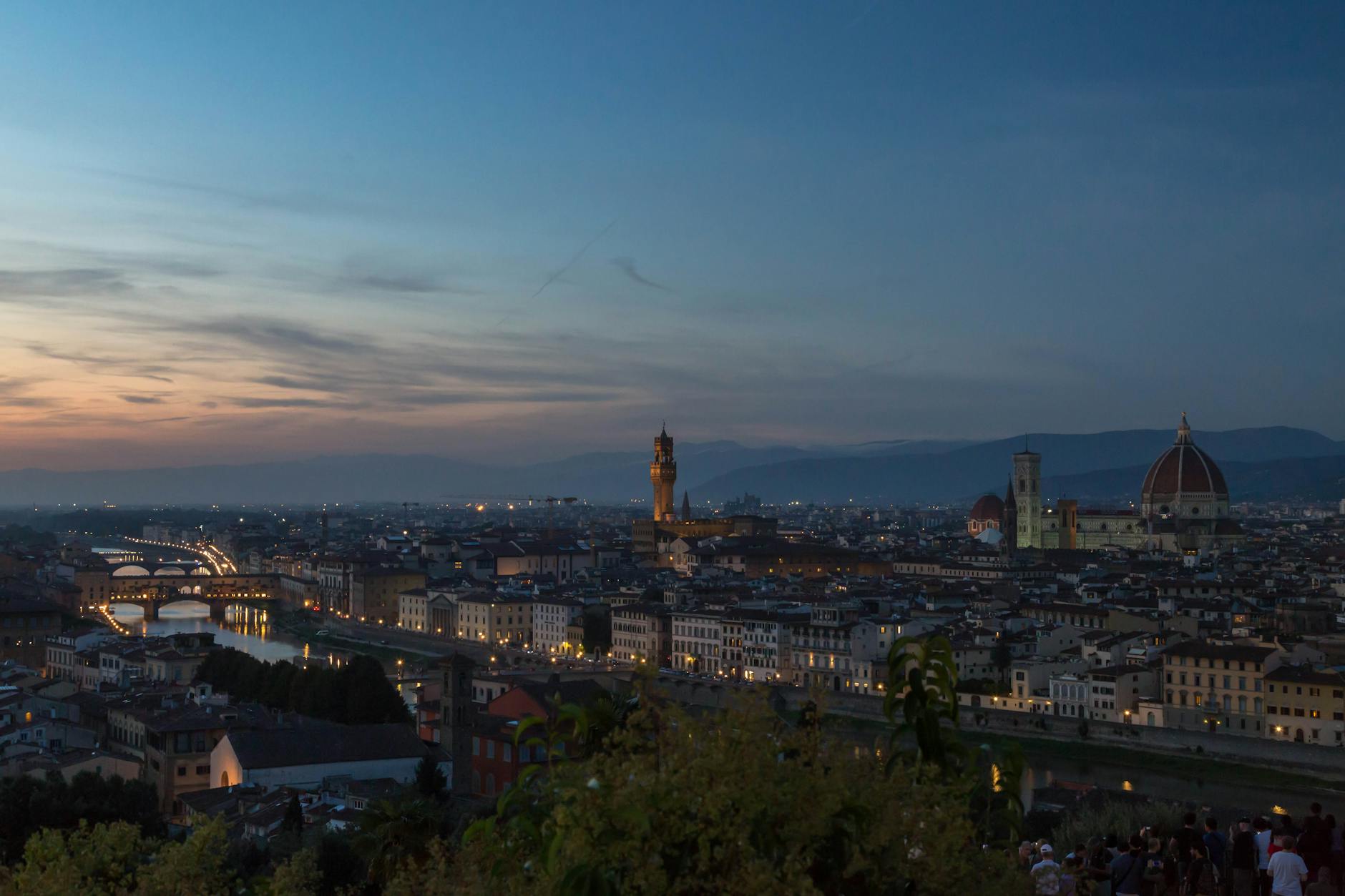
One structural advantage of July: the sun sets at about nine. That gives you a long, warm, usable evening that simply does not exist in the shoulder seasons, and it is the single best argument for a summer trip. Our sunset guide has the viewpoints ranked.
Weather, prices and crowd levels for the month are covered in our Florence in July guide.
August: Ferragosto and the Empty City
August is the month everyone warns you about, and the warnings are half right.
What is true: it is the hottest month, regularly into the mid-thirties and sometimes well past that, with stone and brick radiating heat back at you until late in the evening. A meaningful number of independent shops, workshops and family-run restaurants close for two or three weeks. Ferragosto, 15 August, is a national holiday and the deadest day of the Italian year — Florentines who can leave have left, and much of what remains is shut.
What is not true: that the city empties. It empties of Florentines. It does not empty of visitors, and the Uffizi in mid-August is exactly as busy as the Uffizi in mid-June. You get the crowds without the locals, which is the worst combination available.
What still works in August:
- Estate Fiesolana keeps running through the month, including its open-air cinema season inside the Roman theatre — and Fiesole is cooler.
- Museums are air-conditioned. This is not a small point in a 36-degree afternoon. Book the two till five slot deliberately.
- The Boboli Gardens open at 08:15 and have shade. Go at opening, leave by eleven.
- Evening everything. The programme keeps going and the streets come alive again after eight.
The full month, including what actually closes and how to plan around Ferragosto, is in our Florence in August guide.
September: Rificolona and the Season Ending
September is the best of the four months and it is not close. The heat breaks in the first fortnight, the light turns, the Italians come back, prices dip slightly after the first week, and Estate Fiorentina is still running until the 30th.
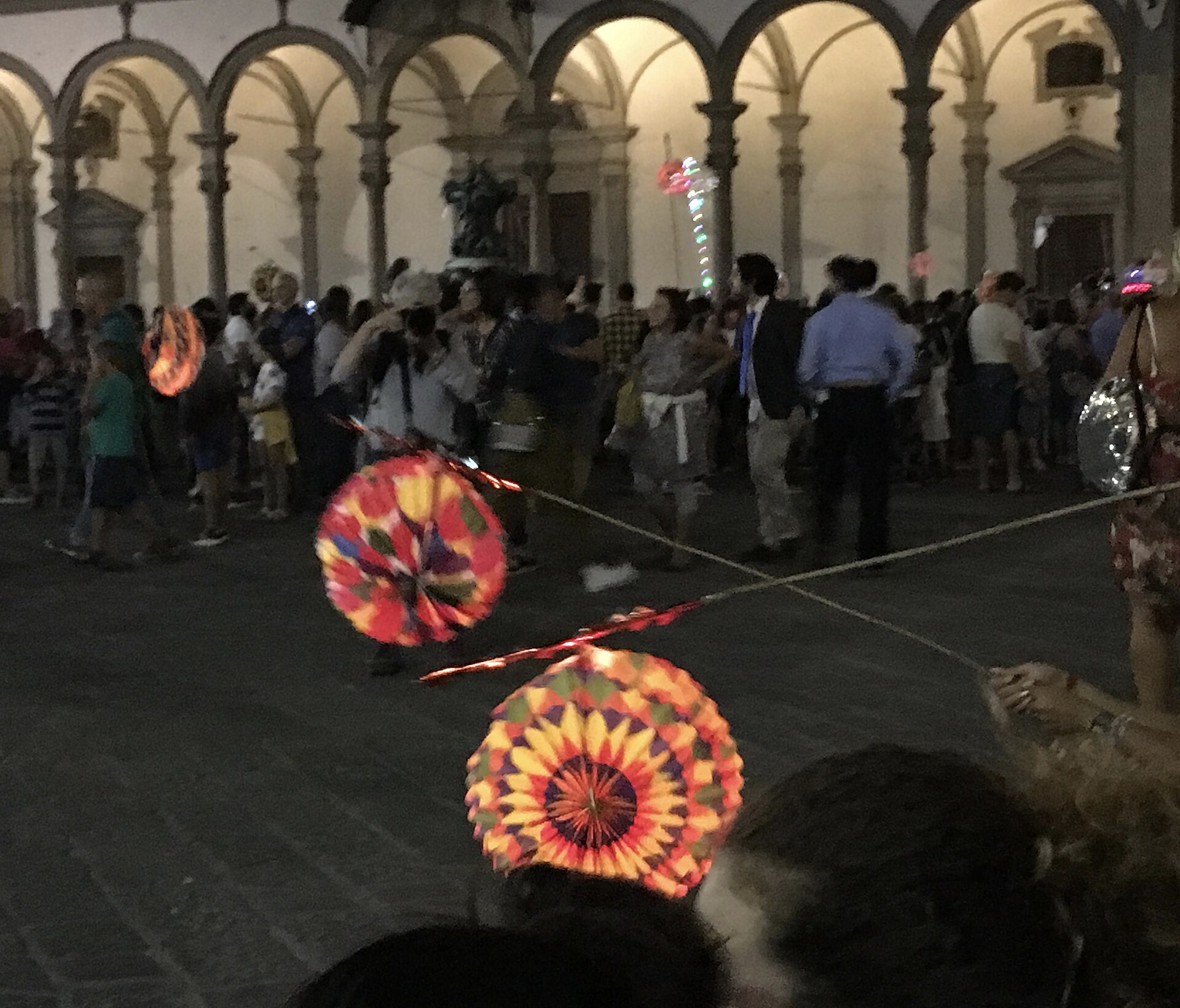
The Festa della Rificolona, on the evening of 7 September, is the summer’s closing ceremony and one of the strangest things Florence does. Children carry brightly coloured paper lanterns on poles in procession to Piazza Santissima Annunziata, on the eve of the Nativity of the Virgin. The lanterns are homemade, elaborate and highly flammable. Other children shoot at them with peashooters, and the object is to make them catch fire and collapse. Parents encourage this.
The origin is agricultural: peasants from the surrounding countryside used to walk into Florence overnight for the fair on 8 September, carrying lanterns to see by, and the city children mocked their clothes and their lamps. Nine hundred years later the mockery has become the festival. It is free, it starts in the early evening, and it is a genuinely local occasion that has never been packaged for anybody.
September also brings the start of the autumn calendar — the harvest and the country sagre begin at the end of the month, and the wine towns south of Florence start their season.
The harvest calendar that follows on is covered in our guide to Tuscan wine festivals.
The River, the Rooftops and Where People Actually Drink
Every summer the city licenses temporary bars along the Arno embankments and in the parks — sand underfoot in some, deckchairs, a stage, cheap spritz, food trucks, a DJ from ten. They go up in June and come down in September, the names and the locations change year to year, and they are where Florentines under forty actually spend a July evening.
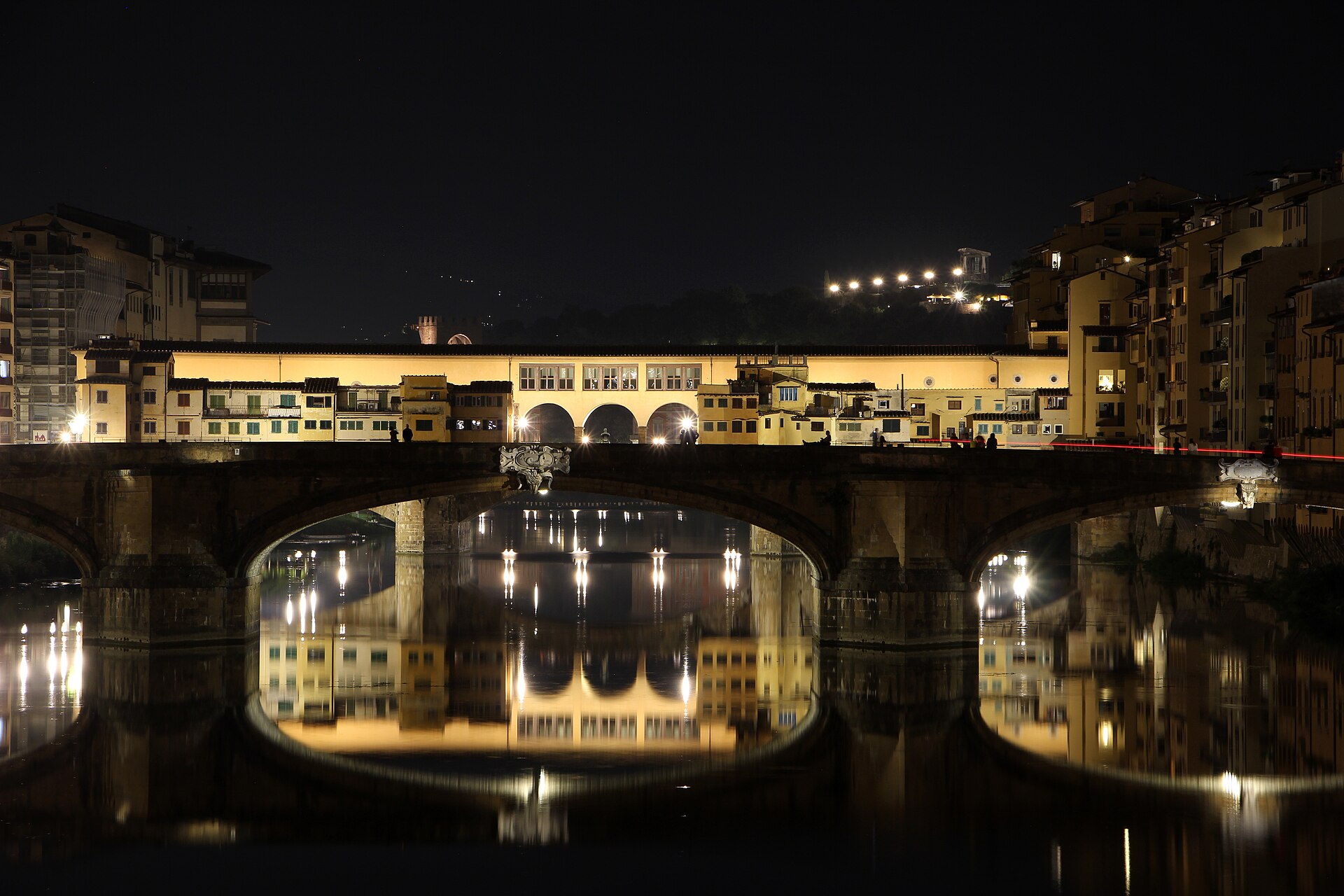
The other summer institution is the Parco delle Cascine, the long park running west along the river, which hosts festivals, concerts and the Tuesday morning market. It is the city’s only real green lung and it is where the larger outdoor concerts happen.
Two honest notes. First, the riverside bars are cheap and cheerful, not smart — if you were expecting a Milanese aperitivo terrace you will be disappointed by the plastic furniture. Second, the mosquitoes along the Arno in July and August are a genuine problem, and every bar sells repellent for three times what a pharmacy charges. Buy it at the pharmacy.
For the rest of the after-dark map, our Florence nightlife guide has the year-round version.
Surviving the Heat
Florence sits in a river basin ringed by hills, which is excellent for defence, wine and painting, and terrible for air circulation. The city holds heat. July and August afternoons regularly reach the mid-thirties, the stone stays warm long after dark, and there is almost no breeze.
- Front-load the day. Be out by 08:00. The Boboli Gardens open at 08:15, the Uffizi at 08:15, and the two hours before ten are worth four in the afternoon.
- Use the museums as shelter. Book the hottest part of the day inside something air-conditioned. This is the one time of year when a mid-afternoon Uffizi slot is the smart booking.
- The fountains are drinkable. Florence has public drinking fountains, including fontanelli dispensing chilled still and sparkling water. Carry a bottle and refill it.
- Churches are cold. Santa Maria Novella, Santo Spirito and San Miniato are all several degrees below the street. So is the Museo dell’Opera del Duomo.
- Go up. Fiesole, San Miniato and the Bardini gardens are all cooler than the centre. Fiesole noticeably so.
If it beats you anyway, our indoor Florence guide works just as well for heat as for rain — the buildings are the same buildings.
Practicalities and Costs
| Event | When | Cost | Where |
|---|---|---|---|
| Estate Fiorentina (umbrella) | 1 Jun – 30 Sep | Mostly free or under €15 | City-wide |
| Apriti Cinema | ~15 Jun – 26 Jul, 22:00 | Free, 200 seats | Piazzale degli Uffizi |
| Open-air cinema, Pitti | Summer evenings | Free | Piazza de’ Pitti |
| Estate Fiesolana | 21 Jun – 12 Sep | ~€15–45, some free | Teatro Romano, Fiesole |
| Calcio Storico final | 24 June | Ticketed, sells out | Piazza Santa Croce |
| San Giovanni fireworks | 24 June, ~22:00 | Free | Fired from Piazzale Michelangelo |
| Festa della Rificolona | 7 September, evening | Free | Piazza Santissima Annunziata |
Getting around: a single bus or tram ticket is €2.00, valid 90 minutes, sold at machines, tobacconists and bars with the AT sticker, and €3.00 from the driver in exact change. Bus 7 covers Fiesole; buses 12 and 13 cover Piazzale Michelangelo. Most of the centre is walkable and in summer, after dark, walking is the pleasant option.
Note the summer night ZTL if you are driving: on Thursday, Friday and Saturday nights from the first Thursday of April to the first Sunday of October, the restricted zone runs 23:00 to 03:00 as well as its normal weekday hours. Fines run €80–335 plus whatever your rental company adds for processing the paperwork.
Frequently Asked Questions
What is Estate Fiorentina?
It is Florence city council’s umbrella programme for outdoor cultural events between 1 June and 30 September — not a single festival but a framework supporting independent organisers. The 2026 edition ran 1,268 events from 162 organisers, most of them free or under €15, spread right across the city rather than concentrated in the centre.
Is the open-air cinema at the Uffizi really free?
Yes. Apriti Cinema puts about 200 seats in the Piazzale degli Uffizi and screens films at 22:00, roughly from 15 June to 26 July, free and unticketed on a first-come basis. Films run in the original language with Italian subtitles. Arrive by 21:15 on a busy night.
When are the Florence fireworks?
24 June, the feast of San Giovanni, fired from Piazzale Michelangelo over the Arno at around ten in the evening. This is the city’s proper display — considerably better organised than anything that happens at New Year. The lungarni fill from about eight.
Is Florence worth visiting in August?
It is the weakest month. Mid-thirties heat, a good number of independent shops and restaurants closed for two or three weeks, and Ferragosto on the 15th shutting much of what remains. The crowds do not thin, only the locals leave. If you have a choice, September is better in every respect.
How do I get to the Roman theatre at Fiesole?
Bus 7 from Santa Maria Novella station or Piazza San Marco, roughly every twenty minutes, twenty to thirty-five minutes each way. Tickets are €2.00 in advance or €3.00 from the driver. Check the last bus down before you commit to a late concert, and take a layer — the hillside gets cold after eleven even in August.
What is the Rificolona?
A lantern festival on the evening of 7 September. Children process to Piazza Santissima Annunziata carrying homemade paper lanterns, and other children shoot at them with peashooters to set them alight. It descends from country people walking into the city overnight for the 8 September fair, and the city children mocking their lamps. Free and thoroughly local.
When is the summer programme announced?
Late May, usually, and it keeps growing through June. Because Estate Fiorentina is an application-based framework rather than a curated festival, no reliable line-up exists more than a few weeks ahead. Check the city’s cultural pages a fortnight before you travel and pick up the printed programme on arrival.
Keep Reading
- Florence festivals and events calendar — the whole year, month by month.
- Live music in Florence — venues, seasons and where the good gigs are.
- Sunset in Florence — the viewpoints, ranked, and when the light lands.
- The best bars in Florence — rooftops, wine bars and the summer terraces.
- Florence nightlife — the year-round after-dark map.
- Indoor Florence — works for 36 degrees as well as for rain.