This article contains advertising. Booking links on this site can be turned into paid links automatically by our partner Travelpayouts: if you book through one, we earn a commission from the provider, at no extra cost to you. It never affects what we recommend. Affiliate disclosure
Tuscan Wine Festivals & the Autumn Harvest Calendar
The best of the Tuscany wine festivals are not wine festivals at all in the sense a visitor expects. There is no marquee, no lanyard and no tasting flight. There is a village square, a folding table, a man from a farm four kilometres away pouring his own Chianti Classico into a glass you paid two euros for, and a great many people who have known each other for fifty years. Between the middle of September and the end of November, Tuscany runs several hundred of these, and Florence is a good base for perhaps a dozen of them.
The countryside version of the Florence festivals calendar — and the low-cost alternative to the organised Tuscany wine tours from Florence.
October is the month this calendar peaks, and the month the vineyards finally turn. Our guide to Florence in October covers the weather, the crowds and where the autumn colour is inside the city.
The wine calendar does not start with the autumn harvest. Cantine Aperte opens cellars across Tuscany at the end of May (the 2026 edition was on 30–31 May; Movimento Turismo del Vino publishes the next dates and the wineries taking part), and our guide to Florence in May explains how to book it and why two cellars beat six.
The harvest calendar peaks here, with the vendemmia running through it all. In 2026 the Expo Chianti Classico at Greve ran from 11 to 13 September and Impruneta’s hundredth Festa dell’Uva paraded on 27 September; both organisers publish the next edition’s dates. Our guide to Florence in September covers how to fit them into a city trip.
What a Sagra Actually Is
A sagra is a village food festival built around one ingredient. It is organised by a local committee, usually attached to a parish or a district association, staffed entirely by volunteers, and run to raise money for something specific — a new roof, a football pitch, the ambulance. The food is cooked in a marquee by people who have been cooking it for that marquee for decades. You queue at a hatch, buy tickets, hand them over at a second hatch and eat at a trestle table with strangers.
This matters because it sets your expectations correctly. A sagra is not a curated tasting experience. It is a fundraiser with very good food, and it is aimed squarely at the people who live there. Nobody will speak much English. Nothing will be explained. Portions are large and cheap: a plate of pasta for five or six euros, a glass of local wine for two or three, a whole dinner for under twenty.
It is also, for exactly those reasons, the closest a visitor gets to the real thing. The Tuscany wine festivals that sell tickets online and put on a shuttle bus are perfectly pleasant, and they are a different category of event. If you have a choice, the folding table wins.
Two words worth knowing
Vendemmia — the grape harvest, roughly late August to early October depending on grape and altitude. Sagra — the village festival built around one ingredient: grapes, chestnuts, mushrooms, wild boar, olive oil, thrush. Yes, thrush. We will come back to that.
The Autumn Calendar
Dates shift by a weekend from year to year, but the pattern is stable and has been for decades. This is the shape of a Tuscan autumn:
| When | What | Where | From Florence |
|---|---|---|---|
| September (2026: 11–13 September) | Expo Chianti Classico | Greve in Chianti | Bus |
| Late August – early October | Vendemmia (the harvest itself) | Everywhere | — |
| Last Sunday of September | Festa dell’Uva | Impruneta | A short bus ride |
| Late September – October | Village grape and wine sagre | Chianti villages | Varies |
| October | Sagra delle Castagne | Marradi | Faentina railway |
| Last weekend of October | Sagra del Tordo | Montalcino | A long trip, best overnight |
| Late October – early December | Olive harvest and pressing | Everywhere | — |
| November | Olio nuovo, frantoi open, truffle fairs | Across Tuscany | Varies |
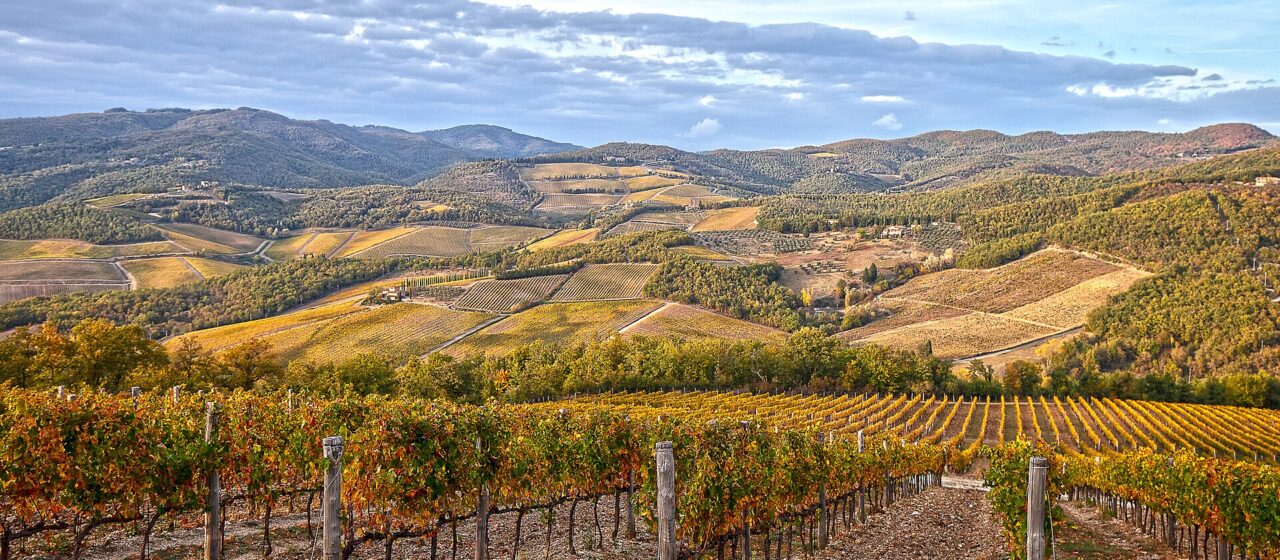
The critical thing to understand about timing: the harvest and the pretty vineyards do not coincide. Picking happens while the leaves are still green. The gold-and-rust hillsides come after the picking is over, and when they peak varies from one valley to the next and from year to year. If you want the harvest, come in September. If you want the colour, come later in the autumn. You cannot have both, and most people who think they want the first actually want the second.
October is the month this all peaks — weather, prices and crowds are covered in our Florence in October guide.
Expo Chianti Classico, Greve
The formal wine event within easy reach of Florence that is easiest to recommend. The Expo Chianti Classico takes over Piazza Matteotti in Greve in September — the 54th edition ran from 11 to 13 September 2026, after a weather alert cancelled the planned opening day on the 10th — and brings the Chianti Classico producers of the surrounding hills into the square to pour.
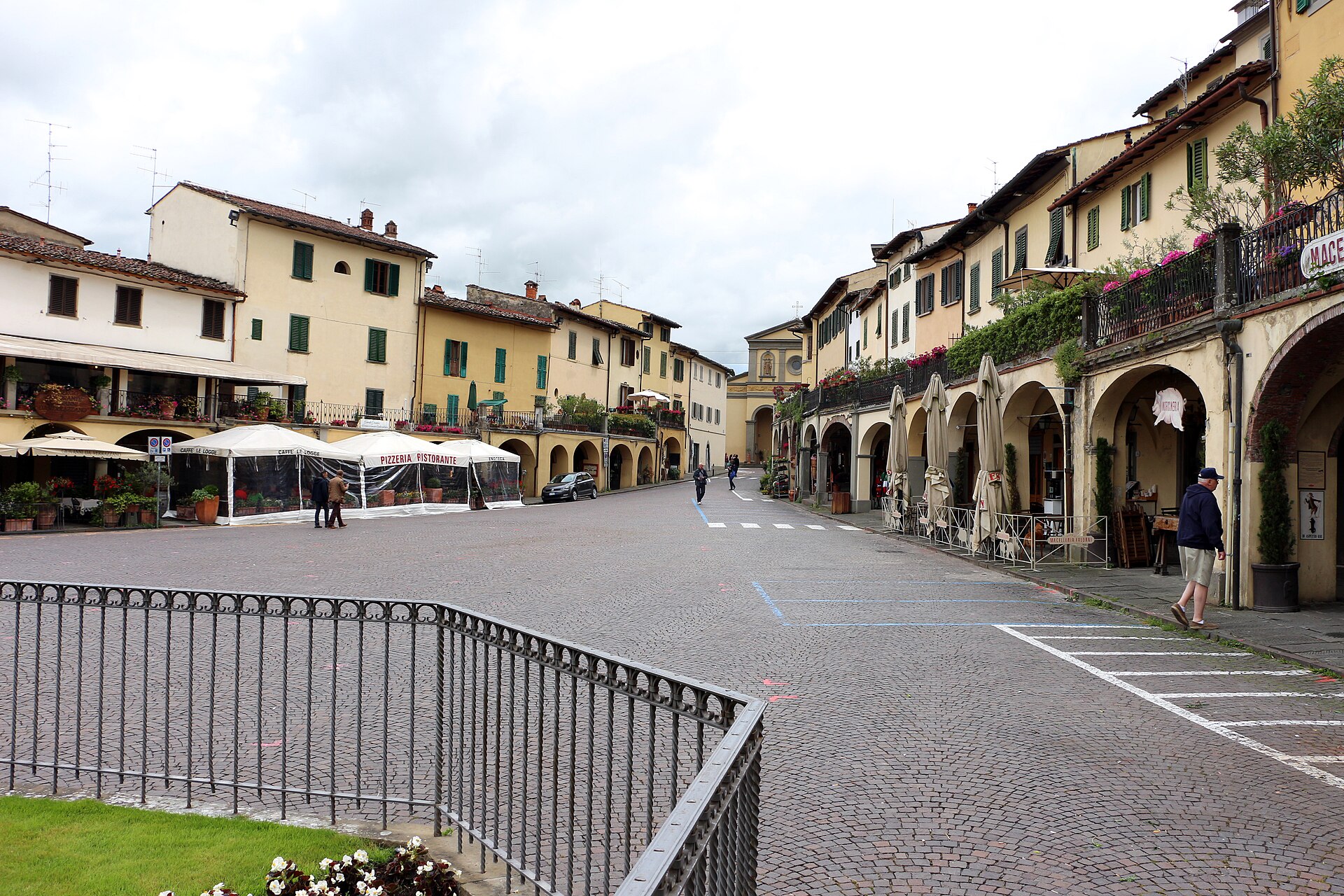
Greve’s square is an odd, elongated triangle with arcades running down both long sides, and it is one of the more pleasing pieces of small-town architecture in Chianti even when nothing is happening. During the Expo you buy a tasting glass and a set of tokens at the entrance, then work along the stands. Prices are set by the organisers rather than the producers, so nobody is upselling you.
Alongside the tastings there is a food market, a programme of talks and a certain amount of costumed civic ceremony. It is busy but not oppressive, and it is one of the few events on this list where speaking only English will not leave you stranded — the Chianti Classico producers export, and their people at the stands know it.
Do not drive. This should not need saying at a wine festival and it does. Greve has no railway station; buses run from Florence. Check the current route and timetable before you go, and check the last one back with more care than you check the first one out.
Festa dell’Uva, Impruneta
A short bus ride from Florence, in a town best known for its terracotta, the Festa dell’Uva comes round on the last Sunday of September. Its 2026 edition, with the parade on 27 September, was the hundredth, which tells you something about how seriously Impruneta takes it. Check the organisers’ programme for the next one.
Four historic districts — Pallò, Fornaci, Sant’Antonio and Sante Marie — compete by building enormous allegorical floats, which are wheeled into Piazza Buondelmonti and judged. The floats are made over months in the districts’ own workshops, involve moving parts and satire, and are a genuine matter of local pride. The theme changes every year, the politics are frequently local, and none of it is explained to visitors.
It is the most purely Tuscan thing on this page. Nobody has adapted it for anybody. If you want to see an Italian town doing something for itself, on a Sunday, with a fierce four-way rivalry underneath the good humour, this is the one. Go, stand at the edge of the square, drink the wine, and let it happen at you.
Sunday, and only Sunday
The Festa dell’Uva is a one-day event. Everything — the parade, the judging, the eating — happens on that last Sunday afternoon and evening. The rest of the festival week is preparation. Do not turn up on the Friday expecting floats.
The Vendemmia Itself
The harvest runs from late summer into early autumn, earlier at low altitude and for white grapes, later for Sangiovese on the higher slopes. In a hot year it starts in the middle of August; in a cool one it drags into the second week of October. Nobody knows the date until about ten days beforehand, which makes it impossible to book a trip around.
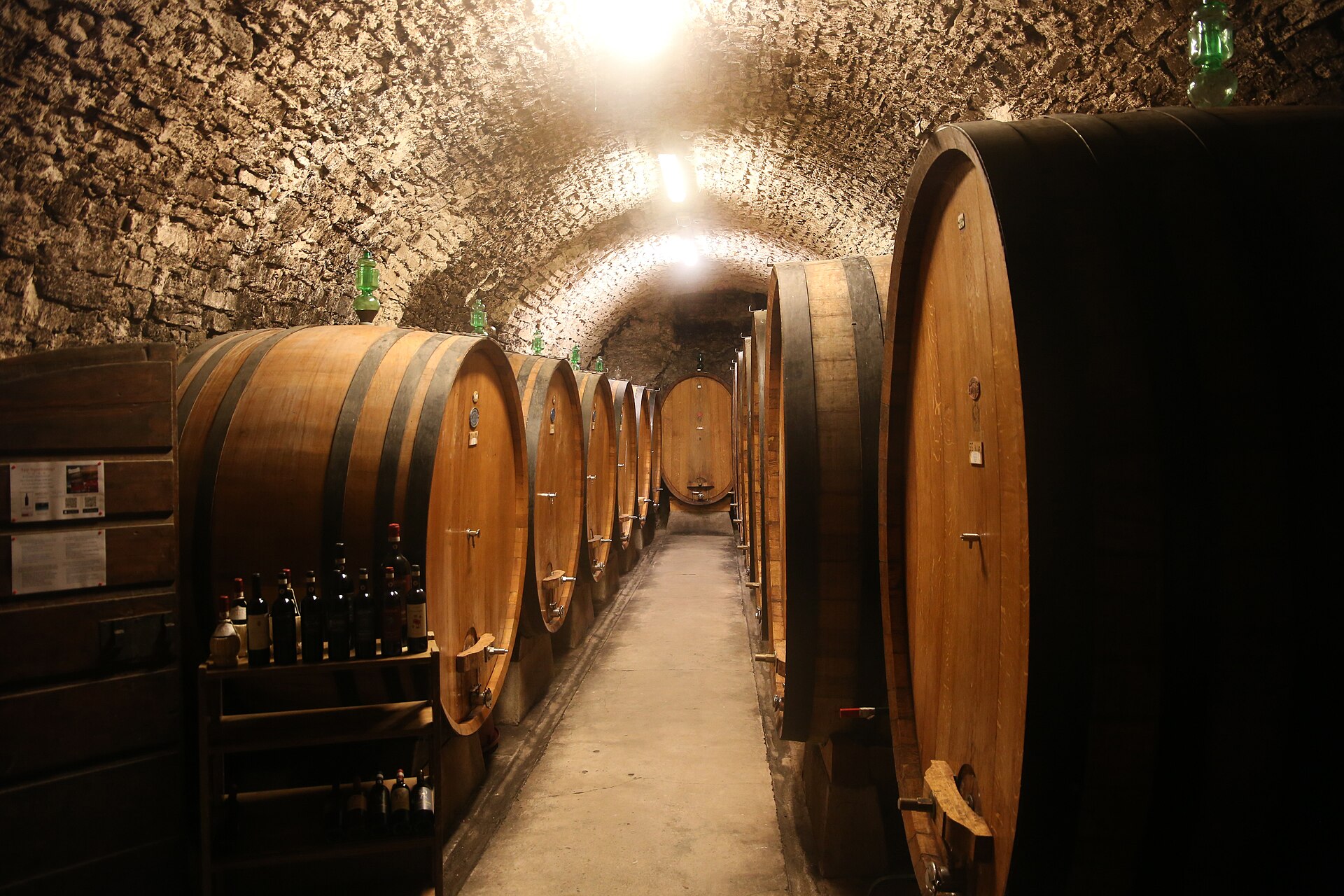
Can you join a harvest? Sometimes. A number of estates run vendemmia experiences in September: a couple of hours picking, a look at the crush, then lunch. Prices are typically in the same band as an ordinary estate visit with lunch, and the picking is symbolic rather than useful — a real day’s harvest is eight hours of bending in the heat, and no estate is putting a paying visitor through that.
Two honest notes. First, harvest is the busiest time of a winemaker’s year, and what an estate offers visitors while it is on varies from one estate to the next. If you are booking cellar visits for mid-September, confirm they are actually running. Second, if the picking experience is the thing you want, book it directly with an estate rather than through a platform — the platform version is often a demonstration on two rows kept back for the purpose.
Our guide to wine tours from Florence covers the organised versions, and the Chianti day trip guide covers doing it independently.
The route through the vineyards themselves is in our Chianti Classico wine road guide.
Sagra del Tordo, Montalcino
A festival of costume and ceremony, held on the last weekend of October in the Brunello town of Montalcino, well south of Florence. Its 2026 edition runs from Friday 23 to Sunday 25 October.
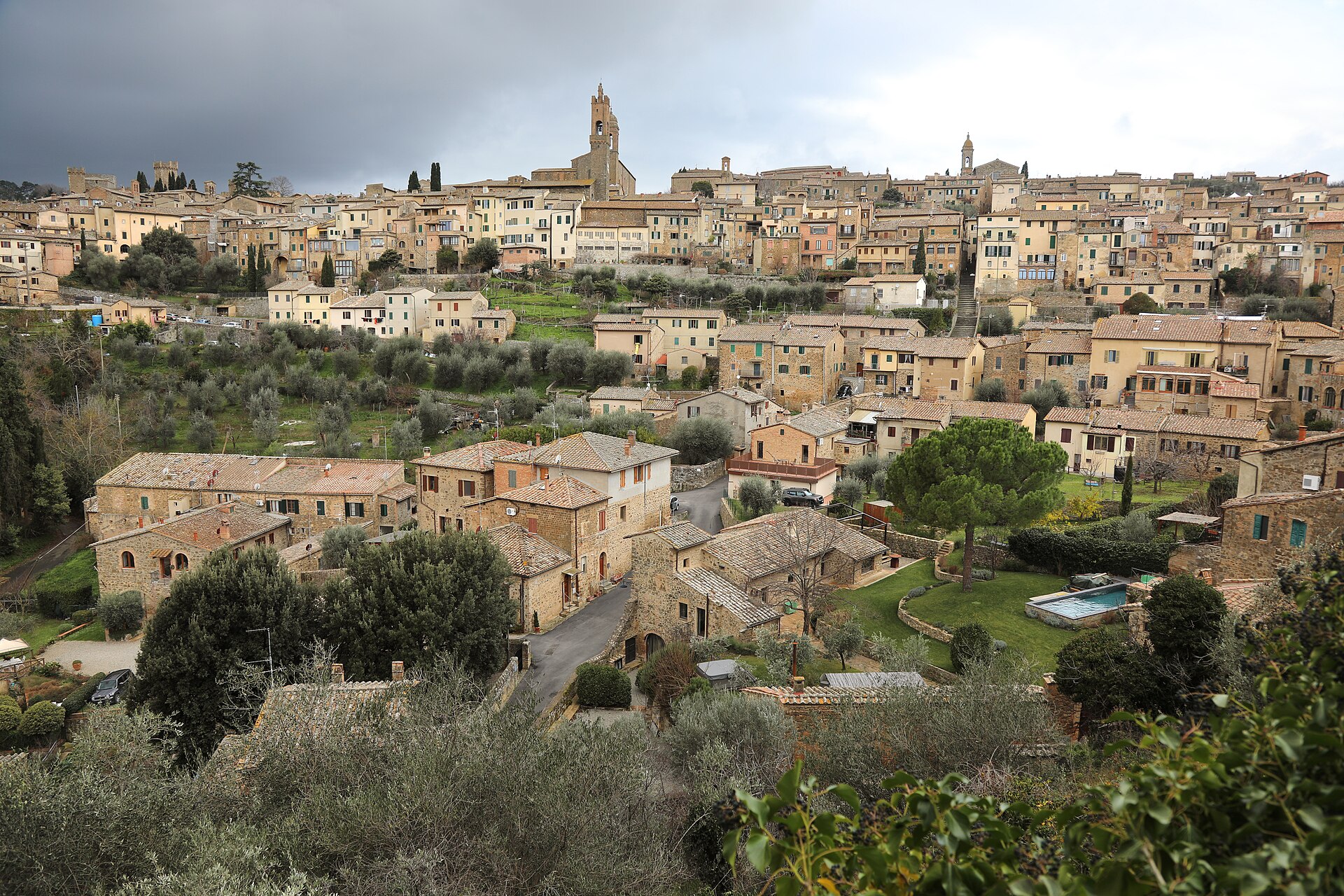
The town’s four quarters compete in an archery tournament below the fourteenth-century fortress, in medieval dress, with a costumed procession through the streets. Each quarter runs its own kitchen serving its own banquet, and what they serve is game: wild boar, pigeon, and the thrush the festival is named for.
Yes, thrush. The festival grows out of old popular traditions, and a songbird on the menu is precisely the kind of thing that reads badly in 2027 and is entirely normal in a Tuscan hill town. Modern practice varies and much of what is served is farmed quail or other game, but the name and the tradition are what they are, and you should know that before you sit down with a plate.
Practically, Montalcino is a long way. There is no railway. It is about two hours by car from Florence, or a train to Siena and a bus onward, which on a festival weekend is a serious undertaking. This is the one event on this list that is genuinely better as an overnight — and Montalcino in late October, with Brunello in every bar and the Val d’Orcia going gold outside, is not a bad place to stay.
Chestnuts and the Faentina Line
North of Florence, up in the Apennines, chestnut country runs its own October. The most famous of the festivals is at Marradi, which holds its Sagra delle Castagne in October (check the town’s programme for the days) — and it is reached by one of the better railway journeys in Tuscany.
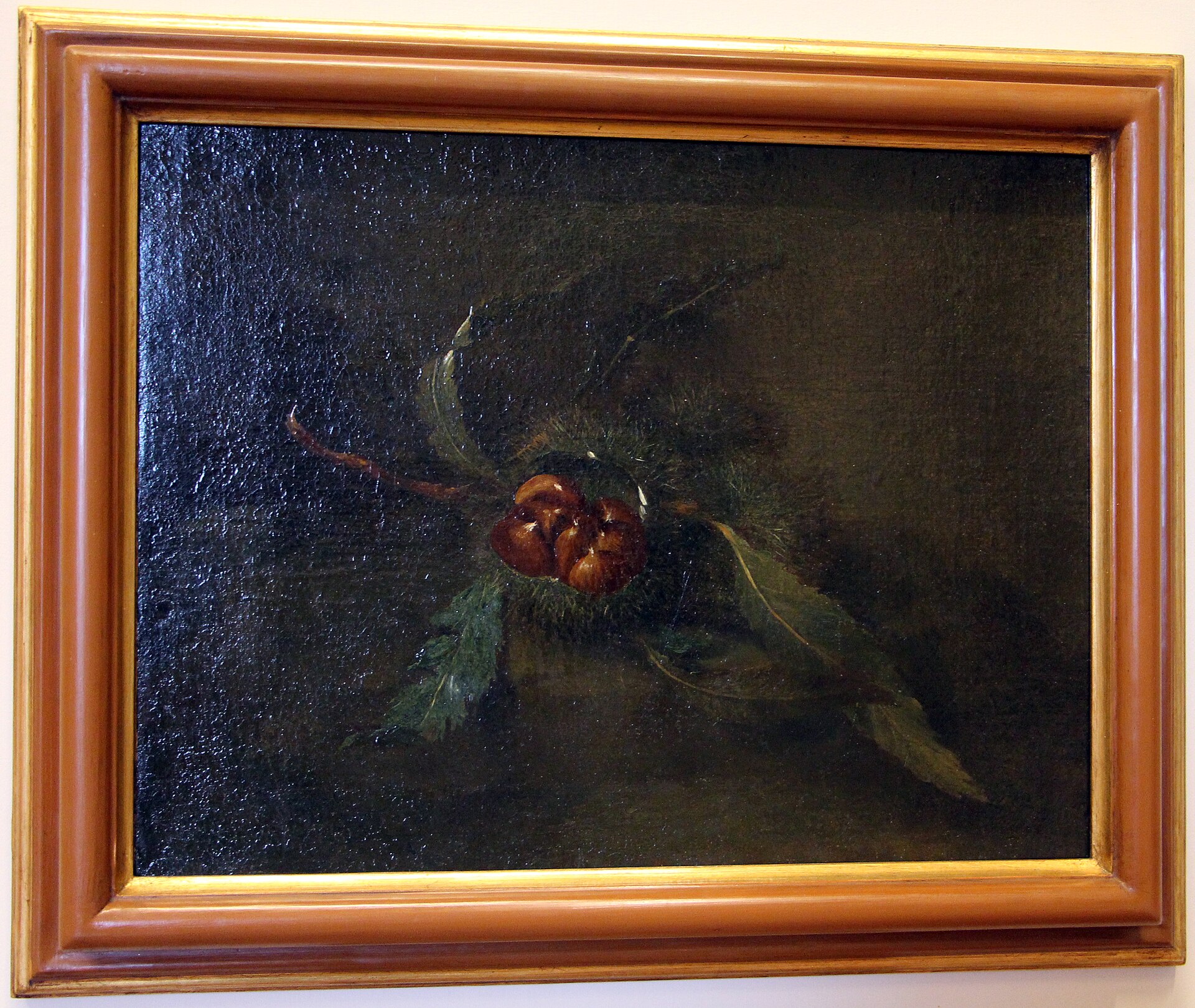
The Faentina line runs from Santa Maria Novella up through the Mugello and over the passes, and the trip takes well over an hour through terrain that looks nothing like the Tuscany of the brochures — wooded, steep, misty and cold. Marradi itself is a small mountain town with a chestnut economy: marron buono, the local variety, roasted in the street, ground into flour, turned into marrons glacés and into castagnaccio, the flat, dark, unsweetened chestnut-flour cake with rosemary and pine nuts that divides opinion so sharply.
Go for the train as much as for the chestnuts. It is a two-euro-ish regional fare, the carriages fill with people going up for the day, and it is one of the few ways to see the other Tuscany — the poor, cold, upland one that fed the rich one — without a car.
Olive Oil: The November Event Nobody Advertises
The olive harvest starts as the wine one finishes, running from late October into early December. It gets a fraction of the attention and, for a visitor who actually cooks, it is the more useful season.
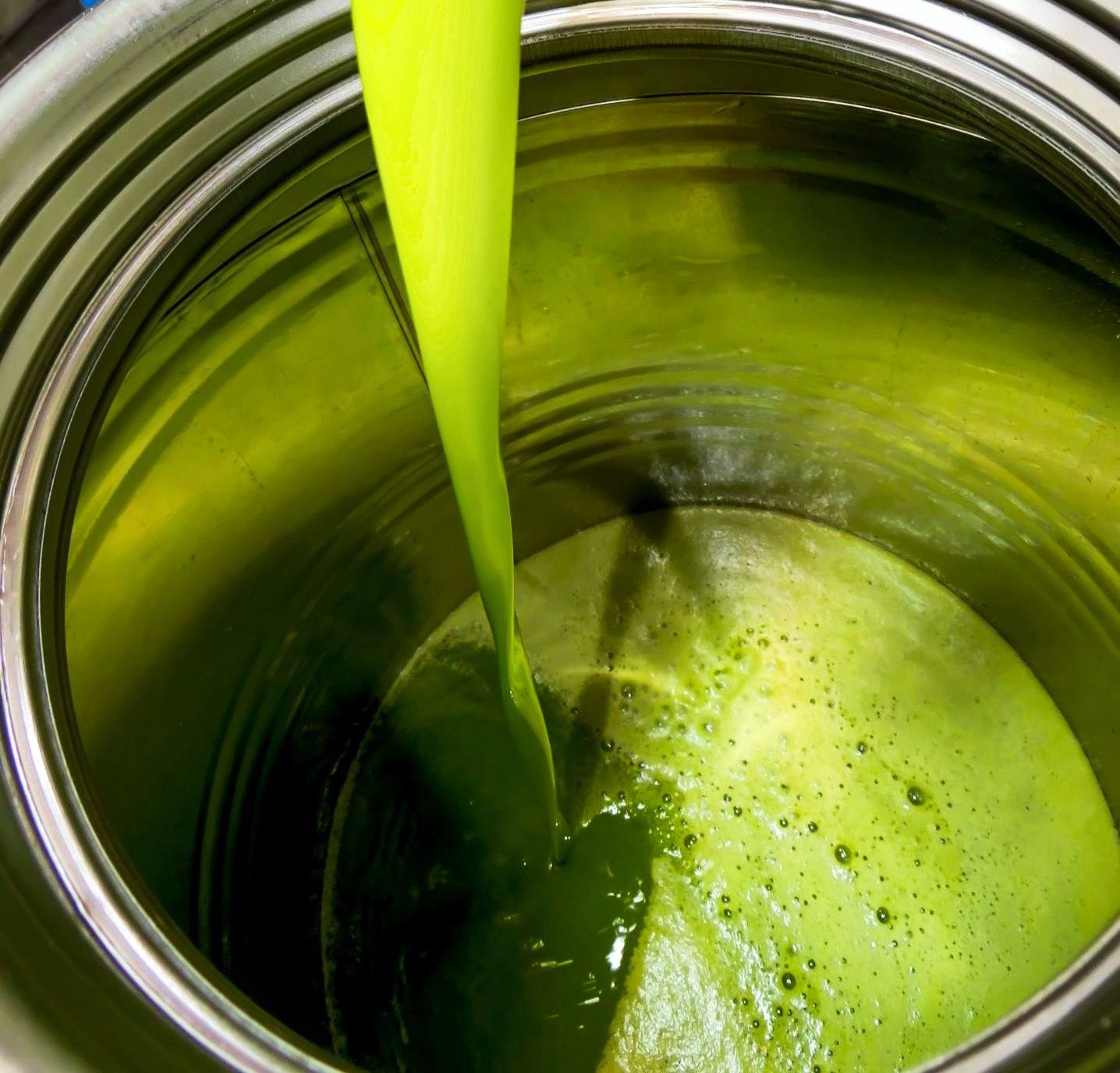
What you are after is olio nuovo — oil pressed within the last few days, unfiltered, cloudy, violently green, and so peppery at the back of the throat that first-timers cough. It is available for a matter of weeks and then it settles down into ordinary, excellent extra virgin. Many frantoi — olive mills — open to visitors during the pressing season, and standing in a mill while it is running is a considerably more interesting hour than most cellar tours.
The dish to look for is fettunta: bread grilled over embers, rubbed with a cut clove of garlic, salted, and drowned in new oil. It is Tuscany’s entire culinary philosophy in one object — three ingredients, all of them the best available, no technique whatsoever — and it is on menus across the region in November and gone by February.
Our guide to buying Tuscan wine and olive oil covers what is worth carrying home and what is not.
Getting There Without a Car
Most of these events are in places with no railway station, which is the central logistical problem of a Tuscan autumn.
- Buses. Autolinee Toscane run into Chianti from Florence; check journey times on at-bus.it. Services are much reduced on Sundays, which is exactly when the festivals are, so check the return before you commit.
- Trains. Useful for Marradi on the Faentina line, and for Siena, from which buses reach the southern towns. Not useful for Chianti at all — there is no line through it.
- Organised tours. Full-day small-group trips from Florence to the Val d’Orcia and the wine towns run €80–140 per person and solve the drinking-and-driving problem entirely. On festival weekends they book out.
- Driving. Possible, and the roads are lovely, but you are going to a wine festival. Somebody has to not drink, and Italian drink-drive limits are lower than British ones. Also remember Florence’s ZTL: active Monday to Friday 07:30–20:00 and Saturday 07:30–16:00, suspended on Sundays and public holidays, with a fine of around €80 or more for each gate you pass, plus notification costs, and your rental company may add its own administration fee under the rental agreement.
The genuinely sensible plan for a single festival day: take the bus out in the late morning, eat and drink for four hours, and take the bus back at six. It costs almost nothing and removes every difficult decision.
What to Buy and How to Get It Home
Autumn is the one time of year when buying at the source is materially cheaper than buying in Florence, because you are buying from the person who made it with no shop in between.
| Item | Why | Travel note |
|---|---|---|
| Olio nuovo | Unavailable anywhere else, at any price | Hold luggage only; bag it twice |
| Chianti Classico from a small estate | Half the UK shelf price, and better | Heavy. Two bottles, not six |
| Chestnut flour | Keeps, light, genuinely regional | Ideal. Buy this |
| Dried porcini | Light, expensive at home, keeps for years | Ideal |
| Vin santo and cantucci | The classic pairing, cheap at source | Vin santo bottles are small — easy |
| Pecorino | Aged versions travel fine | Vacuum-packed only |
| Cured meat | — | Check your own country’s import rules first |
If you are flying with hand luggage only, the wine is not happening. Chestnut flour, dried mushrooms and a jar of honey weigh nothing and pass security, and they are what you will actually use.
Which Ones Are Actually Worth the Day
Impruneta, last Sunday of September. The best of them, and the closest. A short bus ride from Florence, free, entirely local, and a hundred years old. If you are in Florence that weekend, go.
Greve, early September. The easiest and the most legible if you want to taste seriously and talk to producers. Not the most atmospheric, but the most useful.
Any village sagra you happen to see a poster for. Genuinely. The hand-printed sign taped to a lamppost advertising a sagra del cinghiale in a village you have never heard of is a better evening than most things you can book. Ask at your hotel; they will know what is on.
Montalcino, last weekend of October. Wonderful, and a long way. Only worth it as an overnight, and only if the medieval pageantry appeals as much as the wine.
Marradi, in October. Worth it mostly for the train and the mountains. The chestnut festival itself is a small-town street fair; the journey up is the reason to go.
And the honest negative: skip anything advertised to tourists as a “wine festival experience” with a shuttle bus from a Florence hotel and a ticket price over forty euros. You are paying a substantial margin for a curated version of an event that is free, two euros a glass, and a bus ride away. Our Florence wine bars guide will do the same job for less if you would rather stay in the city.
Frequently Asked Questions
When is the grape harvest in Tuscany?
The vendemmia starts at the end of summer and carries on into the autumn, earlier for white grapes and at low altitude, later for Sangiovese on higher slopes. The exact date is only known about ten days beforehand. Note that the vines are still green while picking happens — the gold autumn colour arrives two or three weeks later.
What is the best wine festival near Florence?
The Expo Chianti Classico in Greve, held in September, is the most useful if you want to taste widely and talk to producers. The Festa dell’Uva at Impruneta on the last Sunday of September is the more atmospheric and the more local, and it is only a short bus ride from the city.
Can I take part in a grape harvest?
Some estates run vendemmia experiences in September — an hour or two picking, a look at the crush, then lunch. Book directly with the estate rather than through a platform, and ask what it runs during the harvest, since that changes from estate to estate. Confirm before you travel.
What is a sagra?
A village food festival, usually built around one local ingredient. You buy tickets at one hatch, hand them over at another, and eat at a trestle table. A plate of pasta is around five or six euros and a glass of local wine two or three. Nothing is translated and nothing is explained — that is the point.
What is olio nuovo and when can I get it?
New olive oil, pressed within days, unfiltered and bright green, with a peppery finish that makes first-timers cough. It is available for a few weeks from about the start of November. Eat it as fettunta — grilled bread, garlic, salt, oil — and buy a tin to take home in hold luggage.
Do I need a car for the Tuscan wine festivals?
No, and you should not want one. Buses reach Greve and Impruneta, and the Faentina railway reaches Marradi. Check the Sunday timetable and the last bus back before you go out. Montalcino is the exception — much further away, no railway, best done as an overnight.
What is the Sagra del Tordo?
Montalcino’s festival on the last weekend of October: a costumed procession and an archery contest between the town’s four quarters below the fortress. Each quarter runs a kitchen serving game — wild boar, pigeon and the thrush the festival is named for — alongside a great deal of Brunello.
Keep Reading
- Tuscany wine tours from Florence — the organised option, with prices.
- Chianti day trip from Florence — doing it independently.
- Buying Tuscan wine and olive oil — what is worth carrying home.
- Florence wine bars — the same wine, in the city, at a table.
- Florence festivals and events calendar — the city’s own year.
- Estate Fiorentina — what happens before the harvest starts.