This article contains advertising. Booking links on this site can be turned into paid links automatically by our partner Travelpayouts: if you book through one, we earn a commission from the provider, at no extra cost to you. It never affects what we recommend. Affiliate disclosure
Florence in July: Heat, Estate Fiorentina & Early Starts
Florence in July is the hottest, driest and sunniest month the city has: thirty-two degrees as an average afternoon, 313 hours of sunshine, and under three days of rain in the whole month. It is also the month with the best free entertainment in Italy, a sales season that starts on the first Saturday, and evenings that go on until eleven with everybody out in them. July is not a month you fight. It is a month you rearrange your day around — up at seven, indoors by eleven, out again at five — and once you do that it stops being an ordeal and starts being a holiday.
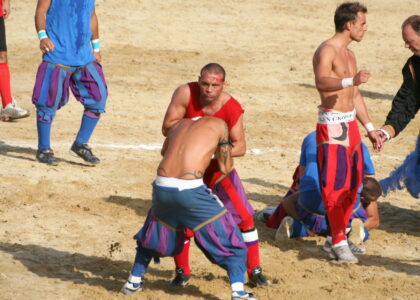
Part of our month-by-month series — the best time to visit Florence compares all twelve, and Florence in June covers the month before, with Calcio Storico in it.
The month after is the same temperature to a tenth of a degree and a completely different city — the workshops shut, the trattorias go on ferie, and the museums stay open regardless. Our guide to Florence in August separates what actually closes from the myth.
The summer night ZTL — Thursday, Friday and Saturday, 23:00 to 03:00, April to October — catches people driving back from dinner. Our guide to the Florence ZTL and parking sets out every window the cameras are live.
The Short Verdict
Nobody sensible tells you July is the best month to visit Florence. It is not. It is hot in a way that shapes everything you can do, the queues are at their annual maximum, and a Renaissance city of narrow stone streets is close to the worst possible design for a heatwave.
But the reasons people go anyway are real. School holidays are the obvious one. Less obvious: July has the best free cultural programme of the Florentine year, with open-air cinema in the courtyard of the Uffizi, concerts in a Roman theatre above the city and over a thousand events under the Estate Fiorentina banner. The sales start on the first Saturday. The evenings run until eleven and the whole city is out in them. And there is a particular pleasure in a Florentine July night — eating outside at ten, the stone finally giving up its heat, the streets full — that you cannot get in April.
The deal is straightforward. Give up the middle of the day entirely and July works. Try to sightsee from eleven to four the way you would in October and you will be miserable, sunburnt and queuing.
The other honest note: if you have a genuine choice of month and no constraint forcing July, take May or September. July is for people who are coming in July.
The month after is statistically identical on temperature and completely different in character — our guide to Florence in August covers Ferragosto, the closures and whether the emptier city is worth it.
How Hot Is It Really
| Measure | June | July | August |
|---|---|---|---|
| Average high | 29.1 °C | 32.3 °C | 32.4 °C |
| Average low | 16.0 °C | 18.4 °C | 18.5 °C |
| Rainfall | 45 mm | 25 mm | 37 mm |
| Wet days | 5.2 | 2.9 | 4.0 |
| Sunshine per month | 270 hrs | 313 hrs | 279 hrs |
Three superlatives in one column: July is the hottest month, the driest month and the sunniest month of the Florentine year. Twenty-five millimetres of rain across fewer than three days means you can plan outdoor things with real confidence — which is the one genuine advantage July holds over every other month.
The heat, though, is worse than thirty-two degrees suggests, for reasons of geography. Florence sits in a basin ringed by hills, so there is almost no through-breeze; the historic centre is dense stone that absorbs heat all day and radiates it back after dark; and the streets are narrow enough that shade is patchy and unreliable. The practical consequence is that the city does not cool down in the evening the way a coastal town does. Half past nine in July is still warm.
The record is 42.6 °C, set on 26 July 1983, and while that remains exceptional, thirty-seven and thirty-eight now turn up most summers. When that happens the city issues heat warnings and the advice hardens: stay out of the sun between noon and five, drink far more than you think you need, and abandon anything involving stairs.
Where the water is
Florence has free public drinking fountains across the centre, including the municipal fontanelli that dispense chilled still and sparkling water. Carry a bottle and refill it constantly — you will get through three or four litres on a July day without noticing. Pharmacies, marked with a green cross, are the first port of call for anything minor and are used that way by Italians; our guide to restrooms, pharmacies and emergencies lists the late-opening ones and the public toilets, which in a heatwave matters more than it sounds.
The Day Plan That Works
This is the whole guide in one section. Florentines do not endure July; they reorganise around it, and so should you.
A July day, hour by hour
- 07:00 — get up. This is the only genuinely painful instruction on the page and it is the one that matters. The streets between seven and nine in July are the best they are all year: empty, cool, the light low and gold, the delivery vans and the bar coffees and none of the coaches.
- 08:15 — the big ticket. The Uffizi, the Accademia and Boboli all open at 08:15. Book the first slot. This is not a marginal gain — an 08:15 Uffizi is a different museum from a midday one.
- 11:00–17:00 — go indoors, go up, or go in the water. Long lunch, a cool church, an air-conditioned museum, the hill at Fiesole, or a swimming pool. Do not queue for anything in this window and do not climb anything.
- 17:00–20:00 — the second shift. The €16 afternoon Uffizi ticket, the Oltrarno workshops, the markets, the gardens as the light drops.
- 20:00–23:00 — the actual holiday. Aperitivo, dinner outside at nine or ten, the passeggiata, a film in the Uffizi courtyard. This is what you came for.
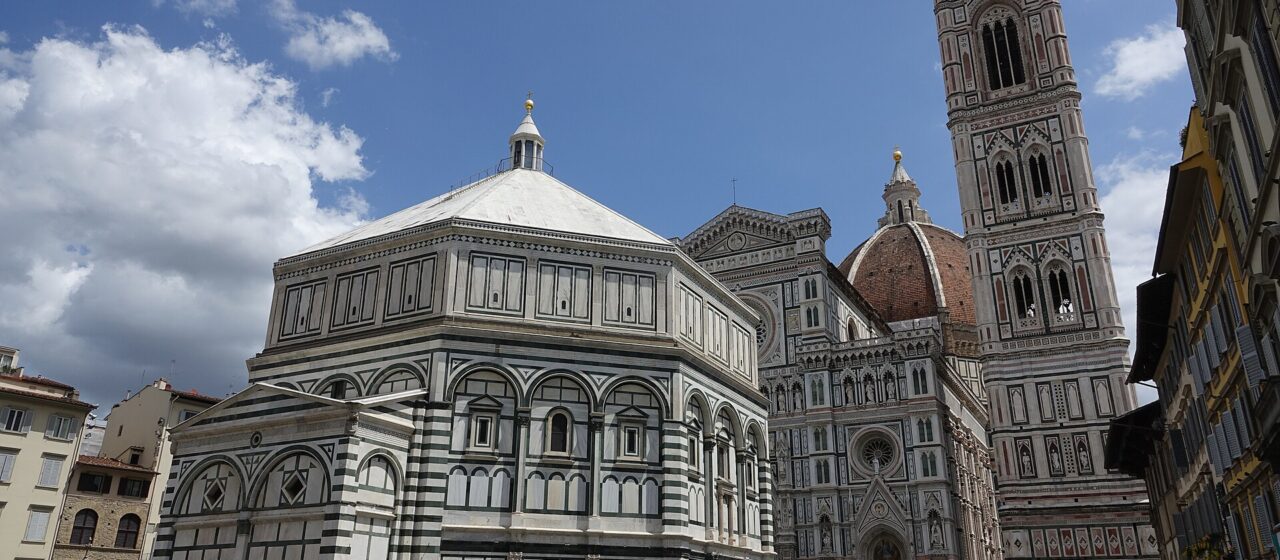
One specific instruction: the dome climb is a first-slot-only activity in July. It is 463 steps, there is no lift, the stairwell is enclosed masonry with negligible airflow, and it is shared with people coming down. At nine in the morning it is a hard climb. At two in the afternoon in thirty-four degrees it is something people are treated for. The bell tower — 414 steps, no reservation needed on the Brunelleschi or Giotto pass — is marginally more forgiving but not much.

Estate Fiorentina and the Free Summer
Florence’s summer programme is much larger than visitors realise and it peaks in July. Estate Fiorentina runs from 1 June to 30 September as the city’s umbrella for everything: the 2026 edition carried 1,268 events from 162 organisers across piazze, gardens, cloisters and the outer districts, a great deal of it free. The full programme lives on the city’s culture site and is worth ten minutes before you travel.
Apriti Cinema
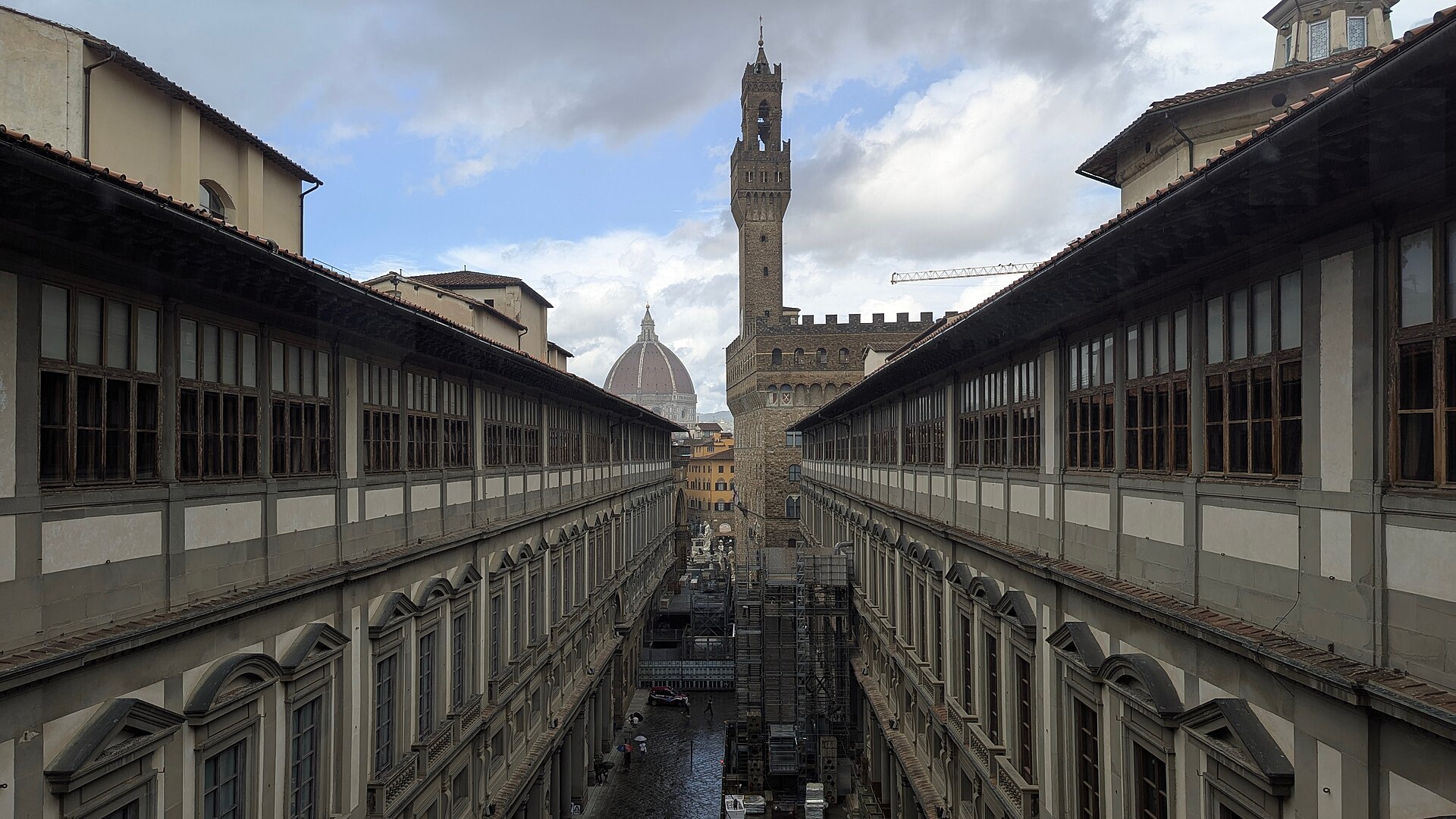
A screen goes up in the Piazzale degli Uffizi — the long courtyard between the gallery’s two wings, Palazzo Vecchio’s tower at the open end — and films are shown outdoors at 22:00, running from around the middle of June to 26 July. Roughly two hundred seats, Italian subtitles, free until the seats run out. A second strand runs in Piazza de’ Pitti.
Go. Arrive by half past nine. Watching anything at all in that courtyard on a warm night, with the Uffizi on both sides of you, is among the best free hours available anywhere in Italy, and it is the single most July thing you can do in Florence.
Estate Fiesolana
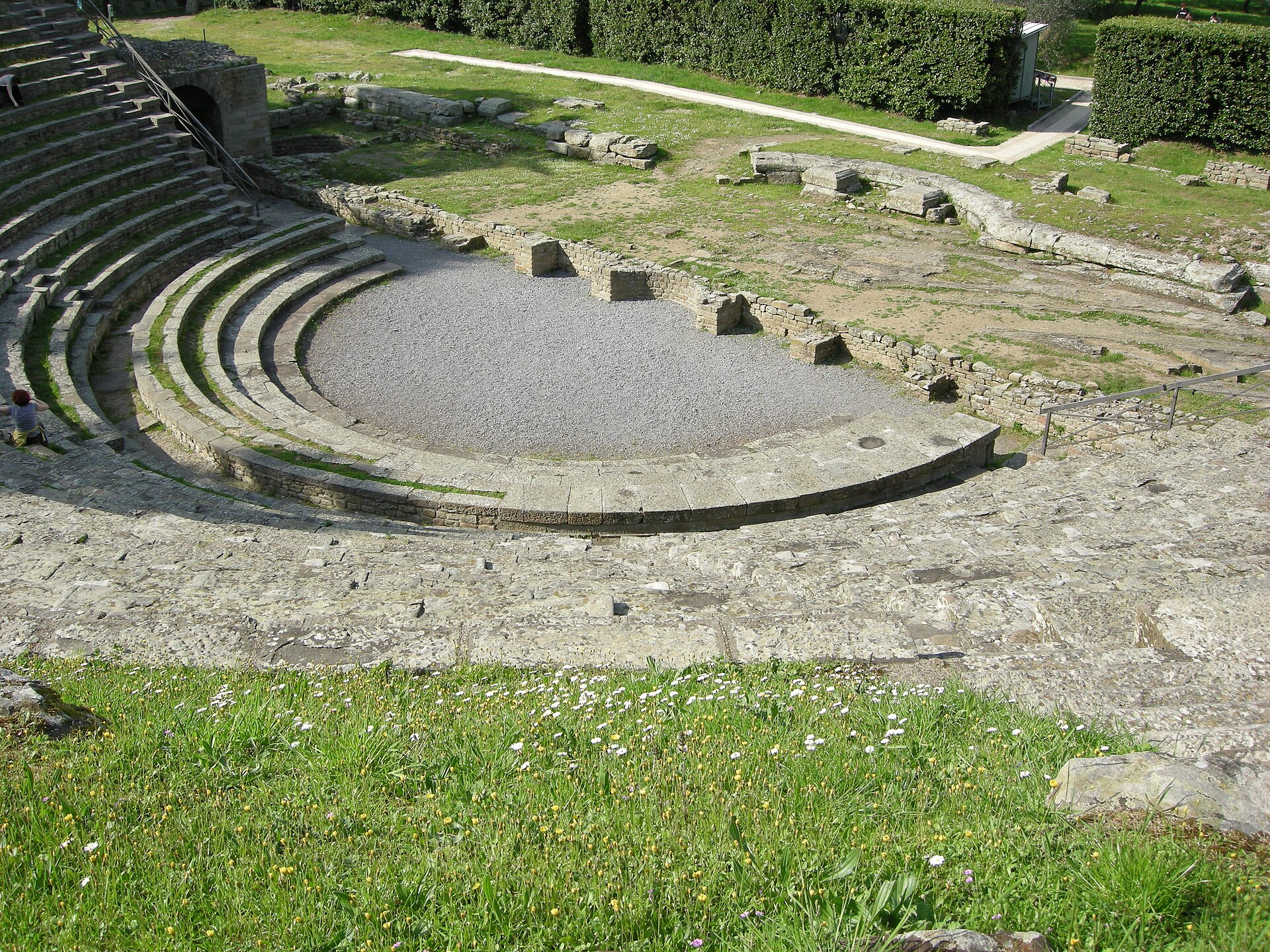
From around 21 June into September, mostly in the Teatro Romano di Fiesole — a first-century BC theatre seating about three thousand, cut into the hill above the city. Music, theatre and dance, with an open-air cinema season inside the theatre in August. Fiesole is bus 7 from Santa Maria Novella or San Marco, twenty to thirty-five minutes, about every twenty, and it is several degrees cooler than the basin. A July concert up there, with the valley going dark below you, is the best-value evening in the province.
Musart
Musart ran its eleventh edition from 28 June to 26 July 2026 — a mixed bill of rock, Italian singer-songwriters and classical, with the Orchestra and Chorus of the Maggio among the acts. Note the change: for years it filled Piazza Santissima Annunziata, and in 2026 it moved out to the Parco Mediceo di Pratolino, the UNESCO-listed Medici park north of the city. Plenty of older guides still put it in the piazza, so check the venue for the year you are travelling.
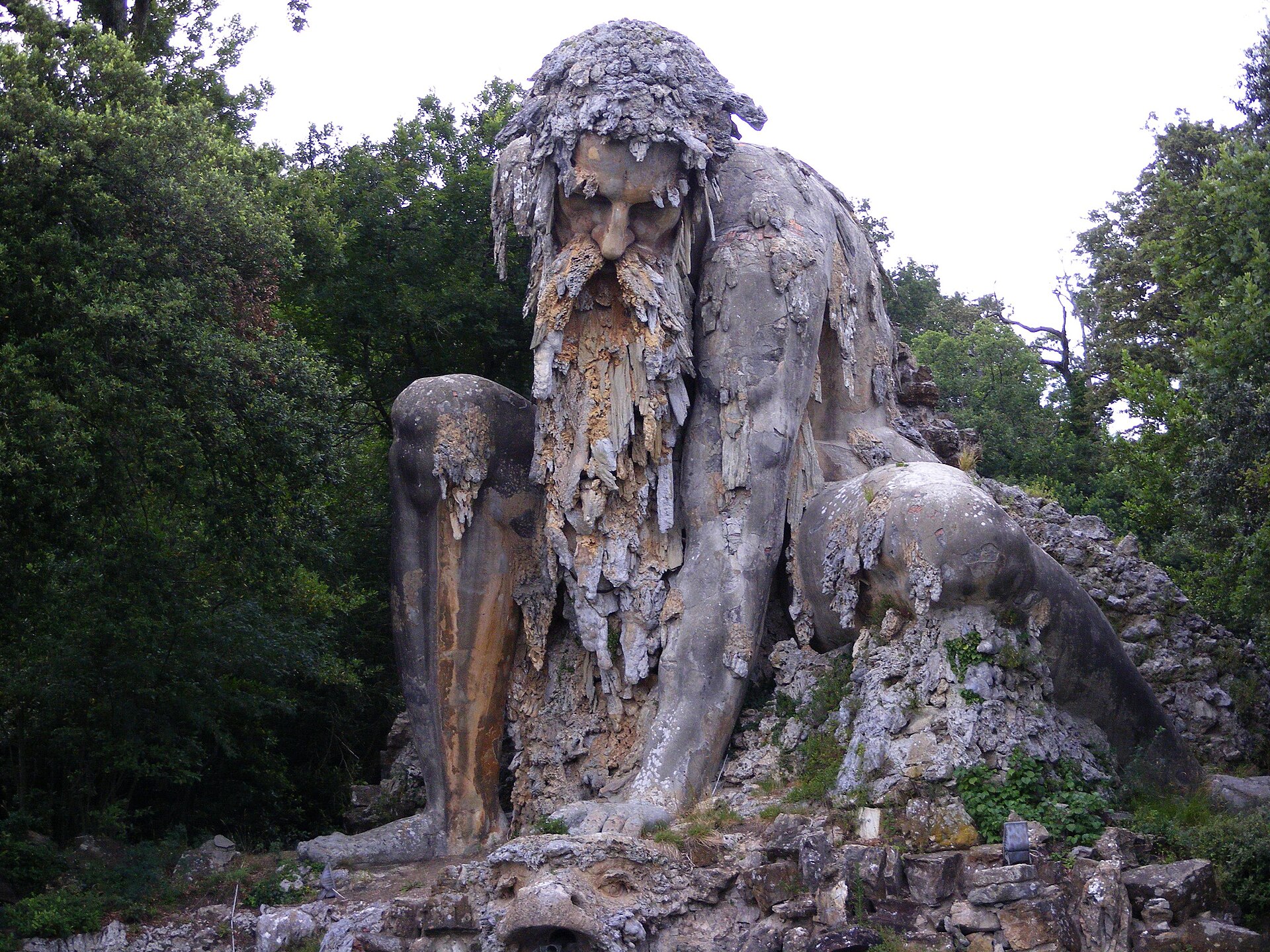
Pratolino is worth the trip on its own merits, festival or not. It holds Giambologna’s Appennino, a colossal crouching stone giant from the 1580s, encrusted and dripping, sitting in the woods looking like something that has been there since before the Medici. It is one of the strangest and best things within reach of Florence and almost nobody goes.
The Sales Start on the First Saturday
Italian end-of-season sales — the saldi — are fixed by regional decree, not by shops, and in Tuscany the summer ones begin in the first week of July and run about two months. In 2026 they started on Saturday 4 July and ran to 1 September, set by regional resolution in May.
Two things follow from this that are worth knowing.
First, the dates are the same in every shop. There is no hunting for which store has started early, because regional law also bans promotional discounting on the same goods for the thirty days before the sales open. If you are in Florence in late June, the prices you see are the prices, and they will drop on a known Saturday.
Second, the first weekend is a genuine event in the city — Via Roma, Via de’ Tornabuoni, Via dei Calzaiuoli and the Coin and Rinascente stores are packed from opening. The discounts are real, typically starting at thirty per cent and deepening through August, and by the second half of the sales it is mostly thin rails and odd sizes.
Practicalities on paying: card is accepted essentially everywhere now, but small artisan workshops in the Oltrarno still prefer cash, and non-EU visitors can reclaim VAT on larger purchases if they ask for the paperwork at the till rather than afterwards. Our guide to money and currency in Florence covers the mechanics, and the Florence shopping guide covers where to actually go.
Escaping the Heat
The four honest options, in order of how well they work.
Go up. Fiesole sits about 300 metres above the city and is reliably a few degrees cooler with actual moving air. Bus 7, twenty to thirty-five minutes. The Roman theatre, the archaeological area, the view back down the valley and a long lunch under a pergola is a complete and genuinely pleasant July day.
Get in water. Florence has several open-air public pools that run through the summer — in the Cascine park, out at Campo di Marte, and along the Lungarno east of the centre. They are municipal, inexpensive, full of Florentines and almost entirely undiscovered by visitors. An afternoon in one beats an afternoon in a queue by a distance that is difficult to overstate.
Go to the coast. The Versilia beaches around Viareggio are reachable by train via Lucca in roughly ninety minutes, and the sea is properly warm in July. Be warned that the Tuscan coast in July is a national institution and the beaches are organised into paid stabilimenti with rows of loungers; free stretches exist but you need to know where. Trains are busy both ways at weekends.
Use the cool interiors. Several of the best things in Florence are also among the coolest: the Bargello with its thick walls and internal courtyard, the Museo dell’Opera del Duomo, the Santa Maria Novella pharmacy on Via della Scala which is free and takes fifteen minutes, and the Brancacci Chapel at €15 (€10 reduced) for ten people at a time. Full list in our Florence museums guide.
What not to do in July
- The dome after ten in the morning. 463 enclosed steps, no lift, no airflow.
- A full-day open-country Tuscan tour. Val d’Orcia in a minibus in thirty-four degrees is an endurance event. Do it in the morning or do it in September.
- Boboli at midday. The Viottolone has almost no shade and the gravel reflects.
- Booking a hotel without air conditioning. Check it explicitly, and check it works at night — some historic buildings run it only in public areas.
Crowds, Prices and Booking
| What | Book ahead | Price |
|---|---|---|
| Accademia (David) | A month | €20 + €4 booking |
| Uffizi, 08:15 slot | A month; this slot goes first | €25 day / €29 booked |
| Uffizi, from 16:00 | Two weeks | €16 |
| Duomo dome climb | A month, and take the earliest slot | Brunelleschi Pass €30 |
| Vasari Corridor | As far out as it is sold | €43 day / €47 booked, with the Uffizi |
| Apriti Cinema | No ticket — be there by 21:30 | Free |
| Estate Fiesolana / Musart | Weeks for the named acts | Varies |
| Restaurants with outdoor tables | Four or five days | — |
One July-specific piece of good news: Boboli does not take its first-and-last-Monday closure from June to October, so it is open on Mondays that would catch you out in spring. The Bardini garden keeps its closure, so do not assume the two match.
Skip the free first Sunday. In July it turns a great gallery into three hours of queue in direct sun followed by a room you cannot move in. Pay the twenty-five euros and go on a Tuesday at quarter past eight.
The Night ZTL
If you are driving anywhere near the centre in July, there is a summer-specific rule that catches people out. Florence’s restricted traffic zone operates Monday to Friday 07:30–20:00 and Saturday 07:30–16:00 year-round — but from the first Thursday in April to the first Sunday in October there is an additional night ZTL on Thursday, Friday and Saturday from 23:00 to 03:00.
That is precisely when you would be driving back from dinner or a concert, it is enforced by camera exactly like the daytime zone, and the fines run from €80 to €335 plus whatever your hire company charges to process it. Hotel permits exist but have to be registered by the hotel, in advance, with your plate.
The zone boundaries, how hotel permits actually work and where to park outside the cameras are in our guide to the Florence ZTL and parking.
The simple version: do not drive in Florence. The centre is walkable end to end in half an hour, the buses and trams are €2.00 a ride, and a car is a liability from the moment you land. If you are hiring one for Tuscany, collect it on the way out and drop it on the way back — see renting a car in Florence.
Eating in July
Tuscan summer food is cold, simple and built on bread and tomatoes, which turns out to be exactly what you want at nine in the evening in thirty degrees.
Panzanella is the dish of the month: stale bread, tomato, red onion, basil, oil, vinegar. A good one is a revelation and a bad one is wet crumbs, so order it where the locals are. Pappa al pomodoro is the same principle cooked and served warm or at room temperature. Both are peasant food designed around not wasting bread, and both are better in July than at any other time because the tomatoes are.
Alongside: fagioli all’uccelletto, melon and prosciutto, crostini, and the fruit, which in a Tuscan July is the real luxury — peaches, figs from the end of the month, and melon that tastes of something.
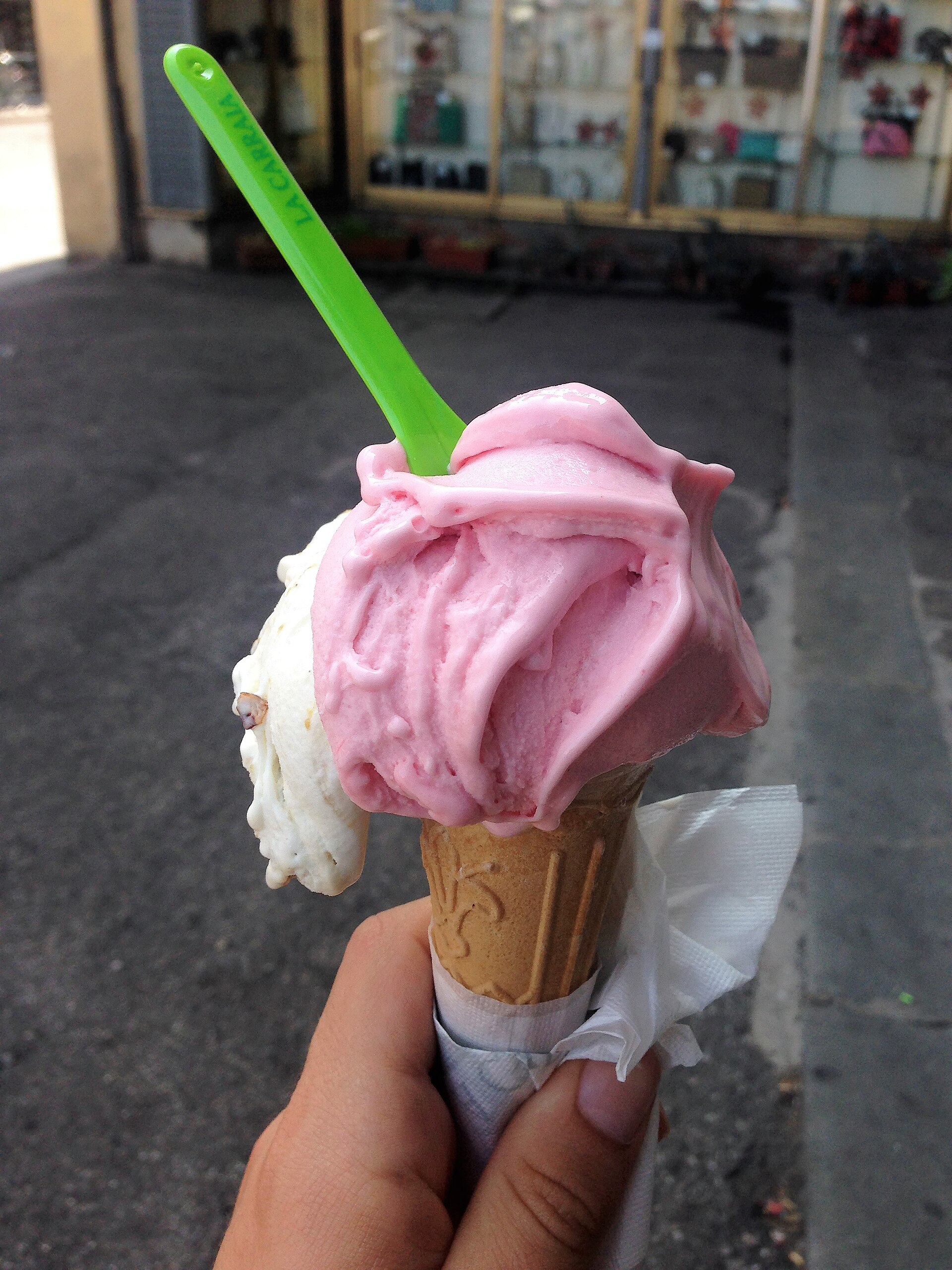
Gelato. Unavoidable, and worth doing properly. The reliable test is colour: real pistachio is a dull khaki, not fluorescent green, and real banana is grey, not yellow. Look for gelato artigianale, flat metal tubs with lids rather than piled pastel mountains, a short list that changes with the season, and a shop that is not on the direct line between the Duomo and the Ponte Vecchio.
And lampredotto, which is Florence’s own street food — the fourth stomach of a cow, slow-simmered, chopped into a bun with salsa verde, sold from carts around the markets. It is far better than that description suggests and it is what the city actually eats at lunchtime.
Book tables four or five days ahead if you want to eat outside, which in July you do. Our Florence food guide has where to go and Italian dining etiquette covers the coperto, the coffee rules and the rest.
What to Pack
- Loose natural fabrics only. Linen and cotton. Synthetics in a Florentine July are a mistake you make once.
- A real hat and high-factor sunscreen. Ten hours of sun a day, and the shade in the centre is patchy.
- A refillable bottle. Non-negotiable. Three or four litres a day.
- Something with sleeves for churches. Shoulders and knees are enforced at the Duomo and Santa Croce and it is maximally irritating in July. A light scarf in the bag solves it — see the church dress code.
- Two pairs of broken-in shoes, so one can dry out. Eight hours on hot cobbles is harder on feet than the distance suggests.
- Electrolyte sachets. Unglamorous, weightless, and they will rescue at least one afternoon.
The full seasonal list is in our Florence packing list.
Frequently Asked Questions
Is July a good time to visit Florence?
It is the hardest month for sightseeing and one of the best for evenings. Thirty-two degrees, maximum crowds and almost no rain, against the best free cultural programme of the year and nights that run until eleven. If you can choose freely, May or September are better. If you are coming in July, restructure the day — early start, middle of the day indoors, out again at five — and it works.
How hot does Florence get in July?
Average high around 32 °C and average low around 18 °C, with 313 hours of sunshine and under three wet days. The record is 42.6 °C, set on 26 July 1983, and thirty-seven or thirty-eight now occurs most summers. It feels hotter than the number because the city sits in a basin with little airflow and the stone radiates heat well into the night.
What free things are on in Florence in July?
A great deal. Apriti Cinema shows films outdoors in the Piazzale degli Uffizi at 22:00 until around 26 July, free until the roughly two hundred seats go. Estate Fiorentina runs 1 June to 30 September with over a thousand events, much of it free. The Rose Garden below Piazzale Michelangelo is free and open all year, as is the Santa Maria Novella pharmacy.
When do the summer sales start in Florence?
The first week of July, on a date fixed each year by Regione Toscana — in 2026 it was Saturday 4 July, running sixty days to 1 September. The date is the same in every shop, and regional law bans promotional discounting on the same goods for the thirty days beforehand, so late-June prices are genuinely full prices.
Can you climb the Duomo in July?
Yes, but book the first slot of the day. It is 463 steps with no lift, in an enclosed masonry stairwell with negligible airflow, shared with people descending. At nine in the morning it is a hard climb; in the afternoon in thirty-four degrees it is genuinely risky for anyone not in good shape. The dome slot is timed, so you are choosing when you book.
Where can you swim near Florence in July?
Florence has several open-air municipal pools that run through the summer — in the Cascine park, at Campo di Marte and along the Lungarno east of the centre. They are cheap, full of locals and almost unknown to visitors. For the sea, the Versilia beaches around Viareggio are about ninety minutes by train via Lucca, and warm through July.
Is the ZTL different in summer?
Yes. On top of the year-round weekday and Saturday restrictions, a night ZTL operates Thursday, Friday and Saturday from 23:00 to 03:00, from the first Thursday of April to the first Sunday of October. It is camera-enforced like the daytime zone and fines run €80 to €335 plus a hire-company admin fee. It catches people driving back from dinner.
July or August in Florence?
Statistically identical on temperature — 32.3 against 32.4 — but different in character. July has the fuller events programme and the sales starting, and the city is still fully open. August empties of Florentines, closes a portion of the good restaurants, and is quieter in the streets around Ferragosto. July for the city working normally; August if you want fewer people and will accept the shutters.
Keep Reading
- Florence in June — three degrees cooler, with Calcio Storico and the San Giovanni fireworks.
- Florence summer events — the whole June-to-September programme in one place.
- The best time to visit Florence — all twelve months compared.
- Florence weather by month — the full climate tables.
- Florence shopping guide — where to spend the sales.
- Outdoor activities in Florence — the pools, the river and the hills.
- Day trips from Florence — including the coast and the cooler hill towns.