This article contains advertising. Booking links on this site can be turned into paid links automatically by our partner Travelpayouts: if you book through one, we earn a commission from the provider, at no extra cost to you. It never affects what we recommend. Affiliate disclosure
Florence in August: Ferragosto, Closures & the Truth
Florence in August has a reputation it only half deserves. Yes, this is the month Florentines leave — the workshops pull their shutters down, a good share of the historic trattorias go on ferie for a fortnight, and if you want a supermarket on the 15th you are out of luck. But the museums stay open on Ferragosto, some of them late into the night; the city hands out two tonnes of free watermelon on the 10th; and the streets away from the Duomo are emptier than they have been since March. August is not the ruined month people tell you it is. It is a different city, and it rewards knowing which one you have arrived in.
Part of our month-by-month series — the best time to visit Florence compares all twelve, and Florence in July covers the month before, which is statistically identical and practically different.
Five degrees cooler, everything reopened after the ferie, and the harvest happening half an hour outside the city. Our guide to Florence in September explains why the second half of the month is the part worth booking.
The Short Verdict
Here is the honest summary, because this is a month people are routinely misled about in both directions.
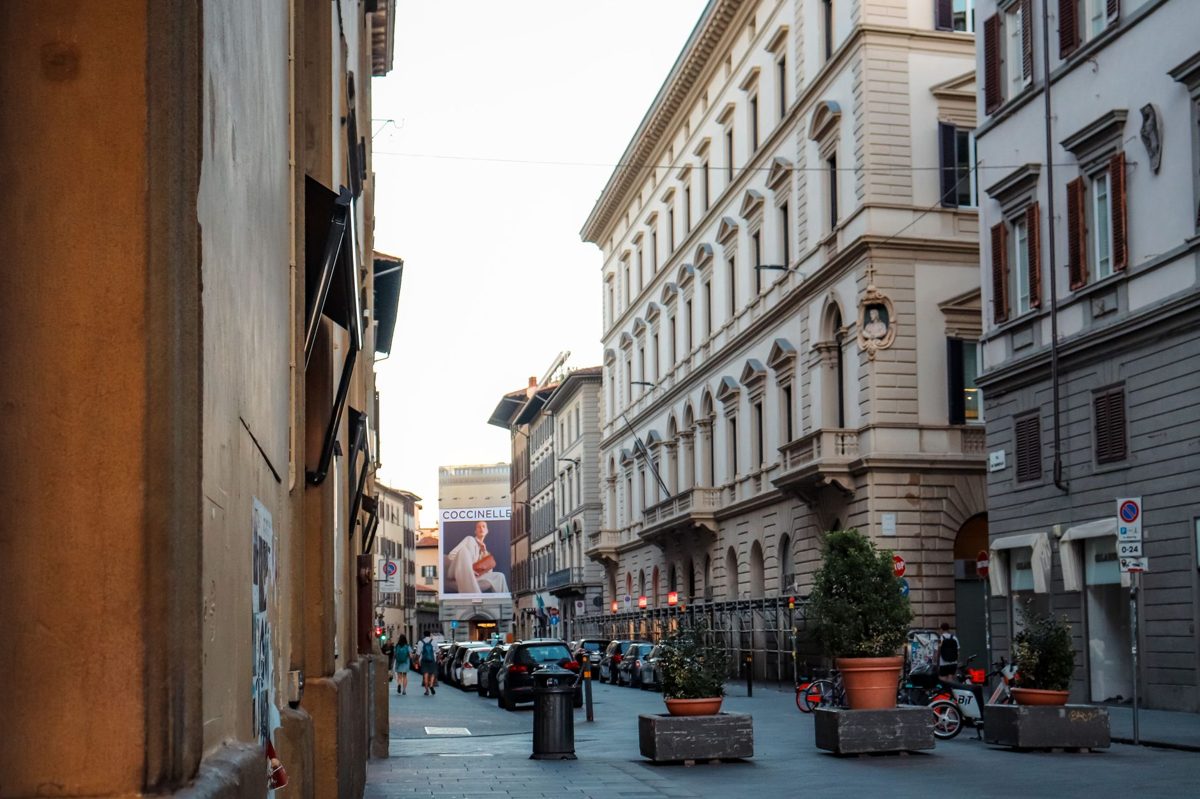
What is true: it is as hot as July. Many of the best small restaurants and nearly all the Oltrarno artisan workshops close for two or three weeks around the middle of the month. Ordinary shops and supermarkets shut on the 15th. The city feels partly evacuated, because it partly is.
What is not true: that Florence shuts. The Uffizi, the Accademia, Pitti, Boboli and the Duomo complex all run normal hours through August including Ferragosto, and several museums add special evening openings on the 15th specifically. The summer events programme runs to the end of September. The sales are still on. The city is not closed; the city’s own life is on pause, which is a different thing.
Who should come in August: anyone locked to school holidays, anyone who wants the big museums without a spring booking window, and anyone who likes a city slightly emptied of its own residents — which, if you are honest, is an odd but real pleasure.
Who should not: anyone whose trip is mainly about eating, or about the workshops and the artisan quarter. Those are precisely the things on holiday. Come in May or wait for September.
If your dates are movable by three weeks, they probably should be — our guide to Florence in September covers the month that gets the warmth without the shutters.
The Weather, Against July
| Measure | July | August | September |
|---|---|---|---|
| Average high | 32.3 °C | 32.4 °C | 27.3 °C |
| Average low | 18.4 °C | 18.5 °C | 15.0 °C |
| Rainfall | 25 mm | 37 mm | 67 mm |
| Wet days | 2.9 | 4.0 | 6.2 |
| Sunshine per month | 313 hrs | 279 hrs | 210 hrs |
A tenth of a degree separates July and August on the long-run averages. August is not hotter than July. It is very slightly wetter and rather less sunny — thirty-four fewer hours over the month — because late-August afternoons start producing the thunderstorms that build towards the wet Tuscan autumn.
Those storms are worth knowing about. They arrive fast, usually between four and seven, drop a great deal of water in twenty minutes and then stop, and they take five or six degrees off the evening. A late-August evening after a storm is one of the nicest things in the Florentine year.
Everything in our hot-weather advice for July applies unchanged: the city sits in a basin with no through-breeze, the stone radiates heat until well after dark, and the only workable shape for a day is early start, middle of the day indoors or uphill, out again at five. The dome climb — 463 steps, no lift, enclosed masonry — remains a first-slot-only proposition.
The end of the month is the turn
The last week of August is measurably better than the first, and it is consistently under-booked because people think of it as high summer. The heat starts giving way, the Florentines begin coming back so the restaurants reopen, and the September crowd has not yet arrived. If you have to travel in August, take the last week over the first.
What Actually Closes
This is the question everybody has, and the answer is more specific than “everything”.
Open as normal
- The state museums — Uffizi, Accademia, Pitti, Boboli, Bargello, the Medici Chapels. Normal hours, normal closing days, right through August and on Ferragosto itself.
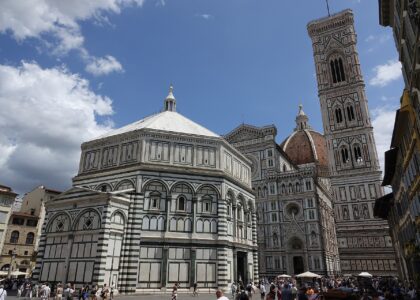
- The Duomo complex — cathedral, dome, bell tower, Baptistery and the Museo dell’Opera, all on standard summer hours.
- Tourist-facing businesses in the centre — hotels, central restaurants, the big shops on Via Roma and Via de’ Tornabuoni, the markets.
- Buses, trams and trains — on reduced summer timetables rather than suspended. The €2.00 single is unchanged.
Closed, and this is the real story
- Oltrarno artisan workshops. The leatherworkers, gilders, frame-makers and restorers on Via Santo Spirito, Via Maggio and Borgo San Frediano largely shut for two or three weeks around Ferragosto. If the craft quarter is why you are coming, do not come in August.
- Historic trattorias. A substantial share of the family-run places take their ferie mid-month. Check individually, and book what is open.
- Supermarkets and neighbourhood shops on the 15th, and many for several days around it — more so the further you get from the centre.
- Offices, banks, pharmacies on rota, and anything municipal on the 15th.
The pattern is simple once you see it: what serves visitors stays open, what serves Florentines closes. That is also exactly why the city feels strange in August. The parts of Florence that are a living town go quiet, and the parts that are a destination carry on.
Ferragosto, 15 August
Ferragosto is the Feast of the Assumption and a national public holiday, and it is the fulcrum of the Italian summer — the day the country as a whole is at the seaside. The name goes back to the Feriae Augusti, the holidays instituted by the emperor Augustus in 18 BC, which is a better piece of continuity than most things sold as ancient tradition.
For a visitor in Florence, the practical facts are these.
The museums are open. This surprises people and it is worth repeating: Ferragosto is a museum day in Italy, not a closure day. The Uffizi, Pitti and Boboli run standard hours. Several go further — in 2026 the Medici Chapels opened 08:15 to 13:50 and then again from 19:15 to 22:50 for a special evening session, and the Bargello opened on a day it would normally have been shut. Check the individual museum a week ahead, because the special openings are announced late and are genuinely good: a Renaissance interior at ten at night in August is a rare thing.
The shops are not. Finding a supermarket open in the city on the 15th is close to impossible. Buy food the day before. Central tourist businesses will be trading, so you will not starve, but you will pay centre prices for it.
Book dinner. The restaurants that stay open on Ferragosto fill with the Florentines who did not leave and with everyone else. This is one of two nights in the Florentine year — the other is 24 June — when walking in and asking for a table will not work.
There is free watermelon. Public cocomerate — organised watermelon giveaways — are held around the city on the 15th, including in the Giardino dell’Orticoltura, the nineteenth-century glasshouse garden north of the centre that is free, shaded and one of the most pleasant places in Florence to sit out a hot afternoon.
In 2027, 15 August falls on a Sunday, which softens the effect slightly: a Sunday closure is closer to normal than a midweek one, and there is no bridge weekend to inflate it.

Festa di San Lorenzo, 10 August
Five days before Ferragosto, Florence throws one of its best and least-known parties, and it is completely free.
San Lorenzo — St Lawrence — was martyred on a gridiron, which the Florentines have always found more amusing than solemn, and the Basilica di San Lorenzo is the Medici parish church: Brunelleschi’s interior, Michelangelo’s Laurentian Library staircase, the Medici Chapels behind it, and a facade that was never finished and is still bare stone six hundred years later.
10 August, the running order
- Morning — the Corteo Storico della Repubblica Fiorentina walks in costume to Palazzo Vecchio and then to the basilica, where Mass is at 11:00 with the historic ceremony of the offering of candles.
- From 21:00, in Piazza San Lorenzo — the city hands out 300 kilos of pasta al ragù and then the cocomerata, for which the Mercato Centrale donates roughly two tonnes of watermelon. Plus yoghurt, kefir and live music. Free to anyone who turns up.
This is not a tourist event. It is a genuine neighbourhood festa that happens to sit in the middle of one of the most visited squares in Italy, and the queue for the pasta is full of Florentines who have done it every year of their lives. Go, queue, eat standing up, and do not expect anything refined about it. It is one of the warmest evenings the city offers.
The 10th is also the Notte di San Lorenzo, the night of the shooting stars — the peak of the Perseid meteor shower, which Italians have long associated with the saint’s tears. Light pollution in the city makes this mostly notional, but get up to Fiesole, or out into the hills, and it is real. If you want somewhere dark and close, the slopes above Settignano or the road up past San Miniato will do at a pinch.
What Is Still On
August is thinner than July for events, but not by as much as you would think.
Estate Fiorentina runs to 30 September, so the city’s umbrella summer programme continues right through — concerts, open-air performances and neighbourhood events across the piazze and gardens, much of it free. The programme is published on the city’s culture site.
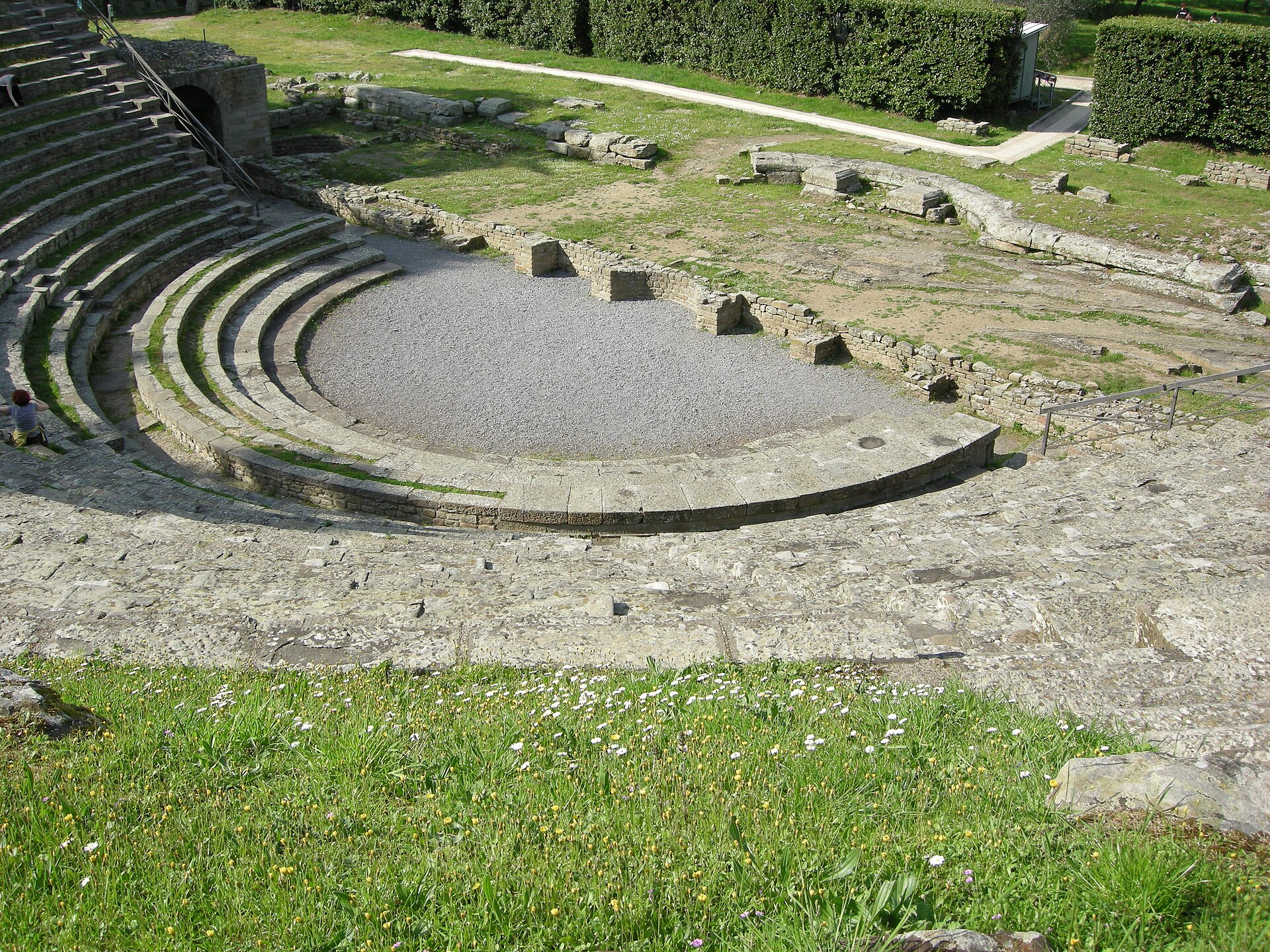
Estate Fiesolana continues at the Roman theatre above the city into September, and in August it runs a dedicated open-air cinema season inside the theatre itself — in 2026, from 7 to 23 August. Watching a film from the stone tiers of a first-century BC theatre, three hundred metres above a city you can see from your seat, is a better evening than most things you will pay four times as much for. Bus 7 from Santa Maria Novella or San Marco, twenty to thirty-five minutes.
The sales are still running. Tuscan summer saldi run about sixty days from the start of July — in 2026, to 1 September — so August is the deep-discount end of them. Reductions are at their steepest and the stock is at its thinnest; go for the shoes and the leather rather than hoping for a specific size.
What has finished: Apriti Cinema, the free open-air cinema in the Piazzale degli Uffizi, wraps up around 26 July, and the Musart festival with it. If those are what you wanted, you needed July.
The Myth of the Empty City
You will read that Florence empties in August. It is half true and the half that is false costs people money.
Florentines leave. Visitors do not. August is one of the biggest international tourism months of the year, and the Uffizi, the Accademia, the Duomo queue and the Ponte Vecchio are all as busy as they are in July. What empties is the residential city — the Oltrarno backstreets, the neighbourhood bars, Sant’Ambrogio, Campo di Marte, anywhere that exists for people who live here.
So the booking rules do not relax:
| What | Book ahead | Price |
|---|---|---|
| Accademia (David) | Three to four weeks | €20 + €4 booking |
| Uffizi, 08:15 slot | Three weeks | €25 day / €29 booked |
| Uffizi, from 16:00 | A week or two | €16 |
| Duomo dome climb | Three weeks; earliest slot only | Brunelleschi Pass €30 |
| Restaurants, 15 August | A week, and confirm they are open | — |
| Estate Fiesolana cinema | A few days | Varies |
| Accommodation | Rates soften slightly mid-month | — |
The one genuine saving is accommodation. Hotel rates in Florence do dip a little in the middle of August, because the domestic market has gone to the coast and the city is a hard sell in thirty-two degrees. It is the only month of the high season where that happens.
What to Do
The August-specific list
- Do the big three properly. With the booking pressure marginally lower than May or September, August is a reasonable month to actually see the Uffizi, the Accademia and the Bargello without a month of planning.
- Use Fiesole as a second base. Three hundred metres up, genuinely cooler, with a Roman theatre, an archaeological area, a cathedral and a view back down over the whole basin. Bus 7. This is the single best move available in a Florentine August.
- Swim. The municipal open-air pools — in the Cascine, at Campo di Marte, along the Lungarno east of the centre — run through the summer, cost very little and are full of the Florentines who stayed. For the sea, the Versilia beaches near Viareggio are about ninety minutes by train via Lucca.
- Sit in the Giardino dell’Orticoltura. Free, shaded, with a huge nineteenth-century iron and glass greenhouse, and almost entirely local. A better hot afternoon than a museum queue.
- Walk at seven in the morning. The centre of Florence between seven and nine in August is the closest you will get to having the place to yourself, and the light is the best of the day.
What not to do in August
- Plan the trip around the Oltrarno workshops. Most are shut for a fortnight. Our Florence neighbourhoods guide explains what the quarter is normally like, and it is not this.
- Arrive on the 14th without food. The supermarkets shut on the 15th.
- Climb anything after ten in the morning.
- Book a hotel without confirming the air conditioning runs overnight. Some historic buildings only run it in the public rooms.
- Expect the coast to be quiet. The whole of Italy is there. That is the point of Ferragosto.
Eating in August
This is where August genuinely costs you something, and it is worth being straight about it. The best small family restaurants in Florence are family restaurants, and families take holidays in August. A place you read about in March may have a handwritten sign on the shutter saying chiuso per ferie, back on the 1st of September.
How to handle it:
- Check before you go, not when you arrive. Most places post their ferie dates on their own social accounts in July.
- Book what is open. Fewer restaurants trading and the same number of visitors is straightforward arithmetic.
- Eat late. Nine or half past. Nobody in Florence eats outside at seven in August, and the places that seat you then are the places catering to people who do not know that.
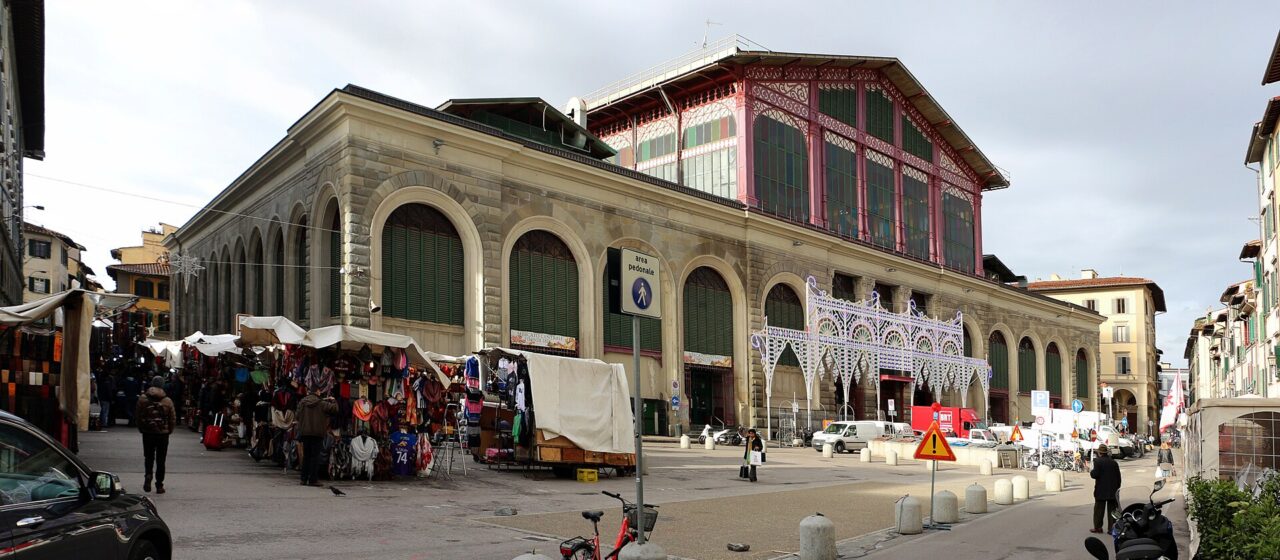
- Use the markets. Sant’Ambrogio and the Mercato Centrale both run through August, and assembling lunch from a market and eating it in a garden is the correct response to thirty-two degrees.
What to order: panzanella and pappa al pomodoro, both at their absolute peak in August because the tomatoes are; melon and figs, which come good towards the end of the month; fagioli all’uccelletto; and lampredotto from a cart, which is what the city actually eats at lunchtime and is far better than a description of it suggests.
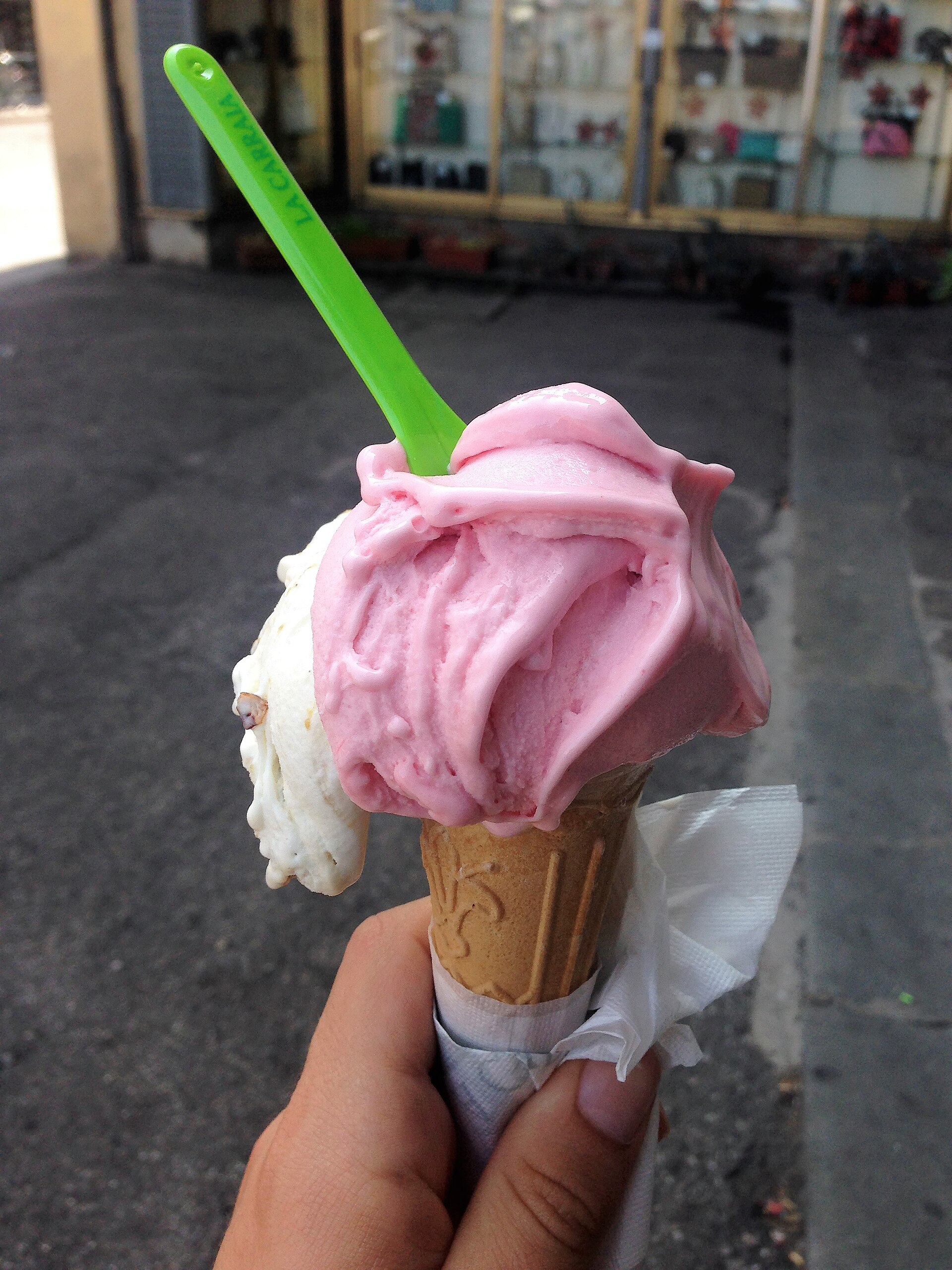
And gelato, constantly. The colour test still applies: real pistachio is a dull khaki, real banana is grey. Flat metal tubs with lids, a short seasonal list, and preferably not on the direct line between the Duomo and the Ponte Vecchio. Our Florence food guide has the addresses, and Italian dining etiquette the unwritten rules.
What to Pack
- Loose linen and cotton only. The same rules as July, because it is the same temperature.
- A hat, and sunscreen you will actually reapply. Nine hours of sun a day and unreliable shade.
- A refillable bottle. The fontanelli give chilled still and sparkling water free.
- A thin waterproof. New for August: late-month afternoon thunderstorms are heavy and sudden.
- Sleeves for churches. Shoulders and knees are enforced at the Duomo and Santa Croce — see the church dress code.
- Swimming things. Genuinely useful here, which is not true in any other month except July.
The full list is in our Florence packing list.
Frequently Asked Questions
Is Florence worth visiting in August?
Yes, with conditions. The museums, the Duomo complex and the central city all operate normally, hotel rates dip slightly mid-month, and the residential streets are quieter than at any point since spring. But it is as hot as July, many of the best small restaurants and nearly all the Oltrarno workshops close for a fortnight, and shops shut on the 15th. Come if your dates are fixed; move to September if they are not.
Is Florence hotter in August than July?
No — they are effectively identical, 32.4 °C against 32.3 °C on the long-run averages. August is slightly wetter, with four wet days against three, and has about thirty-four fewer hours of sunshine, because late-August afternoons start producing thunderstorms. Those storms take five or six degrees off the evening, which is a genuine improvement.
Are museums open in Florence on Ferragosto?
Yes. The Uffizi, Pitti, Boboli, the Accademia and the Duomo complex all run normal hours on 15 August, and some museums add special evening openings for the holiday — in 2026 the Medici Chapels ran a late session from 19:15 to 22:50. Ferragosto is a museum day in Italy, not a closure day. What does close is supermarkets, ordinary shops, banks and offices.
What closes in Florence in August?
The rule is that what serves Florentines closes and what serves visitors stays open. So: the Oltrarno artisan workshops, a large share of the family-run trattorias, neighbourhood shops and supermarkets — mostly for two or three weeks around the 15th. Museums, hotels, central restaurants, the markets and public transport all carry on.
What happens in Florence on 10 August?
The Festa di San Lorenzo. A costumed historical procession to Palazzo Vecchio and then to the Basilica di San Lorenzo for Mass at 11:00 with the offering of candles, then from 21:00 in Piazza San Lorenzo the city gives away 300 kilos of pasta al ragù and about two tonnes of watermelon donated by the Mercato Centrale. Free, local and genuinely good fun. It is also the peak of the Perseid meteor shower.
Is Florence empty in August?
Only of Florentines. August is a peak international tourism month, so the Uffizi, the Accademia, the Duomo queue and the Ponte Vecchio are as busy as in July. What empties is the residential city — the Oltrarno backstreets, the neighbourhood bars, the markets locals use. Book museums three to four weeks ahead as usual.
Are the sales still on in August?
Yes. Tuscan summer saldi run about sixty days from the start of July — in 2026, to 1 September — so August is the deep-discount end. Reductions are at their steepest but the stock is thin, so it is better for leather goods and shoes than for finding a particular size.
When in August is best?
The last week, comfortably. The heat begins to break, Florentines come back and the restaurants reopen, the September crowd has not arrived yet, and it is consistently under-booked because people still think of it as high summer. The worst stretch is roughly 12 to 18 August, around Ferragosto itself.
Keep Reading
- Florence in July — the same temperature, the fuller events programme, nothing shut.
- Florence summer events — the whole June-to-September calendar.
- The best time to visit Florence — all twelve months compared.
- Florence weather by month — the full climate tables.
- Florence food guide — and which places take August off.
- Day trips from Florence — including the coast and the hill towns.
- Outdoor activities in Florence — the pools, the gardens and the river.