This article contains advertising. Booking links on this site can be turned into paid links automatically by our partner Travelpayouts: if you book through one, we earn a commission from the provider, at no extra cost to you. It never affects what we recommend. Affiliate disclosure
Lucca is one of Italy’s most underrated cities — a 2,000-year-old Tuscan walled town 90 minutes by train from Florence, where you can rent a bike and cycle a 4km loop on top of intact Renaissance city walls, see the Romanesque Cathedral of San Martino, visit the birthplace of opera composer Giacomo Puccini, and spend the day in a working Italian city that has somehow escaped the worst tourist intensity of its bigger Tuscan neighbours. This 2026 guide covers everything: getting there, the famous walls, where to rent bikes, what to see, the Cathedral, Puccini sites, and how to combine Lucca with Pisa for a fuller day.
Lucca is among the most relaxed day trips from Florence and pairs naturally with Pisa on the same rail line. The city is best seen on two wheels — if you enjoy that, see our guide to cycling in and around Florence.
Why Lucca?
Lucca was a Roman colony (founded 180 BC), the wealthy banking centre of medieval Italy (rivalling Florence), and from 1500–1799 an independent republic squeezed between the Florentine and Pisan territories. The independence is why Lucca’s defining feature exists: fortified walls. Built between 1545 and 1650, Lucca’s walls — 4.2km in circumference, 12 metres high, 30 metres thick at base — are the most complete Renaissance fortifications in Italy. Crucially, they were never tested in war and never demolished.
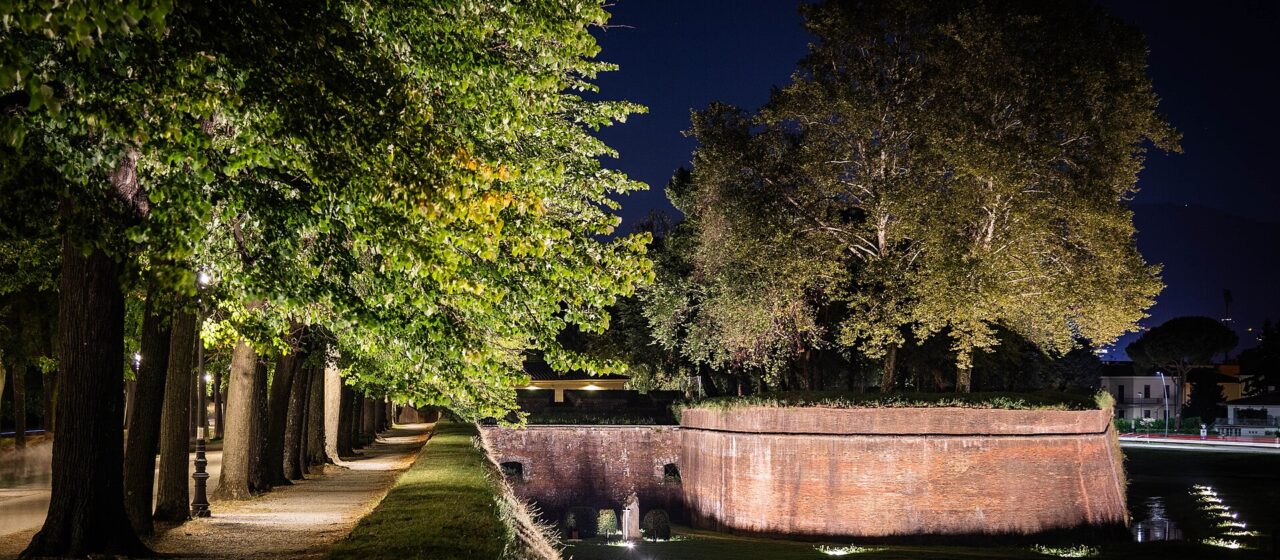
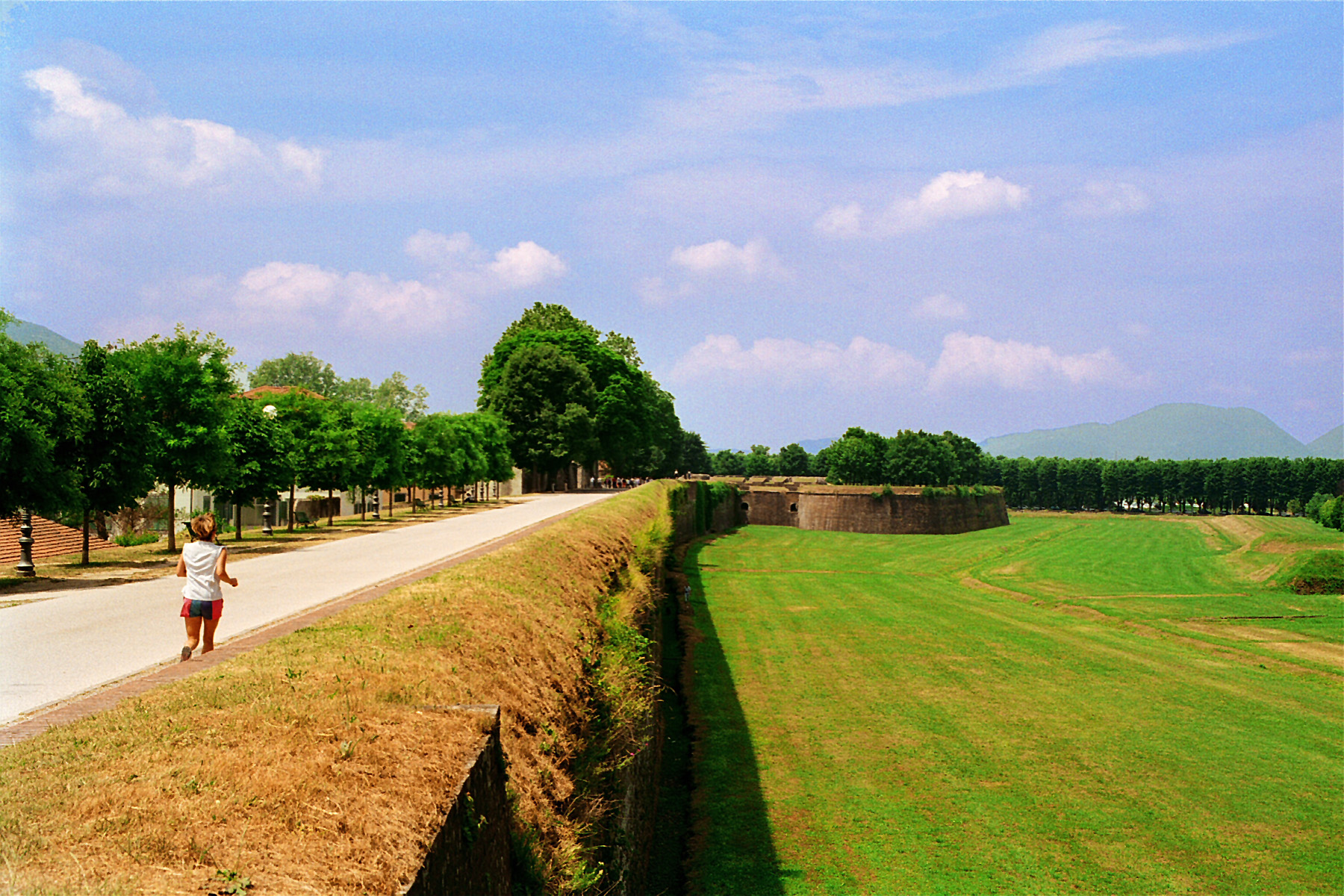
In the 1820s, the local duchess Maria Luisa converted the walls into a public greenway with a tree-lined promenade running the entire 4.2km circuit. Today this is the city’s most distinctive feature — a flat, shaded, completely traffic-free walking and cycling loop above the historic centre, with views into private gardens, panoramic glimpses of Tuscan countryside, and benches every 100 metres.
Beyond the walls: Romanesque churches, narrow medieval streets, a Roman amphitheatre footprint preserved as a piazza, the Puccini connection, and a working Tuscan town atmosphere with significantly fewer tourists than Florence or Siena.
Getting from Florence to Lucca
By Train (Recommended)
- Direct Trenitalia regional train from Florence Santa Maria Novella to Lucca
- Journey: 1 hour 15 minutes to 1 hour 30 minutes
- Cost: €8.50 fixed regional fare
- Frequency: Every 60 minutes
- Lucca station is just outside the city walls, 5-minute walk through Porta San Pietro to Piazza Napoleone
The journey passes through Pistoia and Lucca Ardenza on the way; both are minor stops. Buy tickets at the station ticket counters, vending machines, or via the Trenitalia mobile app.
By Car
- Distance: 80km via the FI-PI-LI superstrada (free) and SS12, ~1 hour 15 minutes
- Parking: Lucca has a ZTL covering the historic centre. Park at Parking Mazzini, Parking Borgo Giannotti, or Parking Stadio (€2/hour, €15–20/day) just outside the walls. Walk in via any of the 12 city gates.
By Bus
Less common — Autolinee Toscane bus runs Florence-Lucca but takes ~2 hours via roads. Train is faster and roughly the same price.
Cycling the Walls
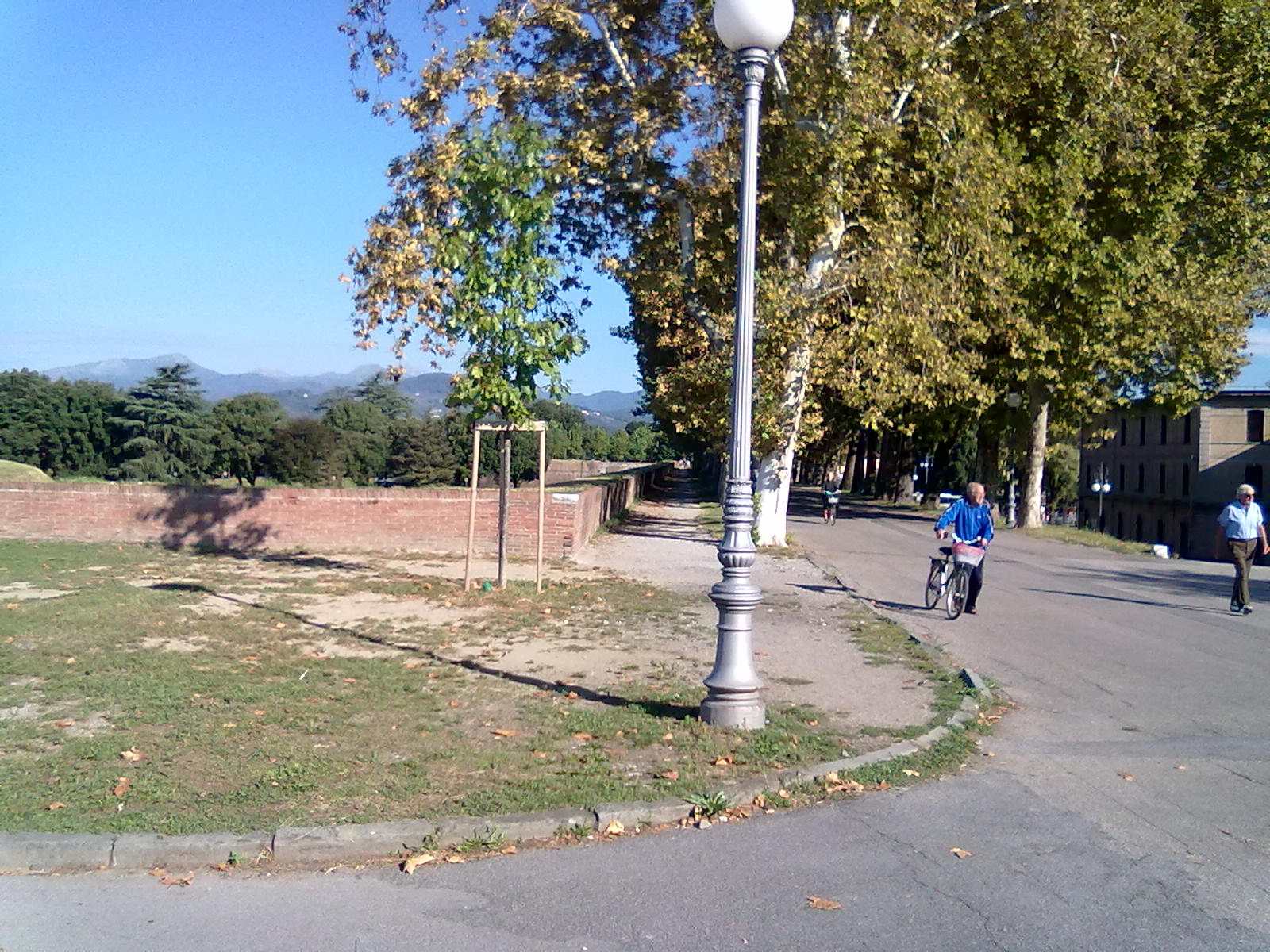
The 4.2km loop on top of Lucca’s walls is the city’s signature experience. Cycling it takes 30–45 minutes at leisurely pace, including stops at the bastions for views. Walking the full loop takes 90 minutes.
Bike Rental
Multiple shops inside the walls. Recommended:
- Cicli Bizzarri (Piazza Santa Maria 32) — long-established, English-speaking, near the Porta Santa Maria gate. €4/hour or €15–18/day for city bikes; €10/hour or €25–30/day for e-bikes.
- Cicli Rai (Piazza Santa Maria 42) — competitor, similar prices.
- Tourist Centre Lucca (Piazza Curtatone) — bike rental + city information.
- Hotels and B&Bs often have bikes for guests, free or €5–10 per day.
Most shops include helmet (recommended but not legally required for adults in Italy), lock, and basic city map. Children’s bikes and tag-along trailers available for families. No advance booking needed except for large groups.
The Walls Route
The walls have 11 bastions (massive defensive corners) named after saints — Bastion San Donato, Bastion San Frediano, Bastion San Pietro, etc. Each bastion has a small park or rest area, and most have stairs/ramps down to street level (useful for popping into the historic centre mid-loop). The cycling path is paved, flat, completely traffic-free, and shaded by 200-year-old plane trees.
Highlights along the loop:
- Bastion San Frediano — northern view to the Apuan Alps
- Bastion San Donato — eastern view of the historic centre’s bell towers
- Bastion San Pietro — view of the Cathedral and city core
- Porta Sant’Anna — gate near the bus station
- Bastion Santa Maria — close to the popular Piazza Anfiteatro
Many cyclists do two loops to make the rental fee feel worthwhile. Some hotels organise sunset wall rides for guests.
What to See in Lucca
Cathedral of San Martino

Lucca’s Cathedral, dating to the 11th century with extensive 13th-century renovations. Distinctive features:
- The Volto Santo — a 13th-century cedar wood crucifix, said to be carved by Nicodemus during Christ’s lifetime; the city’s most venerated relic
- Tomb of Ilaria del Carretto by Jacopo della Quercia (1407) — one of Italy’s most beautiful Renaissance tombs, the recumbent figure of a young Lucca noblewoman with her dog
- The Last Supper by Tintoretto (1592)
- Asymmetric facade — the right side of the bell tower extends further than the left, a famous architectural quirk
The Cathedral plus the Cathedral Museum and Bell Tower combo €13. Cathedral interior alone €5. Open daily 09:30–17:30 (reduced Sunday hours).
Piazza dell’Anfiteatro

One of Italy’s most distinctive squares — an oval piazza preserving the footprint of a Roman amphitheatre. The Roman structure was built around 50 AD and demolished over the medieval period, but the oval shape survived as the working pattern of houses constructed inside and around it. Today restaurants, gelaterias and shops line the perimeter.
The piazza is accessed via four narrow stone passageways at compass points. Lunch on the piazza, browse the small antique market (weekends), and spend an hour photographing the unique geometry.
Church of San Michele in Foro
Lucca’s most spectacular Romanesque facade — multi-tiered loggias of marble columns, with intricate stonework. Built on the site of the Roman forum (hence the “in Foro” suffix). Free entry; especially photogenic in late afternoon golden light.
Puccini’s Birthplace Museum
Giacomo Puccini was born in Lucca on 22 December 1858. His childhood home, just off Piazza Cittadella, is now the Puccini Museum (Casa Natale di Puccini). Houses original manuscripts, scores, costumes from his operas, and personal objects. €8 entry. Worth 30 minutes for opera lovers.
The annual Puccini Festival (July–August) at Torre del Lago, 20km away by bus from Lucca, presents Puccini operas in an open-air theatre by the lake where he composed. €60–200 ticket; one of Italy’s distinctive summer cultural experiences.
Torre Guinigi
The most distinctive of Lucca’s surviving medieval towers — a 45-metre stone tower with seven oak trees growing on the rooftop garden (a common medieval Lucchese tradition; this is the only surviving example). 230 steps to the top for panoramic views of the entire historic centre and the surrounding hills. €5 entry.
Palazzo Pfanner
17th-century Baroque palace with elegant rooms and a beautiful Italian-style garden visible from the city walls. Used as a filming location in The Portrait of a Lady and Stealing Beauty. €6 entry for the gardens, €10 combined garden + palace.
Piazza Napoleone
Lucca’s main civic square, named for the Napoleonic occupation. Surrounded by the Palazzo Ducale (now provincial offices) and the Palazzo della Provincia. Hosts the Lucca Summer Festival in July (concerts by major international rock and pop acts).
A 6-Hour Lucca Day Itinerary
Departing Florence 09:00, returning ~18:00.
- 10:30: Arrive Lucca station, walk through Porta San Pietro to Piazza Napoleone
- 10:30–11:00: Coffee on Piazza Napoleone or Piazza San Michele
- 11:00–11:30: San Michele in Foro church facade and interior (free)
- 11:30–12:00: Walk to Cathedral of San Martino — Cathedral interior + tomb of Ilaria del Carretto + Volto Santo (€5)
- 12:00–13:00: Climb Torre Guinigi for panoramic views (€5, 230 steps)
- 13:00–14:30: Lunch on Piazza dell’Anfiteatro — Buca di Sant’Antonio, Trattoria Buralli, or one of the small osterias inside the oval
- 14:30–15:00: Rent a bike at Cicli Bizzarri (€4/hour for city bike, €10/hour for e-bike)
- 15:00–16:30: Cycle the 4.2km wall loop — 1.5 hours including bastion stops and views
- 16:30–17:00: Return bike, browse Via Fillungo (Lucca’s main shopping street)
- 17:00–17:30: Final coffee or aperitivo
- 17:30: Walk back to Lucca station
- 18:00: Train back to Florence
Lucca + Pisa Combo
Pisa is 30 minutes from Lucca by direct regional train (€4 each way). Combining them in one full day from Florence:
- 09:00: Florence SMN → Lucca direct (1h15, €8.50)
- 10:30–13:30: Lucca walls cycling, Cathedral, Torre Guinigi, lunch on Piazza Anfiteatro
- 13:30: Lucca → Pisa Centrale (30 min, €4)
- 14:00–17:30: Pisa Field of Miracles, Tower climb if booked
- 17:30: Pisa → Florence (1 hour, €9.80)
- 18:30: Back in Florence
Total transport €21 each. Two iconic Tuscan cities in one efficient day.
Food & Drink in Lucca
Lucca has its own distinctive Tuscan-Lucchese cuisine:
- Tordelli lucchesi — meat-stuffed ravioli with meat ragù, the local Sunday lunch
- Buccellato di Lucca — sweet bread ring with raisins and aniseed, the city’s signature pastry
- Farro — ancient grain (spelt) used in soups, salads and main courses
- Lucchese olive oil — the local DOP olive oil, exceptional
- Wines from the Lucca Hills — local Colline Lucchesi DOC, plus excellent Vermentino whites
Recommended restaurants:
- Buca di Sant’Antonio — historic restaurant in operation since 1782, traditional Lucchese
- Trattoria Buralli — working trattoria, family-run
- Osteria Vecchia Trattoria Da Buralli — variant of the above with wine focus
- Da Felice — pizza al taglio and cecìna chickpea pancake (€2 a slice)
- Pasticceria Taddeucci — buy buccellato direct from the bakery that has made it for 130+ years
Lucca Festivals & Events
- Lucca Comics & Games (late October–early November) — Italy’s largest pop-culture/anime/games convention. The whole city fills with cosplayers; book accommodation 6 months ahead.
- Lucca Summer Festival (July) — major rock/pop concerts on Piazza Napoleone
- Puccini Festival (July–August at Torre del Lago, 20km away) — open-air opera
- Settembre Lucchese (September) — month-long civic celebrations including the Volto Santo procession
- Mercato Antiquario (third Sunday of every month) — antiques market on Piazza dell’Anfiteatro
Insider Tips
Tip 1: Rent the e-bike (€10/hour vs €4/hour) — the wall ride is flat, but having an e-bike lets you also climb the small ramp to the wall (saves carrying a city bike up steps) and explore beyond the walls.
Tip 2: Climb Torre Guinigi at midday — most visitors miss it, the queue is rarely more than 10 minutes, and the rooftop oak trees are unique to this tower.
Tip 3: Buy buccellato (the local sweet bread ring) at Pasticceria Taddeucci — €5–8 per ring, packaged for travel home.
Tip 4: Avoid restaurants on Piazza Napoleone — overpriced. Lunch on Piazza dell’Anfiteatro or in the smaller streets near the Cathedral.
Tip 5: The Cathedral interior light is best mid-morning when sun streams through the upper windows; the Volto Santo crucifix is dramatically lit.
Tip 6: If visiting in late October–early November, book accommodation months ahead — Lucca Comics & Games sells out the city.
Tip 7: The walls are accessible by ramp at six points — useful for strollers, wheelchairs and travellers carrying larger items. The Bastion San Pietro ramp is the smoothest.
Best Time to Visit Lucca
- April–May, late September–October — comfortable weather, comfortable cycling temperatures, manageable crowds
- July and August — hot but with summer programming; the wall trees provide shade for the cycling loop
- Late October–early November — Lucca Comics & Games (book months ahead) or the immediate weeks before/after for quiet visits
- November–February — quiet, atmospheric, with shorter daylight; ideal for budget visitors
Lucca Day Trip FAQ
How long is the train from Florence to Lucca?
1 hour 15 minutes by direct Trenitalia regional train, €8.50 fixed fare, hourly departures. Lucca station is a 5-minute walk through Porta San Pietro to the historic centre.
Can I cycle the Lucca walls?
Yes — the 4.2km loop on top of the walls is flat, traffic-free, and tree-shaded. Bike rentals from €4/hour or €15–18/day at multiple shops inside the walls (Cicli Bizzarri, Cicli Rai). The full loop takes 30–45 minutes by bike.
What’s the must-see in Lucca?
Cycling the walls, Cathedral of San Martino (Volto Santo + tomb of Ilaria del Carretto), Piazza dell’Anfiteatro (Roman amphitheatre footprint), Torre Guinigi (medieval tower with rooftop oak trees), and San Michele in Foro church facade.
Where should I eat in Lucca?
Buca di Sant’Antonio (historic, traditional), Trattoria Buralli (working trattoria), or one of the smaller osterias on Piazza dell’Anfiteatro. Buy buccellato sweet bread at Pasticceria Taddeucci. Try cecìna at Da Felice.
Should I combine Lucca with Pisa?
Yes — Pisa is 30 minutes from Lucca by direct regional train (€4). A full day from Florence covers Lucca morning + Pisa afternoon. Total transport €21 each, two iconic Tuscan cities in one day.
Is Lucca the birthplace of Puccini?
Yes — Giacomo Puccini was born in Lucca on 22 December 1858. His childhood home is now the Puccini Museum (Casa Natale di Puccini, €8 entry). The annual Puccini Festival runs July–August at Torre del Lago, 20km from Lucca.
Is Lucca good for children?
Excellent — flat walking, no cars in the historic centre, the cycling walls, the rooftop-oak Torre Guinigi, the unique Roman amphitheatre piazza. Many bike rentals offer children’s bikes and tag-along trailers.
Lucca is the kind of Tuscan day trip that confirms why people fall in love with Italy. The walled town, the cycling loop, the Romanesque Cathedral, the working medieval streets, the Tuscan food — all in a city small enough to feel intimate but substantial enough to fill a full day. Take the 09:00 direct train, rent a bike on arrival, ride the walls, lunch on Piazza dell’Anfiteatro, climb Torre Guinigi for the panorama, and you’ll come back to Florence understanding why Lucca is the secret favourite of so many returning Italy travellers.