This article contains advertising. Booking links on this site can be turned into paid links automatically by our partner Travelpayouts: if you book through one, we earn a commission from the provider, at no extra cost to you. It never affects what we recommend. Affiliate disclosure
San Gimignano is the “Manhattan of the Middle Ages” — a tiny Tuscan hilltown 60km south of Florence, with 14 surviving medieval towers (out of an original 72) standing dramatically above the Val d’Elsa countryside. The town is a UNESCO World Heritage site, photographable from every angle, walkable in 90 minutes, and packed with Tuscan food traditions including the famous Vernaccia di San Gimignano white wine. This 2026 guide covers everything: how to get there from Florence, what to see, the must-eat gelato at world-champion Dondoli, the best ticket combinations, and how San Gimignano fits into a Tuscany day-trip strategy.
San Gimignano appears on almost every shortlist of day trips from Florence and is usually combined with Siena. For a quieter, more scenic alternative further south, compare it with Val d’Orcia.
Siena is the town most often paired with San Gimignano, and it is the easier of the two to reach. Our guide to Florence to Siena by bus or train covers the rapid 131R coach, the fares and the last departures back.

What is San Gimignano?
San Gimignano is a 13th-century Tuscan hilltown that became wealthy during the medieval period as a stop on the Via Francigena pilgrimage route between northern Europe and Rome. The town’s defining feature: medieval towers. Wealthy families competed to build ever-taller stone tower-houses as status symbols; at the medieval peak around 1300, the town had 72 towers stretching skyward. Following the 1348 Black Plague, urban decline and tower demolition reduced the count, but 14 survive today — more than anywhere else in Italy.
The unchanged medieval streetscape, the dramatic skyline visible from miles away, and the surrounding Val d’Elsa countryside make San Gimignano one of Tuscany’s most photographed places. UNESCO World Heritage since 1990; population about 7,500.
Getting from Florence to San Gimignano
San Gimignano has no train station. Three realistic options:
By Bus (Cheapest)
- Step 1: Florence to Poggibonsi by Trenitalia regional train (1 hour, €8.50)
- Step 2: Poggibonsi to San Gimignano by Autolinee Toscane bus 130 (25 minutes, €2.60)
- Total: 1 hour 25 minutes each way, €11–12 total
Buses run roughly every 30–60 minutes from Poggibonsi station. Less frequent on Sundays.
Direct Bus from Florence
- Autolinee Toscane bus 131 — direct Florence Autostazione → San Gimignano
- Journey: 1 hour 45 minutes, €8.40 single
- Frequency: 4–5 daily services, less convenient than the train+bus combo for most visitors
By Car
- Distance: 60km via SS222 → SP1, ~1 hour 15 minutes
- Parking: San Gimignano has its own ZTL covering the historic centre. Park outside at Parcheggio Bagnaia (free), Parcheggio Giubileo (free), or Parcheggio Montemaggio (€2/hour)
- Walking: 5–10 minutes from any of these car parks to the historic centre
Guided Day Tour
San Gimignano is rarely a stand-alone day-trip destination — it’s typically combined with Siena and a Chianti winery in a single full-day Tuscany tour. €85–150 per person. The combo is more efficient than visiting San Gimignano alone, since the town is small enough to absorb in 2.5–3 hours.
What to See in San Gimignano
Piazza della Cisterna
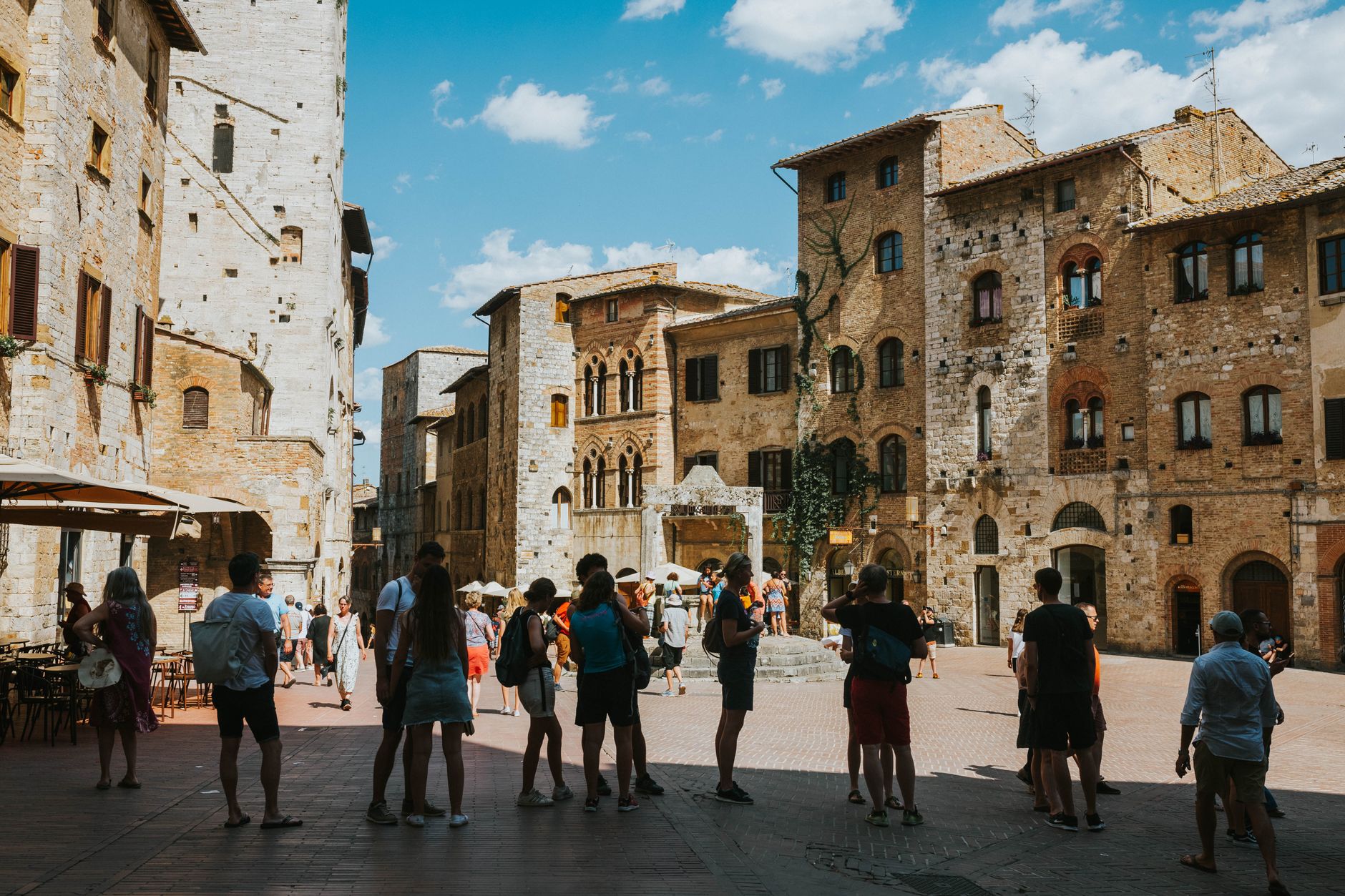
The town’s social heart — a triangular piazza paved in herringbone red brick, with a 13th-century well (cisterna) at the centre and surrounded by medieval tower-houses. The world-champion Gelateria Dondoli faces the well; wine bars and trattorias line the perimeter. This is where you’ll start, finish, and likely return throughout your visit.
Piazza del Duomo
The civic centre, just behind Piazza della Cisterna. Surrounded by:
- Collegiata di Santa Maria Assunta — the town’s main church (called “Collegiata” rather than “Duomo” because it’s not a bishop’s seat). Inside: extensive 14th-century fresco cycles by Lippo Memmi, Bartolo di Fredi, Taddeo di Bartolo, and Benozzo Gozzoli. The Old Testament scenes by Bartolo di Fredi (1356) are particularly fine.
- Palazzo Comunale — town hall, with the Pinacoteca art gallery upstairs and access to the Torre Grossa (the “Big Tower,” tallest of the surviving towers).
- Torre Grossa — the only tower open to climbing, 54 metres tall, 218 steps. Best panorama in the town.
The Surviving Towers
Of the original 72 towers, 14 survive. The most prominent:
- Torre Grossa — tallest, only one open to climb (€10 with Pinacoteca combo)
- Torre Rognosa — 51m, second tallest, in Piazza del Duomo
- Torri dei Salvucci — twin towers visible from many angles
- Torre del Diavolo — “Devil’s Tower,” with a famous local legend
- Torre Chigi — distinctive square shape
Most surviving towers belong to private buildings; you can see them from the streets but not enter. The Torre Grossa is the only public climb.
Rocca di Montestaffoli
The medieval fortress at the northwest end of the town, now mostly ruins but with extensive 360-degree views over the Tuscan countryside, the surrounding vineyards (Vernaccia di San Gimignano), and the towers themselves. The best photography point in town. Free to enter.
Other Sights
- Sant’Agostino — north end of the town, with extensive Benozzo Gozzoli frescoes (15th century) of the Life of St. Augustine
- Palazzo Pratellesi — small civic museum
- Galleria d’Arte Moderna e Contemporanea — modern art gallery
- Museum of Torture — controversial small museum, €10 entry
Tickets & Combinations 2026
- Collegiata di Santa Maria Assunta — €5
- Pinacoteca + Torre Grossa — €10 combo
- Sant’Agostino church — free
- Combined Civic Museum + Towers + Collegiata + Sant’Agostino + Galleria d’Arte — €15 combo
- Rocca di Montestaffoli — free
The €15 combined ticket is the smart purchase if you’ll see the major sights. Buy at the Pinacoteca entrance in Piazza del Duomo.
Food & Drink: The Vernaccia and Beyond
Vernaccia di San Gimignano
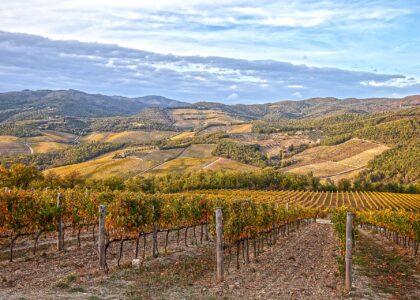
The town’s most famous product — the only DOCG white wine in Tuscany (Italy’s highest wine classification, otherwise reserved for reds). Vernaccia is a crisp, mineral white made from the local Vernaccia grape, grown only in the surrounding hills. Notable producers: Panizzi, Falchini, Tenuta Cappella, La Mormoraia.
Tastings: visit one of the in-town wine bars (Le Vecchie Mura, La Cantina del Vinaccio) or drive to a producer’s estate for cellar visits and full tastings. €15–30 per person at producer estates.
Gelateria Dondoli (World Champion)
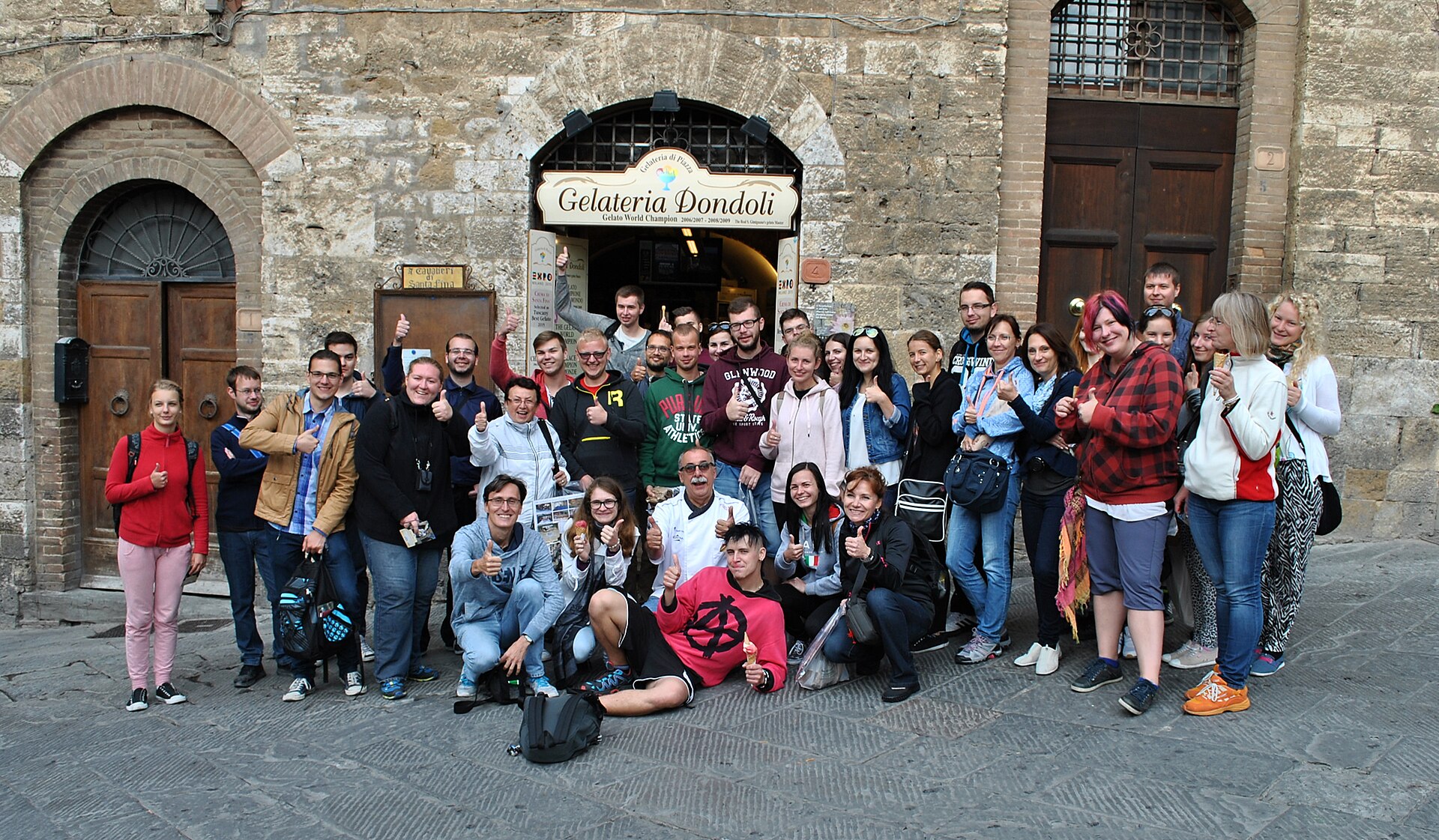
The gelateria on Piazza della Cisterna run by Sergio Dondoli, two-time World Gelato Champion. Famous flavours: Crema di Santa Fina (saffron and pine nuts), Champelmo (pink grapefruit and Champagne), Dolceamaro (rosemary and herbs). The queue can be 15–20 minutes long in summer; it’s worth it. €3.50 small cone, €5 large.
Restaurants
Sit-down restaurants get crowded at lunch with day-tour groups. Recommended for serious Tuscan food:
- Cum Quibus — outside the walls, slightly upscale, contemporary Tuscan
- Trattoria Chiribiri — small, family-run, classic dishes
- La Mangiatoia — working trattoria with cinghiale specialties
- Le Vecchie Mura — wine-bar with food, atmospheric setting on the city walls
Avoid restaurants advertising “tourist menus” or with photo menus — pure tourist traps. Most working trattorias are off the main piazzas.
Local Specialties
- Pici al cinghiale — hand-rolled pasta with wild boar ragù
- Cinghiale (wild boar) salami and prosciutto — bought at any of the in-town macelleria shops
- Saffron-infused dishes — San Gimignano grows its own saffron, used in risotto, sauces, and the Dondoli gelato
- Cantucci di San Gimignano — local almond biscotti
A 3-Hour San Gimignano Itinerary
Arriving at the Porta San Giovanni gate (the main entrance):
- 0–10 minutes: Walk up Via San Giovanni — the main shopping/restaurant street, with views of towers ahead
- 10–20 minutes: Piazza della Cisterna — coffee or first gelato at Dondoli (or save for later), photograph the well and surrounding towers
- 20–35 minutes: Piazza del Duomo — Collegiata church + frescoes (Bartolo di Fredi Old Testament scenes are unmissable), €5
- 35–60 minutes: Climb Torre Grossa via Palazzo Comunale — €10 combo with Pinacoteca, 218 steps, panoramic Tuscan view
- 60–90 minutes: Walk Via San Matteo to Sant’Agostino church — Benozzo Gozzoli frescoes (free)
- 90–120 minutes: Lunch at Trattoria Chiribiri or Le Vecchie Mura
- 120–150 minutes: Rocca di Montestaffoli — free, 360-degree views, the best photo spot
- 150–180 minutes: Final gelato at Dondoli, browse leather/wine shops
Best Time to Visit
- April–May, late September–October — comfortable weather, manageable crowds, surrounding countryside at its best
- July and August — packed with tour groups; visit before 10:30 or after 16:30 for any photographic peace
- Winter (November–March) — quiet, atmospheric but cold; many smaller shops and restaurants close
The town opens to day-trippers around 09:30; tour groups peak 11:00–14:00. Arriving 09:30 or staying past 16:00 gives you significantly quieter time.
Should You Stay Overnight?
An overnight in San Gimignano transforms the experience — once the day-trippers leave around 17:00, the town becomes intimate and quiet, almost private. Sunset on the walls and dinner at a working trattoria with the towers lit are memorable.
Hotels and B&Bs inside the walls run €100–250 per night; surrounding agriturismi (countryside farm stays) €120–280. Book 2+ weeks ahead in summer.
Insider Tips
Tip 1: Walk the Rocca di Montestaffoli for the best Tuscan-countryside-with-towers photography. Free, often empty even at midday peak.
Tip 2: The Collegiata frescoes by Bartolo di Fredi are unjustly overlooked — the Old Testament cycle is one of the great Tuscan fresco series after Giotto.
Tip 3: Climb Torre Grossa (€10 combo) for the only public tower climb — 218 steps, well-spaced, the only way to feel the town’s medieval verticality from above.
Tip 4: Dondoli’s queues are long but ordered. Try unusual flavours (saffron Crema di Santa Fina, Champelmo grapefruit-Champagne) rather than the standard chocolate/pistachio.
Tip 5: Buy Vernaccia di San Gimignano at one of the in-town enoteche to take home — the wine is rare in Florence shops and direct-from-source bottles run €15–25 (vs €25–35 retail).
Tip 6: Arrive 09:30 or stay past 16:00 to avoid peak tour-group crowds. Tuesday-Thursday are calmer than weekends.
Tip 7: The Sant’Agostino frescoes by Benozzo Gozzoli are free, undertouristed, and feature one of the best 15th-century narrative cycles in Italy.
San Gimignano vs Other Tuscan Hilltowns
- vs Siena: San Gimignano is much smaller (3 hours suffices vs full day for Siena). Different historical character — San Gimignano is medieval intact; Siena is Gothic with serious museum art.
- vs Lucca: Lucca is larger and offers cycling on its walls; San Gimignano offers towers and dramatic skyline. Both 1.5–2 hour day trips.
- vs Cortona, Pienza, Montepulciano: Each Tuscan hilltown has a distinct character. San Gimignano’s defining feature is the towers and the Vernaccia wine.
- vs Volterra: Volterra is similar in size and walkable in 3 hours, with stronger Etruscan and alabaster traditions. Many Tuscany day tours combine San Gimignano + Volterra.
San Gimignano Day Trip FAQ
How long do I need in San Gimignano?
3 hours covers the essential sights (Piazza della Cisterna, Piazza del Duomo, Collegiata, Torre Grossa, Sant’Agostino, Rocca di Montestaffoli). 4–5 hours allows for a longer lunch and the Pinacoteca. The town is small enough to absorb in half a day.
How do I get to San Gimignano from Florence?
Train + bus: Florence to Poggibonsi (1 hour, €8.50), then bus 130 to San Gimignano (25 min, €2.60). Direct bus 131 takes 1h45 but runs less frequently. Driving: 1h15, free SS222/SP1 route. Or guided tour combined with Siena and a Chianti winery (€85–150).
What’s the must-see in San Gimignano?
Piazza della Cisterna with the medieval well, the Collegiata frescoes (Bartolo di Fredi Old Testament cycle), the Torre Grossa climb, and the Rocca di Montestaffoli for panoramic views. Plus Dondoli’s world-champion gelato.
Can I climb a tower in San Gimignano?
Only Torre Grossa is open to public climbing — 218 steps, €10 combo with Pinacoteca. The other 13 surviving towers belong to private buildings and aren’t accessible.
What is Vernaccia di San Gimignano?
The town’s signature white wine — the only DOCG white wine in Tuscany (Italy’s highest classification). Crisp and mineral, made from the Vernaccia grape grown only in the surrounding hills. Top producers include Panizzi, Falchini, Tenuta Cappella.
Is Dondoli gelato worth the queue?
Yes — Dondoli has won the World Gelato Championship multiple times, and the unusual flavours (Crema di Santa Fina with saffron and pine nuts, Champelmo with pink grapefruit and Champagne, Dolceamaro with rosemary) are unique to this gelateria. €3.50–5 per cone; 15–20 minute queues in summer.
Is San Gimignano good for children?
Yes — the small scale, the dramatic towers, the medieval streetscape, and Dondoli gelato make it engaging for children. The Torre Grossa climb is age 6+ recommended (218 steps); the Rocca di Montestaffoli is open and ideal for kids to run.
San Gimignano is the most photographable Tuscan hilltown — a 90-minute walking experience that rewards arriving early, staying late, and combining with another Tuscan stop (Siena, Volterra, or a Chianti winery) for a fuller day. Climb Torre Grossa, eat Dondoli’s gelato twice, see the Bartolo di Fredi frescoes in the Collegiata, and walk to the Rocca for the panoramic view that makes this medieval Manhattan justify its postcards.