This article contains advertising. Booking links on this site can be turned into paid links automatically by our partner Travelpayouts: if you book through one, we earn a commission from the provider, at no extra cost to you. It never affects what we recommend. Affiliate disclosure
Tuscany produces some of the most celebrated wines in the world — Chianti Classico, Brunello di Montalcino, Vino Nobile di Montepulciano, Vernaccia di San Gimignano, and the Bolgheri “Super Tuscans.” A wine tour from Florence is many travellers’ dream Italian experience, and the region offers everything from €70 half-day group tastings to €600 private chauffeured cellar visits. This 2026 guide covers every realistic Tuscan wine tour option from Florence — Chianti, Brunello, Vino Nobile, Bolgheri — with tour comparisons, winery recommendations, and how to plan the right tour for your interests and budget.
Wine tours are the most booked category within our day trips from Florence guide, and most of them head into Chianti. To taste before you commit, start at a Florence wine bar.
Wine tours are the biggest single line in most Florence budgets. Our pillar guide to Florence tours and tickets sets out what is genuinely worth booking across the whole city.
For roughly the same money as a small-group wine tour you can ride between the vineyards instead of being driven. Our Vespa tours guide compares the two honestly, including where the wine tour wins.
There is a free version of all this, and it happens in village squares between September and November. Our guide to Tuscan wine festivals covers the harvest calendar, the sagre and how to reach them on a bus.
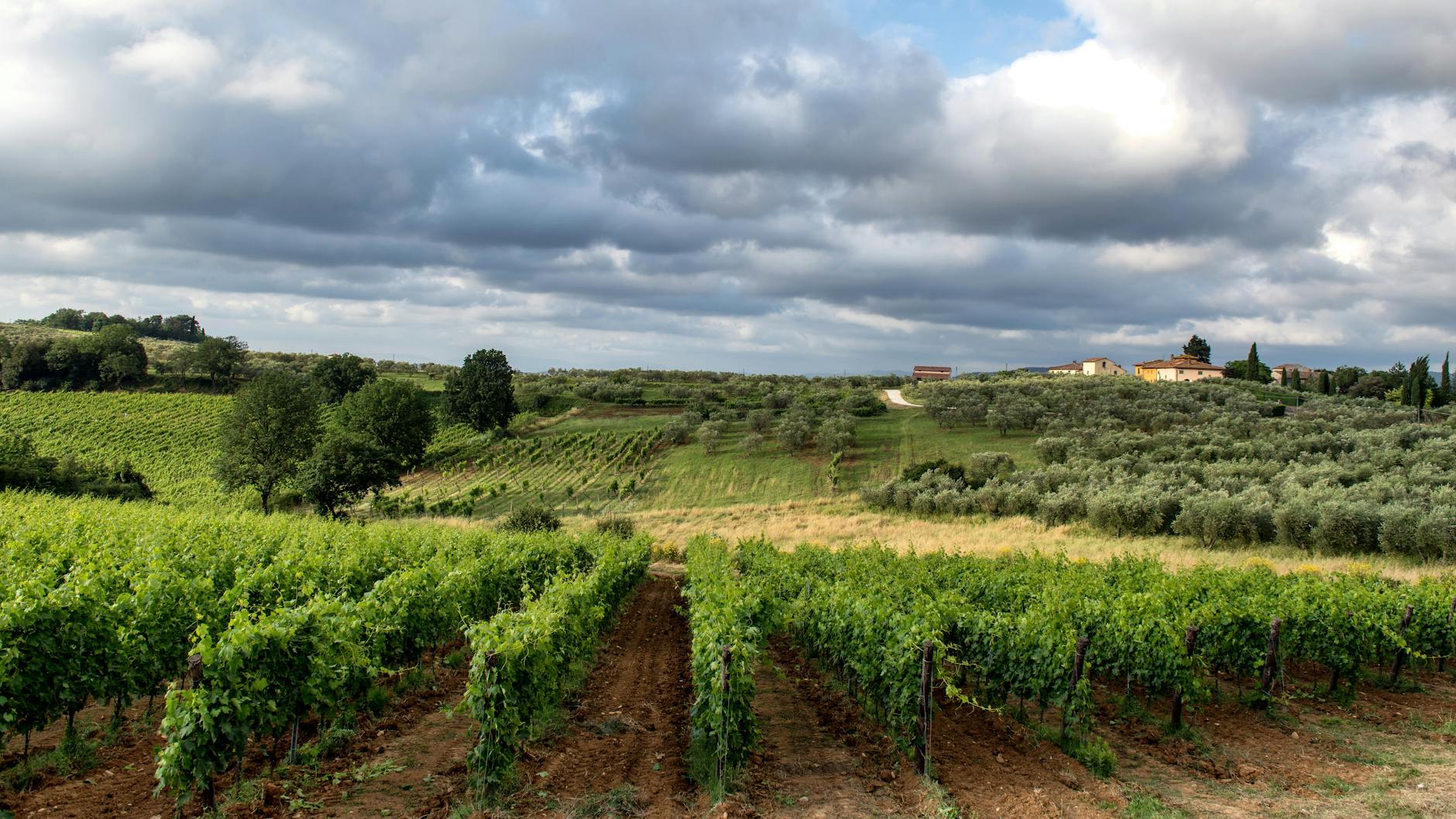
Tuscany’s Major Wine Regions
Tuscany has multiple distinct wine zones, each with its own grape, style and terroir. The four most important for visitors:
- Chianti Classico — between Florence and Siena. Sangiovese-based reds, the gallo nero (black rooster) seal. An easy day out by car from Florence.
- Montalcino (Brunello) — south of Siena, in the Crete Senesi hills. 100% Sangiovese ageing minimum 5 years (Brunello Riserva 6 years). Italy’s most prestigious red wine. A longer drive from Florence than Chianti.
- Montepulciano (Vino Nobile) — east of Pienza in southern Tuscany. Sangiovese-based reds (locally called Prugnolo Gentile), aged minimum 2 years. Substantial wines, increasingly recognised. A longer drive from Florence than Chianti.
- Bolgheri (Super Tuscans) — coastal Tuscany near Livorno. International grapes (Cabernet Sauvignon, Merlot, Cabernet Franc) blended with Sangiovese. The Sassicaia, Ornellaia, Tignanello “Super Tuscan” tradition. 2h from Florence.
San Gimignano produces Tuscany’s only DOCG white (Vernaccia), and small Tuscan zones produce other wines, but for Florence-based tours these four regions dominate.
Tour Options

Half-Day Group Tour (€55–80)
Departure and return times vary by operator, so check the tour’s timetable when you book. Visit one or two Chianti wineries with included tastings, usually with light snacks like bruschetta, cheese and salami; exactly what is included depends on the operator. No full lunch. Best for: travellers with limited time, those combining the trip with a Florence sightseeing afternoon, budget-conscious travellers.
Full-Day Chianti Tour (€95–150)
Departure times and stops vary by operator; a medieval village such as Greve in Chianti or Castellina is a common addition to the winery visits. Full lunch at one of the wineries (Tuscan multi-course meal with wine pairings). The complete Chianti experience.
Full-Day Brunello / Val d’Orcia Tour (€130–200)
Long-day tour to Montalcino region. Times and stops vary by operator, but most visit a Brunello producer and may add Pienza or Montepulciano. Lunch at a winery. The most prestigious wines, but a long drive each way.
Full-Day Bolgheri / Super Tuscan Tour (€150–250)
Coastal Tuscany tour. Departure and return times vary by operator. Visit one or two Bolgheri estates. Tenuta San Guido (Sassicaia) does not offer guided winery or vineyard visits, so tours go to quality producers nearby. Higher cost reflects the longer drive and more prestigious wines. Less common than Chianti tours; book through specialist operators.
Private Driver/Guide Tour (€350–800)
Custom full-day tour with private chauffeur. Sedan €350–550 for 1–3 passengers, minivan €450–750 for 4–7, luxury vehicles €500–900. Pick your own wineries, pace, lunch venue. Driver handles all bookings, navigation, and transport — you focus on the tasting. Best for: groups, travellers wanting flexibility, those visiting hard-to-reach prestige producers, private events.
Multi-Region Long Day (€150–220)
Some operators run combination tours: Chianti morning + San Gimignano + Siena afternoon, or Chianti + a winery in Val d’Orcia. Expect a long day. Less depth at each stop but covers more ground in one day.
E-Bike Wine Tour (€85–150)
Active alternative — guided cycling days into Chianti, with winery visits and lunch; optional e-bikes make the hills manageable. Route length and difficulty vary by operator, so check both before you book. Best for spring/autumn (April–June, September–October).
Recommended Tour Operators
- Walks of Italy — premium small-group tours, knowledgeable guides, €100–180 per person. Strong reputation across all Tuscan regions.
- City Wonders — group tours with English guides, €70–100 range. Reliable for Chianti.
- The Tour Guy — premium small-group with strong reviews.
- Caf Tour — long-established Florence operator with multiple Tuscan tour options.
- GetYourGuide / Viator / Headout — aggregator platforms; useful for last-minute bookings.
- Tasting Tuscany — wine-focused specialist with deeper cellar visits.
- Italian Roots — heritage and ancestry tours that can include wine and food experiences; ask which regions are on offer.
Notable Wineries by Region
Chianti Classico
- Castello di Volpaia (Radda) — entire restored medieval village is the winery. €30–50 tasting.
- Castello di Brolio (Gaiole) — historic Ricasoli family estate, birthplace of modern Chianti Classico. €25–60.
- Castello di Albola (Radda) — hilltop castle estate. €25–45.
- Castello di Ama (Gaiole) — winery + serious contemporary art collection. €60–80.
- Antinori nel Chianti Classico (Bargino) — architectural masterpiece HQ of Italy’s most famous wine family. €40–80.
- Rocca delle Macìe (Castellina) — family-run, lunch options. €30–50.
Montalcino (Brunello)
- Castello Banfi — large modern estate with extensive tour and tasting programme. €30–80.
- Biondi-Santi — the originator of Brunello di Montalcino in 1888. Premium €100+ tastings, requires advance booking.
- Casanova di Neri — modern estate, internationally celebrated.
- Il Marroneto — small premium producer.
- Fattoria dei Barbi — historic estate with restaurant and museum.
Montepulciano (Vino Nobile)
- Avignonesi — premium estate with Vin Santo de Avignonesi at €1,000+/bottle.
- Poliziano — top Vino Nobile producer.
- Boscarelli — small premium producer.
- Contucci — historic family estate inside Montepulciano town walls.
Bolgheri (Super Tuscans)
- Tenuta dell’Ornellaia — premium estate, guided visits by reservation.
- Tenuta San Guido (Sassicaia) — no guided winery or vineyard visits.
- Petra — architecturally striking newer estate, more accessible.
- Le Macchiole — quality producer with regular tours.
What a Tuscan Wine Tasting Looks Like
A winery visit often includes:
- Vineyard walk — walk through the vines, learn about the soil and climate, see different grape varieties
- Cellar tour — see fermentation tanks, oak barrels (barrique vs Slavonian botte), bottling line
- Tasting — a selection of the estate’s wines, often with simple food such as bruschetta, cheese or salami, depending on the winery
- Optional purchase — direct sales are often cheaper than retail; shipping abroad depends on the winery and your destination
Premium tastings include vertical comparisons (multiple vintages of the same wine), barrel sampling of unfinished wines, and lunches with the producer.
Best Time to Visit Tuscan Wineries
- September–October — vendemmia (grape harvest) season. Vineyards full, wineries actively making wine, the year’s most rewarding time.
- Late April–May — green countryside, wisteria blooms, longer days, growing-season activity.
- Late June and September — comfortable temperatures, full activity, manageable crowds.
- July and August — hot; Florence averages daily highs of about 32°C in both months. Visit only with air-conditioned vehicles and avoid 13:00–17:00 outdoor activities.
- March — vines bare; atmospheric but austere. Wineries quieter, easier to book.
- November–February — cool, often wet, many wineries closed or reduced hours. Plan ahead.
Insider Tips
Tip 1: Buy a few bottles direct from the winery — direct purchases are often cheaper than retail. Many wineries ship internationally, for roughly €30–60 to Europe and €60–120 to US/Asia, depending on the winery.
Tip 2: Book directly with the winery rather than through tour operators when possible. Direct booking often costs less and gives more flexibility on tasting menu and tour duration.
Tip 3: Lunch at a winery (€45–80) rather than in a village restaurant — you’ll eat with the producer’s own wines paired to a multi-course Tuscan menu, often outdoors with vineyard views.
Tip 4: The Chianti Classico Expo in Greve in Chianti each September is a tasting held in the town’s piazza. At the 2026 edition €20 bought a tasting glass, holder and seven tasting tickets; up to four tickets could be used at producer stands, and Riserva, Gran Selezione and Vinsanto each took two. Check the organiser’s site (expochianticlassico.com) for the next edition’s dates and prices.
Tip 5: “Spit, don’t swallow” at tastings if you’re driving. The Italian blood-alcohol limit is 0.05%, and it is zero for drivers under 21, drivers in their first three years of licence and professional drivers. How much wine that allows varies from person to person. Use the spittoons at every winery.
Tip 6: Skip the highest-end “Cantina Aperta” days when wineries are open to all-comers — they’re packed and tastings are rushed. Pre-booked private or group tours give better access.
Tip 7: Some tours add food tastings to the wine, such as cheese at Pienza or prosciutto and lardo at Cinta Senese farms; ask tour operators about food-and-wine combo experiences.
Tip 8: If you want a specific premium estate, ask it directly about visits and book ahead. Tenuta San Guido (Sassicaia) does not offer guided visits to its winery or vineyards, so check Ornellaia and Biondi-Santi for their own arrangements. Tour operators typically can’t access these.
Cost Comparison
| Tour Type | Cost (per person) | Best For |
|---|---|---|
| Half-day group Chianti | €55–80 | Time-limited, budget-conscious |
| Full-day group Chianti | €95–150 | Standard Chianti experience with lunch |
| Full-day Brunello/Val d’Orcia | €130–200 | Prestigious wine focus |
| Full-day Bolgheri/Super Tuscans | €150–250 | Modern Tuscan style, coastal day |
| Private driver Chianti | €175–325 (couple) | Customisation, group flexibility |
| Multi-region long day | €150–220 | Maximum ground covered |
| E-bike wine tour | €85–150 | Active alternative |
Sample Tour Itineraries
Full-Day Chianti Tour
- 09:00: Pickup at central Florence meeting point
- 10:00: First winery — Castello di Volpaia or Castello di Albola — vineyard walk + cellar + tasting
- 12:00: Stop at medieval village (Greve in Chianti or Castellina) — 30 minutes for browsing
- 13:00: Lunch at second winery — multi-course Tuscan meal with wine pairings (2 hours)
- 15:30: Third winery — Rocca delle Macìe or Castello Banfi — tasting
- 17:00: Drive back to Florence
- 18:00: Drop-off at central Florence
Brunello / Val d’Orcia Tour
- 08:30: Pickup in Florence
- 10:00: Coffee stop in Pienza — Renaissance “ideal city,” walk for 30 minutes
- 10:30: Pecorino di Pienza tasting at a local cheese maker (€10–15)
- 12:00: Brunello winery in Montalcino — vineyard walk + cellar + tasting (90 minutes)
- 13:30: Lunch at the winery — 2 hours, with Brunello pairings
- 15:30: Stop in Montepulciano — 1 hour for the village walk and a Vino Nobile tasting
- 17:00: Drive back to Florence
- 19:00: Drop-off in Florence
Wine Experiences in Florence (No Tour)
If you can’t do a full Tuscan day trip, several Florence-based alternatives:
- Le Volpi e l’Uva — Oltrarno wine bar serving wines from across Italy, with three-half-glass tasting flights at €18 for reds or €12 for whites.
- Il Santino — small wine bar, often pours rare Tuscan finds, aperitivo €8–12.
- Procacci — historic 1885 wine bar on Via de’ Tornabuoni, pouring Antinori wines by the glass.
- Florence Wine Walking Tour — €60–90 for a 3-hour walking tour combining 4–5 wine bars and historical commentary.
- Cantine del Cinque Monti — Florentine wine school running €60–150 educational tastings.
Tuscany Wine Tour FAQ
How much does a Tuscan wine tour cost?
€55–80 per person for half-day group Chianti tours. €95–150 for full-day group tours with lunch. €130–200 for Brunello/Val d’Orcia tours. €350–800 for private driver day tours. Includes transport, tastings, and usually lunch on full-day tours.
Which Tuscan wine region should I visit?
For first-time visitors: Chianti Classico — an easy day out from Florence, with classic Sangiovese reds. For prestige wine focus: Brunello di Montalcino (a longer drive). For modern style: Bolgheri/Super Tuscans (2h drive). For full Tuscan landscape: Val d’Orcia day tour combining Pienza/Montalcino/Montepulciano.
When is the best time for a Tuscan wine tour?
September–October (grape harvest), late April–May (spring blooms), or late June. Avoid peak July–August heat and November–February quiet/closed seasons.
Should I book a group or private wine tour?
Group tours (€95–150) are excellent for solo travellers, couples and budget-conscious groups. Private tours (€350–800) are worth it for groups of 4+, travellers wanting custom itineraries, or those visiting hard-to-reach prestige producers.
Can I buy wine to take home?
Yes — and direct-from-winery purchases are often cheaper than retail. Shipping depends on the winery and destination (roughly €30–60 to Europe, €60–120 to US/Asia). Bring a foldable spare bag or use winery shipping for serious purchases.
Can I visit Sassicaia or Ornellaia?
Tenuta San Guido (Sassicaia) does not offer guided visits to its winery or vineyards. Tenuta dell’Ornellaia offers guided visits by reservation, so book ahead through its website. Neither is typically on standard tour-operator itineraries.
Do I need a designated driver?
If self-driving, yes — the Italian blood-alcohol limit is 0.05%, and it is zero for drivers under 21, drivers in their first three years of licence and professional drivers. Use spittoons at every winery if you’re driving. For group tours and private drivers, the vehicle handles transport and you can taste freely.
Are children welcome on wine tours?
Yes — Italian winery culture is family-friendly. Children typically aren’t part of tastings but can join vineyard walks, cellar tours, and lunches. Many wineries have outdoor spaces, gardens or playgrounds for kids during parents’ tasting time.
A Tuscan wine tour from Florence is the kind of experience that defines an Italian trip — the regional grapes, the centuries-old family estates, the Tuscan farmhouses with vines visible from the tasting-room window, the long lunches that segue into late afternoons. Choose your region by interest (Chianti for accessibility, Brunello for prestige, Bolgheri for modern style, Val d’Orcia for landscape), match the tour format to your group size and budget, book at least 2 weeks ahead in summer, and you’ll come home with bottles, photographs and a clearer sense of why Tuscan wines have been celebrated for a thousand years.