This article contains advertising. Booking links on this site can be turned into paid links automatically by our partner Travelpayouts: if you book through one, we earn a commission from the provider, at no extra cost to you. It never affects what we recommend. Affiliate disclosure
Bologna is Italy’s gastronomic capital — the home of tagliatelle al ragù (the original “bolognese”), tortellini, mortadella, balsamic vinegar from neighbouring Modena, and possibly the best pasta you’ll eat in Italy. It’s also a major medieval university city (Italy’s oldest, founded 1088), with 62km of UNESCO-listed porticoes, two leaning towers, and a working historic centre largely free of tourist intensity. From Florence, Bologna is just 35 minutes by Frecciarossa — making it the easiest “different city” day trip and a serious culinary experience. This 2026 guide covers everything: train logistics, what to eat, what to see, the porticoes and Two Towers, and how to make a day trip work.
Bologna is the fastest long-distance option among our day trips from Florence — 37 minutes by high-speed rail from Santa Maria Novella. The same Frecciarossa line also makes Venice a realistic add-on to a Tuscany trip.
Why Bologna?
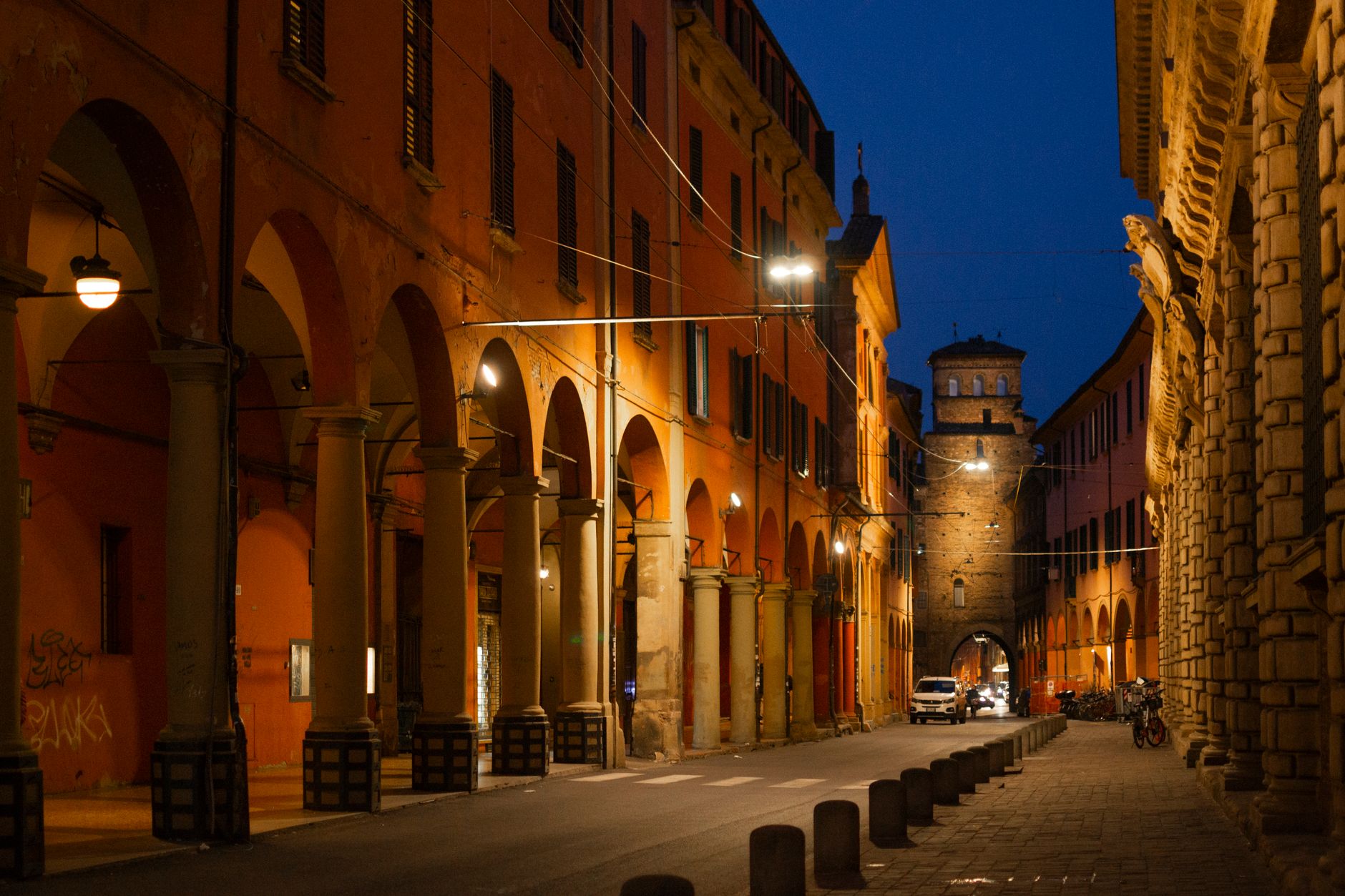
Bologna is the capital of Emilia-Romagna, Italy’s gastronomic heartland. The city has three nicknames that sum it up: “La Dotta” (The Learned, for the university), “La Grassa” (The Fat, for the food), and “La Rossa” (The Red, for the brick-red and ochre buildings).
Three things make Bologna a serious day trip from Florence:
- Italy’s best food. Bologna is widely considered Italy’s culinary capital — the original tagliatelle al ragù, fresh-stuffed tortellini in brodo, mortadella, lasagne alla Bolognese, balsamic vinegar (from Modena, 35 minutes away), Parmigiano-Reggiano (from the surrounding countryside).
- UNESCO porticoes. Inscribed in 2021 — Bologna has 62km of covered porticoes, the longest such network in the world. The porticoes evolved from medieval property extensions over public streets and now define the city’s distinctive urban character.
- Working medieval centre. Less polished than Florence, less tourist-saturated, more authentic Italian-city feel. The city is genuinely lived in.
Bologna is also the easiest train-day-trip from Florence — 35 minutes by Frecciarossa, faster than getting from central Florence to Pisa or Lucca.
Getting from Florence to Bologna
By High-Speed Train
- Frecciarossa or Italo from Florence Santa Maria Novella to Bologna Centrale
- Journey: 35 minutes (the fastest direct services)
- Cost: €18–35 single, often as low as €9.90 if booked 90+ days ahead on Italo Smart
- Frequency: Every 15–20 minutes peak hours, 30–45 minutes off-peak. 100+ daily services.
Bologna Centrale is at the northern edge of the historic centre, 15 minutes’ walk from Piazza Maggiore (the main square). The station is large and well-equipped with shops, restaurants and luggage storage.
By Regional Train
Trenitalia regional trains take 1h15–1h30 for €13.20 fixed fare — slower but cheaper than Frecciarossa. Useful if you book day-of and Frecciarossa fares have spiked. Departs every hour from Florence SMN.
By Car
- Distance: 110km via A1 autostrada
- Driving time: 1 hour 30 minutes
- Tolls: €15 each way
- Parking: Bologna has a strict ZTL covering the historic centre (active 07:00–20:00 daily). Park outside at Parking Riva Reno (€2/hour, €18/day) or one of the underground garages near the station.
Driving doesn’t make sense for a day trip. The train is dramatically faster, cheaper, and avoids the ZTL parking complications.
What to See in Bologna
Piazza Maggiore
Bologna’s main civic square. Surrounded by:
- Basilica of San Petronio — the world’s fifth-largest church, with an unfinished facade (started 1390 but funds ran out). Inside: vast Gothic interior, Bolognini Chapel frescoes by Giovanni da Modena (including the controversial “Last Judgment” depicting Mohammed in hell). Free entry.
- Palazzo del Podestà — 13th-century town hall, now houses the historic Voltone del Podestà passageway with its famous acoustic experiment (whisper at one corner, hear it at the diagonally opposite corner)
- Palazzo Comunale — current town hall, with the Collezioni Comunali d’Arte upstairs (€6, Bolognese Renaissance paintings)
- Palazzo dei Banchi — banking palace facade designed by Vignola
Le Due Torri (The Two Towers)
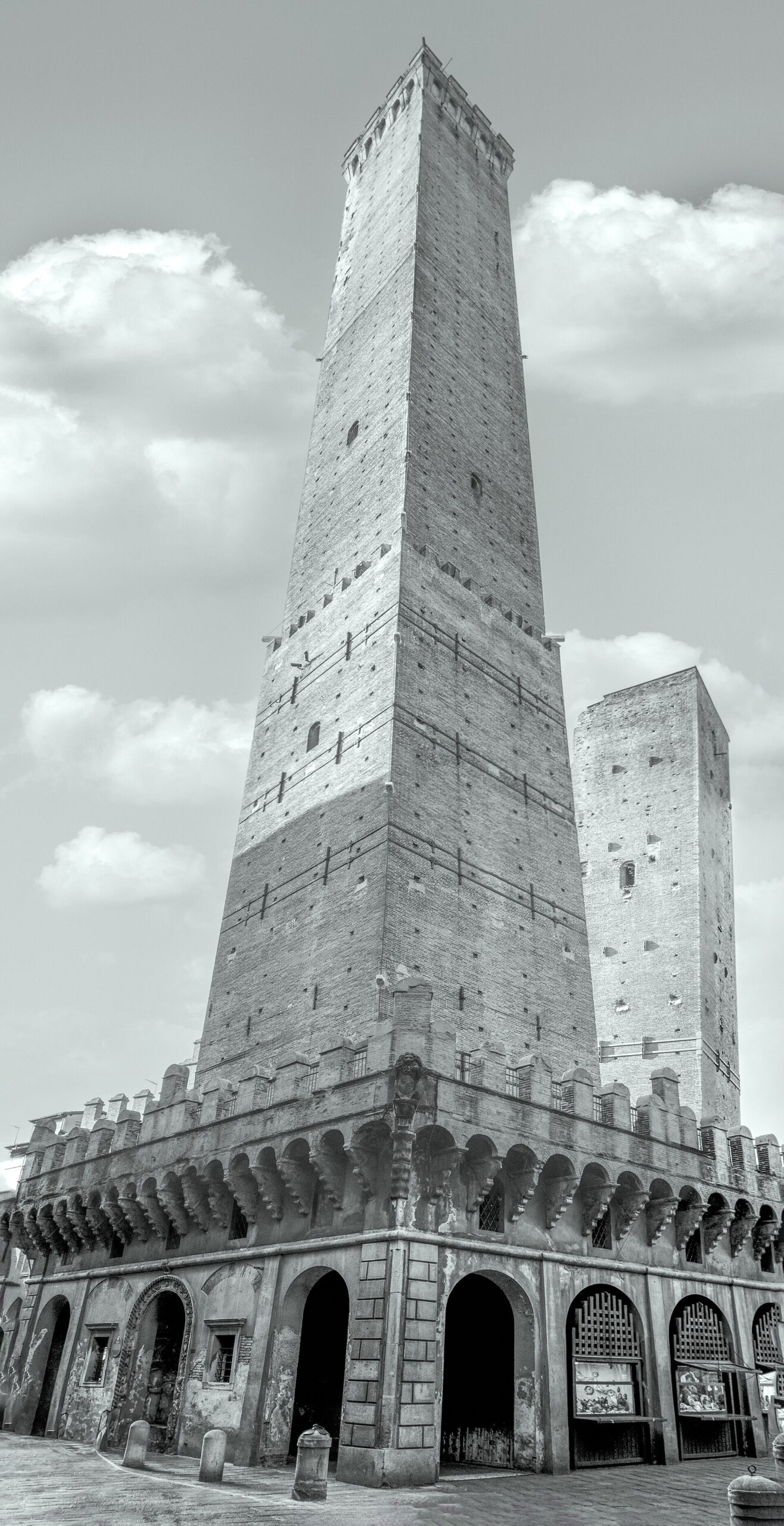
Bologna’s two leaning medieval towers, just east of Piazza Maggiore — emblems of the city. Both lean visibly:
- Torre degli Asinelli — 97 metres tall, the taller of the two, climbable (498 steps, €5 entry). Currently closed for safety reasons; check status before visiting.
- Torre Garisenda — 47 metres tall, the more dramatically leaning (4 degrees of tilt). Cited by Dante in the Inferno. Not open to climbing.
Of Bologna’s original 100+ medieval towers, about 20 survive. Most are private buildings; the Two Towers are the most prominent.
Mercato del Quadrilatero
The medieval food market just east of Piazza Maggiore — narrow streets packed with butchers, cheesemongers, fishmongers, fresh-pasta shops, and small osterias. The most concentrated edible experience in Bologna. Walk Via Pescherie Vecchie, Via Drapperie, and Via Caprarie. Free, open daily morning-evening.
University of Bologna Quarter
Italy’s oldest university (founded 1088) — and the world’s oldest university by some measures. The historic Palazzo dell’Archiginnasio (the original 16th-century university building, free entry) houses the Anatomical Theatre — a 17th-century lecture hall for human dissection lectures, with elaborate wood carvings. Visit via Piazza Galvani.
Portico di San Luca
The world’s longest portico — 3.8km of covered colonnade running from Porta Saragozza in the historic centre up to the Sanctuary of San Luca on the hill above the city. The walk: 666 arches (Bolognese number 666 has nothing to do with the devil; it’s just the count), 2-hour uphill walk, dramatic basilica with panoramic city views at the top. Bus 20 returns you down. Free.
Basilica di Santo Stefano (Sette Chiese)
Complex of seven interconnected medieval churches, dating to the 4th–13th centuries, designed to recreate the Holy Sepulchre in Jerusalem. Free entry; one of Bologna’s most atmospheric and undervisited sights. Open daily.
Palazzo Poggi University Museums
The university’s historical scientific instruments and natural history collections. Includes early Renaissance anatomical wax models, military architecture displays, and historical ship models. €5 entry; quiet specialist museum.
Bologna Food: What to Eat

Bologna’s specialties:
Tagliatelle al Ragù
The original “spaghetti bolognese” — except spaghetti is wrong (Bolognesi use tagliatelle, the wider egg-pasta), the sauce is wrong (Bolognesi use a slow-cooked meat ragù with tomato secondary, not heavy on tomato), and the foreign dish bears little resemblance to the Bolognese original. The chamber of commerce officially registered the recipe in 1982 to defend authenticity. Try it at: Trattoria Anna Maria, Trattoria Gianni, Osteria dell’Orsa.
Tortellini in Brodo
Small ring-shaped pasta stuffed with pork, prosciutto and Parmigiano, served in a clear chicken broth. The signature winter Bologna dish. Try at Trattoria Anna Maria or Osteria delle Dame.
Lasagne alla Bolognese
Multi-layered green spinach pasta with ragù and béchamel sauce, baked. Bolognese version uses green pasta (not white) and is much less heavy than international “lasagna.” Most trattorias serve it.
Mortadella
The pink Bolognese cured pork sausage with white fat lozenges and pistachios. Sliced thin and eaten on tigelle bread or crescentine. Try at any of the Quadrilatero butchers; Tamburini is the most famous (and most expensive).
Other Specialties
- Crescentine / Tigelle — fried bread or pan-cooked rounds, served with cured meats and stracchino cheese
- Cotoletta alla Bolognese — breaded veal cutlet topped with ham and cheese, fried
- Friggione — onion and tomato side dish, distinctive to Bologna
- Aceto Balsamico Tradizionale di Modena — the real balsamic vinegar, aged minimum 12 years, €30+ per 100ml at proper producers
- Parmigiano-Reggiano — the cheese from the surrounding countryside; visit a producer for tastings
Recommended Bologna Restaurants
- Trattoria Anna Maria — classic Bolognese trattoria, family-run, world-class tagliatelle al ragù. Reserve.
- Trattoria Gianni — historic, packed with locals at lunch
- Osteria dell’Orsa — student-friendly, large portions, classic dishes
- Osteria delle Dame — slightly upscale, regional cuisine
- Tamburini — historic deli/restaurant in the Quadrilatero, expensive but classic
- FICO Eataly World — large food park outside the centre, useful as a Bologna gastronomic crash course (Bologna airport day trip option)
Food Tours
Several Bologna-based operators run food walking tours: Italian Days (€60–95 per person, 3–4 hours, 4–5 food stops), Eating Bologna, Walks of Italy Bologna Food Tour. Useful for first-time visitors wanting a curated introduction to Bolognese cuisine.
A 6-Hour Bologna Day Itinerary
Departing Florence 09:00, returning 19:00:
- 10:00: Frecciarossa departs Florence SMN
- 10:35: Arrive Bologna Centrale
- 10:35–11:00: Walk to Piazza Maggiore via Via dell’Indipendenza (15 minutes)
- 11:00–11:30: Coffee on Piazza Maggiore, Basilica of San Petronio interior visit
- 11:30–12:00: Walk to Two Towers via Strada Maggiore
- 12:00–13:00: Mercato del Quadrilatero — wander the medieval food market streets
- 13:00–14:30: Lunch at Trattoria Anna Maria or Trattoria Gianni — tagliatelle al ragù + tortellini
- 14:30–15:30: Walk to Basilica di Santo Stefano (Sette Chiese)
- 15:30–16:30: Walk Via Zamboni — university quarter, Palazzo Poggi if interested
- 16:30–17:00: Optional Archiginnasio Anatomical Theatre
- 17:00–17:30: Aperitivo on Piazza Verdi or Piazza Santo Stefano
- 17:30: Walk back to Bologna Centrale
- 18:00: Frecciarossa back to Florence
- 18:35: Arrive Florence SMN
Best Time to Visit
- Late April–May, late September–October — best weather, comfortable for the porticoed walks, manageable crowds
- July and August — Bologna empties for Italian summer holidays; many trattorias close 1–3 weeks. Smaller museums often closed.
- Late October–November — Bologna is wet (the rainiest of major Italian cities, alongside Florence) but the porticoes mean you stay dry. Atmospheric.
- December–February — quieter, atmospheric, but cold and damp. Many trattorias open year-round given the local university crowd.
Insider Tips
Tip 1: Book Frecciarossa or Italo 90+ days ahead for €9.90–14 fares — Bologna’s the cheapest single-day Italian high-speed run available.
Tip 2: Reserve lunch at Trattoria Anna Maria or Trattoria Gianni 1–2 weeks ahead — Bologna’s working trattorias are popular with locals and book out at lunch.
Tip 3: The Mercato del Quadrilatero is the morning food experience — the streets are most active 09:00–13:00 with butchers, cheesemongers and fresh-pasta makers fully working.
Tip 4: The Palazzo del Podestà acoustic experiment (“whisper from one corner, hear at the diagonal”) is real and works — try it under the Voltone del Podestà passageway.
Tip 5: The Archiginnasio Anatomical Theatre is an extraordinary 17th-century medical lecture hall (free with library admission, €3) — very few tourists know about it.
Tip 6: Bologna’s porticoes mean you can rain-walk most of the city — even in heavy showers, you can cover the historic centre largely under cover.
Tip 7: Combine Bologna with a Modena half-day visit (35 minutes by Frecciarossa) for the home of balsamic vinegar production — possible as a longer day trip from Florence.
Bologna + Modena Combo
Modena is 35 minutes from Bologna by Frecciarossa. Famous for: Aceto Balsamico Tradizionale di Modena (the real balsamic vinegar, aged minimum 12 years), Lambrusco wine, Ferrari (museum at nearby Maranello), and Pavarotti (museum at his birthplace). For food-and-wine focused day trips, the Florence-Bologna-Modena combination works:
- 09:00: Florence → Bologna Centrale (35 min)
- 09:35: Bologna → Modena (35 min direct Frecciarossa)
- 10:30–13:30: Modena — Cathedral, Piazza Grande, balsamic vinegar tasting at a producer
- 13:30: Modena → Bologna
- 14:30–17:30: Bologna — Quadrilatero lunch, Two Towers, Piazza Maggiore
- 17:30: Bologna → Florence (35 min)
- 18:30: Back in Florence
This is ambitious for a day but feasible — Italy’s high-speed network makes the geometry work.
Bologna vs Other Florence Day Trips
- vs Pisa: Bologna is bigger and more substantial; Pisa is smaller and faster (1 hour vs 35 min). For first-time Italy visitors, Pisa is more iconic; for second-time visitors, Bologna is more rewarding.
- vs Lucca: Both are walking-friendly working Italian cities. Bologna has bigger food culture and university character; Lucca has the walls and Puccini.
- vs Siena: Bologna is faster to reach but lacks the medieval Gothic cohesion of Siena. Different feels — Siena is monumentally complete; Bologna is gritty and gastronomic.
- vs Cinque Terre: Bologna is dramatically more practical (35 min vs about 3 hours each way) but offers no coastline or Mediterranean villages.
Bologna Day Trip FAQ
How long is the train from Florence to Bologna?
35 minutes by Frecciarossa or Italo direct. Regional trains take 1h15–1h30. Bologna Centrale is 15 minutes’ walk from Piazza Maggiore (the main square). The fastest single-day Italian-city day-trip from Florence.
How much does Bologna cost from Florence?
Frecciarossa or Italo Smart fares from €9.90–14 booked 90+ days ahead, typically €18–25 booked 30 days ahead, €25–35 day-of. Regional train €13.20 fixed.
What must I eat in Bologna?
Tagliatelle al ragù (the original “bolognese”), tortellini in brodo (stuffed pasta in clear chicken broth), lasagne alla Bolognese (with green spinach pasta), mortadella (the original from the Quadrilatero butchers). Plus crescentine fried bread and balsamic vinegar tastings.
What’s the must-see in Bologna?
Piazza Maggiore (Basilica of San Petronio, Palazzo del Podestà acoustic experiment), the Two Towers (Torre Asinelli & Garisenda), Mercato del Quadrilatero food market, Basilica di Santo Stefano (Sette Chiese), and the university Archiginnasio Anatomical Theatre.
What are Bologna’s porticoes?
62km of covered walkways throughout the historic centre — the longest such network in the world, UNESCO World Heritage since 2021. Originally evolved from medieval property extensions over public streets; now define the city’s distinctive character. The longest single portico (3.8km, 666 arches) runs from Porta Saragozza up to the Sanctuary of San Luca.
Is one day enough for Bologna?
Yes for the major sights — Piazza Maggiore, Two Towers, Quadrilatero, Santo Stefano, university quarter, plus a long lunch. The 35-minute train each way leaves 6+ hours actually in the city.
Should I take a guided Bologna tour?
Bologna’s centre is small enough to self-guide easily. Food tours (€60–95 per person, 3–4 hours) are useful for first-time visitors wanting curated cuisine introductions; otherwise self-guided is fine.
Is Bologna good with children?
Yes — small scale, walkable porticoed centre, child-friendly food, the Palazzo del Podestà acoustic experiment is delightful for kids, and the Two Towers are dramatic medieval landmarks. Older children appreciate the university quarter’s historical character.
Bologna is the underrated gem of Italian day trips from Florence — 35 minutes by Frecciarossa, gastronomic capital of the country, UNESCO porticoes, working medieval centre, and food culture that justifies the entire concept of “going to Italy for the food.” Take the early train, lunch at a working trattoria, walk the Quadrilatero food market, climb the Two Towers if open, and you’ll be back in Florence by 19:00 with the best meal of your trip behind you and a clearer sense of why Italians from across the country travel to Bologna specifically to eat.