This article contains advertising. Booking links on this site can be turned into paid links automatically by our partner Travelpayouts: if you book through one, we earn a commission from the provider, at no extra cost to you. It never affects what we recommend. Affiliate disclosure
Florence is one of the world’s most photogenic cities—the terracotta dome, the Arno reflections, the Tuscan hills, the Renaissance facades, and the cobblestone alleys all create extraordinary photographs. But the difference between a tourist snapshot and a memorable image is knowing where to stand, when, and what direction the light is coming from. This guide covers the best photo spots in Florence for every kind of photographer—from iconic postcard views to hidden gems, with specific timing recommendations and equipment tips for each.
The city photographs best at either end of the day — our sunset spots guide and panoramic viewpoints guide cover where to stand, and the Ponte Vecchio is worth shooting twice, once from the water and once from the bridge upstream.

Top 15 Florence Photo Spots
| Location | Best Time | What You’ll Capture |
|---|---|---|
| Piazzale Michelangelo | Sunset/sunrise | Iconic city panorama with Duomo |
| San Miniato al Monte terrace | Sunset | Quieter panoramic alternative |
| Ponte Santa Trinita | Golden hour | Ponte Vecchio silhouette + Vasari Corridor |
| Ponte Vecchio (on the bridge) | Early morning | Goldsmith shops, medieval bridge details |
| Top of Brunelleschi Dome | Morning slot 8:15 | 360° city view from inside the dome |
| Top of Giotto’s Bell Tower | Morning or sunset | The dome itself in foreground |
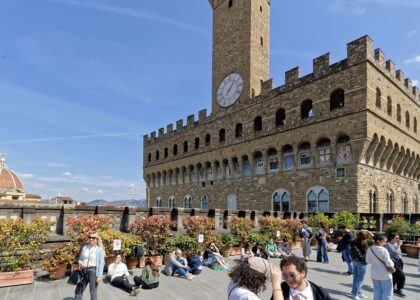
| Piazza della Signoria | Early morning | Sculpture details, Palazzo Vecchio |
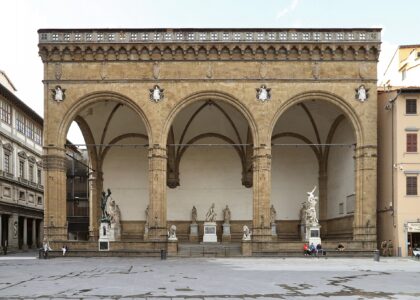
| Loggia dei Lanzi | Late afternoon | Cellini Perseus, Giambologna sculptures |
| Boboli Gardens (Cypress Avenue) | Late afternoon | Tuscan formal garden, statuary |
| Bardini Garden terrace | Late April-May | Wisteria pergola with city view |
| Forte Belvedere | Sunset | Florence panorama with Boboli foreground |
| Lungarno Acciaiuoli | Golden hour | Arno reflections, riverside |
| Via dei Calzaiuoli | Early morning | Empty streets, classic Florence |
| Oltrarno alleys | Anytime | Authentic neighborhood, artisan shops |
| Mercato Centrale | Morning 8-10am | Italian market life, food |
The Iconic Sunset View: Piazzale Michelangelo
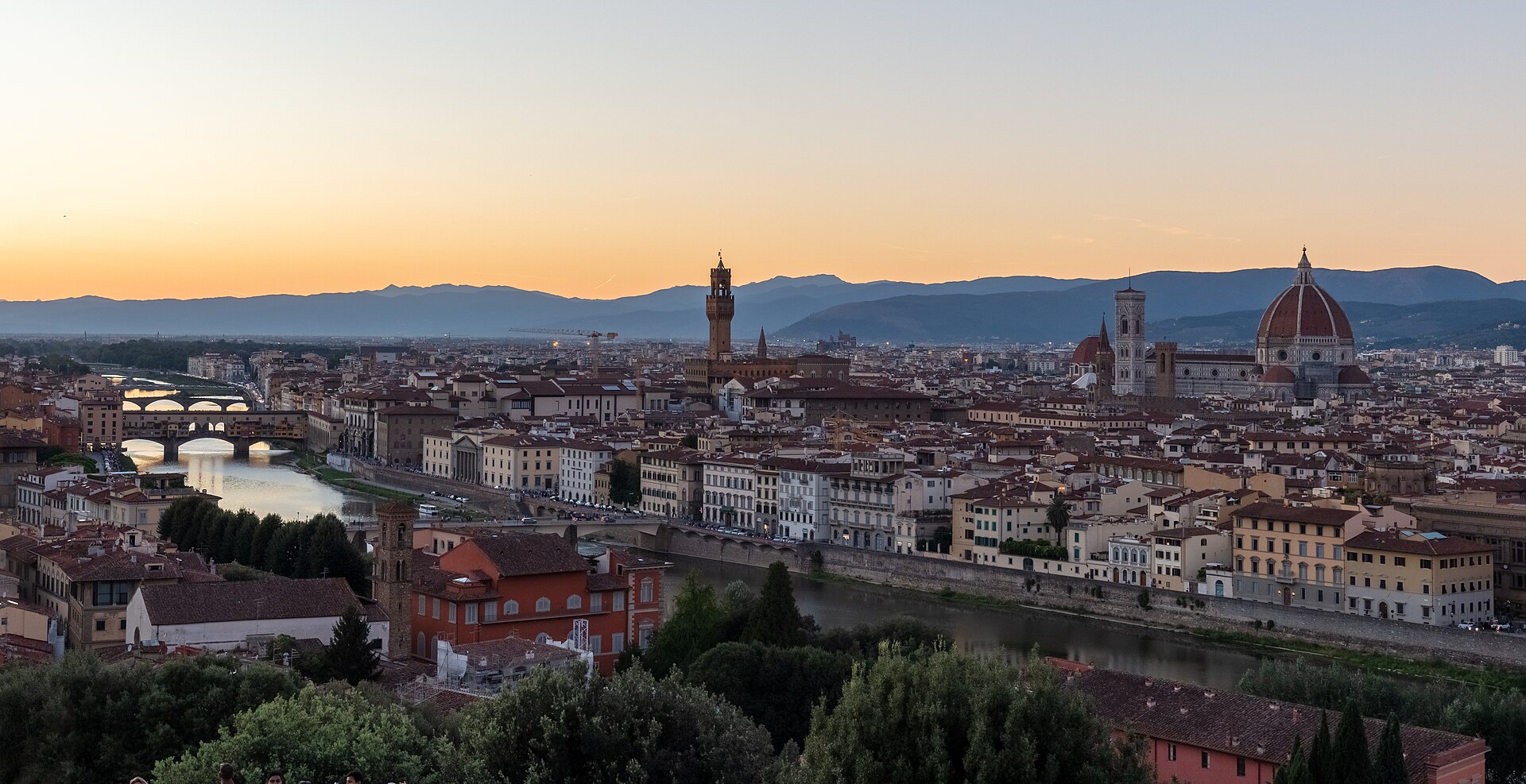
Piazzale Michelangelo is Florence’s most famous photo spot for good reason. The terrace 80 meters above the city offers the postcard view: Brunelleschi’s dome rising from the historic center, Palazzo Vecchio’s tower in the foreground, the Arno snaking through the valley, and the green hills of Fiesole behind.
When to shoot: Sunset is iconic, but sunrise is even better—same light, almost no people, plus the soft blue hour that follows. Arrive 30-45 minutes before sunset to claim a parapet spot. Stay through blue hour (the 30 minutes after sunset) for the best photographs of the city lights coming on against deep purple sky.
Equipment tips: 35mm to 85mm range covers most compositions. Wide-angle for the full panorama; medium telephoto to isolate the dome. Tripod helpful for blue hour but not strictly necessary with modern phones. Polarizing filter cuts haze on clear days.
The Quieter Alternative: San Miniato al Monte
Just 5 minutes uphill from Piazzale Michelangelo, San Miniato al Monte’s terrace offers virtually identical views with significantly fewer photographers. The 11th-century Romanesque facade itself is also stunning. Combining architecture and landscape, San Miniato is the connoisseur’s photo spot.
Plan the visit around sunset over the city and the daily Gregorian Vespers chant at 18:30 (Gregorian Mass is at 18:00 on weekdays, 17:30 on Sundays and holidays). The combination is one of Florence’s quiet magical experiences.
The Ponte Vecchio Photographs
Ponte Vecchio is photographed millions of times a year, but the right approach distinguishes good shots:
- From Ponte Santa Trinita: The classic side-view of Ponte Vecchio with the Vasari Corridor running along the top. Best at golden hour with the bridge silhouetted. Walk to the eastern parapet of Ponte Santa Trinita facing east.
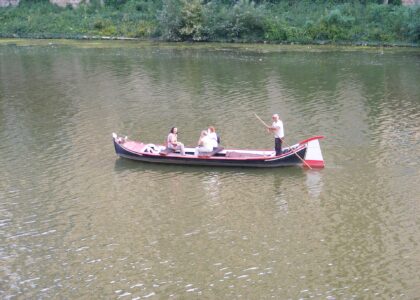
- From Lungarno embankments: Reflection shots in calm Arno water—best in early morning when wind is minimal. From the south bank near Ponte Santa Trinita.
- From Ponte alle Grazie: Less famous angle showing Ponte Vecchio with the Florence skyline behind.
- On the bridge itself: Detail shots of the goldsmith windows, the bronze Cellini bust, the medieval shop fronts. Best in early morning before crowds (7:00-9:00).
- Aerial: From Piazzale Michelangelo or San Miniato al Monte for the bridge in context.
The Dome from All Angles
- Best ground-level view: Piazza del Duomo from the Bell Tower side; the dome rises dramatically.
- From Giotto’s Bell Tower: The unique perspective of looking AT the dome rather than from inside it. Ideal at golden hour.
- Aerial: Piazzale Michelangelo: Dome with city context.
- Detail close-up: The polychrome marble facade in late morning light.
- From the lantern (top of dome): 360° city panorama—you can’t see the dome itself but everything else.
Hidden Gem Photo Spots

Bardini Garden’s Wisteria Pergola
In late April through mid-May, the Bardini Garden’s wisteria pergola creates one of Italy’s most photographed scenes—a tunnel of cascading purple flowers with the Florence skyline visible at the end. €10 admission to the garden; arrive late afternoon for light through the flowers.
Forte Belvedere
Open seasonally May-October. The Medici fortress on a hill above Pitti Palace offers a different angle on Florence—you see the city from south, with the Boboli Gardens in the foreground. Combined with art exhibitions on the ramparts in summer.
The Belvedere of Fortezza da Basso
The 16th-century fortress north of Santa Maria Novella offers a unique view of the city from a different angle. Currently houses Pitti Uomo fashion shows; surroundings are accessible.
Oltrarno Alleys
The narrow medieval alleys of San Frediano and San Niccolò—Borgo San Frediano, Via di Santo Spirito, Via dei Bardi—offer authentic neighborhood shots without the tourist crush. Late afternoon golden light through narrow streets is dramatic.
Vasari Corridor (when open)
Reopened in late 2024 after extensive restoration. The kilometer-long elevated passage offers unique views from windows and one open terrace. Tickets €43-48; combined with Uffizi.
Cathedral Museum Loggia
The reconstructed cathedral facade hall in the Cathedral Museum has a small loggia overlooking Piazza del Duomo. The view of the Cathedral from this side is unique and photographable. Included in all Duomo passes.
Photography Equipment for Florence
- Smartphone with multi-lens system: iPhone 15 Pro+ and Pixel 8 Pro+ produce excellent Florence photographs. Wide-angle, telephoto, and night mode handle most situations.
- Mirrorless or DSLR: 24-70mm f/2.8 zoom covers most needs; add 35mm or 50mm prime for low-light and street photography.
- Wide-angle lens: 16-35mm or 14-24mm helpful for narrow streets, church interiors, and full panoramas.
- Telephoto lens: 70-200mm or 100mm prime for isolating dome details and compressing distant features.
- Tripod: Essential for blue hour and dawn shots. Travel tripods (Peak Design, Gitzo, Manfrotto) work well. Many viewpoints don’t allow tripods, but the lungarni and Piazzale Michelangelo permit them.
- Polarizing filter: Reduces haze and increases color saturation, especially useful for landscapes.
- ND filter: 6-stop or 10-stop for long exposures of the Arno, capturing motion blur on water.
- Spare batteries and storage cards: Always.
Photography Etiquette and Rules
- No flash inside churches and museums: Universal rule. Photography of art generally permitted, sometimes with limitations.
- Tripods restricted: Most museums, churches, and tourist attractions ban tripods. The Loggia dei Lanzi, Piazza Signoria, and lungarni allow them.
- Drones banned: Florence’s historic center has total drone restrictions. Permits exist for licensed professionals; tourists cannot fly drones.
- Selfie sticks restricted: Banned in many museum spaces; allowed in public squares.
- Permission for people: When photographing identifiable individuals (especially at markets, cafés, near artisans), ask permission. Italians appreciate the courtesy.
- Religious services: Don’t photograph during Mass or services in churches.
- Commercial use: Photographs taken in tourist locations may have restrictions on commercial use; check local regulations.
Frequently Asked Questions
What’s the best time of day to photograph Florence?
Sunrise (6-8 AM in summer, 7-9 AM in winter) for soft light and empty streets. Golden hour (last 90 minutes before sunset) for warm light on architecture. Blue hour (30 minutes after sunset) for dramatic city lights. Avoid harsh midday light (11 AM-2 PM in summer).
Where’s the best Instagram-worthy spot in Florence?
Piazzale Michelangelo for the iconic city view. Bardini Garden’s wisteria pergola in late April-May. Ponte Santa Trinita at sunset. The view from atop Giotto’s Bell Tower. The Loggia dei Lanzi sculptures.
Are tripods allowed in Florence museums?
No. Tripods are banned in nearly all Florence museums, churches, and historic sites. They’re allowed in public squares (Piazza della Signoria, Piazzale Michelangelo) and on the lungarno embankments. Some venues sell permits for professional photography.
Can I fly a drone in Florence?
No. The historic center has total drone restrictions for tourists. Licensed professional photographers can apply for permits, but recreational drone flying is prohibited. Drone footage from Florence on YouTube was typically shot with permits.
Can I photograph art at the Uffizi?
Yes, generally. Photography is permitted in most galleries without flash. Some specific paintings or special exhibitions may have additional restrictions. Tripods and selfie sticks not permitted.
What’s the best lens for Florence photography?
A 24-70mm zoom covers 80% of needs. Add a wide-angle (16-35mm) for narrow streets and church interiors, and a longer lens (85-200mm) for isolating architectural details. For smartphone photographers, a 0.5x ultra-wide and 3x or 5x telephoto cover most situations.
How early should I arrive at Piazzale Michelangelo for sunset?
30-45 minutes before sunset. The piazza fills quickly, and parapet spots become hard to find. In summer, when sunset is at 21:00, arrive by 20:15. In winter, when sunset is at 17:00, arrive by 16:15.
Are there photography tours in Florence?
Yes. Several local photographers offer guided photography walks (€80-200 for 3 hours). Search “Florence photography tour” or “Florence photo walk” on Airbnb Experiences, GetYourGuide, or local operators. They take you to less-known viewpoints and provide technical guidance.