This article contains advertising. Booking links on this site can be turned into paid links automatically by our partner Travelpayouts: if you book through one, we earn a commission from the provider, at no extra cost to you. It never affects what we recommend. Affiliate disclosure
Florence Tours & Tickets: What Is Actually Worth Booking
Florence sells more guided experiences per square metre than almost anywhere in Europe, and a great many of them are a waste of money in a city you can cross on foot in twenty-five minutes. This guide separates the bookings that genuinely change your trip — and the ones that will cost you sixty euros to be told things you could have read on a plaque.
New to the city? Start with our Florence guide for first-time visitors, then use things to do in Florence to work out what you actually want to see before you book anything.
The Uffizi is the one booking almost every visitor gets wrong, usually by paying a reseller forty-five euros for a twenty-nine euro ticket. Our Uffizi tickets guide lays out the full fare table, the booking windows by season, and what “skip the line” really means here.
At the top of the market, a licensed private guide runs from €150 a half day for the whole party. Our private guide guide works out when that beats a group tour on price as well as quality — the answer turns on how many of you there are.
The Short Answer: What Actually Needs Booking
Most visitors arrive having either booked nothing, and then lose a morning in a queue, or booked everything, and then spend four days being marched around by someone holding a numbered paddle. Neither is necessary. Florence has a small number of genuine bottlenecks and a very large number of optional extras dressed up as essentials.
That is the whole strategy, and it is worth understanding why it holds. Florence’s historic centre is roughly 1.5 kilometres square. There is no metro to master, no confusing zone system, and no attraction more than a twenty-five-minute walk from any other. The logistical friction that makes guided tours valuable in Rome or Istanbul barely exists here. What Florence has instead is a handful of extremely popular rooms — the Botticelli hall, the tribune housing the David, the top of Brunelleschi’s dome — each with a hard capacity limit and a queue that forms by nine in the morning.
So the question is not really “which Florence tours should I take?” It is “which capacity-limited rooms do I want to be inside, and what is the cheapest way to guarantee that?” Answer that first, and the rest of your itinerary can stay loose.
What Costs Nothing
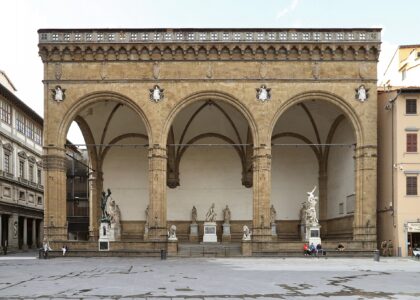
Before spending anything, it is worth knowing how much of Florence is free. The cathedral itself — the vast interior of Santa Maria del Fiore — costs nothing and needs no ticket. Every one of the city’s great churches is either free or a few euros. The Officina Profumo-Farmaceutica di Santa Maria Novella, a working pharmacy since 1221 with frescoed ceilings and Gothic cabinetry, charges nothing to walk in and look. Piazza della Signoria is an open-air sculpture gallery with no gate. The view from Piazzale Michelangelo is free, and so is the better one from the terrace of San Miniato al Monte just above it.
State museums, including the Uffizi, are also free on the first Sunday of every month — which sounds like a gift until you see the queue. Our guide to free museums in Florence covers which of those days are worth targeting and which are best avoided entirely, and free things to do in Florence maps out several days of genuinely good sightseeing that costs nothing at all.
Uffizi Tickets: Prices, Fees and Doors
A standard Uffizi ticket costs €25 if you buy it at the gallery on the day and €29 if you book it in advance. The €4 difference is the reservation fee, and it is the best four euros you will spend in Florence. In peak season the walk-up queue at Door 2 runs to an hour or more; a timed ticket at Door 1 gets you inside in five to ten minutes.

There is also a cheaper afternoon ticket: entry from 16:00 costs €16. If your schedule is flexible and you are prepared to move briskly, this is a genuine saving of more than a third. The gallery is quieter late in the day than in the middle of it, though not as quiet as first thing.
The Three Doors
The Uffizi’s door numbering catches out a remarkable number of people, including some who have paid for priority access and then queue for an hour anyway.
- Door 1 — priority entrance. If you have a booked, timed ticket on your phone, this is where you go.
- Door 2 — the general walk-up queue. Avoid.
- Door 3 — ticket collection, for anyone holding a voucher that needs exchanging for a physical ticket.
If you booked through a reseller rather than the official site, check whether you have a ticket or a voucher. A voucher means Door 3 first, then Door 1, and you need to allow an extra twenty minutes.
When to Go
The 08:15 slot is the single best booking in Florence. For roughly the first twenty minutes you can stand in front of the Birth of Venus with a handful of other people rather than four coach parties, and the gallery stays genuinely pleasant until around ten. After that it fills steadily until early afternoon.
Book one to two weeks ahead for most of the year. Between April and October, and especially over public holidays, popular slots go earlier than that. Our dedicated Uffizi Gallery guide covers what to see once you are inside, and skip-the-line museum tickets in Florence compares the booking routes across the city’s major collections. The Vasari Corridor is a separate booking and can only be entered from inside this building, so if you want both, put them in the same morning.
The Duomo Passes: Which One You Need
Entry to the cathedral itself is free and requires no ticket at all. This is the most expensive misunderstanding in Florence. Every paid Duomo pass covers the other monuments in the complex — the dome, the bell tower, the baptistery, the museum and the excavated ruins of Santa Reparata beneath the nave. The cathedral floor is free to anyone prepared to join the (fast-moving) entry line. It is closed on Sundays and during religious celebrations.

There are three passes, and the differences between them are cleaner than most sites make them sound.
| Pass | Full | Ages 7–14 | Includes |
|---|---|---|---|
| Brunelleschi | €30 | €12 | Dome, bell tower, baptistery, museum, Santa Reparata |
| Giotto | €20 | €7 | Bell tower, baptistery, museum, Santa Reparata |
| Ghiberti | €15 | €5 | Museum, baptistery, Santa Reparata |
Under-sevens go free on all three. Prices are lowest on the official Opera del Duomo site; resellers add a margin on top. Our Florence Duomo tickets guide takes each pass apart in detail — what is inside, which monuments need a timed slot, and where the pass stops being worth it.
The Only Question That Matters
The dome climb appears on the Brunelleschi Pass and nowhere else. If you want to go up inside Brunelleschi’s cupola — and it is a genuinely extraordinary experience, walking between the inner and outer shells on the original builders’ stairs — you need the €30 pass, and you need to reserve a timed slot when you buy it. Slots sell out.
If you do not want to climb it, the Giotto Pass at €20 is the better buy, and here is the contrarian bit: the view from Giotto’s bell tower is arguably better than the view from the dome. From the bell tower you can see the dome. From the dome, you cannot. The bell tower also has no timed slot, so you can go when the light suits you. Our guides to climbing Brunelleschi’s dome and Giotto’s bell tower compare the two climbs step for step.
The Ghiberti Pass at €15 is for people who want the art without the stairs. It covers the Museo dell’Opera del Duomo, which holds the original Gates of Paradise panels, Donatello’s haunted wooden Magdalene and Michelangelo’s Bandini Pietà, and which is reliably the emptiest world-class museum in the city.
The Accademia and the David
The Galleria dell’Accademia is a small museum with one overwhelming object in it. Michelangelo’s David has stood here since 1873, when it was moved indoors after three and a half centuries of weather in Piazza della Signoria. It is 5.17 metres tall — measured properly in 2000 — and no photograph prepares you for the scale of the hands.
Book about a month ahead between April and October, and about a week ahead the rest of the year. This is the booking most likely to catch people out, because the Accademia is small and its slots are correspondingly limited. Unlike the Uffizi, there is no meaningful walk-up option in high season. Our Accademia tickets guide sets out the booking windows season by season, the reduced and free-entry categories, and what the reservation fee actually buys.
Two things worth knowing before you spend the money. First, there are full-size copies of the David outside Palazzo Vecchio and at Piazzale Michelangelo, both free, and if your interest is a photograph rather than the object itself, the copies will do. Second, the rest of the Accademia — the unfinished Prisoners straining out of their marble blocks in the corridor leading up to the David — is, for many visitors, the more affecting half of the visit. Do not rush it. Our Accademia Gallery guide walks the collection room by room.
Uffizi or Accademia, If You Only Do One?
The Uffizi, comfortably. It is a far larger and more varied collection, it holds several works of the same stature as the David, and it needs two to three hours rather than one. The Accademia is a superb hour, but it is an hour. If your trip is short, put the Uffizi in and let the David go — or see it in copy, outside, for nothing. We weigh the two against each other properly — time needed, total cost, what you come away with — in Uffizi vs Accademia.
The Firenze Card: Maths, Not Marketing
The Firenze Card costs €85 and covers more than sixty museums, gardens and monuments for 72 hours, counted from the moment you enter the first one. Reservation fees are included, though you still have to make the reservations for the Uffizi and the Accademia.
The single most important thing to know: the Duomo complex is not on the card. No dome climb, no bell tower, no baptistery, no Opera del Duomo museum. People buy the card assuming otherwise and then pay €30 more on top.
The breakeven is roughly three to four paid museums. A typical light itinerary — Uffizi at €29 plus Accademia at €24 (€20 plus the €4 booking fee) — comes to about €53, and the card loses badly. A heavier one that adds Palazzo Pitti, the Boboli Gardens, the Bargello and San Marco climbs past €85 and the card starts to pay.
But the honest case for the card is not the arithmetic. It is that 72 hours is a tight window and most people cannot visit six museums in three days without their holiday becoming a forced march. If you are the kind of traveller who genuinely will do that — and some people are, happily — the card is good value and removes a great deal of booking friction. If you are not, it is an expensive way to feel obliged. We work through several real itineraries in our Firenze Card guide.
Walking Tours: Free, Paid and Pointless
Florence is the easiest major Italian city to navigate without help, which changes what a walking tour is for. You are not buying orientation. You are buying either interpretation — someone who can explain what you are looking at — or access, in the form of a guide who can get you into somewhere you could not enter alone.
Tip-based “free” walking tours run daily from the main squares. They are a reasonable first-morning orientation and a good way to work out which neighbourhoods you want to return to, but the guides are working for tips and the commentary tends to be broad. Budget €10–15 per person as a fair tip; anything less is not really participating.
Paid small-group walking tours — typically two to three hours, capped at a dozen or so people — are where the quality jumps. A licensed guide on a Renaissance-themed walk will tell you things about the Medici that reframe the buildings you have already walked past twice. Our walking tours in Florence guide compares the main themes and operators, and the Renaissance walking guide covers the same route free, if you would rather read it yourself and go alone.
Which Themes Are Worth It
- Oltrarno and artisan workshops — genuinely worth paying for. The workshops are real, working ones, and access usually depends on the guide’s relationships. Hard to replicate alone. See artisan workshops in Florence.
- Uffizi guided visits — worth it if you want art history rather than a checklist, but confirm the ticket is included and that the group is under fifteen.
- Generic “highlights of Florence” walks — skip. You will walk past the Duomo, the Ponte Vecchio and Piazza della Signoria for free within an hour of arriving.
- Ghost and mystery tours — entertainment, not history. Fine if that is what you want; do not expect scholarship.
Food Tours and Cooking Classes
Food tours in Florence run roughly €55–99 depending on length and how much is actually included, and last anywhere from two to six hours. This is the category where the gap between the good and the mediocre is widest, because the format — walk a bit, eat a bit — is easy to do badly and expensive to do well.

A good food tour does three things: it takes you into places you would not have found, it explains why Tuscan food is the way it is, and it feeds you enough that it replaces a meal. A weak one walks you between four places you could have found on our street food in Florence page and hands you a small portion at each.
The test to apply before booking: does the itinerary name the specific places, or only the categories? “A historic market, an artisan gelateria and a traditional wine bar” is a warning sign. Named venues mean the operator has actual relationships. And if the tour does not include a stop at the Mercato Centrale or Sant’Ambrogio, ask why not. Our guide to Florence food tours goes through the operators worth the money, what each one actually feeds you, and which neighbourhoods they cover.
Cooking Classes: Mind the Price Tiers
The pricing here is genuinely misleading, so it is worth being blunt about it. Listings at €31–55 on the big aggregator platforms are, in most cases, demonstrations: the chef cooks, you watch, you taste small portions. Real hands-on classes — where you make the pasta yourself, badly, and then eat it — start at around €60–90 per person at established schools. Private bundled experiences with a market walk beforehand run to about €150 per person.
Pasta-making is the most-booked format and the most reliably enjoyable. Classes built around Tuscan classics — ribollita, panzanella, a properly handled bistecca — teach you more about the region but suit people who already cook. Our cooking classes in Florence guide covers the main schools and what a class actually involves.
Day Tours Into Tuscany
This is the category where organised Florence tours earn their money most clearly, and the reason is simple: public transport into the Tuscan countryside ranges from awkward to non-existent. Siena, Lucca, Pisa and Arezzo are all straightforward by train or coach and need no tour at all. The Val d’Orcia — Montepulciano, Pienza, Montalcino — effectively cannot be done from Florence by public transport in a day. The local buses are infrequent and do not connect in any useful pattern.

Full-day small-group tours covering two or three Val d’Orcia towns run roughly €80–140 per person. That is good value for a day that is otherwise closed to you. The same logic applies to Chianti wine tours: the estates are scattered along country roads, tastings are the point, and somebody has to drive. Our Tuscany wine tours from Florence guide covers what a serious tasting day looks like, and the Chianti day trip covers doing it independently if you do have a car.
Where a Tour Is a Waste of Money
Do not book a tour to Siena. The rapid coach drops you at the edge of the old town in about seventy-five minutes and costs a fraction of a guided day; see Siena as a day trip from Florence. The same applies to Pisa, which is under an hour by train, and to Lucca. Combined “Pisa and Siena in one day” coach tours are particularly poor value: you get roughly ninety minutes in each and four hours on a bus.
The Cinque Terre is a genuine judgement call. It is doable independently by train but it is a long day with several changes, and a tour removes real friction. Our full comparison of every option is in day trips from Florence.
Vespa and Sidecar Tours
Vespa tours through the Chianti hills are one of the few gimmicks in Florence that is not a gimmick. You ride out past San Miniato al Monte into the hills, stop at an estate for lunch and a tasting, and come back. Most operators run a safety briefing and a practice loop before letting anyone onto the road, and some use radio headsets so the guide can talk you through the route. Riders normally need a licence; sidecar options exist for anyone who would rather be a passenger. It is not cheap, and it is genuinely the best half-day you can buy in Florence if the weather is right. Licence rules, what the day actually involves and the operators worth booking are in our Vespa tours in Florence guide.
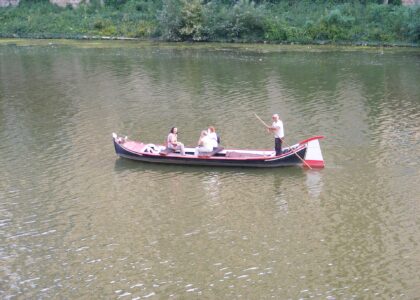
The river belongs in the same bracket. The flat-bottomed barchetti that the renaioli still pole under the Ponte Vecchio run May to September and cost about €49 a head shared — not cheap for forty-five minutes, but the only way to look up at Florence rather than across at it. Our Arno boat tours guide covers who runs them and how to book.
Private Guides: What They Cost
A licensed private guide in Florence costs from roughly €150 for a half day and €250–400 for a full day. Crucially, that is the guide’s fee only — museum entry is extra, for you and sometimes for them. Budget accordingly, because a full day with a guide plus Uffizi and Accademia tickets for two people comfortably passes €400.
The case for a private guide is strongest in three situations: you have a specific interest — Medici politics, Renaissance sculpture technique, textiles — that a general tour will not serve; you have limited mobility and need the day paced around you; or you are a family with children whose attention needs actively managing, which a good guide does far better than a parent.
Check for a licence. Tuscany licenses its guides, and licensed guides can lead groups inside state museums where unlicensed “local experts” legally cannot. If someone is vague about their credentials, that vagueness is the answer.
For most travellers, though, a small-group tour delivers eighty to ninety per cent of the value at a fifth of the price. Book one private half-day on a subject you care about, and use small groups or self-guided routes for everything else.
Where to Book: Official Sites vs Resellers
For museum entry, the rule is simple and saves real money: buy from the official site. The Opera del Duomo sells its own passes at duomo.firenze.it, and the state museums sell through the official ticketing channel. Every layer between you and them adds a margin, sometimes a small one and sometimes forty per cent.
Where resellers earn their keep is bundling and language. If you want a single confirmation covering a guided Uffizi visit with entry included, an aggregator handles that competently, and the free-cancellation windows the big platforms offer have genuine value if your dates might move. The official channels are less forgiving about changes.
Reading a Listing Honestly
A few signals separate a real operator from a repackager:
- Named venues rather than categories. “A traditional wine bar” means the itinerary is improvised. A name means a relationship.
- A stated group size. If the listing does not say, assume it is large. “Small group” without a number is marketing.
- Clarity on what the price includes. Guided museum tours that quote a low headline figure often exclude the entry ticket, which can double the real cost.
- A meeting point you can find. “Near the Duomo” is not a meeting point in a piazza that size.
- Recent reviews that mention the guide by name. Generic five-star reviews about “a wonderful day” tell you nothing; a review naming the guide tells you the operator retains people.
One further caution specific to Florence: a number of ticket sites use domain names that read like official ones. If you are buying a Duomo pass and the URL is not duomo.firenze.it, you are buying from a reseller. That may still be fine — but you should know that is what you are doing, and you should compare the price before you click.
What to Skip
A short list, offered without hedging.
- Hop-on hop-off buses. Florence’s centre is largely pedestrianised and the sights are minutes apart on foot. The bus cannot go where you want to be. The one arguable use is the Fiesole or Piazzale Michelangelo leg, and city buses 12 and 13 do the latter for the price of a normal ticket. The full case, including the two situations where the bus does earn its fare, is in hop-on hop-off Florence.
- “Skip the line” add-ons sold on top of timed tickets. Covered above; you are paying twice for one thing.
- Combined multi-city coach days. Two hill towns in one day means two hours in each and five on a coach.
- Segway tours. Restricted from much of the historic centre, and you will spend the time watching the wheel rather than the city.
- Anything promising to “skip the line” at the cathedral. The cathedral is free. There is a line, it moves, and no ticket exists that bypasses it.
A Booking Timeline That Works
Working backwards from your arrival date, this is the sequence that avoids both the queues and the over-booking.
| When | What to book | Why then |
|---|---|---|
| 4–6 weeks out | Accademia slot (Apr–Oct) | Smallest venue, fewest slots, sells out first |
| 3–4 weeks out | Dome climb slot, if you want it | Timed and capacity-capped; only on the Brunelleschi Pass |
| 1–2 weeks out | Uffizi, ideally the 08:15 slot | Enough lead time for the good slots without over-committing |
| 1 week out | One Tuscany day tour, if you want one | Small groups fill, but not that far ahead |
| 2–3 days out | Cooking class or food tour | Plenty of availability; lets you match it to the weather |
| The day before | Walking tours, anything else | Never sells out; keeps your itinerary flexible |
Two structural notes. Do not book two ticketed museums on the same day unless you are certain you want that; Florence rewards wandering more than it rewards ticking off. And leave at least one full day with nothing booked at all — it will probably be the day you remember. If you are still shaping the trip, our one day in Florence itinerary and the wider Florence itineraries collection show how the fixed bookings fit around everything else.
Frequently Asked Questions
Do I need to book Florence tours and tickets in advance?
Only three things genuinely require it: the Uffizi, the Accademia and the dome climb. Book the Accademia four to six weeks ahead between April and October, the dome climb three to four weeks ahead, and the Uffizi one to two weeks ahead. Walking tours, food tours and cooking classes can almost always be arranged a day or two before, and booking them late lets you match them to the weather.
Is entry to Florence Cathedral free?
Yes. Walking into Santa Maria del Fiore costs nothing and needs no ticket, though it is closed on Sundays and during religious celebrations. The paid passes cover the dome, bell tower, baptistery, museum and Santa Reparata — not the cathedral floor. Any tour selling “skip the line” access to the cathedral itself is selling you something that does not exist.
Which Duomo pass should I buy?
If you want to climb the dome, the Brunelleschi Pass at €30 — it is the only one that includes the climb, and it requires a timed slot. If you do not, the Giotto Pass at €20 covers the bell tower, baptistery and museum, and the bell tower arguably has the better view because it is the one vantage point that includes the dome itself. The Ghiberti Pass at €15 suits anyone who wants the museum and baptistery without any stairs.
Is the Firenze Card worth €85?
Only if you will genuinely visit four or more paid museums within 72 hours. The card excludes the entire Duomo complex, which surprises most buyers. Two museums come to around €45 booked separately, so the card loses badly on a light itinerary. It wins for museum-intensive trips, where it also removes a lot of booking friction — but you still have to reserve Uffizi and Accademia slots yourself.
Are free walking tours in Florence any good?
They are a decent first-morning orientation and a fair way to decide which areas to revisit, but the commentary is broad and the guides work for tips — budget €10–15 per person. For anything deeper, a paid small-group walk with a licensed guide is a significant step up, particularly for Oltrarno artisan routes where access depends on the guide’s own relationships.
How much does a private guide in Florence cost?
Roughly €150 and up for a half day, €250–400 for a full day, and that is the guide’s fee alone — museum entry is extra. Check the guide is licensed in Tuscany, because licensed guides can lead groups inside state museums where unlicensed operators cannot. For most visitors a small-group tour gives most of the benefit at a fraction of the cost.
Should I book a tour to Siena or the Val d’Orcia?
Val d’Orcia yes, Siena no. Montepulciano, Pienza and Montalcino are effectively unreachable from Florence by public transport in a day, so a €80–140 small-group tour buys you a day that is otherwise closed. Siena, by contrast, is about seventy-five minutes on a rapid coach that drops you at the edge of the old town, and it is far better explored at your own pace.
What is the cheapest way to see the David?
Free, if a copy will do. Full-size replicas stand outside Palazzo Vecchio in Piazza della Signoria and at Piazzale Michelangelo, both in the open air and both costing nothing. The original in the Accademia is a different experience — the scale and surface do not survive reproduction — but if your interest is mainly a photograph, the copies are honestly fine.
Final Thoughts
The best-run trip to Florence is not the most-booked one. Three reservations — the Uffizi, the Accademia and the dome, or just two of those — will secure everything that genuinely has a queue. Beyond that, the marginal return on each additional booking drops fast, and the marginal cost to your day rises, because every timed ticket is an appointment you have to walk to.
What Florence rewards is the unbooked hour: the church you went into because the door was open, the wine bar where you ended up talking to the person next to you, the walk up to San Miniato at six in the evening because the light looked right. None of that is purchasable, and all of it is what people remember. Book the bottlenecks, then leave yourself alone.
Ready to plan the rest? Start with planning your Florence trip for the practical framework, or go straight to the Florence museums guide if art is what brought you here.