This article contains advertising. Booking links on this site can be turned into paid links automatically by our partner Travelpayouts: if you book through one, we earn a commission from the provider, at no extra cost to you. It never affects what we recommend. Affiliate disclosure
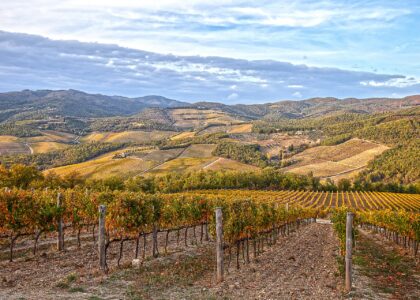
Chianti is the rolling, vineyard-stitched wine region between Florence and Siena — and a Chianti day trip is the single most popular day excursion from Florence. The land itself is the postcard image of Tuscany: cypress avenues, stone farmhouses, medieval hilltop villages, terraced vineyards. Chianti Classico, the highest classification of the region’s wine, is produced exclusively here. This 2026 guide covers every realistic Chianti day-trip option: guided tours, private drivers, self-drive itineraries, e-bike tours, the major village stops (Greve, Castellina, Radda, Panzano), winery booking strategy, and the food-and-wine experiences that make this Florence’s most rewarding single-day excursion.
Chianti is one of ten excursions covered in our day trips from Florence guide. If you want to compare organised options first, read our Tuscany wine tours from Florence comparison, and see buying Tuscan wine and olive oil before you fill your suitcase at a cellar door.
There is a version of this day where you ride it yourself. Our Vespa tours guide covers what €135 buys, the licence rules that catch people out, and why the scooters live in the hills rather than in Florence.
Time the trip for early September and Greve’s Piazza Matteotti fills with producers pouring their own wine. Our guide to Tuscan wine festivals has the dates, the Impruneta grape festival and the chestnut season that follows.
The vine leaves turn gold in autumn once the harvest ends, and the timing of the best colour shifts from year to year. Our guide to Florence in October has the timing and the weather to plan around.
What Is Chianti?
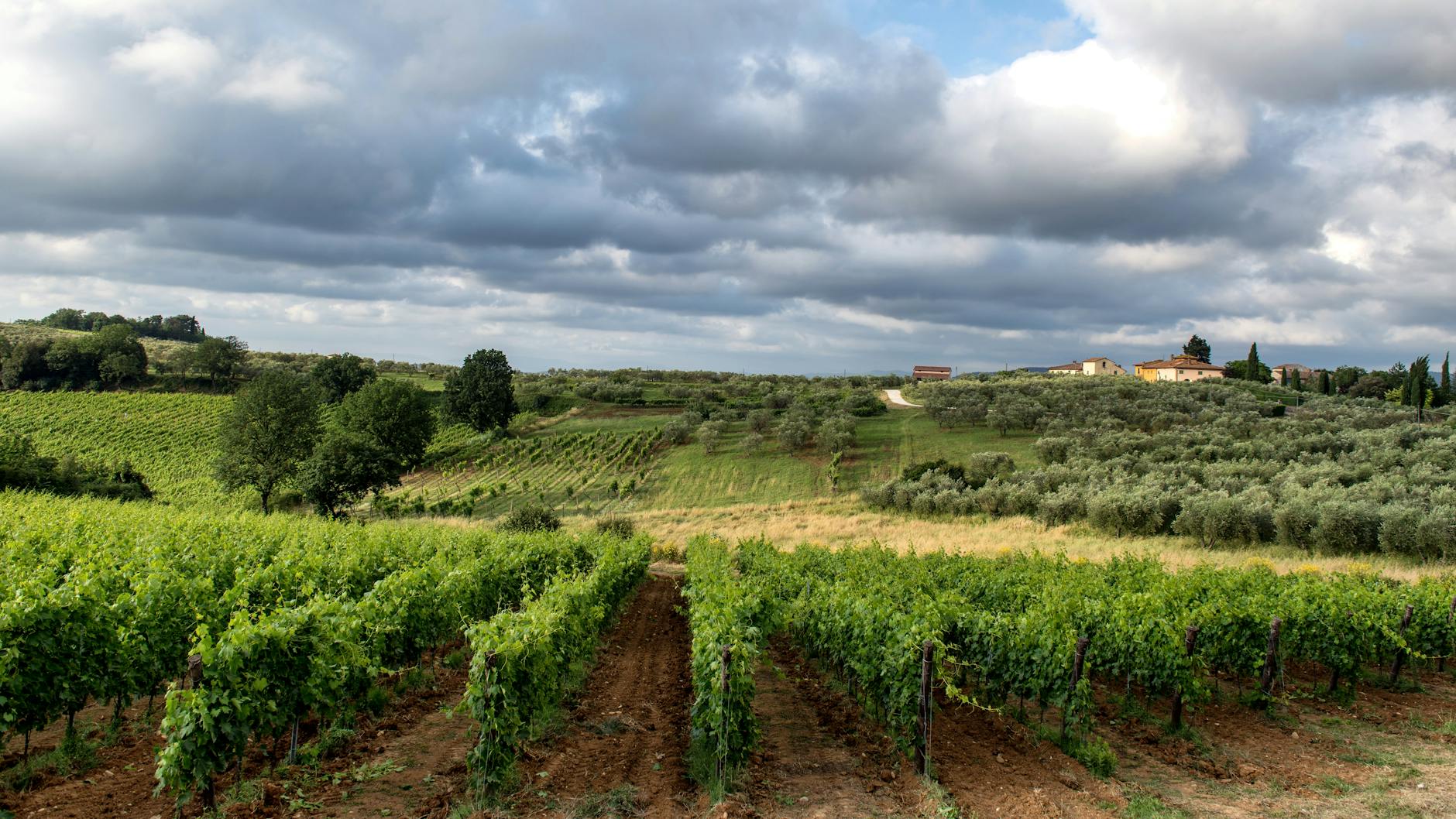
Chianti is a 70,000-hectare wine region in the hills between Florence and Siena, divided administratively into seven sub-zones (the most famous and prestigious being Chianti Classico, marked by the historic black-rooster (gallo nero) seal on every bottle). The region’s land use is roughly half wine, a quarter olive groves, the rest oak forests, fields and small towns.
The classic Chianti grape is Sangiovese — Italy’s most-planted red grape — making medium-bodied red wines aged in oak. Chianti Classico minimum requirements demand 80% Sangiovese; many top producers use 100%. The wines range from young, fresh “annata” through aged “Riserva” to the elite “Gran Selezione.”
Chianti’s tourism revolves around three things: vineyard tastings (€20–60 per person at the winery, including 3–5 wines and food pairings), medieval village visits (Greve, Castellina, Radda, Panzano), and the countryside drive itself on the SR222 Chiantigiana road that winds through the most photogenic Tuscan landscape.
Day Trip Options From Florence
Five realistic ways to do Chianti as a day trip:
- Guided group tour — €70–130 per person, full or half day, typically visiting 2 wineries plus 1 medieval village. Best for first-timers and solo travellers.
- Private driver/guide — €350–650 for a sedan/minivan, custom itinerary, professional driver. Best for groups wanting flexibility.
- Self-drive rental car — total cost €100–180 (rental + fuel + tolls + winery fees + lunch). Best for travellers comfortable driving and wanting maximum flexibility.
- E-bike tour — €85–150 per person, full day, guided cycling through scenic Chianti routes with included winery stop. Active alternative.
- Public bus + village walk — €5–10 each way to Greve in Chianti via SITA bus, but limits you to one village without winery transport. Cheapest option but limited.
Guided Group Tours
The most popular option for Florence visitors. Departing typically 09:00 from a central Florence meeting point and returning 17:00–19:00.
Half-Day Tours (€55–80)
Morning departure 09:00, return 14:00. Visit 1–2 Chianti Classico wineries with included tastings (3–4 wines per stop, light snacks). 60–75 minutes at each winery. Light lunch or aperitivo, no full sit-down meal. Best for travellers with limited time or those combining the trip with a Florence sightseeing afternoon.
Full-Day Tours (€95–150)
Departing 09:00, returning 18:00. Visit 2–3 wineries plus a medieval village stop (typically Greve in Chianti or Castellina). Full lunch at one of the wineries (Tuscan multi-course meal with wine pairings). The complete Chianti experience.
Chianti + Siena/San Gimignano Combo (€100–160)
Long-day combo tour: Florence → Chianti winery → San Gimignano → Siena → Florence. 12 hours total. Covers more ground but each stop is shorter; lunch usually at the winery. Best for travellers wanting Tuscany in one efficient day.
Recommended Tour Operators
- Walks of Italy — premium small-group tours, knowledgeable guides, typically €100–150 per person.
- City Wonders — group tours with knowledgeable English guides, €70–100 range.
- GetYourGuide / Viator — aggregator platforms with multiple operators; useful for last-minute bookings.
- The Tour Guy — premium small-group with strong reviews.
Private Driver/Guide Tours
For groups of 2–7 wanting custom flexibility:
- Standard sedan (1–3 passengers): €350–500 for a full-day private Chianti tour
- Minivan (4–7 passengers): €450–700
- Premium SUV: €500–800
- Customisable itinerary — pick your own wineries, lunch venue, village stops
- Wine purchases facilitated (no lugging bottles on a bus)
- Driver-guide combination — many private drivers are also licensed guides
Per-person cost for a couple is €175–250; for a family of 4, €100–175. The flexibility (skip a winery if it’s crowded, extend lunch, add a third stop, change route mid-day) is worth the premium for travellers with specific interests or limited time.
Self-Drive Chianti Day Trip
Self-driving Chianti is the most flexible option but requires comfort with Italian rural roads and a willingness to designate a non-drinking driver if visiting wineries.
A Classic Self-Drive Route
- 09:00: Pick up rental car in Florence (Borgo Ognissanti or Florence Airport)
- 09:30: Take SR222 Chiantigiana south toward Greve
- 10:30: Arrive Greve in Chianti — stroll Piazza Matteotti (the triangular main square), visit Antica Macelleria Falorni butcher (free tastings), browse Le Cantine winery shop
- 12:00: Drive 25 minutes to Castellina in Chianti — walk the underground passages (Via delle Volte), visit the Rocca fortress and archaeological museum
- 13:00: Lunch at one of Castellina’s working trattorias (Albergaccio, Squarcialupi)
- 14:30: Drive 20 minutes to a Chianti Classico winery — pre-booked tasting (Castello di Albola, Castello di Volpaia, Brolio Castle)
- 16:30: Drive back via SR222 — stop at Panzano in Chianti for a quick walk
- 18:30: Return rental car in Florence
Total: 8 hours, ~120km driven, €100–180 all-in (rental + fuel + lunch + winery + tolls).
Self-Drive Considerations
- Designate a non-drinking driver — the Italian limit is 0.05% blood alcohol (0.5 g/L), and zero for under-21s, new and professional drivers. Wineries pour generously.
- Spit, don’t swallow — at tastings, use the provided sputacchiera (spittoon). No number of tastings is a safe amount for the driver, so spit or drink water between sips.
- SR222 Chiantigiana is paved and well-marked but narrow with tight curves and minimal shoulders. Drive sober and patient.
- Most wineries require advance booking for tastings (24–72 hours notice) — call ahead or use the winery’s online portal.
- Pre-load Google Maps offline — Italian rural cellular coverage is spotty in deep Chianti.
- Pick-up rental at Borgo Ognissanti in Florence (no airport surcharge, drives straight onto SR222)
The Major Chianti Villages
Greve in Chianti
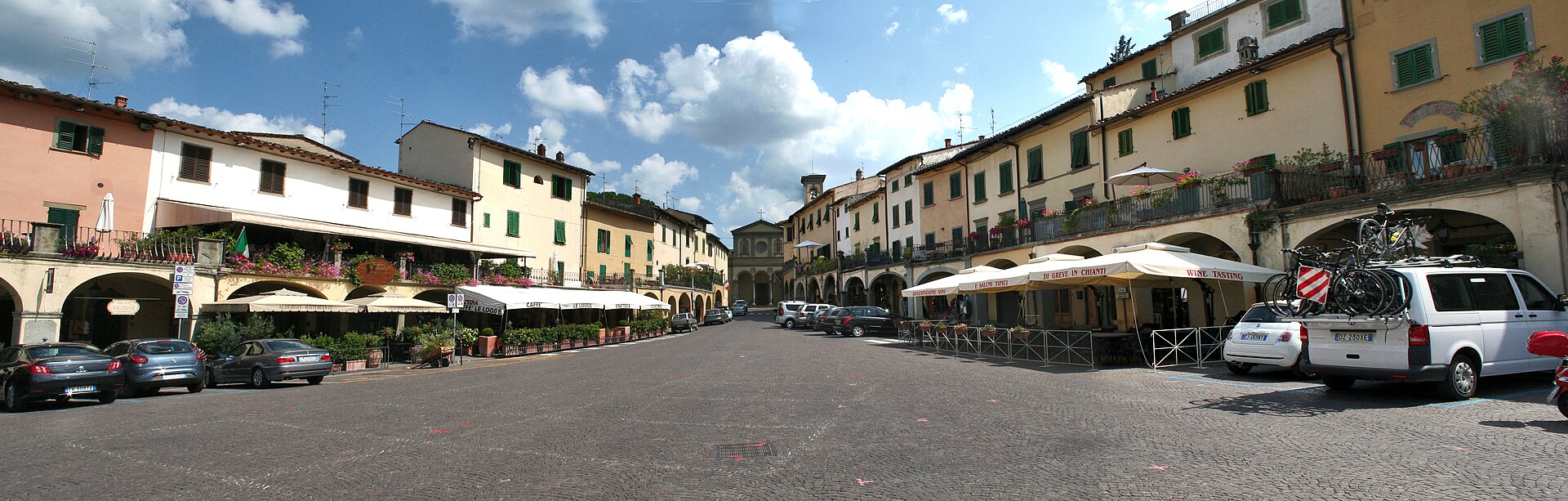
The “capital” of Chianti — a working medieval village 35km south of Florence on the SR222. Triangular Piazza Matteotti is the main square, surrounded by a wooden-arcaded loggia. Greve hosts the September Chianti Classico Wine Festival (the region’s biggest annual event). Highlights:
- Antica Macelleria Falorni (Piazza Matteotti) — historic butcher shop since 1729, with free tastings of finocchiona (fennel salami), cinghiale (wild boar) salami, prosciutto.
- Le Cantine di Greve in Chianti — the village’s central enoteca with 140+ Chianti producers, mass-market and cult labels alike, “tasting tickets” sold individually.
- Piazza Matteotti’s Saturday market — fresh produce, cheese, bread, leather.
- Santa Croce church — small Romanesque church just off the square, free entry.
Panzano in Chianti
Smaller village 5km south of Greve, famous for two reasons. First, the Antica Macelleria Cecchini — Dario Cecchini’s “Tuscan philosopher butcher” workshop (eighth-generation butcher, Bistecca alla Fiorentina pioneer). Second, the Conca d’Oro — the curved valley below Panzano filled with Chianti Classico vineyards. Quick 30-minute stop on most tours.
Castellina in Chianti
Medieval fortified village on a ridge 50km south of Florence. Highlights:
- Via delle Volte — underground covered passageway running along the village perimeter, with shops and wine bars in vaulted spaces.
- The Rocca — medieval fortress now housing the small Archaeological Museum.
- Etruscan tomb sites just outside the village (free to visit).
- Several outstanding restaurants — Albergaccio, Trattoria La Torre.
Radda in Chianti
Smaller medieval village further south. Fewer tourists than Greve or Castellina; more authentic working Chianti feel. Excellent base for serious Chianti exploration.
Gaiole in Chianti
The southernmost of the major Chianti villages, surrounded by some of the region’s most prestigious wineries (Brolio Castle, Castello di Ama). October hosts L’Eroica, Italy’s most famous vintage cycling event.
Chianti Wineries Worth Booking
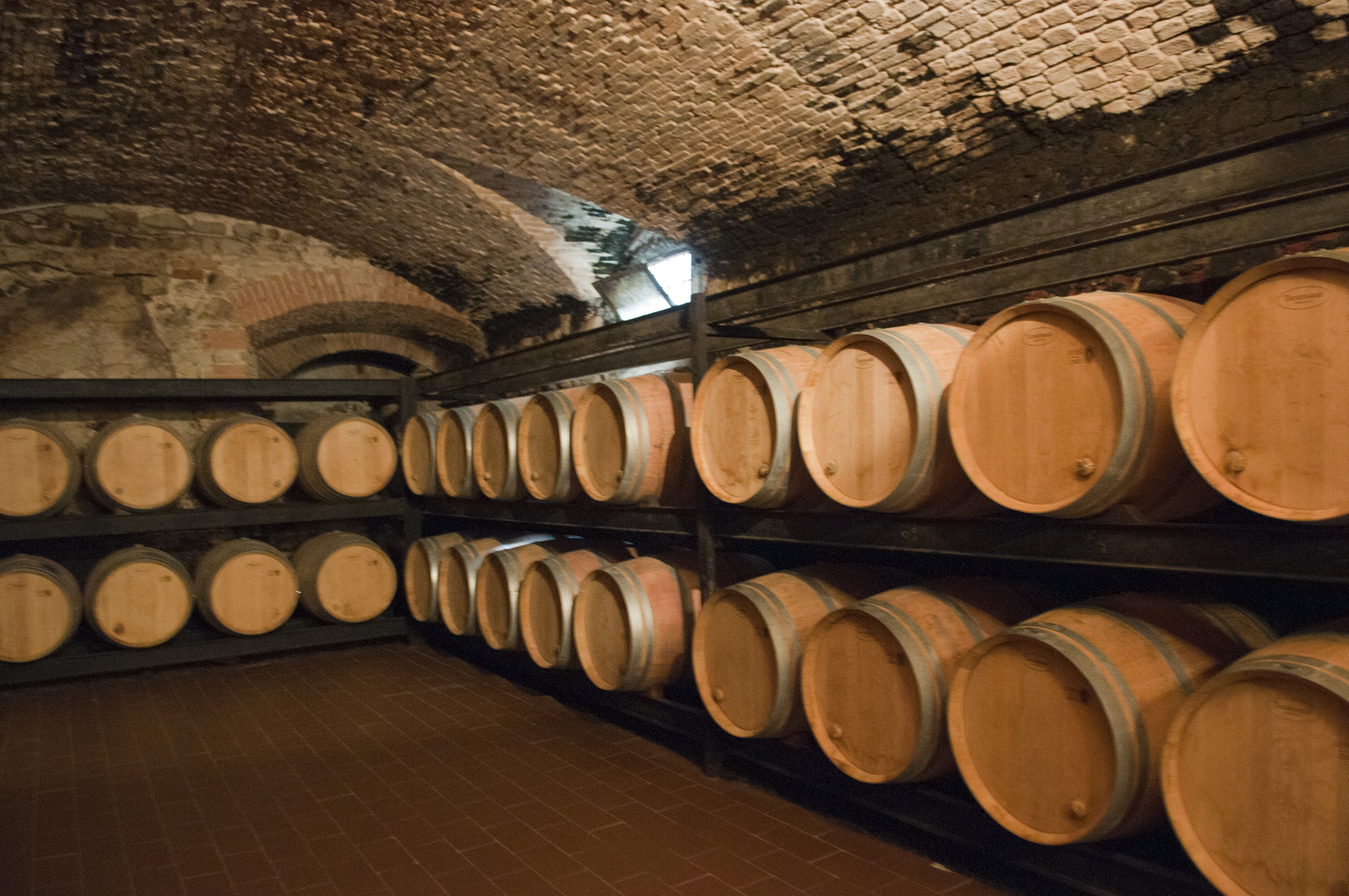
Some of the most welcoming and prestigious Chianti Classico wineries for day-trip visits:
Castello di Volpaia (Radda)
Entire restored medieval village of Volpaia is the winery — every stone building is part of the production estate. The cellars run beneath the streets. Tours include the village walk, cellar visit, and tasting in the winery shop. €30–50 per person.
Castello di Brolio (Gaiole)
The historic Ricasoli family castle — birthplace of the modern Chianti Classico recipe in the 19th century. Tour includes castle, gardens, cellars and tasting. €25–60 per person depending on tour level. The most historically significant Chianti winery to visit.
Castello di Albola (Radda)
Spectacular hilltop estate with castle dating to the 1100s. Modern facilities for tastings; gardens and cellars. €25–45.
Castello di Ama (Gaiole)
Chianti Classico estate with serious contemporary art collection (Anish Kapoor, Daniel Buren installations among the vines). Wine tour + art tour combination €60–80. For travellers who want art with their wine.
Rocca delle Macìe (Castellina)
Family-run estate (the Zingarelli family) with a strong tour and tasting programme; lunch options for visitors. €30–50.
Antinori nel Chianti Classico (Bargino)
The architecturally spectacular Antinori headquarters — the Marquis Antinori family has been making wine here since 1385. Modern building partially buried in the hillside; tour covers production from vine to bottle. €40–80 depending on tour, daily tours and tastings.
Booking Strategy
- Tours and private drivers: book 2–4 weeks ahead in summer; same-day or 2–3 days ahead off-season.
- Winery tastings: book directly with the winery 24–72 hours ahead (some accept walk-ups, but you risk getting a “fully booked” turn-away).
- Lunch at wineries: book 1–2 weeks ahead; popular winery lunches sell out.
- Dario Cecchini’s Solociccia restaurant in Panzano: books out 2 months ahead. Reserve early.
- Major Chianti festivals (Greve September wine festival, Brolio cantina aperta days): book accommodation and transport 2+ months ahead.
E-Bike Day Tours
Active alternative to bus or car tours. Florence-based operators run guided e-bike tours through Chianti landscapes:
- Tuscany e-Bike Tour (€85–120, full day) — guided e-bike tour from Florence outskirts into Chianti Classico, lunch and 1–2 winery visits.
- Chianti e-Bike Wine Tour (€95–150, full day) — premium tour with 2–3 wineries.
- Half-day e-bike (€65–95) — shorter loops near Greve or Panzano.
E-bike eliminates the climbing problem that makes regular cycling uncomfortable in hilly Chianti. Distance covered: 30–50km daily, with frequent stops. Best in spring and autumn (April–June, September–October); summer afternoons can be hot.
Public Transport (Greve Only)
Bus 365 (SITA service, now Autolinee Toscane) connects Florence’s Autostazione bus terminal to Greve in Chianti. Journey 1 hour 10 minutes, €5 single. Limited frequency (8–10 daily services). Useful for visitors wanting only Greve, but wineries require additional taxi or walking.
For other Chianti villages (Castellina, Radda, Gaiole) public transport is essentially impractical without changes and long waits.
Best Time for a Chianti Day Trip
- September–October — vendemmia (grape harvest) season. The countryside is at its most active, vineyards are full, the new wines are being made. Optimal time.
- Late April–May — green hills, wisteria, irises, longer days. Excellent.
- Late June and September — pleasant temperatures, full activity, manageable crowds.
- July and August — hot (32°C+), full sun, dry. Visit only with full air-conditioning and avoid 13:00–17:00 outdoor activities.
- March — vines bare, atmospheric but austere. Wineries quieter, easier to book.
- November–February — cool, often wet, many wineries closed or reduced hours. Plan ahead.
Insider Tips
Tip 1: Book wineries directly rather than through tour operators when possible. Direct booking often costs less and gives more flexibility on tasting menu and tour duration.
Tip 2: Buy a few bottles at the winery — they ship internationally for a fee, and direct purchases are typically 20–30% cheaper than the same bottles in Florence wine bars.
Tip 3: The September Chianti Classico Wine Festival in Greve (typically the second weekend) brings 100+ producers to a single piazza tasting — €20 buys a glass, holder and seven tasting tickets. The single best Chianti event.
Tip 4: Lunch at a winery (€45–80) rather than in a village restaurant — you’ll eat with the producer’s own wines paired to a multi-course Tuscan menu, often outdoors with a view.
Tip 5: Skip the highest-end “Cantina Aperta” days when wineries are open to all-comers — they’re packed and tastings are rushed. Pre-booked private tours give better access.
Tip 6: The “Chianti” wines without the “Classico” subzone designation come from outside the historic boundary — they’re typically lower quality. Look for the gallo nero (black rooster) seal on the bottle neck.
Tip 7: If self-driving with multiple winery stops, designate one person as the non-drinking driver and have them spit at every tasting. Italian DUI penalties are severe.
Cost Comparison
| Option | Cost (per person) | Pros | Cons |
|---|---|---|---|
| Group bus tour (full day) | €95–150 | No driving, knowledgeable guide, social | Less flexibility, fixed schedule |
| Half-day group tour | €55–80 | Shorter, fits with Florence sightseeing | One winery only, no full lunch |
| Private driver/guide | €175–325 (couple), €100–175 (4 pax) | Custom itinerary, total flexibility | Expensive for solo or couple |
| Self-drive rental | €100–180 total (split among group) | Maximum flexibility, set own pace | Need designated driver, navigation effort |
| E-bike tour | €85–150 | Active, scenic, less car-dependent | Hot in summer, weather-dependent |
| Bus + Greve walk | €10–20 (transport) + lunch + tastings | Cheapest option | Limited to one village, no winery transport |
Chianti Day Trip FAQ
Is a Chianti day trip worth it?
Yes — Chianti is the most popular and rewarding single-day excursion from Florence. The combination of wine, food, medieval villages and Tuscan countryside delivers exactly what most visitors travel to Tuscany hoping to find.
Should I take a guided tour or drive myself?
Take a tour if you don’t want to drive, you’re solo or a couple wanting to drink at every winery, or if you want curated commentary. Drive yourself if you have a comfortable group, want a custom itinerary, and have a designated non-drinking driver.
How much does a Chianti day trip cost?
€55–80 per person for half-day group tours, €95–150 for full-day group tours, €350–800 for a full-day private driver, €100–180 total for self-drive (split among group), €85–150 for an e-bike day tour.
Which Chianti villages should I visit?
Greve in Chianti is the must-see (the regional capital, with Antica Macelleria Falorni and Le Cantine wine shop). Castellina in Chianti for the underground passageways and best lunch trattorias. Panzano for Dario Cecchini’s butcher shop. Radda or Gaiole for a quieter, more authentic experience.
Which Chianti wineries are best for visits?
Castello di Volpaia (entire medieval village is the winery), Castello di Brolio (the historic birthplace of modern Chianti Classico), Castello di Ama (contemporary art among the vines), Antinori nel Chianti Classico (architectural masterpiece), Castello di Albola (scenic hilltop). Book directly 24–72 hours ahead.
Can I do Chianti by public transport?
Greve in Chianti is reachable by bus 365 (SITA/Autolinee Toscane) from Florence’s Autostazione, 1h10 journey, €5 single. But other Chianti villages and most wineries are not practical by public transport — guided tours, private drivers or self-drive are the realistic options.
When is the best time to visit Chianti?
September–October (grape harvest), late April–May (spring blooms), and shoulder months (June, late September) are optimal. Avoid peak July–August heat and November–February quiet/closed seasons.
Are children welcome in Chianti?
Yes — Italian winery culture is family-friendly. Most wineries have outdoor space, gardens or playgrounds, and lunches are casual. Children typically aren’t part of formal tastings but can join the village walks and meals.
The Chianti day trip is the most rewarding single-day excursion from Florence — the right way to taste actual Tuscany rather than just see Tuscany from a distance. Book wineries 24–72 hours ahead, choose between guided tour and self-drive based on your priorities, allow a full 8 hours for the round trip, and don’t rush the lunch. Done well, a Chianti day trip leaves you with two or three bottles for home, a clearer sense of what Sangiovese tastes like, and an afternoon’s slow conversation in a vineyard view that justifies the entire trip to Tuscany.