This article contains advertising. Booking links on this site can be turned into paid links automatically by our partner Travelpayouts: if you book through one, we earn a commission from the provider, at no extra cost to you. It never affects what we recommend. Affiliate disclosure
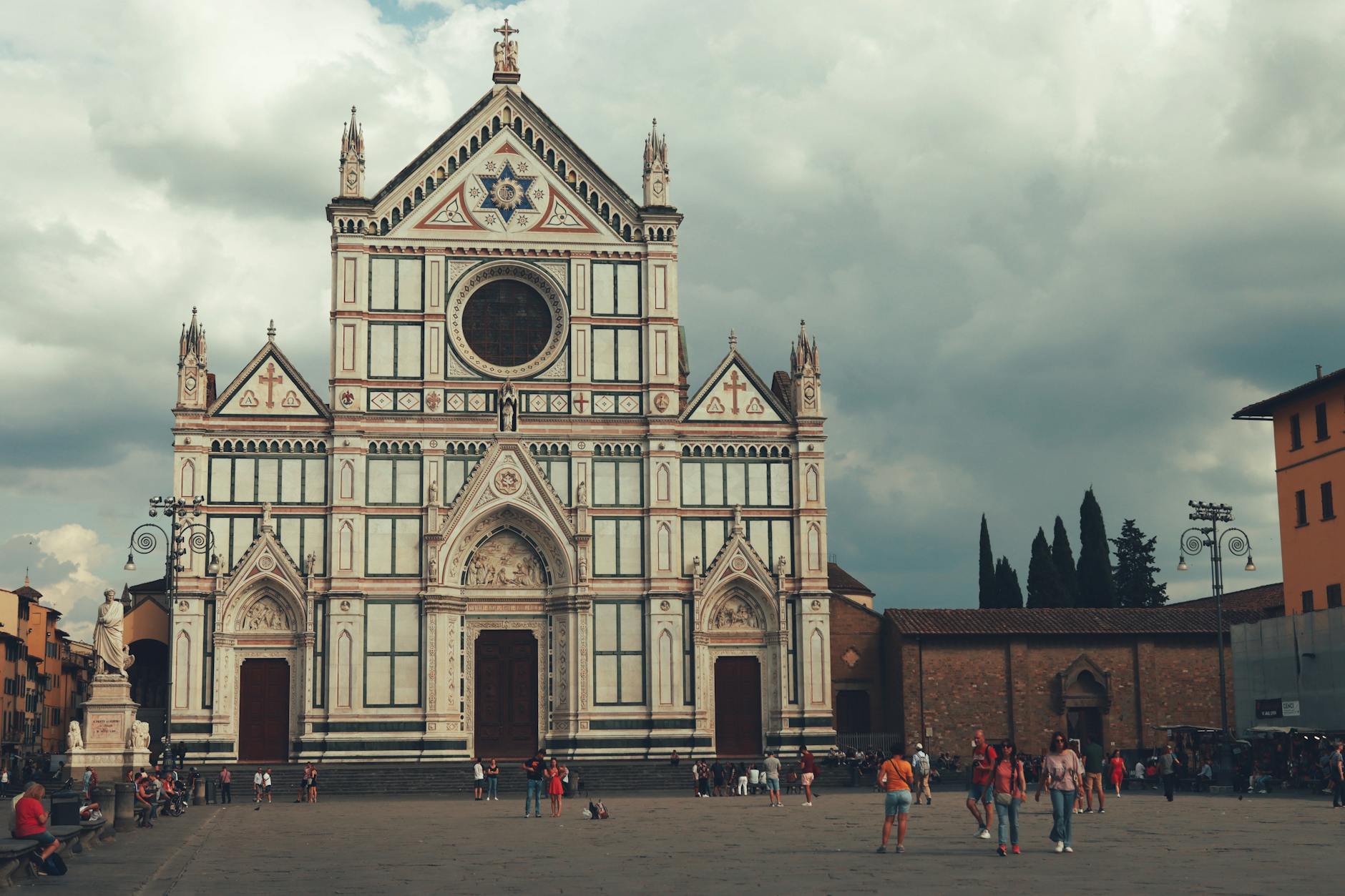
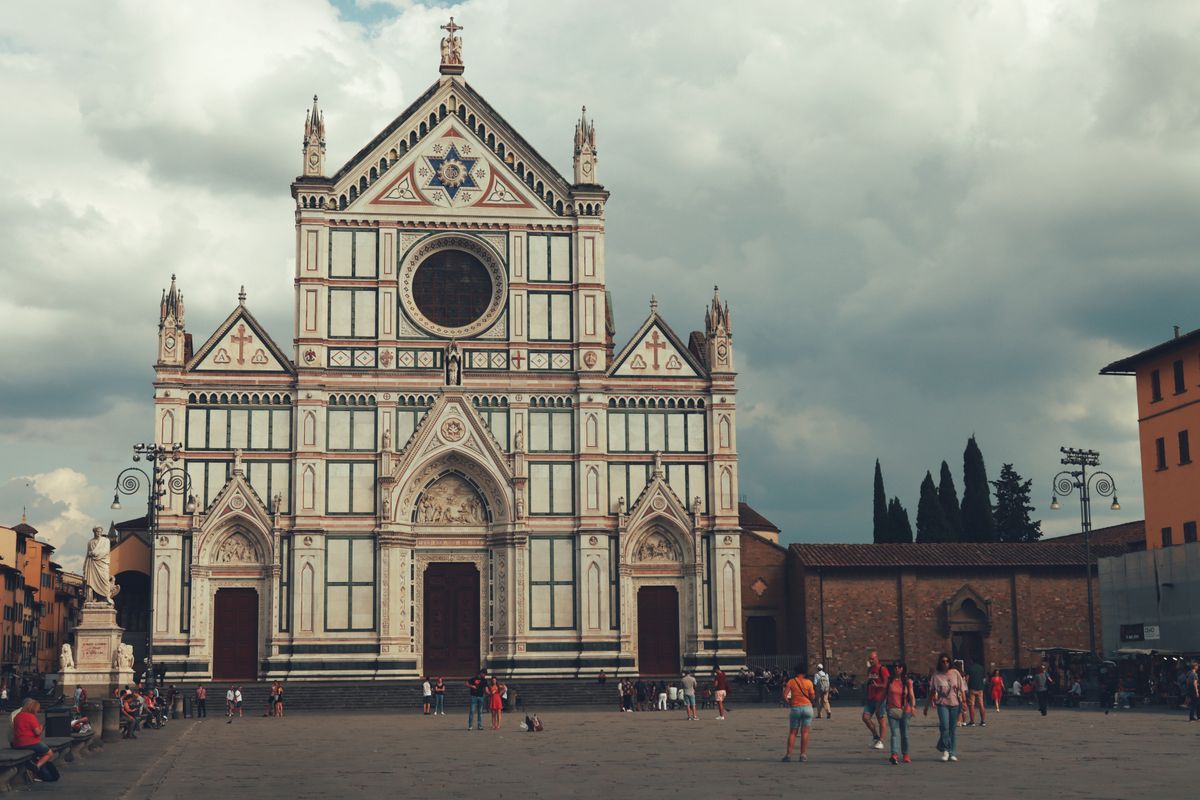
Calcio Storico Fiorentino—Florence’s historic football—is one of the most extraordinary, brutal, and beautiful sporting traditions in the world. Every June, the four historic neighborhoods of Florence compete in three matches in Piazza Santa Croce, which is filled with sand for the occasion. Twenty-seven costumed players per side, almost no rules, fifty minutes of fighting, wrestling, kicking, and occasional ball-handling—and at the end, the winning team’s neighborhood is rewarded with a Chianina cow (no longer literal, now symbolic). The tradition dates to the 16th century but reflects games even older. This complete guide to Calcio Storico covers the rules (such as they are), the history, the four teams, how to get tickets, what to expect, and how the tournament fits into Florence’s June 24 Festa di San Giovanni.
The June tournament is the loudest week in the Florentine year and the hardest to get tickets for — check the dates against our festivals and events calendar, and be ready for heat: our weather by month guide covers what a Florentine June actually feels like. The finals fill Piazza Santa Croce with sand.
The tournament sits inside a month that has a great deal else going on — the open-air cinema at the Uffizi, the Fiesole season, and the fireworks that close the final. Our guide to Florence in June puts it all in order.
Calcio Storico Quick Facts
| Detail | Information |
|---|---|
| Origin | Florentine ball games from the Middle Ages; codified 16th century |
| Most famous match | February 17, 1530 (during the siege of Florence) |
| Modern revival | 1930 |
| Venue | Piazza Santa Croce (filled with sand) |
| Players per team | 27 (4 goalkeepers, 3 fullbacks, 5 halfbacks, 15 forwards) |
| Match length | 50 minutes (no halftime) |
| Teams | Bianchi (Santo Spirito), Azzurri (Santa Croce), Rossi (Santa Maria Novella), Verdi (San Giovanni) |
| Tournament structure | 2 semifinals + final; final on June 24 |
| Tickets | €40-80 for grandstand; limited standing |
| Prize | Symbolic Chianina cow (food calf for victory feast) |
The History
Florence has played some form of ball game since at least the early Middle Ages. The Roman harpastum probably influenced early Tuscan ball games, and by the 1400s, “calcio” (literally “kick”) was a popular pastime in Italian piazzas. Florentine nobility played a more codified version starting in the 16th century—and one match in particular cemented Calcio Storico in Florentine identity.
On February 17, 1530, Florence had been under siege by imperial troops loyal to Pope Clement VII (a Medici, attempting to restore the dynasty after the Republic had expelled them). The siege had dragged on for months; food was scarce; the population was exhausted. To demonstrate Florentine defiance to the besiegers, the Republic organized a Calcio match in Piazza Santa Croce—visible to the imperial forces camped on the surrounding hills. The Florentines played a full match in front of their enemies as if nothing was wrong. The siege ended in surrender six months later, but the symbolic gesture became legendary—a refusal to be cowed.
The game was officially codified in 1580 by Giovanni de’ Bardi, who wrote the first rulebook (such as it was). It was played by the Florentine elite throughout the Medici Grand Duchy, occasionally before visiting royalty. By the 19th century the tradition had largely died out. The current form of Calcio Storico Fiorentino was revived in 1930 as a tourist and civic event, and has been held continuously since then (with breaks for major events including 1942-1945 and 2020 COVID closures).
The Four Teams
Four teams represent the four historic neighborhoods of central Florence, each with its own color, banner, and supporters:
- Bianchi (Whites): Santo Spirito quarter, south of the Arno (Oltrarno). Historically associated with the working-class Oltrarno community.
- Azzurri (Blues): Santa Croce quarter, eastern central Florence. The “home” team given that the matches are played in their piazza. Notoriously aggressive and well-supported.
- Rossi (Reds): Santa Maria Novella quarter, western central Florence (around the train station). Often associated with Florence’s commercial class.
- Verdi (Greens): San Giovanni quarter, around the Duomo and the original civic center. Linked historically to the religious and political establishment.
Each team draws players exclusively from its neighborhood—a young man from Santo Spirito plays for the Bianchi; one from Santa Croce for the Azzurri. Many players are amateur athletes (rugby players, boxers, MMA fighters) who train year-round for the three June matches. Being selected for the team is a major honor; veterans of the team include local construction workers, plumbers, lawyers, and police officers. The teams have managers, training schedules, and rivalries that extend across generations of Florentine families.
The Rules (Such As They Are)
The basic structure: the rectangular sand arena (about 80m × 40m) has goal areas at each end—a long, low net stretched across the entire short side. The goal is to throw or kick the ball into the opposing team’s net. Each goal scored is called a caccia. The team with the most cacce after 50 minutes wins.
Each team fields 27 players in specific positions: 4 goalkeepers, 3 fullbacks (datori indietro), 5 halfbacks (datori innanzi), and 15 forwards (innanzi). Goalkeepers are positioned along the goal line. Forwards make most of the contact and scoring.
What’s allowed: kicking the ball, throwing the ball, tackling, punching opponents (within reason—see “what’s not allowed”), wrestling, headbutting (technically), and strategic use of the field’s sand for body positioning. What’s not allowed: ganging up on a single opponent (more than one defender attacking one player is a foul), kicks to the head of a downed opponent, attacks from behind on an unaware player, and use of any weapons or objects.
Important rule: if a player misses a shot at goal, the entire half-point is forfeited to the other team. This is the rule that prevents Calcio Storico from becoming pure brawling—players must actually try to score. Misses are punished. The result is occasional scoring (3-7 cacce per match is typical) interspersed with sustained physical combat.
Players who are knocked unconscious, severely injured, or ejected by referees cannot return for that match. Substitutions are not allowed under most circumstances—if a team loses 5 players, they play with 22.
The Tournament Structure
The current format of Calcio Storico has three matches:
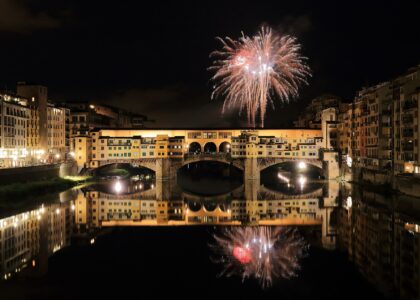
The match-up brackets are set by lottery in late spring (no fixed seeding by previous tournaments). The final on June 24 is the anchor of the day’s celebrations of San Giovanni Battista, Florence’s patron saint, and is followed in the evening by the famous fireworks over the Arno.
The Pageantry
Each match begins with an extensive Renaissance-costume procession from the Palazzo Vecchio to Piazza Santa Croce: hundreds of participants in 16th-century costume—drummers, flag-throwers, halberdiers, mounted knights, judges in period dress, the Marzocco lion mascot. The procession is itself one of the most spectacular Florentine sights of the year. Allow at least 30 minutes for it to pass; a good viewing position is on Via dei Calzaiuoli or in Piazza della Signoria.
Inside Piazza Santa Croce, the team players enter in costume to the cheers (or jeers) of the supporters of all four neighborhoods. The ball is ceremonially placed in the center of the arena. A cannon is fired to start the match. The 50 minutes that follow are a continuous melee of action and brutality, broken only by goals and ejections.
The crowd is split—each neighborhood occupies one side of the grandstands and chants its team songs throughout the match. Calcio Storico crowds can be intense (drinking, shouting, occasional minor violence between supporters) but are largely good-humored and contained by police presence.
How to Get Tickets
Tickets become available in late April or early May each year through the Comune di Firenze website (comune.fi.it) and at the official ticket office at the Palazzo dei Congressi. Prices range from €40 (limited standing/cheaper grandstand) to €80 (premium grandstand seats with backrests). VIP options sometimes include €120-€180 packages with reception food and drinks.
Tickets sell out quickly. The semifinal matches sell out within 2-3 weeks of release; the June 24 final sells out within days. Buy as soon as tickets are released. Resale tickets through trusted sites can be found closer to the date but typically at significant markup. Do not buy from street touts on the day—fakes are common.
Free options exist for those who don’t want to pay: the Renaissance procession to and from Palazzo Vecchio is free to watch from any street it passes; some areas around Piazza Santa Croce allow free viewing of the procession arriving (but not the match itself, which is fully ticketed).
What to Expect at the Match
Length: Matches start around 17:00 and last 50 minutes of game play, but the entire experience including procession, ceremony, and post-match takes about 3 hours. Plan to arrive by 16:30 (procession arrives ~17:00) and stay until the post-match award ceremony (~19:00).
Violence: Real and intense. Players regularly bleed, receive black eyes, suffer broken bones, and are knocked unconscious. Medical staff and ambulances are present throughout the match. The game is not for visitors who are squeamish about combat sports. That said, fatalities have not occurred in the modern era.
Audience: Predominantly local Florentine, with strong representation from each neighborhood. International tourists are present but are a minority. Italian is the language of the announcements and chants; you can follow without Italian but you’ll miss a lot.
Children: The Comune sets minimum age at 12 for the matches due to the violence, but many Florentine families bring younger children to selected sections. Discuss with parents before bringing.
Weather: Mid-June in Florence is hot (often 30-35°C). The grandstands are partially shaded but bring water and a hat. The piazza catches and holds heat from the sun-baked sand and stone.
Recent Champions
The four teams have competed since 1930 with rotating champions. Recent winners (2024 and earlier):
- 2024: Verdi (San Giovanni)
- 2023: Azzurri (Santa Croce)
- 2022: Verdi (San Giovanni)
- 2021: Bianchi (Santo Spirito)
- 2019: Azzurri
- 2018: Verdi
Winning teams celebrate vigorously through their neighborhoods that night, with parties, fireworks (in addition to the city’s), and bragging rights for an entire year. Losing teams nurse wounds and plan revenge for the next year.
What to Eat and Drink
The grandstands have basic concession stands with water, soft drinks, beer, and Italian snacks. Most attendees arrive with food prepared earlier or eat at restaurants near the piazza after the match. Reservations at restaurants near Piazza Santa Croce on June 24 (final) need to be made 2-3 months in advance—the entire neighborhood becomes a celebration.
Recommended restaurants near the piazza for post-match dinner: Antica Trattoria da Tito (Via Vinegia, traditional Tuscan), Trattoria All’Antico Gambero (Via Verdi 60r, hearty homestyle), Ristorante Il Cavaliere (Via San Giuseppe).
Photography and Filming
Photography is allowed for personal use. Professional and press photography requires accreditation; contact the Comune di Firenze press office. The pageantry processions outside the piazza are photographed without restrictions. Inside the arena, get a seat in the grandstands rather than the bleachers for clearer views; flash is technically not permitted but rarely enforced. Drones are not permitted over the piazza.
Safety and Etiquette
Personal safety: The crowds can be dense and chaotic. Pickpocketing is a concern; keep wallets in front pockets and bags secured. Avoid wearing the colors of a team you’re not supporting (Bianchi white, Azzurri blue, Rossi red, Verdi green) in their seating area to avoid uncomfortable interactions.
Cheering: Each section cheers its team enthusiastically, but cross-neighborhood taunting is part of the culture. Don’t take it personally if locals chant against your chosen team. Don’t engage in shouting matches with rival supporters.
Medical needs: Florence Red Cross (Misericordia) operates field stations during all matches. Tell staff if you feel ill from heat or crowds.
Frequently Asked Questions
What is Calcio Storico?
A 16th-century Florentine sport combining elements of soccer, rugby, and bare-knuckle fighting. Four neighborhood teams play three matches in Piazza Santa Croce each June, ending with the final on June 24 (Festa di San Giovanni). It’s brutal, beautiful, and uniquely Florentine.
How violent is Calcio Storico?
Real and intense. Players regularly bleed, suffer broken bones, and are knocked unconscious. Medical staff and ambulances attend every match. Punching, wrestling, and tackling are all permitted. The game is real combat, not theater—but referees and rules prevent the most dangerous attacks (kicks to downed players, ganging up on one player).
How do I buy Calcio Storico tickets?
Tickets release in late April or early May through the Comune di Firenze website (comune.fi.it) and at official ticket offices. Prices €40-80 for grandstand seats. Sell out within 2-3 weeks of release; final on June 24 sells out within days. Buy immediately when tickets become available.
When is Calcio Storico held?
Three matches in mid-to-late June. Two semifinals around June 12-20, and the final on June 24 (Festa di San Giovanni, Florence’s patron saint day). Exact dates and team match-ups are announced in late spring.
Who plays Calcio Storico?
Amateur athletes from each of the four historic Florence neighborhoods. Many are rugby players, boxers, MMA fighters, or fitness professionals; some are construction workers, plumbers, lawyers, or police officers in their day jobs. Players are 18-35 years old, almost all native Florentines from their neighborhood.
How long is a Calcio Storico match?
50 minutes of continuous play, no halftime. With the Renaissance procession before and award ceremony after, the entire experience is about 3 hours. Plan to be at the venue from 16:30 (procession arrival) until about 19:00 (after the post-match ceremony).
Can children attend Calcio Storico?
The official minimum age is 12 due to the match’s violence. Some Florentine families bring younger children to less intense seating areas, but parents should consider their child’s tolerance for combat sports.
What do the players wear?
Renaissance-style costumes including knee-length pants in their team color, white tunics, and historical-style boots. The costumes are heavy-duty for protection (some include light padding) but allow significant movement. Helmets are not worn.
What’s the prize for winning Calcio Storico?
Symbolically, a Chianina cow—a famous Tuscan cattle breed historically given as the championship prize. Today the cow is no longer literal (the team gets a small cash prize and bragging rights), but the symbolism remains. Winning team members get the satisfaction of a year of neighborhood celebration and recognition.