This article contains advertising. Booking links on this site can be turned into paid links automatically by our partner Travelpayouts: if you book through one, we earn a commission from the provider, at no extra cost to you. It never affects what we recommend. Affiliate disclosure
The San Lorenzo Market is Florence’s largest outdoor market — 200+ stalls along the streets surrounding the Basilica of San Lorenzo, selling leather goods, scarves, ceramics, t-shirts, and souvenirs. It’s also the city’s main bargaining-culture destination — a working market where the asking price is rarely the selling price, and where 25% discounts are routinely possible. This 2026 guide explains exactly how to shop the market: what to buy (and what to skip), bargaining strategy, the Mercato Centrale food hall above, scam awareness, and how San Lorenzo fits into a Florence shopping day.
San Lorenzo is the best-known market in our Florence shopping guide, and the place most visitors go first for leather in Florence. Its indoor food hall, Mercato Centrale, sits in the same building.
What is the San Lorenzo Market?
The San Lorenzo Market refers to two distinct but adjacent things:
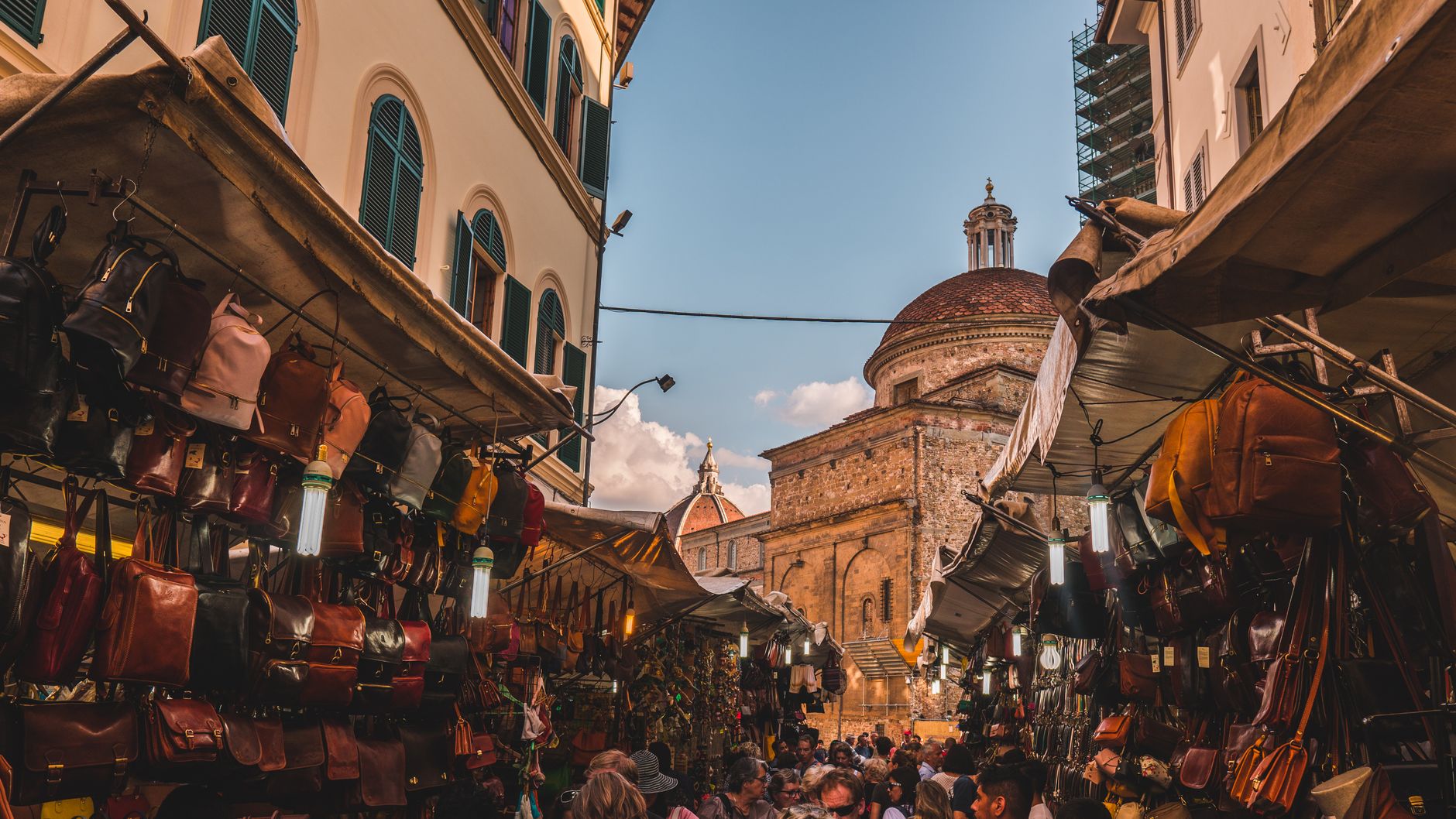
- The outdoor leather and souvenir market — 200+ stalls along Via dell’Ariento, Via Sant’Antonino, and the surrounding streets near the Basilica of San Lorenzo. Daily, roughly 09:00–19:00.
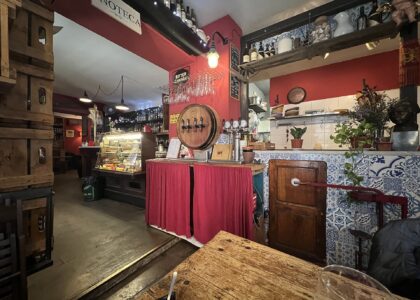
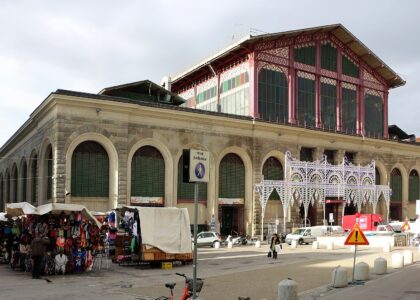
- Mercato Centrale — the covered food market in a 19th-century iron-and-glass building. Ground floor working market (vegetables, fish, butchers, cheesemongers); upstairs food hall with some 19 shops plus a bar, brewery, pizzeria and grill selling sit-down meals.
Most visitors do both — outdoor market browsing for leather and souvenirs, then upstairs at Mercato Centrale for €8–14 lunch. Together they’re the city’s main shopping-and-eating hub, especially for budget-conscious travellers.
Where Is It and How to Get There
- Address: Centre point at Piazza del Mercato Centrale, surrounded by Via dell’Ariento, Via Sant’Antonino, Via Panicale
- From the Cathedral: 8-minute walk via Via dei Cerretani and Via Borgo San Lorenzo
- From SMN station: 7-minute walk via Via dei Banchi
- From the Uffizi/Piazza della Signoria: 10-minute walk via Via Roma
The market spreads across roughly 3 streets surrounding the Basilica of San Lorenzo. Allow 30–45 minutes minimum for a quick browse, 90–120 minutes for serious shopping.
What to Buy at San Lorenzo
Leather Goods
The market’s headline category. Quality varies dramatically — from genuinely good Italian leather at great prices to plastic-leather garbage at high prices. Apply the leather-quality tests rigorously:
- Pressure test — real leather wrinkles, faux compresses
- Smell test — real has natural smell, faux smells chemical
- Edge inspection — real leather has fibrous rough edges
- “Vera pelle” (real leather) and “Made in Italy” labels
Best leather buys at San Lorenzo:
- Wallets — €15–60 with bargaining (asking prices €25–80)
- Belts — €20–60 (asking €30–80)
- Small bags — €40–150 (asking €60–250)
- Leather jackets — €120–400 with bargaining for genuine leather (asking €200–600)
For premium quality, prefer the Scuola del Cuoio (Leather School) at Santa Croce — fixed prices but consistent quality. San Lorenzo is for value-conscious shoppers willing to apply quality tests.
Scarves & Textiles
Italian silk, wool, and pashmina scarves. Quality varies — some are genuine Italian-made; many are imported polyester labelled as silk. Tests:
- Real silk — soft, slightly rough texture, slight crinkle when crushed
- Real wool/cashmere — warm to touch, dense feel
- Polyester pretending to be silk — uniformly smooth and slippery, plastic-like sheen
Prices: silk scarves €10–30 (asking €15–50), wool/cashmere €25–80 (asking €40–120). Check labels for fibre content; “100% silk” or “100% lana” guarantees real material.
Ceramics
Hand-painted Italian ceramics from various Tuscan and Umbrian towns (Deruta, Montelupo, San Gimignano). Plates, bowls, espresso cups, decorative pieces. Quality marker: hand-painted (visible brush strokes) vs machine-printed (uniform pattern). Prices €15–80 with bargaining for individual pieces.
Souvenirs
- Florence-themed t-shirts and tote bags — €5–20
- Statuettes of David — €5–30
- Magnets and keychains — €1–5
- Leather bookmarks — €3–8
- Postcards — €1–3
- Prints and small art reproductions — €5–25
Most souvenirs are imported — quality is consistent across vendors. Bargain on volume (5+ items at one stall).
What to Skip at San Lorenzo
- “Italian designer” knockoffs — counterfeit Gucci, Prada, Ferragamo are common; quality is poor and you risk customs issues taking them home
- “Antique” jewellery — almost always cheap reproductions priced as antiques
- Premium leather goods at suspiciously low prices — €100 for a “full-grain leather jacket” is almost certainly fake
- Exotic-skin products — most are imitation, and real exotic-skin items have customs/CITES restrictions
- Olive oil and food products at the leather market — buy at the upstairs Mercato Centrale food hall instead
Bargaining Strategy
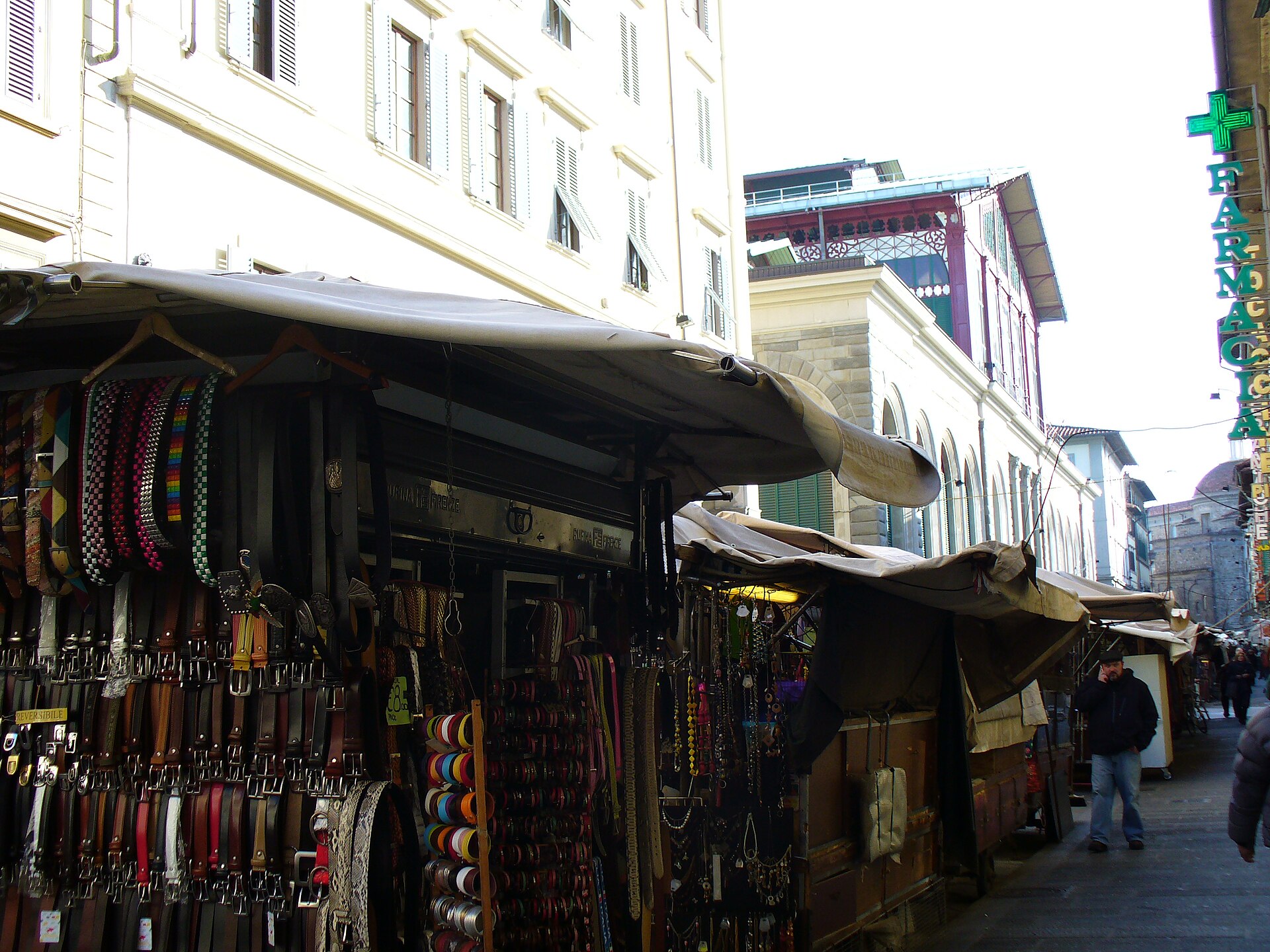
Bargaining is expected and normal at the outdoor stalls. The asking price is rarely the selling price.
Basic Rules
- Initial offer: 60–70% of the asking price
- Final price target: 75–85% of asking price
- Cash discounts: 5–10% extra discount for cash; vendors may decline cards or add 3–5% surcharge
- Multi-item discounts: Buying 2+ items at one stall typically gets an additional 10–20% off
- Don’t show too much enthusiasm — vendors price up if they sense desire
- Walk away if needed — vendors often call you back with a better offer
- Be polite — Italian market culture is conversational, not hostile. “Mi dispiace ma è troppo” (I’m sorry but it’s too expensive) is the standard line.
Useful Italian Phrases
- “Quanto costa?” — How much does it cost?
- “È vero pelle?” — Is it real leather?
- “È fatto in Italia?” — Is it made in Italy?
- “È troppo caro” — It’s too expensive
- “Posso pagare in contanti?” — Can I pay in cash?
- “Posso avere uno sconto?” — Can I have a discount?
- “Sì, lo prendo” — Yes, I’ll take it
- “No grazie, è troppo” — No thanks, it’s too much
A Bargaining Example
Asking price for a leather bag: €120
- You: “Quanto costa?” — Vendor: “€120”
- You examine, smile politely, look concerned at the price
- You: “È bello ma è troppo. Posso fare €80?” — Vendor: “€110, va bene?”
- You: “Posso pagare in contanti €85?” — Vendor: “€100, l’ultimo prezzo”
- You: “Mi dispiace ma è ancora troppo. €90?”
- Vendor pauses, then: “OK, €90”
Final: €90 vs €120 starting (25% discount). A good outcome.
Mercato Centrale (the Food Hall)
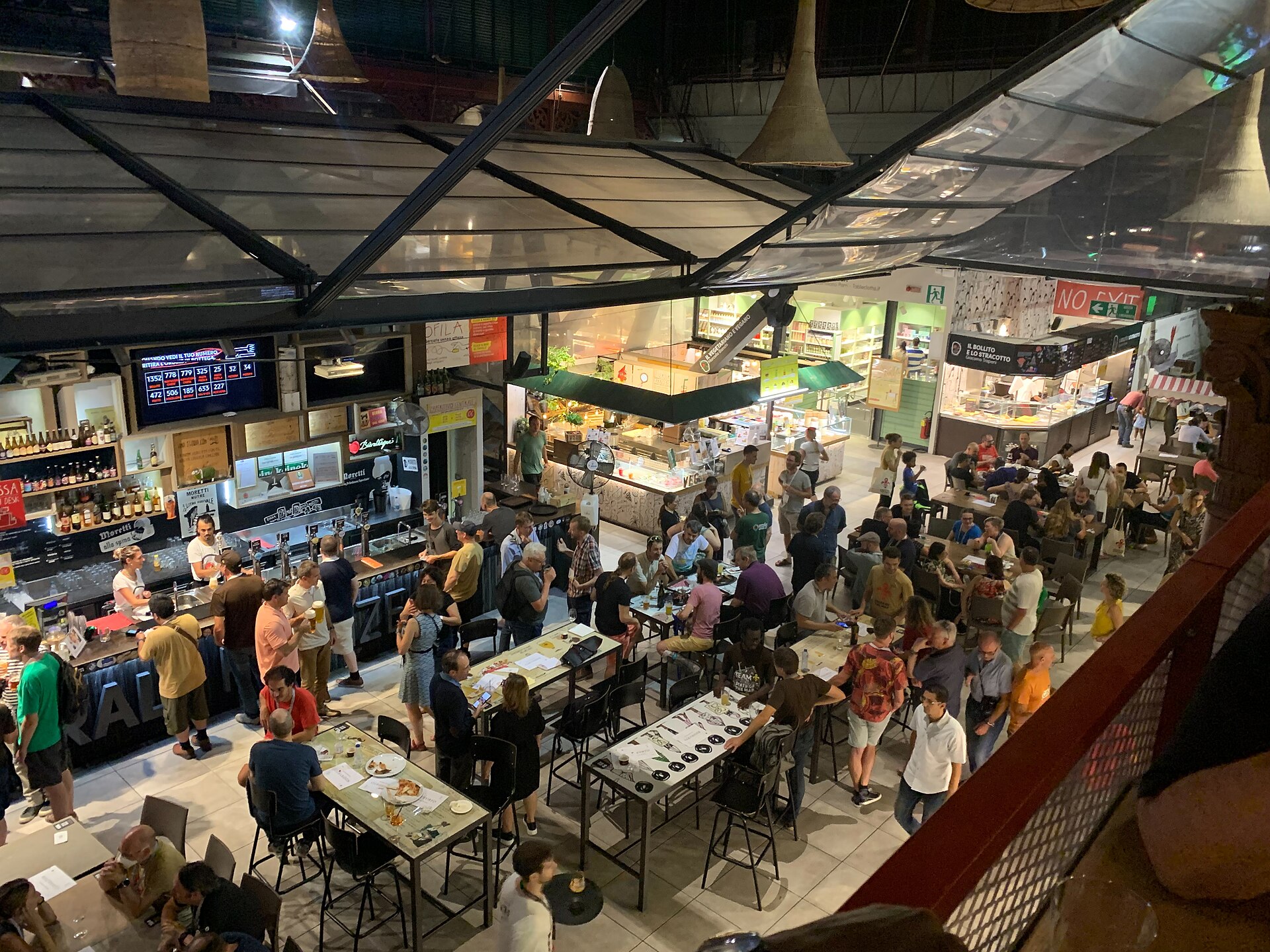
The covered Mercato Centrale (Piazza del Mercato Centrale) is two distinct experiences:
Ground Floor (07:00–15:00, to 17:00 on Saturday)
The working covered market — Florentines shop here for vegetables, fresh fish, butchers, cheesemongers, fresh pasta. Less touristy than the upstairs food hall, more authentic. Closed on Sundays.
- Da Nerbone (the legendary tripe sandwich stall) — €5.50 for a panino al lampredotto, eaten standing up. Florence’s most authentic working-class lunch.
- Cheesemongers (Caseificio La Pratolina, others) — Tuscan pecorino, parmigiano-reggiano tastings
- Butchers — visit La Fiorentina or similar for the famous Bistecca alla Fiorentina cuts
Upper Floor (09:00–23:00)
The food hall — opened in 2014 in a renovated upper floor. Some 19 shops plus a bar, brewery, pizzeria and grill selling sit-down meals at €8–14. Grab a tray, walk between stalls, choose: pizza, pasta, gelato, sandwiches, wines, gelato. Sit at communal tables.
- Pasta Fresca counter — fresh pasta with various sauces, €8–12
- Pizza Romana counter — Roman-style pizza al taglio, €4–8 a slice
- Tartufo (truffle) counter — truffle pasta and pizzas, €10–14
- Bistecca counter — small Bistecca alla Fiorentina portions, €15–25
- Gelato counter — €3–4 cones
- Wine bar — €4–8 glasses, €15–25 bottles
Touristy but high-quality and good value. The food hall is open until 23:00, making it a late-evening option after museum days.
Best Time to Visit
- 09:00–11:00 — Early morning is calmest. Vendors are setting up but receptive to early sales (often willing to give “first-customer-of-the-day” discounts).
- 11:00–13:00 — Peak browsing, busy. The streets are crowded but vendors are most active.
- 13:00–14:30 — Lunch break for some vendors; others continue. Use this time for the Mercato Centrale upstairs.
- 14:30–17:00 — Afternoon browsing. Vendors begin marking down and clearing inventory.
- 17:00–19:00 — Closing time. Vendors more willing to negotiate hard to clear stock; “end-of-day” discounts.
- Sundays — most stalls open with reduced hours; Mercato Centrale food hall open all day.
Best shopping window: 14:30–18:00 weekdays. Vendors are willing to discount more aggressively in the afternoon.
Pickpocket & Scam Awareness
San Lorenzo is one of Florence’s main pickpocket zones — packed crowds, distracted tourists, dense market chaos. Standard precautions:
- Crossbody bag worn front-of-body — not behind your back
- Phone in zipped pocket — never in back pocket
- Wallet in front pocket or zipped bag
- Keep your distance from the petition-clipboard scammers (they often work near the market entrance)
- Watch for the “let me check this label” trick — vendor takes your bag/wallet to “examine” something and palmes a card
- Never give your wallet to a vendor to “weigh out the right change” — pull out specific bills yourself
Insider Tips
Tip 1: Visit the Scuola del Cuoio first to see what genuine premium Italian leather looks and feels like. Then return to San Lorenzo with a calibrated quality eye.
Tip 2: Compare across multiple stalls before bargaining seriously. A leather wallet with a €40 asking price at one stall might be €30 at another a few stalls down.
Tip 3: The longer-established permanent-looking stalls tend to have better quality than the lightweight pop-up stands. The first impression matters.
Tip 4: Ask vendors questions about the leather (where it’s from, the tannery, the grain type). Reputable vendors can answer; counterfeit-stall vendors will deflect.
Tip 5: Pay in cash for the largest discounts and to avoid card-machine “broken” tactics.
Tip 6: Buy multiple items at one stall for additional discounts — vendor margins improve, and they’ll give you 10–20% off the cumulative total.
Tip 7: The Mercato Centrale food hall is a great quick lunch break between leather shopping sessions. €8–14 sit-down meals, no booking needed.
Tip 8: Photograph items you’re considering before walking away — if you decide to come back, you can find the same stall by the photograph.
Other Florence Markets
Florence has several other markets worth knowing:
- Mercato del Porcellino (Mercato Nuovo) — smaller leather and souvenir market on Via Porta Rossa, named for the famous bronze “Pig Fountain” (Il Porcellino) at one corner. Touch the pig’s snout for good luck. €5 fewer stalls than San Lorenzo.
- Mercato di Sant’Ambrogio — eastern Florence covered + outdoor market. Less touristy than San Lorenzo. Working-class food market upstairs (similar to Mercato Centrale ground floor) plus an outdoor produce market on the surrounding piazza. Closes 14:00.
- Piazza Annigoni flea market — antiques and bric-a-brac, the “Mercato delle Pulci”, which has moved here from Piazza dei Ciompi. Daily 10:00–19:00.
- Cascine Park Tuesday market — large weekly Tuesday market with food, clothing, household goods. Less touristy than San Lorenzo; bring time and patience.
For pure leather and tourist souvenirs, San Lorenzo remains the standard. For working Florentine market culture, Mercato di Sant’Ambrogio is more authentic.
San Lorenzo Market FAQ
When is San Lorenzo Market open?
The outdoor leather/souvenir market is open daily roughly 09:00–19:00 (some stalls earlier or later). Sundays open with reduced hours. The Mercato Centrale food hall (upstairs) opens 09:00–23:00 daily.
Should I bargain at San Lorenzo?
Yes — bargaining is expected at the outdoor stalls. Start at 60–70% of the asking price, settle at 75–85%. Pay in cash for largest discounts; multi-item purchases get 10–20% additional off. Walking away is the most powerful tactic.
Is the leather at San Lorenzo real?
Mixed. Quality varies dramatically — some stalls sell genuine Italian leather at great prices, others sell faux leather labelled as real. Apply the leather-quality tests (pressure, smell, edge inspection, “vera pelle” labels) and compare across multiple stalls before buying.
What should I buy at San Lorenzo?
Wallets (€15–60), belts (€20–60), small bags (€40–150), leather jackets (€120–400 with bargaining for genuine leather), silk scarves (€10–30), souvenirs (€1–25), and ceramics (€15–80). Skip designer knockoffs, “antique” jewellery, premium leather at suspiciously low prices, and exotic-skin products.
Should I visit Mercato Centrale (the food hall)?
Yes — the Mercato Centrale is adjacent to the outdoor leather market and offers great-value €8–14 sit-down meals from some 19 shops plus a bar, brewery, pizzeria and grill. Try Da Nerbone’s tripe sandwich (€5.50, ground floor), the upstairs pasta and pizza counters, the gelato bar. Open until 23:00 — great late-evening option.
Can I claim VAT refund?
For purchases over €70 per invoice (VAT included) at participating stalls (look for “Tax Free Shopping” signs), yes — non-EU residents can claim 12–14% VAT refund. Get the form at purchase, stamp at airport customs, claim refund. Most stalls don’t participate, but the larger established leather sellers often do.
Is San Lorenzo safe?
Generally safe but the busy crowds make it a pickpocket zone. Wear crossbody bag front-of-body, phone in zipped pocket, watch for petition scammers near entrance, never give your wallet to a vendor. Standard centro-storico precautions.
San Lorenzo or Scuola del Cuoio?
Both — visit the Scuola del Cuoio (Leather School at Santa Croce) first for premium-quality calibration with fixed prices. Then visit San Lorenzo for budget-friendly options with bargaining-ready quality awareness. Scuola is for top-tier purchases (leather jackets, premium bags); San Lorenzo for value-conscious accessories (wallets, belts, souvenirs).
San Lorenzo Market is Florence’s biggest outdoor shopping experience — leather goods, scarves, ceramics, and souvenirs across 200+ stalls in a working-market atmosphere. Apply the leather-quality tests, bargain confidently (start at 60–70%, settle at 75–85%), pay in cash for the largest discounts, and combine the leather-shopping morning with a Mercato Centrale upstairs lunch. The market rewards careful buyers; impulse shoppers without quality awareness end up with €30 plastic-leather wallets that fall apart in 6 months.