This article contains advertising. Booking links on this site can be turned into paid links automatically by our partner Travelpayouts: if you book through one, we earn a commission from the provider, at no extra cost to you. It never affects what we recommend. Affiliate disclosure
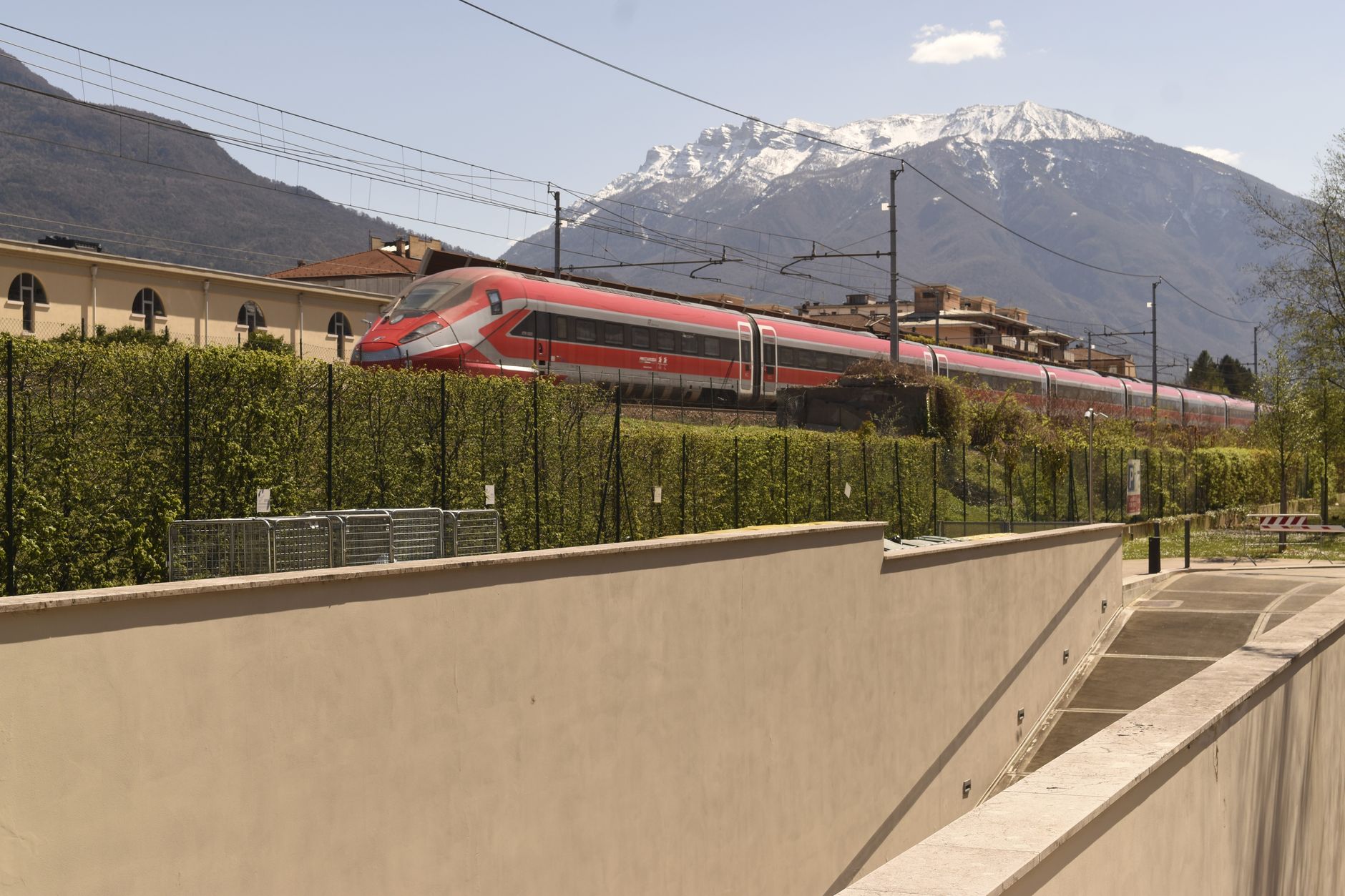
Rome to Florence is an easy high-speed train journey — Italo advertises the trip from 1 hour 25 minutes with fares from €14.90, subject to availability, and Frecciarossa takes a little over an hour and a half. Driving the same 280km on the A1 autostrada takes about 3 hours, costs €25 in tolls, and adds the headache of Florence’s ZTL traffic-restricted zone. This 2026 guide walks through every realistic Rome-to-Florence transport option — Frecciarossa vs Italo, regional trains, Flixbus, driving, private transfers, and how to combine them with Florence to Pisa, Venice and Cinque Terre — with booking strategies, exact stations, and the real-world tips that save money and stress.
If you are visiting both cities on one trip, our combined Florence and Rome itinerary shows how to split the nights between them. And if you are picking one city rather than both, our Florence vs Rome comparison weighs them up.
The same high-speed line carries on south of Rome to Naples, and most of the trains that link Florence and Rome run through to it. Our guide to the Florence to Naples train compares Frecciarossa and Italo, with real fares and what each one buys you.
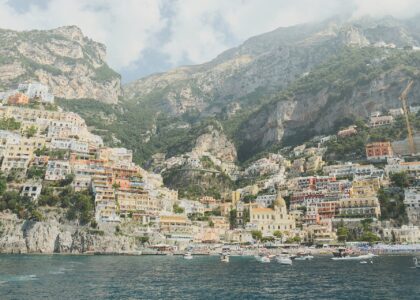
The same high-speed trains run on south beyond Rome to Salerno, where the ferries for Amalfi and Positano leave from a short walk away. Our guide to Florence to the Amalfi Coast has the times and fares.
Quick Recommendation
Take the high-speed train. Frecciarossa runs from Roma Termini to Firenze Santa Maria Novella in a little over an hour and a half; Italo advertises 1h25, with fares from €14.90 if you book early and seats are available. Driving is slower, more expensive, and lands you in a 280km motorway stretch followed by Florence’s ZTL parking maze. Bus fares are worth comparing if you book late, and FlixBus advertises the trip from 2 hours 15 minutes.
Train Options: The Short Version
Three categories of train run between Rome and Florence:
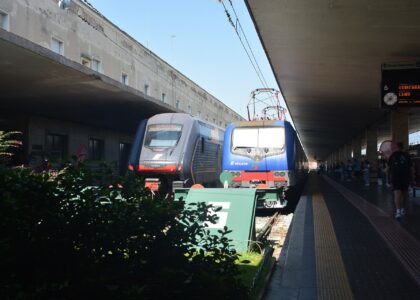
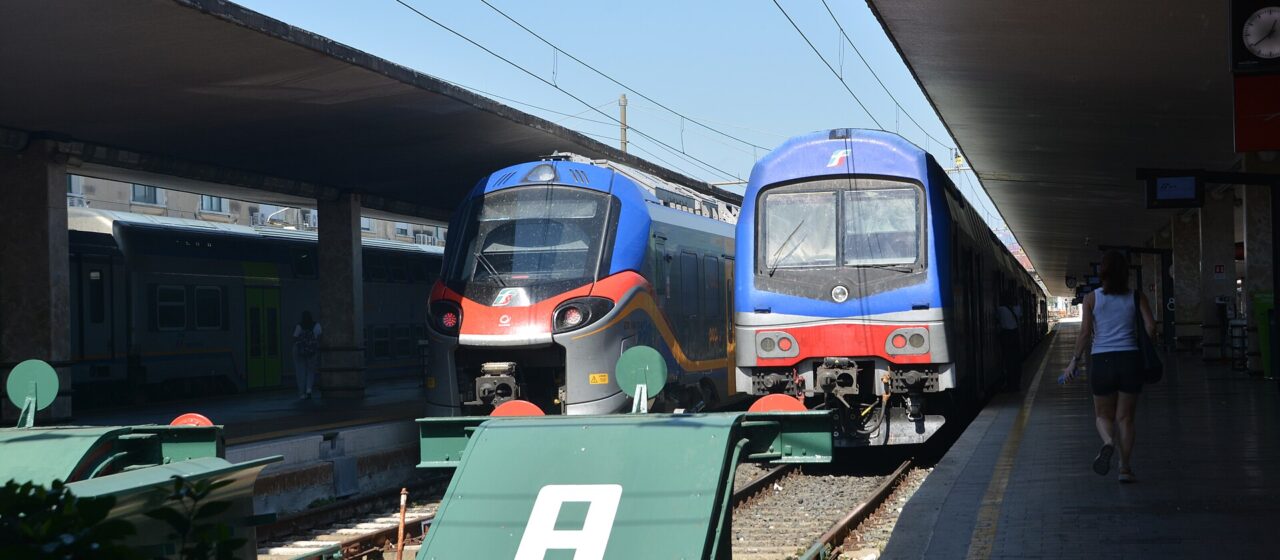
- Frecciarossa (Trenitalia) — the iconic red Trenitalia high-speed train. 1h25–1h35, €15–80 depending on booking lead-time. The default option for most travellers.
- Italo (NTV) — Trenitalia’s private competitor, with Rome–Florence journeys advertised from 1h25 and a modern fleet that includes the original Italo and the newer EVO.
- Regional trains (Trenitalia Regionale) — much slower (several hours, multiple stops), but flexible — no advance booking needed, and you can buy up to just before departure. Used mainly by locals on shorter segments; not ideal for Rome-Florence direct.
Frecciarossa and Italo both run frequent departures through the day, so check the timetable for your date. Both serve the same routes; the difference is mostly aesthetic and operational.
Which Stations: Termini, Tiburtina, SMN, Campo di Marte
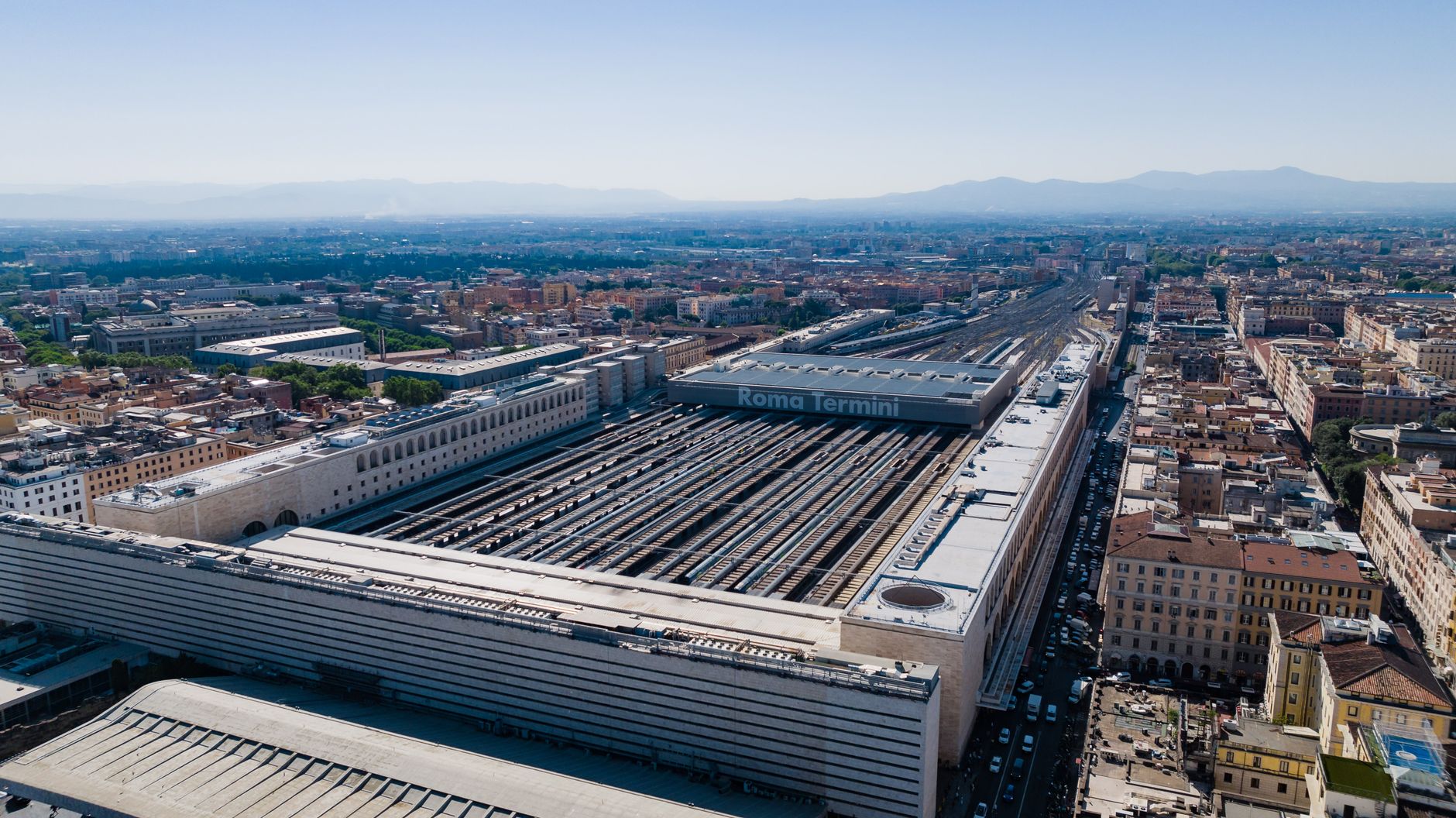
Both Rome and Florence have multiple train stations. Choose carefully — they’re not all centrally located.
Rome Stations
- Roma Termini — Rome’s main station, central, at the eastern edge of the historic centre. Most travellers depart here. Fully equipped: shops, restaurants, lockers, taxi rank.
- Roma Tiburtina — Rome’s high-speed-friendly secondary station, north-east of the centre, served by both Frecciarossa and Italo. Less central but easier to navigate, better for travellers staying in northern Rome neighbourhoods.
Some Frecciarossa and Italo trains stop at both Termini and Tiburtina, around ten minutes apart: Frecciarossa 9505 from Florence, for example, calls at Tiburtina at 08:54 and Termini at 09:04. Check each train’s Rome stops when booking, and where you can pick either as your origin, choose whichever is closer to your hotel.
Florence Stations
- Firenze Santa Maria Novella (SMN) — the central Florence station, within walking distance of the Cathedral. The default arrival point. Fully equipped: shops, restaurants, lockers, T2 airport tram, taxi rank, all major intercity buses.
- Firenze Campo di Marte — secondary station in the north-east of the city, outside the historic centre. Inconvenient for tourists — €10–15 taxi or 25-minute walk to the centre.
When booking, check which Florence station the train serves. A ticket that ends at “Firenze Campo di Marte” means a longer onward journey to your hotel. Check the arrival station and the live timetable before paying.
Fares & Booking Strategy
Italian high-speed train fares are dynamic — like airline tickets, the same seat costs less when booked early and more when booked closer to departure.
Booking Lead-Time vs Price
- 90+ days ahead: €14.90–25 (lowest fares — “Super Economy” / “Economy”)
- 60 days ahead: €25–40
- 30 days ahead: €40–55
- 1 week ahead: €50–70
- Day-of: €70–95 standard fare; €100+ for premium classes
Frecciarossa and Italo put trains on sale well before departure; check each operator’s booking calendar to see when your date opens. The cheapest “Super Economy” tickets release first and sell out fastest — book the minute your train goes on sale for maximum savings.
Train Classes
Frecciarossa offers four classes — Standard, Premium, Business, Executive. Italo has Smart, Comfort, Prima, Club Executive. The cheap fares (“Super Economy”) apply to Standard / Smart class with non-refundable, change-only-with-fee terms. Premium fares add seat-selection, free changes and minor amenities. Business / Prima offers leather seats, more legroom, included drinks and snacks. Executive / Club Executive is the luxury tier — €120–180: Frecciarossa Executive has spacious individual seats and a meeting area you can reserve, while Italo’s Club Executive offers enclosed Salotto compartments for up to four passengers.
For most travellers, Standard or Smart is perfectly comfortable — modern, clean trains with reclining seats and tables, free Wi-Fi, plug sockets at every seat. The premium classes are a comfort upgrade rather than essential.
Frecciarossa or Italo?
Functionally identical for most travellers. Frecciarossa runs more services per day and has slightly more legroom in Standard. Compare both fares for your date and time slot, and note that Italo’s newer EVO trains have more outlets per seat.
Booking strategy: check both on a single search engine like Trainline or Omio, compare prices, pick whichever fits your time slot for the cheapest fare. Don’t agonise over which company — the experience is essentially the same.
Where to Buy Tickets
- trenitalia.com — official Frecciarossa booking. English version available; pay with most credit cards.
- italotreno.com — official Italo booking.
- thetrainline.com or omio.com — third-party aggregators. Slightly higher fees (€2–5) but compare both companies in one search.
- Train station ticket machines or counters — same prices as online but slower and add no value.
Avoid third-party “rail” sites with questionable URLs that aren’t widely known — Italian rail-ticket scam sites are a small but persistent issue. Stick to the four options above.
Driving Rome to Florence
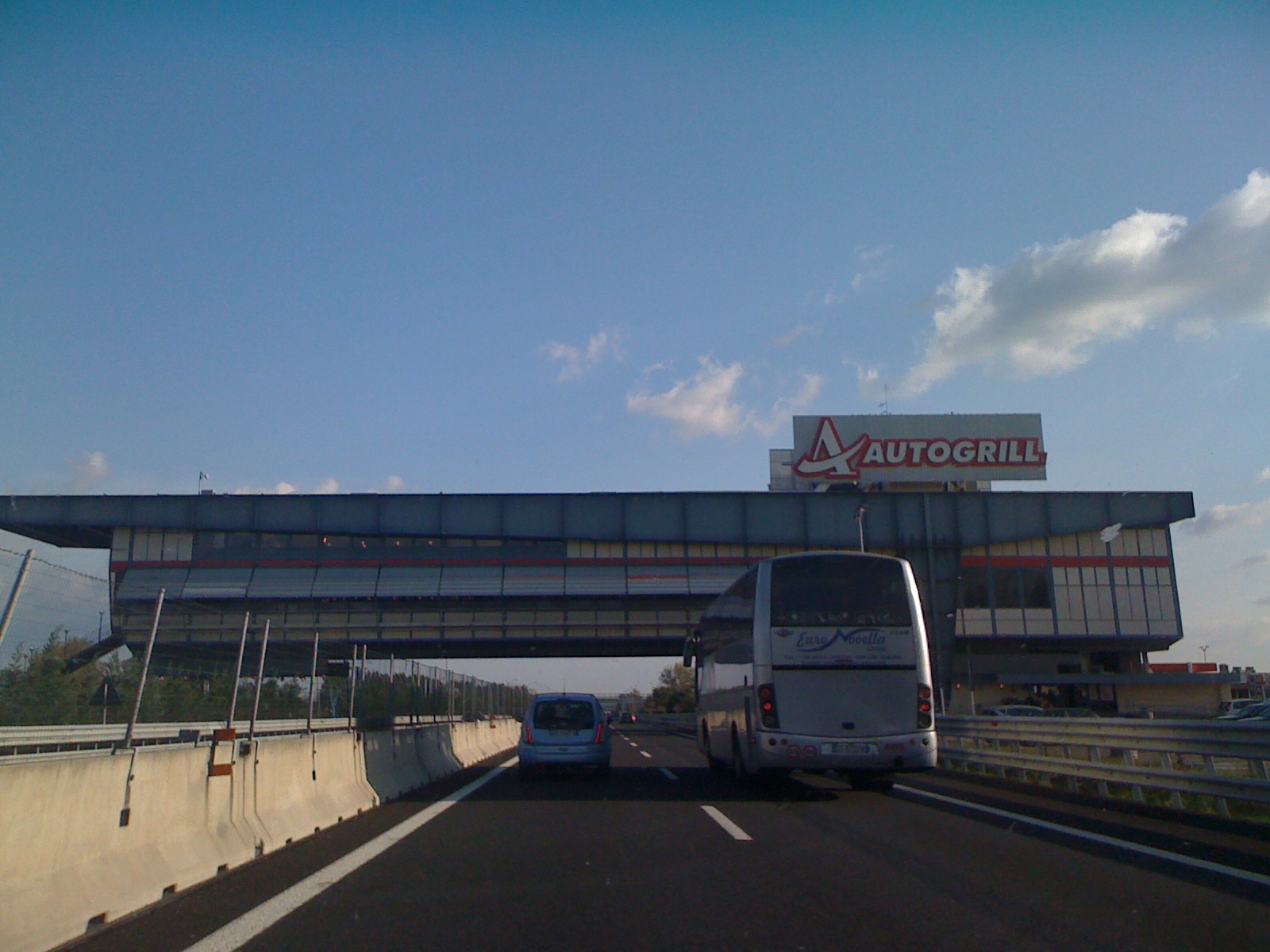
The A1 autostrada (Italy’s main north-south motorway) connects Rome to Florence in about 280km — roughly 3 hours non-stop, longer once you add breaks.
- Tolls: €25–28 each way for a standard car. Pay at the autostrada exit booth (cards or cash).
- Fuel: €40–60 each way depending on car economy.
- Driving time: roughly 3 hours non-stop, and realistically more once you allow for rest stops, possible Tuscan-region traffic, and the Florence approach.
- Total cost: €70–90 each way for a standard car (rental + fuel + tolls), versus €15–80 for the train.
Driving makes sense if:
- You’re continuing to Tuscany day trips (Chianti, San Gimignano, Val d’Orcia) where a car is genuinely useful
- You’re a group of 4–5 sharing fuel and toll costs
- You want stops at scenic Tuscan towns en route (Orvieto, Montepulciano, Pienza) which a train can’t deliver
Driving doesn’t make sense if:
- Your trip is Rome + Florence only with no Tuscan day trips
- You don’t have a car already
- You’re solo or a couple — train is cheaper
- You want to avoid Florence’s ZTL parking nightmare (parking €25–35/day outside the historic centre)
Parking in Florence
Florence’s historic centre is a ZTL (traffic-restricted zone) — unauthorised vehicles entering it are picked up automatically by cameras and face a fine of around €80 or more, plus notification costs, and rental companies may add their own administration fee. If you arrive by car, park outside the ZTL:
- Parking Beccaria — charged by the hour; there is no daily tariff.
- Garage La Stazione at Santa Maria Novella station — €35 per day for city cars, €40 for medium cars and €50 for saloons, SUVs and vans; the historic centre is under 400 metres away.
- Piazzale Montelungo (Stazione Binario 16) — hourly rates only, with no daily tariff.
- Parking Porta al Prato–Leopolda (Via Gabbuggiani 2/4) — €20 per day.
Hotels inside the ZTL can register a guest’s number plate for each drive to the hotel, with a stop of up to 30 minutes nearby to unload. It is not a 24-hour driving permit, so arrange access with your hotel before arrival or you’ll pay fines.
Flixbus & Coach Options
Flixbus operates direct Rome-Florence coach service with multiple daily departures.
- Journey time: from 2 hours 15 minutes on the fastest departures; check the duration of the one you book
- Cost: €9–25 single, often €5–10 cheaper than the cheapest train fares
- Departure: Roma Tiburtina coach station (next to the train station)
- Arrival: Florence Villa Costanza (the Tuscany regional bus hub, on the southern outskirts of Florence) or Santa Maria Novella station
- Buses have toilets, free Wi-Fi, plug sockets, reclining seats
Flixbus is the budget option for Rome-Florence — useful if booking a week or less ahead when train prices spike. The journey is roughly twice the train’s duration; weight that against the savings. For students, backpackers, or budget travellers, the bus often makes sense.
Private Transfer / Chauffeur Service
Pre-booked private car transfers from Rome to Florence:
- Standard sedan (1–3 passengers): €350–500
- Minivan (4–7 passengers): €450–650
- Luxury sedan / SUV: €500–800
- Door-to-door service (your hotel in Rome to your hotel in Florence)
- Stops at scenic towns en route possible (Orvieto, Montepulciano) — adds €50–100 per stop
Private transfers make sense for groups of 4+ wanting to combine Rome-Florence transfer with Tuscan stops, families with significant luggage, or travellers with mobility needs that make the train transfer awkward. For solo or couple travel, the cost is dramatically higher than train + airport-style ground transport.
Arriving at Florence Santa Maria Novella
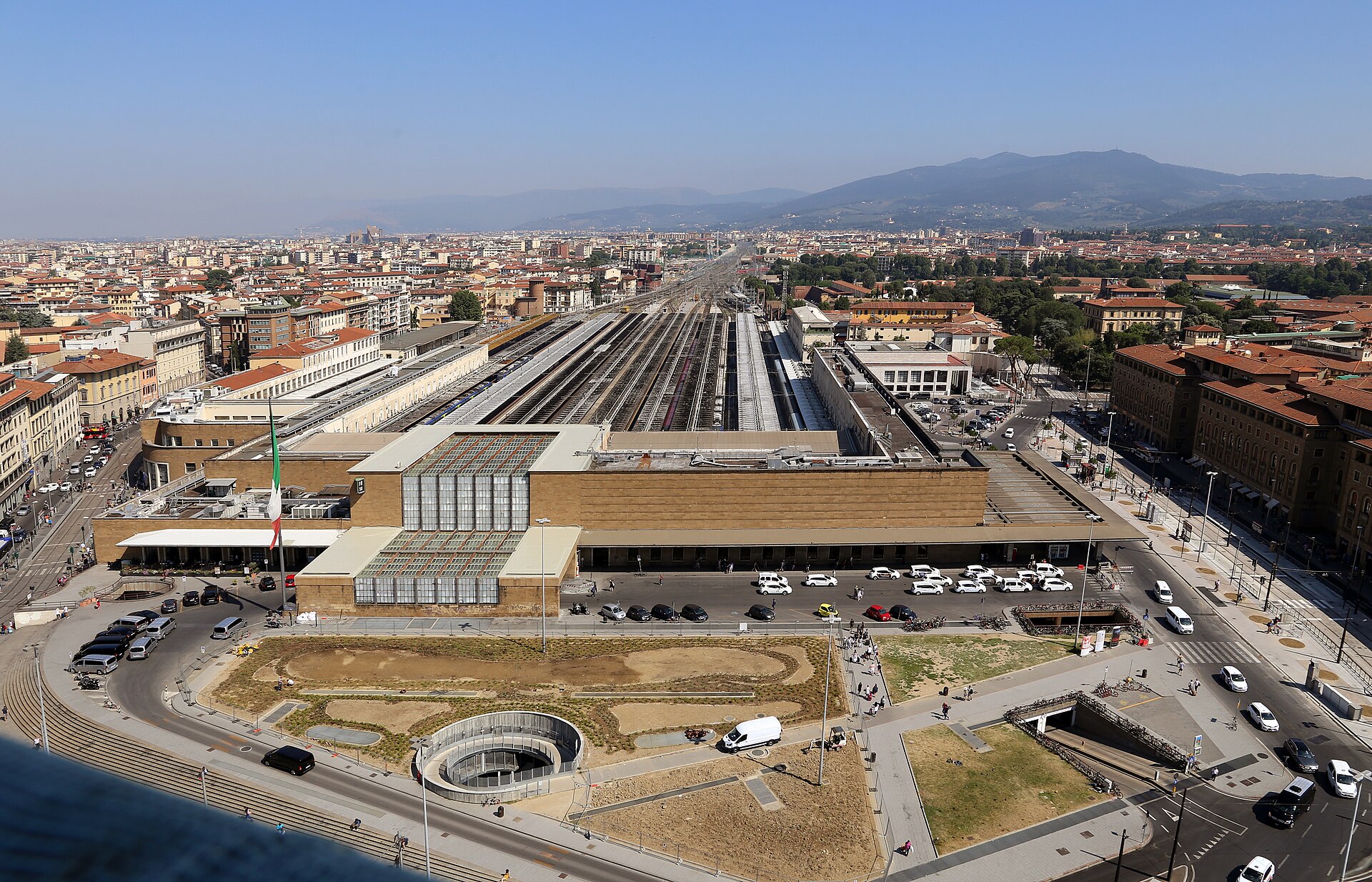
Florence’s main station is at the western edge of the historic centre. After arrival:
- Walk to the Cathedral via Via Panzani and Via dei Cerretani
- Bus 14 or 22 to other parts of town (€2.00 single ticket valid 90 minutes, validated on board; check the line map for the nearest stop)
- Tram T2 to Florence airport (€2.00 urban ticket, about 20 minutes — useful for departures from FLR; Pisa airport needs a separate onward connection)
- Taxi rank outside the station for €10–15 trips to specific hotels
- Left luggage (KiPoint, booked through KiBag, along Platform 16 with a second entrance from Via Valfonda): daily 07:00–21:00, from €6
- Tourist information office just outside the station (Piazza della Stazione) for maps and bookings
Watch for pickpockets at SMN — the station is one of Florence’s five main pickpocket zones, with organised crews working the arrivals hall, ticket machines and platforms. Keep luggage between your feet, wallet in front pocket.
Florence as a Day Trip from Rome?
Yes, technically possible: take an early high-speed train out of Rome and an evening one back. Frecciarossa 9321, for example, leaves Florence at 16:59 and reaches Roma Termini at 18:35. Pick both trains from the timetable for your date, and your time in Florence is whatever lies between them.
Realistic day-trip Florence covers: pre-booked Brunelleschi Dome climb at 09:00, Cathedral interior + Baptistery at 10:30, lunch at Mercato Centrale, one major museum (Uffizi or Accademia, not both, with timed slot), Ponte Vecchio walk, Piazzale Michelangelo at 15:30, return to station for 17:00.
What you can’t fit: Cathedral Museum, Pitti, Boboli, Bargello, San Marco, Oltrarno neighbourhood, both major museums, Santa Croce, the cenacoli, evening aperitivo. A day trip is a forced march that leaves you wanting more.
Most experienced Italy travellers recommend: rather than day-tripping Florence from Rome, allocate at least 2–3 nights in Florence within a longer Italy trip. Even one overnight transforms the day-trip into a relaxed visit.
Combining Rome-Florence with Tuscan Stops
If you have a few extra days and a rental car, the A1 corridor offers several rewarding stops between Rome and Florence:
- Orvieto — on the way between Rome and Florence. Hilltop Umbrian town with extraordinary striped Cathedral. Half-day visit.
- Civita di Bagnoregio — the “dying town” perched on tuff stone, accessed only by footbridge. Half-day or evening visit.
- Montepulciano — wine-region hilltown in southern Tuscany, between Rome and Florence. Full-day visit.
- Pienza — UNESCO Renaissance “ideal city”, same general area as Montepulciano.
- Bagno Vignoni — thermal-spring village, similar area.
- Chianti wine region — between Florence and Siena, within about an hour of Florence.
A 2-3 day Rome-to-Florence drive with stops in Orvieto + Montepulciano + Chianti is one of the great Italian road trips. Avoid this if you’re tight on time or driving reluctance is an issue.
Insider Tips
Tip 1: Book Frecciarossa or Italo as soon as your train goes on sale. Look for Trenitalia’s Super Economy offer on Frecciarossa; Italo’s fares start at €14.90, subject to availability.
Tip 2: Italo advertises fares from €9.90 on some routes, subject to availability — sign up for Trenitalia and Italo email lists to hear about offers.
Tip 3: Validate paper regional tickets at a station machine before departure. Digital Regional Tickets activate automatically at the scheduled departure time, and Electronic Regional Tickets need no validation. Frecciarossa and Italo tickets are seat-numbered and don’t need validation.
Tip 4: Italo trains have luggage racks at the end of each carriage and overhead racks above the seats. Heavy suitcases fit in the end racks; carry-on bags go overhead.
Tip 5: Don’t plan a tight connection. FS reports that 77% of its high-speed trains ran within ten minutes of schedule in January–November 2025, so allow slack for whatever comes next. Get to the station with time to spare, too, as the security checks at large stations like Termini can slow you down.
Tip 6: Avoid the day-of fare panic. If a Frecciarossa is showing €80, check Italo for the same time slot — often €60. Or check the next/previous Frecciarossa departure — fares often drop by €15–20 just an hour later.
Tip 7: If you’re 3–4 days in Rome and 3–4 days in Florence, one-way tickets give you the most flexibility, but compare them with any return offer you qualify for. Trenitalia’s A/R Weekend, for instance, takes 40% off Intercity trips out on a Saturday and back on the Sunday of the same weekend, which suits a quick visit rather than a longer stay.
Rome to Florence: Comparison Table
| Option | Time | Cost (each way) | Best For |
|---|---|---|---|
| Frecciarossa Standard | Just over 1h30 | €15–80 | Most travellers, default option |
| Italo Smart | 1h25 | €15–70 | The main rival to Frecciarossa |
| Frecciarossa Business | Just over 1h30 | €60–140 | Comfort upgrade, included drinks |
| Regional train | About 4 hours | Check at booking | No advance booking, very flexible |
| Flixbus | From 2h15 | €9–25 | Budget; book later |
| Rental car | 3 hours | €70–90 (fuel+toll) | Tuscan stops or 4+ travellers |
| Private transfer | 3 hours | €350–500 | Groups, mobility needs, scenic stops |
Rome to Florence FAQ
What’s the cheapest way to get from Rome to Florence?
A high-speed train booked early: Frecciarossa’s Super Economy fares or Italo’s, which start at €14.90 subject to availability. After those sell out, Flixbus at €9–25 becomes the cheapest option (longer journey).
What’s the fastest way?
The high-speed train: Italo about 1h25 station-to-station, Frecciarossa about 1h30. Driving takes roughly 3 hours without stops, more in traffic; FlixBus advertises the trip from 2 hours 15 minutes, depending on the service.
Frecciarossa or Italo — which is better?
Functionally identical. Frecciarossa runs more frequently and has slightly more legroom. Compare both at the same time slot and pick the cheaper.
When should I book Rome-Florence trains?
As early as you can for the cheapest Super Economy/Smart fares: check each operator’s booking calendar to see when your date goes on sale. For more flexible travel, 30 days out gets reasonable Economy fares around €40.
Can I day-trip Florence from Rome?
Technically yes — go out on an early train and come back in the evening (Frecciarossa 9321 leaves Florence at 16:59 and is in Roma Termini by 18:35), and you get most of a day. Realistic Florence day trip covers the Brunelleschi Dome, Cathedral, lunch at Mercato Centrale, one major museum, Ponte Vecchio and Piazzale Michelangelo. You’ll miss most of Pitti, Bargello, San Marco, the Oltrarno neighbourhood. Most travellers recommend at least 2–3 nights instead.
Which Rome and Florence stations should I use?
Most travellers depart Roma Termini and arrive at Firenze Santa Maria Novella (SMN). Tiburtina is also fine for Rome; some trains call there about ten minutes before or after Termini, so check your train’s stops. Avoid trains terminating at Firenze Campo di Marte unless your hotel is in that area — it’s in the north-east of the city, outside the historic centre.
How much luggage can I bring?
Italo lets you bring any number of bags free of charge, though in Smart each one must not exceed 75 × 53 × 30 cm; its end-of-carriage racks fit large suitcases and the overhead racks fit carry-ons. For Frecciarossa, check Trenitalia’s luggage conditions before you pack.
Should I drive Rome to Florence?
Only if you’re continuing to Tuscan day trips that require a car or you’re a group of 4–5 sharing fuel and toll costs. For solo or couple travel without further Tuscan ambitions, the train is faster, cheaper and avoids Florence’s ZTL parking nightmare.
The Frecciarossa or Italo high-speed train is the right choice for almost every Rome-to-Florence trip. Book early for fares from €14.90, take the ride of about an hour and a half, arrive in central Florence ready to walk to your hotel. Reserve driving for trips where Tuscan stops actually justify the rental car, and Flixbus for last-minute budget runs. The Italian high-speed network is one of Europe’s best and the Rome-Florence corridor is its showpiece — the journey itself is barely worth thinking about. Save your planning effort for what to do with the extra hours you save by taking the train.