This article contains advertising. Booking links on this site can be turned into paid links automatically by our partner Travelpayouts: if you book through one, we earn a commission from the provider, at no extra cost to you. It never affects what we recommend. Affiliate disclosure
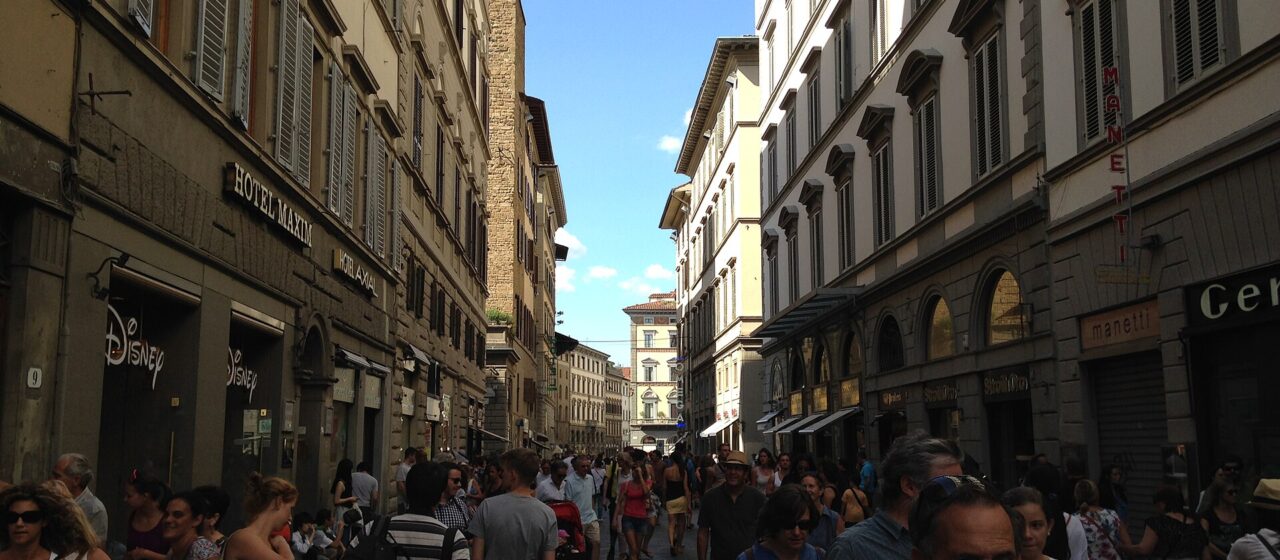
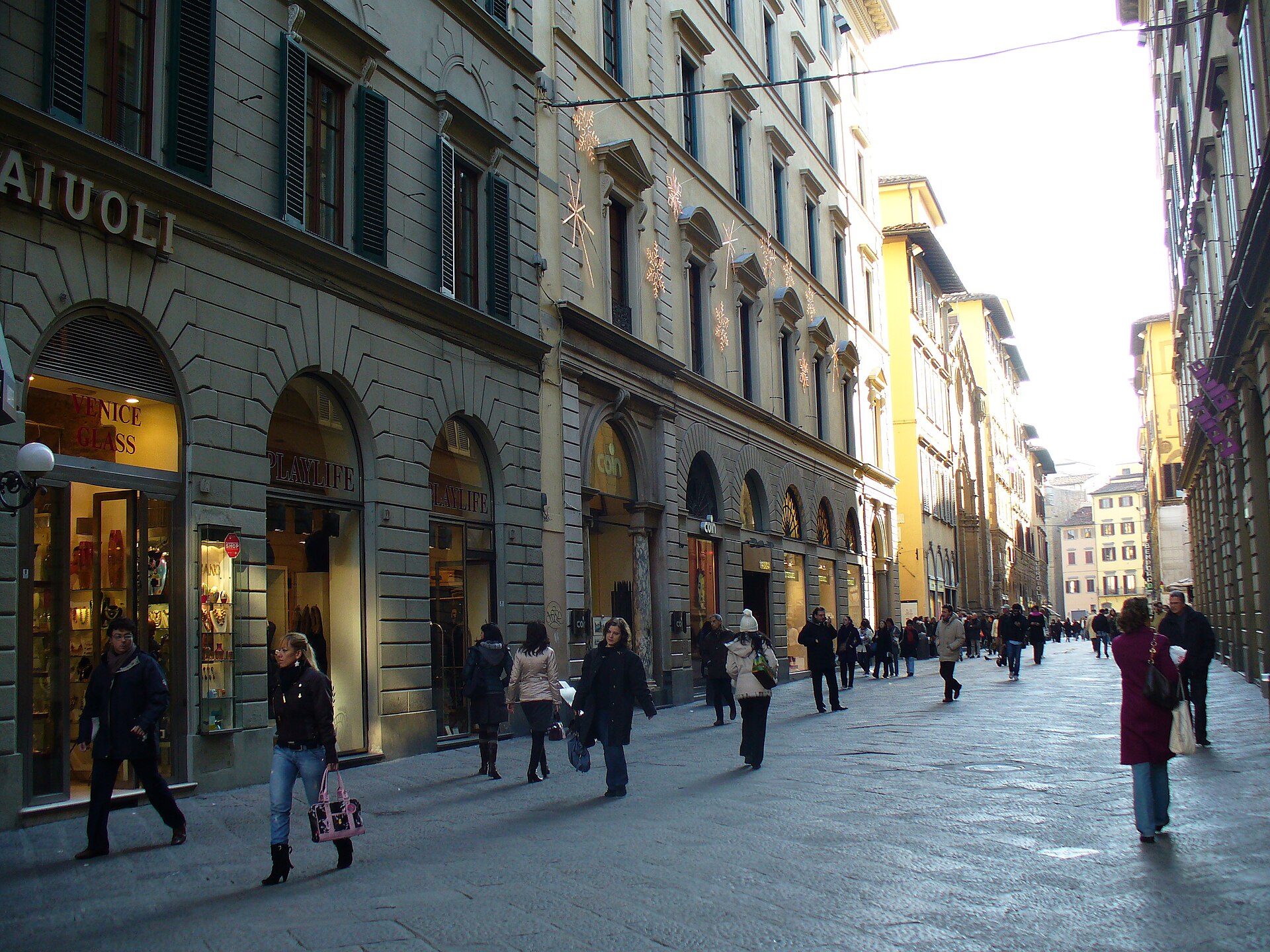
Florence is the most walkable major Italian city, full stop. The historic centre is roughly 1.5km × 1km, every major sight is within 25 minutes’ walk of every other, and most of the city centre is pedestrianised or restricted to ZTL traffic — meaning the streets between you and the Cathedral are full of other walkers, not cars. This 2026 guide answers the practical questions: how walkable is Florence really, what shoes you need, how the cobblestones affect strollers and wheelchairs, the walking distances between major sights, the steepest hills, the best walking routes, and when walking actually does not beat public transport.
For the few journeys that are genuinely too far on foot, our Florence bus and tram guide covers tickets, routes and validation.
The sightseeing bus is the alternative most first-time visitors consider, and in a city this size it usually loses. Our hop-on hop-off guide sets out the two routes, who genuinely benefits, and the €2 city bus that does the same job.
Is Florence Walkable? The Honest Answer
Yes — emphatically. Florence’s historic centre covers approximately 5 square kilometres total, with the dense tourist area in roughly 1.5km × 1km. Major distances:
- Cathedral to Uffizi Gallery: 5 minutes (450m)
- Cathedral to Accademia: 8 minutes (650m)
- Cathedral to Pitti Palace: 15 minutes (1.2km, including Ponte Vecchio crossing)
- Santa Maria Novella station to Cathedral: 10 minutes (800m)
- Cathedral to Piazzale Michelangelo: 25–35 minutes (2km, includes a steep climb)
- Cathedral to Bargello: 7 minutes (550m)
- Cathedral to Santa Croce: 10 minutes (850m)
- Cathedral to San Marco Museum: 9 minutes (700m)
- Cathedral to Mercato Centrale: 8 minutes (650m)
- Ponte Vecchio to Boboli Gardens: 8 minutes (650m)
A typical Florence sightseeing day involves 6–10km of walking on cobblestones — manageable for most adults, demanding for elderly travellers or anyone with knee/foot issues. The good news: the city’s small size means you’re rarely more than 10 minutes from a café break, gelato stop, or aperitivo bar.
Why Florence Walks So Well
- ZTL (traffic-restriction zone) covers most of the historic centre — most streets are free of cars during daytime, leaving them to pedestrians, cyclists and authorised vehicles only.
- Pedestrianised piazzas — Piazza del Duomo, Piazza della Signoria, Piazza Santa Croce, Piazza Santo Spirito are car-free and walkable corner to corner.
- Compact geography — the Roman urban grid that became Florence is tightly packed; sights cluster within minutes of each other.
- Pedestrian-only Ponte Vecchio — the iconic medieval bridge has been pedestrians-only since 1942.
- Minimal cycle traffic — unlike Amsterdam or Copenhagen, Florence isn’t a cycling city; you don’t dodge bicycles constantly.
- Density of attractions — every 2 minutes’ walk reveals another church, palace, sculpture or bookstore worth pausing at.
The Cobblestone Reality
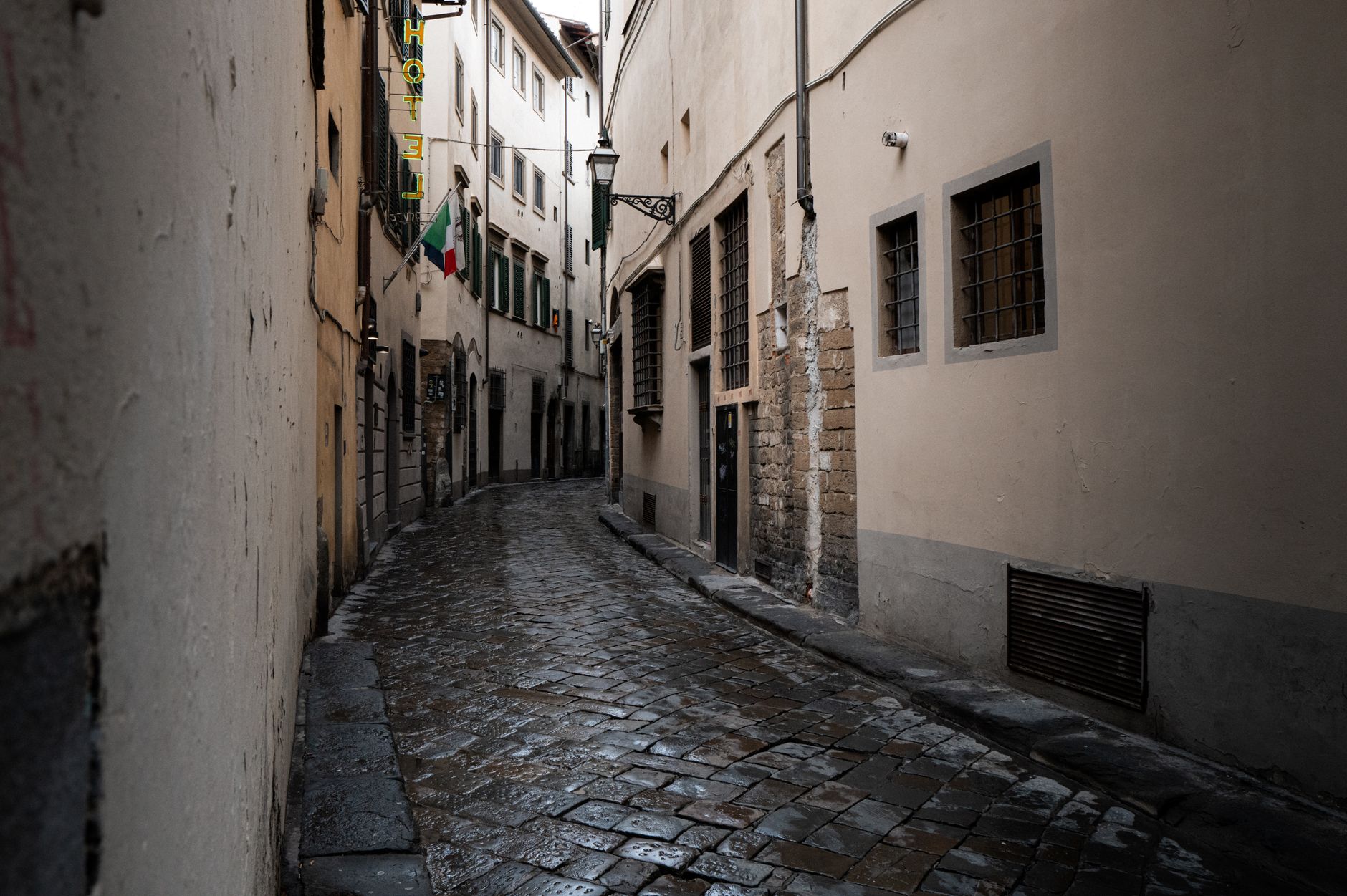
Florence’s pavement comes in three main types:
- Pietra forte slabs (large flat stone tiles) — the main historic-centre paving, generally smooth but with occasional gaps and uneven sections.
- Granite cobblestones (small irregular stones) — older streets, especially in Oltrarno and around the Cathedral. Demanding on small wheels and high heels.
- Modern asphalt or tile — more recent pavement on outer streets, smoother, easier to walk.
The pavement varies block by block. A perfect smooth stretch can give way to broken cobbles after a single corner. Plan for variability and don’t trust apparent uniformity.
Shoes That Survive Cobblestones
The single most consequential packing decision for Florence is shoes. The pavement punishes:
- Brand-new shoes (any kind) — break in 5–10km at home before flying.
- High heels above 3cm — heel tips catch in cobble gaps, twisted ankles are common.
- Thin ballet flats with no cushioning — every cobble is felt through paper-thin soles.
- Hard-soled dress shoes without arch support — by day three your feet ache.
The pavement rewards:
- Cushioned-sole leather sneakers — the optimal Florence shoe; broken-in, supportive, smart enough for most restaurants
- Closed-back leather sandals with arch support for summer
- Low-heeled (under 3cm) leather boots for shoulder seasons and winter
- Waterproof leather walking shoes for autumn and winter rain
- Padded ballet flats for women wanting low-profile elegance with cushioning
If your shoes start blistering on day one, Florence’s leather school at Santa Croce, the artisans of Oltrarno, and several chain stores (Geox, Clarks, Decathlon) sell quality replacements at €100–250. Don’t try to “save money” with footwear in Florence.
Strollers, Wheelchairs & Mobility
Florence’s cobblestones are unforgiving for travelers with mobility constraints. Realistic expectations:
Strollers
Lightweight umbrella strollers struggle on cobbles. The wheels jam, the frame rattles, the baby gets jostled. A baby carrier (front-mount or back-mount) is dramatically more practical for long sightseeing days. If you must use a stroller, choose one with all-terrain wheels.
Smaller strollers work better than oversized travel-systems. Pack-it-back-in-bag size frames are easier through narrow doors at small B&Bs.
Wheelchairs
Florence has invested significantly in accessibility but the medieval pavement remains a challenge. Manual wheelchairs work on the smoother pietra-forte streets (most major sightseeing routes are reasonably accessible), but the secondary cobble streets, narrow medieval alleys and many small piazzas remain difficult.
Powered wheelchairs and mobility scooters generally manage the historic centre’s main routes. Ramps are increasingly common at major museums, churches and public buildings, and Florence’s tourist office at Piazza della Stazione produces an updated “Florence Accessible Map” highlighting the most navigable routes.
Major museums (Uffizi, Accademia, Pitti, Bargello, Palazzo Vecchio) all have lift access, accessible restrooms and ramped entries. The Brunelleschi Dome climb and Bell Tower are not accessible due to historic-fabric constraints.
Elderly & Limited-Stamina Walkers
Florence rewards a slower pace. Strategies for older or less-mobile walkers:
- Do half-day routes rather than full-day marathons
- Include long café and gelato breaks
- Use the C1, C2, C3, C4 mini-electric buses for cross-historic-centre rides
- Take taxis (€10–14) for the longer single-leg trips like Cathedral to Pitti
- Choose accommodation as close to the Cathedral as your budget allows
- Skip the steep climb to Piazzale Michelangelo and take bus 12/13 instead
- Schedule rest days between intensive sightseeing days
The Best Walking Routes
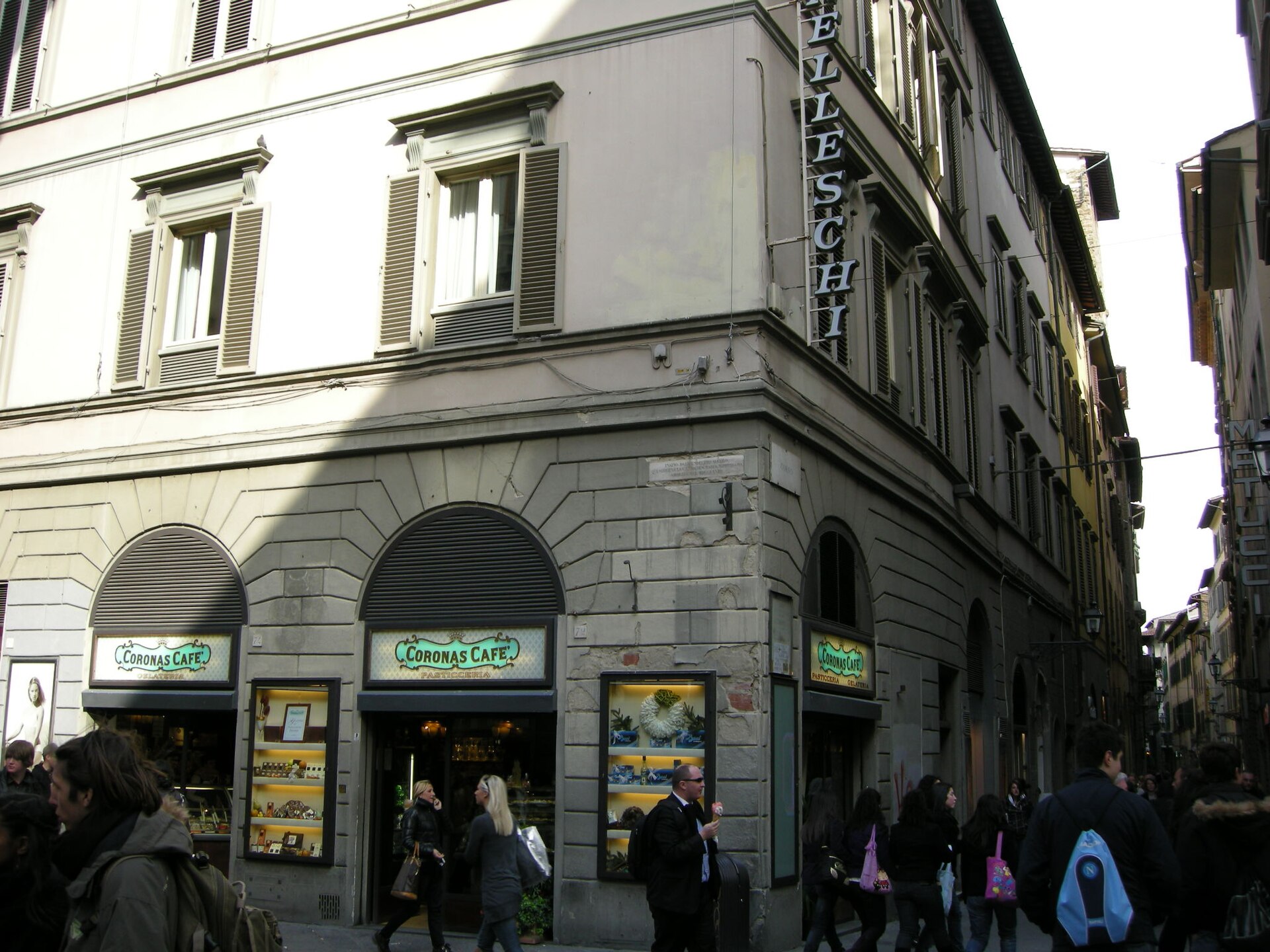
Route 1 — The Big Five (90 minutes, 2.5km)
Cathedral → Piazza della Repubblica → Piazza della Signoria → Uffizi exterior → Ponte Vecchio → Pitti Palace exterior. Hits Florence’s five most-photographed locations in a 90-minute slow walk. Best at sunset or early morning.
Route 2 — The Renaissance Loop (3 hours, 3.5km)
Cathedral → Bargello → Piazza della Signoria → Uffizi → Ponte Vecchio → Pitti Palace courtyard → Boboli Gardens (entry) → Santo Spirito → Brancacci Chapel exterior → Ponte Santa Trinita → return via Piazza della Repubblica. Covers most of the major Renaissance sights in a single half-day walk.
Route 3 — Oltrarno Artisans Walk (2 hours, 2km)
Ponte Vecchio → Borgo San Jacopo → Piazza Santa Felicita → Pitti Palace courtyard → San Frediano church → Piazza Santo Spirito → Borgo San Frediano → Lungarno Soderini → Ponte Santa Trinita. Through Oltrarno’s artisan workshops (leather, gilders, bookbinders, jewellers) and squares.
Route 4 — Sunset Climb to Piazzale (1 hour up, 30 min down)
Ponte alle Grazie → Lungarno Serristori → Piazza Giuseppe Poggi → climb the Rampa del Poggi steps → Rose Garden (free, peak May) → Piazzale Michelangelo. Time to arrive 30 minutes before sunset for the best views. Walk back via San Niccolò and a riverside dinner.
Route 5 — Cenacoli Trail (Half day, 4–5km)
San Marco Museum → Cenacolo di Sant’Apollonia (5 min walk) → Mercato Centrale lunch → Cenacolo di Andrea del Sarto via San Salvi (25 minute walk east, on bus route 8 if needed) → return via Piazza dei Ciompi → Sant’Ambrogio market. The “Last Supper trail” — three free Renaissance frescoes few tourists see.
Pedestrian-Only Areas
The following Florence areas are pedestrian-only year-round:
- The entire Cathedral block including Piazza del Duomo, Via dei Calzaiuoli, Via Roma
- Piazza della Signoria and the Loggia dei Lanzi area
- Piazza Santa Croce and the surrounding streets
- Piazza Santa Maria Novella
- Ponte Vecchio (1942-permanent pedestrian conversion)
- Most of the streets between the Cathedral and the river
- Borgo San Jacopo and parts of Oltrarno’s central artery
Outside these zones, the ZTL (traffic-restriction zone) limits cars to authorised vehicles only — meaning even non-pedestrian streets are mostly free of car traffic. The combined effect is that walking through central Florence feels much more like a market square than a city.
The Steep Climbs
Florence’s historic centre is mostly flat. The few climbs that matter:
- Piazzale Michelangelo via the Rampa del Poggi — 60-metre vertical climb in 12 minutes via stone steps. Steep but manageable; the most rewarding climb in Florence.
- San Miniato al Monte beyond Piazzale Michelangelo — additional 30-metre climb on stone steps. Gregorian Vespers are sung daily at 18:30, free.
- Forte Belvedere — climb from Piazza Santa Felicita up Costa San Giorgio. 15 minutes uphill; rewarding view; closed to ramparts only during exhibitions.
- Bardini Garden — terraced uphill walk through gardens; around €10 admission for an adult.
- Fiesole village from bus 7 stop — 5-minute moderate uphill walk to the central piazza, then more uphill if heading to the Roman ruins.
- Brunelleschi Dome climb — 463 narrow medieval steps inside the Cathedral dome (€30 Brunelleschi Pass, advance booking).
- Bell Tower (Giotto’s Campanile) climb — 414 steps, included in the Brunelleschi Pass.
- Arnolfo Tower at Palazzo Vecchio — 233 steps, separate ticket.
None of these are “extreme” climbs but all become exhausting after a long day’s walking. Pace yourself; bring water; rest before the climb rather than after several hours of museum standing.
When Walking Beats Public Transport (Almost Always)
The math for Florence:
- Cathedral to Pitti Palace: 15 minutes walking via Ponte Vecchio vs 25–30 minutes by bus (which detours around the ZTL). Walking wins.
- Cathedral to Accademia: 8 minutes walking vs 12 minutes by bus. Walking wins.
- Cathedral to Santa Maria Novella station: 10 minutes walking vs 8 minutes on tram. Even.
- Cathedral to Piazzale Michelangelo: 25–35 minutes walking (with climb) vs 20 minutes by bus 12/13. Bus wins for time, but walking is more atmospheric.
- Cathedral to FLR airport: 90 minutes walking (not realistic with luggage) vs 22 minutes by tram. Tram wins.
- Cathedral to Fiesole: Unwalkable (10km) vs 35 minutes by bus 7. Bus wins.
Inside the historic centre, walking almost always wins. Outside the centre, public transport wins. The boundary roughly follows the Viali ring road that surrounds the historic centre.
Walking Florence at Night
The historic centre and adjoining neighbourhoods (Oltrarno, San Niccolò, Sant’Ambrogio, San Marco) are reliably comfortable to walk after dark. Streets stay animated until 23:00–00:30 with restaurant and bar trade; lighting is generally good.
Areas with reduced after-dark comfort: Cascine Park (avoid after dark), the immediate perimeter of Santa Maria Novella station after midnight, the riverside Lungarni after 01:00. None of these are dangerous in absolute terms — Florence is among Europe’s safest cities — but they’re less pleasant.
Walking back from a 22:00 dinner at any reputable restaurant in the centre is a normal Florence evening. Solo women, families and elderly travellers do this without incident.
Walking Tours
Florence is one of Europe’s strongest walking-tour markets. Three options:
- Free walking tours (pay-what-you-want): 2–3 hour tours starting Piazza Santa Maria Novella or Piazza della Signoria. Tip €10–15 per person. Daily 10:00 and 16:00 from operators like Strawberry Tours, Free Tour Florence and SANDEMANs.
- Paid group walking tours (€25–60): 2–3 hour themed tours (Renaissance highlights, Medici story, Oltrarno artisans, foodie tours). Smaller groups, more depth, professional guides.
- Private walking guides (€150–300 per half-day): Custom routes, art-history specialists, in-depth focus on specific interests (Michelangelo, Renaissance painting, food & wine).
Free walking tours are an efficient orientation tool for first-time visitors — you’ll learn the city’s geography, get pointers to hidden gems, and meet other travellers in 2–3 hours.
Walking Distance Reference Table
| From | To | Distance | Walking Time |
|---|---|---|---|
| Cathedral | Uffizi Gallery | 450m | 5 min |
| Cathedral | Accademia | 650m | 8 min |
| Cathedral | Pitti Palace | 1.2km | 15 min |
| Cathedral | Bargello | 550m | 7 min |
| Cathedral | Santa Croce | 850m | 10 min |
| Cathedral | San Marco Museum | 700m | 9 min |
| Cathedral | Mercato Centrale | 650m | 8 min |
| SMN station | Cathedral | 800m | 10 min |
| Ponte Vecchio | Pitti Palace | 500m | 6 min |
| Ponte Vecchio | Boboli Entrance | 650m | 8 min |
| Cathedral | Piazzale Michelangelo | 2km (incl. climb) | 25–35 min |
| Cathedral | Santo Spirito | 1.3km | 16 min |
| Cathedral | Santa Maria Novella basilica | 700m | 9 min |
| Cathedral | Medici Chapels | 500m | 6 min |
| Cathedral | Sant’Ambrogio Market | 900m | 11 min |
| Cathedral | FLR Airport | about 4km | not walkable |
| Cathedral | Fiesole | 10km | not walkable |
Practical Walking Tips
Tip 1: Pack two pairs of broken-in walking shoes and alternate them daily. Foot fatigue is cumulative; alternating shoes spreads pressure on different foot areas.
Tip 2: Carry a refillable water bottle and use Florence’s public nasoni drinking fountains. Hydration prevents the “feet ache + dehydration headache” combo that ends many sightseeing days early.
Tip 3: Build in 30-minute café breaks every 2 hours of walking. Italian café culture is structured around this — sitting at a table with an espresso and a glass of water is an ordinary, unhurried afternoon ritual.
Tip 4: The Lungarni (river embankments) are the easiest walks in the city — flat, smooth, scenic, and minimal car traffic. Use them for east-west crossings rather than the cobbled inner streets.
Tip 5: Mid-afternoon (14:00–16:00) is the hottest and most crowded sightseeing window in summer. Schedule indoor museum time then; reserve walking for cooler 09:00–11:00 and 17:00–20:00 windows.
Tip 6: Bring a small daypack — large backpacks are inconvenient on cobblestones (they sway with each step) and must be checked at most major museums.
Tip 7: Sunset walking is one of Florence’s distinctive pleasures. Plan your evening to walk toward the river or up toward Piazzale Michelangelo as the city turns golden — even a 20-minute walk in this light is memorable.
Walking in Florence FAQ
Is Florence walkable?
Extremely. The historic centre is 1.5km × 1km and every major sight is within 25 minutes’ walk. Most streets are pedestrianised or restricted to ZTL traffic. Walking is generally faster than buses or taxis within the centre.
How far is the typical walking day in Florence?
6–10km on cobblestones. A full sightseeing day combining the Cathedral complex + Uffizi + Accademia + Ponte Vecchio + Piazzale Michelangelo typically logs 8–10km of walking.
Is Florence flat or hilly?
The historic centre is largely flat — pleasant for walking. The two notable climbs are Piazzale Michelangelo (60-metre climb up Rampa del Poggi steps) and the Brunelleschi Dome interior (463 narrow stairs). Forte Belvedere and the Boboli Gardens upper terraces also involve uphill walking.
Are strollers practical in Florence?
Difficult. Cobblestone pavement jams stroller wheels and jostles babies. A baby carrier is dramatically more practical for long sightseeing days. If you must use a stroller, choose one with all-terrain wheels.
Should I walk or take the bus in Florence?
Walk inside the historic centre — it’s faster than buses, which detour around the ZTL. Take public transport for the airport (T2 tram), Piazzale Michelangelo (bus 12/13), Fiesole (bus 7), and outer-suburb destinations.
What shoes should I wear in Florence?
Comfortable broken-in walking shoes — leather sneakers, padded ballet flats, or low boots with arch support. Avoid heels above 3cm, brand-new shoes, thin-soled flats, and hard-soled dress shoes. Pack two pairs and alternate daily.
Is it safe to walk in Florence at night?
Yes, in the historic centre and adjoining neighbourhoods (Oltrarno, San Niccolò, Sant’Ambrogio, San Marco). Avoid Cascine Park after dark and the immediate perimeter of Santa Maria Novella station after midnight. Solo women, families and elderly travellers regularly walk between the centre and surrounding neighbourhoods after dinner.
Should I worry about pickpockets while walking?
Awareness, not worry. Pickpocketing concentrates at Santa Maria Novella station, on packed buses, in the Cathedral entrance crowds, on Ponte Vecchio, and at the San Lorenzo leather market. Wear a crossbody bag front-of-body, keep phone in zipped pocket (never back), stay alert when bumped.
Walking is the right answer in Florence — almost every day, almost every route. Pack good shoes, build the trip around walking distances, take occasional breaks for café and gelato, and treat the few longer transfers (airport, Piazzale Michelangelo, Fiesole) as the exceptions where bus or tram make sense. The reward is a more intimate, slower experience of the most concentrated cultural city in Europe — felt at street level rather than viewed from a tour bus window.