This article contains advertising. Booking links on this site can be turned into paid links automatically by our partner Travelpayouts: if you book through one, we earn a commission from the provider, at no extra cost to you. It never affects what we recommend. Affiliate disclosure
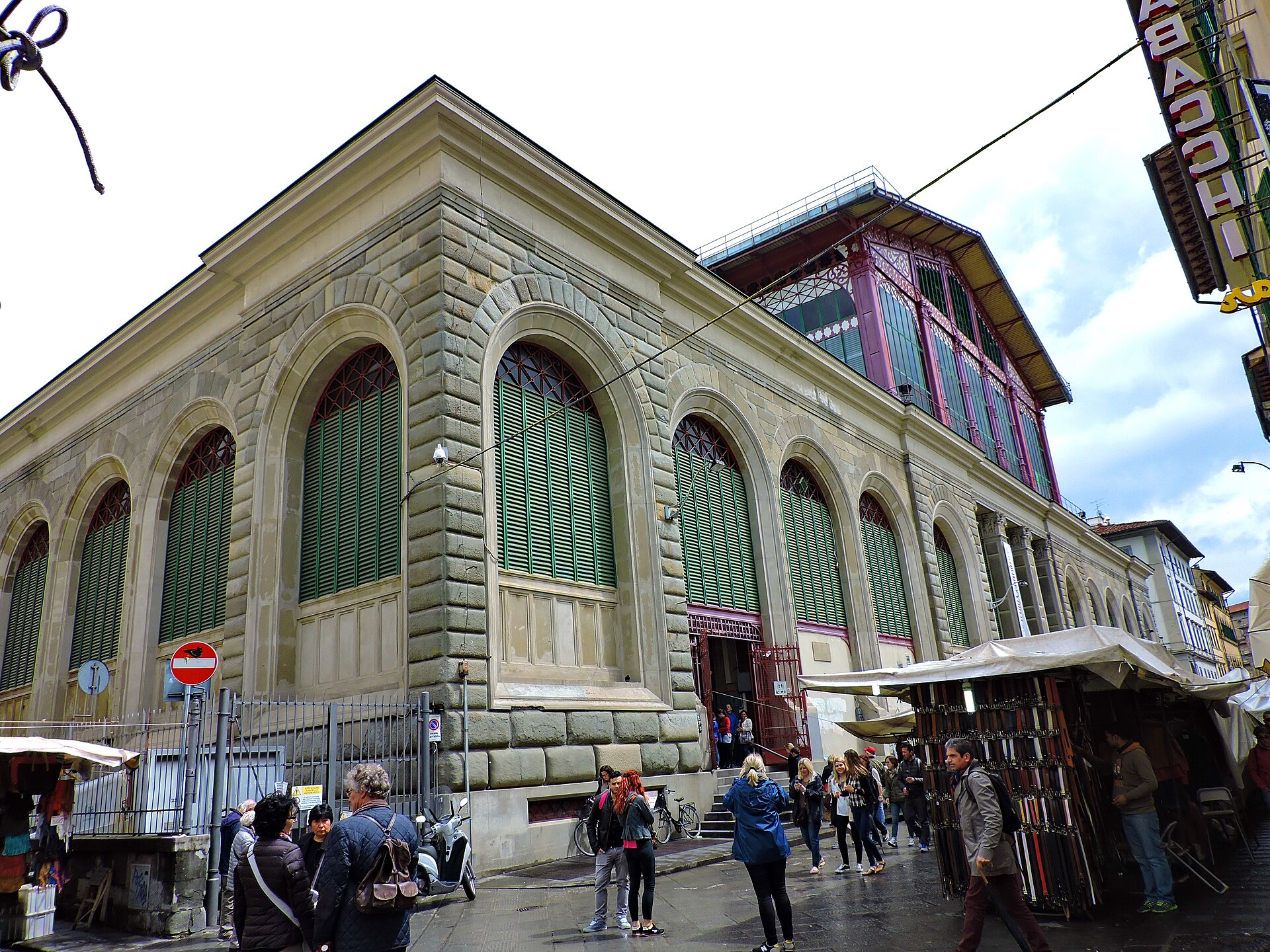
Mercato Centrale Florence is a two-floor, two-era food destination at the heart of San Lorenzo. The ground floor is a working market: butchers, cheesemongers, fishmongers, fresh-pasta makers and lampredotto sellers trading under the iron-and-glass roof of the 1874 hall. The upstairs is a modern food hall (opened 2014) with 19 artisan shops plus a bar, brewery, pizzeria, grill and cooking school, serving everything from fresh pasta to truffle dishes to gelato, open from 09:00 to 23:00 every day. Together they form Florence’s most useful food destination — for breakfast, lunch, dinner, take-home shopping, or just an espresso at the 1874 market bar. This 2026 guide covers the full Mercato Centrale — what to eat at each counter, when to visit, how to navigate it as a traveller and as a shopper, and how it compares with nearby Sant’Ambrogio market.
For broader context see our Florence Food Guide pillar, our Best Restaurants in Florence guide, and our San Lorenzo & San Marco neighbourhood guide.
The market sits at the centre of the San Lorenzo quarter, so the leather stalls of the outdoor San Lorenzo market are literally on the doorstep, and the Medici Chapels are a two-minute walk from the produce hall.
Most food tours in the city start or finish in this building, and the good ones do not stop here. Our Florence food tours guide compares the formats on price and group size, and explains why a tour that includes Sant’Ambrogio is the one to book.
What is Mercato Centrale?
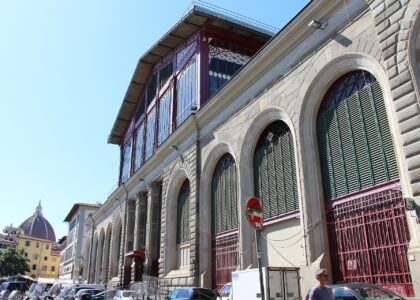
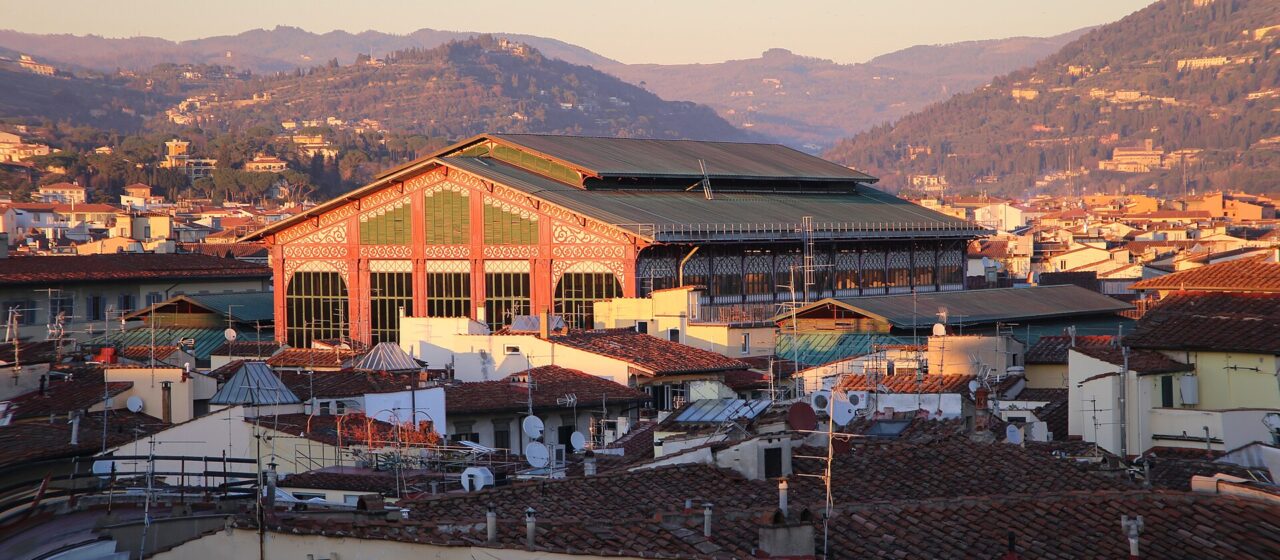
Mercato Centrale is Florence’s main food market, filling a city block in the San Lorenzo neighbourhood, a few minutes’ walk north of the Duomo. The cast-iron-and-glass hall was designed by Giuseppe Mengoni — the same architect who built Milan’s Galleria Vittorio Emanuele II — and opened in 1874, shortly after Florence’s years as capital of unified Italy (1865–1871).
The architecture deliberately referenced Parisian Les Halles and London’s Crystal Palace — wrought-iron columns, multi-storey ceiling height, glass roof for natural light. The format was modern for its era; today the building feels timelessly Florentine.
The two-floor structure:
- Ground floor (Mon–Fri 07:00–15:00, Sat 07:00–17:00; closed Sundays) — the working market: butchers, fishmongers, cheesemongers, fresh-pasta makers, fruit and vegetable vendors, dry-goods shops. Plus the historic Da Nerbone counter and a lampredotto cart.
- Upstairs / first floor (daily, 09:00–23:00) — the modern food hall: 19 artisan shops serving prepared food across multiple cuisines, plus a bar, brewery, pizzeria, grill and cooking school, all around communal long tables.
The upstairs food hall opened in spring 2014 on the market’s long-disused first floor. The conversion respected the original architecture; the cast-iron columns and beams remain visible. The format expanded what the market offered: visitors can now eat lunch and dinner without buying ingredients to cook later.
Ground floor — the working market
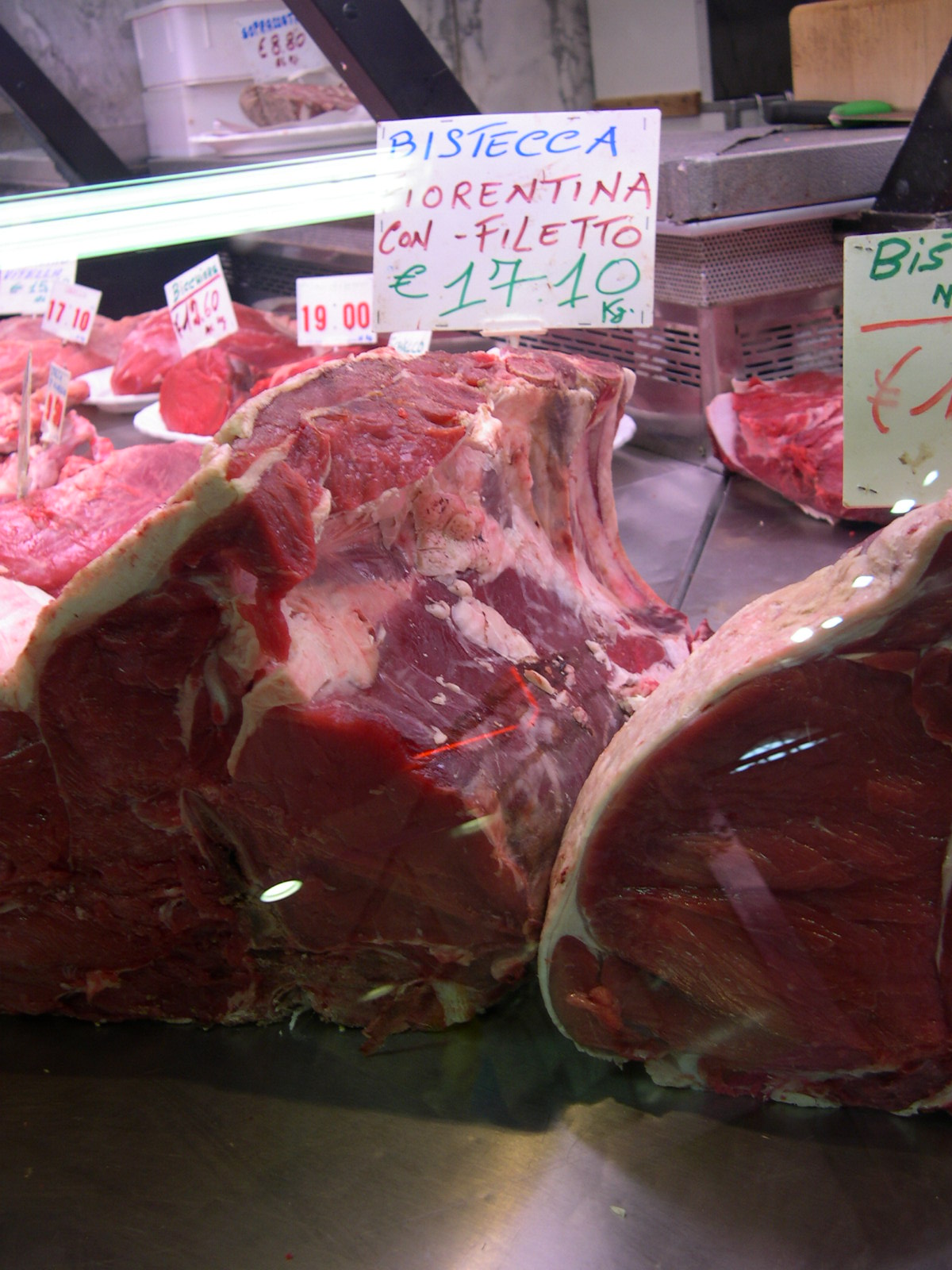
The ground floor is the older, more traditional layer. Open Mon–Fri 07:00–15:00 and Sat 07:00–17:00; closed Sundays. This is where Florentines shop for groceries — butchers slicing salami, cheesemongers with pecorino in glass cases, fishmongers, and fresh-pasta makers.
The stalls open at 07:00, so an early start gives you the whole morning to shop before sightseeing. Da Nerbone is the obvious lunch stop on this floor. Closing time is 15:00 on weekdays and 17:00 on Saturdays, and the ground floor stays shut on Sundays.
Most travellers can walk through in 20–30 minutes; serious food enthusiasts spend 90 minutes browsing, sampling and buying. Cards are accepted at most stalls; small purchases under €10 go faster with cash.
Upstairs — the food hall
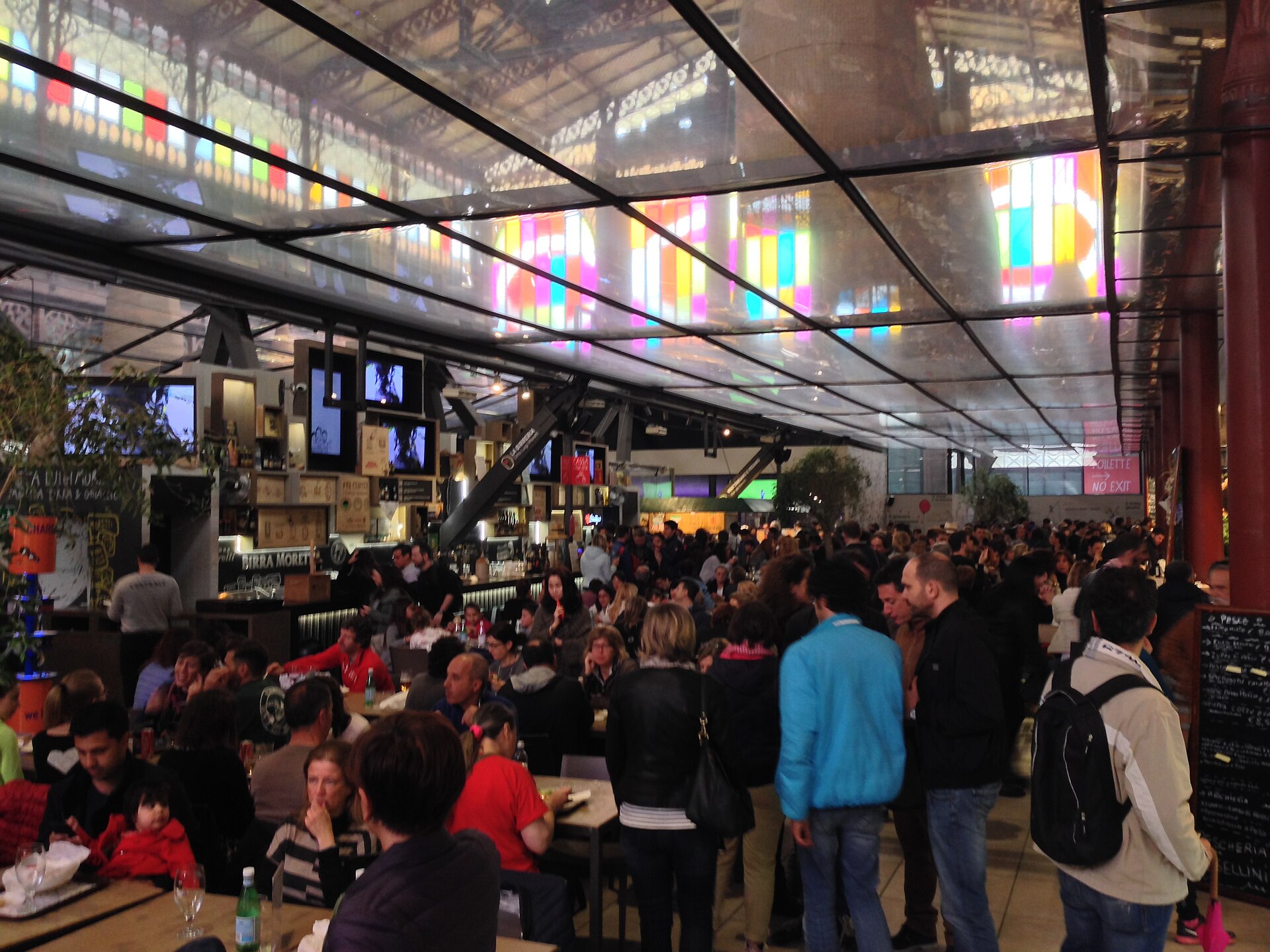
The upstairs floor opened to the public in spring 2014 after a careful renovation of a level that had long stood disused. The current format: 19 artisan shops plus a bar, brewery, pizzeria, grill and cooking school, arranged around a central seating area with long communal tables and several smaller table clusters.
The format works simply. Browse the counters; order at any one (or multiple) of them; pay at each counter; collect a buzzer or a printed ticket; sit at any free communal table; food is brought to you or you collect it when ready. Communal tables encourage strangers to share; meals are loud, sociable and Italian.
Average meal cost upstairs: €10–€18 per person for a single counter visit; €15–€25 if you sample two counters; €25–€40 if you go big with multiple counters and wine.
Cookery school: the upstairs floor also includes a small cooking school run by Lorenzo de’ Medici; Mama Florence teaches its classes elsewhere, on Viale Petrarca near Piazza Tasso — see our cooking classes guide.
Da Nerbone — Florence’s most famous lunch counter
If you visit only one Mercato Centrale stall, make it Da Nerbone. Located on the ground floor, immediately to the right after entering from Piazza del Mercato Centrale.
Da Nerbone traces its history to 1872 — two years before the market itself opened. It serves Florence’s most famous boiled-beef sandwich (panino di bollito), the broth-dipped roll filled with sliced beef brisket and boiled onions, optionally topped with green sauce. €6 a sandwich. Eaten standing at the counter, with paper napkins and a plastic glass of red wine (€2 extra).
The other Da Nerbone classics: lampredotto (cow’s-fourth-stomach sandwich, €5); trippa alla fiorentina (slow-stewed tripe in a bowl, €8); seasonal Tuscan pastas (€8 for fresh pasta with seasonal ragù, served in a paper bowl); a daily “piatto del giorno” board (€10 for a hot plate). Check its current opening hours before you plan lunch around it. Cash and card accepted.
Queues build over lunch, so arrive before the main rush or once it eases. Come earlier rather than later for the full menu choice: popular dishes can sell out.
Standout ground-floor vendors
Butchers
- Macelleria Soderi — the bistecca specialists, with Fiorentina steaks on the bone. Also salami, prosciutto Tuscano, finocchiona.
- Macelleria Bigi — long-running Tuscan butcher; ask for finocchiona salami or capocollo.
- Macelleria Falorni — branch of the famous Greve in Chianti butchery; cinghiale (wild boar) salami in autumn.
Fish
- Pescheria Conti — fresh fish from Viareggio (Tuscan coast); daily catch ranges from sea bass to anchovies.
- Pescheria del Mare Adriatico — Adriatic-sourced; specialty in clams and squid.
Cheese
- Bono — Italian cheese specialist; carries gorgonzola, taleggio, parmigiano reggiano alongside Tuscan options.
Pasta
- Pasta Fresca da Eugenio — handmade tagliatelle, ravioli, pici, gnocchi.
- Macelleria Conti — also stocks fresh egg pasta alongside meats.
Truffles, herbs, oils
- Tartufi Savini — fresh white and black truffles in season; also truffle oils, salts and dried products.
- Spezieria Erboristeria San Lorenzo — herbs, spices, dried mushrooms, salt-cured fish.
- Pegna Mini — branch of the famous Pegna deli; vacuum-sealed cured meats, premium oils, biscotti, gift boxes.
Bread & baked goods
- Forno Vecchio — Tuscan salt-free pane sciocco, schiacciata, focaccia.
- Pasticceria del Mercato — Tuscan pastries, cantucci, schiacciata fiorentina in Carnival season.
Fruit & vegetables
- Multiple seasonal fruit-and-veg stalls cluster along the perimeter; quality varies. The middle-of-the-floor vendors with the longest queues are typically the most reliable.
Best upstairs food-hall counters
The line-up of 19 shops changes occasionally but includes:
Pasta & classic Tuscan
- Famiglia Michelis — fresh pasta with daily sauces (€10–€14 per plate).
- Tartufi Savini — truffle pasta and bruschetta in season; €15–€22.
- Trippa & Lampredotto — upstairs branch of the ground-floor street food; €5–€8.
Pizza
- Pizza al taglio counter — pizza by the slice; €4–€6.
- Pizza al Taglio — square-cut pizza priced by weight.
- Gabriele Madeo — the food hall’s pizza artisan; €8–€12 whole.
Fish & seafood
- Pescheria Conti — daily fresh catch as crudo or grilled plates; €15–€22.
Meat
- Macelleria Soderi upstairs — bistecca alla fiorentina by weight, grilled to order. €5–€7 per 100g.
- Roast pork & porchetta counter — €6–€8 sandwich or plate.
- Burger counter — Tuscan-beef burgers; €10–€14.
Plant-based & alternative
- Vegetariano counter — daily-changing vegetarian plates; €8–€12.
- Vegan counter — recent addition; soy and seitan-based dishes; €10–€14.
- Gluten-free counter — pasta, breads, pastries; €10–€16.
Cheese, salumi & wine
- Tagliere counter — assembled cheese-and-salumi plates for sharing; €12–€20 per board.
- Soltani – Caffè Sant’Ambrogio — the food hall’s enoteca, with wines by the glass; €5–€12.
- Baffo Moretti — the food hall’s brewery counter, beers on tap; €5–€8.
Sweet & finishing
- Paolo Pomposi — gelato and chocolate counter inside the food hall; €3–€4 cone.
- Pasticceria counter — cantucci, schiacciata fiorentina, pastries; €3–€6.
- Caffè counter — espresso bar within the upstairs space; €1.50–€3.
Hours, prices, payment
- Ground floor: Mon–Fri 07:00–15:00, Sat 07:00–17:00; closed Sundays.
- Upstairs food hall: daily 09:00–23:00. Entry is free and you pay at each counter. Seating at the communal tables is open to all; for a reserved table, book with the pizzeria or the restaurant.
- Average prices: ground-floor lunch €5–€12 (Da Nerbone €6 sandwich); upstairs lunch/dinner €10–€18 per counter visit.
- Payment: cards accepted everywhere; cash works at every counter and stall. Many ground-floor vendors prefer cash for small purchases.
- Bathrooms: free, located near the upstairs food hall. Cleaner than most public bathrooms in central Florence.
- WiFi: free, sign in at the upstairs counter.
- Stairs and lift: lift available between floors for accessibility; multiple staircases near each entrance.
- Entrances: main entrance Piazza del Mercato Centrale; secondary entrance Via dell’Ariento (the leather-market street).
Mercato Centrale vs Sant’Ambrogio market
Florence has two main central food markets. Honest comparison:
| Factor | Mercato Centrale | Sant’Ambrogio |
|---|---|---|
| Location | San Lorenzo (a few minutes from the Duomo) | Piazza Lorenzo Ghiberti |
| Tourist density | High | Lower |
| Local-shopper density | Moderate | High |
| Ground floor hours | Mon–Fri 07:00–15:00, Sat 07:00–17:00 | Mon–Sat 07:00–14:00 |
| Upstairs food hall | Yes (daily 09:00–23:00) | Small dining areas among the stalls |
| Famous lunch counter | Da Nerbone (one of the market’s oldest stalls) | Trattoria da Rocco (€10 working-class lunch) |
| Lampredotto cart | Inside | Just outside |
| Authenticity | Polished, modernized | Working-class, gritty |
| Best for travellers | Variety, evening dinner, picky-eater families | Authenticity, market-shopping with a Florence local feel |
| Best for cooks | Ground floor specialty stalls | Working-day produce shopping |
Most travellers visit both — Mercato Centrale for the food-hall lunch or dinner, Sant’Ambrogio for the morning shopping experience. They’re within walking distance of each other and complementary.
Mercato Centrale with kids
Mercato Centrale is one of central Florence’s most family-friendly food destinations:
- Variety solves picky-eater problems: with 19 shops plus a pizzeria and a grill, kids can pick pasta, pizza, grilled meat or gelato; parents can simultaneously order Tuscan classics or wine bars.
- Communal long tables are kid-tolerant and encourage informal social interaction.
- Open till 23:00 every day — flexible for families with kids on different sleep schedules.
- Bathrooms are clean and well-located.
- Stroller-friendly — lifts and wide aisles work for prams.
- Cooking class option: the Lorenzo de’ Medici cooking school runs classes upstairs; ask the school about sessions suitable for children.
- Avoid peak Saturday when crowds make stroller navigation harder.
Shopping for take-home Tuscan ingredients
For travellers shopping at the ground floor for take-home Tuscan ingredients:
- Tuscan extra-virgin olive oil — €15–€30 per 750 ml at Pegna Mini, Erboristeria, or specialty vendors. Travels in checked luggage if well-packed.
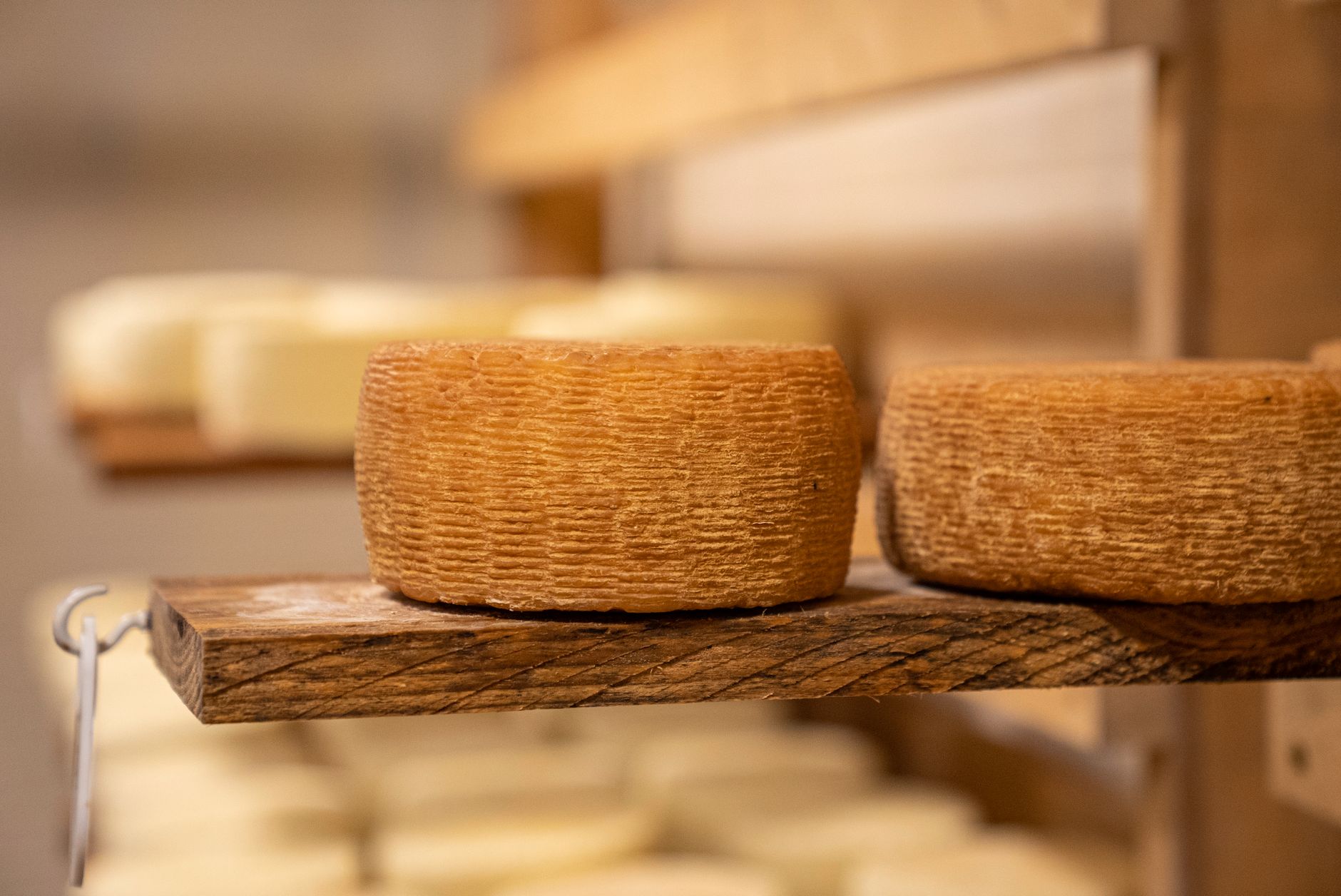
- Aged pecorino cheese — ask whether the stall can vacuum-seal it, and store it as the label advises. Customs-friendly for most countries.
- Cured meats (finocchiona, capocollo, prosciutto Toscano) — vacuum-packed at Macelleria Soderi or Falorni. Check your home country’s import rules: the US restricts meat products in passenger baggage, though solid cheeses such as aged pecorino are allowed if they contain no meat. Declare all agricultural products on arrival.
- Tuscan dried beans (cannellini, zolfini) — for ribollita and fagioli all’uccelletto. Lightweight; long shelf life.
- “00” Italian flour for fresh pasta — sold by the bag at the market’s dry-goods shops.
- Cantucci di Prato — boxed at the pasticceria counter; ideal travel souvenir.
- Truffle products — small bottles of truffle oil, truffle salt, dried truffle. Check airline liquid rules.
- Vin santo — sweet Tuscan wine for cantucci dipping. Check airline alcohol rules.
- Tuscan honey — chestnut, acacia, miele millefiori. Customs-friendly.
- Italian dried herbs — sage, rosemary, oregano, fennel seeds.
Most ground-floor vendors will vacuum-seal and label products for travel; ask at the counter. Pegna Mini specialises in gift boxes (€30–€80) with curated combinations.
A Mercato Centrale walking circuit
Morning visit (90 minutes, 09:30–11:00)
09:30 — espresso at the ground-floor market bar (€1.20 standing). 09:45 — walk through the perimeter butchers, cheesemongers, fishmongers; sample what’s offered. 10:30 — Da Nerbone for an early lampredotto sandwich (€5); chat with the long-time staff. 10:45 — buy take-home items from Pegna Mini or the cheese counter. 11:00 — exit toward the leather market or back to the Duomo.
Lunch visit (60 minutes, 12:30–13:30)
12:30 — climb to the upstairs food hall. 12:35 — order from 1–3 counters: pasta from Famiglia Michelis, taglieri from the cheese-and-salumi board, glass of Chianti from the Soltani enoteca. 12:45 — find a communal table seat; eat while sharing space with strangers. 13:25 — gelato from the upstairs gelateria counter to finish.
Evening visit (90 minutes, 19:30–21:00)
19:30 — head up to the food hall; for a reserved table, book with the pizzeria or the restaurant, or take your chances at the communal tables. 19:35 — order multiple counter dishes: pizza al taglio, fresh pasta, taglieri, glass of Brunello at the wine bar. 20:15 — eat at communal table; chat with adjacent diners. 20:45 — gelato or pasticceria for dessert. 21:00 — walk south to the Duomo or back to your hotel.
Cooking in your apartment: a sample shopping list
For travellers in apartments cooking a Tuscan dinner for two from Mercato Centrale ground floor, a sample €30–€45 shopping list:
- 200g fresh tagliatelle from Pasta Fresca da Eugenio — €4
- 200g sliced finocchiona salami from Macelleria Soderi — €6
- 150g aged pecorino from Caseificio Porcari — €5
- 1 small loaf of Tuscan bread from Forno Vecchio — €3
- 500g cherry tomatoes from a perimeter vegetable stall — €3
- 250g spinach or chicory for a side — €2
- 1 small bottle of olive oil for cooking and finishing — €8
- 500ml Chianti from Soltani – Caffè Sant’Ambrogio or any wine vendor — €7
- 200g cantucci from the pasticceria counter — €4
- 1 small bottle of vin santo for the cantucci — €6
Total: €48 for a 4-course Tuscan dinner for two — antipasto, pasta, salad, dessert with wine. Roughly €24 per person. Less than the upstairs food hall; significantly less than a sit-down trattoria; more home-cooked authentic.
Counter-by-counter strategy at the upstairs food hall
For travellers who want to maximise their first food-hall visit:
If you have 30 minutes
One counter, one plate, one glass of wine. Recommended: Famiglia Michelis for fresh tagliatelle (€12) plus a glass of Chianti from the Soltani – Caffè Sant’Ambrogio enoteca (€7). Total €19; 25 minutes.
If you have 60 minutes
Two counters, sample widely. Recommended: pasta from Famiglia Michelis; Tartufi Savini truffle bruschetta in season; or pizza by the slice from the pizza al taglio counter; finish with a glass from Soltani – Caffè Sant’Ambrogio. Total €25–€32.
If you have 90 minutes
Three counters plus dessert. Recommended: a small pasta plate; a tagliere (cheese-and-salumi board); a pizza slice; a glass of Brunello; gelato from the upstairs gelateria counter. Total €35–€45 per person.
If you have 2 hours and want to “do” the food hall
Sample 4–5 counters. Order a pizza slice, fresh pasta, taglieri, gelato, and a wine flight from the Soltani enoteca (3 wines, €15). Total €50–€65 per person. Worth doing once on a long Florence stay.
Mercato Centrale through the year
Spring (March–May)
Ground floor: spring vegetables flood the perimeter stalls — artichokes, fava beans, asparagus, peas. Upstairs: lighter pasta and seasonal vegetable counters. Prime months for visit.
Summer (June–August)
Ground floor: peak fruit season (peaches, melons, watermelons, figs); Tuscan tomato vendors at peak. Upstairs: panzanella, pappa al pomodoro, gelato run heavily. Crowds especially heavy at lunch in July; come at 11:30 or after 14:00.
Autumn (September–November)
Ground floor: truffle season (October–December for white) opens at Tartufi Savini; new olive oil arrives mid-November; chestnuts, mushrooms, autumn vegetables. The food year’s prime period. Upstairs: ribollita and slow-stewed wild-boar pastas appear on counter menus.
Winter (December–February)
Ground floor: quieter, warmer atmosphere. Italian Christmas specialties (panettone, panforte, struffoli) appear at pasticceria counters mid-December. Upstairs runs warming menus — peposo, cinghiale, ribollita. Schiacciata fiorentina (sweet Carnival flatbread) appears at every pasticceria counter from late January.
A short history of Mercato Centrale
Florence’s central food market predates the current building by centuries. The 14th-century outdoor market on the same site was called the “Mercato del Sale” (salt market) and operated as one of medieval Florence’s main commercial hubs. By the 18th century it had grown into a sprawling open-air affair; the unification of Italy in 1861 brought modernisation pressure.
The current Mercato Centrale building opened in 1874, designed by Giuseppe Mengoni in cast iron and glass, the modern materials of the era. The intent was to bring Florence’s food retail into the industrial age, and Mengoni also designed Milan’s Galleria Vittorio Emanuele II.
The upstairs level had long stood disused when Umberto Montano and Human Company turned it into a food hall. It opened on 23 April 2014 as the very first Mercato Centrale; the Rome location followed on 5 October 2016.
The pandemic closed the food hall for a time; it reopened on 11 June 2021. The current ownership continues to expand the brand — Rome, Milan, Turin, Naples — but Florence remains the original.
Common Mercato Centrale myths
- “The upstairs is just a tourist trap” — partially true. Some counters are touristy; others (Famiglia Michelis, Tartufi Savini, the Soltani – Caffè Sant’Ambrogio enoteca) are excellent. Pick selectively.
- “Da Nerbone is overhyped” — false. The €6 boiled-beef sandwich is a Florence institution and worth the queue. Compare it with lunch at a sit-down trattoria and the value is obvious.
- “It closes early” — half-true. The ground floor closes at 15:00 on weekdays and 17:00 on Saturdays; upstairs runs to 23:00 every day. Plan your visit accordingly.
- “Saturdays are best” — false. Saturdays are most crowded; Tuesday or Thursday mornings are the working-market sweet spot.
- “Sant’Ambrogio is better” — depends. Sant’Ambrogio wins on authenticity; Mercato Centrale wins on convenience, hours and variety. Both have merits.
Mercato Centrale Florence — FAQ
What is Mercato Centrale Florence?
Florence’s main food market in San Lorenzo, a few minutes north of the Duomo. Two-floor structure: ground floor working market (Mon–Fri 07:00–15:00, Sat 07:00–17:00) with butchers, fishmongers, cheesemongers, fresh-pasta makers, plus the famous Da Nerbone sandwich counter. Upstairs food hall (daily 09:00–23:00) with 19 artisan shops plus a bar, brewery, pizzeria, grill and cooking school.
What time does Mercato Centrale open?
Ground floor: Mon–Fri 07:00–15:00, Sat 07:00–17:00, closed Sundays. Upstairs food hall: daily 09:00–23:00 including Sundays. Da Nerbone keeps its own hours on the ground floor, so check them before you go.
What should I eat at Mercato Centrale?
Ground floor: Da Nerbone’s panino di bollito (boiled-beef sandwich, €6) or lampredotto (€5). Upstairs: fresh pasta from Famiglia Michelis (€10–€14), truffle pasta from Tartufi Savini in season, taglieri (cheese-and-salumi board, €12–€20), glass of Chianti from the Soltani – Caffè Sant’Ambrogio enoteca (€5–€12).
Can I shop for take-home Tuscan ingredients?
Yes — cured meats, aged pecorino, fresh pasta and other Tuscan produce from the ground-floor shops. Pegna Mini offers curated gift boxes (€30–€80). Ask at each stall whether it can vacuum-pack your purchases for the flight home.
Is Mercato Centrale family-friendly?
Very. With 19 shops plus a pizzeria and a grill upstairs, kids can choose pasta, pizza, grilled meat or gelato. Stroller-friendly; lifts between floors; clean bathrooms; communal long tables work for families. Avoid peak Saturday lunch with kids.
Mercato Centrale or Sant’Ambrogio market?
Both. Mercato Centrale wins on convenience, hours and the upstairs food hall. Sant’Ambrogio wins on authenticity, less tourist density and a more working-class shopping atmosphere. Visit both — they’re an easy walk from each other and complementary.
How much does it cost to eat at Mercato Centrale?
Ground floor: €5–€12 lunch (Da Nerbone €6). Upstairs lunch: €10–€18 per counter visit; €15–€25 if you sample 2 counters; €25–€40 if multiple counters with wine.
Do I need to book at Mercato Centrale?
No reservations needed for individual counters. For a reserved table, book directly with the pizzeria or the restaurant. Cooking classes upstairs require advance booking.