This article contains advertising. Booking links on this site can be turned into paid links automatically by our partner Travelpayouts: if you book through one, we earn a commission from the provider, at no extra cost to you. It never affects what we recommend. Affiliate disclosure
Val d’Orcia is the postcard Tuscany — rolling green hills, cypress avenues, hilltop villages perched against pure blue sky, vineyards producing some of Italy’s most prestigious wines. The valley between Siena and Mount Amiata in southern Tuscany has been a UNESCO World Heritage cultural landscape since 2004, recognised as the inspiration for many Renaissance painters’ backgrounds. From Florence, Val d’Orcia is a long but rewarding day trip — 1h30 each way to the closest village (Pienza), 1h45 to Montalcino, 2 hours to Montepulciano. This 2026 guide covers everything: how to get there, the three main hilltowns (Pienza, Montalcino, Montepulciano), the Brunello and Vino Nobile wines, photography hotspots, and how to make a long day trip work.
Val d’Orcia is the most photogenic of our day trips from Florence, and realistically needs a car — see renting a car in Florence for pickup points and ZTL warnings. Wine-focused travellers should also read our Tuscany wine tours comparison.
What is Val d’Orcia?
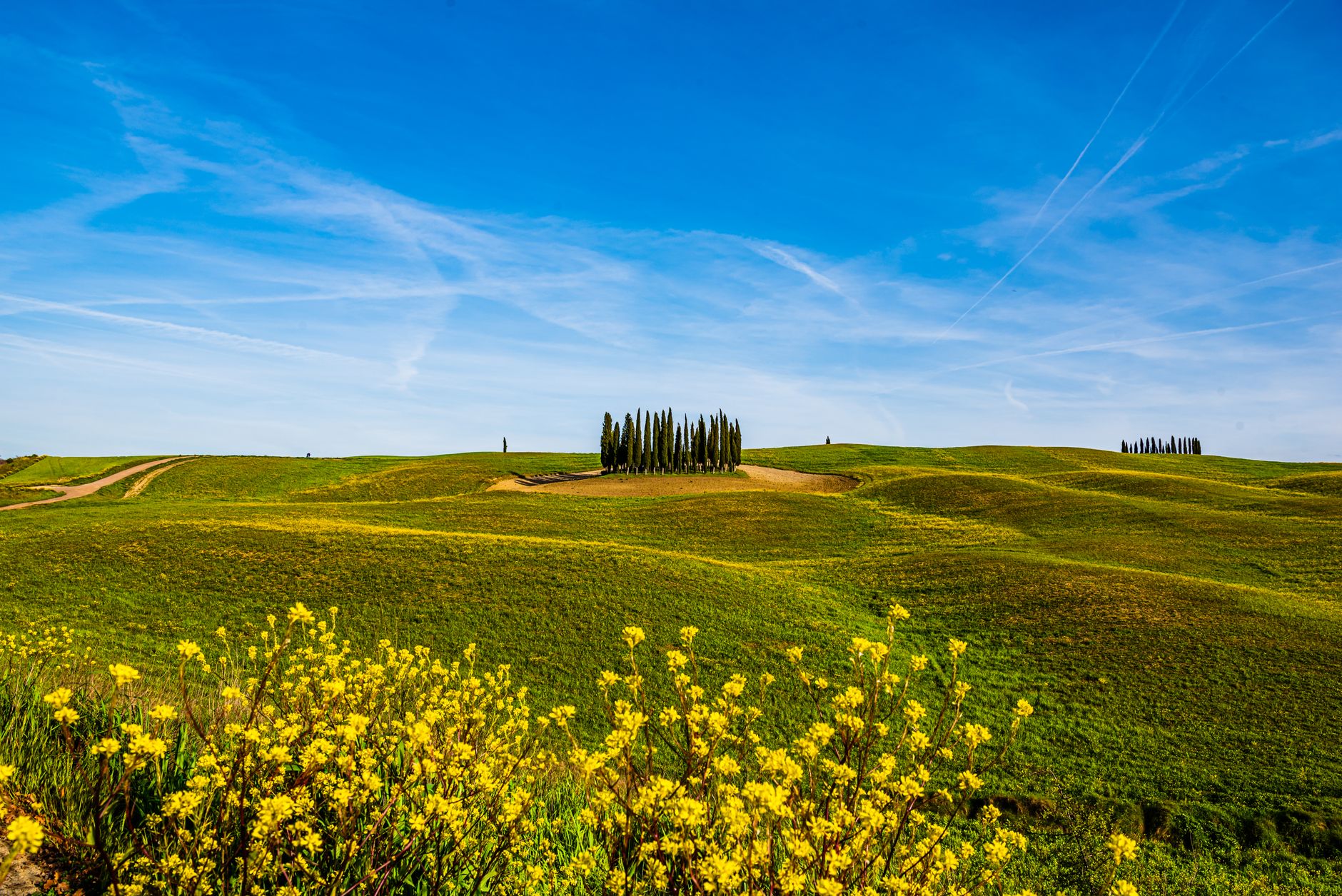
Val d’Orcia is the valley of the Orcia river in southern Tuscany, between Siena and Monte Amiata. The 90,000-hectare landscape combines:
- Rolling agricultural hills — wheat, sunflower and grape fields with the iconic Tuscan colour palette
- Cypress avenues — the linear tree plantings that punctuate the landscape; the most photographed example is the cypress road outside San Quirico d’Orcia
- Hilltop villages — Pienza, Montalcino, Montepulciano, San Quirico d’Orcia, Castiglione d’Orcia, Bagno Vignoni
- Vineyards — Brunello di Montalcino (a celebrated Tuscan Sangiovese red), Vino Nobile di Montepulciano
- Renaissance “ideal city” architecture — Pienza was designed by Pope Pius II in the 1460s as a model Renaissance settlement
Val d’Orcia became UNESCO World Heritage in 2004 specifically because of its preserved Renaissance landscape — the same hills, fields and villages that appear in the backgrounds of Sienese 14th–15th century paintings and Renaissance Florentine works. It’s a “cultural landscape” rather than a single monument.
Getting from Florence to Val d’Orcia
Val d’Orcia has no train stations within the heritage area. The closest train stations are at Chiusi (40km from Pienza/Montepulciano) and Buonconvento (15km from Pienza/Montalcino). Realistic options:
Guided Day Tour (Recommended)
The most practical option for most travellers — €130–200 per person, full-day Val d’Orcia tour from Florence:
- Departure: 08:00–08:30 from central Florence meeting point
- Stops: Typically Pienza (1h30 visit), Montepulciano (1h30), Montalcino with Brunello tasting and lunch (3 hours), with photo stops at panoramic Tuscan landscape views and a cypress avenue
- Return: 19:00–20:00 to Florence
A guided tour is worth it for the logistics simplification — Val d’Orcia by car is 2 hours each way and the 4 hours of driving plus winery navigation are dramatic stress.
Self-Drive
- Distance: 130km via A1 autostrada (Florence-Roma) → SR2 (Cassia)
- Driving time: 1h45 to Pienza, 2 hours to Montalcino, 2h to Montepulciano
- Tolls: €15 each way
- Total cost: €30+ in tolls and fuel each way for a standard car (rental + fuel + tolls)
Self-driving makes sense for groups of 4+ or for travellers wanting custom itineraries. The countryside is spectacular for driving (the photogenic SR2 between San Quirico and Pienza is one of Italy’s most beautiful drives).
Train + Bus (Most Difficult)
Florence to Chiusi (1h30 by Frecciarossa €25, or 2h by regional €13.20), then local bus to Pienza or Montepulciano (60–90 minutes, €5–7). Total 3h+ each way. Service is infrequent; not realistic for typical day-trippers wanting to visit multiple villages.
Pienza: The Renaissance Ideal City
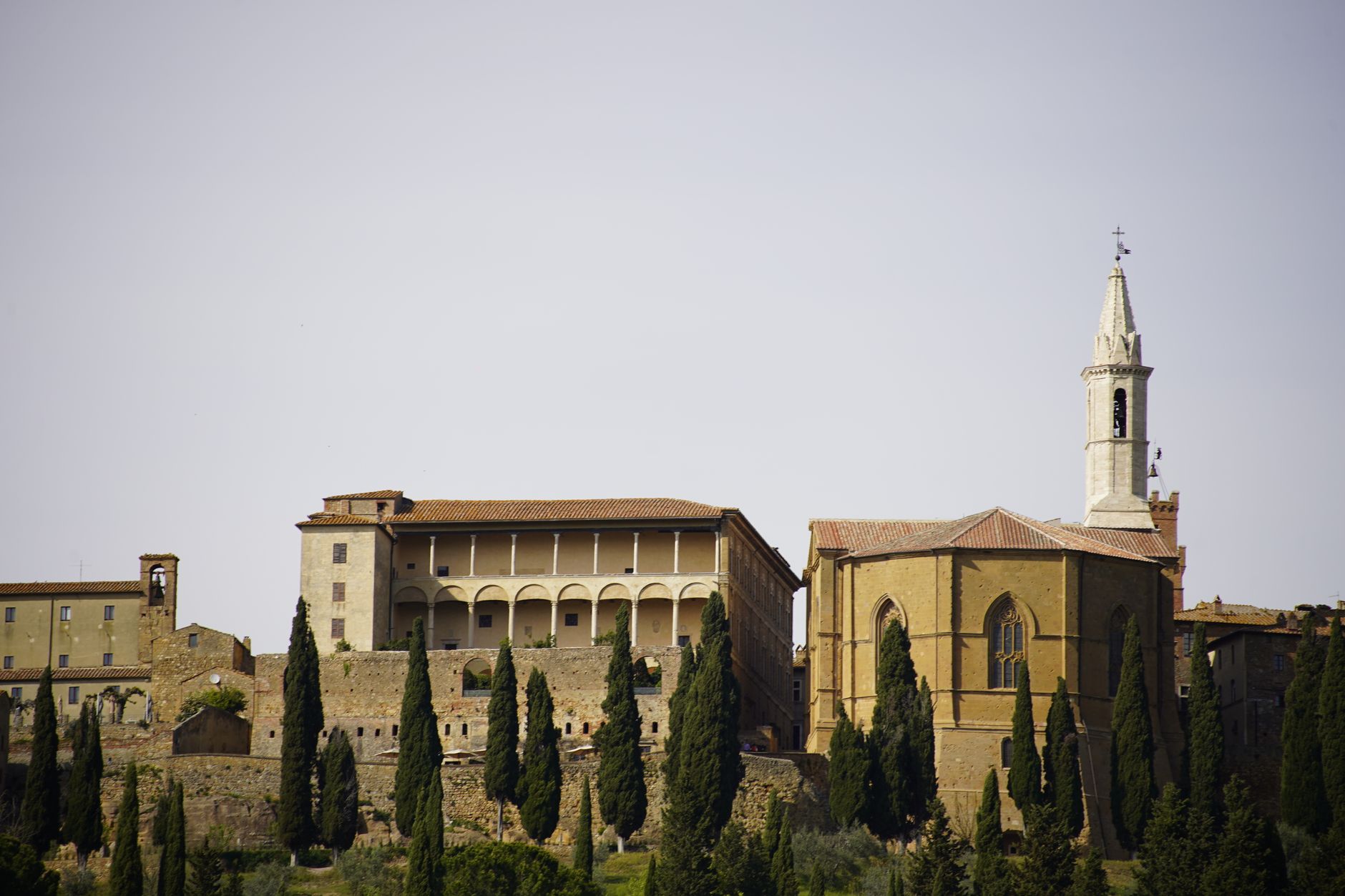
Pienza is a tiny village (population about 2,000) on a hill overlooking the Val d’Orcia. The pope born here in 1405 — Aeneas Silvius Piccolomini, who became Pius II — commissioned a complete Renaissance “ideal city” design starting 1459, with architect Bernardo Rossellino. The result was Italy’s first “modern” planned town and a UNESCO World Heritage site within Val d’Orcia’s broader heritage.
What to See
- Piazza Pio II — the Renaissance central square, with Cathedral, Palazzo Piccolomini, Palazzo Vescovile, and Palazzo Comunale on four sides — the most complete 15th-century planned piazza in Italy
- Pienza Cathedral — Renaissance facade, late-Gothic interior; free entry
- Palazzo Piccolomini — Pope Pius II’s family palace, with original 15th-century furniture and a hanging garden overlooking the Val d’Orcia. €7 entry, guided tours every 30 minutes.
- The Panoramic Walk — Via dell’Amore, Via del Bacio, Via della Fortuna — the streets along the cliff edge with continuous Val d’Orcia views
- Pecorino di Pienza — Pienza’s famous sheep’s milk cheese, available at multiple cheese shops on Corso Rossellino. Tastings €5–10.
Pienza takes 90 minutes to walk through and absorb. The cheese tasting is the food highlight; pecorino di Pienza comes in fresh, semi-aged, aged, and truffle versions, with significant variations.
Montalcino: The Brunello Town
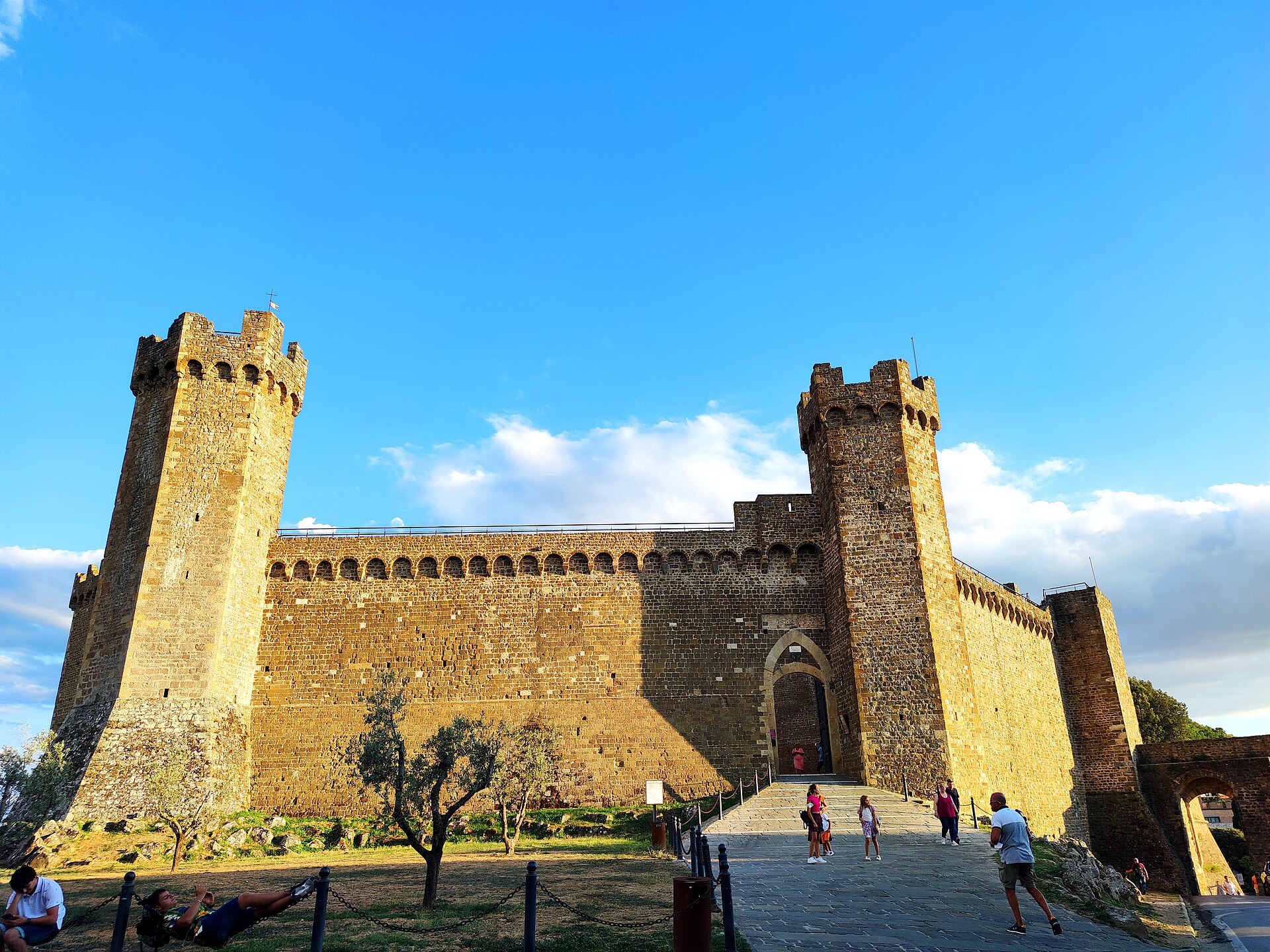
Montalcino sits on a 567-metre hill west of Pienza, overlooking the Crete Senesi clay-soil hills where Brunello di Montalcino is produced. Brunello is a celebrated Tuscan red — 100% Sangiovese (locally called “Brunello”), aged minimum 5 years (Riserva 6 years), with international prices of €40–€2,000+ per bottle depending on producer and vintage.
What to See
- Fortezza di Montalcino — 14th-century fortress at the village’s highest point, with walls you can walk around and an enoteca inside selling Brunello tastings. Walking the walls free; €4 to climb to the upper viewing platform.
- Piazza del Popolo — the main square, with the medieval town hall
- The historic centre — a small medieval village walkable in 30 minutes
- Brunello tastings — at the Fortezza enoteca (€10–25 per flight) or at one of the village wine bars
Brunello Winery Visits
Most Val d’Orcia tours include a winery visit near Montalcino. Major producers (advance booking required for visits, often through tour operators):
- Castello Banfi — large modern estate with extensive tour and lunch programmes (€30–80)
- Biondi-Santi — the originator of Brunello in 1888, premium tastings €100+, advance booking essential
- Casanova di Neri — modern internationally celebrated estate
- Il Marroneto — small premium producer
- Fattoria dei Barbi — historic estate with restaurant and museum
Montepulciano: Vino Nobile and Vampires
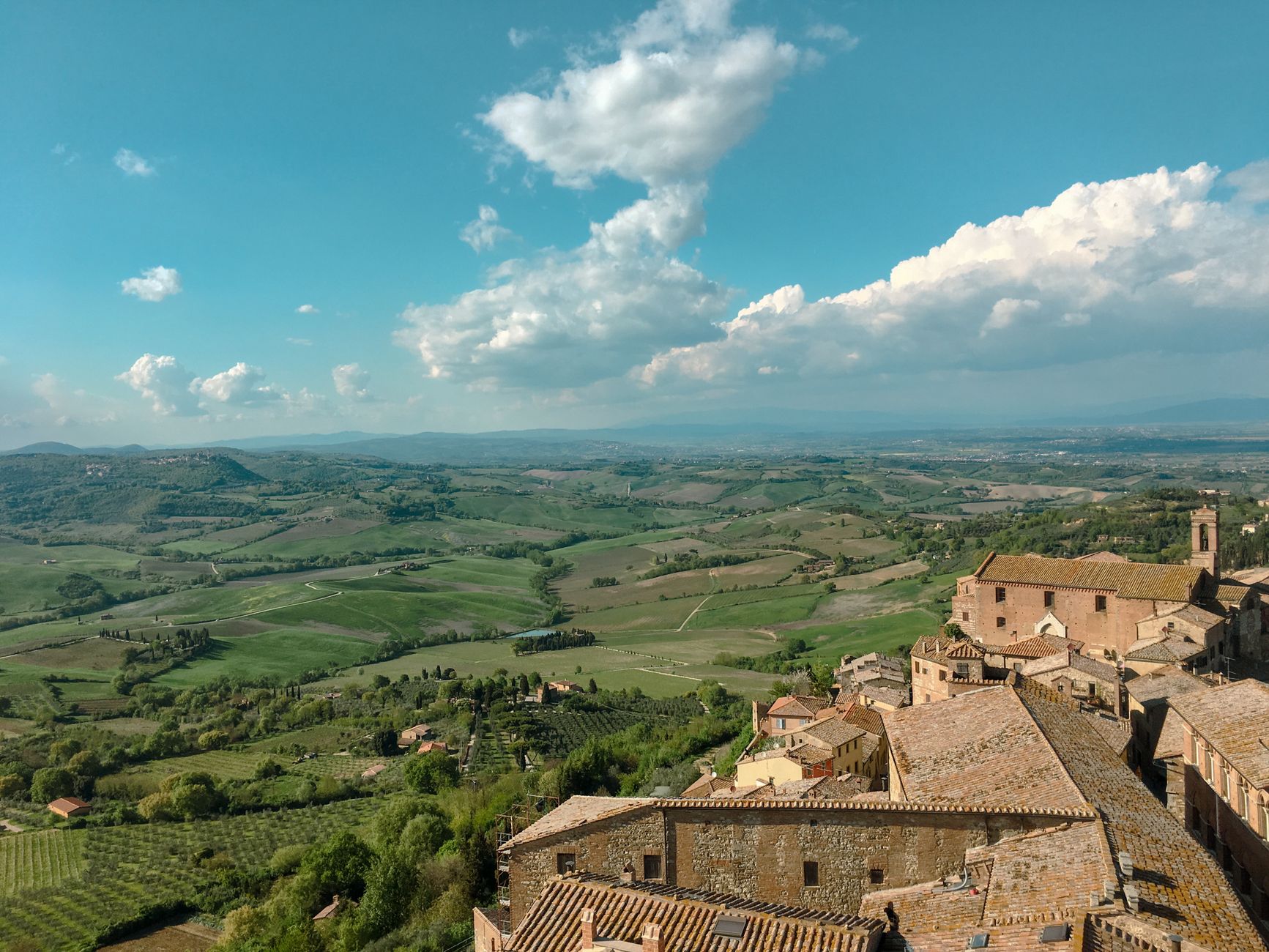
Montepulciano is a 605-metre hilltop village east of Pienza, famous for two things: Vino Nobile di Montepulciano (Italian DOCG red wine) and being a filming location for the vampire movie New Moon (2009) — yes, the Twilight series. The town has a steady stream of Twilight fan-pilgrims still 15+ years later.
What to See
- Piazza Grande — the main civic square at the village’s highest point, with Cathedral, Palazzo Comunale, and several Renaissance palaces
- Montepulciano Cathedral — late 16th-century, with Taddeo di Bartolo’s Assumption triptych
- Palazzo Comunale — town hall with a clock tower offering panoramic views (€5 to climb)
- Tempio di San Biagio — Renaissance basilica just outside the walls (Antonio da Sangallo the Elder, 1518–45), free entry
- Wine cellars under the historic centre — Cantina Contucci, Cantina del Redi, and others offer underground cellar visits with tastings (€10–25)
Vino Nobile di Montepulciano
Italy’s first DOCG-designated red wine (1980), made from Sangiovese (locally called “Prugnolo Gentile”) aged minimum 2 years (Riserva 3 years). Less famous than Brunello but increasingly recognised internationally. Producers to know: Avignonesi, Poliziano, Boscarelli, Contucci, Cantina del Redi.
Other Val d’Orcia Villages
- San Quirico d’Orcia — small medieval village on the SR2 between Pienza and Montalcino, with the iconic cypress road photographic stop just outside
- Castiglione d’Orcia — hilltop village near Mount Amiata
- Bagno Vignoni — thermal spa village, the main square is filled by a steaming thermal pool. Quirky and unique.
- Sant’Antimo Abbey — Romanesque abbey south of Montalcino, with Gregorian chant Vespers daily at 18:30
Val d’Orcia Photography Hotspots
The Val d’Orcia landscape is the most photographed in Italy. Top spots:
- The Cypress Road — outside San Quirico d’Orcia, off the SR2. The S-curving road between cypresses is the iconic shot.
- Belvedere Farmhouse — single farmhouse on a hill with surrounding cypresses, between San Quirico and Pienza
- Cappella della Madonna di Vitaleta — small church on a hill, classic isolated Tuscan landscape shot
- Pienza panoramic walk — Via del Bacio, Via dell’Amore, with continuous Val d’Orcia views
- Sunrise on Pienza’s eastern wall — for serious photographers, light at 06:30–07:30
Spring (April–May) and autumn (September–November) deliver the most varied colour. Mid-summer August is dry and golden but uniformly so.
A Sample Val d’Orcia Day Itinerary
Departing Florence 08:00, returning 19:30 (11.5 hours total):
- 08:00: Depart Florence (guided tour or rental car)
- 10:00: Photo stop on the SR2 — cypress road and panoramic landscape (15 minutes)
- 10:30: Pienza — Cathedral, Palazzo Piccolomini, Pecorino tasting, lunch break
- 13:00: Lunch at a winery near Montalcino — multi-course Tuscan with Brunello pairings
- 15:00: Visit a Brunello winery — vineyard, cellar, tasting
- 16:30: Quick stop in Montalcino historic centre — Fortezza walls walk
- 17:30: Drive back to Florence via Montepulciano photo stop (15 minutes if time)
- 19:30: Arrive Florence
This is a brisk full-day. To do all three towns plus winery requires either skipping some or accepting only 60-minute stops at each. Most tours focus on Montalcino + Pienza or Montalcino + Montepulciano.
Best Time to Visit Val d’Orcia
- September–October (vendemmia) — grape harvest, vineyards full, wineries actively making wine, light gold-orange across the countryside. The optimal time.
- Late April–June — green hills with poppy bursts, comfortable temperatures, longer days
- July and August — hot (32°C+), uniformly dry, golden landscape but uncomfortable midday outdoor activities
- March — fields turning green, vines bare; atmospheric but austere
- November–February — wet, cool, often empty; many wineries reduced hours or closed
Insider Tips
Tip 1: If self-driving, take the SR2 Cassia rather than just the A1 autostrada — the SR2 from San Quirico to Pienza is the most beautiful 30-minute drive in Italy.
Tip 2: Pecorino di Pienza tasting at one of the 4–5 cheese shops on Corso Rossellino is the lunch alternative if you want a lighter day. €10–15 for a tasting flight of fresh, aged and truffle pecorino with bread.
Tip 3: Sant’Antimo Abbey south of Montalcino has free Gregorian chant Vespers at 18:30 daily — one of the great unspoiled Italian religious experiences. Free; quiet.
Tip 4: Bagno Vignoni’s thermal-spring main square is a 5-minute drive from San Quirico. Free to look; €30 for a thermal bath at one of the surrounding hotels.
Tip 5: Buy direct from wineries — Brunello at the producer is typically 25–35% cheaper than retail in Italian wine bars, and dramatically cheaper than overseas.
Tip 6: Avoid Val d’Orcia in heavy summer rain or fog — the landscape’s beauty depends on clear horizons and low-angle light. If forecasts are bad, postpone if possible.
Tip 7: If you have flexibility, stay overnight in Pienza, Montalcino or Bagno Vignoni — the day-tripper crowds disappear by 17:00 and the villages become intimate. Hotels run €120–280/night.
Val d’Orcia vs Chianti
The two most popular Tuscan day-trip wine regions, but very different:
- Chianti is closer (30–60 min from Florence vs 1h30+ for Val d’Orcia), more accessible, less prestigious wines (Chianti Classico vs Brunello), more medieval village character
- Val d’Orcia is further but with more dramatic landscape (the iconic Tuscan postcard scenery), more prestigious wines (Brunello, Vino Nobile), Renaissance “ideal city” architecture (Pienza)
Choose Chianti for a shorter or first-time Tuscan winery day trip. Choose Val d’Orcia for the iconic Tuscan landscape, prestigious wine, and Renaissance architectural focus.
Val d’Orcia Day Trip FAQ
How long is Florence to Val d’Orcia?
1h45 to Pienza, 2 hours to Montalcino or Montepulciano by car via A1 + SR2. Train + bus combo takes 3+ hours each way and is impractical. Total day-trip time 11–12 hours including 5–6 hours actually in the valley.
Should I take a guided tour?
For most travellers, yes — the 2 hours each way of driving plus winery navigation is significant. Guided full-day tours run €130–200 per person. Self-drive saves money for groups but adds significant logistics.
Which Val d’Orcia villages should I visit?
The standard trip covers Pienza (Renaissance ideal city, pecorino), Montalcino (Brunello wine, fortress), and Montepulciano (Vino Nobile wine, Tempio di San Biagio). Add San Quirico d’Orcia, Bagno Vignoni or Sant’Antimo Abbey for fuller stays.
What’s the difference between Brunello and Vino Nobile?
Both are Sangiovese-based Tuscan reds. Brunello (Montalcino) ages minimum 5 years and is Italy’s most prestigious wine, €40–€2,000+ per bottle. Vino Nobile (Montepulciano) ages minimum 2 years, less famous internationally, €20–80 typical bottle. Brunello is the bigger, longer-lived wine; Vino Nobile is more accessible and approachable.
When is the best time to visit Val d’Orcia?
September–October (grape harvest, golden landscape, active wineries) and late April–June (green hills with poppies, longer days). Avoid peak July–August heat and November–February quiet seasons.
Where do I take the iconic Tuscan photos?
The cypress road outside San Quirico d’Orcia, the Belvedere farmhouse, the Cappella della Madonna di Vitaleta, and Pienza’s panoramic walls (Via del Bacio, Via dell’Amore). Best light: golden hour 30 minutes before sunset, or just after sunrise.
Should I stay overnight?
If your itinerary allows, yes — Pienza, Montalcino or Bagno Vignoni after the day-tripper crowds leave at 17:00 are intimate and quiet. Hotels run €120–280/night. Sunset and sunrise photography are dramatically rewarding from these villages.
Val d’Orcia delivers the Tuscany of postcards and Renaissance paintings — rolling hills, cypress avenues, hilltop villages, and the world’s most prestigious red wines. The day trip from Florence is long (11–12 hours) but the rewards justify the effort: Pienza’s Renaissance ideal city, Montalcino’s Brunello vineyards, Montepulciano’s Vino Nobile cellars, and the cypress-lined SR2 between them. Take a guided tour for logistical simplicity, or self-drive if your group has flexibility, and you’ll come back with the iconic photographs that motivated half your Italy trip in the first place.