This article contains advertising. Booking links on this site can be turned into paid links automatically by our partner Travelpayouts: if you book through one, we earn a commission from the provider, at no extra cost to you. It never affects what we recommend. Affiliate disclosure
Florence in October: Autumn Colour, Rain & Truffles
Florence in October is the month the city stops sweating and starts eating. Daytime highs sit around twenty-one degrees, the light goes long and gold in the afternoon, the hills turn, and every menu in Tuscany quietly rearranges itself around truffles, chestnuts, game and new oil. It is also, statistically, one of the two wettest months of the year, which is the detail nobody packs for. Both of those things are true at once, and planning for the second is what makes the first work.
Part of our month-by-month series — see the best time to visit Florence for the whole year at a glance and Florence weather by month for the numbers.
If the last ten days of October are the sweet spot, the month after is where the prices really fall. Our guide to Florence in November weighs the empty museums against the dark.
The month before is the warm half of the autumn: twenty-seven degrees, the vendemmia in Chianti and a crowd that thins every week. Our guide to Florence in September covers the harvest festivals and the Rificolona lanterns on the 7th.
The Short Verdict
October is, on balance, the best month to visit Florence, and the qualification matters. It wins on temperature, on light, on food and on the quality of what is happening in the countryside. It loses on rain and, in the first fortnight, on crowds.
Set against September, October is cooler, wetter and slightly quieter. Set against November, it is warmer, brighter and considerably busier. If your only priority is having Florence to yourself, come in November or January. If your priority is enjoying being outdoors in a beautiful city and eating extremely well, October is the answer and there is not much of an argument.
October at a glance
- Average high: about 21.5°C at Florence Airport (1991–2020 normals), cooling as the month goes on
- Average low: about 11°C
- Rainfall: about 105 mm across nine wet days (1 mm or more) — the second-wettest month after November
- Sunshine: around 5 hours a day
- Clocks: go back on the last Sunday of the month, so sunset comes an hour earlier on the clock overnight
- Crowds: heavy to mid-month, easing noticeably after about the 20th
The Weather, Honestly
The headline number — a daytime high around twenty-one degrees — is an average across the whole month, and October is a month that changes shape as it goes. The first week frequently behaves like September: high twenties, hard sun, cafe tables outside at nine in the evening. By the last week the days are cooler and shorter, and once the clocks go back it is dark an hour earlier.
The rain is the part people underestimate. Florence gets around 105 mm in October, spread over about nine wet days, which makes it the second-wettest month of the year after November. It does not usually drizzle. Tuscan autumn rain arrives as a thunderstorm that empties the sky for two hours and then stops, which is much more manageable than eight hours of English grey, but it does mean you will get caught at least once.
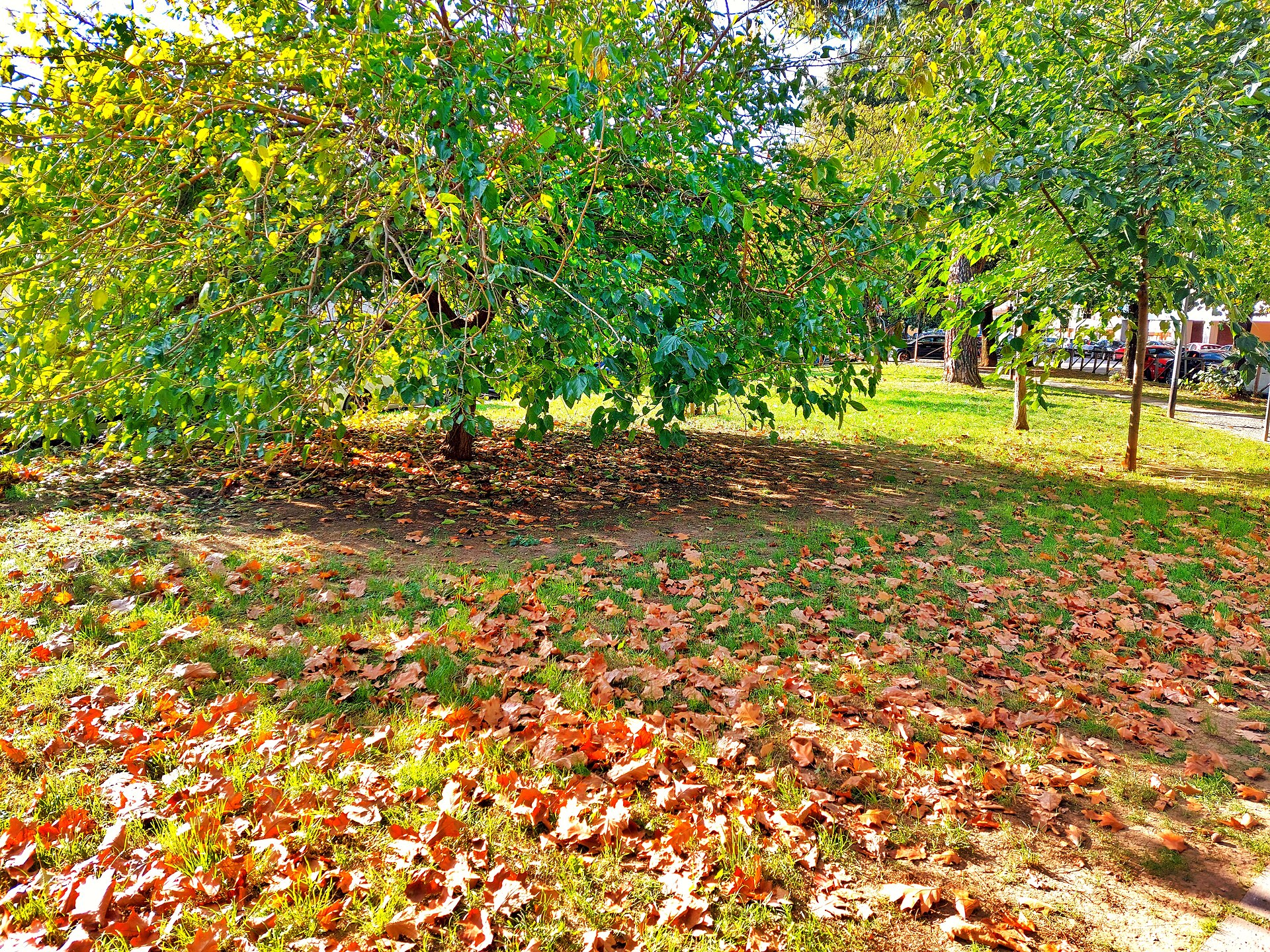
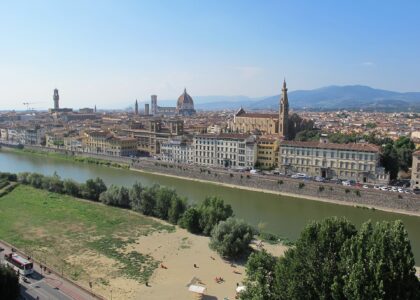
The other thing October does is change the light. From about the second week the low afternoon sun starts hitting the ochre and pietra serena at an angle that summer never manages, and the hour before sunset becomes genuinely spectacular. Our photo spots guide is more useful in October than in any other month.
Clocks change on the last Sunday of October, which is a bigger deal here than people expect. On the Saturday the sun still sets in the early evening. On the Sunday it sets an hour earlier. Every plan built around a late-afternoon viewpoint needs redrawing that weekend.
The Two Halves of October
Treat the month as two different destinations.
| 1–18 October | 19–31 October | |
|---|---|---|
| Temperature | Warm, often still summery | Cooler as the month goes on |
| Crowds | Heavy — near summer levels | Noticeably thinner |
| Hotel rates | High season pricing | Falls away after about the 20th |
| Autumn colour | Barely started | Starting to turn |
| Daylight | Long, light evenings | Sunset an hour earlier on the clock after the clocks change |
| Rain risk | Moderate | Higher |
The first half of October is still a busy time in Florence. Autumn travellers are out in force, the coach tours are still running, and a mid-morning queue outside the Accademia will not feel like a quiet month. Anyone who told you October is quiet was describing the second half.
The week after the clocks change is the sweet spot: the crowds have thinned, the hills have turned, hotel rates have eased, and the restaurants have all switched to their autumn menus. If you have flexibility, aim there.
What to Pack
October is the hardest month in Florence to pack for, because you are packing for two different climates.
- Layers, not weight. A t-shirt at two in the afternoon and a jumper plus a jacket at nine in the evening is a normal October day. One warm mid-layer beats one heavy coat.
- A packable waterproof. Not an umbrella — the storms come with wind, and you will be carrying it around all day for the ninety minutes you need it. A jacket that folds into a bag is the right answer.
- Shoes with grip. This is the one non-negotiable. Florentine paving is worn stone and it is genuinely slippery wet. Smooth-soled shoes on the slope down from Piazzale Michelangelo in the rain are how people end up in the pronto soccorso.
- Something you can cover shoulders and knees with. Church dress codes are enforced year-round; in October you are more likely to be in short sleeves and get caught out. Our church dress code guide has the detail.
- Sunglasses. The low autumn sun straight down a west-facing street is genuinely blinding.
What you do not need: a proper winter coat, thermal anything, or an umbrella large enough to be useful, which will not fit in your bag and will be abandoned in a hotel room.
Where the Autumn Colour Is
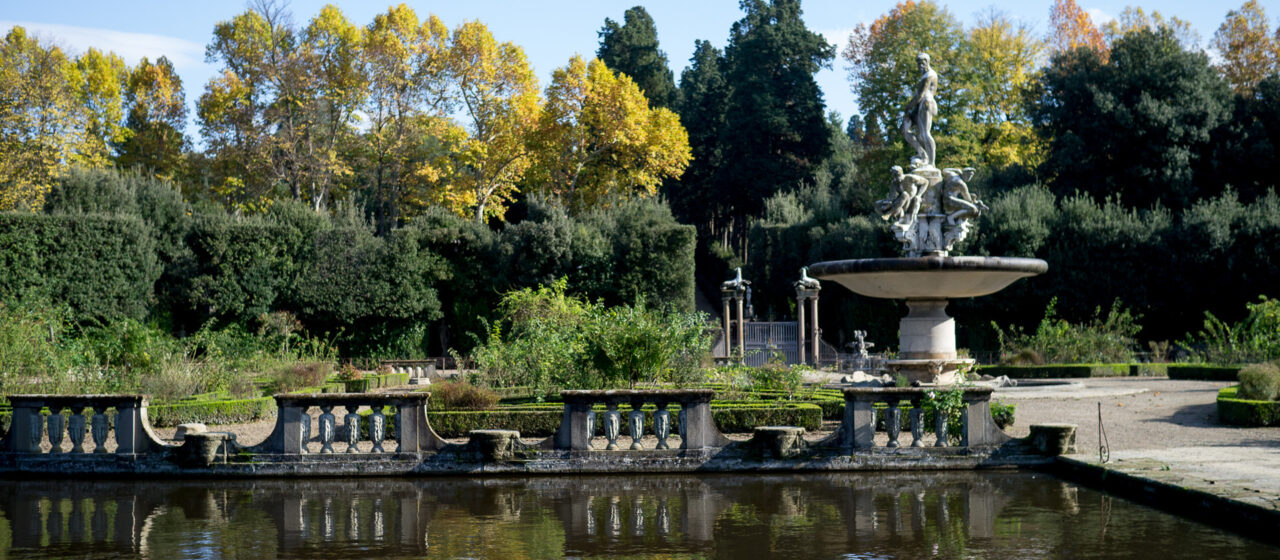
Florence is a stone city and the autumn colour is not everywhere — you have to go and find it. The turn usually comes late in October and carries on into November, and its timing shifts from year to year.
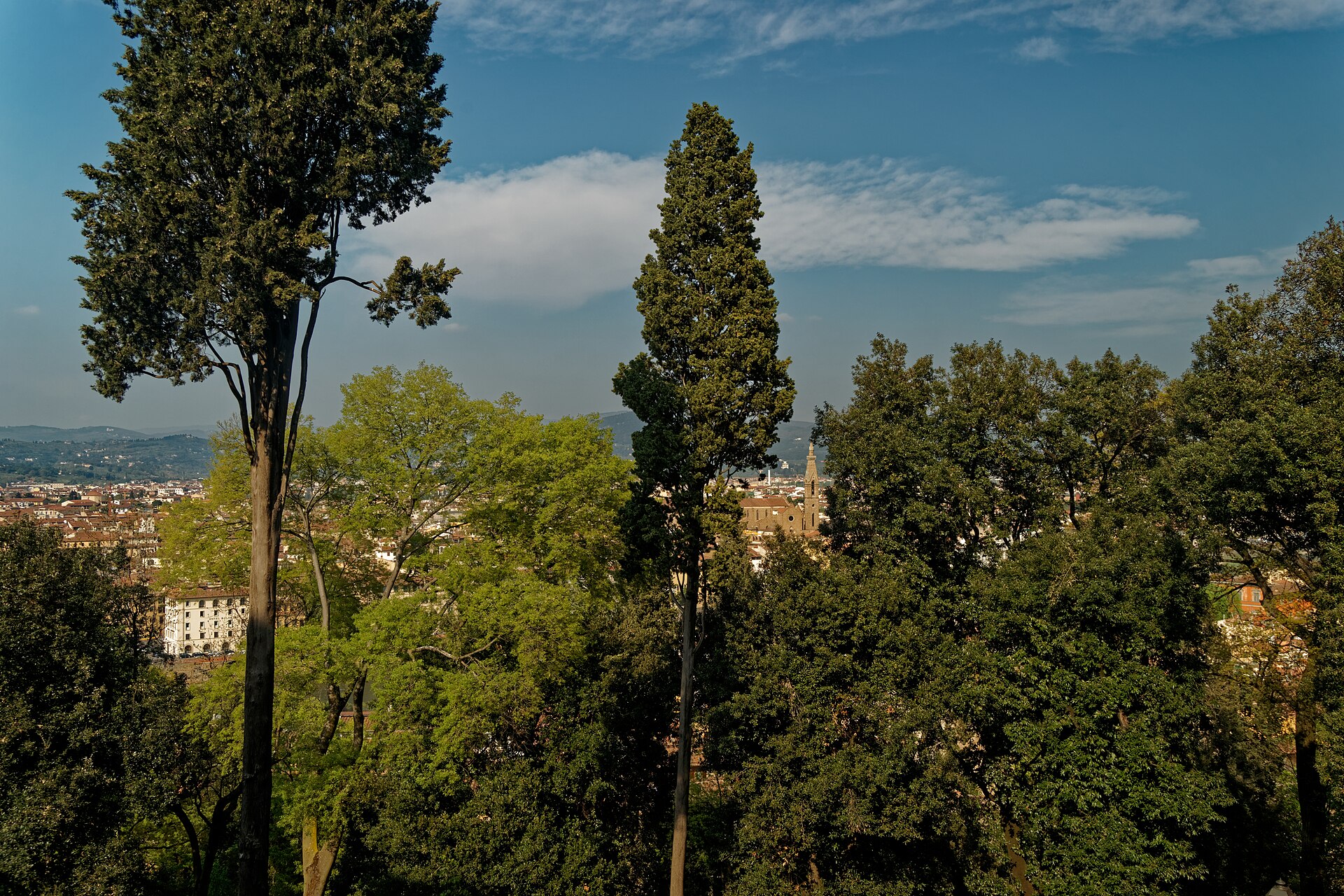
- Giardino Bardini. The best of them. Terraced, steep, with a view straight over the rooftops, and almost nobody there in late October because everyone comes for the April wisteria instead.
- Boboli Gardens. €10 on the day or €13 booked, opens at 08:15, and enormous. The oak and plane avenues at the back, well away from the Pitti, are where the colour is. Note it closes on the first and last Monday of every month.
- Piazzale Michelangelo. The ginkgo there goes an absurd yellow for about ten days. It is a single tree and it is worth the walk up.
- Parco delle Cascine. The city’s big riverside park, west along the Arno. Not beautiful, exactly, but it is where Florentines actually walk in autumn.
- The Chianti hills. The real event. Vine leaves turn gold and rust after the harvest, and the hillsides go from green to a patchwork you cannot photograph adequately.
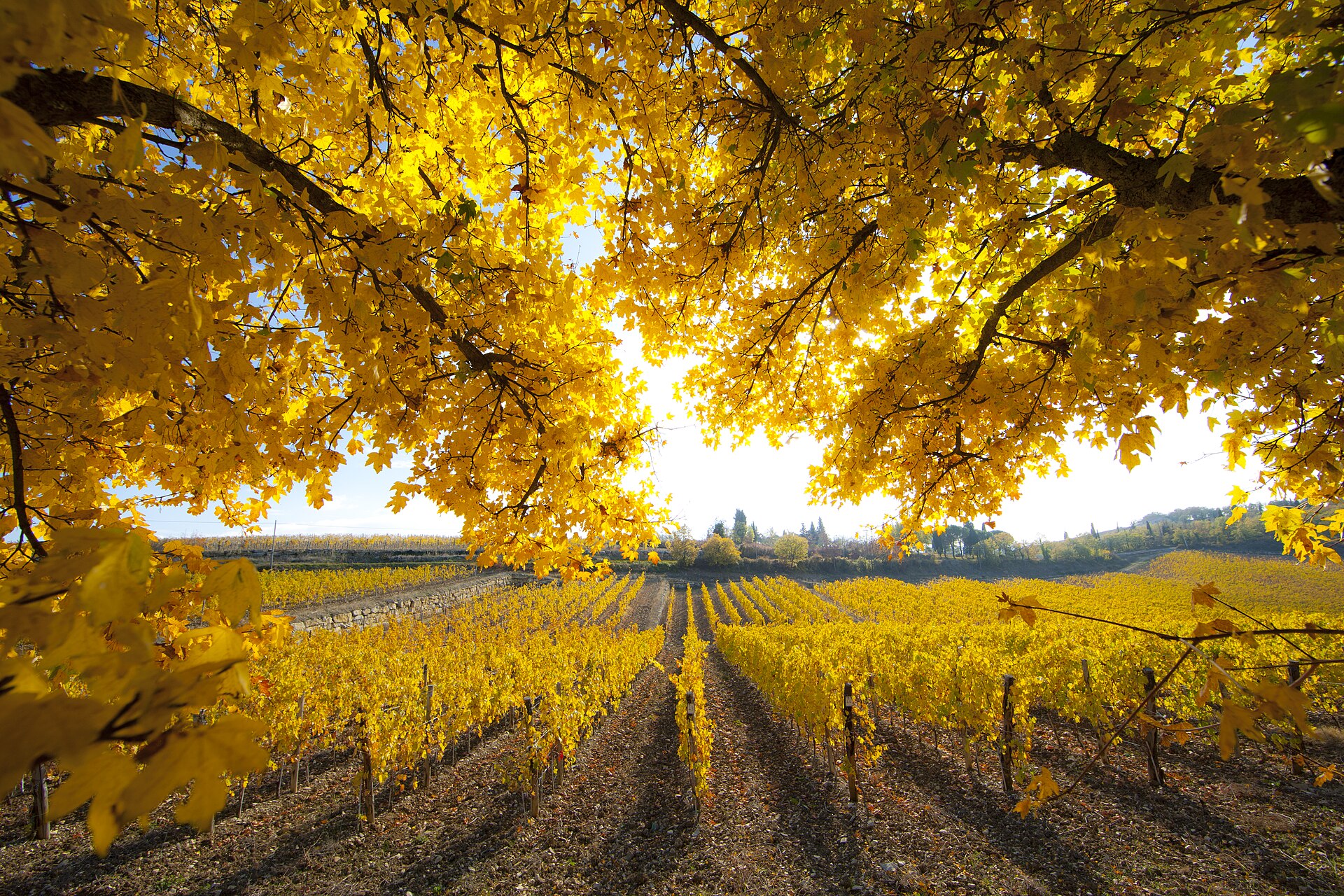
If you want the hills, you have to leave the city — there is no viewpoint in Florence from which the vineyards are visible. Our Chianti day trip guide covers doing it under your own steam.
Truffles, Chestnuts and the Autumn Table
This is the strongest argument for October. Tuscan cooking is seasonal in a way that is not marketing, and the autumn menu is the region at its best.
- White truffle. The season runs roughly from October into December, and the Tuscan centre of it is San Miniato, between Florence and Pisa, which holds a truffle market through November. In Florence you will find tagliolini al tartufo bianco on menus from mid-October, priced by the gram and shaved at the table. It is expensive and it is the real thing.
- Porcini. Cheaper, more abundant, and arguably better value. Grilled porcini caps, porcini risotto, porcini in everything, from late September through October.
- Chestnuts. Roasted in the street from about the middle of the month, and turned into castagnaccio — the flat, dark, unsweetened chestnut-flour cake with rosemary and pine nuts, which is either the best or worst thing you will eat, with no middle ground.
- Game. Wild boar (cinghiale) in pappardelle and stews, hare, pigeon. Autumn is when the ragùs get serious.
- Olio nuovo. The new olive oil starts appearing at the very end of the month and into November — bright green, peppery, available for a few weeks only.
- Vino novello. Released in early November, drunk young and cold, and frankly not very good. Try it once for the experience.
October is also when eating at one in the afternoon becomes pleasant again rather than an endurance test, and when restaurants that had given up on outdoor tables in the August heat put them back out.
What Is On
The city’s own summer programme, Estate Fiorentina, ran from 1 June to 30 September in 2026, and with it over, the action in October moves to the countryside.
Almost every village within an hour of Florence runs a sagra in October — chestnut, mushroom, wild boar, new wine — and these are volunteer-run village festivals where a plate of pasta costs five euros and nobody has adapted anything for visitors. The two best-known within reach are the Sagra delle Castagne at Marradi and the Sagra del Tordo at Montalcino, held on the last weekend of October and far enough out to be worth an overnight. Check each village’s own site for the year’s dates before you go.
Our guide to Tuscan wine festivals and the autumn harvest calendar has the full list with dates and how to reach them without a car.
Back in the city, October brings the start of the indoor cultural season: the Teatro del Maggio and the smaller theatres open their programmes, the autumn exhibition season starts at Palazzo Strozzi, and the concert calendar picks up. Check what is running when you book — a major Strozzi show can be the best two hours of a rainy afternoon.
The month before, when it is hotter and busier, is covered in Florence in September.
Museums, Queues and Booking
The first half of October is high season for museum queues and the second half is not. Book accordingly.
| Museum | Price (booked) | Book ahead |
|---|---|---|
| Uffizi | €29 (€25 on the day) | Book a timed slot before you travel, sooner in early October |
| Uffizi, after 16:00 | €16 (entry from 16:00) | The value option, all month |
| Accademia | €20 + €4 fee | About a month to mid-October |
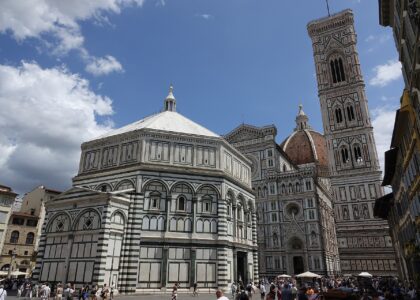
| Brunelleschi Pass (Duomo) | €30 | Dome slot: as early as possible |
| Boboli Gardens | €13 booked, €10 on the day | Walk up |
| Vasari Corridor | €47 with the Uffizi (€43 on the day); Friday-evening Corridor-only visits €24 (€20 on the day) until 20 November 2026 | Book early; groups of up to 25 |
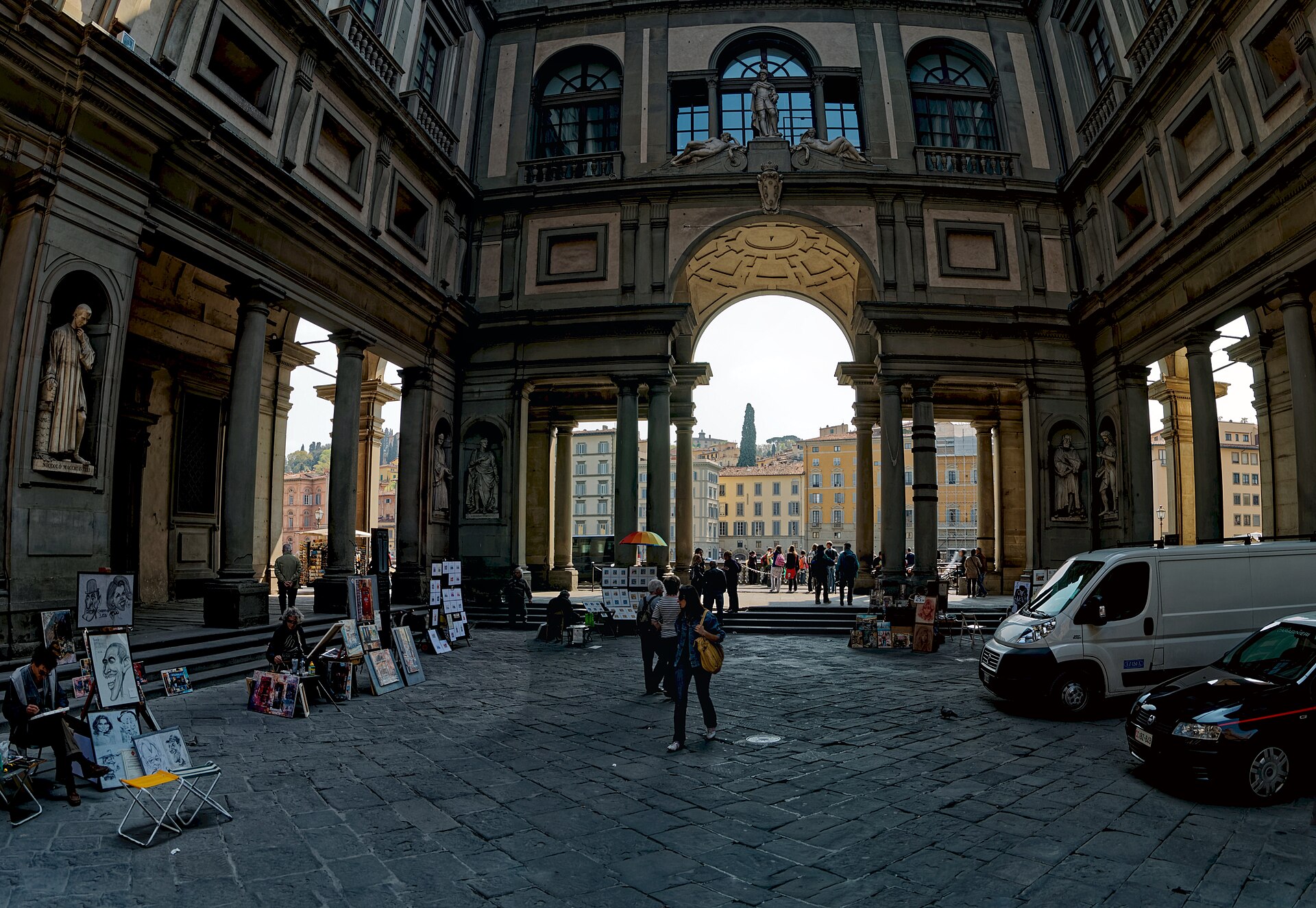
Two October-specific notes. The first Sunday of the month is free at state museums, the Uffizi included. That sounds excellent, and if the saving matters to your budget, arrive at opening. And the Accademia’s price rose from €16 to €20 in February 2026, so anything you read quoting the old figure is out of date.
Our Uffizi guide and Duomo complex guide have the full mechanics of both.
The Rain Plan
You will lose part of at least one day. Have a plan for it rather than standing under a colonnade waiting for it to stop.

The good news is that Florence is unusually well set up for wet weather, because everything worth seeing is indoors and within fifteen minutes’ walk. A rainy October afternoon is a perfectly good Bargello, Museo dell’Opera del Duomo or Palazzo Strozzi afternoon, and the queues shorten immediately when it rains.
Two things work badly in the rain: the dome climb, which is 463 steps with no lift and a viewing gallery you will not want to be on, and Piazzale Michelangelo, which in low cloud is a viewpoint with no view. Both are refundable-slot problems, so build them into the first clear morning rather than a fixed day.
Our rainy day Florence guide is the full fallback list.
What It Costs
| Item | Price | Note |
|---|---|---|
| Mid-range hotel, early October | High season rate | Same as June; book early |
| Mid-range hotel, late October | Often lower | Usually the month’s best value |
| Tourist tax, 4-star | €7.50 pppn | Capped at 7 nights, under-12s exempt |
| Tourist tax, B&B or short let | €6 pppn | Usually paid at checkout |
| Single bus or tram ticket | €2.00 | €3.00 from the driver; rose in Aug 2026 |
| Firenze Card | €85 / 72 hrs | Excludes the Duomo; price your plan first (booked Uffizi, Accademia, Pitti and Medici Chapels come to €86) |
| Trattoria dinner, two courses | €25–40 | Autumn menus from mid-month |
| Tagliolini with white truffle | Priced by the gram | Ask before you nod at the shaver |
If the shoulder is what you are after, the following month goes further — see Florence in November.
Frequently Asked Questions
Is October a good time to visit Florence?
It is arguably the best month, with one caveat. Highs around 21°C, superb light, autumn colour late in the month and the best food of the year. The caveat is rain — about 105 mm across nine wet days, making it the second-wettest month after November. The first half is also still very busy; the last ten days are the sweet spot.
How hot is Florence in October?
Average high around 21.5°C, average low around 11°C, with about five hours of sunshine a day. But the month cools as it goes and one day can be very different from the next, so pack layers rather than for one climate.
Does it rain a lot in Florence in October?
Yes — around 105 mm over about nine wet days, which makes it the wettest month after November. It usually arrives as short heavy thunderstorms rather than all-day drizzle. Bring a packable waterproof and shoes with grip; Florentine stone paving is genuinely slippery wet.
When is the autumn colour at its best?
Usually from late October into November, though the timing moves from year to year. In the city, the Bardini garden, the far end of Boboli and the ginkgo at Piazzale Michelangelo are the best of it. For the real thing you need the vineyards of the Chianti hills.
Is Florence crowded in October?
Busy in the first half — early October still feels like high season. It eases later in the month, and hotel rates often ease with it. The claim that “October is quiet” describes the second half only.
When do the clocks change?
The last Sunday of October. Overnight, sunset moves an hour earlier on the clock, which changes every plan built around a late-afternoon viewpoint. Note it if you are booking a Piazzale Michelangelo sunset or a dome climb late in the month.
Is truffle season worth planning around?
White truffle runs from about October into December and appears on Florentine menus from mid-month, priced by the gram. San Miniato, between Florence and Pisa, is the Tuscan centre of it and holds a truffle market through November. Porcini are cheaper, more abundant and arguably the better October ingredient.
Keep Reading
- Best time to visit Florence — how October compares with the rest of the year.
- Florence weather by month — the full averages.
- Tuscan wine festivals — the autumn harvest calendar outside the city.
- Chianti day trip — where the vineyard colour actually is.
- Rainy day Florence — the plan for the day you lose.
- Best photo spots in Florence — October light is the best of the year.