This article contains advertising. Booking links on this site can be turned into paid links automatically by our partner Travelpayouts: if you book through one, we earn a commission from the provider, at no extra cost to you. It never affects what we recommend. Affiliate disclosure
Florence Duomo Tickets: Brunelleschi Pass Tiers Compared
Florence Duomo tickets come in three tiers, only one of them includes the dome climb, and none of them is required to walk into the cathedral itself — which is free, and which is the single fact that would save the most money in Florence if more people knew it. This page compares the Brunelleschi, Giotto and Ghiberti passes, explains what each actually gets you through the door of, and tells you which one to buy.
This page is about the ticketing. For what to look at once you are inside, our Florence Duomo guide covers the complex building by building, and Florence tours and tickets puts it in the context of everything else you might book in the city.
First: The Cathedral Is Free
Before any of the pass arithmetic, the thing that catches nearly everyone. Walking into Santa Maria del Fiore — the enormous nave, the Vasari and Zuccari Last Judgement covering the inside of the dome, Uccello’s clock above the entrance — costs nothing. There is no ticket. There is a security queue along the north side that moves faster than it looks, and there is a dress code, and that is all.
What the passes buy is the vertical stuff and the collections: the dome climb, the bell tower, the Baptistery, the archaeological crypt of Santa Reparata under the nave floor, and the Museo dell’Opera del Duomo across the piazza. Five paid sites around one free church. The cathedral is closed on Sundays and during religious celebrations, which is when the piazza suddenly looks very confusing to visitors holding tickets.
The Three Passes Compared
The Opera di Santa Maria del Fiore sells three standard combined passes, named Brunelleschi, Giotto and Ghiberti after the artists tied to the monuments they let you into. They are cumulative — each tier contains everything in the tier below it, plus one more monument.
| Pass | Full | Ages 7–14 | Includes |
|---|---|---|---|
| Brunelleschi | €30 | €12 | Dome climb, bell tower, museum, Baptistery, Santa Reparata |
| Giotto | €20 | €7 | Bell tower, museum, Baptistery, Santa Reparata |
| Ghiberti | €15 | €5 | Museum, Baptistery, Santa Reparata |
Under-7s go free on all three. All three are valid for three calendar days from the date you choose, and within those three days you can visit each monument once. Each pass has one timed booking: the dome with the Brunelleschi Pass, the bell tower with the Giotto Pass, Santa Reparata with the Ghiberti Pass. Everything else it includes needs no time slot. The dome is important enough to have its own section below.
The difference between Brunelleschi and Giotto is ten euros and one staircase. The difference between Giotto and Ghiberti is five euros and a different staircase. Everything else — the museum, the Baptistery, the crypt — is in all three.

Which Pass Do You Actually Need?
The decision is simpler than the pricing suggests, because it reduces to one question: do you want to climb the dome specifically, as opposed to climbing something?
Buy the Brunelleschi Pass if…
You want to be inside Brunelleschi’s double shell, walking the gallery at the base of the fresco and coming out at the lantern with the whole city underneath. That is a genuine experience and no other building in Florence offers it. It is €30, it is timed, and it is best booked ahead. If you are in Florence for the architecture — if the phrase “double shell” means anything to you at all — this is your ticket and the ten-euro premium is not the point.
Buy the Giotto Pass if…
You want a view over Florence and you are not attached to which staircase produces it. This is the right answer for most visitors and almost nobody chooses it. Twenty euros gets you the bell tower, which involves 414 steps rather than 463, comes with a reserved time slot, and — the part people underestimate — has the dome in the view. From the top of the dome you get a superb panorama of Florence with a conspicuous dome-shaped hole in it.
Buy the Ghiberti Pass if…
You have no interest in climbing anything, or you are travelling with someone who cannot. Fifteen euros for the Baptistery, Santa Reparata and the Museo dell’Opera is quietly the best-value ticket in the complex, because the museum is far better than its visitor numbers suggest and the Baptistery ceiling is one of the great sights of medieval Europe.
The Dome Slot and the Other Timed Bookings
This is the mechanic that trips people up, so it is worth stating plainly. Your pass is valid for three days and you can wander into the museum or the Baptistery whenever you like within them. Three entries are timed: a Giotto Pass comes with a reserved slot for the bell tower, a Ghiberti Pass with one for Santa Reparata, and when you buy a Brunelleschi Pass you choose a date and a time slot for the dome climb. The dome slot is the one that matters most, and it is fixed. Miss it and you have not missed your pass — you have missed the dome, which is the only reason you paid thirty euros.
Dome climb access runs 08:15 to 18:45 Monday to Friday, 08:15 to 16:30 on Saturdays, and only 12:45 to 16:30 on Sundays, when morning services take priority. That Sunday window is narrow. The dome is closed for maintenance from 16 to 20 November 2026.
Book your dome slot as soon as your dates are fixed, and check the times on offer on the official ticket site. The 08:15 climb is the one to want — cooler, emptier, and the light on the fresco is better before the sun is overhead.
The climb itself is 463 steps with no lift, and the section between the two shells is genuinely enclosed, so if you have real claustrophobia, believe it about yourself before you are forty steps in.
Our dedicated guide to climbing Brunelleschi’s dome covers the route itself in detail — where it gets tight, where you can pause, and what you actually see at the gallery level.
Dome or Bell Tower? The Honest Answer
If you only climb one, climb the bell tower. This is not the popular answer and it is not what the ten-euro price gap implies, but it holds up.
Giotto’s campanile gives you the better photograph, for the straightforward reason that the dome is in it. It is 414 steps against 463, with loggias on the upper levels where you can look out. Its time slot is reserved when you buy the pass, so book it alongside the rest of your visit. The terrace at the top stays open during the restoration work, though views may be partly obstructed, and the tower is closed from 9 to 13 November 2026.

What the dome gives you instead is the inside of the thing. You climb between the two shells of Brunelleschi’s dome, you pass close to the Last Judgement at gallery level, and you emerge at the lantern knowing something about how it was built that you did not know at the bottom. That is worth thirty euros to a certain kind of visitor and very little to another.
The pragmatic answer, if you have three days and the legs: buy the Brunelleschi Pass and do both, on different days. They are twenty metres apart and completely different experiences, and the pass covers both. Our comparison of the best views in Florence puts them alongside Piazzale Michelangelo and San Miniato, both of which are free and neither of which involves a staircase.
The Baptistery and Santa Reparata
Both are on every pass, both take under an hour between them, and both are routinely skipped by people who have already paid for them.
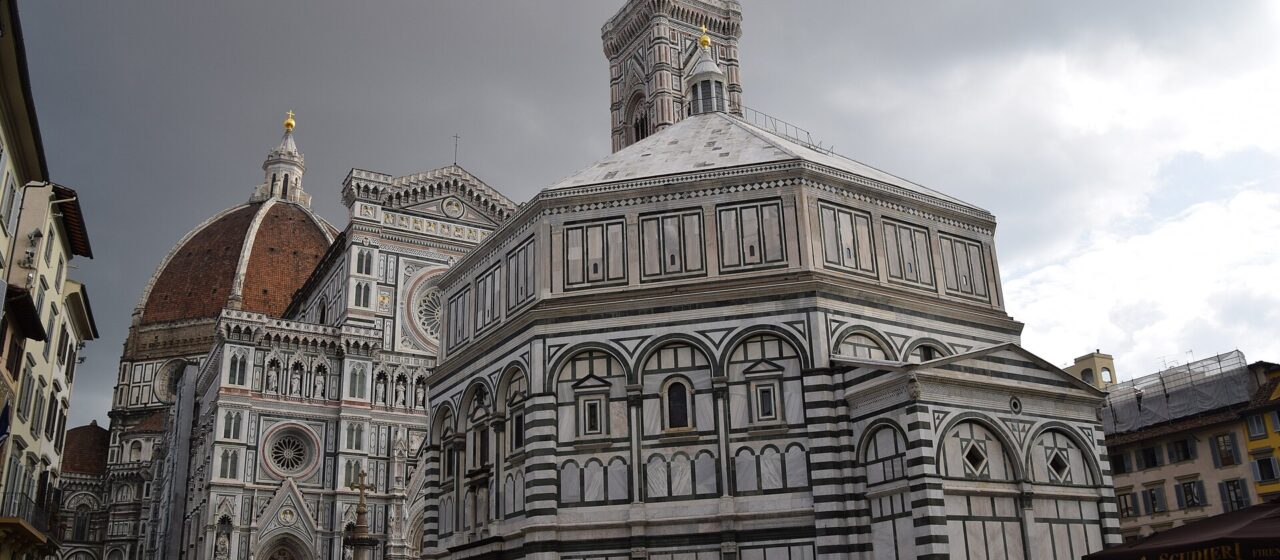
The Baptistery of San Giovanni is Romanesque and older than the present cathedral. The ceiling is why people go: a gold vault of medieval mosaics, mainly thirteenth-century, with Christ in Judgement set within a circle eight metres across and a hell scene underneath. The vault is currently hidden by restoration work, so check before you plan a visit around the mosaics specifically.

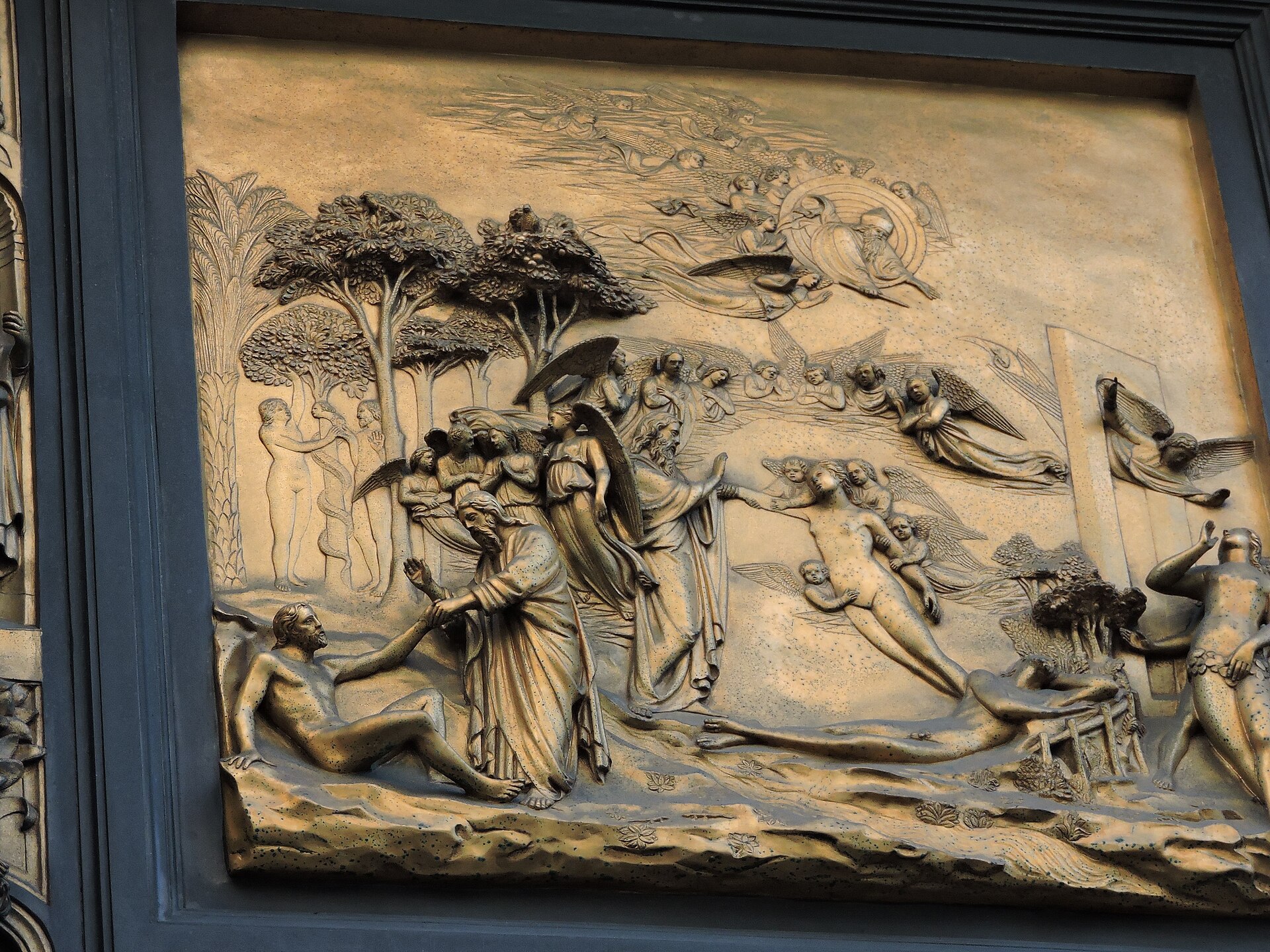
The bronze doors are the other reason to stop, with one caveat that matters: the panels on the building are replicas. Ghiberti’s originals — the ones Michelangelo is supposed to have called the Gates of Paradise — are indoors in the Museo dell’Opera, restored and displayed at eye level, which is a far better way to see them than craning at a doorway across a crowd. Our guide to the Baptistery and the Gates of Paradise explains which panel is which.
Santa Reparata is the church that stood here before the cathedral was built over it, founded in the early fifth century, and its remains lie beneath the cathedral. It is dim, it is fragmentary, and Brunelleschi is buried in it. Fifteen minutes, and it is the one part of the complex where you will usually be more or less alone.
The Museum Nobody Books
The Museo dell’Opera del Duomo is on all three passes and sits behind the cathedral. It is closed on the first Tuesday of the month. It holds the original Gates of Paradise, Donatello’s harrowing wooden Mary Magdalene, Michelangelo’s unfinished Bandini Pietà, and a full-scale reconstruction of the medieval cathedral facade that was pulled down in 1587.
Two practical points in its favour. It is indoors and air-conditioned, which in a Florentine July is not a small thing, and it is the one part of the complex you can enjoy in the wrong weather. And it is the best possible use of the third day of your pass, when your legs have opinions about further staircases.
We go through the collection room by room in our Museo dell’Opera del Duomo guide.
Why the Firenze Card Does Not Help
This is the most expensive misunderstanding in Florence, so it gets its own heading. The Duomo complex is not on the Firenze Card. Not the dome, not the bell tower, not the Baptistery, not the museum. The card is €85 for seventy-two hours and covers over 60 museums, and the Duomo complex is not among them, because the Opera di Santa Maria del Fiore is a separate institution that administers the complex and sells its own passes.
Visitors buy the card, arrive at the dome entrance, and discover they need to spend another thirty euros. If your Florence plan is the Duomo plus a couple of galleries, the card is not for you; our Firenze Card guide works through the breakeven properly, and the answer is usually that you need three or four paid museums before it earns its keep.
The comparison worth making is the other way round: a €20 Giotto Pass and a separately booked Uffizi ticket covers what most three-day visitors actually want, for under fifty euros a head.
Where and When to Book
Buy from the Opera’s own ticketing site, reached through duomo.firenze.it. The Brunelleschi Pass is €30 there, and you reserve your dome slot when you buy. Check that any other seller’s price and inclusions match the official pass.
There is a physical ticket office in Piazza San Giovanni, opposite the Baptistery, and it does sell same-day passes. Same-day dome slots are not guaranteed, so the safest route is to book the dome online ahead of time.
Dome slots are released through the official booking calendar on the Opera’s ticketing site. Check it for your dates and book the dome slot as soon as your plans are fixed.
Resellers charge €40 to €55 for what the Opera sells at €30, and packages branded “skip the line Duomo” bundle access with a guide, so compare each package’s inclusions with the official pass. The dome and the bell tower each run on reserved time slots, so see exactly what a package adds before you pay the difference.
On the Day: Doors, Bags and Dress
The complex has separate entrances and they are not intuitive, which is why the piazza is full of people walking briskly in circles.
- Cathedral (free): the main west door, with the security queue running along the north side. Move fast — it looks worse than it is.
- Dome climb: the Porta della Mandorla, on the north side of the cathedral. Arrive about ten minutes before your slot, no earlier — there is nowhere to wait.
- Bell tower: its own door at the base, on the piazza side. Arrive for the slot you reserved.
- Baptistery: the north door, facing the cathedral.
- Museum: Piazza del Duomo 9, behind the apse.
No large bags on either climb, and there is no cloakroom at the dome entrance — leave the rucksack at your hotel or use the station lockers, because being turned away at your timed slot is a thirty-euro mistake with no appeal. Shoulders and knees covered for the cathedral and the Baptistery; the rule is enforced, particularly in summer, and our note on the dress code for Florence churches covers what actually passes.

One last piece of timing. Giotto Pass holders reserve a bell-tower time slot when they buy, so if your pass has three days on it, choose the day and slot that fit around the rest of your plans.
Frequently Asked Questions
How much are Florence Duomo tickets?
Three passes: Brunelleschi €30 (everything, including the dome climb), Giotto €20 (everything except the dome), Ghiberti €15 (museum, Baptistery and Santa Reparata only). Ages 7–14 pay €12, €7 and €5 respectively; under-7s are free. Entering the cathedral itself costs nothing.
Do I need a ticket to go inside the cathedral?
No. Entry to Santa Maria del Fiore is free and unticketed — you queue for security on the north side and walk in. The dome fresco is fully visible from the floor. The cathedral closes on Sundays and during religious celebrations.
How long is a Duomo pass valid?
Three calendar days from the date you select, with each monument visitable once. The dome climb, the bell tower and Santa Reparata each have a timed slot, depending on the pass; the Baptistery and the museum can be visited at any point inside those three days.
Is the Duomo included in the Firenze Card?
No, and this is the most common and most expensive assumption visitors make. The Opera di Santa Maria del Fiore runs its own ticketing, entirely separately from the state museums the Firenze Card covers. You need a Duomo pass regardless of what else you hold.
How many steps is the dome climb?
463 steps, with no lift. The bell tower is 414 steps, also without a lift. Neither is suitable for anyone with significant mobility or breathing difficulties, and the dome climb runs enclosed between the shells.
Can I climb the dome without booking a time?
No. The dome has a compulsory timed slot, chosen when you buy the Brunelleschi Pass. If you miss your slot the pass remains valid for everything else, but the climb is gone. The bell tower also needs a reserved slot with the Giotto Pass.
Which climb is better, the dome or the bell tower?
For the view, the bell tower — because the dome is in it. For the experience of the building, the dome, since you climb between Brunelleschi’s two shells and pass the fresco at gallery level. If you have three days, the Brunelleschi Pass covers both.
Where to Go From Here
With the pass chosen, the Florence Duomo guide covers what to look for in each building, and Giotto’s bell tower and the dome climb each have their own pages with the route detail. If the engineering is what draws you, our history and architecture guide explains how a city that had left a cathedral open to the sky for a century finally worked out how to close it.
Planning the rest of the trip? Florence tours and tickets is the honest overview of what is worth booking, and first-time visitors to Florence handles the arrival logistics.