This article contains advertising. Booking links on this site can be turned into paid links automatically by our partner Travelpayouts: if you book through one, we earn a commission from the provider, at no extra cost to you. It never affects what we recommend. Affiliate disclosure
Florence is one of the most rewarding first-international-trip cities in Europe — small, walkable, English-friendly, safe, and densely packed with the kind of art and architecture that justifies the long flight. But it’s also a city that punishes the unprepared: museum slots sell out months ahead, the Cathedral demands a dress code, the central piazzas are full of tourist-trap restaurants, and visitors who arrive without basic Italian-cultural awareness can feel lost in their first few hours. This 2026 first-time-visitor guide is the all-in-one essentials briefing — what to book before you arrive, what to do on day one, the cultural rhythms to absorb, the cultural mistakes to avoid, and a 4-day itinerary template you can copy and adapt.

Once the basics are covered, our Florence travel tips collect the smaller lessons most visitors only learn on day three.
Almost every first trip runs into the same fork. Our Uffizi versus Accademia comparison answers it directly, with the booking windows for each — the smaller museum sells out first, which surprises people.
Quick Orientation: What You’re Working With
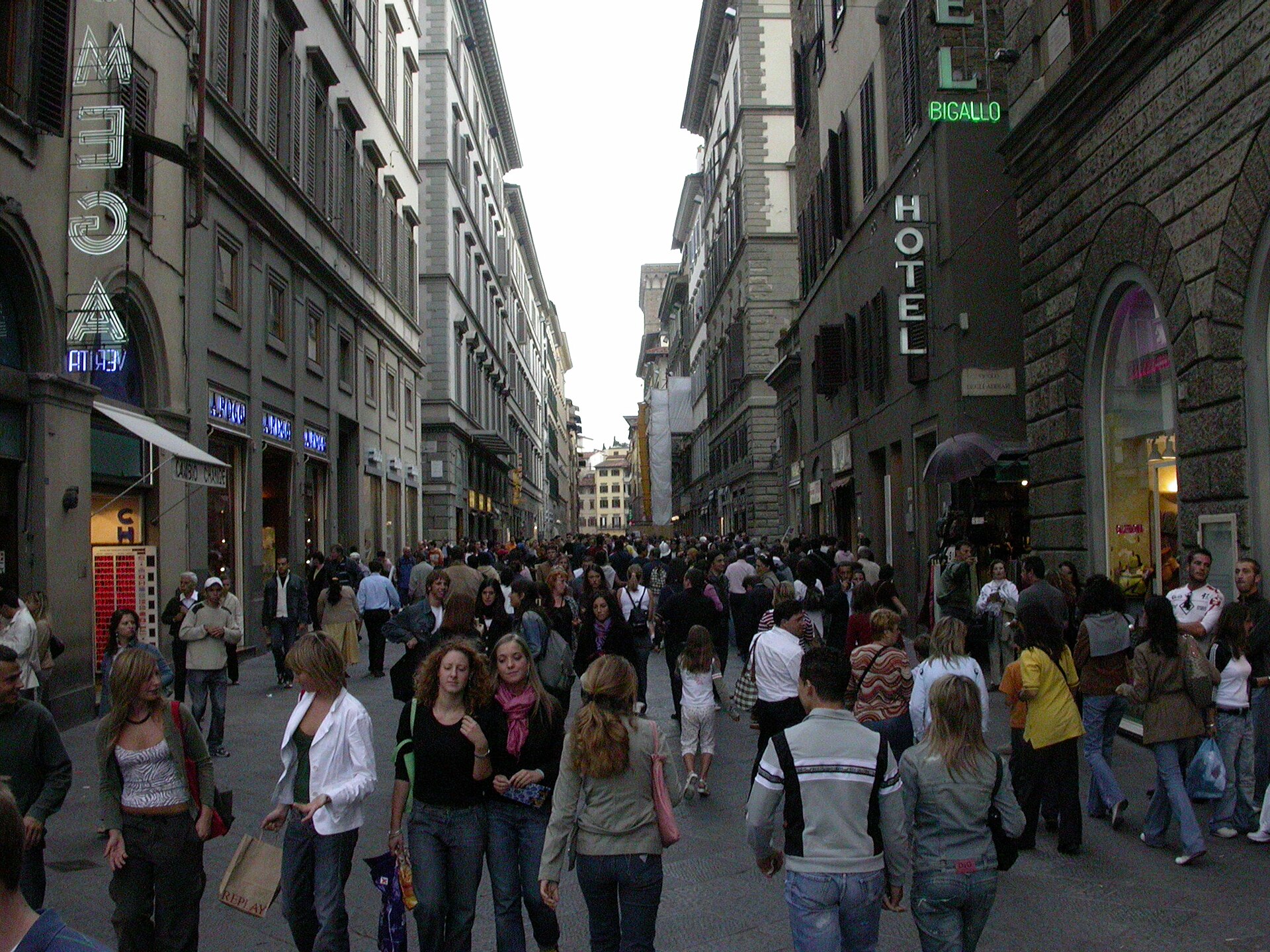
Five facts shape every Florence trip:
- Florence is small. The UNESCO-listed historic centre covers 505 hectares, and you can walk between the major sights rather than ride.
- The city centre has two halves. “North of the Arno” (where the Cathedral, Uffizi, Accademia, San Lorenzo, Santa Croce sit) and “Oltrarno” — the south side of the river — with the Pitti Palace, Boboli Gardens, San Frediano and San Niccolò. Most travellers stay north of the Arno; advanced travellers stay in Oltrarno.
- Walking is the only sensible transport. Taxis often take longer than walking because of ZTL (traffic-restricted zone) detours. Buses are useful only for outliers — Piazzale Michelangelo, Fiesole, the airport.
- It’s compact but cultural-dense. Three days is the minimum for a serious first visit; four days is comfortable; five is the connoisseur trip.
- Booking ahead matters. Reserve the Uffizi, the Accademia and the Brunelleschi Dome climb before you travel, especially in summer, and check availability for your dates. The dome only admits visitors with a reserved time slot, and walk-up queues at the big museums can be long.
Before You Leave Home
Five tasks to tick off in the weeks before your trip:
- Book the Uffizi, Accademia, and Brunelleschi Dome as soon as your dates are fixed, and well ahead in peak summer. Use tickets.uffizi.it for the Uffizi/Accademia and duomo.firenze.it for the Cathedral complex.
- Choose accommodation neighbourhood and book. First-timers do well in the Cathedral block, Santa Croce, or Santa Maria Novella station area. Oltrarno (San Frediano, San Niccolò) is for travellers wanting a more local feel.
- Confirm your travel insurance covers Italy and includes medical evacuation. Save the policy details and emergency phone number on your phone.
- Set up an Italian eSIM or international roaming. A mobile plan from another EU country generally lets you roam in Italy at domestic rates within fair-use limits, so check its terms before you travel. Non-EU travellers can buy a local or travel eSIM. International roaming with home carriers is usually €10/day or more.
- Break in your walking shoes. Walk 5–10km in the shoes you’ll pack, on the pavement at home, before flying. Cobblestones punish brand-new soles.
Arrival in Florence
Most international visitors arrive at Florence Airport (FLR Peretola), Pisa Airport (PSA) via a connecting train, or Santa Maria Novella station via Frecciarossa or Italo high-speed rail.
- FLR airport to centre: Tram T2 on the standard €2.00 urban ticket (valid 90 minutes), about 20 minutes to Santa Maria Novella station. Trams run 05:00–00:30 (until 02:00 Friday/Saturday). Or take a taxi: the fixed fare to the centre inside the ring roads is €28 on weekday daytimes, €30 on Sunday and holiday daytimes and €32 at night (22:00–06:00), plus €1.20 per bag.
- PSA airport (Pisa): PisaMover shuttle to Pisa Centrale (€6.50 single, about five minutes), then a regional train to Florence Santa Maria Novella (€9.80 in second class; check the timetable for your train’s journey time).
- Santa Maria Novella station to centre: the Cathedral is a short walk away. Don’t take a taxi for this distance.
The first hours in Florence: drop bags at your hotel (ask ahead whether it will hold luggage before check-in), take a quick walk to the Cathedral exterior to orient yourself, then have a sit-down lunch and a long espresso to acclimatise. Save serious sightseeing for day two if you arrive on a long-haul flight.
The Must-Sees: First-Timer Priority List
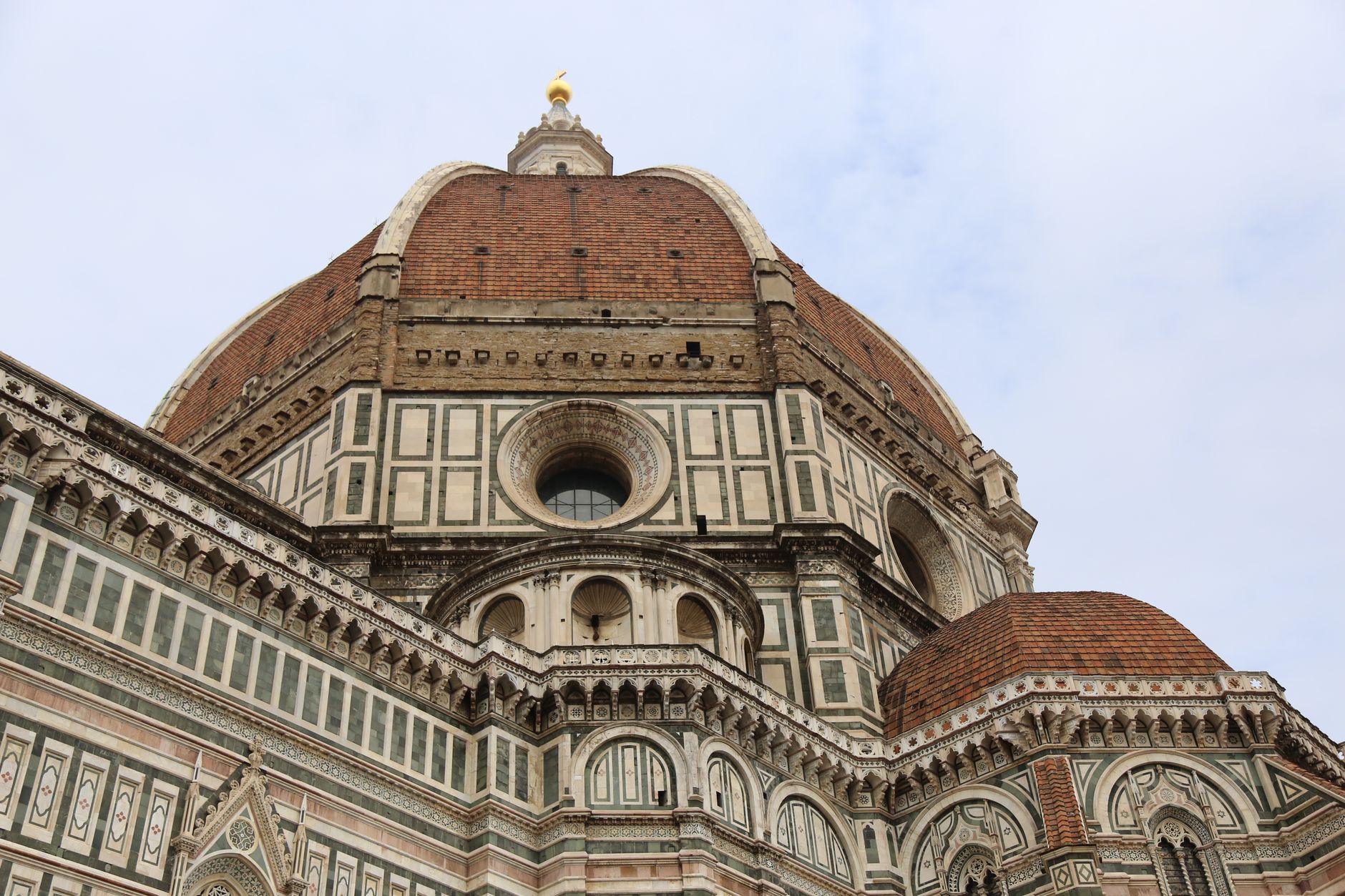
For a 3–4 day first visit, prioritise this list of 12 sights:
1. The Cathedral Complex (Half a Day)
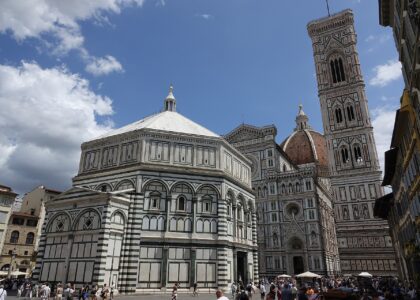
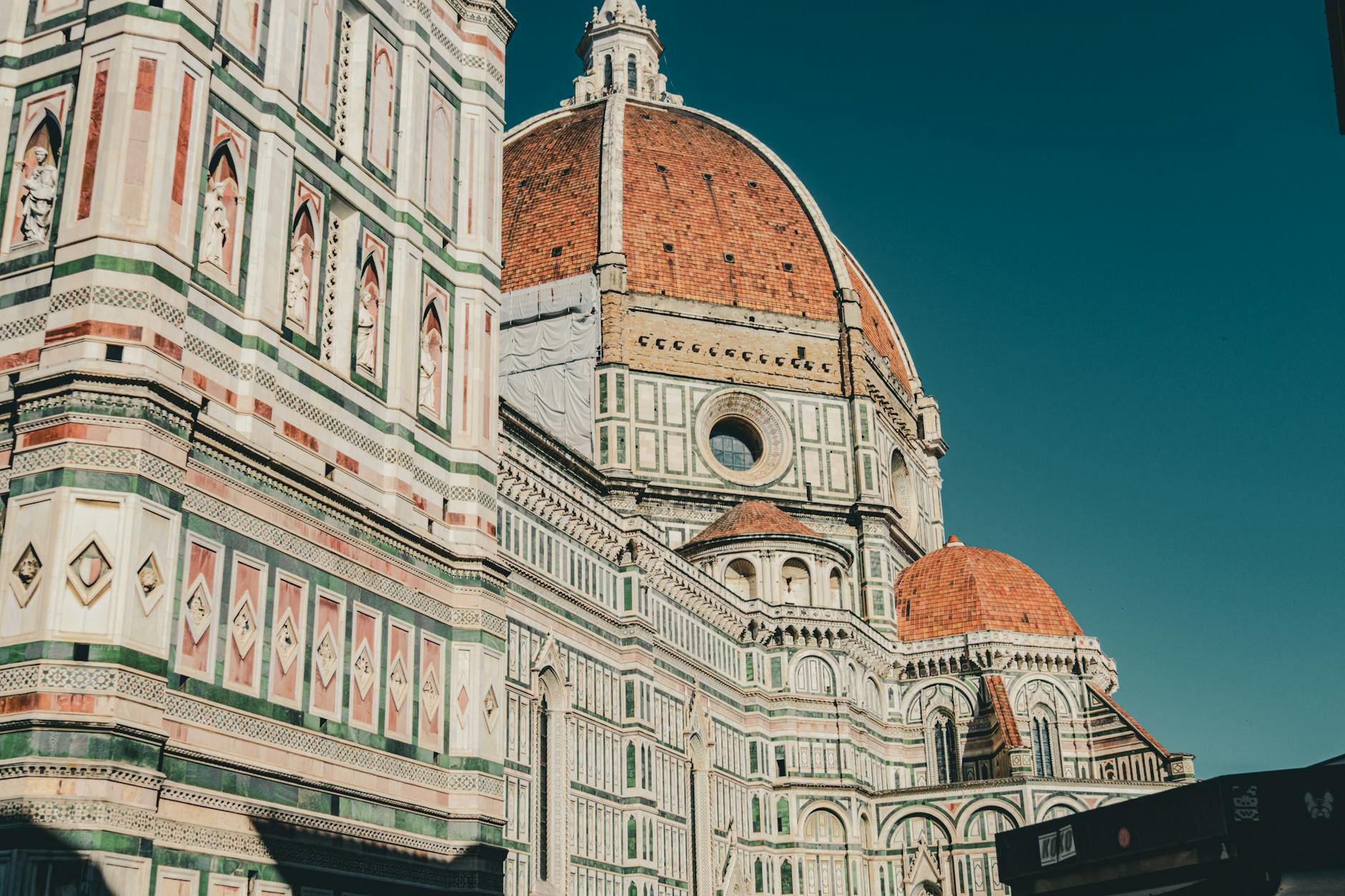
Florence’s signature structure. The Cathedral exterior, the free Cathedral interior, the Brunelleschi Dome climb (€30 Brunelleschi Pass, book ahead), and the Cathedral Museum. Allow 3–4 hours total. Best done early in the trip — orientation anchor.
2. The Uffizi Gallery (Half a Day)
The world’s greatest Renaissance painting collection. Botticelli’s Birth of Venus and Primavera, Leonardo’s Annunciation, Michelangelo’s Doni Tondo, Raphael, Caravaggio. €25–29 in 2026, book a timed slot at tickets.uffizi.it well before you travel.
3. Galleria dell’Accademia / Michelangelo’s David (90 Minutes)
The original David (Michelangelo’s 4-metre marble masterpiece) plus the four Prisoners sculptures. €20 plus a €4 booking fee; book ahead in summer.
4. Ponte Vecchio (15 Minutes)
Florence’s medieval bridge with shops still on it (jewellers since the 16th century). Walk across at sunset for the river light; don’t shop here unless serious about gold or silver. Free.
5. Piazzale Michelangelo at Sunset (1 Hour)
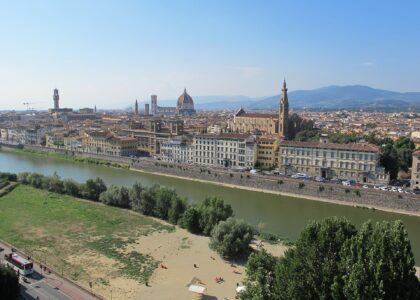
The panoramic terrace overlooking the entire city. Climb via the Rose Garden (free) or take bus 12 / 13. Sunset is the day’s best free entertainment. Continue up to San Miniato al Monte for free Vespers chant.
6. Palazzo Pitti & Boboli Gardens (Half a Day)
The Medici’s vast 15th-century palace, home to five museums (among them the Palatine Gallery with its Raphael holdings and the Royal Apartments, plus Modern Art), with more than 33 hectares of Italian Renaissance gardens behind. €22 combo ticket, the most ambitious sightseeing day on most itineraries.
7. The Bargello (90 Minutes)
Opened in 1865 as the first national museum of the Kingdom of Italy, and home to a major collection of Renaissance sculpture. Donatello’s marble and bronze Davids, the 1401 Baptistery competition panels, Michelangelo’s Bacchus, Cellini, Verrocchio. €12 (booking optional, €4 extra), walk-in usually fine.
8. San Marco Museum (90 Minutes)
Fra Angelico’s frescoed monastic cells — plus many of his most important panel paintings and Savonarola’s former rooms. Quiet, contemplative, undertouristed. Closes at 13:50, plan accordingly.
9. Santa Croce Basilica (75 Minutes)
The “Pantheon of Florentines” — tombs of Michelangelo, Galileo, Machiavelli, Rossini. Giotto frescoes in the Bardi and Peruzzi chapels. €10 admission to the basilica complex (€1 extra to book online).
10. Mercato Centrale (Lunch)
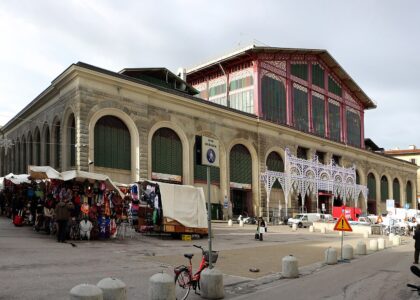
The covered market with a working ground-floor producers’ hall and an upstairs food hall — the city’s best lunch destination. €8–14 sit-down meals. Try the tripe sandwich at Da Nerbone, pasta at the upstairs counters, gelato.
11. Aperitivo at Piazza Santo Spirito or Sant’Ambrogio (Evening)
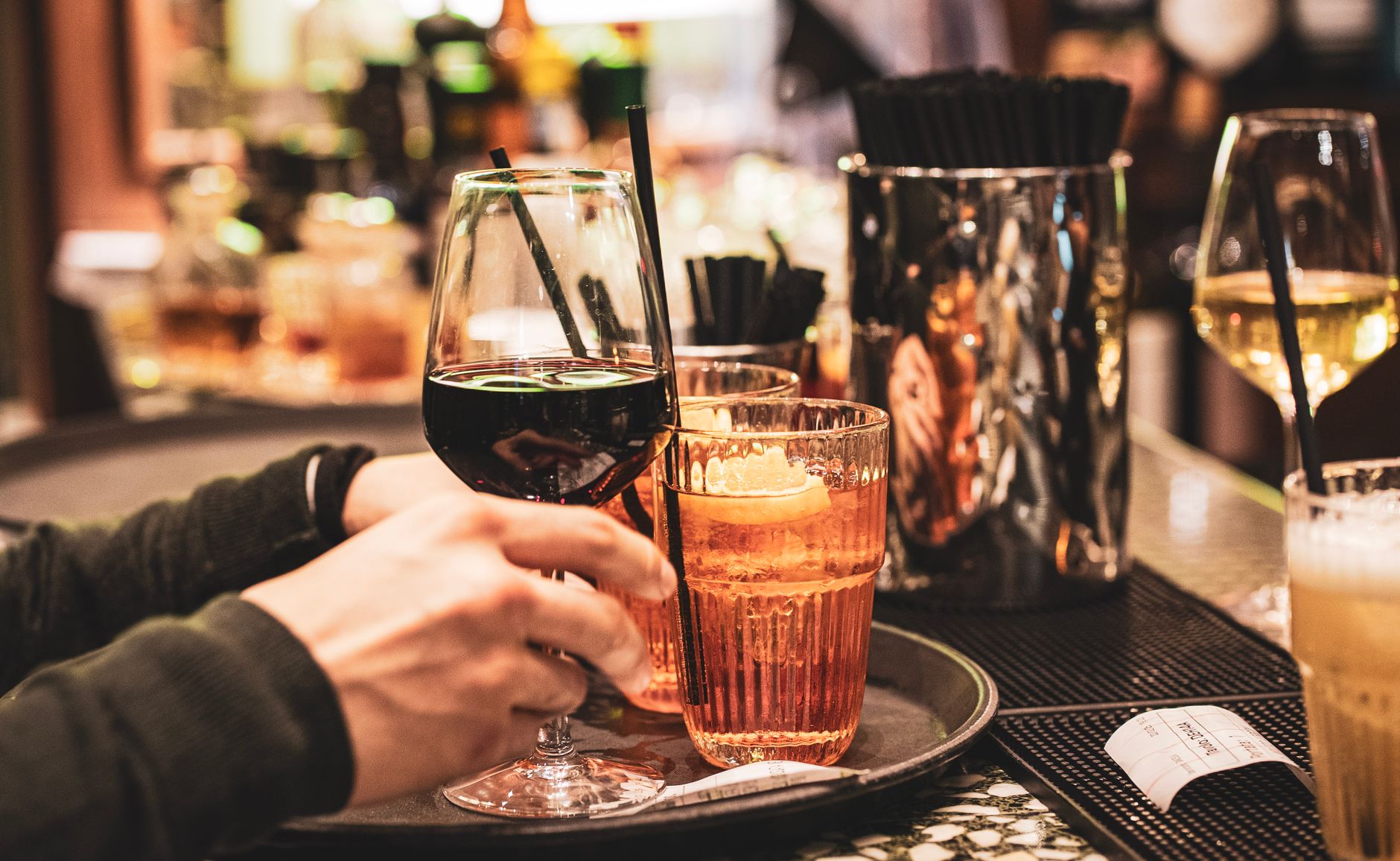
Florence’s nightly aperitivo culture — drinks plus snacks at sunset — is half-evening ritual, half-cultural immersion. Le Volpi e l’Uva, Il Santino, Volume, the bars on Piazza Santo Spirito and Sant’Ambrogio. €8–12 for a spritz with food spread.
12. One Day Trip (Full Day)
Choose one of: Siena (1.5 hours by bus), Lucca (1.5 hours by train), Pisa (1 hour by train), Fiesole (20 minutes by bus), or a Chianti winery tour. The Tuscan countryside is half the reason most visitors travel to Italy — don’t skip the day-trip.
A 4-Day First-Timer Itinerary
This itinerary assumes 4 nights in Florence, with arrival on day 1 evening and departure on day 5 morning.
Day 1 — Arrival & Orientation
Afternoon arrival. Drop bags. Walk to the Cathedral exterior for the orientation moment. Sit-down dinner near Piazza Santa Croce. Early to bed if jet-lagged.
Day 2 — Cathedral & Around
09:00 Brunelleschi Dome climb (book ahead). 10:30 Cathedral interior. 11:30 Baptistery + Cathedral Museum. Lunch at Mercato Centrale upstairs. 14:30 Bargello (Donatello). 17:00 walk Piazza della Signoria + Loggia dei Lanzi sculpture. 18:00 aperitivo. 20:00 dinner near Piazza Santa Croce.
Day 3 — Uffizi & Accademia
08:30 Accademia (timed slot, 90 minutes). 11:00 walk to San Marco for Fra Angelico (90 minutes). Lunch at Trattoria Mario near San Lorenzo. 14:30 Uffizi Gallery (timed slot, 3+ hours). 18:00 Ponte Vecchio crossing into Oltrarno. 19:00 aperitivo at Le Volpi e l’Uva. 20:30 dinner in Oltrarno.
Day 4 — Pitti & Oltrarno
09:00 Palazzo Pitti (Palatine Gallery + Royal Apartments + Modern Art, 3 hours). 12:30 lunch in Oltrarno. 14:30 Boboli Gardens (90 minutes). 16:30 walk through San Frediano and San Niccolò. 18:00 climb to Piazzale Michelangelo via Rose Garden. 19:30 sunset on the terrace. 20:30 final dinner — splurge on a memorable trattoria.
Day 5 — Day Trip or Departure
Either: morning departure flight, leaving on the early tram or train. Or: full-day Tuscan day trip (Siena, Lucca, Pisa, Chianti) before evening flight.
Italian Cultural Rhythms to Absorb
- Lunch runs from around midday into the early afternoon; many restaurants then close until dinner. Don’t expect food at 15:30 except at café-bars.
- Riposo / siesta is real for shops and small businesses, which often close for a few hours in the early afternoon. Don’t expect to buy stamps or visit a small artisan workshop at 14:00.
- Dinner starts late by northern European and American standards, and locals tend to eat later still.
- Italian breakfast is light — coffee + pastry standing at the bar. Don’t expect a hot American breakfast at most cafés.
- Sundays are quieter. Many shops close all Sunday; some restaurants close Sunday evening; museums are open but with first-Sunday free crowds.
- Mondays are when many state museums close (Bargello, Medici Chapels, San Marco — but not the Uffizi, which closes Tuesdays).
- August (especially around Ferragosto on 15 August) sees Italians vacate the city for the coast. Many family-run shops and trattorias close for part of the month.
Money & Cards
- Currency: Euro (€). Florence is moderate-to-expensive — see our budget article for cost breakdowns.
- ATMs: Use bank-branch ATMs (Intesa Sanpaolo, BNL, Unicredit) rather than free-standing tourist-zone machines (lower skim risk, often better rates).
- Cards: Visa and Mastercard are accepted virtually everywhere. American Express is accepted at upper-tier restaurants and hotels but not all small businesses.
- Always pay in Euros, not your home currency, on card terminals. “Dynamic currency conversion” is a worse exchange rate disguised as convenience.
- Carry €30–50 cash for small purchases, taxi tips, market vendors, and the toilet attendant.
- Tipping: See our tipping guide. Round up bills, leave 5–10% maximum at restaurants, never tip on top of an already-included servizio charge.
Language: What to Learn
English is widely spoken in tourist Florence — major museums, restaurants in the centre, hotels, train station. You can navigate the city in English without difficulty. But Italians appreciate basic effort, and a few words go further than the same words in (say) Paris.
- Buongiorno — good morning (used until early evening)
- Buonasera — good evening
- Grazie — thank you
- Per favore — please
- Scusi — excuse me / sorry (formal); scusa (informal)
- Sì / no — yes / no
- Il conto, per favore — the bill, please
- Un caffè, per favore — an espresso, please (Italians say caffè, not espresso)
- Acqua naturale / frizzante — still / sparkling water
A clear “buongiorno” when entering a shop or restaurant lands warmly. A clear “grazie” on departure does the same. A “scusi” before asking a question gets attention politely.
Common First-Timer Mistakes
- Booking the Uffizi or Accademia after arrival (slots sell out)
- Eating at Piazza della Signoria or Piazza del Duomo restaurants
- Sitting at café tables for espresso (€3–6 vs €1.20–1.50 at the bar)
- Ordering “today’s special” without confirming the price
- Wearing tank tops or mini-shorts to the Cathedral (refused entry)
- Wearing brand-new shoes for cobblestone walking
- Buying the Firenze Card (€85) for a 2-museum itinerary without first adding up the single tickets
- Taking taxis when walking is faster
- Refusing to learn even basic Italian greetings
- Carrying your phone in your back pocket on a crowded bus
- Buying bottled water by the case when tap water is excellent
- Letting a stranger tie a “friendship bracelet” on your wrist
- Trying to “do Florence in one day” from another Italian city
- Skipping aperitivo
- Choosing a hotel only on the Cathedral block — overpriced and similar quality is 5 minutes’ walk away
- Booking guided wine tours when you only have 3 days (the day spent on a tour is a day not in the city)
- Forgetting that Mondays close many state museums — schedule accordingly
First-Timer Essentials Checklist
- Comfortable broken-in walking shoes (the most important item)
- Light scarf or shawl for church visits
- Crossbody anti-theft day bag worn front-of-body in crowds
- Refillable water bottle
- Universal European plug adapter (Type C, F, L)
- Power bank 10,000 mAh+
- Compact umbrella (especially November, April, October)
- Sunglasses + sunscreen (yes, even in shoulder season)
- Photocopy of passport + travel insurance details
- Italian eSIM or international roaming activated before arrival
- Pre-booked Uffizi, Accademia, and Brunelleschi Dome tickets
- Small bills (€5, €10) for tipping in cash
Where to Stay (First-Timer Recommendations)
Five neighbourhood recommendations for first-time visitors:
- Cathedral / Piazza del Duomo block. Walk to everything; pay a premium for it. Best for short trips (2–3 nights) where convenience trumps cost.
- Santa Croce / Sant’Ambrogio. Working neighbourhood with character, 5–10 minute walk to centre. Excellent for first-timers who want a feel of local Florence at moderate prices.
- Santa Maria Novella station area. Easy logistics for arrivals and departures, slightly cheaper, 5 minutes’ walk to the Cathedral.
- San Frediano (Oltrarno). The artisans’ neighbourhood — boutique B&Bs, daily-life feel, slightly less central. For travellers wanting a more local trip.
- San Niccolò (Oltrarno, eastern side). Quiet, charming, a short walk over Ponte alle Grazie to the centre, with Piazzale Michelangelo right above.
Avoid the Lungarno tourist hotels — overpriced view rooms above road noise. The boutique experience in Oltrarno is dramatically better for similar money.
First-Timer FAQ
Do I need to speak Italian to visit Florence?
No. English is widely spoken in tourist-facing Florence. Basic greetings (buongiorno, grazie, scusi) are appreciated but not required. Major museums, mid-range restaurants, hotels and the train station all operate in English.
How many days do first-time visitors need?
Three full days plus arrival and departure half-days (4 nights total) is the recommended sweet spot. This covers Uffizi + Accademia + Cathedral complex + Pitti + Boboli + Bargello + Oltrarno + one Tuscan day trip.
Is Florence safe for first-time visitors?
Yes. The main risks are pickpocketing in five specific zones (Santa Maria Novella station, central buses, Cathedral entrance, Ponte Vecchio, San Lorenzo market) and a handful of recognisable tourist scams (friendship bracelet, petition, restaurant overcharging). Crossbody bag worn front-of-body and basic vigilance drop your risk to near-zero.
Is Florence walkable?
Yes — extremely. The historic centre covers 505 hectares, and the major sights sit close enough together to walk between them. Walking is faster than taxis (which detour around the ZTL traffic-restricted zone). Plan to walk 8–12km per day.
When should first-time visitors go?
Late September to mid-October or mid-April to mid-May. Both windows usually bring comfortable sightseeing weather with cooler evenings, and tend to be less crowded and better value than peak summer. Avoid the first three weeks of August (extreme heat and Ferragosto closures).
What’s the dress code for the Cathedral?
Covered shoulders and knees. No tank tops, mini-shorts, mini-skirts, off-shoulder or crop tops. The same code applies to Santa Croce, Santa Maria Novella, and most major Florentine churches. Carry a light scarf or shawl in summer.
Do I need cash in Florence?
Cards work almost everywhere, but carry €30–50 cash for small purchases, taxi tips, market vendors and toilet attendants. Withdraw from bank-branch ATMs once in Italy rather than airport currency-exchange counters.
What’s the emergency number in Florence?
112 (the EU emergency number for police, ambulance and fire, with multilingual assistance available). Save it in your phone before arriving.
Florence rewards first-time visitors who arrive prepared. Book the headline museums two months out, pack practical shoes and a layered seasonal wardrobe, learn five Italian words, walk everywhere, eat off the main piazzas, and absorb the Italian rhythm of late dinners and standing espressos. Use the 4-day itinerary as a template, adjust for your interests, leave enough flex time for one Tuscan day trip, and you’ll come home with a complete first taste of Florence — Renaissance art, medieval architecture, Tuscan food, evening aperitivo, the small daily rituals of one of the world’s most concentrated cultural cities.