This article contains advertising. Booking links on this site can be turned into paid links automatically by our partner Travelpayouts: if you book through one, we earn a commission from the provider, at no extra cost to you. It never affects what we recommend. Affiliate disclosure
Florence ZTL & Parking: How Not to Get a Fine
The Florence ZTL is the single most expensive thing a visitor can get wrong in this city. More than thirty camera gates ring the historic centre, reading every number plate that crosses them, and they are live from half past seven in the morning until eight at night on weekdays, plus Saturday mornings and — in summer — three nights a week. Each gate you pass is a separate fine of €83 or more, with notification costs added. The notice arrives months later, via your hire company, with their handling fee on top. Here is exactly where the zone is, how the hours work, how hotel permits actually function, and where to leave a car so that none of this ever applies to you.
Part of our transport series — the Florence transportation guide covers getting around without a car, and renting a car in Florence covers when you actually need one.
Most hire cars in Florence are collected at Peretola, which is exactly the right place to pick one up and the wrong place to start driving into the centre from. Our Florence airport guide covers the desks and the practicalities at the terminal.
Hiring at Pisa and driving in is the version of this journey that ends in a camera fine. Our guide to getting from Pisa airport to Florence sets out the four transfer routes and where a car does and does not make sense.
The Short Version
If you read nothing else: do not drive into central Florence. There is no version of this where it goes well. The centre is compact enough to cross on foot, a bus or tram ticket is €2.00, and the historic core is a network of one-way medieval streets in which a car is a liability rather than an asset.
The three mistakes that cost people money, in order of frequency:
- Following a satnav to the hotel door. Satnavs route through the ZTL. They do not know about it, or they know and do not warn you clearly. This is how most fines happen.
- Assuming the hotel permit is automatic. It is not. Someone at the front desk has to type your plate into a system, and if you did not give it to them beforehand, they have not.
- Driving back from dinner in summer. There is a separate night ZTL on Thursday, Friday and Saturday from April to October, and it catches people who have checked the daytime hours and stopped worrying.
Everything below is the detail. But the one-sentence answer is: park outside and take the tram.
What the ZTL Actually Is
Zona a Traffico Limitato means limited traffic zone, and Florence has run one over its historic centre since the late 1980s. It is not a congestion charge — there is nothing to pay and no way to pay it. It is a prohibition. Either your plate is on an authorised list or you are not allowed in, and if you go in anyway you are fined.
The zone is divided into five sectors: A, B, O, F and G. A and B cover the core on the north bank of the Arno; O is the Oltrarno, the south-bank quarter around Santo Spirito and San Frediano that people often assume is outside the zone because it feels less central. It is not.
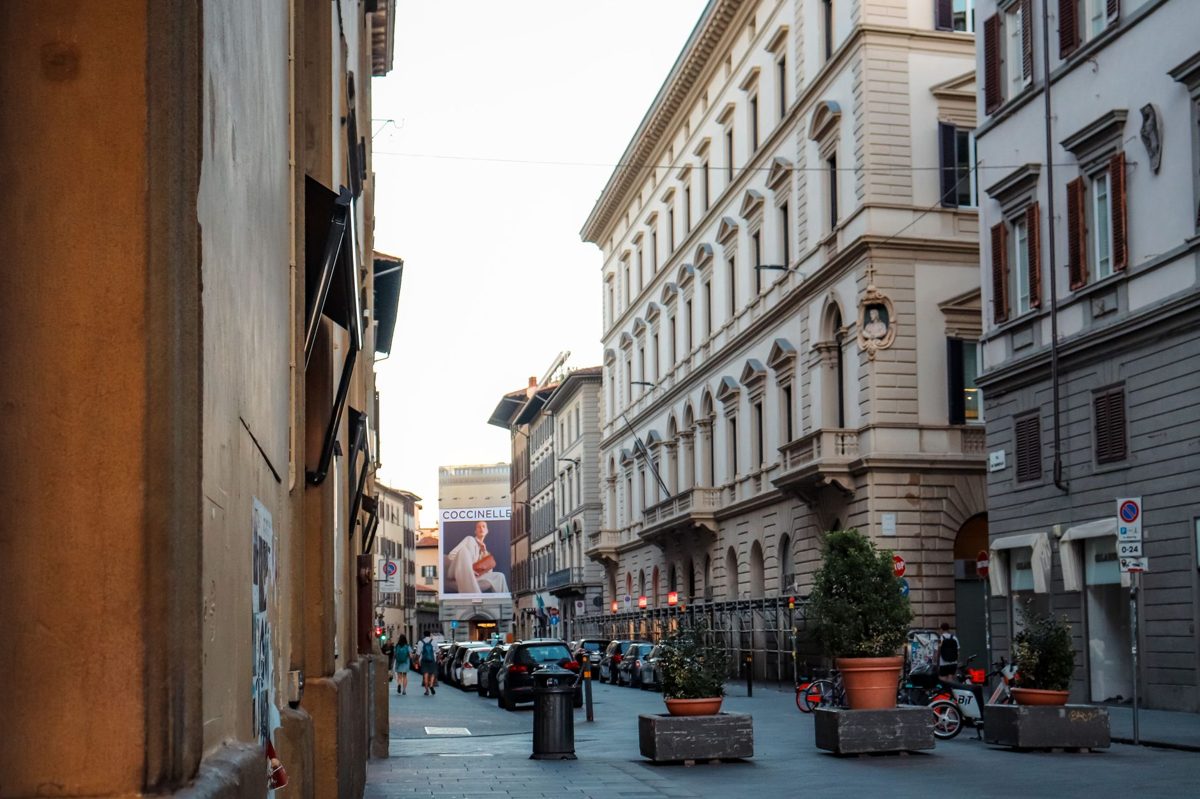
The perimeter carries more than thirty electronic gates — varchi — using Telepass-type equipment that photographs and reads the plate of every vehicle passing through, in both directions, whether the zone is active or not. There is no barrier and nothing stops you. You will very often not realise anything has happened.
What the signs look like
A white circle with a red border — the standard Italian “no vehicles” sign — with ZONA A TRAFFICO LIMITATO beneath it and a panel listing the active hours, usually in Italian only. The gates are electronic, so read the panel at every entrance, and if you cannot tell whether the zone is active, turn round.
One more thing worth internalising: each gate crossed is a separate offence. Drive in, get lost, drive out through a different gate and back in again, and you have three fines rather than one. This is how a single wrong turn becomes several hundred euros.
The Hours, Sector by Sector
| When | Sectors | Status |
|---|---|---|
| Monday–Friday 07:30–20:00 | A, B, O | Active all year |
| Saturday 07:30–16:00 | A, B, O | Active all year |
| Sundays and public holidays | All | Suspended |
| Summer nights; days and hours set each year by city ordinance | Check the city’s mobility pages | Active first Thursday of April to first Sunday of October |
Three observations that matter more than the table looks.
Sunday is genuinely free. The zone is suspended on Sundays and public holidays, which makes Sunday the sane day to arrive with a car or to move one. If you are collecting or returning a hire car and have any flexibility, use a Sunday.
The summer night ZTL is the one that catches people. From the first Thursday of April to the first Sunday of October, Thursday, Friday and Saturday nights are restricted from eleven at night to three in the morning, across all sectors. That is precisely the window in which you would be driving back from a restaurant or a concert, and it applies to people who have carefully read the daytime hours and concluded they are safe after eight. They are not, on those three nights, in those six months.
Hours change, and they change by sector. Florence adjusts ZTL timings periodically, including seasonal variations that are announced locally rather than internationally. Check the city’s own mobility pages for the week you travel — not a travel blog, and not this page, which was accurate when written and is not a legal source.
The Fines, and How They Find You
The penalty for entering the ZTL without authorisation is €83 to €332 under the Highway Code, plus notification costs. Those costs are not trivial and they are not optional.
The sequence for a hire car, which is how most visitors encounter this, goes:
- The camera records your plate at the moment you cross.
- Months later — often six to twelve, occasionally longer — the authority traces the plate to the rental company.
- The rental company identifies you as the driver, charges you an administration fee for doing so, typically €30 to €60 per notice, and passes your details on.
- The fine itself then arrives separately, at your home address, in Italian.
Two consequences follow. First, you will not know at the time, so “nothing happened” is not evidence. People routinely think they got away with it and find out a year later. Second, the multiplier is brutal: three gate crossings on one confused evening become three fines and three admin fees, which is how a wrong turn ends up costing more than the car hire did.
There is no way to pay at the time and no kiosk that fixes it. If you have crossed a gate you should not have, your only useful move is to tell your hotel immediately — see below.
Hotel Permits: How They Really Work
Guests of hotels inside the zone are allowed in, which is the source of a great deal of false confidence. The mechanism is specific.
The hotel — not you, not the rental company, not the booking site — enters your registration plate onto a temporary whitelist (lista bianca) electronically, for a limited window covering your arrival and departure. Once the plate is on that list, the cameras still read it, but no fine is generated.
How to actually get this right
- Email the hotel the plate before you arrive. As soon as you have the car, before you drive anywhere near Florence. Include the exact plate, the country of registration, your arrival date and your departure date.
- Get confirmation in writing that they have registered it. “Yes, we will sort it” is not confirmation. Ask them to confirm it has been entered.
- Do not assume a plate change is handled. If the hire company gives you a different car from the one booked, the plate has changed and the whitelist entry is now useless. Re-send it.
- Ask about the departure day. The window is limited. Leaving a day later than booked can put you outside it.
- Apartments and B&Bs vary. Not every short-let host has access to the system. Ask before booking if you are bringing a car, not after.
If you have already crossed a gate without the plate registered, tell the front desk the moment you arrive, with the time and, if you know it, which gate. Some hotels can still register retrospectively within a short window. Many cannot. It is worth asking immediately and pointless asking a week later.
Permits and authorisations are administered by SAS — Servizi alla Strada — on the city’s behalf, and the hotel deals with them, not you.
The Scudo Verde
There is now a second ring, and it is new enough that most guidance does not mention it.
The Scudo Verde — “green shield” — is a much wider camera-monitored perimeter drawn around Florence, well outside the historic-centre ZTL. Its camera gates have been active since 1 April 2025.
The zone also carries access restrictions for the oldest and most polluting vehicles. For almost every visitor in a modern hire car this is irrelevant. If you are driving your own older vehicle into Tuscany, it is not, so check its eligibility on the Servizi alla Strada site before you set off.
The useful detail: the perimeter has been drawn deliberately so that the tram terminals and the park-and-ride car parks at the ends of the lines remain reachable from outside it. In other words, the city has designed the system so that the park-and-ride answer keeps working regardless of what the Scudo Verde does next. Which is a fairly strong hint about the direction of travel.
Where to Park
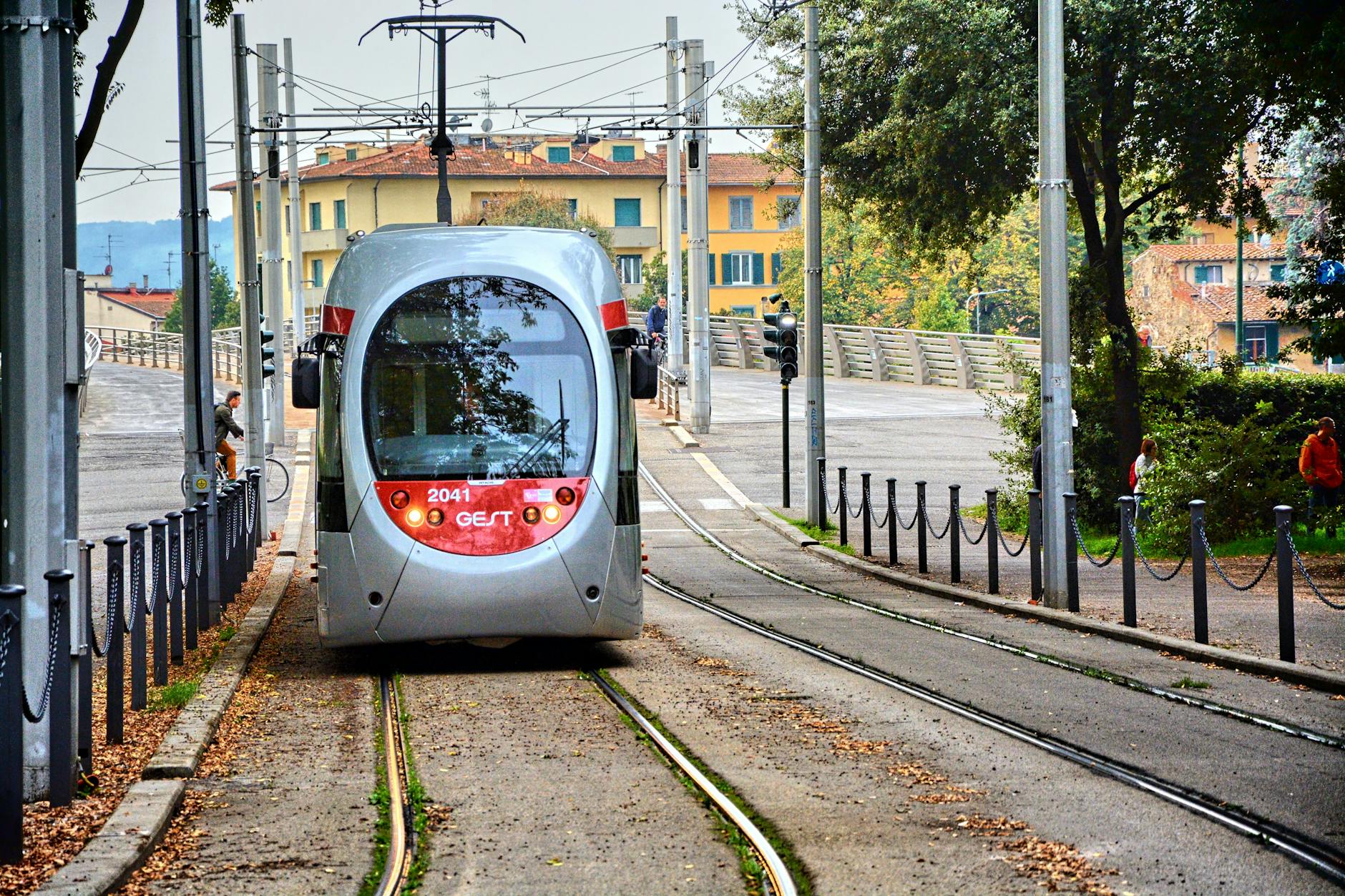
The correct answer for almost every visitor is a park-and-ride on the tram, and the best of them is genuinely excellent.
| Where | How it connects | Cost | Best for |
|---|---|---|---|
| Villa Costanza, Scandicci | T1 tram stop just outside the car park; about 22 min to Santa Maria Novella | Paid | Anyone arriving on the A1 — you exit the motorway straight into it |
| Ponte a Greve | On the tram line | Free | Budget, if there is space |
| Via Sansovino | On the tram line | Paid | Backup when Villa Costanza is full |
| Viale Guidoni | On the tram line, north-west | Paid | Arriving from the north |
| Via Sassetti | Walk or bus | Free | Early arrivals only — full by mid-morning |
| Central underground garages | Inside or on the ZTL edge | Expensive | Only with a confirmed hotel whitelist entry |
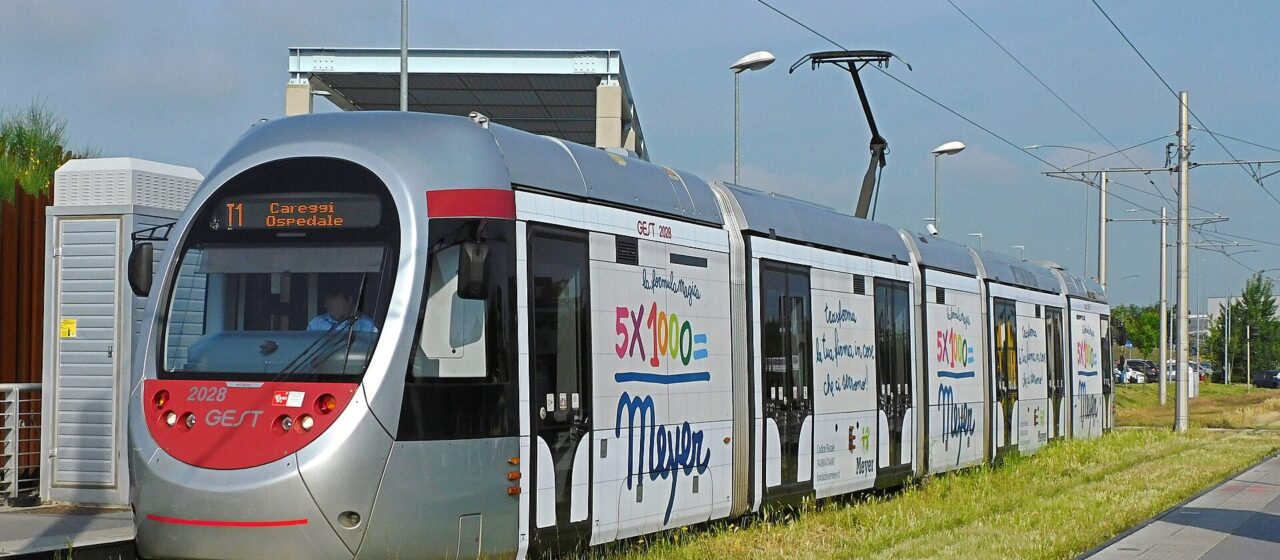
Villa Costanza deserves its reputation. It is Italy’s first “drive and tramway” motorway car park: you leave the A1 directly into the parking without ever entering the city street network, park, and walk a few steps to the T1 tram stop just outside the car park. The T1 runs from there through Scandicci to Santa Maria Novella station in about twenty-two minutes, and on to Careggi. A ticket is €2.00, valid ninety minutes on buses and trams, and €3.00 if you buy it from the driver on a bus.
For a family or a couple with luggage this is not a compromise. It is faster than driving into the centre would be even if the centre were open, it costs a fraction of a central garage, and it removes the entire ZTL problem in one decision.
Blue, White and Yellow Bays
Italian on-street parking is colour-coded, and the code is the same nationwide. Getting it wrong is cheaper than a ZTL fine but still avoidable.
- Blue lines — paid, and open to visitors. Pay at the meter or with an app and display the ticket. These are the ones you are looking for. Hours of charging are on the meter; outside them they are usually free, but check, because Florence varies this by area.
- White lines — residents only in Florence. In some other Italian towns white means free, which is exactly the trap: in the Florence centre, white bays belong to residents with permits and parking in one will get you a ticket.
- Yellow lines — reserved. Residents, disabled bays, loading, buses, taxis. Never you.
Note also that the ZTL and parking are separate systems. A legal blue bay inside the ZTL does not authorise you to have driven there. People get both fines on the same trip.
And the practical reality: on-street parking anywhere near the centre is scarce, contested and time-limited. Even locals use the garages. This is not a city where circling for a space is a viable strategy.
If You Do Get a Fine
First, check that it is real. There is a long-running scam in which official-looking demands are sent to foreign visitors for Italian traffic offences, with payment details for an account that is nobody’s. A genuine notice comes from the municipality or an authorised agent, carries a protocol number, identifies the specific gate and the date and time, and includes a photograph reference.
Second, understand the arithmetic. Italian fines carry a reduced rate for prompt payment — typically a significant discount if you pay within a short window of receiving the notice, commonly five days. Since notices to foreign addresses take months to arrive, that window starts from your receipt, not from the offence. Read the dates on the document.
Third, be realistic about appeals. A formal appeal is possible and is made to the Prefect or the Justice of the Peace, in Italian, within a set period. Pursuing one from abroad for a few hundred euros is rarely proportionate unless you genuinely have evidence — a written hotel confirmation that your plate was whitelisted, for instance, is a real defence and is precisely why you should get that confirmation in writing.
Fourth, do not simply ignore it. Unpaid Italian fines can be pursued across the EU and can resurface when you next hire a car in Italy.
Driving Tuscany Without Driving Florence
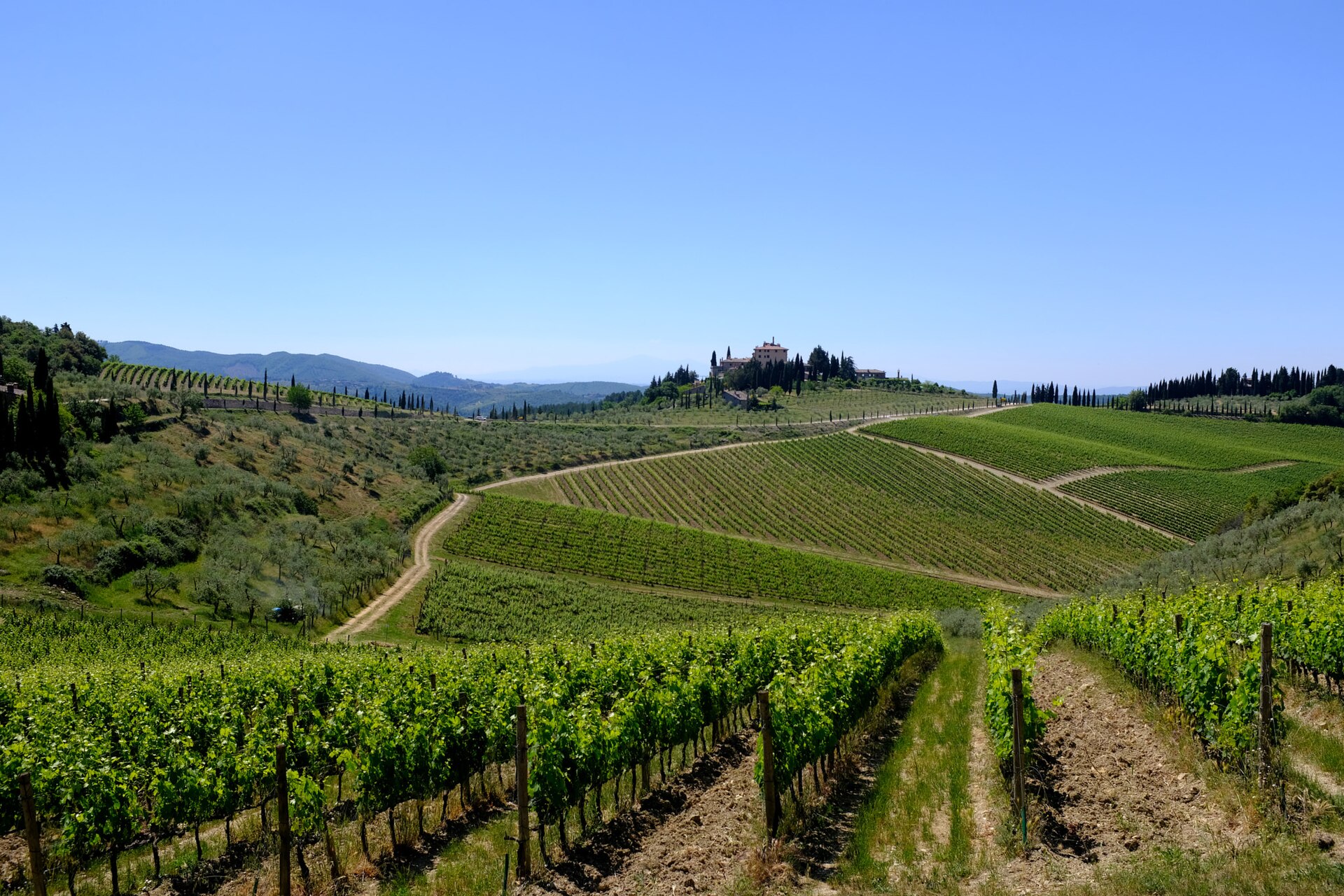
None of this is an argument against hiring a car in Tuscany. Chianti, the Val d’Orcia, the hill towns and the back roads are genuinely better with one, and public transport to the smaller places is thin.
The move is to keep the car and the city apart:
- Collect the car on the day you leave Florence, not on arrival. Most rental desks are at the airport or near Santa Maria Novella, both reachable by tram.
- Return it before you come back in, or return it to the airport and take the T2 tram.
- If you must keep it while based in Florence, park at Villa Costanza and leave it there. The daily rate is far below a central garage and the car is outside every camera in the city.
- Check the ZTL in the other towns too. Siena, Lucca, San Gimignano, Pisa, Arezzo and Cortona all have their own zones and their own cameras. The Florence one is the most expensive to get wrong, but it is not the only one.
Routes, timings and where the driving is actually worth it are in our Tuscany road trip itinerary.
For the mechanics of hiring — insurance, the credit-card hold, automatic versus manual and which desks to avoid — see renting a car in Florence. And for the days you are in the city, the Florence transportation guide covers buses, trams and the walking distances that make a car unnecessary in the first place.
Frequently Asked Questions
What are the Florence ZTL hours?
Sectors A, B and O are active all year, Monday to Friday 07:30–20:00 and Saturday 07:30–16:00, suspended on Sundays and public holidays. On top of that, a summer night ZTL runs from the first Thursday of April to the first Sunday of October; its days, hours and sectors are set each year by city ordinance. Timings are adjusted periodically, so check the city’s mobility pages for your dates.
How much is a Florence ZTL fine?
€83 to €332 under the Highway Code, plus notification costs. A hire company will add its own identification fee, commonly €30 to €60 per notice. Crucially, each gate you cross is a separate offence, so one confused evening can generate several fines at once.
Can I drive to my hotel inside the Florence ZTL?
Only if the hotel has entered your registration plate on the temporary electronic whitelist first. The hotel does this, not you, and it is not automatic — email them the exact plate and country of registration before you drive anywhere near the city, and ask for written confirmation that it has been entered. If the hire company gives you a different car, the plate changes and you must re-send it.
Is the ZTL active on Sundays in Florence?
No. The zone is suspended on Sundays and public holidays, which makes Sunday the sensible day to arrive with a car, move one, or collect and return a hire vehicle. Note that a summer night restriction applies between April and October, so a late crossing on a Saturday night in that season can still be an offence; the city’s ordinance sets the nights and hours.
Where should I park to visit Florence?
Villa Costanza at Scandicci, for almost everyone. You leave the A1 directly into the car park without entering the city, and the T1 tram stop is just outside the car park — about twenty-two minutes to Santa Maria Novella, on a €2.00 ticket. Ponte a Greve is free and also on the tram; Via Sansovino and Viale Guidoni are further options on the line.
What is the Scudo Verde?
A second, much wider camera-monitored perimeter around Florence, separate from the historic-centre ZTL, with camera gates active since 1 April 2025. It also restricts the oldest and most polluting vehicles, so check an older car’s eligibility on the Servizi alla Strada site before you drive in. Modern hire cars are unaffected. The perimeter is drawn so the tram terminals and park-and-ride lots stay reachable from outside.
What do the blue, white and yellow parking lines mean?
Blue is paid parking open to visitors — pay at the meter and display the ticket. White is residents only in Florence, which catches people because white means free in some other Italian towns. Yellow is reserved for residents, disabled badge holders, loading, buses or taxis. Parking legally in a blue bay does not excuse having driven through a ZTL gate to reach it.
How long does a ZTL fine take to arrive?
For a hire car with a foreign driver, commonly six to twelve months and sometimes longer, because the authority must trace the plate to the rental company, which then identifies you and charges its own fee. Getting home without hearing anything is not evidence that you were not recorded.
Keep Reading
- Renting a car in Florence — when it is worth it, and which desk to use.
- Florence transportation guide — buses, trams, fares and walking distances.
- Florence travel tips — the practical things that save time and money.
- Day trips from Florence — which need a car and which really do not.
- Florence train station guide — Santa Maria Novella, where the tram arrives.
- Florence in July — the month the summer night ZTL bites hardest.