This article contains advertising. Booking links on this site can be turned into paid links automatically by our partner Travelpayouts: if you book through one, we earn a commission from the provider, at no extra cost to you. It never affects what we recommend. Affiliate disclosure

The best gelato in Florence isn’t difficult to find if you know what to look for — and almost impossible to find if you don’t. Florence has a deep gelato tradition (Bernardo Buontalenti, the Renaissance architect who built the Boboli Grotto, is also credited with inventing modern gelato in the 1565 Medici banquet kitchens), and the city’s serious gelaterias have been running on the same family-recipe model for three or four generations. The catch: along the Duomo and Ponte Vecchio strips, dozens of tourist-trap gelaterias serve industrial gelato dressed up in tall, brightly-coloured towers and synthetic-banana-yellow bowls. This 2026 guide tells you exactly where to find authentic gelato in Florence, what the visual and texture markers of real gelato are, the must-order flavours, and the local-favourite gelaterias that haven’t yet been overrun by tour groups.
For broader food context see our Florence Food Guide pillar; for restaurant lists see Best Restaurants in Florence.
Gelato is a walking food in Florence, which makes it the natural companion to a self-guided walking route or an evening climb to one of the panoramic viewpoints. It also survives bad weather better than you would expect — see our rainy day guide.
What is real gelato?
Gelato is technically a category of frozen-dairy dessert with three core differences from American ice cream:
- Lower fat content — typically 4–9% milkfat (vs ice cream’s 14–25%). The lower fat lets fruit and chocolate flavours come through more vividly.
- Lower overrun — overrun is the air whipped into frozen dessert. Industrial ice cream has 40–80% overrun; real gelato has 20–35%. The result is denser, more elastic, more intensely flavoured.
- Warmer serving temperature — gelato is served at -12°C to -14°C (vs ice cream’s -18°C). The warmer temperature lets it spread on the spoon and release flavour faster.
An honest artisan gelateria (“gelateria artigianale”) in Florence:
- Makes gelato fresh on the premises, daily, in small batches.
- Uses fresh fruit, real chocolate, dairy from local farms — no powdered bases or pre-mixed industrial syrups.
- Rotates flavours seasonally (no fresh strawberry in January, no fresh fig in March).
- Stores gelato in stainless-steel pozzetti (covered round tubs) below the counter, or under a hinged metal lid — never in the tall plastic mountains visible through glass.
- Has natural-coloured gelato — pistachio is muted khaki-green, not fluorescent green; banana is creamy yellow-grey, not banana-paint yellow; mint is white-grey, not minty teal.
- Charges €2.50–€4.50 for a small cup or cone (one or two scoops).
How to spot tourist-trap gelato
Florence has dozens of “gelaterias” along Via dei Calzaiuoli, around the Duomo and on Via Por Santa Maria approaching Ponte Vecchio that serve industrial gelato to time-pressed tourists. Telltale signs:
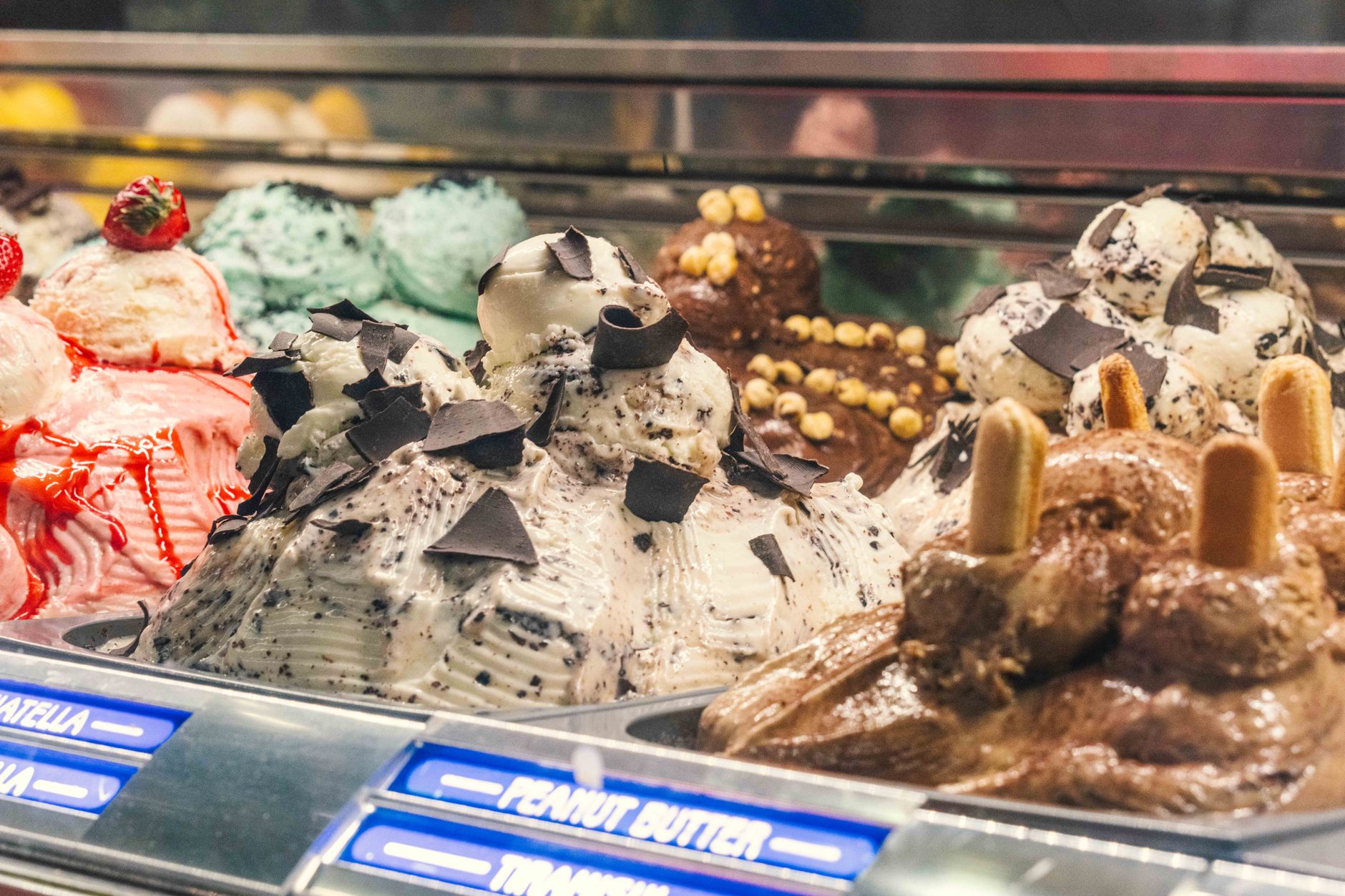
- Tall fluorescent mountains in glass display cases. Real gelato is too dense to hold those tall whipped peaks; the tall format requires industrial overrun and stabilisers.
- Banana yellow that’s actually yellow. Real banana gelato is grey-cream because banana flesh oxidises. If it’s banana-paint yellow, it’s flavoured industrial base.
- Pistachio that’s bright green. Real pistachio is muted khaki-green or even brown-green. Bright green = synthetic colouring.
- Mint that’s teal. Real mint gelato is white-grey with mint specks. Teal-coloured mint is dye.
- Smurf-blue “blue raspberry” or “bubble gum” — these are industrial flavours, not Italian.
- “Pre-portioned” cones served already-loaded in a refrigerator case — real gelato is scooped to order.
- Cones offered free with every order — many gelaterias sell only cups (Vivoli explicitly does so) or charge for cones; tourists’ free-cone-with-purchase is a marketing trick.
- Open till 02:00 with no queue at midnight — most artisan gelaterias close by 23:00 because the gelato runs out.
- Aggressive English-only barkers outside — authentic gelaterias don’t need barkers.
Vivoli — Florence’s oldest gelateria
Via Isola delle Stinche 7r, near Santa Croce. Since 1929; four generations of the same Vivoli family. Florence’s most-cited “best gelato” institution.
The order: a small cup (Vivoli serves no cones — the founder believed cones detract from flavour). Best-known flavours: riso (rice gelato — like rice pudding frozen), fragolina (wild-strawberry, June–September), crema (egg-cream), meringa (meringue). The affogato (espresso poured over a scoop of crema gelato) is the signature dessert. Around €4 for a small cup; €5 for a medium.
The shop is also famous for the brioche-and-gelato — a soft sweet brioche bun split open and stuffed with two scoops; €5–€6. Sicilian in origin but adopted as a Florentine breakfast curiosity. Vivoli’s cake counter sells slices for take-home (chocolate, ricotta, ricotta-and-fig).
The shop is small; queues of 5–15 people are normal in summer. Mornings (10:00–12:00) and late afternoons (16:30–18:00) are quietest. Closed Mondays. The decor hasn’t changed in decades — wooden counters, vintage Italian gelato signage. A genuine institution.
La Carraia — the Oltrarno favourite
Piazza Nazario Sauro 25r, Oltrarno, at the southern end of Ponte alla Carraia. The bridge gives the gelateria its name. Open since 1990 by the Lippi family; now Florence’s most-loved Oltrarno gelateria.
The proposition: €1.50 small cup or cone (the city’s best price-quality ratio); €2.50 medium; €4 large. 30+ flavours rotating seasonally. Standout creations: delizia La Carraia (white chocolate and pistachio), marmo di Carraia (panna cotta with chocolate-waffle pieces), biscotto (cookies-and-cream done correctly), cioccolato fondente (rich dark chocolate).
The shop is busy from 11:00 onwards; the line on summer evenings spills across Piazza Nazario Sauro. Open daily until midnight in summer; until 23:00 in shoulder season. A second branch on Via dei Benci near Santa Croce (technically over the river, but with the same family’s gelato).
8 more excellent Florence gelaterias
Gelateria della Passera (Oltrarno)
Tiny shop on Piazza della Passera, Oltrarno. Small batches; intense flavours. Standouts: rosmarino-miele (rosemary-honey), pera-caramello (pear-caramel), cioccolato (chocolate). €3 a small cone. Often a 5-minute queue; the regulars love it.
Perché No! (centro storico)
Via dei Tavolini 19r, near Piazza della Repubblica. Since 1939. Long pedigree. Pistachio specialist; their pistacchio di Bronte uses certified Sicilian pistachios; arguably the city’s best. Also strong on caffè (coffee), cassata siciliana, nocciola (hazelnut). €3.50–€5 per cone. Open until midnight in summer.
Gelateria de’ Medici (north of centre)
Via dello Statuto 3-5r, slightly outside the historic centre but a Florentine-favourite. Family-run since 1968. Strong on nocciola, fior di latte and melone (cantaloupe melon, in summer). €3 a cone.
Gelateria Edoardo (centro storico)
Piazza del Duomo 45r, across from the cathedral. Biological / organic gelato; certified organic milk and seasonal organic fruit. Slightly more expensive (€4 small cone) but the only properly-certified-bio option in central Florence. Strong dairy-free and vegan options.
My Sugar (north of centre)
Via dei Ginori 49r, near San Lorenzo. Newer (2010s), smaller, and beloved by locals for inventive flavours. Try basilico-limone (basil-lemon), mandorla-pistacchio (almond-pistachio), and any of the rotating chocolate-cream combinations. €3 small cone.
Gelateria Cavini (north-east)
Via Niccolò degli Albizi 34r. Old-school neighbourhood gelateria; less famous outside the locals’ circuit. Strong classic flavours; €2.50 small cone.
Gelateria dei Neri (Santa Croce)
Via dei Neri 9-11r. Another solid Santa Croce option. Big portions; €3.50 cone. Often crowded with after-Antico-Vinaio sandwich crowds.
Le Botteghe di Leonardo (multiple)
Multiple branches. Slightly more touristy than the artisan-only places but consistently good. €3.50–€5 per cone.
Must-try flavours in Florence
Cream-based flavours
- Crema — egg-cream gelato; the test of the gelateria. Should taste of fresh egg yolk and milk, not sugar.
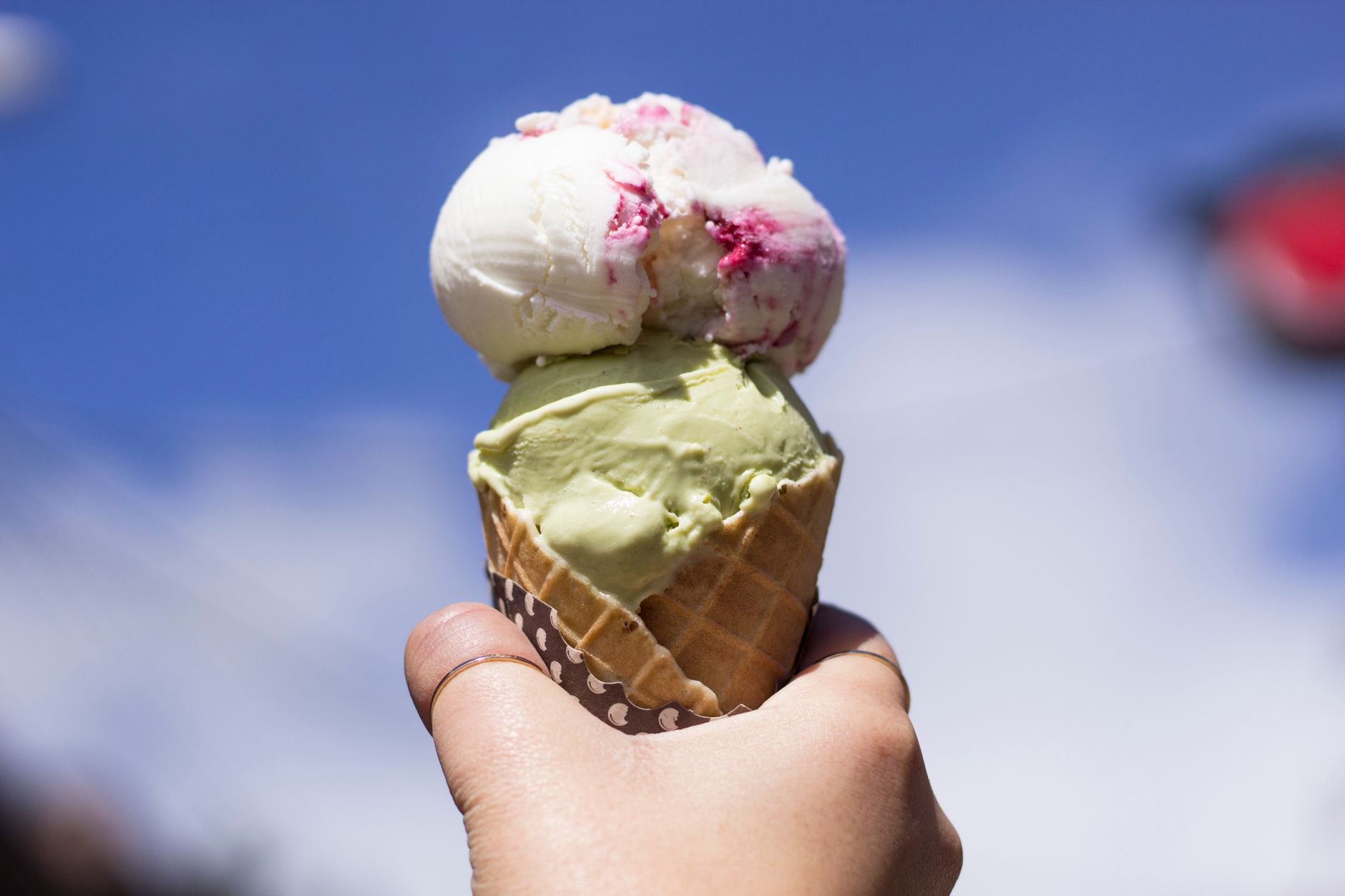
- Pistacchio di Bronte — certified Sicilian pistachios; muted green, intensely nutty.
- Nocciola — hazelnut from Piedmont; richer than pistachio, deeply aromatic.
- Cioccolato fondente — dark chocolate; should taste of cocoa more than sugar.
- Stracciatella — fior di latte (sweet milk) base with chocolate shavings.
- Fior di latte — pure sweet milk, no flavour added; the gelato equivalent of a chef’s tasting his own butter.
- Bacio — chocolate-hazelnut, named after the Italian Baci chocolates.
- Tiramisu — coffee-mascarpone-cocoa; works as a frozen dessert.
- Caffè — espresso gelato.
- Riso — rice gelato (the Vivoli signature); like rice pudding frozen.
Fruit-based flavours (seasonal)
- Fragola / fragolina — strawberry / wild strawberry; June–September only.
- Melone — cantaloupe; July–August.
- Pesca — peach; July–August.
- Limone — Sicilian lemon; year-round.
- Frutti di bosco — mixed berries; June–September.
- Pera — pear; September–November.
- Mela verde — green apple; autumn.
- Cocomero — watermelon (rare; July–August).
- Mandorla — almond; year-round.
Florentine specialties
- Buontalenti — the original 1565 Florentine gelato recipe (egg, cream, milk, sugar). Several gelaterias serve this; flavour is similar to crema with subtle differences.
- Zuccotto — frozen dessert version of the Florentine cake.
- Cantucci — almond-biscotti gelato; works as a flavour version of the classic dessert.
- Vin santo — sweet-Tuscan-wine gelato; rare but excellent at My Sugar and Gelateria della Passera.
- Rosmarino-miele — rosemary-honey; not a Florentine tradition strictly but the Passera signature.
Gelato with kids
Florence with kids works on a 3-gelato-a-day schedule. Recommendations:
- La Carraia — €1.50 small cones; classic flavours kids actually like (chocolate, vanilla, strawberry); 30+ options for picky eaters.
- Vivoli — small cups only (no cones), but the brioche-and-gelato is a hit.
- Edoardo — strong dairy-free options for lactose-intolerant kids.
- Perché No! — old-school feel; the staff often offer kids a free taste-spoon of multiple flavours.
- Le Botteghe di Leonardo — multiple central branches; good for spontaneous “we need gelato now” moments.
Tactical note: let small kids order their own at the counter. The “una pallina al cioccolato per favore” interaction (one scoop of chocolate, please) becomes a trip highlight. Have small euro coins ready.
Dairy-free, vegan & sugar-free options
Florence’s gelato scene has gradually expanded its alternative-dietary offerings:
- Sorbetto — water-based fruit gelato; naturally vegan and dairy-free. Available at every gelateria. Ask for “sorbetto” rather than “gelato”.
- Vegan gelato — typically soy- or rice-milk-based. Edoardo (organic) has a strong programme; Carduccio (the vegan Oltrarno restaurant) sells excellent vegan gelato by the cup; Gelateria della Passera rotates one or two vegan flavours daily.
- Lactose-free — Edoardo, Le Botteghe di Leonardo and Perché No! all label lactose-free options on the daily display.
- Sugar-free — rare. Some gelaterias offer “senza zucchero aggiunto” (no added sugar) options sweetened with stevia or fruit; Edoardo and Perché No! occasionally have these.
- Gluten-free — most gelato is naturally gluten-free; the cones are not. Ask for “in coppa” (in a cup) to avoid the wheat cone.
Best gelato by Florence neighbourhood
Centro storico (Duomo cluster)
Perché No! (best pistachio in central Florence). Edoardo (organic). Le Botteghe di Leonardo. Gelateria dei Neri.
Santa Croce / Sant’Ambrogio
Vivoli (the institution). Gelateria dei Neri. Cavini.
Oltrarno (Santo Spirito + San Frediano + San Niccolò)
La Carraia (best price-quality ratio). Gelateria della Passera (small-batch favourite). My Sugar (technically further north).
San Lorenzo / San Marco
Gelateria de’ Medici (north of the centre but a Florentine local-favourite). Le Botteghe di Leonardo.
SMN station area
Le Botteghe di Leonardo (reliable). Avoid the gelaterias on Via Faenza approaching the station — the most-touristed strip.
Gelato ordering etiquette
- Order at the cashier first in many shops — pay, get a receipt, then take it to the counter for your scoops.
- “Una pallina” = one scoop (literally “a small ball”). “Due palline” = two scoops.
- Cup or cone — “in coppa” or “in cono”. Both usually included in the price; some artisan shops only do cups.
- Choose two flavours per scoop if you can’t decide; serious gelaterias don’t mind.
- Whipped cream on top — “con la panna?” — usually free; nod yes for the full Florentine experience.
- Don’t ask to taste before deciding at a busy artisan shop; small free tastes are often offered to children but rarely volunteered to adults.
- Tipping — not expected at a gelateria.
- Eating the gelato — not on the four-streets-no-eating-walking ordinance area (Via de’ Neri, Piazzale degli Uffizi, Piazza del Grano, Via della Ninna). Step into a side street or sit on a bench.
- Closing times — most artisan shops close 22:00–23:00; tourist-trap places are open later because they don’t run out.
A perfect gelato-tasting day in Florence
For travellers serious about gelato, a full-day comparative tasting structure:
11:00 — Vivoli morning
Start at Vivoli for the institution. Order a small cup with crema + riso. Brioche-and-gelato if you skipped breakfast.
14:00 — Perché No! pistachio test
After lunch, walk to Perché No! Order pistacchio di Bronte plus one chocolate flavour. Compare pistachio quality.
16:30 — Gelateria della Passera
Cross to the Oltrarno. Order rosemary-honey plus pear-caramel. Small-batch artisan format.
19:00 — La Carraia evening
Finish at La Carraia for €1.50 cone with delizia La Carraia and marmo di Carraia. Best value in the city.
21:30 — Late-night optional
Edoardo across from the Duomo for an organic finish, or a take-home cup from any of the above. Close out at midnight with a final affogato (espresso over crema gelato) at Vivoli if it’s still open.
That’s six gelaterias and 8–12 scoops total. Probably too much; spread across two days for sustainability. €25–€35 per person across the day.
Photographing gelato in Florence
For travellers documenting their food trip:
- Vivoli’s small cup against the gelateria’s wooden counter is the classic shot. Natural light; no flash.
- La Carraia’s piazza setting works at golden hour — the Piazza Nazario Sauro at 19:00 with Ponte alla Carraia in the background.
- Brioche-and-gelato at Vivoli — split open with two scoops visible — is the iconic Florence-with-gelato shot.
- Affogato at any decent gelateria — the espresso-pour moment is photogenic.
- Avoid the inside of tourist-trap shops with fluorescent gelato towers; the shots look fake (because the gelato is) and the social-media performance falls flat.
- Pistachio close-up — Perché No!’s muted-khaki pistacchio di Bronte against a marble counter shows the difference from industrial bright-green.
Best gelato by trip type
For first-time visitors (3 days)
Vivoli once (the historical institution); La Carraia once (best value); and one experimental shop — Perché No! or Gelateria della Passera — for variety. Three gelato breaks across three days is plenty.
For families with kids
La Carraia repeatedly (€1.50 cones make repeat visits affordable); Edoardo for organic and lactose-free options; Vivoli for the brioche-and-gelato treat. Avoid the queue-heavy late evenings; mid-afternoon (15:00–17:00) is the family-friendly window.
For honeymoons
Vivoli at 11:00 (quiet morning), then a sunset stop at La Carraia after Piazzale Michelangelo, then a digestivo affogato at Vivoli the next afternoon. Three for the trip.
For solo travellers
The artisan small-batch shops are easiest to enjoy solo — Gelateria della Passera and My Sugar specifically. Quick service, no group dynamics, intense flavours that reward attention.
For repeat-Florence visitors
Skip the headliners and explore the second-tier: My Sugar, Gelateria de’ Medici, Cavini, Le Botteghe di Leonardo. The depth becomes obvious; “best gelato” stops being a singular question and becomes a portfolio.
Beyond eating: gelato experiences in Florence
- Gelato-making class at La Carraia — 90 minutes, €60 per person; learn the science of milk fat percentages, overrun and natural flavour bases.
- Mama Florence gelato class — €60–€80 for an integrated gelato segment within a wider Tuscan-cuisine class.
- Florencetown gelato experience — €70 standalone, ends with three flavours you’ve made.
- Cibreo gelato courses — occasional advanced workshops with Cibreo’s pastry chef. Check availability.
- Self-guided “gelato crawl” — see the day-tasting itinerary above; no booking required.
- Slow Food Gelato Italia — late-September Italian gelato championships visit Florence in some years.
- Gelato-themed walking tour — Eating Europe and Curious Appetite both run gelato-included food walks.
Florence gelato through the year
Spring (March–May)
The first wild strawberry (fragolina) of the year arrives at the better gelaterias in late April. Spring asparagus and citrus flavours appear at experimental shops like My Sugar. Hours: most artisan shops 11:00–22:30.
Summer (June–August)
The full fruit programme: peach, melon, watermelon, fig, plum, raspberry. Lines triple at La Carraia, Vivoli and Perché No! by 21:00; arrive earlier or after 22:30. Many gelaterias extend hours to midnight. Hot afternoons (35°C) make gelato breaks essential.
Autumn (September–November)
Fig (fico), pear (pera), grape (uva), green apple (mela verde) come into season. The first chestnut (castagne) flavours appear in November. Pumpkin and squash gelato at experimental shops. Lines are noticeably shorter than summer.
Winter (December–February)
Most gelaterias remain open year-round; some artisan shops close for 2–3 weeks in January or February for renovation. Winter flavours skew toward chocolate-cream-nut combinations rather than fresh fruit. Vivoli runs strong at Christmas; Perché No! reduces its hours but stays open.
A short history of Florence gelato
Modern gelato has Renaissance-Florentine origins. Bernardo Buontalenti — the architect who built the Boboli Grotto — is credited with inventing modern frozen-dairy gelato in the 1565 Medici banquet kitchens. The Medici hosted Caterina de’ Medici’s wedding banquet for Henry II of France that year, and Buontalenti’s frozen-dessert prototype (egg yolks, sugar, cream, vanilla, milk) was reportedly the centrepiece. The “gelato Buontalenti” recipe is still served at several Florence gelaterias today.
The technique spread first through Italian aristocratic circles, then to Naples and Sicily where it merged with Arab-influenced sorbetto traditions, then to Paris and finally globally. The 19th-century industrial revolution brought ice-cream-making machinery to commercial scale; American ice cream evolved as a higher-fat, higher-overrun cousin in the early 20th century.
Florence’s modern artisan-gelato wave took off in the 1920s and 1930s. Vivoli opened in 1929. Perché No! in 1939. Gelateria de’ Medici in 1968. The 1990s saw a second wave (La Carraia 1990, Gelateria della Passera 1990s) followed by a third wave of natural-ingredient pioneers (My Sugar, Edoardo, Carapina) in the 2010s.
The 2020s have brought a renewed emphasis on local-sourced ingredients — biological milk, single-origin Bronte pistachios, single-estate hazelnuts, fresh seasonal fruit only, no powdered bases. The artisan gelato that wins international recognition (the World Gelato Tour, the Slow Food Gelato Award) almost always tracks back to this small-ingredient-list, hand-stirred-batches approach.
Best gelato in Florence — FAQ
What is the best gelato in Florence?
Vivoli (since 1929) is the consensus institution — the rice gelato in a brioche is iconic. La Carraia in the Oltrarno is the best value (€1.50 small cones). Perché No! (since 1939) has the city’s best pistachio. Gelateria della Passera is the small-batch favourite. Edoardo for organic and dairy-free options.
How much does gelato cost in Florence?
€1.50–€2 for a small cup at La Carraia (the cheapest serious gelateria). €3–€4 at Vivoli, Perché No!, Edoardo, della Passera. Tourist-trap gelaterias charge €4–€6 for bigger industrial portions.
How can I tell real gelato from tourist-trap gelato?
Real gelato sits low in stainless-steel pozzetti tubs, not piled high in colourful plastic mountains. Pistachio is muted khaki-green, not fluorescent. Banana is creamy yellow-grey, not yellow. Mint is white-grey, not teal. The shop closes by 23:00 because the gelato runs out. Scoops are small to medium (€2.50–€4), not huge cones with whipped-cream towers.
Is Vivoli the best gelato in Florence?
Vivoli is the most famous and historic, but “best” depends on flavour priority. Vivoli wins on rice gelato, crema and the brioche format. La Carraia wins on price-value. Perché No! wins on pistachio. Della Passera wins on inventive small-batch flavours. All four are excellent in 2026.
Why is Florence gelato better than ice cream?
Lower fat (4–9% vs 14–25%) lets fruit and chocolate flavours come through. Lower overrun (20–35% vs 40–80%) makes gelato denser and more intensely flavoured. Warmer serving temperature (-12°C vs -18°C) lets it spread on the spoon and release flavour faster. The combination is why Italian gelato tastes more vivid than industrial ice cream.
What’s the best Florence gelato for vegetarians and vegans?
Sorbetto (water-fruit-sugar) is naturally vegan and available at every gelateria. For dedicated vegan gelato, Edoardo (organic) and Carduccio (vegan restaurant) have the strongest programmes. Gelateria della Passera rotates 1–2 vegan flavours daily.
Should I order gelato in a cup or cone?
Both work, but Vivoli serves only cups. Florentine convention is “una coppetta” (a small cup) for serious tasting because the cone competes with the gelato’s flavour. Cones are fine but less “purist”. Adding panna (whipped cream) on top is normal and usually free.