This article contains advertising. Booking links on this site can be turned into paid links automatically by our partner Travelpayouts: if you book through one, we earn a commission from the provider, at no extra cost to you. It never affects what we recommend. Affiliate disclosure
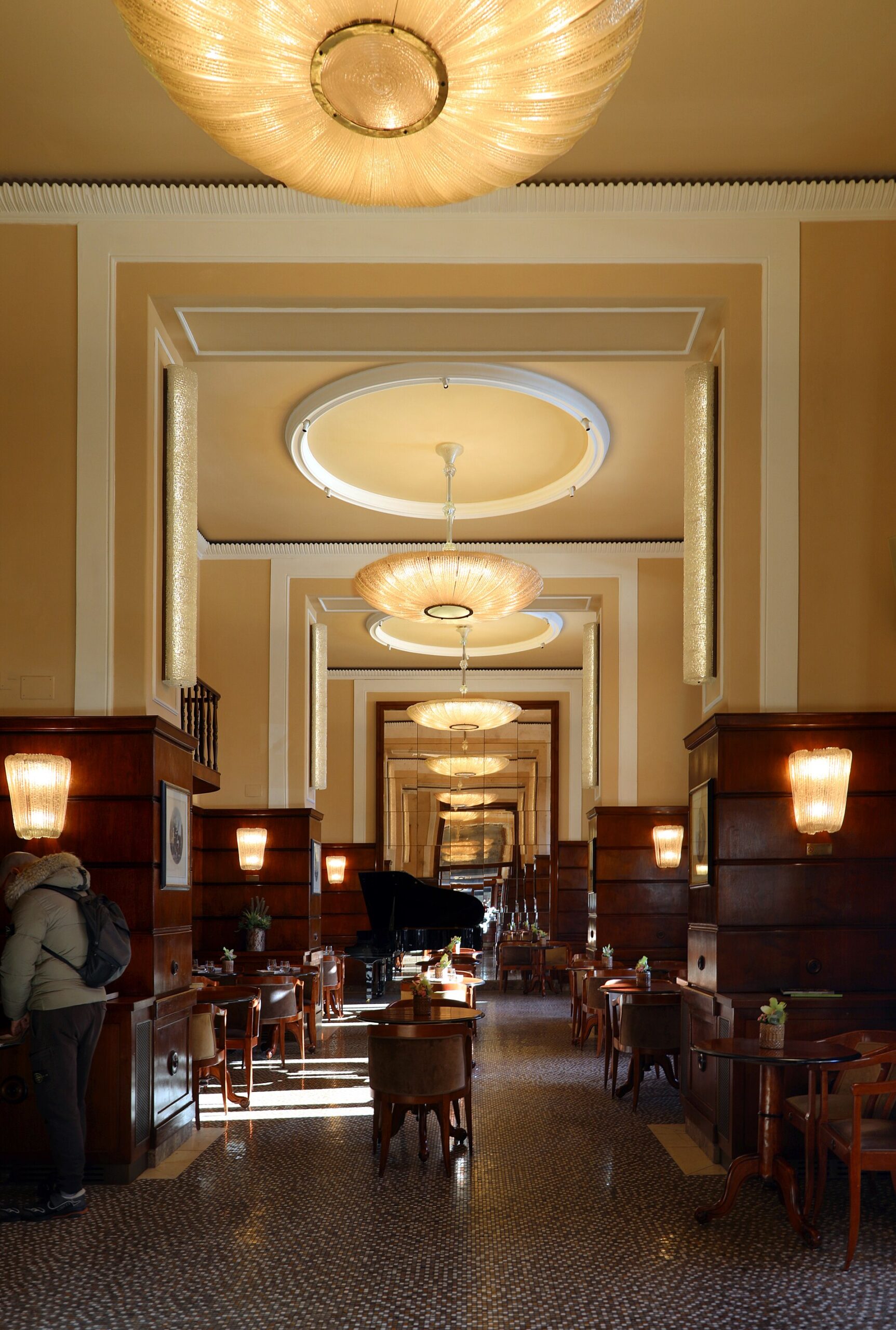
Florentine coffee culture is fast, standing-up and unapologetically Italian. The default order is “un caffè” (a single espresso); the price standing at the bar is €1.20–€1.50; a cappuccino is a morning-only drink that no Florentine orders after 11:00; and sitting down can quadruple the price via service charges and seated tariffs. This 2026 guide covers the best cafes in Florence — historic Belle Époque institutions, working-class neighbourhood bars, modern specialty-coffee shops — plus the unwritten rules of ordering coffee in Florence, the morning ritual of espresso-and-cornetto, and where to find the city’s emerging third-wave specialty-coffee scene.
For broader food context see our Florence Food Guide; for restaurants see Best Restaurants in Florence.
Coffee here comes with etiquette attached — what you order, where you stand and what you pay all shift depending on the time of day. Our guides to Italian dining etiquette, tipping in Florence and useful Italian phrases cover the rest of the ritual.
Florentine coffee culture in 2026
Italian coffee culture is the world’s most ritualised. The format hasn’t changed in 80 years: a small ceramic cup with 25–30 ml of dark, intense espresso, drunk standing at a marble or zinc bar, consumed in roughly 90 seconds. Florence’s version is solidly Italian-classical, with subtle local variations — slightly slower roasts than Naples, slightly less acidic than Roman bars, the schiacciata-and-cornetto combination uniquely Florentine.
The economics: standing at the bar (banco) is €1.20–€1.50 for a single espresso; seated at a table (tavolo) is €4–€6 for the same drink. The difference is technical — table service incurs a Service Charge (servizio) plus a Cover Charge (coperto) — but Italian regulars never sit at a coffee bar; they go to the cashier first, get a receipt, walk to the bar, place the order with the receipt, drink standing, and leave.
The tourist mistake: walking up to the seated table, ordering, sitting through a 20-minute coffee, and discovering a €5 bill. The local moves are quicker, cheaper, more authentic.
How to order coffee like a local

The 4-step Italian bar drill
- Walk to the cashier (cassa) — usually at the front near the door.
- Order and pay: “un caffè, per favore” + €1.20–€1.50. Get a small receipt (scontrino).
- Walk to the marble bar, place the receipt on the counter, repeat your order to the barista.
- Stand and drink. Espresso is consumed in 60–90 seconds. Many Italians read the paper or chat with the barista while drinking.
Variations: at smaller neighbourhood bars, you can order directly from the barista without the cashier step (Caffè Cibreo is one example). At larger or busier bars (Caffè Gilli, Procacci), the cashier-first system is enforced.
The 5 essential coffee orders
- Caffè — single espresso, the default. €1.20.
- Caffè macchiato — espresso with a small spot of milk foam. €1.30.
- Cappuccino — espresso plus steamed milk plus foam (1:1:1). Morning only. €1.50.
- Caffè americano — espresso topped with hot water. €1.50–€2.
- Espresso doppio — double espresso. €2.
The 5 don’t-orders
- Latte alone — in Italian, this means just milk. Order “caffè latte” or “latte macchiato” if you want milk-coffee.
- Cappuccino after 11:00 — technically allowed but flag a tourist immediately. Italians switch to espresso or macchiato post-meal.
- Iced coffee in winter — possible but raises eyebrows. “Caffè freddo” or “caffè shakerato” are summer-only orders.
- Decaf without specifying — order “caffè decaffeinato” or “caffè dec”.
- Caramel macchiato or sweet syrups — these are American constructs not on Italian menus. Don’t ask.
Historic Florentine cafes
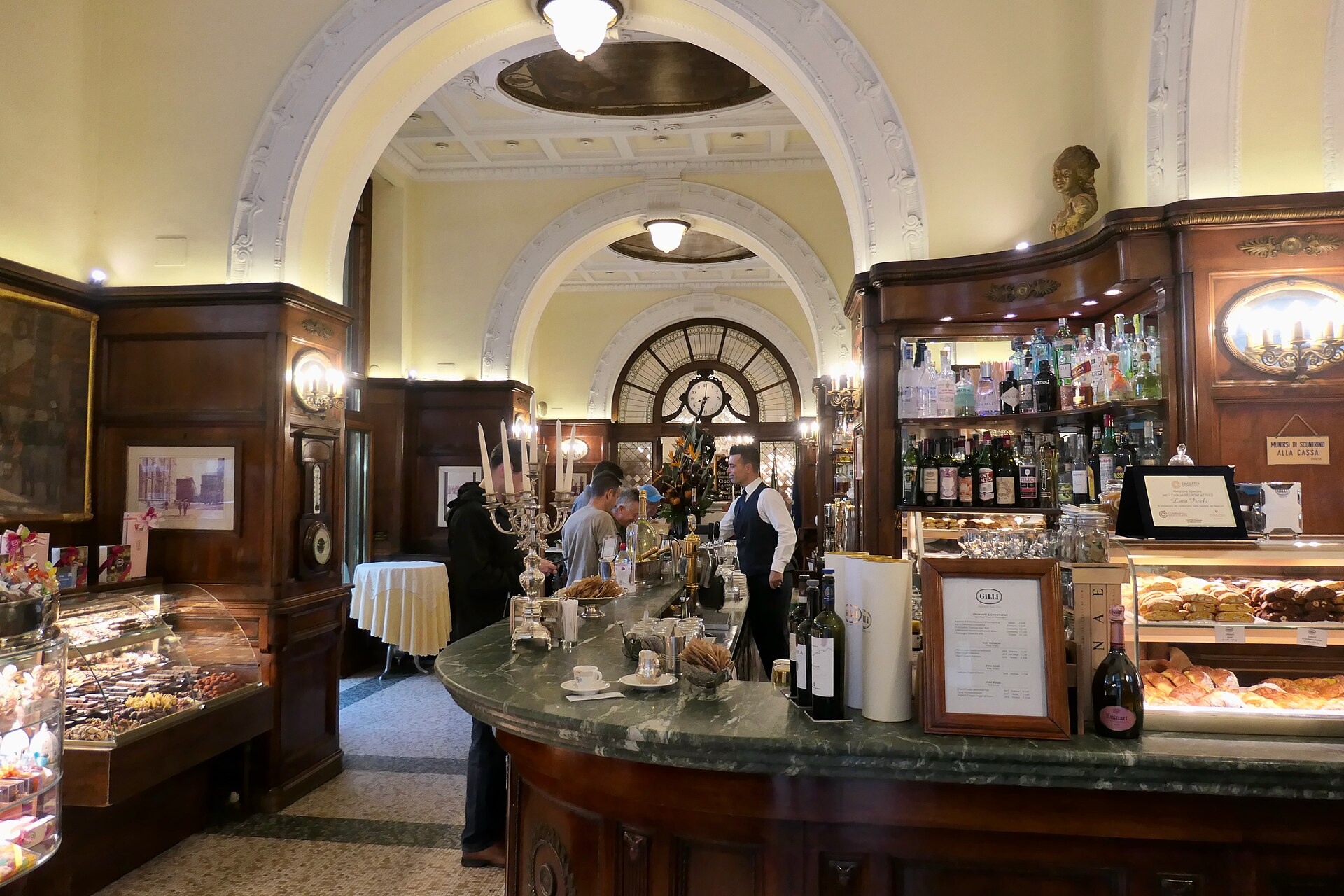
Caffè Gilli (since 1733)
Founded in 1733, and Florence’s oldest historical café by its own account. Piazza della Repubblica corner. Belle Époque interiors with a signature dessert and pastry counter. Espresso €1.50 standing; sitting outside the marble counter with a view of Piazza della Repubblica is €5–€7 with the same drink. The schiacciata-and-cornetto breakfast is excellent. Hot chocolate (cioccolata calda) in winter is iconic. Open daily 07:30–01:00.
Caffè Paszkowski (since 1846)
Opposite Caffè Gilli on Piazza della Repubblica. Belle Époque sister; less famous internationally but locals often prefer it. €1.50 espresso standing. Live piano music some evenings. The wine bar in the back is a quiet evening alternative.
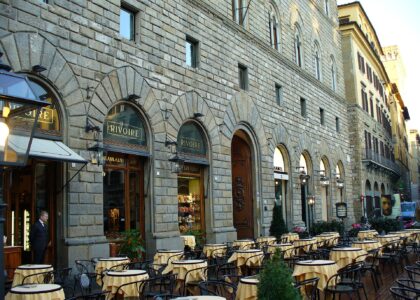
Caffè Rivoire (since 1872)
Piazza della Signoria. Founded by Enrico Rivoire as a chocolate-shop-with-café. The hot chocolate is the signature drink (€8 for a sit-down version with whipped cream; less if standing). Outdoor terrace overlooks Palazzo Vecchio and the Loggia dei Lanzi — table prices push €15 for the same coffee elsewhere costs €1.20.
Procacci (since 1885)
Via de’ Tornabuoni 64r. The truffle-butter-sandwich-and-wine institution. €8 truffle sandwich plus a glass of Antinori Chianti Classico Riserva (€10) makes for the most elegant 30-minute Florence aperitivo. Standing only at the marble counter; small seated section toward the back.
Caffè Italiano
Via dell’Anguillara 13r. Old-school neighbourhood café near Santa Croce. Less famous internationally but the locals’ lunch break.
Caffè Cibreo
Via del Verrocchio (Sant’Ambrogio area). Wooden Belle Époque interiors; excellent breakfast pastry programme; the Cibreo restaurant family’s casual breakfast spot. €1.50 espresso; €5 for a generous breakfast plate.
Pasticceria Robiglio (since 1928)
Via dei Servi 112r. Old-school pasticceria with a signature schiacciata fiorentina (sweet flatbread, Carnival season) and superb breakfast cornetti. €1.50 espresso plus pastry €4. Open 07:30–20:00.
Pasticceria Sieni
Old-school morning cornetto specialist. €2.50 cornetto with cream filling.
Specialty & third-wave coffee shops
Florence’s specialty-coffee wave arrived later than Milan’s or Rome’s but is now well-established. These shops focus on single-origin beans, lighter roasts, filter and slow-brew methods alongside espresso, and seating-friendly cafés where you can stay an hour with a laptop.
Ditta Artigianale
Florence’s specialty-coffee pioneer. Multiple branches: Via dello Sprone (Oltrarno), Via dei Neri, Via dei Cimatori. Founded 2013 by Francesco Sanapo, three-time Italian Barista Champion. Single-origin espresso, V60 pour-over, cold brew. €2.50–€4 specialty espresso. Sits open 08:00–midnight; brunch and evening cocktails too. The Oltrarno branch is the original; Cimatori is the most central.
Melaleuca Bakery + Bistrot
Lungarno delle Grazie. Australian-influenced specialty-coffee café with riverside seating. Best avocado toast in Florence; brunch programme is excellent. €3.50 flat white; €15 brunch plates.
Brac
Via dei Vagellai 18r. Art-bookshop café; vegetarian Sunday brunch; herbal teas alongside specialty coffee. Strong evening atmosphere; live music some nights.
The Pavilion
Via dei Cimatori. Smaller specialty-coffee shop; flat whites and pour-overs.
Caffè Storico Vivoli
Strictly a gelateria but the coffee programme is excellent. Affogato (espresso over crema gelato) is the Italian-classic dessert that the third-wave scene also embraces. €4 affogato.
Caracol
Via dei Macci. Small Latin-American-influenced specialty café; flat whites, churros for Saturday brunch.
Caffè Bertelli
Via dei Pucci. Established 1958 but recently refurbished with specialty-coffee programme; the bridge between historic and modern.
Neighbourhood cafes worth knowing
Centro storico (Duomo cluster)
Caffè Gilli, Caffè Paszkowski, Caffè Rivoire, Procacci. Touristy but with serious classical pedigree. Caffè Pucci on Via de’ Pucci is the working-locals’ alternative.
Santa Croce / Sant’Ambrogio
Caffè Cibreo, Pasticceria Sieni. Less polished, more lived-in.
Oltrarno
Ditta Artigianale (Via dello Sprone). Caffè dell’Oro at Hotel Lungarno (boutique-hotel café open to non-guests). La Cite Libreria Caffè (Borgo San Frediano). Caffè degli Artigiani (Piazza della Passera). Volume on Piazza Santo Spirito for evening coffee + spritz.
San Lorenzo
Pasticceria Robiglio (Via dei Servi). Multiple small cafés around Mercato Centrale.
SMN station / west
Caffè Storico Bottino (Via Faenza). Caffè Apollo (Piazza dell’Unità Italiana).
Beyond the centre
Le Cure neighbourhood café cluster. Cascine park morning espresso bar.
The Italian breakfast — espresso plus cornetto
The Italian breakfast is structurally minimal — €2.40 standing at any café — but the components reward attention.
The cornetto
Italy’s croissant. Slightly less buttery than French croissants; sweeter; available with multiple fillings. Standard versions:
- Cornetto vuoto — empty cornetto. €1–€1.20.
- Cornetto con marmellata — apricot or strawberry jam. €1.20–€1.50.
- Cornetto con crema — vanilla pastry cream. €1.20–€1.50. The most popular.
- Cornetto al cioccolato — chocolate cream. €1.30–€1.60.
- Cornetto integrale — wholegrain version, less sweet. €1.30.
- Cornetto con miele — honey-glazed. €1.30.
Other breakfast pastries
- Schiacciata — small Tuscan flatbread, savoury or sweet. €1.50.
- Bombolone — Italian doughnut with cream filling. €1.50.
- Sfogliatella — Neapolitan multi-layer pastry filled with ricotta. €2.
- Pasta di mandorla — almond paste cookie. €1.50.
- Pan di Spagna — sponge cake; rare in cafés but available at pasticcerias.
Standard breakfast combinations
- Caffè + cornetto — €2.40. The universal default.
- Cappuccino + cornetto — €2.70. Morning-only; never order cappuccino after 11:00.
- Caffè + bombolone — €2.70. Sweet-tooth alternative.
- Espresso + biscotti — at older-school cafés, esp. winter. €1.80.
Most Italians eat breakfast in 5–10 minutes standing at the bar. There’s no expectation of sitting; tables are typically reserved for lunch and afternoon. Breakfast pastries are usually displayed in glass cases and you point or ask the barista — they’ll grab one with tongs.
Types of coffee & what to order when

Espresso family
- Caffè — single espresso, the default. 25–30 ml. €1.20–€1.50. Drunk anytime.
- Caffè doppio — double espresso. 50–60 ml. €2. For travellers needing more caffeine.
- Caffè ristretto — short shot, more concentrated. 20 ml. €1.20.
- Caffè lungo — long shot, more water. 35–40 ml. €1.20.
- Caffè americano — espresso plus hot water. 100–150 ml. €1.50–€2.
- Caffè macchiato — espresso plus a spot of milk foam. €1.30.
Milk-based
- Cappuccino — espresso + steamed milk + foam (1:1:1). 150 ml. €1.50. Morning-only.
- Latte macchiato — milk with a splash of espresso. 200 ml. €2. More milk than coffee; morning-only.
- Caffè latte — espresso with steamed milk. 200 ml. €2. Morning.
- Marocchino — espresso with cocoa, milk foam, more cocoa. 80 ml. €1.50.
Sweet, dessert and seasonal
- Affogato — espresso poured over a scoop of crema gelato. €4–€6.
- Caffè shakerato — iced espresso shaken with sugar and ice. Summer only. €3.
- Caffè freddo — pre-made cold espresso. Summer. €1.50.
- Caffè corretto — espresso “corrected” with a shot of grappa, brandy or sambuca. €2.50.
- Cioccolata calda — Italian hot chocolate, thick and rich. €4–€8 sit-down.
Coffee etiquette & pricing tricks
- Standing at the bar (banco) is always cheaper than sitting at a table (tavolo). Often by 200–400%.
- Pay first, drink second — at most cafés, go to the cassa first, get the receipt, take it to the barista.
- The receipt is required at most cafés — Italian law requires merchants to provide receipts. Don’t lose it before drinking.
- Tipping is optional — leave a few coins (10–20 cents) on the bar after standing at the counter, or round up at the cassa. Not expected.
- Don’t ask for “to-go” — Italians drink at the bar; takeaway cups are unusual. Some specialty-coffee shops (Ditta Artigianale, Melaleuca) do offer takeaway.
- Don’t sit at outdoor tables on Piazza della Signoria, Piazza della Repubblica or Piazza del Duomo unless you’re prepared for €5–€8 espresso prices. The view costs.
- Cappuccino is breakfast-only. Italians drink espresso or macchiato after lunch.
- “Caffè latte” not “latte” — saying just “latte” gets you a glass of warm milk.
- Sugar is universal — most Italians add 1–2 sugars to their espresso. The sugar is on the bar; don’t ask for it.
- Don’t expect milk-substitutes everywhere — soy and oat milk available at specialty shops (Ditta Artigianale, Melaleuca) but rare at classical Italian bars.
Modern brunch alternatives
Florence’s brunch scene has expanded dramatically since 2018. Recommended for travellers wanting more than a cornetto:
- Melaleuca Bakery + Bistrot — riverside; Australian-influenced; €15–€25 brunch plates; avocado toast, eggs benedict, pancakes.
- Brac — vegetarian Sunday brunch with art-bookshop atmosphere.
- Ditta Artigianale — French toast, eggs, smoothie bowls; €12–€18 brunch plates.
- La Menagère — multi-format restaurant with brunch; €15–€20.
- Caracol — Latin-American influenced; churros, weekend brunch.
- Fishing Lab — coastal Italian brunch with seafood focus; €18–€25.
- Move on Caffè — expat-friendly weekend brunch.
- Volume Caffè on Piazza Santo Spirito — light brunch alongside aperitivo crowd.
Coffee to take home from Florence
For travellers wanting to recreate Florentine coffee at home:
- Italian-roast espresso beans — Caffè Lavazza, Illy, Pellini are the supermarket-tier options (€8–€12 per 250g at Conad or Esselunga). Specialty roasters like Ditta Artigianale’s own beans are €15–€20 per 250g.
- Moka pot — the classic stovetop Italian espresso maker. Bialetti is the standard brand; €25–€35 for a 6-cup model at any housewares shop.
- Italian-style ceramic espresso cups — small thick-walled cups designed to keep espresso temperature. €5–€10 for a set of 4 at Pegna or any ceramic shop.
- Cantucci di Prato for dipping — the Italian biscotti with vin santo at home.
- Cocoa powder for proper cioccolata calda — €5 for 250g at Italian supermarkets.
- Espresso-art video-tutorial recommendations — Ditta Artigianale’s YouTube channel runs free tutorials on milk-foaming, espresso pulling and pour-over technique.
- Italian sugar packets — most Italian sugar is slightly different (granulated vs caster) but mostly works the same; not really worth carrying back.
A Florence coffee day — sample itinerary
07:30 — Pasticceria Robiglio breakfast
Espresso plus a cream-filled cornetto at the marble counter. €2.40. 10 minutes.
11:00 — Mid-morning espresso break
Caffè Cibreo or any neighbourhood bar. €1.20 espresso standing. Read the local paper. 5 minutes.
13:30 — Post-lunch caffè macchiato
At any café after lunch. €1.30. The Italian standard for afternoon coffee.
16:00 — Specialty pour-over break
Ditta Artigianale (Via dello Sprone or Cimatori). €4 single-origin pour-over. 30 minutes; you can sit and read.
18:30 — Procacci aperitivo with truffle sandwich
€8 sandwich + €10 glass of Antinori. 30 minutes standing at the marble counter. The most elegant 30 minutes of the day.
22:00 — Affogato nightcap
Vivoli’s affogato (espresso over crema gelato) — €4–€6. The Italian-classical dessert.
Total spend: €30–€38 across the day. Five distinct coffee moments; each authentic to a different facet of Florentine coffee culture.
Best cafes by Florence neighbourhood
Centro storico (Duomo cluster)
Caffè Gilli (1733), Caffè Paszkowski, Caffè Rivoire, Procacci, Pasticceria Robiglio, Pasticceria Sieni.
Santa Croce / Sant’Ambrogio
Caffè Cibreo, Caffè Italiano, Caracol.
Oltrarno
Ditta Artigianale (Via dello Sprone), Caffè dell’Oro (Hotel Lungarno), La Cite Libreria Caffè, Caffè degli Artigiani (Piazza della Passera), Volume.
San Lorenzo / San Marco
Pasticceria Robiglio, Caffè Pucci, multiple small cafés around Mercato Centrale.
SMN station / west
Caffè Storico Bottino, Caffè Apollo.
Hill / Fiesole
Cafés on Piazza Mino Fiesole; bus 7 from Piazza San Marco. Espresso with a Florence panorama.
Florence coffee through the year
Spring (March–May)
Outdoor terraces reopen. Caffè Gilli’s pavement seating fills with morning espresso drinkers. Mid-March is the year’s best window for sitting outdoors with coffee.
Summer (June–August)
Hot afternoons shift drinks to caffè freddo and shakerato. Specialty coffee shops introduce iced and cold-brew menus. Many cafés extend evening hours; aperitivo bleeds into late espresso service.
Autumn (September–November)
Possibly the year’s best month for Florence coffee — outdoor terraces still open, mild temperatures, returning local crowd after August. New olive oil arrives mid-November and shows up at breakfast.
Winter (December–February)
Hot chocolate (cioccolata calda) at Caffè Rivoire and Caffè Gilli is the seasonal speciality — €6–€8 for a thick, rich cup. Schiacciata fiorentina (sweet Carnival flatbread) appears at every pasticceria from late January.
A short history of Florence coffee
Italian coffee culture traces to the early 17th century when Venetian merchants imported the first Arabica beans through Eastern Mediterranean trade. The first Italian café opened in Venice (Caffè Florian, 1720); Florence’s coffee tradition followed shortly after with Caffè Gilli, founded in 1733 and settled on Piazza della Repubblica since 1917, which describes itself as Florence’s oldest historical café.
The 19th-century unification of Italy and the brief period when Florence served as capital (1865–71) drove a wave of new café openings — Caffè Paszkowski (1846), Caffè Rivoire (1872), Caffè Procacci (1885) all date from this era. The Belle Époque interiors that survive today were installed in the 1880s–1900s.
The 20th century brought industrial espresso. The Bezzera espresso machine (1901) and Gaggia spring lever (1948) made high-pressure brewing standard at Italian bars. By the 1950s, espresso was the universal Italian café drink.
The 21st-century specialty coffee wave reached Italy late — Italian baristas resisted lighter roasts and pour-over methods that dominated US and Australian coffee culture. Florence’s specialty scene took off after 2013 with Ditta Artigianale’s first branch; Melaleuca, Brac and others followed in the 2010s. The 2020s have seen the two streams (classical Italian and specialty third-wave) coexist comfortably; many Florentines drink espresso at the corner bar and pour-over at Ditta Artigianale on different days.
Florence coffee — FAQ
What is the best café in Florence?
Caffè Gilli (since 1733) is the most historic; Procacci (since 1885) is the most elegant for an aperitivo-style stop; Ditta Artigianale is the best specialty-coffee option. Caffè Rivoire on Piazza della Signoria is the iconic terrace experience. Caffè Cibreo is the working-locals’ favourite. All are excellent in 2026.
How much does coffee cost in Florence?
€1.20–€1.50 standing at the bar. €4–€8 sit-down at terraces or premium cafés. Specialty espresso at Ditta Artigianale €2.50–€4. Brunch plates €12–€25. The standing-vs-sitting price difference can be 200–400%.
Can I order a cappuccino in the afternoon?
Technically yes, but it flags you as a tourist. Italians order cappuccino only at breakfast (before 11:00). After lunch, switch to espresso, macchiato, or americano. Nobody will refuse to serve you a cappuccino, but you’ll get raised eyebrows.
What’s the standard Italian breakfast?
Espresso (or cappuccino) plus a cornetto pastry. €2.40 standing. Eaten in 5–10 minutes. Most Italians don’t sit for breakfast; the bar counter is the format.
Where is the best specialty coffee in Florence?
Ditta Artigianale (multiple branches; the Via dello Sprone Oltrarno location is the original, Via dei Cimatori is most central). Melaleuca Bakery + Bistrot (riverside, Australian influence). Brac (art-bookshop café, Sunday brunch). The Pavilion (smaller, more intimate).
Can I sit at outdoor tables in Florence?
Yes, but expect 200–400% price markup vs standing at the bar. Caffè Gilli, Rivoire, Paszkowski terraces on Piazza della Repubblica and Piazza della Signoria charge €5–€8 for a coffee that costs €1.20 inside. Worth it for the view at least once; not worth it daily.
Do Florence cafés have WiFi?
Specialty cafés (Ditta Artigianale, Melaleuca, Brac) have free WiFi and laptop-friendly seating. Classical Italian bars typically don’t expect anyone to sit for more than 10 minutes; WiFi is rare and laptops are awkward.
Best place for breakfast pastries in Florence?
Pasticceria Robiglio (Via dei Servi 112r, since 1928) for traditional cornetti and Florentine cakes. Caffè Gilli for elegant Belle Époque setting. Pasticceria Sieni for old-school morning cornetti. Melaleuca Bakery for Australian-influenced brunch pastries.