This article contains advertising. Booking links on this site can be turned into paid links automatically by our partner Travelpayouts: if you book through one, we earn a commission from the provider, at no extra cost to you. It never affects what we recommend. Affiliate disclosure
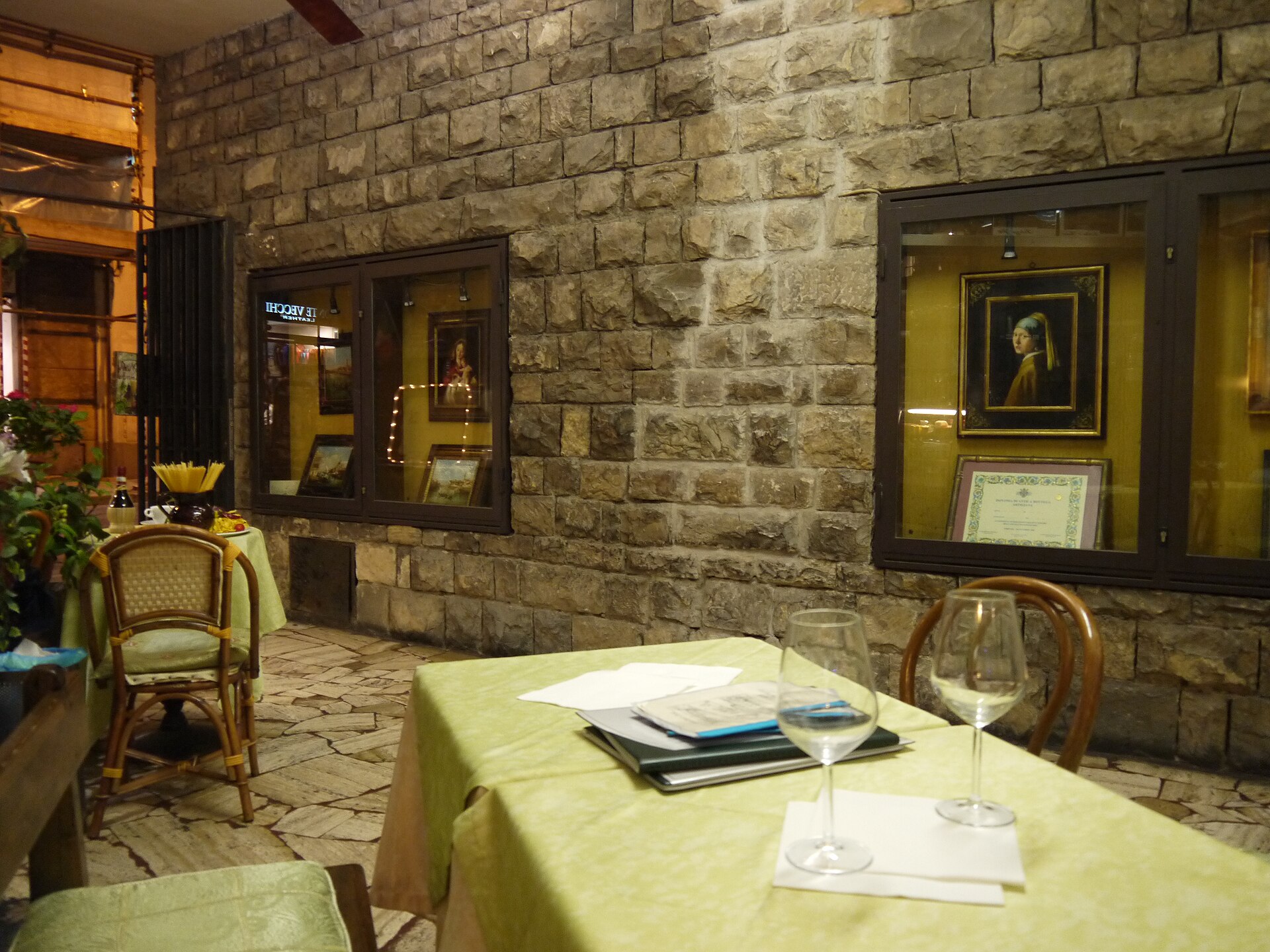
Traditional Florentine food is direct, rustic, ingredient-led — a cuisine evolved over 700 years to make extraordinary meals from poor materials. The classics are unforgivingly simple: bread soup with beans (ribollita), bread soup with tomato (pappa al pomodoro), a 1.2 kg T-bone steak grilled rare and seasoned with sea salt and Tuscan olive oil (bistecca alla fiorentina), a slow-stewed cow’s-stomach sandwich (lampredotto), almond biscotti dipped in sweet wine (cantucci with vin santo). These dishes haven’t changed in centuries because they don’t need to. This 2026 guide rounds up 15 traditional Florentine dishes you must try on a Florence trip, where to order each one well, what to pair with it, and the cultural context that makes the cuisine feel coherent rather than arbitrary.
For the broader food context see our Florence Food Guide pillar; for restaurant recommendations see the Best Restaurants in Florence companion.
Almost every dish below started as peasant cooking and stayed on the menu. The exception is the bistecca alla fiorentina, which has its own rules; for the everyday versions, the counters at the Mercato Centrale and the street food stalls serve them better than most restaurants.
1. Bistecca alla fiorentina
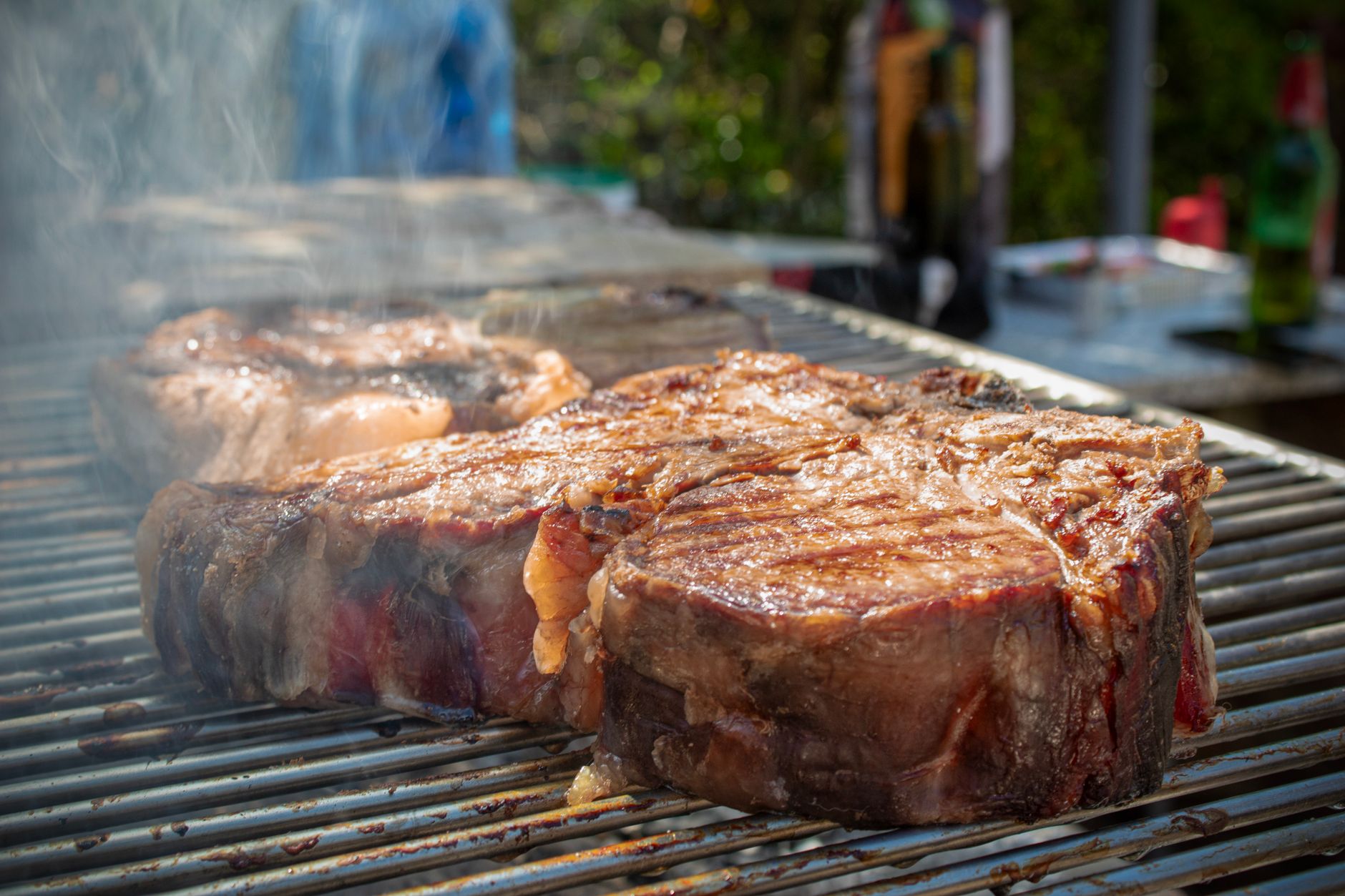
Florence’s signature dish. A thick T-bone steak — typically 1.2–1.5 kg — from Chianina cattle, a giant heritage breed raised in the Val di Chiana south-east of Florence. The steak is wood-grilled hot on each side for 4–5 minutes, then stood up on the bone for 2 minutes to cook the spinal column gently. Served seared-outside, red-inside, on a wooden block, seasoned at the table with sea salt and a generous slug of Tuscan olive oil.
Order it correctly: one steak for two people; rare (“al sangue”); €5–€7 per 100g (so €60–€100 per couple for a 1.2 kg steak). Best venues: Trattoria Mario (lunch Monday to Saturday, plus Friday dinner outside July), Buca Lapi (since 1880), Trattoria Sostanza, Trattoria Cammillo. Pair with Chianti Classico Riserva. Order a side of fagioli all’uccelletto and roast potatoes.
2. Ribollita
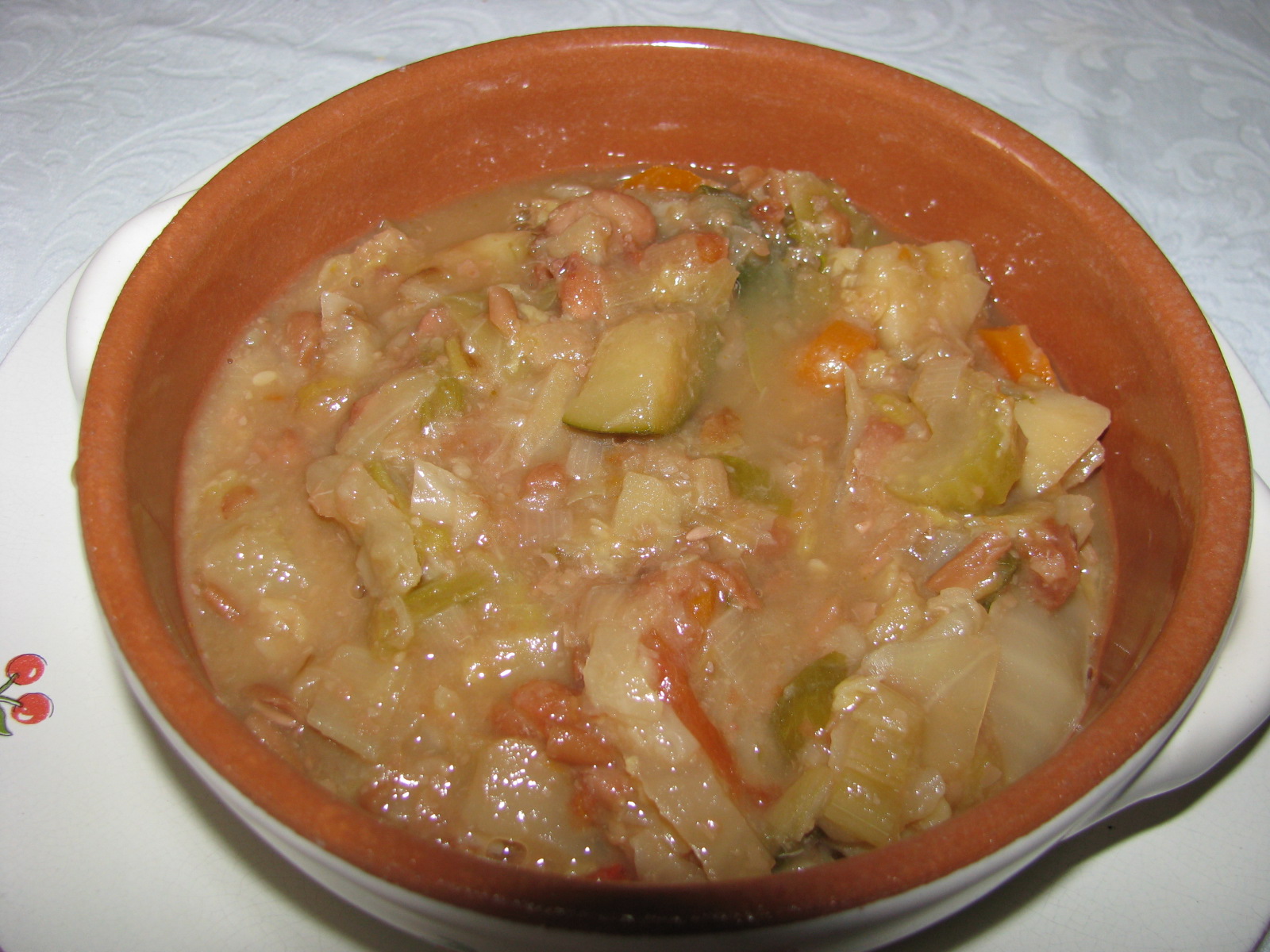
“Ribollita” literally means reboiled. The dish is built over two days: stale Tuscan bread is layered into a pot with white beans (cannellini), cavolo nero (Tuscan black kale), onions, carrots, celery and tomato. Cooked once, set aside overnight, and reboiled the next day until the bread breaks down completely. The result is a thick, almost solid soup that you eat with a fork, finished at the table with raw olive oil and black pepper.
Order it: October through April is the proper season. Best venues: Trattoria La Casalinga, Cibreo Trattoria, Trattoria del Fagioli, Trattoria Mario. Often €10–€12 a bowl.
3. Pappa al pomodoro
The summer counterpart to ribollita. Stale Tuscan bread cooked into a pot of fresh tomatoes with garlic, basil and olive oil. Served warm or at room temperature, finished with raw olive oil. June through September is the right window — earlier in the season the tomatoes aren’t sweet enough.
Best venues: Trattoria del Fagioli, Trattoria 4 Leoni, almost any Tuscan trattoria in summer. €8–€12.
4. Lampredotto
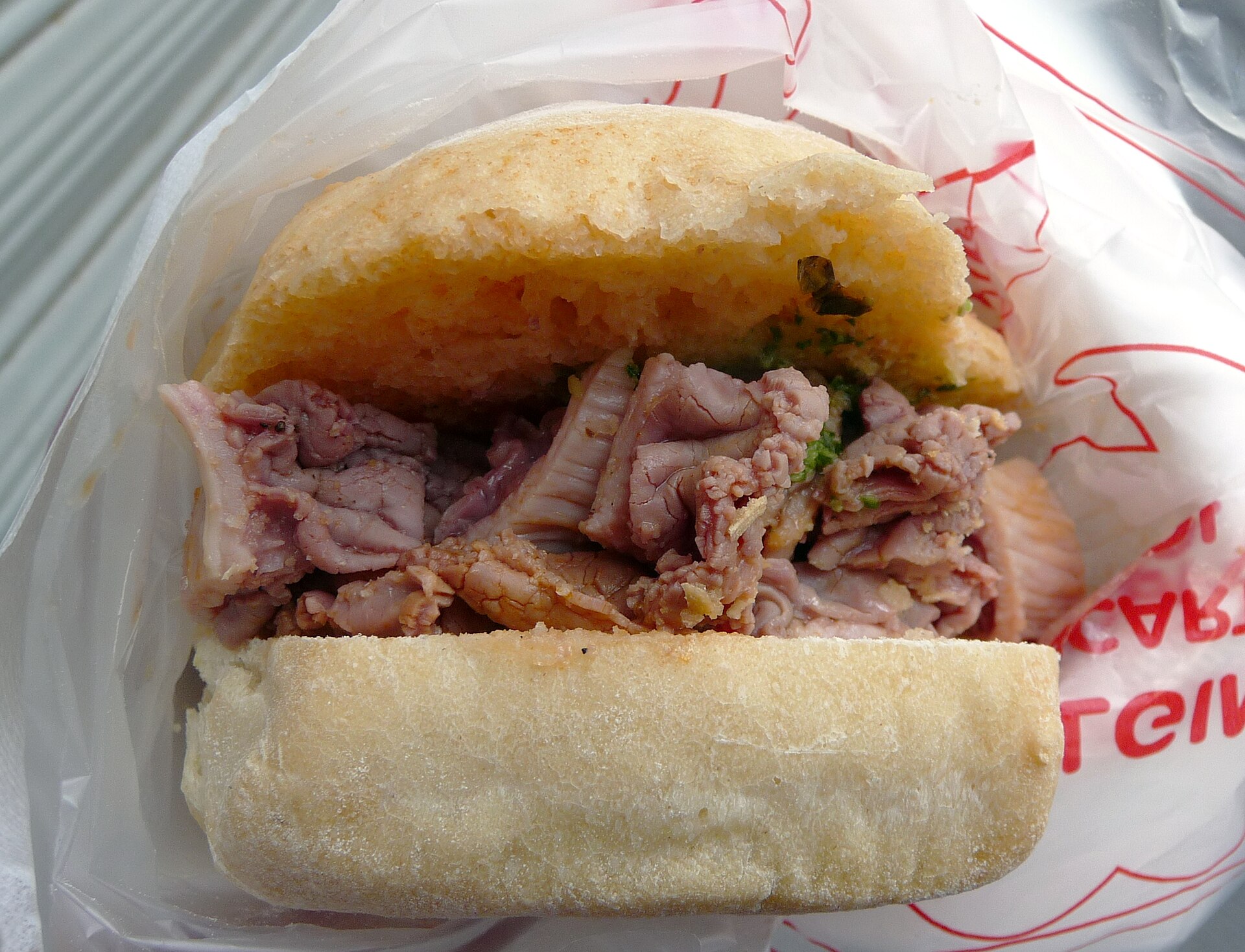
For adventurous eaters, Florence’s most famous street food. Lampredotto is the fourth stomach of the cow, slow-stewed in broth with herbs and tomatoes for 4–5 hours until it’s tender and savoury. Sliced thin and served in a bread roll (a “semella”) whose top half is briefly dipped in the cooking broth — making it lusciously soft. Optional toppings: green sauce (parsley, garlic, capers, olive oil), red sauce (chilli oil), salt and pepper.
Order it: at lunchtime from a street cart. €5 a sandwich; eaten standing up. Surprising-but-true: Anthony Bourdain called this his favourite Italian street food.
5. Trippa alla fiorentina
Tripe, slow-stewed Florentine-style — onion, carrots, celery, tomato, sage, parsley, served on bread or with parmesan. A more refined sit-down version of lampredotto. Best venues: Trattoria del Fagioli, Cibreo Trattoria, Trattoria Sergio Gozzi. €12–€15.
6. Crostini neri (chicken-liver pâté on toasted bread)
The classic Tuscan starter. Chicken livers cooked with capers, anchovies, white wine, butter — pulsed into a smooth pâté and spread on small slices of toasted Tuscan bread. Often served with prosciutto and salame as part of an antipasto board. Best venues: every Tuscan trattoria; particularly good at Trattoria Sostanza and Trattoria 4 Leoni. €6–€10.
7. Pici al ragù di cinghiale
Pici — thick hand-rolled spaghetti, like fat udon — paired with slow-cooked wild-boar ragù. The pasta is shaped one strand at a time on a wooden surface. The wild-boar ragù simmers 4–6 hours with red wine, juniper, rosemary and tomatoes. €14–€18.
8. Pappardelle al cinghiale
Same wild-boar ragù, served on pappardelle (wider 2 cm-flat pasta ribbons). Slightly more elegant than pici; arguably the better pairing for the rich ragù. €14–€20.
9. Peposo
A slow-stewed beef dish with a Florentine origin myth: the kiln-workers of Impruneta (a town just south of Florence, famous for terracotta tiles) supposedly cooked beef in their kilns overnight in clay pots with whole peppercorns and Chianti red wine. The 6-hour braise yields a dark, peppery, intensely flavoured stew traditionally served on Tuscan bread. Best venues: Trattoria Sostanza, Trattoria Cammillo, Trattoria 4 Leoni. €18–€24.
10. Cinghiale in umido
Wild boar slow-stewed in red wine with juniper, rosemary, garlic and a little tomato. Served in heavy ceramic bowls with grilled bread (or polenta) on the side. Autumn–winter dish; the boar is hunted in the Tuscan hills October through January. €18–€26.
11. Schiacciata fiorentina
A flat sweet bread, typically 2 cm thick, dusted heavily with icing sugar (and sometimes filled with whipped cream or Chantilly). Made for Carnival season (early February before Lent) — you’ll see it everywhere in pastry-shop windows during that window. Best at Pasticceria Robiglio, Pasticceria Sieni and Caffè Gilli. €3 a slice.
12. Cantucci with vin santo
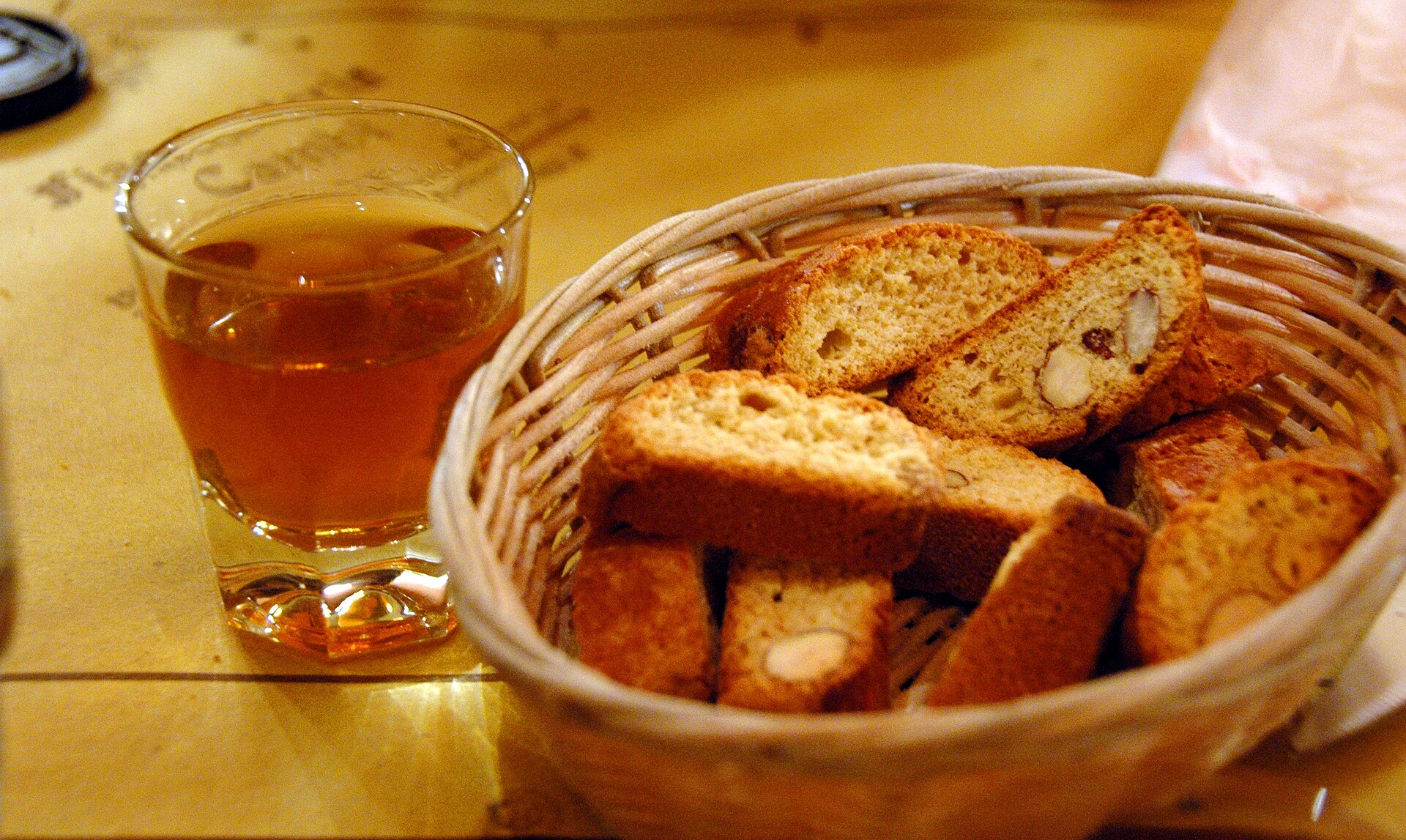
The classic Tuscan dessert. Cantucci (also called biscotti di Prato) are double-baked almond biscuits, dry and crunchy. Vin santo (“holy wine”) is a sweet Tuscan dessert wine made from grapes dried for months before pressing — it has notes of dried apricot, honey, hazelnut. Dip the cantuccino into the vin santo, eat it slightly softened. Universal Florentine end-of-meal ritual. €6–€10.
13. Panzanella
Summer bread salad. Stale Tuscan bread soaked in water, then squeezed dry and torn into a bowl with cucumber, tomato, red onion, fresh basil, olive oil and red-wine vinegar. The Florentine answer to the question: what do you do with stale bread in summer? €10–€14.
14. Fagioli all’uccelletto
White cannellini beans cooked in tomato sauce with sage and garlic. The classic Tuscan side dish, especially good with bistecca alla fiorentina. The name (fagioli “in the manner of small birds”) refers to the cooking method — slow-stewed like a small game bird. €5–€8 as a side.
15. Torta dell’uva
Florentine grape cake — bread dough flattened, topped with red Sangiovese grapes (with seeds intact for a sweet-bitter contrast), olive oil and rosemary. Made during the September wine harvest. A working-vintager’s dessert. €5 a slice at Pasticceria Robiglio in season.
Where Florentine ingredients come from
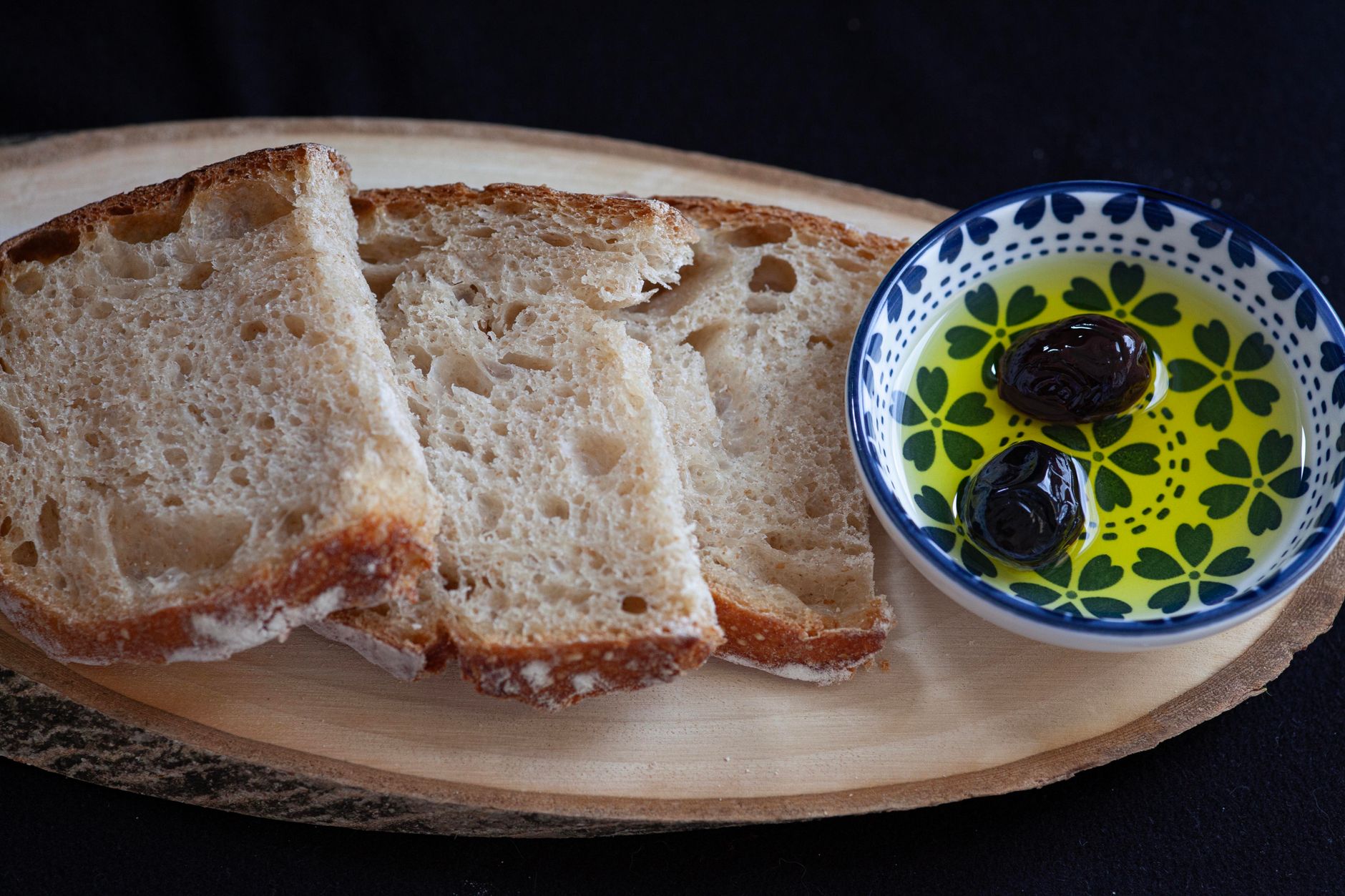
The Florentine cuisine isn’t separable from its source-region ingredients:
Chianina cattle
The breed used for bistecca. Raised in the Val di Chiana south-east of Florence; one of Italy’s largest cattle breeds, prized for tender flavourful meat. Looks white-grey when alive. Always specifically ask the trattoria whether the bistecca is Chianina (sometimes other breeds — Marchigiana, Romagnola — are substituted; still good but not the original).
Tuscan olive oil
Made primarily from frantoiana, leccino and moraiolo olive varieties grown in the hills around Florence. New oil (“olio nuovo”) arrives at Sant’Ambrogio market in November and has a distinctive peppery green character that fades over months. Florentine cooking uses olive oil as a finishing condiment as much as a cooking medium — drizzled raw on soups, breads, vegetables.
Chianti wine
The Chianti region surrounds Florence to the south. Made primarily from Sangiovese grapes; Chianti Classico is the historic centre of the region (between Florence and Siena). The basic Chianti is the everyday house wine; Chianti Classico Riserva is the bistecca-pairing standard.
Cavolo nero (Tuscan kale)
The dark long-leafed kale that defines ribollita. Available at Sant’Ambrogio market October through April; tastes best after the first frost.
Tuscan bread (pane sciocco)
Famously salt-free. Originally a dispute over salt taxation in the 12th century led Florentines to bake without salt, and the tradition stuck. The bread is a structural ingredient as much as a side — designed to soak up sauces, soups and oils without competing flavour-wise.
Pecorino & ricotta
Tuscan sheep’s-milk pecorino at every aging stage; soft fresh ricotta from the Mugello north of Florence. Both available at Mercato Centrale and Sant’Ambrogio.
Wild boar (cinghiale)
Hunted in the Tuscan hills October through January. The autumn-winter pastas and stews depend on it.
White cannellini beans
The legume base for ribollita, fagioli all’uccelletto and many soups. Tuscany’s most everyday legume.
Truffles
White truffles (tartufo bianco) come from the San Miniato area west of Florence (the village, not the church); peak October–December. Black truffles (tartufo nero) more widely available; spring-summer.
The role of Tuscan bread
Florence’s salt-free bread (“pane sciocco” — literally “stupid bread” but more idiomatically “bland bread”) is the cuisine’s structural backbone. A 12th-century salt-tax dispute between Florence and Pisa led the Florentines to refuse to use salt in their bread; over centuries the local cooking adapted, and now the entire cuisine assumes a bread that won’t fight with strongly-seasoned soups and stews.
Practical implications:
- The bread is meant for dipping or scarpetta (mopping sauce); not for eating buttered.
- It stales fast — purposeful, because Florentine cooking explicitly uses stale bread (ribollita, pappa al pomodoro, panzanella).
- You’ll often see day-old or two-day-old bread at trattorias; that’s correct.
- Don’t expect butter at the table; it’s not part of the tradition.
- Bread comes with the coperto cover charge.
Pairing Florentine food with Tuscan wine
Tuscany makes some of Italy’s finest wines, and pairing them with the food is a key part of the experience.
Chianti
The everyday house wine. Made from Sangiovese grapes; medium-bodied, food-friendly, often €5–€8 a quarter-litre at trattorias. Pairs with: pici al ragù, ribollita, trippa, lampredotto.
Chianti Classico Riserva
Step up. Aged 24+ months. €25–€40 a bottle at trattorias. Pairs with: bistecca alla fiorentina, peposo, cinghiale.
Brunello di Montalcino
Tuscany’s most prestigious red. From the Sangiovese clone “Brunello”, aged 5 years before release. €60–€150 a bottle. Pairs with: a special-occasion bistecca, slow-cooked beef peposo, hard cheeses.
Vino Nobile di Montepulciano
From the town of Montepulciano (south of Florence). Sangiovese-based; firm tannins. €30–€50.
Vermentino
Tuscan-Ligurian white. Light, citrus-forward. Pairs with: panzanella, pappa al pomodoro, cured meat starters.
Vin santo
Sweet dessert wine from dried grapes. Pairs exclusively with cantucci di Prato (or with hard pecorino as an alternative).
Super Tuscans
The category invented in the 1970s when winemakers blended Sangiovese with international varieties (Cabernet Sauvignon, Merlot, Syrah) — initially classified as “table wines” because they didn’t fit the official rules. Now Italy’s most prestigious modern category. Sassicaia, Tignanello, Ornellaia. €100–€600 a bottle at restaurants.
Vegetarian, vegan & gluten-free Florentine dishes
Vegetarian
Florentine food has more vegetarian options than its meat-and-bread reputation suggests. Pappa al pomodoro, panzanella, ribollita (most versions; a few add pancetta), fagioli all’uccelletto, crostini with truffle or mushroom, pasta with porcini in season, stuffed-vegetable starters, summer salads. Modern Florentine restaurants like Carduccio, L’OV, 5 e Cinque, Olio & Convivium and Brac all run substantial vegetarian programmes.
Vegan
Tighter category but doable. Panzanella, pappa al pomodoro (without parmesan), ribollita (request without bone-broth versions), fagioli all’uccelletto, grilled vegetables. Carduccio and L’OV are dedicated vegan-vegetarian; Brac runs vegan brunch options.
Gluten-free
The bread-heavy core of Florentine cuisine makes gluten-free travel harder. But: bistecca alla fiorentina is naturally gluten-free; grilled vegetables, fagioli all’uccelletto, most stews. Ask trattorias about gluten-free pasta options (some now stock); Mercato Centrale upstairs has a dedicated GF counter. Modern restaurants are increasingly accommodating.
Where to cook these dishes yourself
Cooking classes are one of the easiest ways to learn to make these dishes properly. Recommended:
- Mama Florence — €95, 4 hours, market tour included, ends with full lunch.
- Cesarine — €85, 3 hours, in a Florentine grandmother’s home kitchen.
- Florencetown — €140 farmhouse-format day with cooking + Chianti vineyard.
- Cucina Lorenzo — small-group classes near Mercato Centrale.
- Florence Cooking Classes — bistecca-specialist class in Chianti.
For a Florentine cookbook to take home: Maremma by Diane Seed; Tuscany Made Easy by Chiara Marchello; the Cibreo cookbook by Fabio Picchi.
Florentine ingredients to take home
Vacuum-sealed at Sant’Ambrogio or Mercato Centrale; survives checked-luggage travel:
- Tuscan extra-virgin olive oil — €15–€30 per 750 ml at the better stalls. Don’t buy the airport version.
- Aged pecorino cheese — vacuum-sealed, travels well, lasts months refrigerated.
- Cured meats (finocchiona, capocollo) — most stalls vacuum-pack; check your home country’s import rules.
- Cantucci di Prato — boxed at any pasticceria.
- Vin santo — sweet wine; check airline luggage rules for liquids.
- Salt-free Tuscan biscuits and crackers — long shelf-life.
- Truffle products — truffle oil (small bottle), dried truffle, truffle salt.
- Tuscan honey — chestnut, acacia, miele millefiori.
- Tuscan dried beans (cannellini, zolfini) — for making ribollita at home.
10 more under-the-radar Florentine dishes
Beyond the headline 15, Florentine cuisine has a deeper cabinet of regional dishes:
- Bollito misto — mixed boiled meats (beef, tongue, sausage, hen) served with green sauce, mostarda and salt. Sunday lunch dish at Trattoria Sostanza.
- Stracotto — beef braised for 6+ hours in Chianti red wine, vegetables, herbs. Served sliced over polenta or potatoes.
- Cee alla pisana — eel babies (a speciality of nearby Pisa, sometimes on Florentine menus). Strictly seasonal.
- Cacciucco — Livornese-Tuscan fish stew, available at coastal-influenced Florentine restaurants.
- Coniglio in umido — slow-stewed rabbit; a Tuscan-rural classic.
- Paposcia — Florentine flatbread sandwich.
- Salame toscano (finocchiona) — fennel-seed salami, distinctively Tuscan.
- Prosciutto toscano DOP — Tuscan dry-cured ham, salt-rubbed (saltier than Parma or San Daniele).
- Pecorino con miele — aged pecorino with chestnut or acacia honey; the Tuscan cheese plate’s classic move.
- Crostini di milza — spleen-pâté toasts, less common but a true cucina-povera classic.
Florentine food shopping — a market guide
Sant’Ambrogio market (Tuesday–Saturday mornings)
Florence’s working-class market east of Santa Croce. Best for everyday Florentine produce. The Trippaio cart out front; the Trattoria da Rocco for €10 lunch inside the hall. Cheese, bread, fish, vegetables, cured meats. Florentines treat this as their “real” market.
Mercato Centrale ground floor (Mon–Sat mornings)
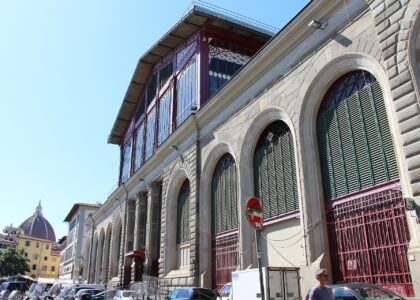
The bigger 1874 cast-iron-and-glass market in San Lorenzo. Slightly more touristy than Sant’Ambrogio but with deeper specialty stalls (truffles, premium pecorino, fresh pasta).
Mercato Centrale upstairs (daily 09:00–23:00)
The 24-counter food hall. Best for tasting the canon dishes — pici al cinghiale, pizza, fresh tagliatelle, Tuscan salumi plates, gelato.
Eataly (Via dei Martelli, daily)
Italian-food superstore. Better for take-home shopping than fresh produce. Cooking classes upstairs.
Pegna deli (Via dello Studio 8, since 1860)
The premium deli for take-home Tuscan ingredients — vacuum-sealed cured meats, oils, vinegars, biscotti.
Conad City (Via de’ Benci 22r and other locations)
The chain supermarket Florentines use for everyday non-fresh shopping. Best for picnic supplies (€5 bread + cheese + ham + drink), wine, basic ingredients.
Esselunga (Via Pisana, larger)
Bigger supermarket if you have a car. Wider selection.
Cucina povera — the philosophy behind Florentine food
Florentine cooking is the most refined expression of cucina povera (“poor cuisine”) — a Tuscan-rural tradition of making excellent food from cheap or surplus ingredients. The defining moves:
- Stale bread is an ingredient, not waste. Ribollita, pappa al pomodoro, panzanella all explicitly use 2–4-day-old bread; without that bread, none of these dishes exist. The salt-free bread stales fast on purpose.
- Use the whole animal. Lampredotto (cow stomach), trippa (more cow stomach), peposo (the cheap cuts braised long), bollito misto (mixed boiled meats including tongue and tail). What luxury restaurants would discard, Florentine cooking elevates.
- Slow cooking over fast. Most Florentine dishes — ribollita, peposo, cinghiale in umido, ragù di cinghiale — are slow-stewed for hours. The technique extracts flavour from inexpensive cuts and stretches a small portion of expensive ingredient (a kilogram of wild boar) over many servings.
- Olive oil is finishing, not fat. The cuisine uses olive oil as a raw seasoning; you’ll see it drizzled at the table on soup, vegetables, bread, even sometimes desserts. The flavour signature is more about the oil than about butter or other fats.
- Bean and legume backbone. Cannellini and zolfini beans show up in soups, stews, side dishes. They’re the protein that stretches the meat.
- Seasonal absolutism. Asparagus in April; artichokes in March; porcini in autumn; cavolo nero after the first frost; new oil in November; cantucci with vin santo always. The seasons dictate the menu.
Travellers used to luxury restaurant food are sometimes underwhelmed by their first encounter with Tuscan cucina povera — the dishes look modest, the presentations are direct. Spend three days eating it and the appeal becomes obvious: this is food that shows the ingredients, not the kitchen.
Florentine food vs broader Tuscan cuisine
Most travellers conflate “Florentine” and “Tuscan” food, which is roughly fair but misses some distinctions:
- Florentine — the urban-rural cuisine specific to Florence and its immediate countryside. Bistecca, ribollita, pappa al pomodoro, lampredotto, peposo, schiacciata fiorentina.
- Sienese — south of Florence; pici alla nonna’s, finocchiona salami, cinghiale, panforte cake. Slightly drier, more rustic.
- Pisan and Maremma — coastal Tuscan with seafood, including tegamaccio (fish stew), cee (eel babies). Different category.
- Lucchese — Lucca and the Garfagnana. Simpler, more chestnut-based; tordelli stuffed pasta, biroldo blood sausage.
- Aretine — Arezzo direction; Chianina cattle’s home turf. Bistecca traditions overlap with Florence.
If you’re spending several weeks in Tuscany, sampling these regional variations is part of the experience. For a Florence-only trip, focus on the Florentine canon above.
A Florentine eating day in 2026
07:30 — Breakfast
Espresso plus cornetto at any neighbourhood bar. €2.40 standing.
10:00 — Mid-morning
Walk through Mercato Centrale or Sant’Ambrogio market while local shoppers buy the day’s vegetables. Coffee at the market bar.
13:00 — Lunch
Trattoria Mario for €15 pasta + secondo + house wine, or a €5 lampredotto sandwich from a street cart, or €8–€12 plate at Mercato Centrale upstairs.
17:00 — Aperitivo
Procacci, Volume on Piazza Santo Spirito, or Le Volpi e l’Uva — €8–€12 spritz with a small antipasto.
20:30 — Dinner
Three-course at a mid-range trattoria: crostini neri starter, pici al ragù, bistecca alla fiorentina, fagioli al uccelletto side, cantucci with vin santo. €60–€90 per person with wine.
22:30 — Late-night
Gelato at Vivoli or La Carraia; an espresso macchiato; a digestivo grappa. Walk home along the Arno.
A short history of Florentine food
Florentine cooking traces back to the medieval period when the Florentine guilds developed a sophisticated urban food economy alongside the rural Tuscan one. Two milestones shaped the modern cuisine:
The bread-tax dispute (12th century)
A salt-tax dispute between Florence and Pisa led the Florentines to bake without salt. The salt-free bread became a permanent feature of the cuisine, and the cooking adapted: assertive sauces, soups and stews that wouldn’t compete with a salted bread.
The Medici banquets (15th–17th centuries)
The Medici grand dukes hosted some of Renaissance Europe’s most elaborate banquets, importing French chefs and codifying recipes that filtered into broader Florentine cuisine. Caterina de’ Medici, when she married Henry II of France in 1533, took Florentine cooks with her — the conventional narrative is that this is how Italian techniques entered French cuisine. (Historians debate this; the influence was probably more modest than legend suggests.)
The peasant-revival of the 19th–20th centuries
The 19th-century unification of Italy brought renewed interest in regional cuisines, and Florentine cooking — the urban refinement of Tuscan cucina povera — was systematised in cookbooks. La Scienza in Cucina by Pellegrino Artusi (1891), written in Tuscany, became Italy’s most influential cookbook and cemented many Florentine recipes.
The 1966 Arno flood
The flood damaged hundreds of Florentine restaurants and many ancient cellars; the rebuilding period in the late 1960s and 1970s coincided with a revival of trattoria culture. Many of today’s “old-school” trattorias (Trattoria Mario, Trattoria Sostanza, Trattoria del Fagioli) traced their current ownership generations to that period.
The modern era (1980s–present)
The Florentine food scene has gradually divided into three streams: working-class trattorias (preserved largely unchanged), Michelin-starred reinterpretations (Pinchiorri opened 1972), and a growing modern-Tuscan / vegetarian / natural-wine wave (Carduccio, Vivanda, Cibreo Restaurant). All three streams now coexist comfortably; travellers who sample across them get a full picture of the cuisine.
Three Florentine food myths to ignore
- “Real Florentine bistecca is from Chianina cattle only” — Chianina is the gold standard, but Marchigiana and Romagnola breeds also yield excellent bistecca. Many trattorias use these as backup. Ask but don’t be precious about it.
- “Authentic ribollita has only seven ingredients” — recipes vary widely. Some Florentine grandmothers add pancetta, others don’t. The defining feature is the reboiled-bread method, not a fixed ingredient list.
- “Pappa al pomodoro must use specific tomatoes” — modern Florentine versions vary. Use the best summer tomatoes you can get; that’s the only rule.
Traditional Florentine food — FAQ
What is the most famous Florentine food?
Bistecca alla fiorentina — the thick T-bone steak from Chianina cattle, wood-grilled rare and seasoned with sea salt and Tuscan olive oil. Order one steak for two; expect €60–€100 per couple. Also iconic: ribollita (winter bread-and-bean soup), lampredotto (street-food tripe sandwich) and cantucci with vin santo.
What should I eat in Florence for the first time?
For a first Florence trip, prioritise: bistecca alla fiorentina, pappa al pomodoro (summer) or ribollita (winter), pici al ragù di cinghiale, lampredotto street sandwich, gelato, cantucci with vin santo. Five dishes will give you a solid taste of the cuisine.
Is Florentine food spicy?
No. Florentine cooking is rustic but not spicy — black pepper appears in peposo, but chilli heat isn’t part of the tradition. The stews and bread soups are intensely flavoured but not heat-forward.
What’s the difference between Florentine and Italian food generally?
Florentine cuisine is a regional sub-set of Tuscan cooking, characterised by salt-free bread, intense use of olive oil as a raw finishing condiment, slow-stewed meats (cinghiale, peposo), bread-based soups (ribollita, pappa al pomodoro), Chianina cattle bistecca, and an unfussy ingredient-led approach. Italian cuisine more broadly varies enormously by region.
What’s lampredotto, really?
The fourth stomach of a cow, slow-cooked in herbed broth for 4–5 hours, sliced thin and served in a bread roll dipped in the broth. Florence’s working-class street food. Acquired taste, but most travellers who try it become converts. €5 a sandwich from a street cart.
Is bistecca alla fiorentina worth the price?
Yes for a once-per-trip splurge. €60–€100 per couple at a serious trattoria buys you 1.2–1.5 kg of Chianina T-bone — the best steak many travellers eat in their lives. Order it correctly: rare, one for two, with house Chianti or Chianti Classico Riserva.
What desserts should I try in Florence?
Cantucci di Prato dipped in vin santo (universal). Schiacciata fiorentina during Carnival (early February). Torta dell’uva during the September grape harvest. Gelato at Vivoli (rice gelato in a brioche), La Carraia, Gelateria della Passera. Tiramisu and panna cotta are universally available but not specifically Florentine.
What’s the best season for Florentine food?
October–November for olive harvest, truffles, wild boar, autumn produce. May–June for fresh vegetables, asparagus, artichokes. Avoid July–August for the hot bread soups; pappa al pomodoro is the summer alternative.