This article contains advertising. Booking links on this site can be turned into paid links automatically by our partner Travelpayouts: if you book through one, we earn a commission from the provider, at no extra cost to you. It never affects what we recommend. Affiliate disclosure
Florence Airport (FLR) Guide: Terminal, Tram & Arrivals
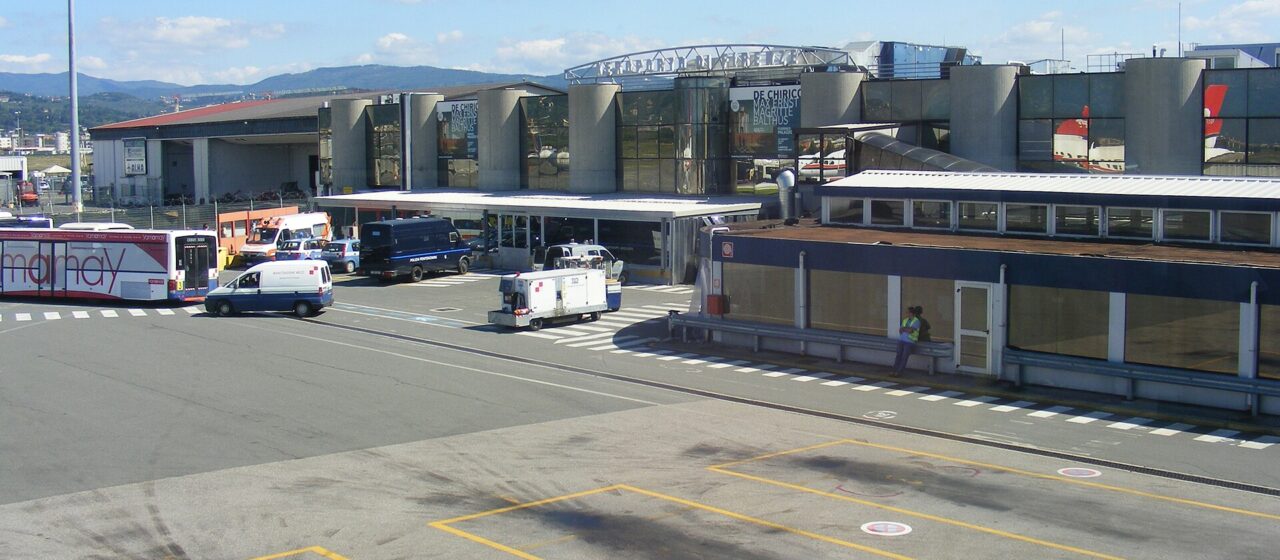
Florence airport — Amerigo Vespucci, FLR, known locally as Peretola — is a compact airport, and that fact explains almost everything about it. One terminal in two connected buildings. One runway of 1,560 metres. No jetbridges at all, so every boarding is a bus and a set of steps. It is four kilometres from the centre of Florence, which is the whole point of it.
Part of our transport series — getting from Florence airport to the city centre covers every transfer option and what each costs, and the Florence transportation guide covers moving around once you are here.
If the fare pushed you to Pisa instead, the transfer is about eighty kilometres and a change of vehicle. Our guide to getting from Pisa airport to Florence compares the PisaMover-and-train route against the coaches and a taxi.
The Basics
| Item | Detail |
|---|---|
| Official name | Amerigo Vespucci Airport / Aeroporto di Firenze-Peretola |
| Codes | IATA FLR, ICAO LIRQ |
| Distance to centre | About 4 km from the centre |
| Terminals | One, in two connected buildings |
| Check-in desks | Around 40 |
| Runway | 05/23, 1,560 m, asphalt — one runway only |
| Boarding | Bus and steps from every gate. No jetbridges |
| Passengers | 3,516,925 in 2024, up 14.3% on 2023 |
| Lounge | Sala Masaccio, airside, Priority Pass accepted |
The headline advantage is proximity. The centre is four kilometres away, and the tram stop is a two-minute walk from the terminal, so the walk from the plane to the hotel is short by the standards of most airports.
The headline disadvantage is that it is small, single-runway and weather-sensitive, and a great many visitors discover both facts on the same trip.
The Runway, and Why It Matters
FLR has one runway, designated 05/23, and it is 1,560 metres long. For context, a large international airport runs three to four kilometres. Florence is boxed in by hills to the north, the A11 motorway alongside and the city itself. Expansion plans include a new runway and passenger terminal, but the runway in use today is the 1,560-metre one.
Three consequences follow, and all three are things you would want to know before booking.
Flights are short-haul. There are no intercontinental arrivals. Everything into Florence is a European short-haul or a regional connection, which means that if you are flying from outside Europe you are connecting somewhere — usually Rome, Frankfurt, Paris, Munich or Amsterdam.
The low-cost carriers are not here. Ryanair and the other ultra-low-cost operators are at Pisa, about an hour west, because the economics of a short runway and a small terminal do not suit them. If your fare looked suspiciously cheap, check which airport it lands at.
Weather diverts flights. This is the one that ruins days. Strong wind or heavy rain at a short runway in a valley means approaches get abandoned, and when they do, your aircraft goes to Pisa or Bologna, both of which have longer runways. Ask your airline for its onward-transfer instructions as soon as you land, because the trip back to Florence is a journey you had not planned for, perhaps at midnight, after a delay.
Build in the diversion risk
If you are flying into FLR on a day with serious weather in the forecast, or in autumn when the Tuscan rain is heaviest, do not book anything tight for that evening — no non-refundable dinner reservation, no onward train, no last-entry museum slot. And if you are flying out of Florence to catch a long-haul connection, take the earliest feasible bank rather than the tightest one. A diversion on the inbound leg is an inconvenience; a missed intercontinental connection is a different order of problem.
The Terminal, Building by Building
There is one terminal, but it reads as two, because it is two — a newer structure joined to an older one.
The main concourse holds the check-in desks, security and duty-free. This is where you arrive at the kerb, and where almost everything you need before flying is.
The whole thing is walkable in a few minutes end to end. There is no need for signage anxiety, no shuttle, and no risk of being in the wrong terminal. In that sense it is a pleasant airport: you cannot get lost.
What it is not is spacious. Three and a half million passengers pass through a building scaled for considerably fewer, and at the two daily peaks — the morning departure bank and the late-afternoon one — the check-in hall and the security queue both back up noticeably. Seating airside is limited and, at busy times, genuinely scarce.
The no-jetbridge fact
Every boarding at FLR is by bus to the aircraft and up a set of external steps. There are no air bridges. Practically, that means: you will be outside for part of every departure and arrival regardless of weather; you will stand on a bus with your cabin bag; the steps are steps, so a heavy wheeled case is a nuisance and a pushchair is a two-person job; and in July the bus is hot and in January the apron is cold and wet. None of this is a disaster, but it is the single most common surprise about this airport and it is worth dressing for.
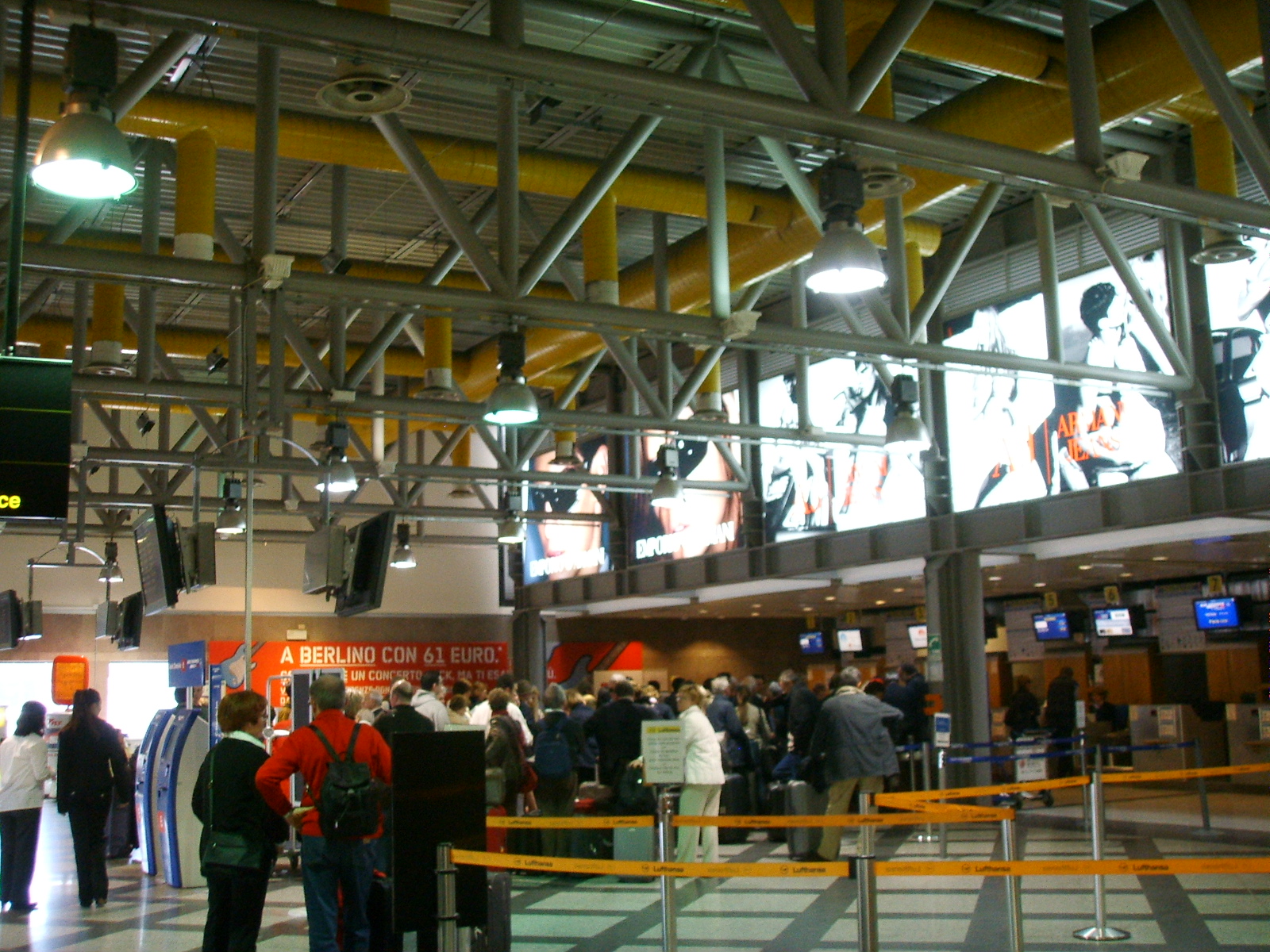
Departing: Check-In to Gate
How early to arrive. Two hours for a Schengen departure is comfortable and ninety minutes is workable off-peak. Do not cut it finer than that at the morning peak: the security queue at a single-channel airport does not have the elasticity of a large one, and there is no second lane to open.
Check-in. Around forty desks, allocated by flight rather than by airline zone, so read the boards. Bag drop for online check-in is at the same desks. Many carriers close bag drop strictly — forty-five minutes before departure is typical and it is enforced.
Security. One centralised control point in the newer building. Standard EU rules; liquids and electronics out unless the lane says otherwise. The queue is the main variable in your morning.
Passport control. Schengen departures do not pass through it. Non-Schengen flights — UK routes most obviously since Brexit — do, so allow extra time for it.
Getting to the gate. Follow the signs once your gate is posted; walking time is a few minutes. Then expect a bus.
Airside: Food, Shops and the Lounge
Set expectations honestly: this is a small airport and the airside offer is proportionate. There is duty-free in the newer building and a food court in the older one, plus the usual scatter of bars and newsagents. It is adequate. It is not Munich.
The lounge is the Sala Masaccio, airside past security. It takes Priority Pass and appears on the major lounge networks, and it is also sold at the door. In an airport where airside seating is limited and the food court gets crowded, a lounge is worth rather more than the equivalent lounge at a big hub — you are buying a chair and quiet, which at FLR at the peak are genuinely scarce goods. If you hold a card that covers it, use it here.
What to buy before you fly. If you want Tuscan food or wine to take home, buy it in the city, not at the airport. The Mercato Centrale and the shops on Via de’ Tornabuoni and in the Oltrarno are cheaper and better, and the Florence shopping guide covers what is actually worth carrying. Airport duty-free here is a convenience, not a bargain.
One practical caution on wine: hand-luggage liquid limits apply to a bottle bought in town. If you are travelling hand-baggage only, buy the wine airside or ship it.
Arriving
Arrivals at FLR is a short and blessedly simple process. You come off the bus, walk in, and the baggage hall is immediately there. Non-Schengen arrivals clear passport control first. Because the aircraft are small, bags come off quickly — fifteen to twenty minutes is normal rather than optimistic.
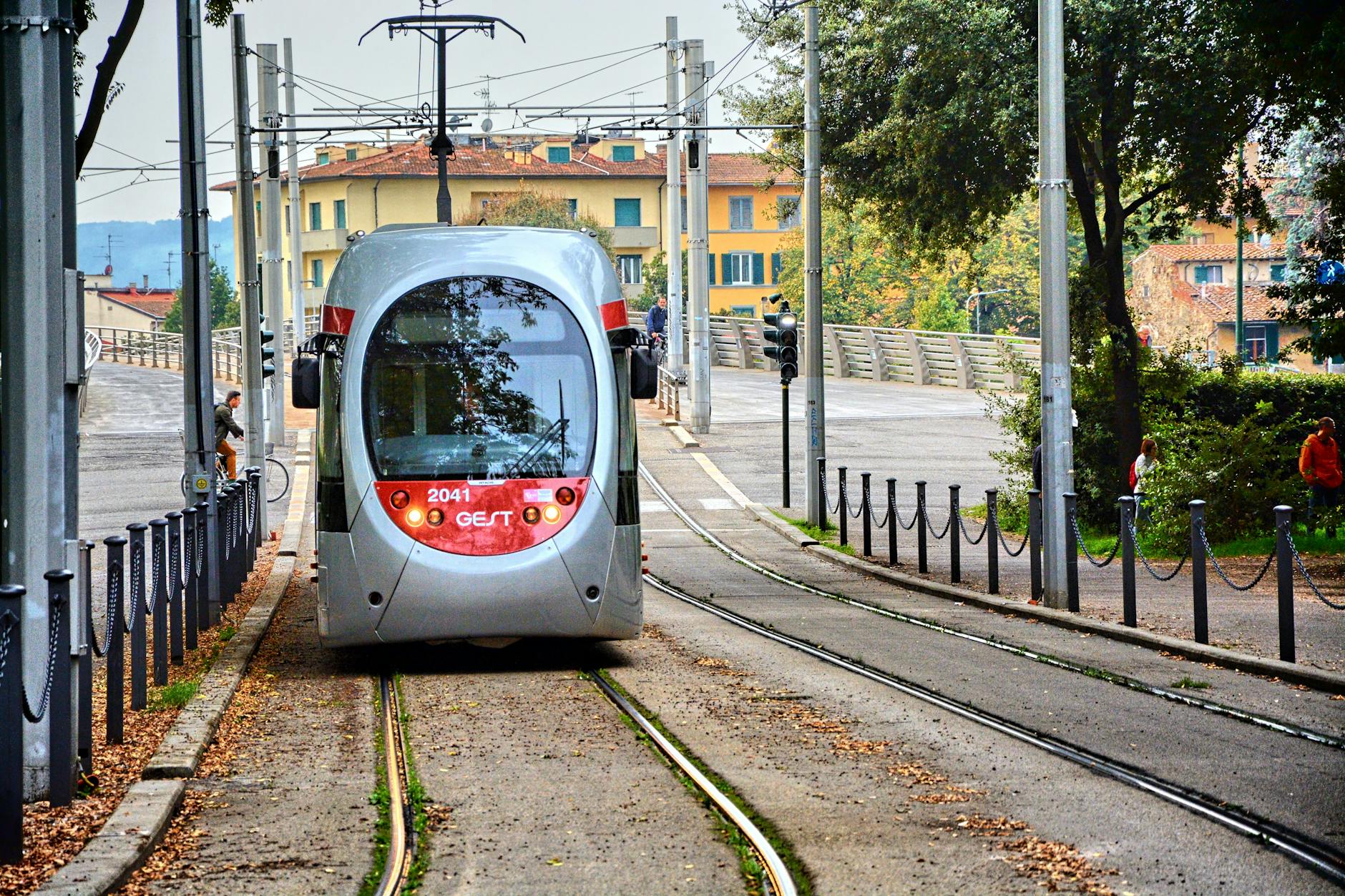
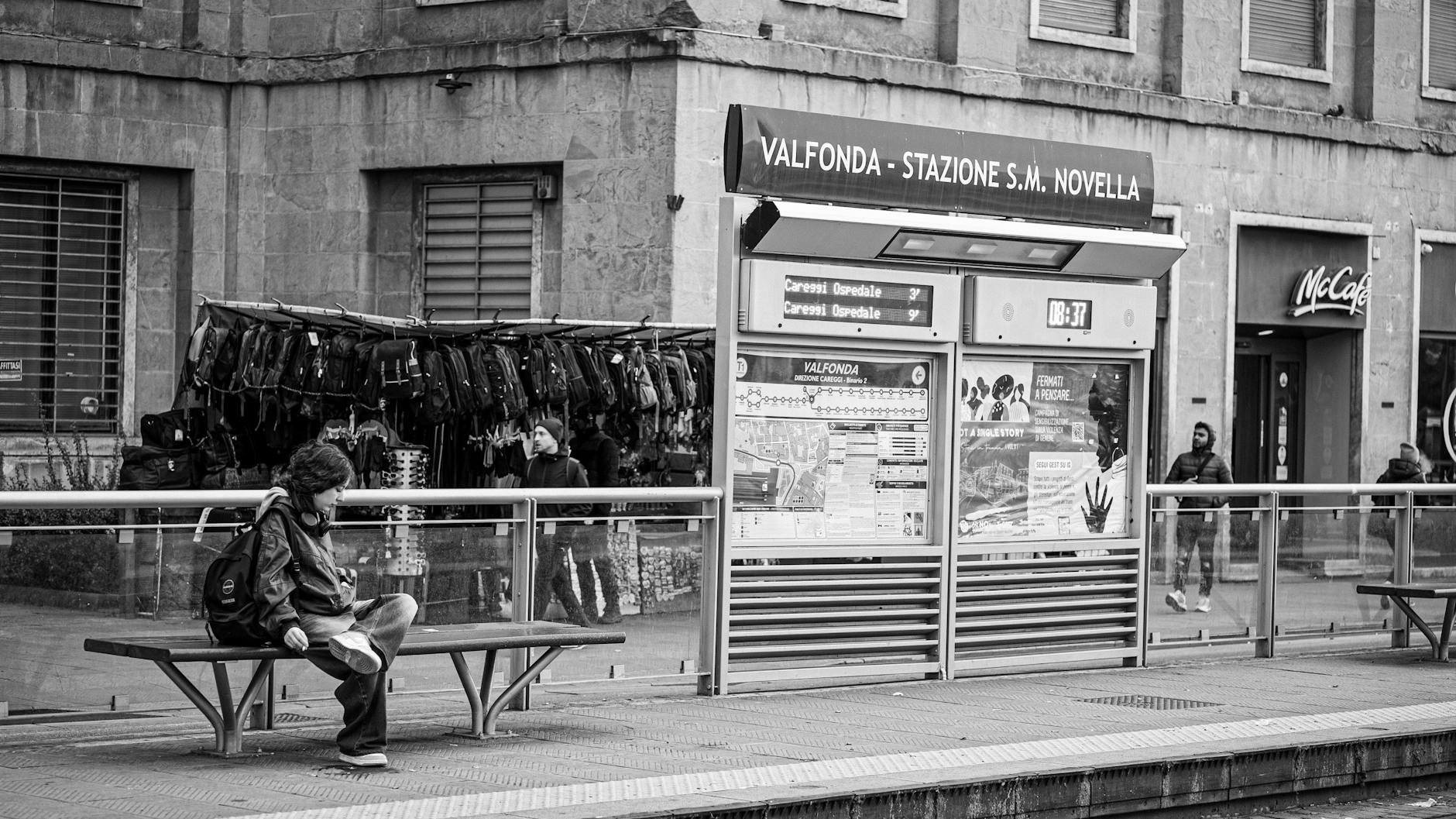
Out of the doors you have the taxi rank, the bus stops and the T2 tram terminus, which is the line that runs between the airport and the city. Everything is within sight of the exit; there is no walk to a distant transport hub and no internal train.
We are not going to duplicate the numbers here, because they live on their own page: how to get from Florence airport to the city centre compares the tram, the taxi and the private transfer, with current fares, journey times, where the stops are and which option suits which kind of arrival. Read that one before you land.
Two things worth knowing that belong here rather than there. First, the ATM and exchange situation: the airport has ATMs, and if one offers to convert the charge to your own currency, decline: that is dynamic currency conversion and it usually costs you more. Our guide to money and currency in Florence covers it. Second, luggage: FLR has no large left-luggage operation of the kind you find at a major hub, so if you are arriving early or leaving late, the storage you want is KiPoint at Santa Maria Novella station or one of the app-based locker services in town.
Car Hire at FLR
The rental companies are based at Via Palagio degli Spini, linked to the terminal by a free shuttle, and for anyone touring Tuscany this is a sensible place to pick up a car — you are outside the city, on the ring road network, with the A1 and A11 within reach and no need to take the vehicle anywhere near the historic centre.
Three things to get right.
Do not drive it into Florence. The ZTL cameras ring the historic centre, each gate you pass is a fine of around €80 or more plus notification costs, and your rental company will add its own administration fee when the notice reaches it. If you are staying in the centre, collect the car on the day you leave rather than on the day you arrive. Full detail in our guide to the Florence ZTL and parking.
Expect a credit-card hold. Italian desks place a substantial authorisation on a credit card in the main driver’s name. A debit card is frequently refused outright. This is the single most common reason people arrive at a Tuscan rental desk and leave without a car.
Book an automatic explicitly if you need one. Manual is the default in Italy and automatics are a limited, more expensive subset that sells out. The full mechanics — insurance, the excess, which desks to avoid and when a car is worth having at all — are in renting a car in Florence.
Layovers, Delays and Long Waits
FLR’s great asset is that it is four kilometres from one of the best small cities in the world, and its great weakness is that there is very little to do inside it. Those two facts combine into a simple rule.
How long a wait justifies leaving the airport
- Under three hours: stay. Between the tram in both directions, security again and the bag-drop cutoff, you would be turning round the moment you arrived.
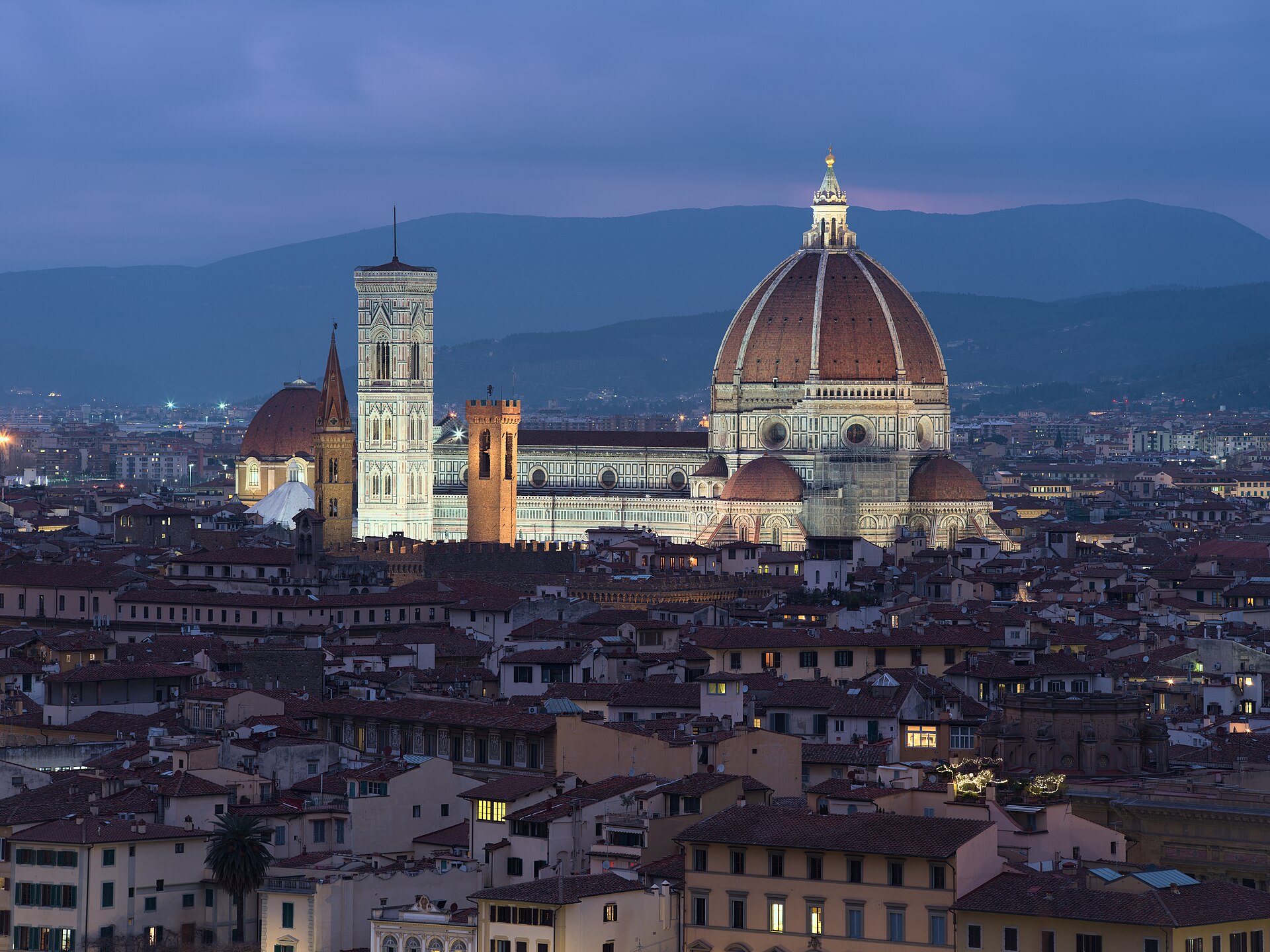
- Three to five hours: go into town if you have no hold luggage, and keep it to one thing — the Duomo exterior and the Baptistery doors, or a walk along the Arno and a coffee. Do not attempt the Uffizi.
- Five hours or more: definitely go. That is enough for a proper lunch, a church and a walk, and it is a far better use of the time than a food court.
- Overnight: the airport is not a comfortable place to sleep and does not pretend to be. A cheap room near Santa Maria Novella is the better answer.
If you are staying put with a long delay, the Sala Masaccio is the answer — see above. And if the delay is the airline’s fault rather than the weather’s, EU261 compensation rules apply to flights departing from Florence regardless of carrier, and to flights arriving on an EU carrier. Keep the boarding passes.
Weather delays and diversions, being “extraordinary circumstances”, generally do not attract compensation, though the airline still owes you care — meals, and accommodation if it runs overnight. At a short-runway airport in an Italian autumn, this comes up more often than at most European airports.
Accessibility and Families
The compactness of FLR is a genuine advantage here: short distances, one security point, no internal transit, and everything on essentially one level. Assistance is provided under the EU framework and should be requested through your airline at least 48 hours before travel.
The complication is boarding. Anyone with limited mobility should arrange ambulift assistance — which the airport has, and which is exactly what the 48-hour notice is for. Do not assume it can be arranged on the day at a small airport.
For families: the bus-and-steps arrangement means a pushchair has to be gate-checked and then retrieved on the apron, in the open. Bring a lightweight one. On the other hand, the walk from kerb to gate is short, which matters more with small children than most facilities do.
Our Florence accessibility guide covers what happens after you leave the airport — the step-free routes, the museums with lifts, and the cobbles that genuinely defeat wheels.
What Is Coming
Florence has been planning a bigger airport for a long time, and the plan is genuinely ambitious: a new terminal with seven jetbridges, the existing runway downgraded to a taxiway, and a new runway laid out parallel to the A11 motorway — which would remove the length constraint and with it the diversion problem and the aircraft-size cap.
The honest position on timing: this is described as a next-decade project and there is no confirmed completion date. Italian airport infrastructure of this scale moves slowly and this particular scheme has a long history of revision. Plan your trip around the airport as it is, not as it is drawn.
FLR, Pisa or Bologna
Three airports serve Florence in practice, and the right one depends on what you are optimising for.
| Florence (FLR) | Pisa (PSA) | Bologna (BLQ) | |
|---|---|---|---|
| Distance | 4 km | About 80 km | About 100 km |
| Best for | Convenience, short stays | Cheap fares, low-cost carriers | Route choice, reliability |
| Runway | Short — diversions happen | Long | Long |
| Aircraft | Up to about A320neo | Full narrowbody and more | Full narrowbody and more |
| Catch | Fewer routes, weather risk | The transfer eats the saving | Furthest away |
The judgement most people need: a cheap Pisa fare is only cheap if you count the transfer. Two people whose fares into Pisa are €40 less each have saved €80 on paper, and then have to get themselves and their luggage about 80 km east, twice. Sometimes that still wins. Often it does not, particularly with children, late arrivals or early departures.
The routes, journey times and real costs of that transfer are in our guide to getting from Pisa airport to Florence.
Bologna is the one people forget. It is furthest in kilometres but sits on the high-speed rail line, and the train from Bologna Centrale to Florence Santa Maria Novella is quick enough that the total door-to-door time can beat Pisa. If you cannot get a sensible Florence fare, price Bologna before you settle for Pisa.
Frequently Asked Questions
How far is Florence airport from the city centre?
About four kilometres north-west, and roughly five kilometres from Santa Maria Novella station. That is unusually close for a European city airport, and the T2 tram terminus is directly outside arrivals. Our airport transfers page compares the tram, taxis and private transfers with current fares and journey times.
How many terminals does Florence airport have?
One, arranged as two connected buildings. The main concourse holds check-in, security and duty-free. The whole terminal takes a few minutes to cross, so there is no risk of being in the wrong place.
Why do flights to Florence get diverted?
Because the single runway is only 1,560 metres and sits in a valley between hills and the A11 motorway. Strong wind or heavy rain can make the approach unworkable, and flights are then sent to Pisa (84 km) or Bologna (98 km), which have longer runways. The airline usually buses passengers back, but it adds two or three hours. Do not book anything tight for your arrival evening.
Does Florence airport have jetbridges?
No. Every departure and arrival uses a bus to the aircraft and external steps, in whatever weather there is. It makes heavy cabin bags awkward and pushchairs a two-person job, and anyone with limited mobility should request ambulift assistance through their airline at least 48 hours ahead. A future terminal with seven jetbridges is planned but has no confirmed date.
How early should I arrive at Florence airport?
Two hours is comfortable for a Schengen departure and ninety minutes works off-peak. Do not go tighter at the morning or late-afternoon peak: there is a single security control point with no spare lanes, and bag drop typically closes forty-five minutes before departure and is enforced. Non-Schengen flights, including UK routes, also pass passport control.
Is there a lounge at Florence airport?
Yes — the Sala Masaccio, airside past security. It accepts Priority Pass and the main lounge networks and is also sold at the door. At an airport where airside seating is limited and the food court fills at the peaks, it buys you something genuinely scarce, so it is better value here than the same lounge would be at a large hub.
Can I leave the airport on a layover in Florence?
Yes, and with more than five hours you should — the centre is four kilometres away on the tram. Under three hours, stay put: the round trip plus security again leaves no time. Three to five hours works if you have no hold luggage and you limit yourself to one thing, such as the Duomo exterior and a walk by the Arno, rather than a museum.
Should I fly into Florence or Pisa?
Florence if the fare is within reason, because four kilometres beats eighty-four. Pisa if the saving is large and you are travelling light — but count the transfer for everyone in the party, in both directions, before deciding. Bologna is the overlooked third option: further away but on the high-speed line, so the total door-to-door time can beat Pisa.
Keep Reading
- Florence airport to the city centre — every transfer option, with fares and times.
- Florence train station guide — Santa Maria Novella, where most arrivals end up.
- Florence ZTL and parking — essential if you are collecting a hire car.
- Renting a car in Florence — the credit-card hold, the insurance and the automatics.
- Florence transportation guide — buses, trams and fares in the city.
- Florence travel tips — the practical things worth knowing before you land.