This article contains advertising. Booking links on this site can be turned into paid links automatically by our partner Travelpayouts: if you book through one, we earn a commission from the provider, at no extra cost to you. It never affects what we recommend. Affiliate disclosure
Florence’s reputation as an “expensive Italian city” is half-true — central hotels and tourist-trap restaurants will absolutely empty your wallet, but the Renaissance city is unusually generous to budget travellers who know where to look. Hostels start at €25 a night, world-class meals at Mercato Centrale cost €8, the entire historic centre is walkable (little or no transport budget), and a dozen of the city’s best museums are free at least one day a month. This 2026 guide breaks down what Florence actually costs, the tactical decisions that separate a €60-a-day backpacker trip from a €350-a-day mistake, the exact neighbourhoods and venues that make up budget Florence, and a four-day budget itinerary you can copy directly.
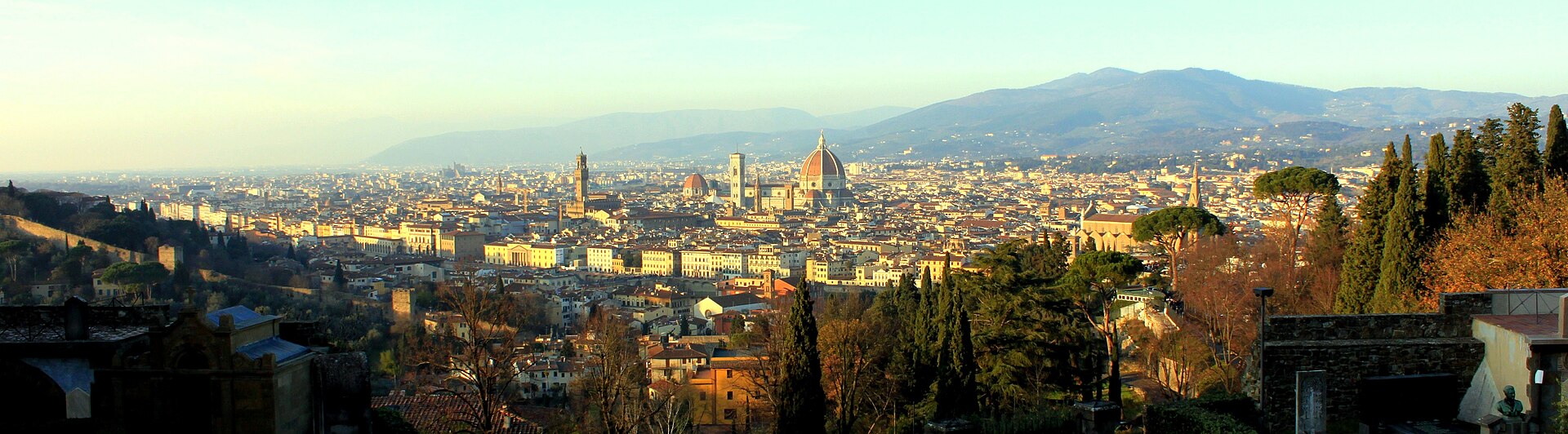
Accommodation is the single biggest line in any Florence budget — see our guide to budget accommodation in Florence for hostels, guesthouses and value neighbourhoods.
How Much Does Florence Cost in 2026?
Florence is a moderate-to-expensive Italian destination, sitting between the elevated cost of Venice and the more affordable south. Realistic 2026 daily budgets, per person, look like this:
| Tier | Daily Cost | Accommodation | Food | Sights & Transport |
|---|---|---|---|---|
| Shoestring | €55–80 | Hostel dorm €25–35 | Markets & pizza al taglio €15–20 | Free museums + walking only €5–15 |
| Budget | €80–130 | Budget B&B / shared apartment €50–80 | 1 trattoria + market lunches €25–40 | 1 paid museum + walking €15–25 |
| Mid-range | €150–250 | 3-star hotel €90–140 | 2 sit-down meals €40–60 | 2 museums + occasional taxi €30–50 |
| Comfortable | €280–420 | 4-star hotel €180–280 | Quality restaurants €70–110 | 3+ museums / tours €40–70 |
| Luxury | €500+ | 5-star €350+ | Fine dining €150+ | Private guides & tours €80–200 |
The single largest variable is accommodation — choosing a hostel over a 4-star hotel saves €100–250 per night, and food choices come a close second (a market lunch versus a Piazza della Signoria sit-down differs by €20–35 per meal). Museums and transport are smaller pieces of the budget than most travellers expect.
When to Visit Florence on a Budget
The cheapest months to visit Florence are mid-January, February, mid-March, and mid-November, when hotel and apartment rates fall well below peak summer levels. Outside the Christmas–Epiphany holidays, December and January are low season too.
The single best budget anomaly: the second and third weeks of August. Italians leave Florence for the Ferragosto holiday, and hotels that were full in July can be noticeably cheaper. Heat is brutal (August highs average around 32°C, with hotter spells) but if you can endure it, mid-August is a paradoxical luxury bargain.
Avoid for budget purposes: Easter and the spring shoulder season, the autumn shoulder, the Christmas and New Year holidays, and the Pitti Uomo trade-show week in January (when central hotels fill up).
Budget Accommodation in Florence

Hostels (€20–45 per dorm bed)
Florence has a strong hostel scene, particularly around Santa Maria Novella station and Oltrarno. The four most-recommended budget options:
- Plus Florence — large central hostel near the station with rooftop bar, swimming pool, female-only floors. Dorm beds €25–45 depending on season.
- Ostello Bello Firenze — newer addition with social lounges and free aperitivo most evenings. €30–50.
- Hostel Archi Rossi — small family-run hostel near the station, social-but-quieter atmosphere, free pasta dinner several nights a week. €25–40.
- Tasso Hostel — Oltrarno neighbourhood, smaller, garden setting, ideal for slower-paced solo travellers. €30–48.
Hostel rates rise on weekends — Friday and Saturday nights often add €5–10 per bed. Avoid the cheapest hostels with flying-saucer-low ratings; “saving” €5 a night on a 12-bed dorm with thin walls and broken air conditioning is a false economy.
Budget B&Bs and Guesthouses (€55–95 per double)
For couples and pairs, a budget B&B beats a hostel on per-person cost. Look for B&Bs in:
- San Frediano (Oltrarno) — local-feeling neighbourhood across the river, within walking distance of the Cathedral, much cheaper per night than the centre.
- Around Mercato Centrale — slightly down-market vs the Cathedral but full of small B&Bs at €60–80.
- Sant’Ambrogio — east of Santa Croce, working neighbourhood with B&Bs at €55–75.
- Outside the Viali (the ring road) — venture 1–2 km outside the centre for B&Bs at €45–65.
The single best booking trick: filter by “guest house” or “B&B” rather than “hotel” — Florence has hundreds of small family-run rooms that don’t appear in hotel-search defaults.
Apartment Rentals (€55–110 per night)
Apartments — through Airbnb, VRBO, Booking.com or Italian-specific platforms like Venere — are the smartest option for stays of 4+ nights. A studio with a kitchen typically runs €55–90 per night in low season and €80–110 in shoulder. Cooking your own breakfast and one or two simple dinners per week saves €15–30 per day, fast paying back the apartment premium.
Budget-friendly apartment neighbourhoods: San Frediano, Sant’Ambrogio, San Niccolò, the area between Santa Maria Novella station and the Cathedral. Avoid the Ponte Vecchio/Uffizi block — apartments there are 60% more expensive.
Eating Cheaply in Florence
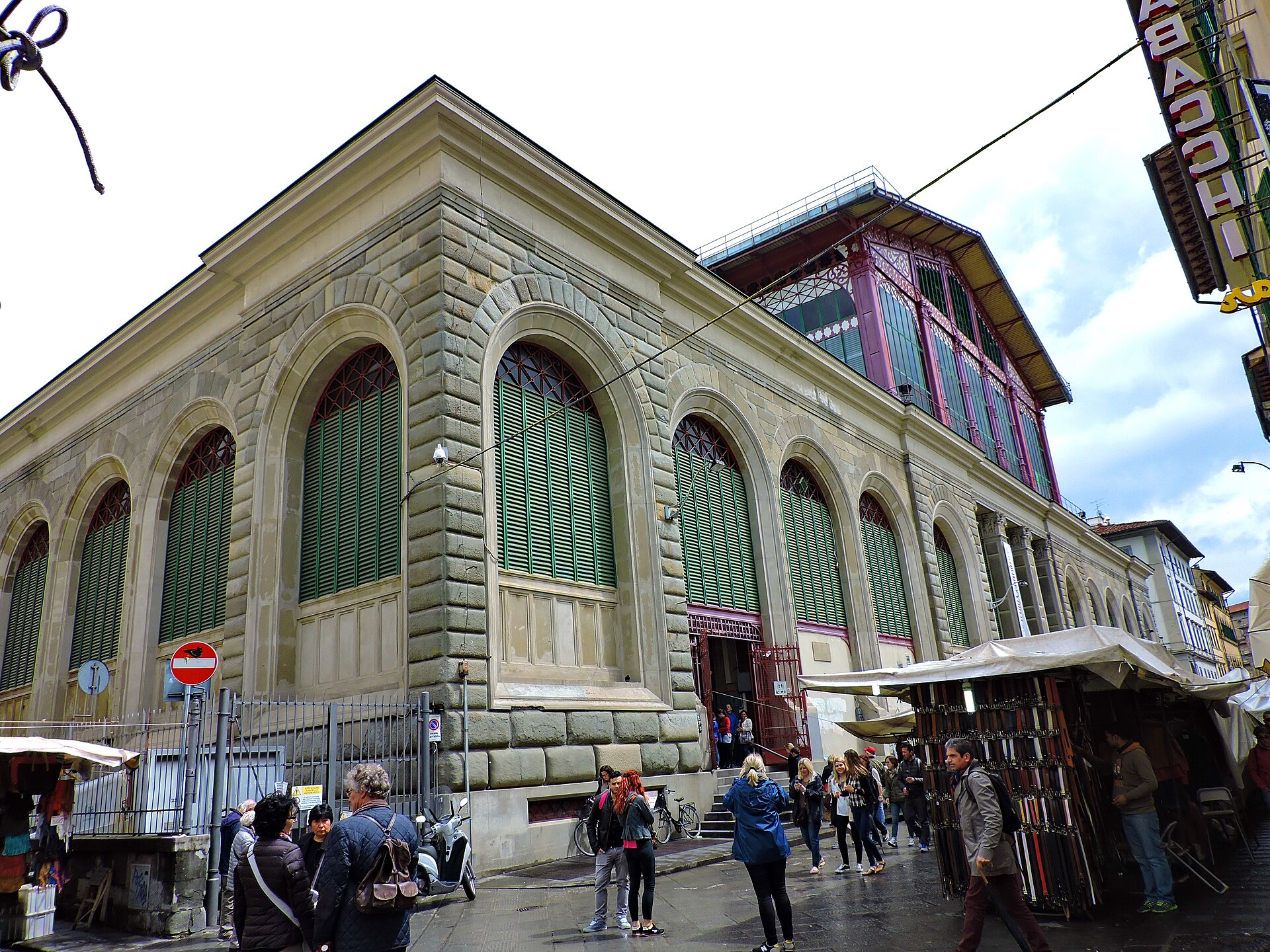
The Two Big Markets
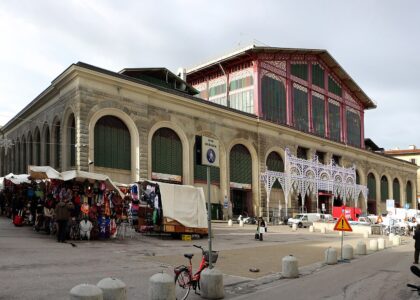
Mercato Centrale (San Lorenzo): two-floor covered market with a working ground-floor producers’ hall (vegetables, fish, butchers, cheesemongers) and an upstairs food hall, open daily 09:00–23:00, where 19 shops plus a bar, brewery, pizzeria and grill sell sit-down meals at €8–14. The famous tripe sandwich at Da Nerbone (€5.50), a half-litre of house wine (€3), pasta at one of the upstairs counters (€8–10), gelato (€2.50) — this is where most budget travellers eat lunch.
Sant’Ambrogio Market (east of Santa Croce): smaller, less touristy, with a working covered hall and an outdoor produce market on the surrounding piazza. A few small trattorias (Da Rocco, Il Pizzaiuolo) offer sit-down lunches at €10–14. Closes at 14:00 — visit before 13:30.
Pizza al Taglio (€3–6 a slice)
Pizza by the slice is sold by weight (€18–24 per kilo) and a generous portion costs €4–6. Best operations: Divina Pizza (Sant’Ambrogio), Pizzeria Il Cavallino Bianco (Oltrarno), and Pugi (multiple locations) for thinner-crust schiacciata. Open until late afternoon — perfect mid-day fuel.
Schiacciata Sandwiches (€5–8)
Florentine schiacciata is a flatbread split open and stuffed to order — the local answer to a panino. All’Antico Vinaio on Via dei Neri is the famous one (long queues), but I Due Fratellini, Procacci for truffle, and the schiacciata counter inside Mercato Centrale offer better-quality sandwiches at the same €5–8 price point and shorter queues.
Prix-Fixe Lunch Deals (€10–15)
Florentine working trattorias often offer a menù di lavoro (workers’ menu) or pranzo di lavoro at lunch — a full first course + second course + water for €10–15. Look for hand-written chalkboards outside trattorias in the business areas around Sant’Ambrogio, San Frediano and the Mercato di Sant’Ambrogio. Trattoria Mario (Via Rosina 2r, San Lorenzo) is a famous working trattoria for a generous Tuscan lunch, open Monday to Saturday at midday and on Friday evenings too (except in July); it takes reservations.
Aperitivo Budget Trick (€10 = Dinner)
Florence’s early-evening aperitivo tradition can turn a single drink into a full meal. Order a €7–10 spritz or wine and the bar lays out a buffet of focaccia, pasta, salads, frittata, vegetable contorni — return for two or three plates and you’ve effectively had dinner for the price of one drink. Best aperitivo bars for budget travellers: Le Volpi e l’Uva, Il Santino, Kitsch (two locations), Volume, and the rotating offerings around Piazza Santo Spirito and Sant’Ambrogio.
Cooking for Yourself
If you booked an apartment with a kitchen, the Conad, Esselunga, and Carrefour Express grocery chains in central Florence sell pasta (€1.50/kg), tomato sauce (€1–2 per jar), Tuscan bread (€3–4), local pecorino (€3–6), prosciutto and salame (€2–4 per 100g), wine (€4–8 per bottle). A simple pasta-and-salad dinner costs €4–6 per person; an aperitivo platter for two with prosciutto, cheese, olives and bread runs €12–18.
Avoid These Restaurant Traps
The €20+ pasta dishes appear consistently at restaurants on Piazza della Signoria, Piazza del Duomo, Ponte Vecchio’s two ends, the riverside Lungarno tourist strips, and the immediate area around Santa Croce. Walking 2 minutes off these squares finds equivalent food for €10–14. Tourist-targeting menus often advertise photos of food (a near-perfect signal of low quality), feature English-only menus with no Italian version, or have a host on the street trying to wave you in — all red flags.
Free Attractions That Anchor a Budget Trip
Florence is unusually rich in always-free attractions, supplemented by the monthly Domenica al Museo programme that opens all state museums (Uffizi, Accademia, Pitti, Bargello, Medici Chapels, San Marco) free of charge on the first Sunday of each month.
Always-Free Highlights
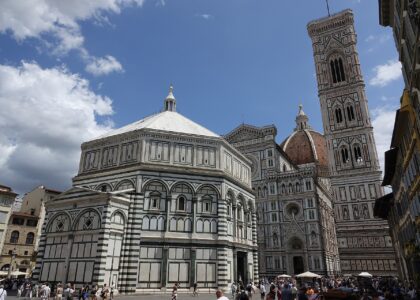
- Cathedral interior — free year-round (the €30 Brunelleschi Pass covers the Dome, Bell Tower, Baptistery and Cathedral Museum; the cheaper Giotto and Ghiberti passes skip the Dome).
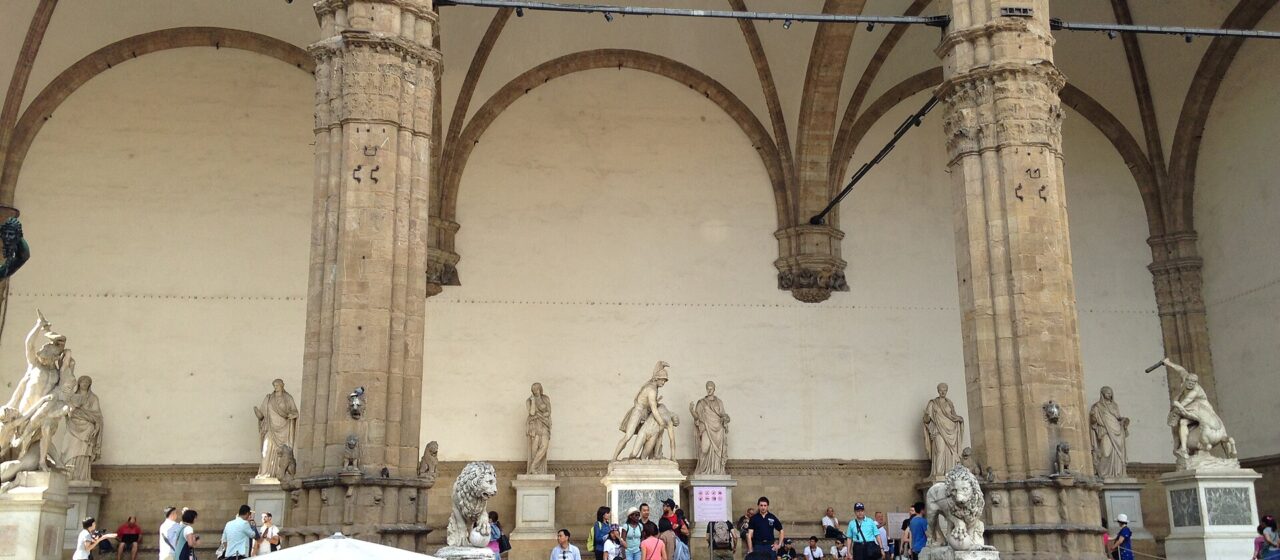
- Ponte Vecchio + the Loggia dei Lanzi sculpture gallery — outdoor Renaissance sculpture (Cellini, Giambologna) on view from Piazza della Signoria; stepping inside the Loggia is free but needs a ticket issued on site.
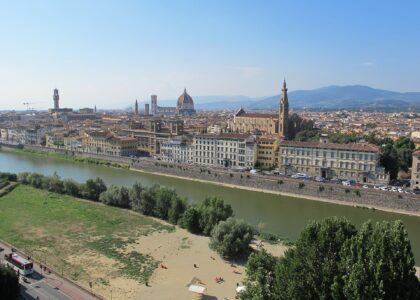
- Piazzale Michelangelo — the panoramic terrace; sunset is the day’s best free entertainment.
- Rose Garden (just below Piazzale Michelangelo) — a wide range of roses, including about 350 ancient varieties, free and open daily all year.
- Iris Garden — opens for three weeks in late April–mid-May, free.
- Santa Trinita basilica — Domenico Ghirlandaio’s frescoed Sassetti Chapel, free.
- Santo Spirito basilica — Brunelleschi’s last great church, free.
- San Miniato al Monte — hilltop basilica where the monks sing Vespers in Gregorian chant every day at 18:30, free.
- Orsanmichele Museum — Saturday-only sculpture museum (Donatello, Verrocchio, Ghiberti originals), free.
- Piazza Santissima Annunziata + Piazza della Signoria + Piazza del Duomo — outdoor museums in their own right.
Domenica al Museo (Free First Sunday)
The first Sunday of every month is free at all Italian state museums in Florence — Uffizi, Accademia, Pitti, Boboli, Bargello, Medici Chapels, San Marco, plus the smaller cenacoli and the Archaeological Museum. No advance booking; first-come, first-served. Strategy: skip the Uffizi and Accademia, where free-day queues can be long, and use the day for the smaller museums (San Marco, Bargello, Medici Chapels).
The last free Sundays of 2026 are 1 November and 6 December. In 2027 they fall on 3 January, 7 February, 7 March, 4 April, 2 May, 6 June, 4 July, 1 August, 5 September, 3 October, 7 November and 5 December.
Children Always Free
Children 0–17 of any nationality enter all Italian state museums free year-round. Family budget travellers benefit massively — a Florence trip for two adults + two children at peak season includes only the adults’ museum tickets (so €25–29 each at the Uffizi, not €100 for the family).
Transport: Walking Beats Everything

The Florence historic centre covers 505 hectares (about 5 square kilometres), compact enough to cross on foot. Taxis from the Cathedral to Pitti cost €10–14 and take longer than walking (20 minutes vs 12 minutes on foot). Expect plenty of walking each day; done that way, intra-city transport costs very little.
The exceptions where transport saves time:
- Bus 12 or 13 to Piazzale Michelangelo if you don’t want to climb the steps. €2 single ticket, valid for 90 minutes.
- Bus 7 to Fiesole if you do that day trip. Same €2 single; check AT’s line 7 timetable for journey times.
- Tram T2 to Florence Airport. €2, about 20 minutes from the Unità stop by the station (vs a fixed taxi fare of around €30, set by the city).
- Train to nearby towns (Pisa, Lucca, Siena) if you do day trips.
A 5-day budget Florence trip can run on €15 of transport tickets total (one airport tram + one Piazzale ride + a Pisa day-trip return). This is dramatically cheaper than budget travel in most other large European cities.
The Firenze Card: Worth It on a Budget?
The €85 Firenze Card lasts 72 hours and covers more than 60 museums, so whether it pays depends on your list: booked tickets for the Uffizi (€29), Accademia (€24), Pitti (€19) and Medici Chapels (€14) come to €86. If you plan only 2–3 paid museums and use free days for the rest, the card doesn’t pay off. The card is most useful for mid-range and comfort-tier travellers who want to maximise sightseeing without queueing.
The cheaper alternative for budget travellers: time your trip to include a first Sunday of the month (free Domenica al Museo), buy single tickets for the Uffizi (€29 booked) and the Accademia (€24 including the booking fee) on official sites, and rely on the dozen free attractions and churches for the rest. Total museum spend on a 4-day trip: roughly €52–67 instead of €85.
The 2026 PassePartout 5-day pass (€40 covering Uffizi + Pitti + Boboli) is a budget-friendly halfway point — saves €21 versus booking the three separately (€29 + €19 + €13), or €11 against the same-day fares, but only useful if you’ll see all three.
Budget-Friendly Day Trips
Several Tuscan day trips work on a budget when you take regional trains rather than guided tours.
- Pisa — regional train, €9.80 each way in second class (journey times vary by train). Half-day for the Leaning Tower complex (Cathedral + Baptistery + Camposanto + Tower climb €27 combined; just the exterior is free).
- Lucca — 1.5-hour regional train, €8 each way. Walled medieval town walkable on free ramparts; bike rental €4–6/hour.
- Siena — bus (1.5 hours, €9 each way) or train+bus (1.5 hours, €12). Cathedral and Palazzo Pubblico require tickets but the Piazza del Campo is free.
- Fiesole — bus 7 from Piazza della Libertà (Porta San Gallo), €2 single. Half-day for Roman ruins, hilltop village and panoramic Florence view.
- San Gimignano — bus from Florence’s bus terminal (1 hour 45 minutes, €13 each way). Towers town, walkable, mostly free.
Avoid the €50–80 guided “Tuscany day tour” packages on a tight budget — they usually combine 3 destinations in one rushed day and you can do any individual one for €15–25 self-guided.
Free Walking Tours & Pay-What-You-Want Activities
Florence has several pay-what-you-want walking tour operators; Free Florence Tours, for one, runs tip-based walks of the historic centre lasting two to three hours from Santa Maria Novella, with its current schedule on its booking page. Tip €10–15 if the guide was good. Search “Florence free walking tour” for the current rota; major operators include Strawberry Tours, Free Tour Florence and SANDEMANs.
Other low-cost or free Florence experiences:
- San Miniato al Monte’s Vespers in Gregorian chant (18:30 all year — daily, free).
- The Florentine ice-cream taste test (5 gelaterias for €15 total — Vivoli, Gelateria della Passera, La Carraia, Vestri, Perché No).
- Bookstore browsing at La Feltrinelli’s flagship and the Paperback Exchange.
- Window-shopping along Via de’ Tornabuoni — the city’s Mansion-Row architecture costs nothing to admire.
- Wandering the Oltrarno artisans’ workshops — leatherworkers, bookbinders, gilders, jewellers all open their doors to curious visitors at no cost.
- Free outdoor concerts during Estate Fiorentina (June–September) at Forte Belvedere, Bargello courtyard, Boboli, Villa Bardini.
A 4-Day Florence Budget Itinerary (Total: €330–410)
Built for the shoestring–budget tier; achievable on €80–100 per day per person.
Day 1 — Free Florence (€18 total)
Cathedral interior (free). Climb to Piazzale Michelangelo via Rose Garden (free). San Miniato al Monte basilica + Vespers (free). Lunch at Mercato Centrale upstairs (€10). Stroll Piazza della Signoria + Loggia dei Lanzi (free). Aperitivo at Il Santino (€8 spritz with buffet).
Day 2 — One Major Museum + Walking (€38)
Pre-booked Accademia (€24 with the booking fee) or, cheaper, the Uffizi’s €16 ticket for entry from 16:00. Lunch at All’Antico Vinaio schiacciata (€7). Walk to Santa Trinita basilica (free). Walk to Santo Spirito (free). Aperitivo at Le Volpi e l’Uva (€10).
Day 3 — Cenacoli + San Marco
Cenacolo di Sant’Apollonia (€5). San Marco Museum (free on the first Sunday of the month). Cenacolo di Andrea del Sarto in the former San Salvi monastery (€5). Lunch at Trattoria Mario (Via Rosina 2r). Wander Sant’Ambrogio neighbourhood. Self-cooked apartment dinner with €5 pasta + €4 wine.
Day 4 — Day Trip to Pisa or Fiesole (€20–35)
Either: Pisa via regional train (€19.60 round-trip + €5 schiacciata lunch + Tower exterior free, optional climb €27), or Fiesole via bus 7 (€4 round-trip on two singles + €10 trattoria lunch + free hilltop view).
Plus 4 nights at €35 hostel = €140 + €60 of food + €30 transport + €40 of museums + €40 of aperitivos and incidentals = ~€330 total. Add €70 if you stay in a B&B instead of a hostel.
Common Budget Mistakes to Avoid
Booking a hotel inside the Cathedral block. Walking five extra minutes from Sant’Ambrogio or San Frediano saves €40–80 per night.
Eating dinner in Piazza della Signoria or Piazza del Duomo. The same pasta you’ll pay €18 for in the piazza costs €10 two streets away.
Buying the Firenze Card with a 2-museum itinerary. If your two museums come to €40 in single tickets, the €85 card is a €45 mistake.
Taking taxis instead of walking. Florence is small. Even at midnight, a 1km walk is faster than waiting for a taxi to circle around the ZTL traffic-restriction zone.
Using ATM exchange counters at the airport. Use a no-foreign-fee card at any high-street bank ATM in town, or withdraw at Conad/Esselunga supermarket ATMs.
Booking guided wine tours when budget is tight. A €120/person Chianti tour replaces an entire day’s budget. Order a tasting flight of three half-glasses at Le Volpi e l’Uva instead (€18 for reds, €12 for whites).
Paying for bottled water at restaurants. Bring a refillable bottle and use the city’s public nasoni drinking-water fountains and your B&B tap. Restaurant bottled water is €3–5 per bottle.
Eating at restaurants with photographic menus. A near-perfect signal of tourist-only food.
Budget Tools & Apps
- Trenitalia + Italo apps — for cheap day-trip train tickets, often €5–8 cheaper than at the station.
- Booking.com filter “B&B” — surfaces cheap guesthouses that don’t appear in default hotel searches.
- HostelWorld — comprehensive hostel reviews; book 2–3 weeks ahead in shoulder season.
- The Fork (TheFork) — discounts at participating Florence restaurants; offers vary.
- Mapy.com (formerly Mapy.cz) or MAPS.ME — downloadable offline walking maps, handy for the climb to Piazzale Michelangelo.
- Google Translate (offline Italian) — for menu reading and shop conversations.
Florence Budget FAQ
Can I do Florence for €500 a week?
Yes, comfortably, in low season. €35 hostel × 7 = €245; €25 daily food average × 7 = €175; €60 of museums and one day trip = €60; transport €15; total ~€495. Adding flight or rail transport from your home country is separate.
When is the cheapest time to visit Florence?
Mid-January, February, mid-March and mid-November are the cheapest months, with hotel rates well below peak summer. The trade-off is short daylight, occasional rain, and cool temperatures — but museums are walk-in and aperitivo bars are full of locals.
Is the Firenze Card worth it for budget travellers?
Usually no. The €85 card runs for 72 hours across more than 60 museums, and it only pays if you fill those days: four big museums booked separately (Uffizi, Accademia, Pitti and the Medici Chapels) cost €86. With 2–3 paid museums and free Sundays for the rest, single tickets at official prices total €52–67 instead of €85 — a meaningful saving.
What’s the cheapest meal in Florence?
The €5.50 tripe sandwich (panino al lampredotto) at Da Nerbone or any of the Mercato Centrale stalls is the canonical Florentine cheap meal — substantial, traditional, eaten standing up. €3 pizza al taglio slices are second cheapest. €10–15 prix-fixe lunches at working trattorias are the cheapest sit-down meal.
Cheapest way from Florence Airport to centre?
Tram T2 — €2 (single Florence urban ticket, valid 90 minutes), about 20 minutes from FLR to the Unità stop by Santa Maria Novella station, then a short walk to the Cathedral area. Don’t take taxis (fixed fare €28 on weekday daytimes, €30 on Sundays and holidays, €32 from 22:00 to 06:00, plus €1.20 per bag) unless you have heavy luggage and are travelling at night.
Is Florence tap water safe to drink?
Yes — Florence’s tap water is excellent. Refill bottles at any tap or at the city’s public nasoni drinking fountains (look for green cast-iron columns). This alone saves €15–25 per week vs buying bottled water.
Cheapest Tuscan day trip from Florence?
Fiesole — €4 round-trip on bus 7 (two €2 singles), €7 for the Roman ruins of the archaeological area, free hilltop view, €10–15 lunch. Total €22.60–27.60 for a half-day in the Tuscan hills. Pisa costs about the same at around €27.60–32.60.
Florence rewards budget travellers who lean into walking, markets, free museums and Tuscan transit. The €60-a-day version of the city is just as visually rich as the €350-a-day version — Botticelli’s Birth of Venus looks the same regardless of which hotel you sleep in. Time your trip for low season, stay in San Frediano or Sant’Ambrogio, eat at Mercato Centrale and Trattoria Mario, walk everywhere, and save the splurge for a single great Tuscan dinner. Done right, Florence is one of Europe’s most generous budget cities.