This article contains advertising. Booking links on this site can be turned into paid links automatically by our partner Travelpayouts: if you book through one, we earn a commission from the provider, at no extra cost to you. It never affects what we recommend. Affiliate disclosure
Florence has four distinct seasons, a strict church dress code, and stone-paved streets between every major sight — which means the right Florence packing list saves you both money (avoiding emergency H&M trips) and aching feet. This 2026 guide breaks down exactly what to wear in Florence by season, the church-and-museum dress requirements that turn travellers away at doors, the shoe choices that survive Florentine cobbles, and the small-but-essential extras (universal adapter, refillable water bottle, scarf for chilly evenings) that every Florence traveller eventually wishes they’d packed.

Pack for two things Florence will definitely ask of you: cobblestones and church doors. Our month-by-month weather guide covers the temperature side, the church dress code guide covers covered shoulders and knees, and walking in Florence explains why the shoes matter more than anything else.
Year-Round Florence Packing Principles
Five rules apply every month of the year:
- Layer everything. Florence’s stone-built historic centre creates strong temperature swings — chilly mornings, hot middays, cool evenings. Year-round, pack clothes you can add and remove without a hotel return.
- Cover shoulders and knees for church visits. The Cathedral, Santa Croce, Santa Maria Novella and most other Florentine churches enforce a dress code, and you will be turned away. Even in summer, carry a light scarf or shawl.
- Wear in your shoes before arriving. Cobblestones punish brand-new sneakers, so give any new pair some proper walks at home before the trip.
- Italians dress smart-casual. Florence isn’t Rome (less formal) and isn’t Milan (much less formal), but locals favour clean, fitted clothes over athleisure. You’ll feel out of place in shorts at a 19:30 dinner and very out of place in flip-flops anywhere except the river.
- Pack light. Florence’s narrow apartment stairs, ZTL traffic-restricted streets, and small hotel rooms reward a single carry-on. Santa Maria Novella station sits in the heart of the city, but how far you wheel a case from it depends on where you are staying.
Florence Church Dress Code (Strict)
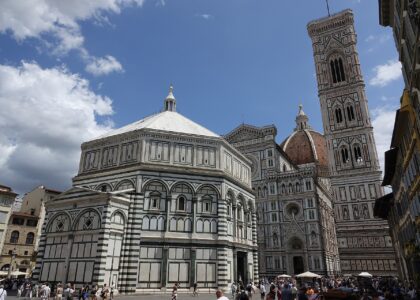
The Cathedral (Duomo), Baptistery, Santa Croce, Santa Maria Novella, San Lorenzo and most major Florentine churches enforce a dress code requiring covered shoulders and knees. Specifically:
- No tank tops, sleeveless tops, or spaghetti straps. T-shirts (short or long sleeve) are fine.
- No off-shoulder or crop tops. Bare midriff is automatic refusal.
- No shorts above the knee. Bermuda-length shorts (just at the knee) are usually permitted; mini-shorts are not.
- No mini-skirts. Skirts and dresses must reach the knee.
- Bare feet, flip-flops, and beachwear are typically refused.
- Hats off inside the church, baptistery, and most museums.
The dress code is enforced at the door — security staff visually scan for compliance. Travellers turned away typically buy a €5 paper poncho-shawl from souvenir vendors near the Cathedral and try again. Carrying your own light scarf or pashmina is a less embarrassing solution.
Museum dress codes are far more relaxed (the Uffizi Galleries, Pitti included, ask only for clothing suited to a formal museum and refuse bare feet and bare chests) — but the Cathedral complex (€30 Brunelleschi Pass), Cathedral interior (free), Santa Croce (€10, plus €1 when booked online), Santa Maria Novella and the San Lorenzo cloister (both ticketed), and the Brancacci Chapel (€15 full ticket, €10 reduced) all enforce church rules.
What to Wear in Florence in Spring (March–May)
Spring warms steadily: March averages about 5°C overnight and 16°C by day, while May reaches about 24°C in the afternoon and 12°C at night, with frequent rain and gradually lengthening days. The packing principle is layers and an umbrella.
Essential Spring Items
- Lightweight waterproof jacket — packable, hood, water-repellent. Spring brings roughly seven to nine rainy days a month.
- Light merino wool sweater or fleece — for cool mornings and evenings.
- Long-sleeve tops + 2–3 short-sleeve t-shirts — layerable for changing afternoon temperatures.
- Jeans + 1 lighter trouser (chinos, linen blends).
- One smart-casual outfit — for nicer dinners.
- Light scarf — both warmth and church-cover.
- Waterproof shoes / boots for the early-spring rain.
- Compact umbrella.
- Sunglasses — late April and May are bright.
Late Spring Specifically (Mid-May)
By May, average daytime highs reach about 24°C and the wardrobe shifts toward summer. Add a couple of cotton dresses, lightweight shirts, and one pair of comfortable shorts for non-church days. Keep the merino sweater for evenings.
What to Wear in Florence in Summer (June–August)
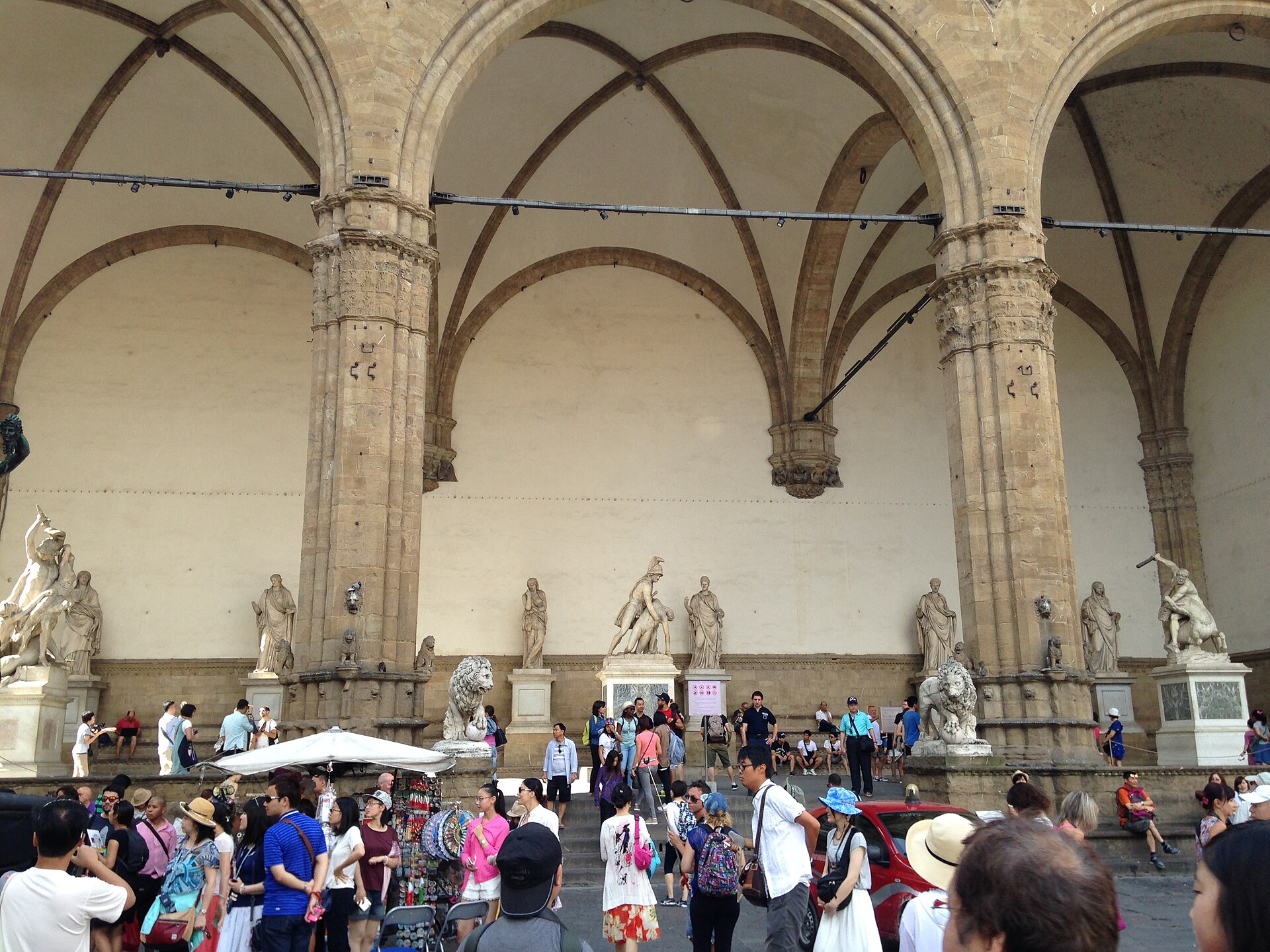
Summer in Florence is hot, July and August most of all, and afternoons in the stone-built centre are the hardest part of the day. Pack for breathability, sun protection, and church-compliant cover-ups.
Essential Summer Items
- Lightweight breathable t-shirts and tops — cotton, linen, or moisture-wicking technical fabrics. Pack 5–7.
- 2–3 lightweight trousers / capris — full or 7/8 length for church visits.
- 2 pairs of shorts — knee-length is church-compliant; mini-shorts are not.
- 2–3 cotton or linen dresses or skirts — knee-length, modest enough for church entry.
- Light cardigan or shawl — for over-air-conditioned museums and dinner-time evenings.
- Light scarf or pashmina — non-negotiable for women planning to enter churches in tank tops.
- Wide-brim sun hat — Florence’s midday sun is fierce.
- Sunglasses with UV protection.
- High-SPF sunscreen (SPF 50+).
- Refillable water bottle — Florence has free public drinking fountains (nasoni) every few blocks.
- Travel-size deodorant — restocked at any Florence pharmacy if you run low.
Summer Evenings
Florentine evenings stay warm, but riverside Lungarno walks and rooftop dinners can feel cool. Throw a light scarf or sweater into your day bag for evening use — and remember the indoor venues’ aggressive air conditioning, which catches travellers in tank tops by surprise.
Fabrics to Avoid in Summer
Heavy denim, polyester athleisure, and tight synthetic activewear are uncomfortable in Florence’s humid heat. Linen, cotton, lightweight wool, and breathable technical fabrics are dramatically more pleasant. Pack one pair of jeans for cool evenings if you must, but don’t make jeans your main trousers.
What to Wear in Florence in Autumn (September–November)
Autumn is the most variable season for Florence packing. September is essentially summer’s tail (average highs about 27°C); October is a comfortable middle (about 22°C); November cools steeply (about 16°C), and the rain builds as the season goes on. Pack like spring but in slightly heavier weights.
Essential Autumn Items
- Mid-weight jacket — denim, leather, or a packable down for late autumn.
- Sweaters and cardigans — wool or cotton-blend, 2–3 of varying weights.
- Long-sleeve tops + a few short-sleeve for warm September days.
- Jeans, chinos, and a smart-casual trouser.
- Closed-toe leather shoes / ankle boots — cobblestones in autumn leaves and rain demand grip.
- Compact umbrella — November is Florence’s wettest month (about 115 mm of rain, falling on around 10 days).
- Scarf — both warmth and Italian style.
- Sunglasses — Tuscan autumn light is sharp and low-angled.
What to Wear in Florence in Winter (December–February)
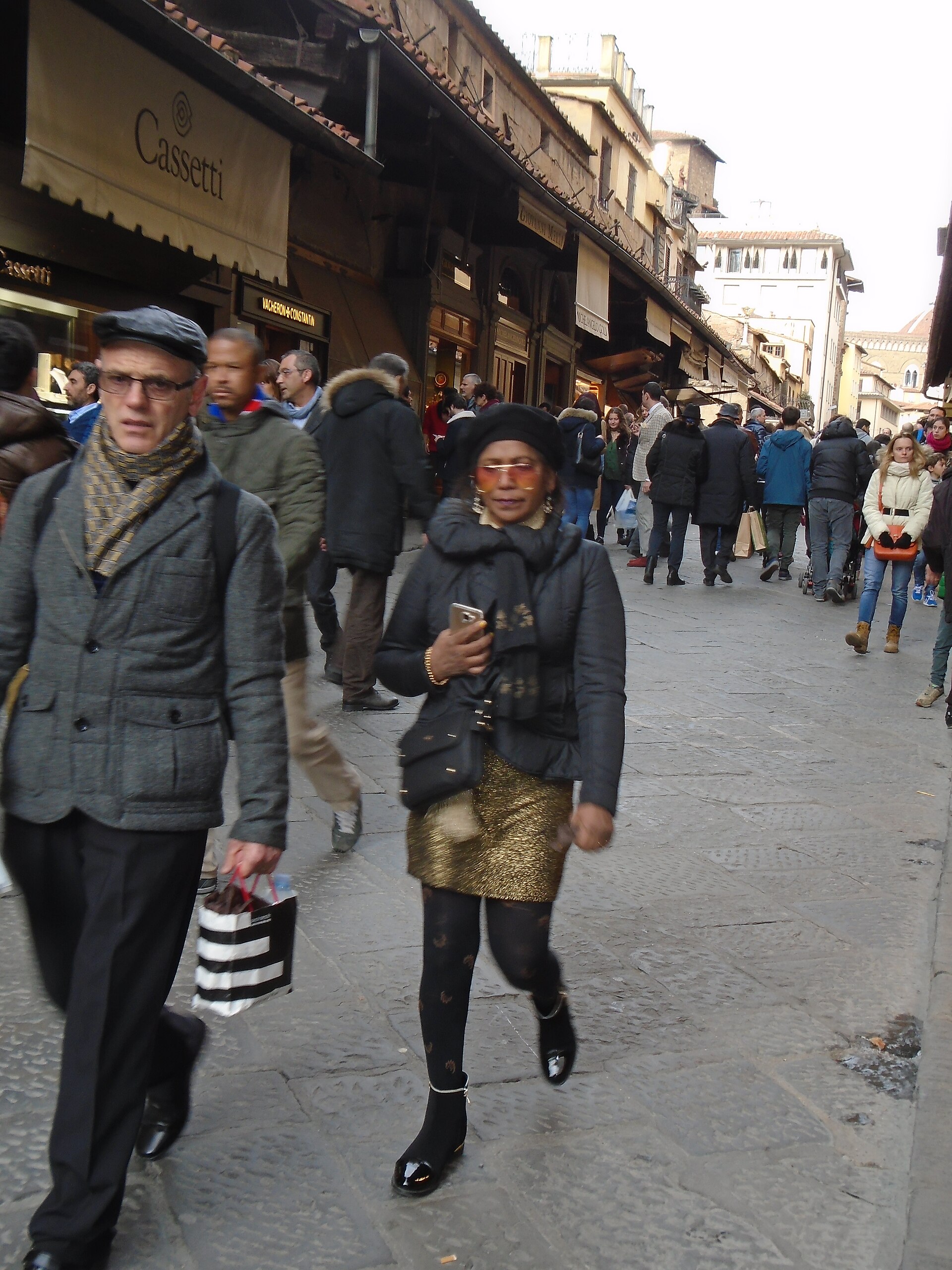
Winter in Florence is cool rather than bitter — average daytime highs of about 11–13°C and overnight lows of about 2–3°C, so frosty mornings are common, though snow is rare. The damp air makes the cold feel sharper than the thermometer suggests, so warmer layers feel more necessary than the temperature alone implies.
Essential Winter Items
- Warm waterproof winter coat — wool overcoat or insulated parka. Wind-resistant is preferable to thick.
- Heavy sweaters — 2–3 wool or cashmere knits.
- Long-sleeve tops + thermal undershirts for under sweaters.
- Warm trousers — wool or fleece-lined jeans.
- Wool or merino scarf — Italians wear scarves all winter; an Italian-cut scarf is also instantly stylish.
- Leather gloves or knit gloves.
- Warm wool hat.
- Waterproof leather boots or insulated shoes — the most important winter purchase. Slush and rain on cobblestones are unforgiving on canvas sneakers.
- Compact umbrella.
- Lip balm + heavier moisturiser — Florence’s winter humidity drops sharply with the heating.
Italian Winter Fashion Tips
Florentines layer extensively. A typical local winter outfit: thermal undershirt + button-down + wool sweater + scarf + wool overcoat. The scarf is the signature item — wide, wool, often patterned, and worn loose around the neck even indoors.
Avoid: bright outdoor-sport puffer jackets in neon colours, baseball caps with logos, hoodies as outer layers. These mark a tourist instantly. A neutral wool overcoat blends in.
The Florence Shoe Strategy
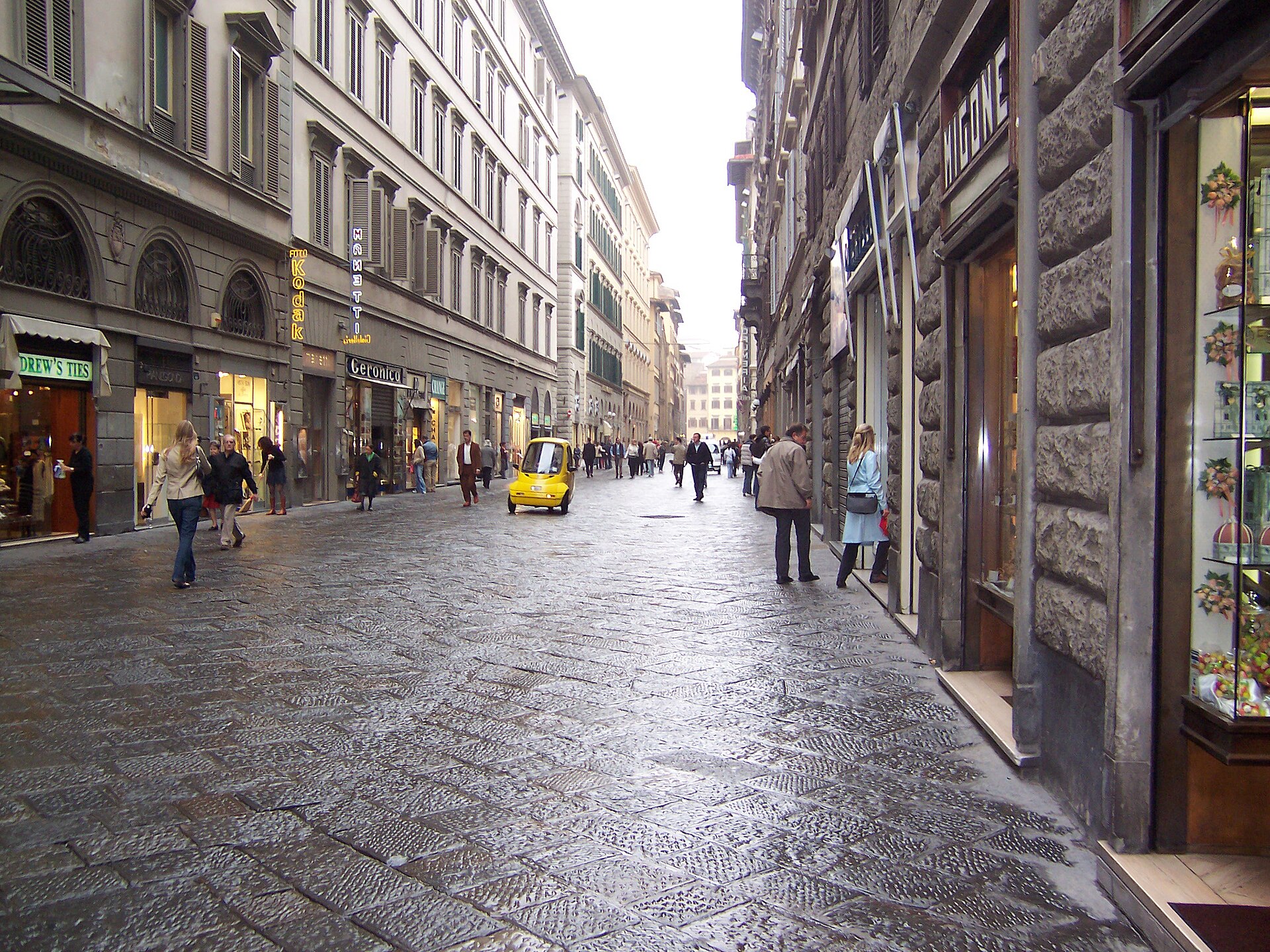
The single most consequential packing decision for Florence is shoes. Much of the historic centre is paved in pietra forte sandstone flagstones, uneven and slippery in places, and a day of sightseeing here is a long day on foot. Choose:
- For summer: leather sandals (closed-back, with arch support — not flat flip-flops), or canvas sneakers. Avoid heels above 3cm.
- For shoulder seasons (spring/autumn): leather sneakers, ballet flats with cushioned insoles, or low ankle boots.
- For winter: waterproof leather boots or weatherproofed sneakers. Avoid suede (Florence’s rain ruins it).
- For nicer dinners: smart leather loafers or low-block heels (under 5cm). Stilettos catch in cobble gaps and high heels are torture after a day’s sightseeing.
Pack 2 pairs of shoes, alternate them daily, and break in before arriving in Florence. The blister risk is real — plan to walk 5–10km in your packed shoes at home before the trip.
Florence is a leather-goods city. If your shoes fail, the leather school at Santa Croce, the artisan workshops in Oltrarno, and the boot makers around Sant’Ambrogio sell quality replacements at €100–250. Cheaper sneakers are at the Tornabuoni-area chain stores (Geox, Clarks, Decathlon). Don’t try to “save money” with footwear in Florence.
Year-Round Essentials
- Universal European adapter (Italy uses Type C, F and L plugs — a multi-format adapter handles all). Buy before you leave; airport prices triple.
- Power bank 10,000 mAh+ for long sightseeing days.
- Refillable water bottle 750ml–1L; refill at the public nasoni.
- Crossbody anti-theft bag — Florence pickpockets target loose backpacks; a zipped crossbody worn front-of-body is the standard local solution.
- Money belt or hidden pouch for passport and emergency cash if you’re staying multi-week.
- Lightweight day pack for daily sightseeing — backpacks larger than 30L must be checked at the Uffizi and Accademia.
- Compact umbrella — folds to handbag size.
- Reusable bag for market shopping; Italian supermarkets charge €0.10–0.30 for plastic bags.
- Travel insurance documentation printed and digital.
- Photocopies of passport + driving licence kept separately from originals.
- Italian phrasebook or downloaded translation app with Italian-language pack offline-saved.
Toiletries (and What to Buy Locally)
Florence is a fully equipped European city — virtually every toiletry is available at farmacia (pharmacy, green cross signage) or supermarket. Don’t overpack toiletries.
Buy locally: shampoo, conditioner, soap, deodorant, sunscreen (SPF 50+ at any Italian pharmacy), razors, toothpaste, contact-lens solution, painkillers (paracetamol/ibuprofen), antacids, plasters, allergy tablets. Italian pharmacy products are often cheaper and higher-quality than the airport-grade options.
Pack from home: prescription medications (with doctor’s note), specialty skincare, contact lenses (extra pairs), feminine hygiene items in your preferred brand, contact lens cleaner if you wear gas-permeable lenses.
Near the Duomo, Farmacia Molteni is at Via dei Calzaiuoli 7r. The Farmacia Comunale 13 at Santa Maria Novella station is 24-hour.
Electronics & Tech
- Smartphone with eSIM or Italian SIM — international roaming bills can sting; an Italian eSIM (Iliad, Vodafone, TIM) is €15–30 for tourist plans with generous data.
- Wall adapter, plus an extension lead with multiple outlets if you’re charging multiple devices.
- Camera if you use one beyond your phone — DSLRs are permitted at most museums except in some temporary exhibitions; tripods are not. Selfie sticks are not permitted in any state museum.
- Headphones — useful for museum audio guides (Uffizi and others sometimes accept BYO headphones with their audio system).
- Lightweight laptop if you’re working remotely; co-working space passes (Multiverso, Nana Bianca, Talent Garden) cost €15–25 per day.
Luggage Strategy
For trips of 3–7 days, a carry-on rolling suitcase (check your airline’s size limit, which varies by carrier and fare) plus a small day pack covers virtually all needs. For longer trips, a 23kg checked bag adds depth.
Practical considerations:
- Cobblestones are murder on small wheels. Choose 4-wheeled spinners with reinforced wheel construction or a soft-sided duffel with shoulder strap. Two-wheel pull-along bags struggle on Florence’s medieval pavement.
- Apartments often have stairs. Ask the property about lift access before you book; in an old building without one, a heavy suitcase becomes a daily fitness exercise.
- Train station to hotel walk depends entirely on your address, so look up the route from the station before you arrive.
- Bring a packable spare bag for souvenirs — leather goods, ceramics, wine, food gifts. A foldable duffel that’s free to check on the return flight saves €50+ on baggage fees.
Looking Less Like a Tourist
Florentines dress smart-casual with strong colour discipline (mostly neutrals — navy, grey, cream, brown, olive — with one accent piece) and an attention to fit that comes from a lifetime of small-town style consciousness. Travellers stand out when they:
- Wear neon athleisure as casual wear
- Pair logo-heavy sportswear with sneakers
- Use cargo shorts in town
- Wear a fanny pack or visible money belt
- Carry oversized backpacks while sightseeing
- Wear heavy hiking boots in the historic centre
Easier blends: a fitted button-down or polo, dark trousers, neutral leather sneakers, a wool scarf, sunglasses. Add a structured jacket for evenings. The total wardrobe is smaller and quieter than typical American or Australian travel attire — pack 70% of what you’d otherwise bring, with each piece in coordinating neutrals.
Common Florence Packing Mistakes
Brand-new shoes. Cobblestones + new soles = blisters by day two. Break them in with proper walks before you fly.
Heels for cobblestones. Stilettos and tall block heels are unwearable on Florentine pavement. A 3cm low block or a fitted leather sneaker is dressier than you’d expect and ten times more comfortable.
Forgetting a scarf or shawl in summer. Without it, you risk being turned away at the Cathedral door, or paying for a €5 paper poncho to get in.
Packing for a heatwave when visiting in shoulder season. Spring and autumn evenings turn surprisingly cool — pack layers and a sweater.
Bringing a giant backpack. Large backpacks have to go into the cloakroom at the major museums, and the bag-drop queue can be slow in summer. A tote or smaller daypack avoids this.
Skipping sunscreen for spring/autumn visits. Tuscan light is more intense than the temperature suggests; skin burns even on overcast May days.
Over-packing toiletries. Italian pharmacies stock everything; carrying full-size shampoo bottles wastes weight allowance.
Forgetting a power bank. Give the Uffizi a long visit, say four hours, with the camera in constant use, and your phone can be flat by mid-afternoon.
Packing Cubes by Trip Length
Weekend (3–4 days, carry-on only)
4 tops, 2 bottoms, 1 dress / smart trouser, 1 sweater or jacket, 4 sets of underwear, 1 pair pajamas, 2 pairs of shoes, 1 scarf, swimsuit (optional summer), light raincoat (any season), small toiletry bag, day pack. Plus the universal essentials list above.
Week (5–7 days)
6 tops (2 short-sleeve + 4 long), 3 bottoms, 2 dresses or smart trousers, 2 sweaters of different weights, jacket appropriate to season, 7 sets of underwear, 2 pairs pajamas, 2–3 pairs of shoes, 2 scarves, swimsuit (optional), full toiletry kit, day pack. Hotel laundry runs €15–25; coin laundromats (lavasecco) cost €5 wash + €5 dry.
Long Trip (10+ days)
Plan to do laundry once per 6–7 days. Pack as the week list above plus a separate set of “outdoor walking” clothes (one pair of dedicated walking trousers + 2 hiking-style tops). Leather goods you buy in Florence will fill any small spare-bag weight allowance — bring a foldable duffel for souvenirs.
Florence Packing FAQ
Can I wear shorts in Florence?
Knee-length shorts (Bermuda) are fine for the streets and most museums and restaurants. Mini-shorts are visually disapproved (locals don’t wear them) and refused at all major churches. For church visits, change into trousers or a knee-length skirt.
Can I wear flip-flops in Florence?
Florentines reserve flip-flops for the beach and won’t wear them in the city. Closed-back leather sandals are the local equivalent. Flip-flops are also typically refused at churches.
Do I need formal clothes in Florence?
Only if you’re attending opera (Maggio Musicale Fiorentino in May–June) or a Michelin-starred restaurant. Smart-casual (a button-down + chinos for men, a dress or smart blouse + trousers for women) covers virtually all Florence dining and evening venues.
Should I save room for leather goods?
Yes — Florence is a leather city. Bags, wallets, jackets and belts at the Mercato di San Lorenzo and the Santa Croce leather school are 30–60% cheaper than equivalent quality at home. Pack a foldable duffel or leave 30% of carry-on capacity unused for the return.
What’s the single most important seasonal item?
For winter: a warm waterproof coat. For summer: a wide-brim sun hat and 50+ sunscreen. For spring and autumn: a packable rain jacket and a wool scarf. Every season: comfortable broken-in shoes.
Where can I do laundry in Florence?
Coin laundromats (search “lavanderia self-service”) cost €4–6 wash + €4–6 dry, scattered throughout the city particularly around Santa Maria Novella station and San Frediano. Hotel laundry costs €15–25 per load, often returned the next day. Apartments with washing machines are the cheapest option for stays of 4+ nights.
Should I pack a refillable water bottle?
Yes — Florence has free public drinking-water fountains (nasoni) every few blocks plus tap water at every B&B. A 1L bottle saves €15–25 per week on bottled water and is the single highest-value packing item for budget travellers.
The right Florence packing list balances seasonal weather, church-compliant cover-ups, cobblestone-friendly footwear, and Italian style. Pack lighter than you think — Florence is a fully equipped city where almost any forgotten item can be replaced cheaply at a pharmacy, supermarket, or chain store. Pack better shoes than you think — those are the only items where compromise costs you the trip’s enjoyment. Build the wardrobe around layers, neutral colours, and one good scarf, and you’ll move through the city like a local.