This article contains advertising. Booking links on this site can be turned into paid links automatically by our partner Travelpayouts: if you book through one, we earn a commission from the provider, at no extra cost to you. It never affects what we recommend. Affiliate disclosure
“When should I go?” is the most consequential decision you’ll make about a Florence trip — more important than where you stay or which museums you book. Florence in late October is a deeply different city from Florence in late July: cooler, cheaper, less crowded, and with completely different daylight, food, and travel rhythms. This 2026 guide covers Florence’s weather month by month, the trade-offs between crowds, prices and weather, the festivals that move dates around, the seasonal events you might want to plan around, and a clear recommendation for each type of traveller (couples, families, art lovers, budget-conscious, photographers).

For month-by-month temperatures, rainfall and what to expect underfoot, see our Florence weather guide.
The single most underrated window in the year is the first half of December: cheap hotels, empty museums, and the lights on from the 8th. Our Christmas in Florence guide explains why that fortnight beats the holiday week itself.
Easter week is busy, with hotel rates near their summer peak — and one genuinely unrepeatable morning in the middle of it. Our guide to Easter in Florence weighs the crowds against the Scoppio del Carro.
If one month has to win, it is probably this one — with the caveat that the first half is nearly as busy as July. Our guide to Florence in October explains why the last ten days are the sweet spot.
Everyone recommends the shoulder season and then names May and September. The actual off season is covered in our guide to Florence in November — no queues, the year’s lowest rates, and dark by quarter to five.
One month contains both the cheapest and one of the most expensive weeks of the year, ten days apart. Our guide to Florence in December explains exactly where the line falls.
If your only priority is having the place to yourself, this is the answer. Our guide to Florence in January covers the cheapest fortnight of the year and is honest about the cold that comes with it.
February still sits in the winter low season, before Easter demand starts to build. Our guide to Florence in February weighs the cold against the empty museums.
If you want one month picked for value rather than weather, this is it — five hours of sun a day, a fortnight’s booking notice at the Accademia and no queue worth the name. Our guide to Florence in March makes the case, and is clear about where it falls down.
For a first visit, this is the month to beat: twenty-degree afternoons, the gardens at their peak and light until past eight. Our guide to Florence in April is honest about what that costs in queues and room rates.
If you have one week and no constraints, this is the month — twenty-four degrees, eight hours of sun a day and light until half past eight. Our guide to Florence in May makes the case and is blunt about what it costs in queues.
The strongest events month of the year, bought with a five-degree jump in the average afternoon. Our guide to Florence in June weighs Calcio Storico and the fireworks against the heat, and says which half of the month to pick.
The hardest month for sightseeing and one of the best for evenings. Our guide to Florence in July is honest about which of those you are buying, and how to restructure a day so the heat stops mattering.
The most misrepresented month in the Florentine year, in both directions. Our guide to Florence in August sets out who should come, who should wait for September, and why the last week beats the first.
If one month has to do everything — weather, opening hours, food and a manageable crowd — this is the one that comes closest. Our guide to Florence in September makes the case, and is precise about which fortnight.
Quick Recommendation
If you want a single answer: late September to mid-October is the optimal balance of weather, light and crowd levels in Florence. Average highs ease from about 27°C in September to 21.5°C in October, when lows are near 11°C; October is also one of the wettest months, so pack for rain. The Tuscan grape harvest runs through September and October, with timing varying from vineyard to vineyard. Hotel rates sit well below peak summer.
If you can’t make autumn work: mid-April to mid-May is the spring equivalent — wisteria peaks, irises bloom, the iris garden and rose garden open, and Easter celebrations bring the city alive. Crowds are noticeably higher than autumn but still well below peak summer.
The two single worst months for most visitors: July and August, when temperatures regularly exceed 35°C and some local restaurants and shops close around the Ferragosto holiday on 15 August, so check a place’s August opening days before you count on it. The single best months for budget travellers: November (wet but cheap), February (cold but extremely cheap), and the second half of January.
Florence Weather Month by Month (Climate Averages)
| Month | Avg High | Avg Low | Rain Days | Sunshine Hours | Crowd Level |
|---|---|---|---|---|---|
| January | 11.2°C / 52°F | 2.1°C / 36°F | 7.5 | 3 hrs | Very Low |
| February | 12.7°C / 55°F | 2.5°C / 37°F | 7.2 | 4 hrs | Low |
| March | 16.2°C / 61°F | 5.1°C / 41°F | 7.0 | 5 hrs | Low–Mid |
| April | 20.0°C / 68°F | 8.1°C / 47°F | 8.7 | 6.2 hrs | Mid–High |
| May | 24.3°C / 76°F | 11.9°C / 53°F | 7.6 | 7.8 hrs | High |
| June | 29.1°C / 84°F | 16.0°C / 61°F | 5.2 | 9 hrs | Very High |
| July | 32.3°C / 90°F | 18.4°C / 65°F | 2.9 | 10.1 hrs | Peak |
| August | 32.4°C / 90°F | 18.5°C / 65°F | 4.0 | 9 hrs | Peak |
| September | 27.3°C / 81°F | 15.0°C / 59°F | 6.2 | 7 hrs | High |
| October | 21.5°C / 71°F | 10.9°C / 52°F | 8.8 | 4.9 hrs | Mid–High |
| November | 15.6°C / 60°F | 6.4°C / 44°F | 10.0 | 3.7 hrs | Low |
| December | 11.4°C / 53°F | 2.6°C / 37°F | 9.6 | 4 hrs | Low (peak between Christmas–New Year) |
Florence sits in an Apennine valley with limited air movement, which exaggerates both summer heat and winter humidity compared to coastal Italy. Summers are hot, and winters feel colder because of damp air. Pack accordingly: lightweight breathable layers in summer, warm waterproof layers (umbrella mandatory) in winter and shoulder seasons.
Spring in Florence (March–May)
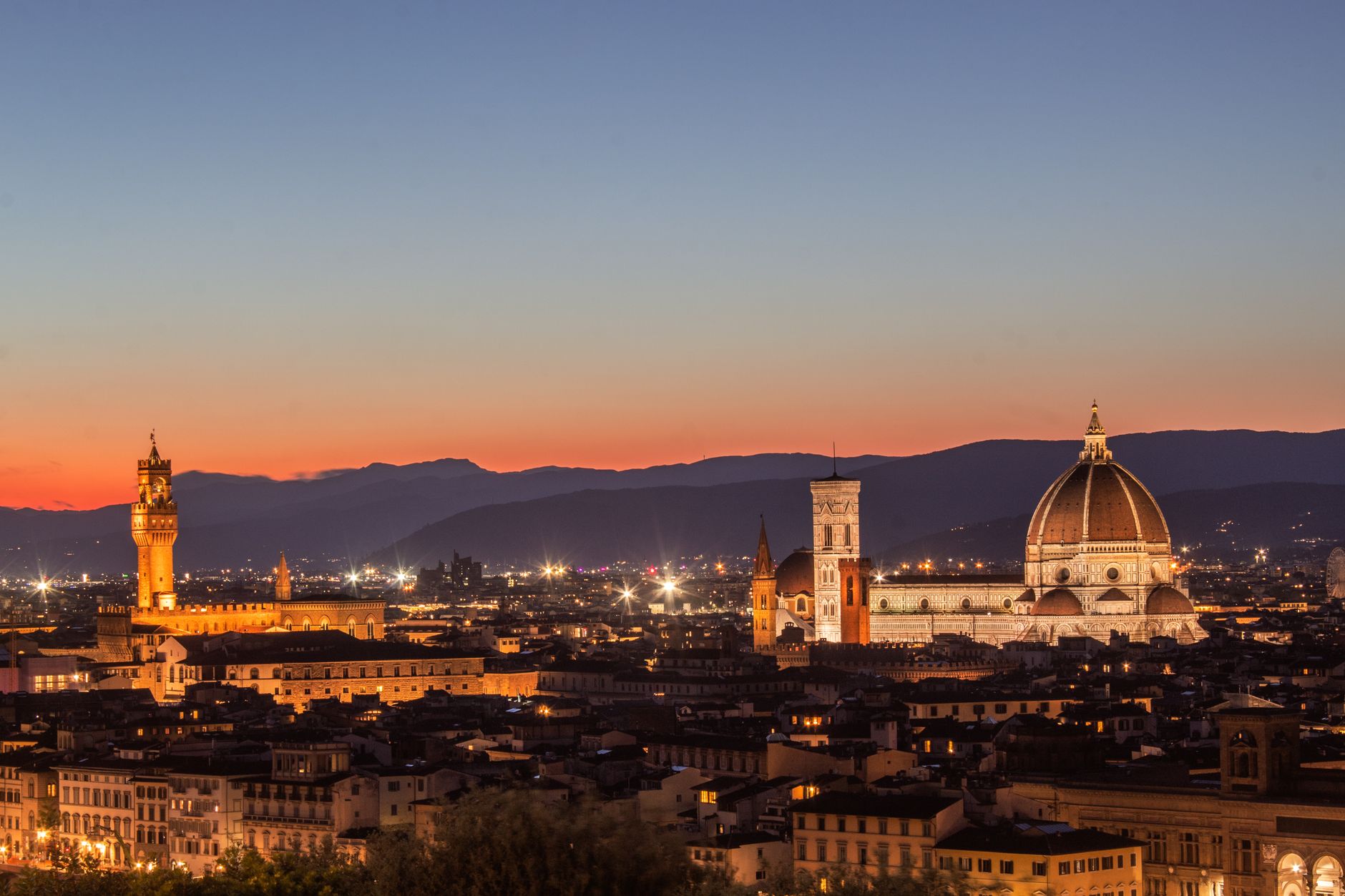
Spring is Florence’s blooming season — gardens reopen, daylight stretches, the Arno reflects soft lemon-light, and the surrounding Chianti hills turn green. The shoulder is roughly mid-March to mid-May; weather is variable but nearly always wearable, with the average high climbing from about 16°C in March to 24°C in May.
March
March is winter’s tail. Cooler, often grey, with around 7 rainy days. Crowds are still low until the late-March Settimana dei Musei (Italian Culture Week) brings free state museum entry for several days — book Florence accommodation late March if you specifically want to ride the wave. Museum slots are easier to find than in spring and summer, and hotel rates remain at low-season levels, well below peak summer.
April
April is the spring inflection point. Average high 20°C, sunshine increases noticeably, and Florence’s gardens — Boboli, Bardini, the Rose Garden — wake up. Easter falls between late March and late April depending on the year (in 2027 it falls on 28 March), bringing the famous Scoppio del Carro (Explosion of the Cart) Easter Sunday tradition: a cart full of fireworks is drawn by oxen to Piazza del Duomo, ignited by a mechanical dove from the Cathedral high altar during the Gloria of Easter Mass, at about 11:00. The crowd is enormous; arrive at 08:00 for the Cathedral and a piazza spot.
Wisteria peaks in the second half of April: the Bardini Garden’s wisteria walkway is one of the most photographed scenes in Italian travel media. The iris garden above Piazzale Michelangelo opens each spring for the iris bloom, with free entry; its 2026 season ran from 25 April to 20 May, and the Società Italiana dell’Iris publishes the next season’s dates on its site.
May
May is Florence’s most beautiful month — long sunny days (about 8 sunshine hours, 24°C high), iris and rose blooms, every garden in colour. The downside is crowds: by mid-May, museum slots need booking well ahead and hotel rates climb towards their peak. The Maggio Musicale Fiorentino opera and music festival is based at the Opera di Firenze; the 2027 festival opens on 18 April, and ticket prices depend on the performance and seat, so check the festival’s own listings.
1 May is a national holiday — most state museums close, restaurants offer reduced service, and Rome stages its big annual Primo Maggio concert in Piazza di San Giovanni in Laterano (Rome’s official tourism site lists each year’s edition).
Summer in Florence (June–August)
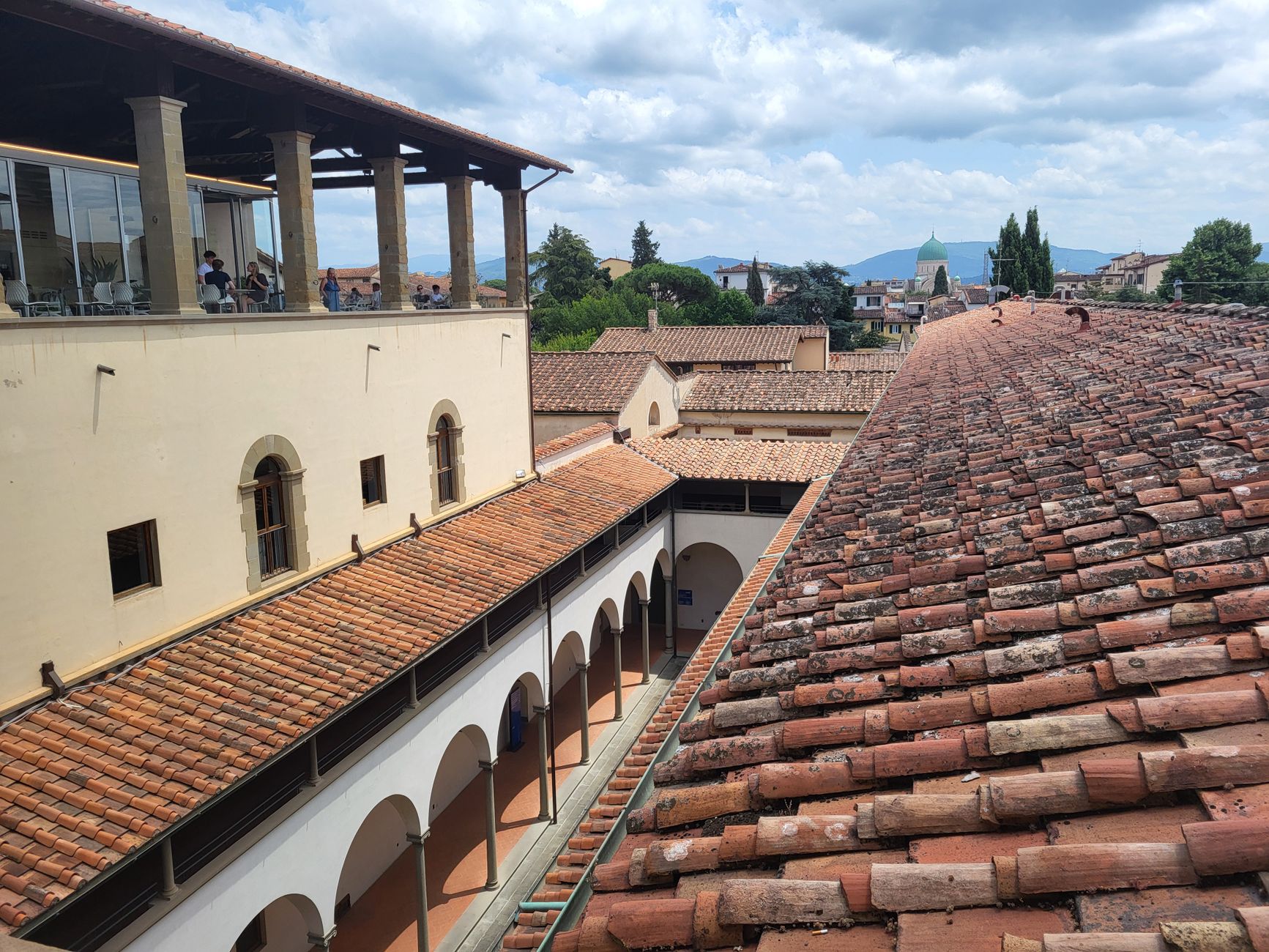
Summer is Florence’s most divisive season. Evenings are long and light, and the summer programme brings outdoor concerts, cinema and theatre to venues across the city. But summer is also expensive, hot, and uncomfortably crowded. Choose summer if you specifically want long evenings and outdoor events; choose another season if comfort or budget matters.
June
June is the most pleasant of the three summer months — average high 29°C, sunny, dry. Major events include Calcio Storico Fiorentino (the medieval Florentine football tournament in Piazza Santa Croce, with its final on 24 June; the City of Florence announces match dates, ticket prices and on-sale dates each year), the Festa di San Giovanni (Florence’s patron saint day, 24 June; the city’s official tourism programme gives the fireworks details), and the start of Estate Fiorentina (Summer in Florence) — the city’s umbrella programming for free outdoor concerts, cinema, dance and theatre at venues across town. The Opera di Firenze, the Boboli Gardens, the Forte Belvedere and Villa Bardini all host free or low-cost summer events.
July
July is hot. Average highs 32°C, and heatwaves can push the temperature considerably higher. Mornings before 11:00 and evenings after 19:00 are pleasant; midday is exhausting. Not every room has reliable air conditioning, older B&Bs and apartments especially — check before booking. The Florence Dance Festival is a summer fixture, held in 2026 in the Chiostro Maggiore of Santa Maria Novella; the festival’s own site carries the next edition’s dates and venue. The trade fairs cluster in June rather than July: Pitti Uomo (the international menswear fair) runs 15–18 June 2027, followed by Pitti Bimbo (children’s fashion, 23–24 June) and Pitti Filati (yarns, 23–25 June).
August
August is Italy’s national holiday month. Ferragosto (15 August) is the formal national holiday, and around it some family-run shops, butchers, bakers and neighbourhood trattorias close for their summer break, so check a place’s August opening calendar before you plan around it. Tourist-facing businesses (major museums, big hotels, chain restaurants) stay open, but the local fabric of the city visibly thins. Heat is identical to July (32°C average high), and the population is heavily skewed toward foreign tourists.
The upside: hotel rates often dip in mid-August (Italians don’t book Florence in August — they’re at the beach). A 4-star room that costs €350 in late June can drop to €230 in mid-August. If you can tolerate the heat and the absence of trattoria life, August is paradoxically a budget option.
Autumn in Florence (September–November)

Autumn is — by quiet expert consensus — the best season in Florence. Temperatures cool gradually from mid-September into November, the surrounding Tuscan countryside enters its harvest months (grape and olive), the city food scene shifts toward heartier seasonal dishes (chestnuts, wild mushrooms, white truffle, the new olive oil olio nuovo), and crowds drop noticeably from September’s first week onward.
September
September is summer’s tail — the average high for the month is 27°C, with the heat easing as October approaches. Crowds remain high through the first week (Italian schools return in mid-September, and many European travellers come specifically because they remember crowded summer Florences). By the third week, the city visibly relaxes.
Major events: the Rificolona (held on 7 September in 2026; Feel Florence publishes each year’s procession programme) is a charming neighbourhood festival in which children parade with paper lanterns to Piazza Santissima Annunziata — a fading but lovely Florentine tradition. European Heritage Days (last weekend of September) opens many palaces, churches and private spaces normally closed to the public, often free.
October
October is widely considered Florence’s optimal month. Average highs around 21°C and lows around 11°C, and it is one of the wettest months, with rain on about nine days. Light is exceptional — golden-hour photographers find late October’s low-angle Tuscan light unmatched anywhere else in Italy. Tuscan harvest activities (grape vendemmia, olive raccolta) are at full pace; day trips to Chianti, San Gimignano or Montalcino are at peak rewards. Hotel rates settle into pre-Christmas low season.
Major events: Florence Marathon (last Sunday of November but with training events through October) and various truffle fairs in nearby San Miniato (October–November).
November
November is wet (Florence’s rainiest month, with 115 mm of rain over about 10 days on average) but cheap. Temperatures 6–15°C — sweater weather but not yet winter coats. Many travellers find November Florence the most “real” experience: locals back at work, Christmas crowds not yet arrived, the centre walkable and uncrowded. Museum bookings are nearly walk-up. The annual olio nuovo (new olive oil) arrives in mid-November and is sold at the Mercato Centrale and small Tuscan estates — pungent, peppery, electric green, completely unlike the supermarket olive oil most travellers know.
Winter in Florence (December–February)
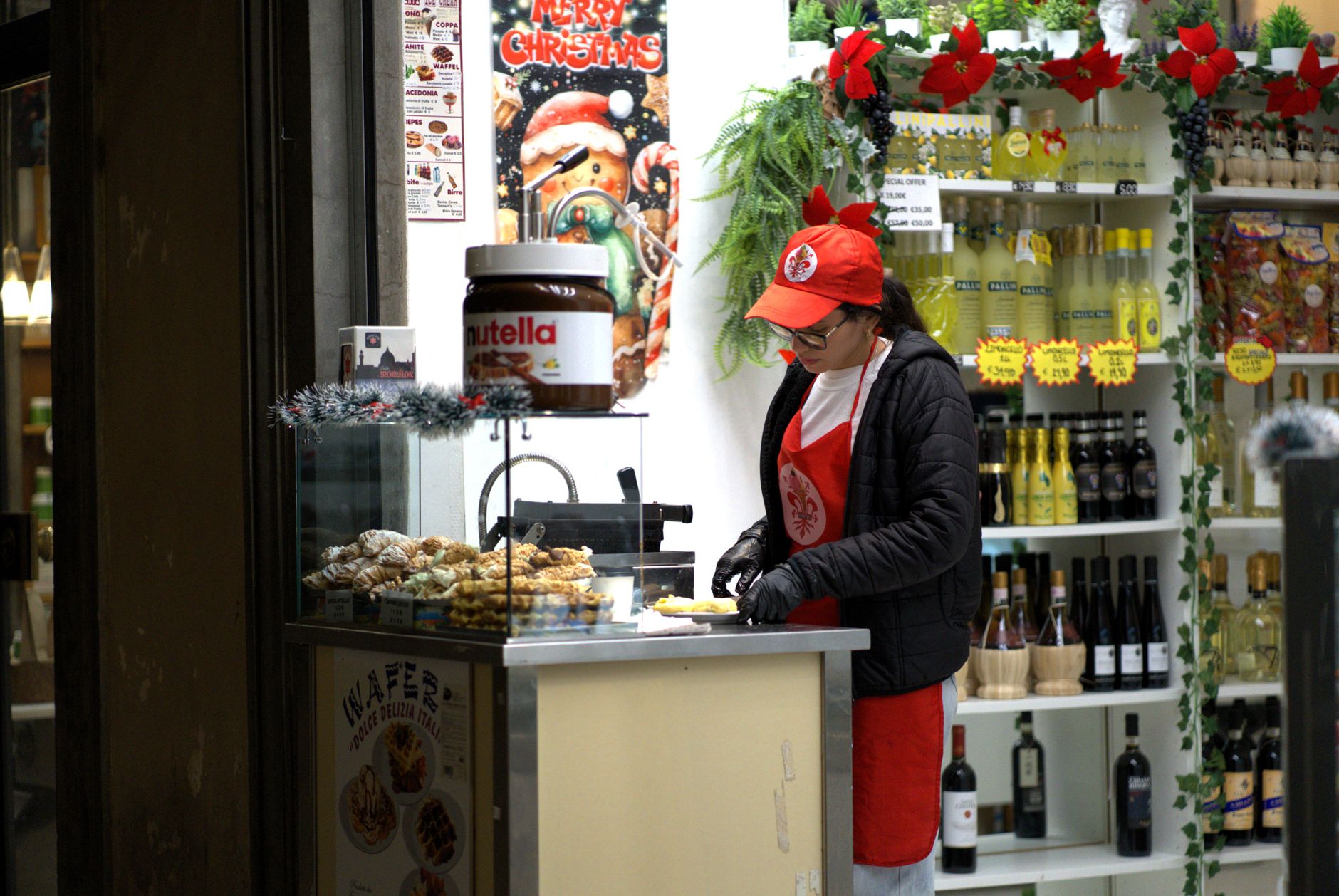
Winter is Florence’s quietest and cheapest season — apart from a spike around Christmas and New Year. Temperatures are cool (10–12°C in daytime, near freezing at night) and damp. Snow is rare but does occur, usually lightly. Daylight is short — sunset falls between about 16:37 and 16:47 in December.
December
December has two distinct phases. The first three weeks are off-season: cheap hotels, walkable streets, museum slots easier to come by. Florence’s Christmas markets are in full swing: the main one in Piazza Santa Croce (German-themed, sausages and gluhwein) runs from 14 November to 20 December in 2026, and a smaller one fills Piazza Santissima Annunziata (Italian craft, panforte and cantucci). Christmas lights along Via de’ Tornabuoni are theatrical and free.
Over the Christmas and New Year holidays, the city fills with holidaymakers. Hotel rates spike to mid-summer levels, and it pays to book restaurants ahead. New Year’s Eve brings a free outdoor concert, held in Piazza Santa Croce for 2025/26; the city’s and Feel Florence’s event pages publish each year’s venue and line-up.
January
January is Florence’s coldest month and, once Epiphany (6 January) has passed, a quiet one. Hotel rates drop to year-round lows; museum slots are easy to come by; the city is genuinely cold (about 2–11°C) but utterly walkable. Saldi (winter sales) begin in early January, on a date the Tuscany region sets each year, and continue through February — fashion-loving travellers can find dramatic discounts in Florentine designer boutiques and outlets. The Pitti Uomo menswear trade show runs in mid-January (12–15 January 2027); the January 2026 edition drew nearly 19,000 visitors, about 12,500 of them buyers, concentrating premium hotel demand for that one week.
February
February is similar to January — cold, cheap, quiet — with Carnival season adding colour, including the Carnival of Viareggio on the coast, reachable by train. The main Florentine Carnival event is in Piazza Santa Croce on the final weekend of Carnival; modest by Venetian or Viareggio standards but free and family-friendly.
Best Time by Type of Traveller
Couples / Honeymoons
Late September and early October are peak romantic Florence — warm enough for outdoor evening dining, cool enough for long walks, golden light, harvest-season Chianti accessible by car or guided tour. Late April–early May (wisteria, irises) is the second-best window. Avoid July–August (heat is unromantic and outdoor dining is sweaty) and the Christmas–New Year peak (rates double, restaurants overbooked).
Families with Children
Late June (after most school holidays start in continental Europe but before peak heat) and late September (post-Italian-school-return). Avoid August Ferragosto if shop-closures matter to you. Christmas through Epiphany is also family-friendly: lights, markets, the giant Christmas tree in Piazza del Duomo, and the Befana figure (the Italian “good witch” who delivers Epiphany gifts) on 6 January.
Art Lovers
November to early March. Museum queues are at their shortest, and on a weekday morning in February you have a fair chance of seeing Botticelli’s Venus without a crowd in front of it. The city’s churches and cenacoli are similarly quiet. The trade-off is short daylight (sunset around 17:25 in early February, earlier in December) and possible closures for restoration work — check each museum’s and monument’s notices before locking in dates.
Budget Travellers
Mid-January to early March (winter cold, lowest hotel rates of the year, far below peak summer); mid-November (rainy but rates have dropped); mid-August (Ferragosto bargain in business-grade hotels). Hostels, B&Bs and short-let apartments offer the most dramatic seasonal pricing — chain hotels less so.
Photographers
Late October and early November (golden Tuscan harvest light, longer shadows, occasional dramatic skies); early March (atmospheric rain and mist over the Arno); late April (wisteria); first January week (rare snow, possible Florentine fog).
Food and Wine Travellers
Mid-October to mid-November is unmatched. Grape harvest finishes mid-October, olive harvest runs late October to early December, white truffle season runs October to December, chestnut and porcini fairs in nearby villages run weekend after weekend. Restaurant menus shift to seasonal Tuscan classics (ribollita, pappardelle al cinghiale, the new olio nuovo). November chocolate festival is a bonus.
Florence Festivals & Events Calendar
January — Pitti Uomo (12–15 January 2027, Fortezza da Basso, fashion trade); Cavalcata dei Magi, the Ride of the Three Kings (6 January); winter sales begin.
February — Carnevale di Viareggio (final weekend of Carnival); Florentine Carnival in Santa Croce; Valentine’s events.
March — Settimana dei Musei (free state-museum entry, late March); Florence Half Marathon; spring fashion launches.
April — Easter Sunday Scoppio del Carro at the Cathedral; Bardini wisteria peak; iris garden opening late April.
May — Maggio Musicale Fiorentino (opera and music festival); Iris Garden in full bloom.
June — Calcio Storico (Florentine medieval football, final on 24 June); Festa di San Giovanni (24 June, patron saint’s day); Estate Fiorentina summer programme begins (see the city’s programme for each year’s events); Pitti Uomo summer edition (15–18 June 2027).
July — Florence Dance Festival; outdoor cinema seasons begin; classical music nights at Forte Belvedere.
August — Ferragosto (15 August national holiday); some local shops and trattorias take a summer break, so check before you go; the Estate Fiorentina summer programme continues.
September — Rificolona lantern festival (early September; Feel Florence lists the programme); European Heritage Days (late September; the Ministry of Culture and participating museums publish the dates); grape harvest activity in Chianti; school resumes.
October — Florence Chocolate Festival (mid-October); olive harvest begins; truffle fairs in San Miniato.
November — olio nuovo arrives mid-month; Florence Marathon (last Sunday); Festa Internazionale del Vino events.
December — Christmas markets (Santa Croce, Santissima Annunziata); Christmas lights illumination (early December); New Year’s Eve concert (Piazza Santa Croce in 2025/26; check the city’s and Feel Florence’s event pages for the new programme).
When Within a Day to Visit?
Florence’s daily rhythm is as important as its yearly one. Day-trippers from cruise ships and bus tours add to the crowds in the historic centre during the middle of the day, so early mornings and evenings are the calmer times to walk the same streets.
Strategy: book your most-anticipated museum (Uffizi or Accademia) for the 08:15 first slot of the day, then have a long lunch in the early afternoon when crowds peak, then resume sightseeing at outdoor sites (the Cathedral exterior, Piazzale Michelangelo, the Boboli Gardens, Ponte Vecchio at sunset) from 17:00 onward. Book dinner on the late side so you have time for the golden evening hour.
When to Avoid Florence
The single worst week of the year for most visitors is the first week of August, when heat is at its peak, locals are away, and tourist density is at its highest. The week before Christmas is similarly difficult: rates double, restaurants overbook, and the city’s normal rhythm distorts.
Easter weekend itself can be congested if you don’t plan around the Scoppio del Carro and large religious processions; visit either the week before Easter (less crowded) or the week after.
The Florence Half Marathon, next run on Sunday 4 April 2027, closes parts of the centre to vehicle traffic for several hours on race morning — pleasant for walkers, less so for travellers with hotel transfers booked, so check the city’s traffic notice before arranging one.
Best Time to Visit Florence FAQ
What’s the absolute best month to visit Florence?
October is the consensus optimal month — average highs around 21°C, exceptional light, harvest season, manageable crowds, and prices well below peak summer. Late September and mid-October are the optimal sub-windows.
When is the cheapest time to visit?
Mid-January through early March is the cheapest window of the year, with hotel rates far below peak summer. Mid-November and mid-August (excluding Ferragosto week itself) are secondary low-rate windows.
Is Florence too hot in July and August?
Yes for most travellers. Average highs of 32°C make midday outdoor sightseeing uncomfortable. Air-conditioned museums become refuges. If you must visit in summer, schedule outdoor activities for before 11:00 and after 19:00, and choose accommodation with reliable air conditioning.
When does it rain most in Florence?
November is the wettest month (115 mm of rain over about 10 wet days on average), with October next for total rainfall and December for the number of rainy days. June, July and August are reliably dry. Florence’s rain is usually short, intense afternoon showers rather than all-day drizzle — pack an umbrella but don’t write off rainy days.
Does it snow in Florence?
Snow is rare in Florence, and when it falls it is usually light. Heavy snow is rare (multi-decade events). Snow on the Cathedral and Ponte Vecchio is photographically extraordinary, though how long it lingers depends on the cold.
Is Easter a good time to visit?
Easter Sunday’s Scoppio del Carro is one of Florence’s most distinctive traditions and worth experiencing once. The downside is high accommodation rates (Easter weekend rates match peak summer) and packed Cathedral surroundings on Easter Sunday morning. Visit either the Holy Week leading up to Easter (less crowded but with religious events) or post-Easter (calmer, with spring weather).
What does “shoulder season” mean for Florence?
Shoulder season for Florence is mid-March to mid-May and mid-September to mid-November. Hotel rates drop well below peak, weather is comfortable, museums need shorter advance booking. The shoulder is what most experienced travellers recommend for Italy generally.
The right time to visit Florence is the time that fits your priorities — there is no single best answer, only different trade-offs. Most travellers should aim for late September to mid-October if they have flexibility, late April to mid-May if not. If budget is the priority, mid-January to early March is unbeatable. The single advice that holds across all profiles: avoid the first three weeks of August, when heat and crowds combine to produce Florence’s least pleasant tourist experience.