This article contains advertising. Booking links on this site can be turned into paid links automatically by our partner Travelpayouts: if you book through one, we earn a commission from the provider, at no extra cost to you. It never affects what we recommend. Affiliate disclosure
Florence in February: Carnival, Low Season & What’s Open
Florence in February is the last cheap month before the city starts filling up again, and the one month of the winter with something genuinely worth travelling for — not in Florence itself, but ninety minutes west at Viareggio, where they build twenty-metre satirical papier-mâché heads and push them along a seafront promenade six times over three weeks. The rest of the month is low-season Florence: cold mornings, short queues, sales still running, and an hour more daylight than January managed.
Part of our month-by-month series — Florence in winter covers the season as a whole and the best time to visit Florence compares all twelve.
The month after is where the value actually sits: the biggest sunshine jump in the Florentine calendar, and hotel rates that stay on the winter number until Easter arrives. Our guide to Florence in March explains why the first three weeks beat the last one.
The Short Verdict
February is January with slightly better weather, considerably more daylight and one enormous event attached. Prices are still at their winter floor, the museums are still quiet, and by the last week you can feel spring starting to move.
It is a better month than January for most visitors and a worse one than October for almost all of them. What it does uniquely well is give you a serious Tuscan spectacle — the Carnevale di Viareggio, which is one of the three or four biggest carnivals in Europe — at a time of year when you can still get a hotel room in Florence for very little money.
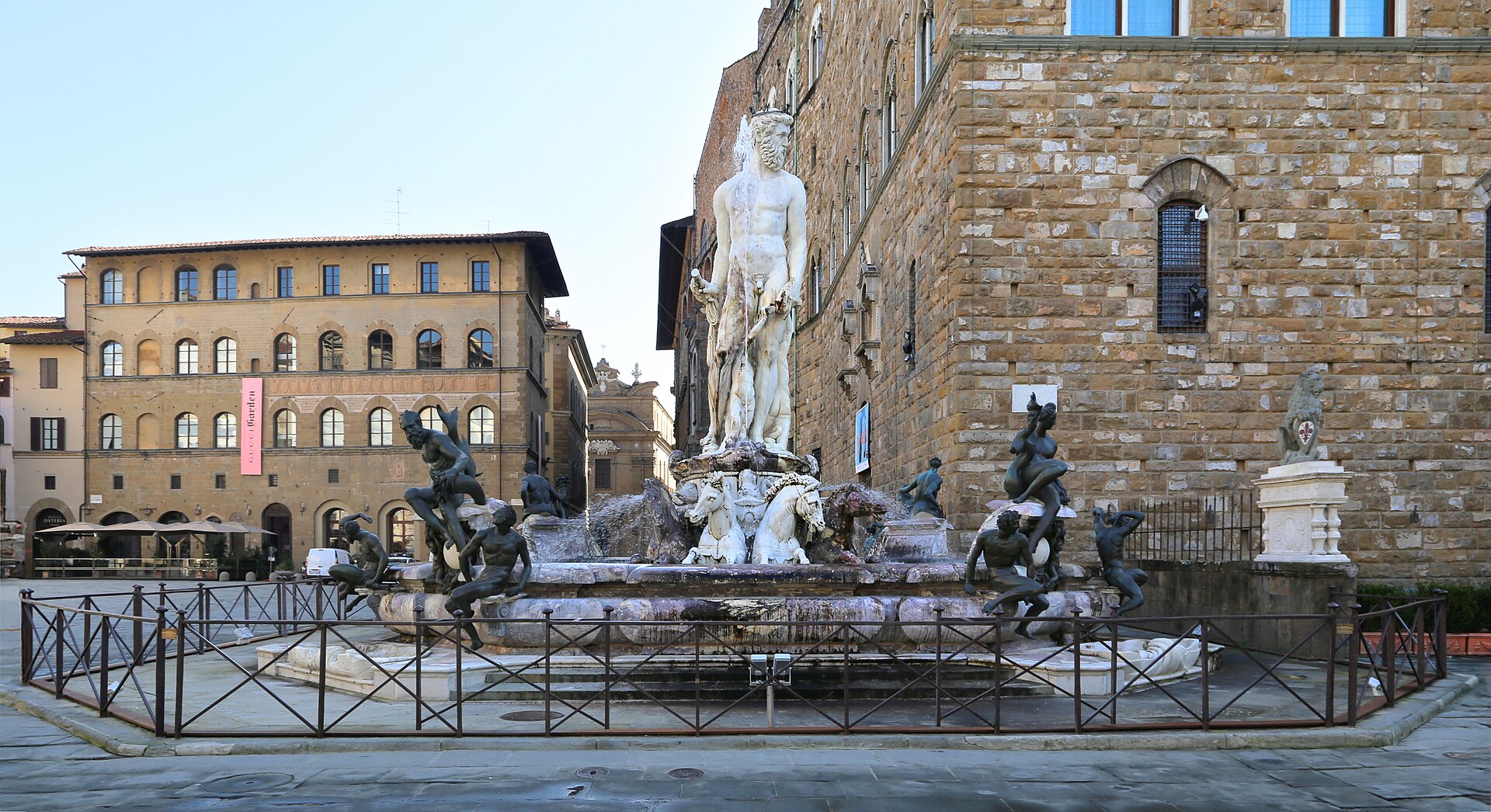
The catch, and it is worth stating plainly: February is short, cold and has more grey days than sunny ones. If this is your one trip to Italy, spend it in April or October. If it is your third trip, or you live in Europe and can come cheaply, February is a very good use of a long weekend.
Weather and Daylight
| Measure | Typical |
|---|---|
| Average high | ~13°C |
| Average low | ~3°C |
| Rainfall | ~70 mm across about 9 wet days |
| Sunshine | ~5 hours a day |
| Sunset | ~17:35 at the start, ~18:05 by the end |
| Snow | Rare; the hills occasionally |
Two degrees warmer than January and an hour more daylight by the end of the month. Neither sounds like much and both are noticeable. By the last week of February sunset is after six, which is the first time since October that an evening walk is a daylight activity rather than a night-time one.
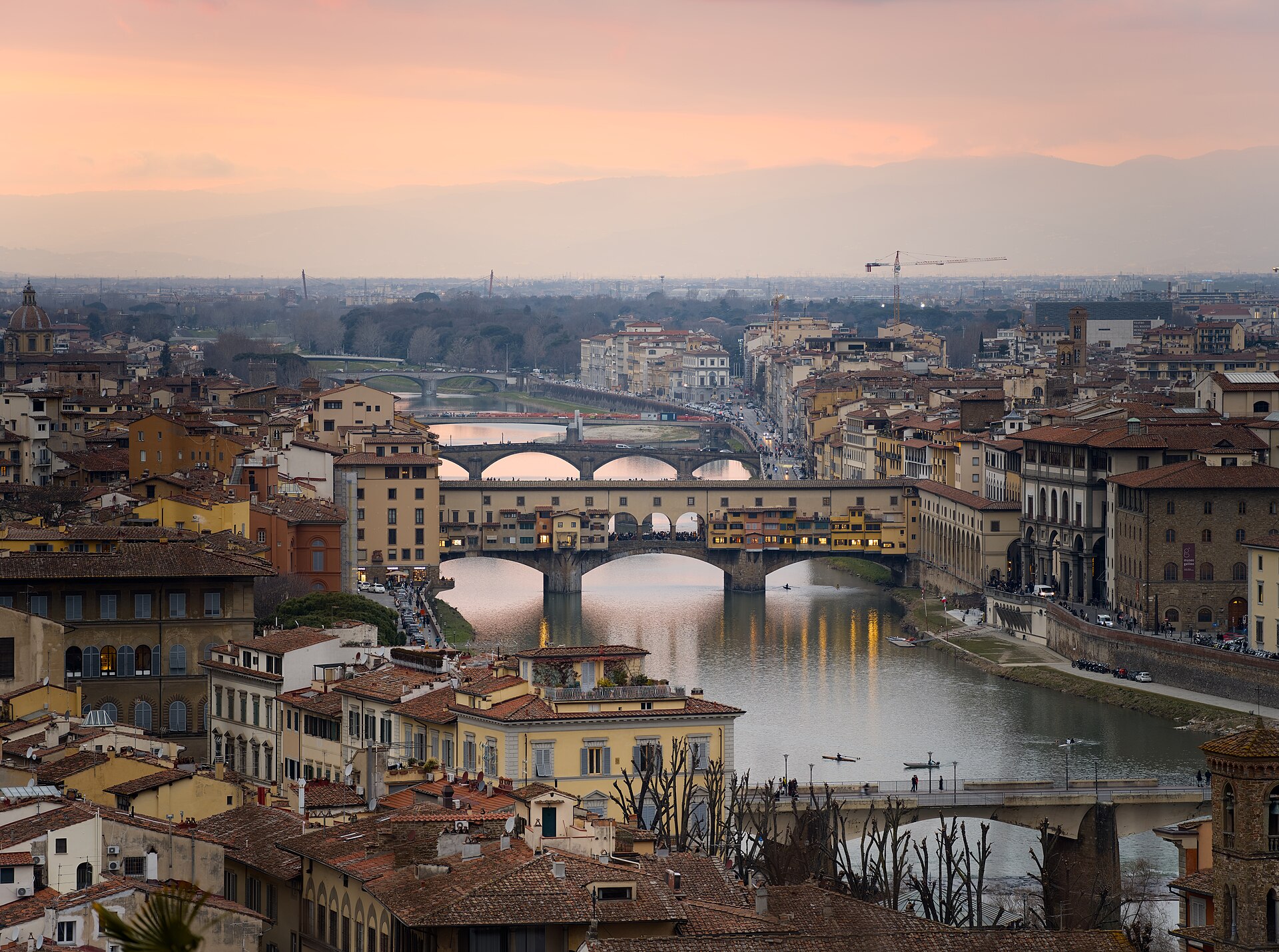
February in Tuscany is also volatile. It produces the year’s occasional hard frost and it produces, most years, at least two or three afternoons of implausible warmth in the high teens where the whole city sits outside in coats drinking coffee. You cannot predict which you will get, so pack for both.
The morning is still winter
Thirteen degrees is an afternoon number. At eight in the morning in February it is three or four, damp off the river, and the churches you will spend the day in are colder than the street. The layers advice from December has not changed: a real coat, warm things under it, gloves you can take off.
Viareggio Carnival
This is the reason to be in Tuscany in February.
The Carnevale di Viareggio is held on the seafront promenade of a faded Art Nouveau beach town on the Ligurian coast, about ninety minutes from Florence by train. It consists of six corsi mascherati — masked parades — spread across late January and February, in which enormous papier-mâché floats process along the seafront in front of very large crowds.
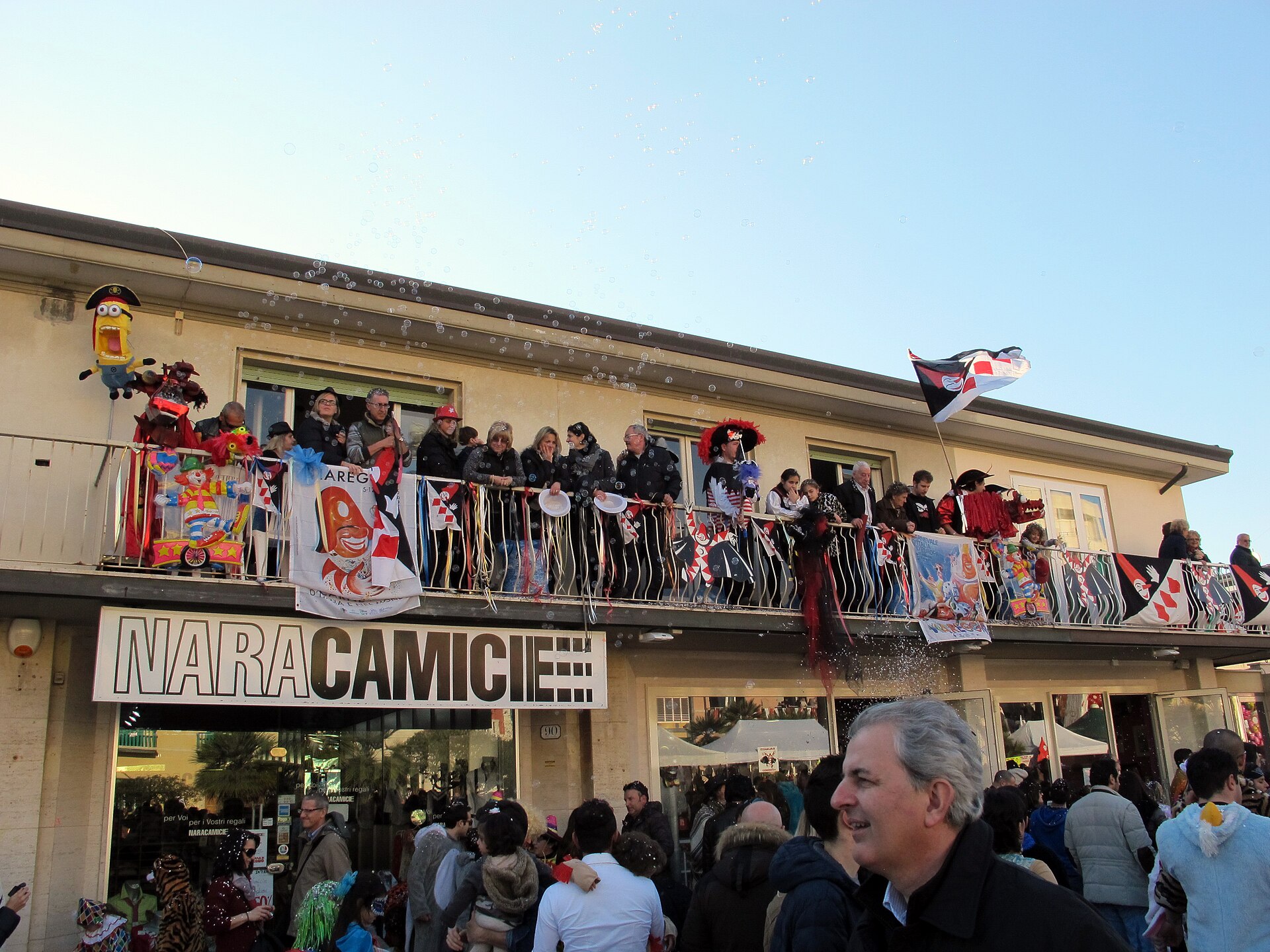
The floats are the point. They are up to twenty metres tall, they move, they carry dozens of costumed dancers, and they are almost all savagely political — Italian prime ministers, foreign presidents, the Church, the climate, whoever is having a bad year. They are built over months in the Cittadella del Carnevale, a purpose-built complex of hangars on the edge of town where the float-building families work, and which you can visit outside carnival season.
Dates for 2027: 30 January, then 4, 7, 9, 14 and 20 February, with the final parade a night-time closing procession at 17:00 on Saturday 20 February. The dates move each year because Carnival is tied to Easter, so check them before booking anything.
Practicalities
- It is ticketed. This is not a free street festival — you buy a ticket for each parade. Prices are set annually; check the official site.
- Get there by train. Viareggio is on the line from Florence via Lucca, and the station is a fifteen to twenty minute walk from the seafront. Trains on parade days are extremely busy in both directions.
- Go early, leave late. The crush at the station immediately after a parade is unpleasant. Eat afterwards and take a later train.
- Dress up or do not. Locals do, thoroughly, and nobody minds either way.
If you can only make one parade, the final Saturday-evening one is the biggest, and the atmosphere at dusk with the floats lit is better than in flat afternoon light.
Carnival in Florence Itself
Modest. Florence is not a carnival city in the way Viareggio and Venice are, and if you turn up in the centre on martedì grasso expecting a spectacle you will find some children in costume and a lot of confetti on the ground.
What does happen: children dress up, thoroughly and for several weekends rather than one day, and the piazze fill with small people in superhero and princess outfits throwing paper confetti (coriandoli) and streamers at each other. It is charming and it is entirely for them.
The food is the better part of the Florentine carnival. Look for cenci — also called chiacchiere elsewhere in Italy — strips of fried pastry dusted with icing sugar, sold everywhere from mid-January until Lent, and gone by the following week. Frittelle di riso, small fried rice fritters, appear at the same time and are a Tuscan speciality attached to St Joseph’s day in March. Both are cheap, both are excellent, and both are seasonal in the strict sense that you cannot get them in June.
The neighbouring towns do more. San Gimignano, Foiano della Chiana — which claims to be Italy’s oldest carnival — and several Chianti villages run their own parades, all of them smaller than Viareggio and all of them free or nearly so.
What Is Open
Everything, essentially. February has no public holidays in Italy at all, which makes it the most administratively straightforward month of the year to visit.
- No national holidays. Nothing closes for a feast day. The next one is 25 April.
- Ordinary Monday closures apply — Uffizi, Accademia, Bargello — and the Boboli Gardens close on the first and last Monday of the month.
- State museums are free on the first Sunday, which pulls a domestic crowd. Worth it if the budget matters; avoid otherwise.
- The Accademia’s price rose from €16 to €20 on 1 February 2026, so anything quoting the old figure is out of date.
- Restaurant annual closures are more common in January than February, but a handful of places still take their break now. Check if there is somewhere specific you want.
The one thing that does interrupt February is Ash Wednesday, the day after martedì grasso, which is not a public holiday but does change the mood noticeably — the carnival food disappears from the pasticceria windows overnight and the churches get busy.
Prices and the Tail of the Sales
| Item | Price | Note |
|---|---|---|
| Mid-range hotel | Winter floor | Level with November and January |
| Tourist tax | Per person per night, by accommodation type | Capped at 7 nights, under-12s exempt, paid at the accommodation |
| Tourist tax, B&B or short let | €6 pppn | Paid at checkout |
| Uffizi | €25 on the day, €29 booked | Walk up and save the fee |
| Uffizi after 16:00 | €16 for entry from 16:00 | Closes 18:30 — still short |
| Accademia | €20 + €4 fee | A few days’ notice is enough |
| Brunelleschi Pass | €30 | Dome slots readily available |
| Boboli Gardens | €10 on the day, €13 booked | Bare, but empty and cheap |
| Single bus or tram ticket | €2.00 | €3.00 from the driver |
| Firenze Card | €85 / 72 hrs | Poor value with no queues to skip |
The Tuscan saldi run for about two months from the start of January, which puts most of February in the back half of the sale period. That means deeper discounts — 50 to 70 per cent is normal by then — on much thinner stock. If you want a specific size in a specific thing, you are too late. If you are happy to be opportunistic, February is when the real bargains sit on the rail.
Our Florence shopping guide covers where to look, and the January guide has the full saldi mechanics.
What to Do
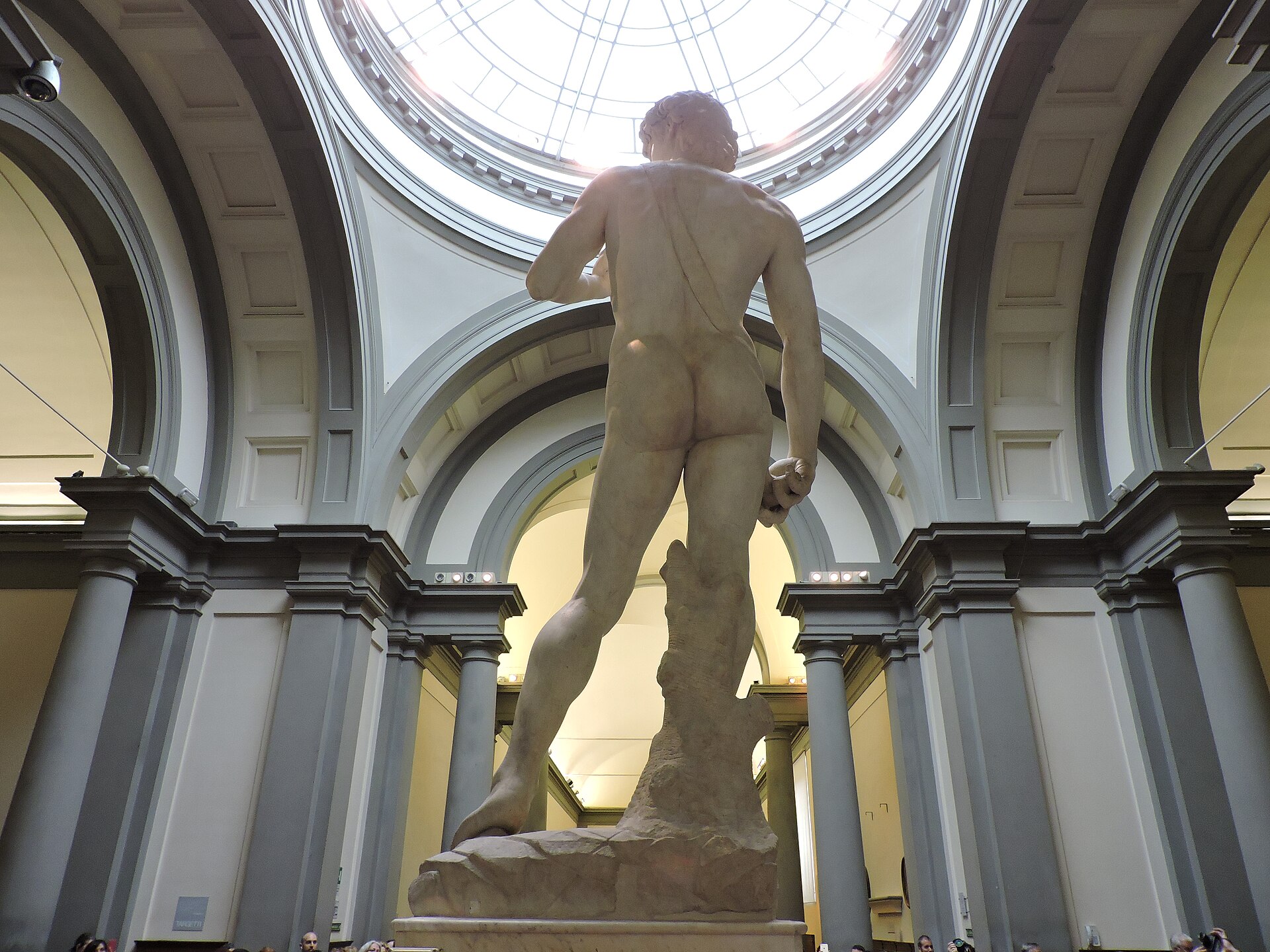
- The big two, properly. Uffizi at opening, Accademia mid-morning, no queues at either. This is the month to see them at a human pace.
- The dome climb. 463 steps, no lift, and February gives you cool air on the way up and the clearest visibility of the year at the top. Book the slot; there will be one.
- The Vasari Corridor. Timed groups of 25, a combined Uffizi and Corridor ticket at €43 on the day or €47 booked, and 750 metres of Vasari’s elevated passage over the Ponte Vecchio. Impossible to book in spring, available now.
- Palazzo Strozzi. The winter exhibition runs through the month and is usually the best thing in the city that is not a permanent collection.
- The Oltrarno workshops. Leather, gilding, marbled paper, bookbinding. February is when the artisans have time to talk and take commissions.
- Fiorentina. Serie A runs through February at the Stadio Artemio Franchi — cheap, loud, and full of people who live here.
Our indoor Florence guide covers the rest, and it is as useful for cold as for wet.
Day Trips
Ten and a half hours of daylight by mid-month, which opens things up considerably compared with December.
- Viareggio for the carnival, obviously, on the six parade dates. Out of carnival it is a slightly melancholy off-season beach town, which some people love.
- Lucca — walled, compact and an easy hour and a bit. Combine it with Viareggio if you are going that way; they are on the same line.
- Siena without crowds. February is one of the few times you can look at the Duomo interior without queueing.
- Bologna, forty minutes on the fast train, thirty-eight kilometres of arcades, and Italy’s best food city. A perfect wet-February day trip.
- Fiesole, bus 7, twenty to thirty-five minutes, for the view on a clear cold day.
Still not worth it in February: Chianti, where the vines are bare and half the estates are shut, and the coastal walking routes, which run reduced or closed in winter.
Eating in February
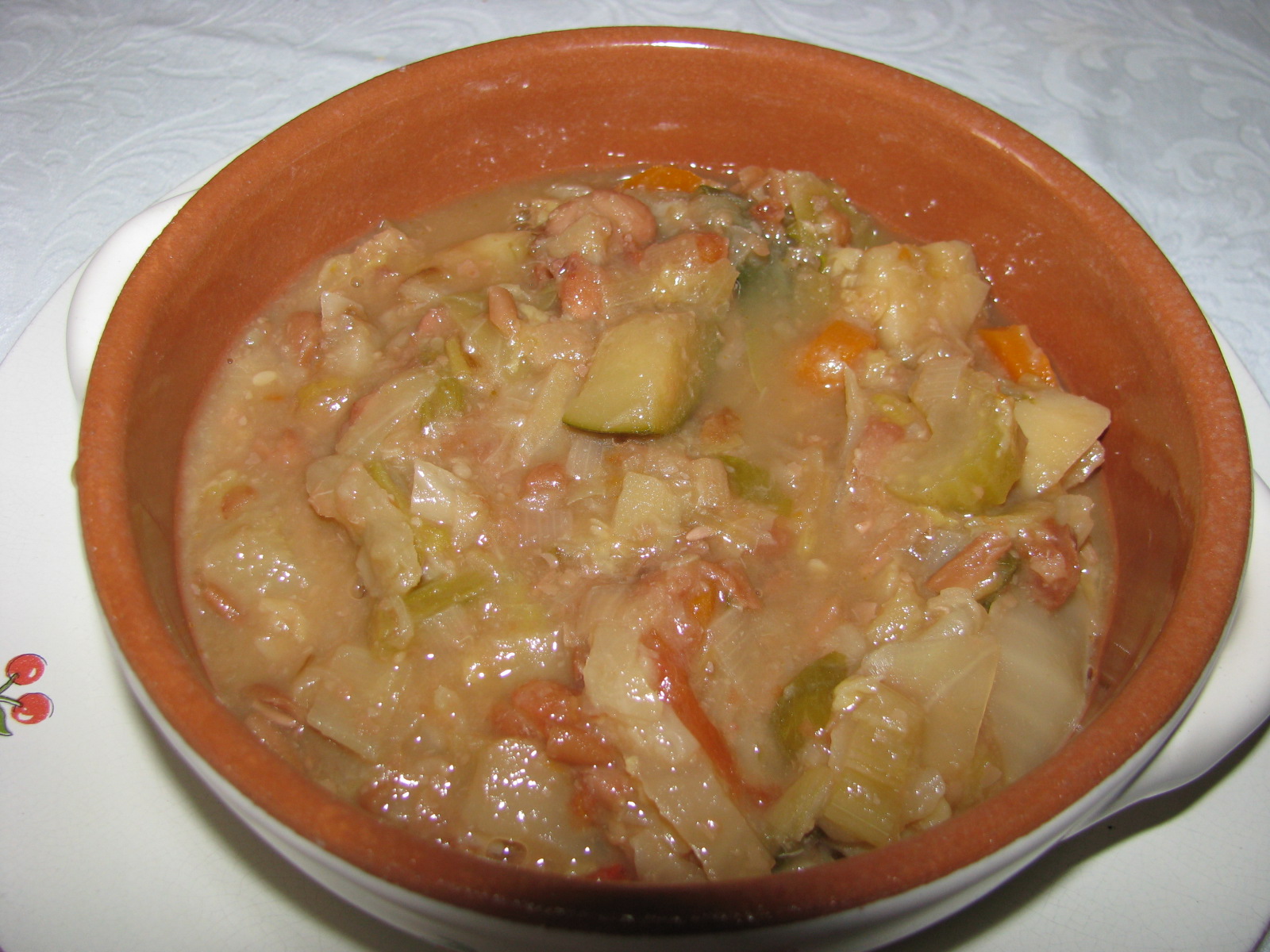
The winter repertoire is still running — ribollita, pappa al pomodoro, cavolo nero, bistecca, wild boar ragù — and to it February adds the carnival sweets, which are the month’s genuine speciality:
- Cenci — ribbons of thin fried dough under icing sugar. In other regions they are chiacchiere, frappe or bugie; in Tuscany they are cenci, meaning rags. Available from mid-January to Lent and then gone.
- Frittelle di riso — small rice fritters, sugared, sold from carnival through to St Joseph’s day on 19 March.
- Schiacciata alla fiorentina — a flat, soft, orange-scented sponge dusted with icing sugar and usually stencilled with the Florentine lily. Strictly a carnival cake, and one of the few genuinely Florentine sweets on the list.
All three vanish on Ash Wednesday, more or less literally, which is the sort of thing that still governs a Tuscan pasticceria window.
The Turn Towards Spring
The last week of February is when Florence starts changing. The almond and mimosa come out, the afternoons get warm enough to sit outside, sunset is past six, and the first coach parties start reappearing in Piazza del Duomo.
Prices follow within a fortnight. By mid-March the winter floor has gone and Easter demand is beginning to build, so if the cheap-and-quiet Florence is what you want, February is the last month you get it cleanly.
The month it turns into is covered in Florence in March.
And if you are working backwards through the winter, Florence in January is colder, quieter and cheaper still.
Frequently Asked Questions
Is February a good time to visit Florence?
It is the last month at the winter price floor, with short queues, no public holidays and an hour more daylight than January. It is also cold and grey more often than not. Good for a repeat visit or a cheap long weekend; not the month for a once-in-a-lifetime trip.
How cold is Florence in February?
Average high around 13°C and average low around 3°C, with about 70 mm of rain over nine days. The afternoons can be pleasant; the mornings are still properly cold, and unheated churches hold the chill all day. February is volatile — expect both a hard frost and a warm afternoon in the same week.
When is the Viareggio Carnival?
Six masked parades across late January and February, with dates that move each year because Carnival is tied to Easter. In 2027 they fall on 30 January and 4, 7, 9, 14 and 20 February, the last being a night-time closing parade at 17:00. It is ticketed, and it is about ninety minutes from Florence by train via Lucca.
Is there a carnival in Florence itself?
A small one, aimed at children — costumes in the piazze and a great deal of paper confetti, over several weekends rather than one day. For a real spectacle you go to Viareggio. What Florence does properly is the food: cenci, frittelle di riso and schiacciata alla fiorentina, all of which disappear on Ash Wednesday.
Are there any public holidays in February in Italy?
None. February has no Italian national holiday, which makes it one of the simplest months to plan — nothing closes for a feast day. Ordinary Monday museum closures still apply, and the Boboli Gardens close on the first and last Monday.
Are the January sales still on in February?
Yes. Tuscany’s winter saldi run for roughly two months from the start of January, so most of February is the back half of the sale: discounts of 50 to 70 per cent on much-reduced stock. Good for opportunistic shopping, hopeless if you need a specific size.
Do I need to book museums in February?
Rarely. Walking up to the Uffizi costs €25 instead of €29, because the difference is a reservation fee for a queue that is not there. Book the Vasari Corridor, which is capped at 25 people per timed slot, and book the dome climb if you have a fixed day in mind. Everything else can wait.
Keep Reading
- Florence in winter — the whole season, December to February.
- Florence in January — colder, quieter, and the saldi from the start.
- Best time to visit Florence — all twelve months compared.
- Florence weather by month — the full averages.
- Florence festivals and events calendar — what is on and when.
- Shopping in Florence — what the sales are actually worth.