This article contains advertising. Booking links on this site can be turned into paid links automatically by our partner Travelpayouts: if you book through one, we earn a commission from the provider, at no extra cost to you. It never affects what we recommend. Affiliate disclosure
Florence in March: Shoulder Season Starts Here
Florence in March is the month the arithmetic turns in your favour. The city gains more sunshine between February and March than between any other two months of the year — forty-two hours of it — the average afternoon climbs three and a half degrees, and the queues have not yet worked out that any of this has happened. Hotels are still charging something close to a winter rate. Then, somewhere in the last week, the clocks go forward, the evening arrives, and March quietly hands the city over to April.
Part of our month-by-month series — the best time to visit Florence compares all twelve, and Florence weather by month has the full climate tables.
The month after is where the gardens finally deliver and the booking windows roughly double. Our guide to Florence in April covers the wisteria at Bardini, the Iris Garden opening on the 25th, and how the two spring public holidays behave.
The Short Verdict
March is the best-value month of the Florentine year, and it is not especially close. You get roughly five hours of sun a day instead of four, afternoons that hover around sixteen degrees, and a city where you can still book the Accademia a fortnight out and walk into a trattoria at eight without a reservation. None of that is true by May.
The catch is that March is two different months wearing one name. The first fortnight is February with better light: cold mornings, unheated churches, restaurants running winter menus, hotel rates barely off the floor. The second fortnight tilts. The clocks go forward on the last Sunday, the evening suddenly extends past half past seven, the gardens open properly, and in some years Easter arrives and takes the price of a hotel room with it.
So the honest advice is narrower than “go in March”. Go in the first three weeks of March. That is where the value sits. The last week is a lottery that depends entirely on where Easter falls that year, and in 2027 it falls badly — more on that below.
What March is not: warm. It is not a month for eating outside at night, and anyone promising you aperitivo on a terrace in early March has confused Florence with somewhere on the coast. It is also not the month for the famous spring flowering. The wisteria that fills every search result for Florence in spring is an April event, and pretending otherwise would be doing you a disservice.
Weather, Light and the Clock Change
Here is the month against its neighbours, using the long-run averages from the Peretola station just outside the city. Treat them as the shape of the month rather than a forecast — March is volatile, and a single week can deliver both a frost and a shirt-sleeves afternoon.
| Measure | February | March | April |
|---|---|---|---|
| Average high | 12.7 °C | 16.2 °C | 20.0 °C |
| Average low | 2.5 °C | 5.1 °C | 8.1 °C |
| Rainfall | 64 mm | 61 mm | 67 mm |
| Wet days | 7.2 | 7.0 | 8.7 |
| Sunshine per month | 113 hrs | 155 hrs | 186 hrs |
Two numbers in that table are doing most of the work. The sunshine column is the obvious one: 155 hours against February’s 113 is the single largest month-on-month gain in the Florentine calendar, and you feel it the moment you step out of a church. The less obvious one is the wet-days column, where March is the driest month of the entire first half of the year. March has fewer rainy days than February, and fewer than April. The cliché that spring in Tuscany means rain is really a cliché about April.
The hour that changes the month
Central European Summer Time begins on the last Sunday of March — 28 March 2027, 26 March 2028. At two in the morning the clocks jump forward and sunset moves from roughly twenty past six to roughly half past seven overnight.
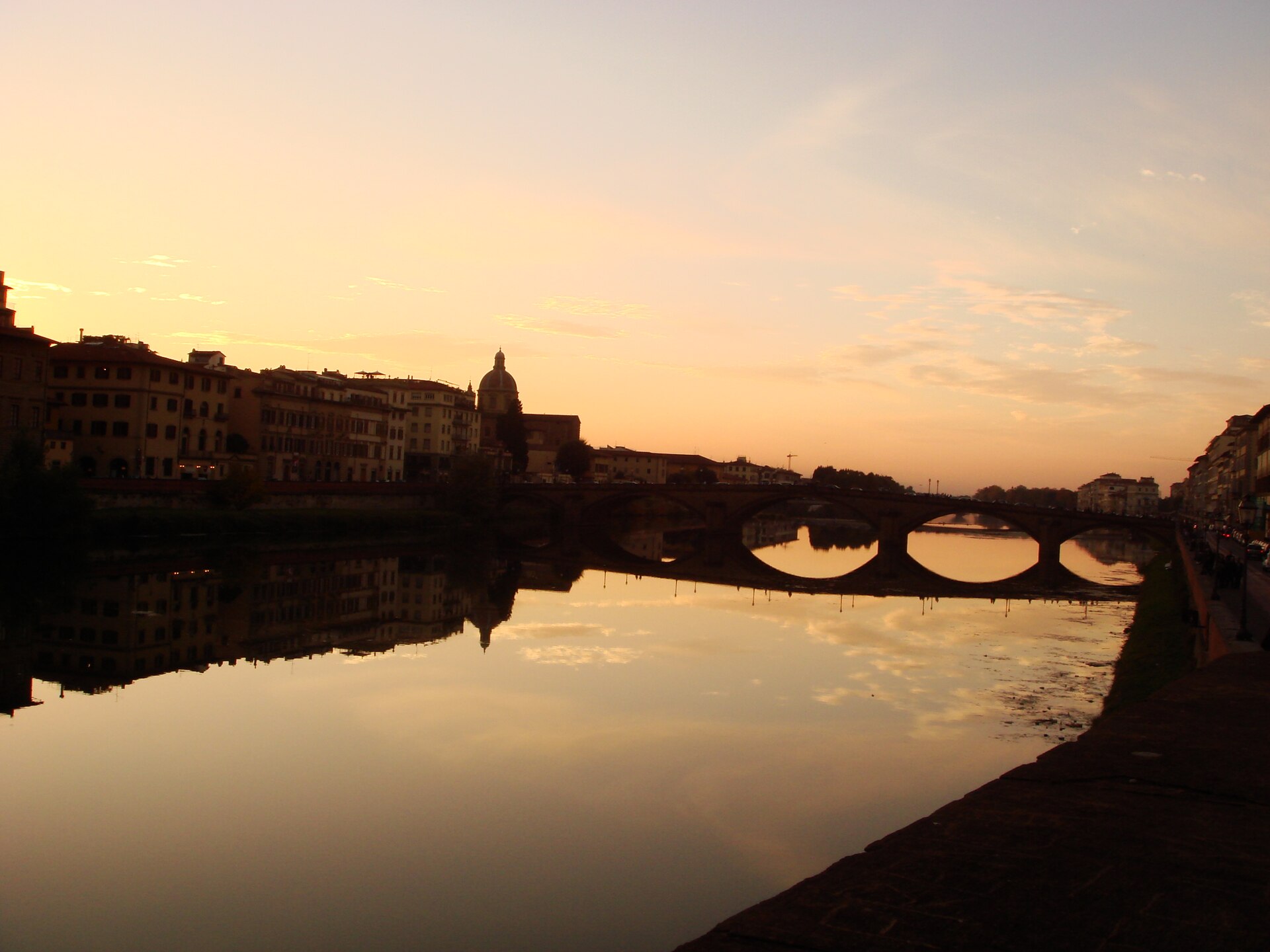
This matters more in Florence than it sounds. Before the change, the light goes while you are still deciding where to eat, and the city empties into restaurants at six. After it, there is a proper passeggiata again: Ponte Santa Trinita fills up, Piazzale Michelangelo gets its sunset crowd back, and an evening walk becomes a thing you would actually choose to do. If your dates are flexible by a few days, landing on the right side of that Sunday is worth more than almost any other scheduling decision you can make in March.
Sixteen degrees is an afternoon number
The average high arrives somewhere between two and four in the afternoon. At eight in the morning you are in five degrees and river damp, and the interior of Santa Croce will be colder than the square outside it — these are stone boxes that spent three months getting cold and have not yet been told it is spring. Dress for the eight o’clock number and carry the difference in a bag. Everyone who dresses for the sixteen spends the first two hours of every day miserable.
When Easter Lands in March
Easter moves, and roughly one year in three it moves into March. When it does, the last week of an otherwise cheap month behaves like peak season: hotel rates jump, trains into Tuscany fill, and the museums book out a month ahead rather than a week.
Easter Sunday 2027 is 28 March — which is also the day the clocks go forward. Those two things landing together is a genuinely awkward coincidence, because the centrepiece of Florentine Easter starts early and you will have had an hour less sleep than your body expects.
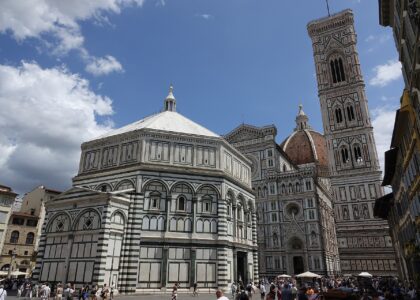
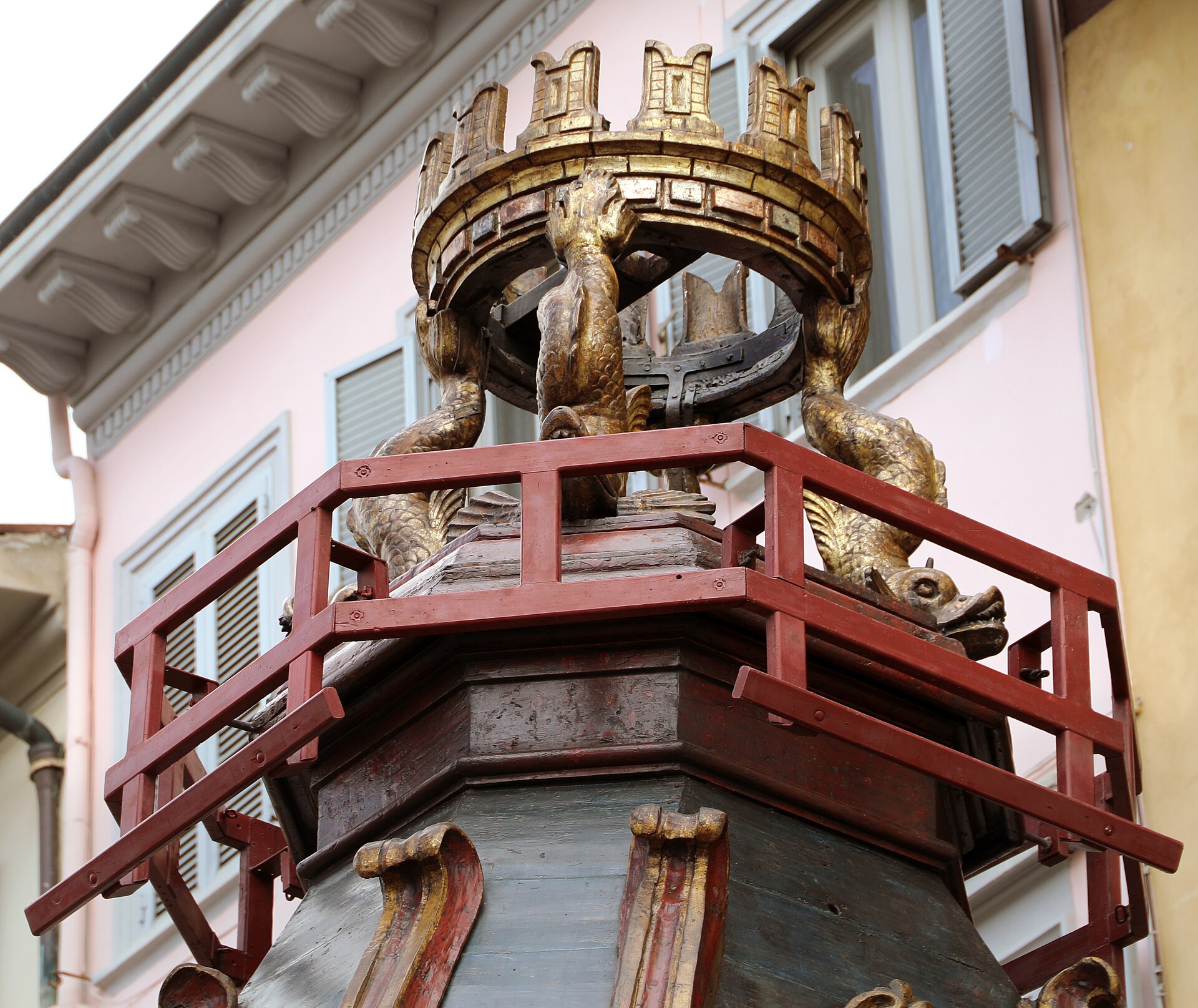
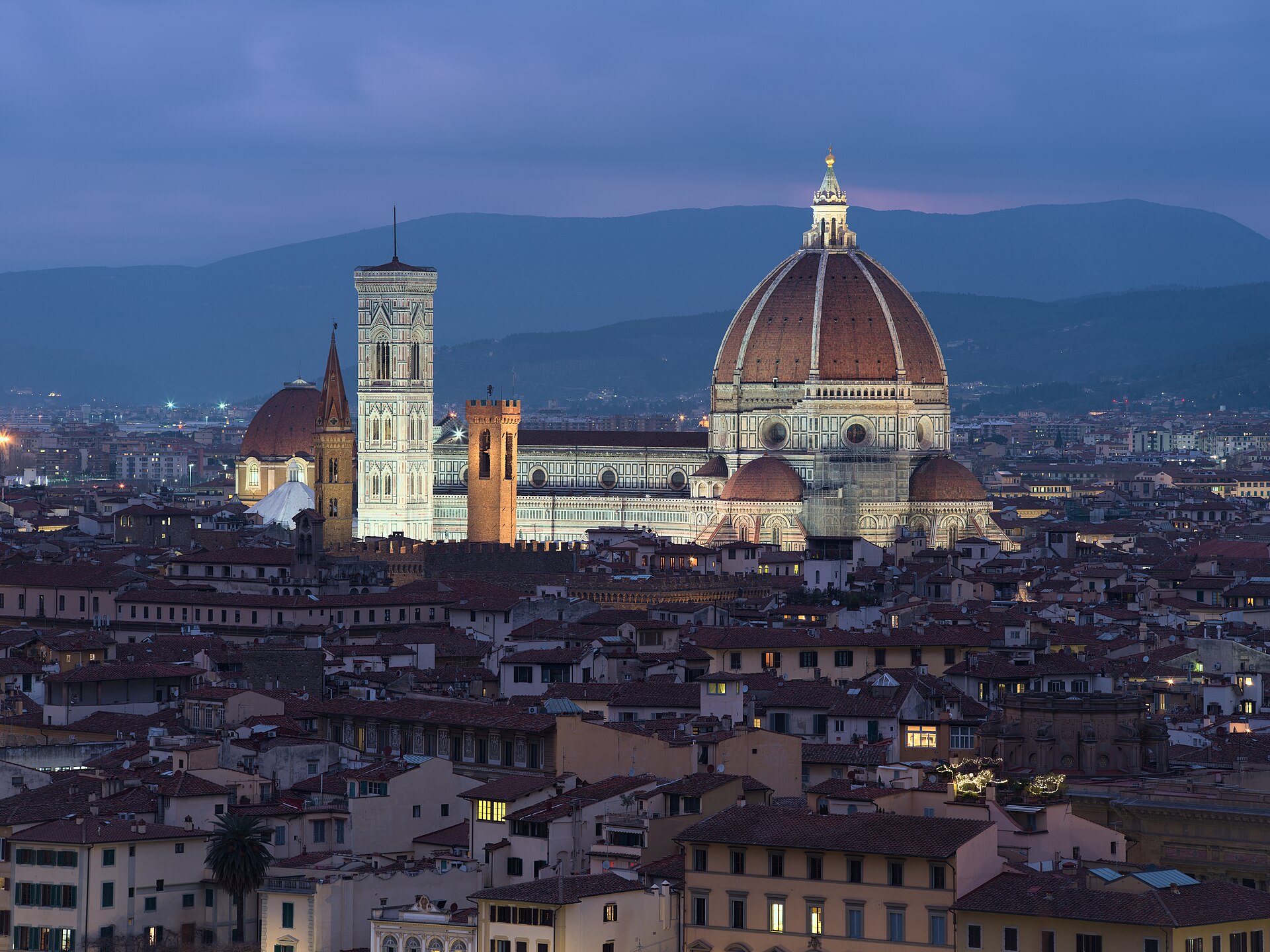
The event is the Scoppio del Carro, the Explosion of the Cart, and it has run in some form for the better part of nine hundred years. A towering decorated wagon called the Brindellone leaves its depot on Via il Prato at 07:30 behind two pairs of white oxen, is parked between the Baptistery and the cathedral facade, and at 11:00 — during the Gloria of the Mass — a dove-shaped rocket called the colombina runs down a wire from the high altar, out through the open cathedral doors, and sets the whole thing off. It burns and bangs for several minutes. A clean run is supposed to mean a good harvest.
The flag-throwers of the Bandierai degli Uffizi perform in Piazza del Duomo at 08:10, the civic procession leaves Piazza di Parte Guelfa at 08:20, and traffic restrictions around the cathedral are published a few days beforehand. If you want a view of the cart rather than the back of a phone, be in the square by about nine.
The other two years in three, Easter belongs to the following month — our guide to Florence in April covers it there, along with the wisteria and the first serious queues.
Easter 2028 falls on 16 April, so March that year is clean. If you are booking for 2027 and you want the cheap version of March, land before the 24th and fly home before the weekend.
Full running order, viewing positions and the Easter Monday aftermath are in our dedicated guide to Easter in Florence.
Capodanno Fiorentino, 25 March
Florence used to start its year on 25 March. Not as a curiosity — as the actual civil calendar, from the Middle Ages until 1750, when the Grand Duchy finally gave in and moved to 1 January like everyone else. The date is the Feast of the Annunciation, nine months before Christmas, and the city has never entirely let go of it.
What happens now is modest and almost entirely local, which is exactly what makes it worth an hour of your afternoon:
25 March, hour by hour
- 08:00–19:30 — the fair, in Piazza Santissima Annunziata. Farm producers, Tuscan sweets, historical re-enactors, demonstrations of medieval arms, and the Cassettai Storici Fiorentini with their wooden stalls. Free, come and go.
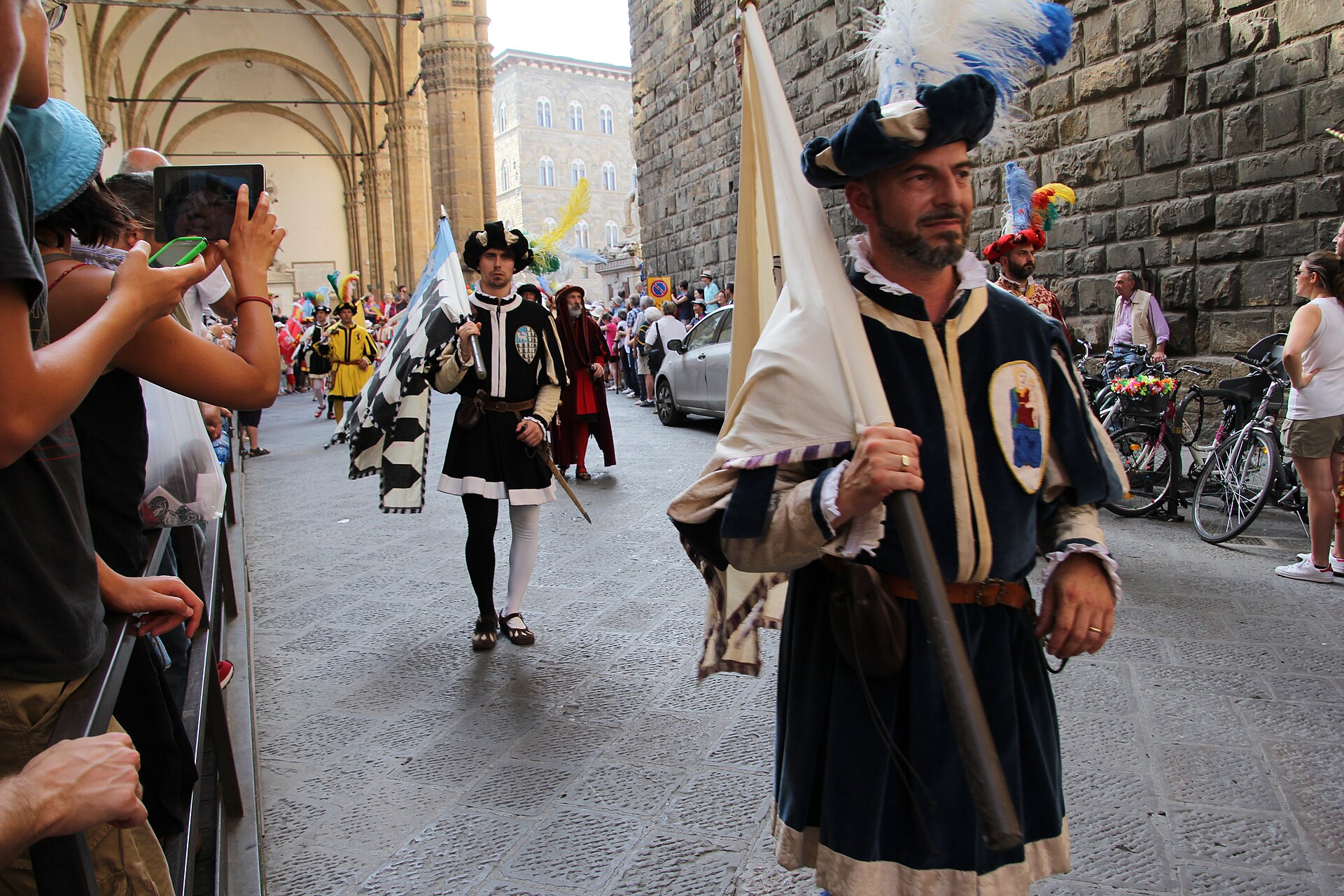
- 16:00 — the Corteo Storico of the Florentine Republic leaves Piazzetta di Parte Guelfa in full costume and walks Via Porta Rossa, Via Calimala, Piazza della Repubblica, Via degli Speziali, Via Calzaiuoli, Piazza del Duomo and Via dei Servi into Piazza Santissima Annunziata, to pay homage to the Virgin.
- Masses at the basilica through the day, at 07:00, 08:00, 08:45, 10:00, 11:00, 12:30, 16:00, 18:00 and 21:00.
- Settimana del Fiorentino — a week of talks, openings and civic events wrapped around the date. The programme is published in mid-March and changes every year.
In 2027, 25 March is a Thursday. It is a civic celebration rather than a public holiday, so shops, offices and museums all work normally — nothing closes, nothing shifts.
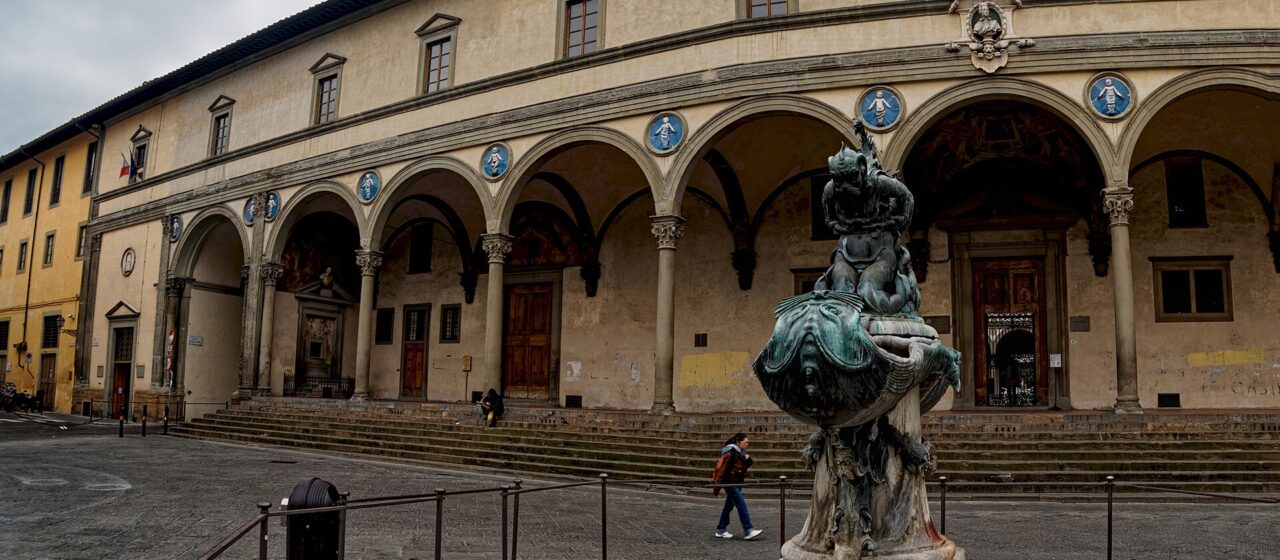
The honest verdict: this is not a reason to book a flight. It is a couple of hundred people in velvet walking a ten-minute route, and if you have seen the Palio or a Sienese contrada parade it will look small. What it is not is staged for you. There is no ticket, no grandstand and no commentary in four languages, and Piazza Santissima Annunziata — arguably the most perfectly proportioned square in the city, and one most visitors never reach — is a far better room for it than the Duomo.
The best spot is the Via dei Servi end, ten minutes before four, looking back towards the cathedral dome framed at the far end of the street. It is one of the best photo spots in Florence on any day of the year; with a costumed column walking into it, more so.
Crowds, Prices and Booking Windows
Museum prices in Florence are fixed year-round — there is no low-season ticket. What changes in March is how far ahead you have to commit, and what a bed costs.
| Item | Price | Note |
|---|---|---|
| Uffizi | €25 on the day / €29 booked | The €4 gap is the reservation fee |
| Uffizi, afternoon entry | €16 | From 16:00; the best-value ticket in the city |
| Accademia | €20 + €4 booking | Rose from €16 on 1 February 2026 |
| Brunelleschi Pass (Duomo) | €30 full, €12 ages 7–14 | Only pass with the dome climb; the dome slot is timed |
| Boboli Gardens | €10 on the day / €13 booked | €15 at the ticket office |
| Firenze Card | €85, 72 hours | Breaks even at three or four paid museums |
| Tourist tax | Per person per night | By accommodation type, capped at seven nights, under-12s exempt |
| Bus or tram single | €2.00 | €3.00 from the driver, exact change |
Booking windows. Off-season, the Accademia takes about a week’s notice. From April to October it wants a month. March sits exactly on that hinge, so the workable rule is a fortnight — earlier in the month you will get away with less, and if Easter is in range you should behave as though it is already April. The Uffizi is more forgiving; one to two weeks is usually enough, and the 08:15 slot is both the quietest and the easiest to get. The mechanics of which ticket to buy are in our Uffizi tickets guide.
Hotel rates. The step change is not 1 March. It is Easter. Through the first three weeks you are paying something close to the winter number, and the jump when it comes is sharp rather than gradual. If your dates are movable, moving them one week earlier in a year like 2027 is worth more than any amount of comparison shopping. Where to put yourself is in where to stay in Florence.
First Sunday of the month means free entry to the state museums — Uffizi, Accademia, Bargello, Pitti, Boboli. It also means queues that undo the entire point of visiting in March. Save your free Sunday for a museum you were not going to pay for anyway, or ignore it and book a Tuesday.
The Gardens Start Working Again
This is where March earns its reputation, and also where most articles about it start overselling. Let us be precise about what is actually out.
What you will see in March: camellias, which peak early in the month and are genuinely good at Boboli; magnolia; almond and plum blossom on the hillsides above the city; the first iris shoots; and the general business of everything turning green again after a Tuscan winter, which is a real and underrated pleasure.
What you will not see in March: the wisteria. The Bardini Garden’s wisteria tunnel — the picture that sells Florence in spring to the entire internet — flowers in April, usually the middle of it. In a warm year the very end of March might give you the first few racemes. Planning a trip around it is a good way to be disappointed. The Iris Garden below Piazzale Michelangelo does not open until around 25 April and runs only to about 20 May, one of the shortest windows of any garden in Europe.
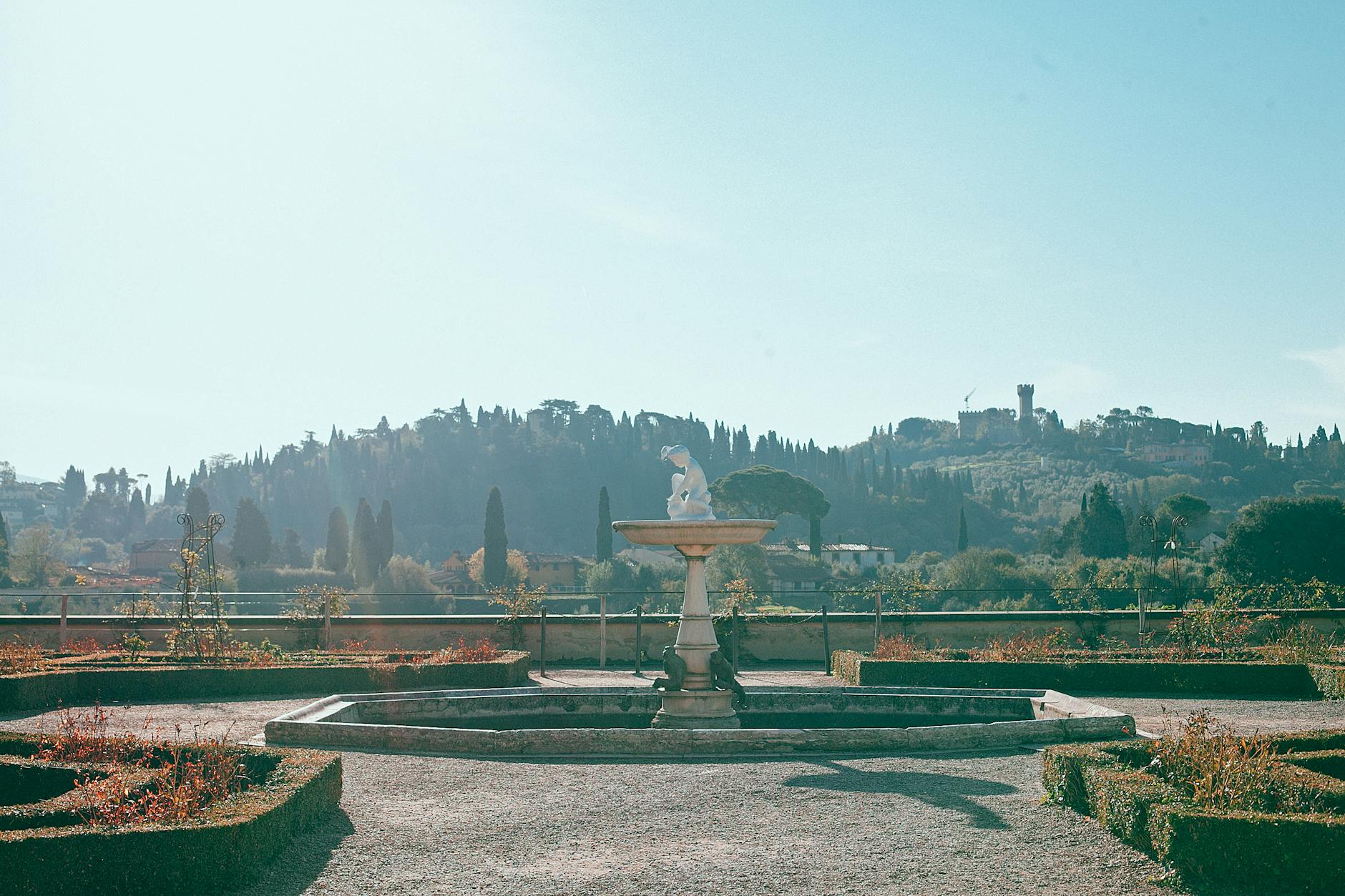
Boboli opens at 08:15 and closes on the first and last Monday of most months, with last entry an hour before closing. The closing time steps later through the spring rather than changing on a fixed date, so check the day you go. The Rose Garden on the slope below Piazzale Michelangelo is free and open all year, and in March it is mostly a very good view with some structure and a Folon bronze or two — the roses themselves are a May event.
Go up, not out
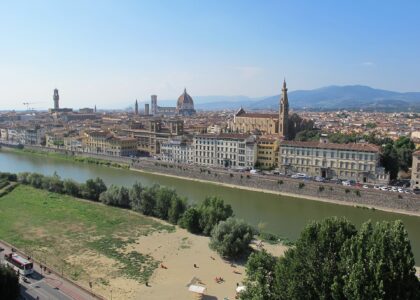
March gives you the clearest air of the year over Florence: the summer haze has not arrived, and after rain the hills behind Fiesole come up sharp enough to count the cypresses. Walk from Ponte alle Grazie up to San Miniato al Monte in the late afternoon rather than taking bus 12 or 13, and you get the whole city doing the thing it does best, with about a tenth of the August crowd on the parapet.
Museums and the Wet Afternoon
Seven wet days, spread unpredictably. You will probably lose one afternoon; plan for it rather than improvising badly on the day.
- The Bargello is the best wet-weather museum in Florence and consistently the emptiest of the major ones. Donatello’s two Davids in one room, Ghiberti and Brunelleschi’s competition panels for the Baptistery doors on the same wall, and an hour’s queue saved compared with the Accademia. Combined tickets with the Accademia run €26 for 48 hours, or €38 for 72 hours with the Medici Chapels, Orsanmichele and Palazzo Davanzati.
- The Museo dell’Opera del Duomo is the most underrated building in the city — the original Baptistery doors, Donatello’s Magdalene, Michelangelo’s Bandini Pietà, and a full-scale reconstruction of the medieval cathedral facade. It is on all three Duomo passes and almost nobody goes.
- Palazzo Vecchio absorbs a long afternoon, and the tower is a better climb in March than in July.
- The Officina Profumo-Farmaceutica di Santa Maria Novella on Via della Scala is free to walk into and is a frescoed thirteenth-century chapel that happens to sell soap. Fifteen minutes, no ticket, no queue.
The dome climb is 463 steps with no lift, and the stairwell is narrow, warm and shared with people coming down. March is one of the two or three best months of the year to do it — in August that same staircase is an endurance event. The bell tower is 414 steps, needs no reservation at all, and is included on the Brunelleschi and Giotto passes. More on how the passes fit together in our Florence Duomo guide, and the wider layout of the city’s collections in the Florence museums guide.
What to Actually Do
In the city
March is a walking month, and the thing to do with it is the half of Florence that people skip when they are hot and hurried. Cross the river and spend a morning in the Oltrarno: the workshops on Via Santo Spirito and Via Maggio are open and working, the artisans are less besieged than they will be in June, and Santo Spirito’s piazza in March is a neighbourhood square rather than a queue. The Brancacci Chapel is worth the booking effort — eight euros, ten people per slot, thirty minutes, closed Tuesdays — and Masaccio’s frescoes are the reason half the Renaissance happened.
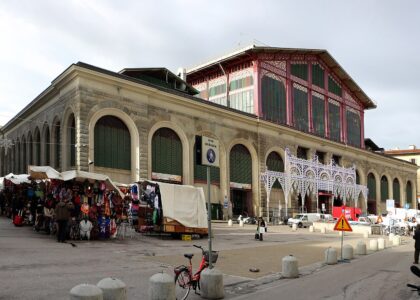
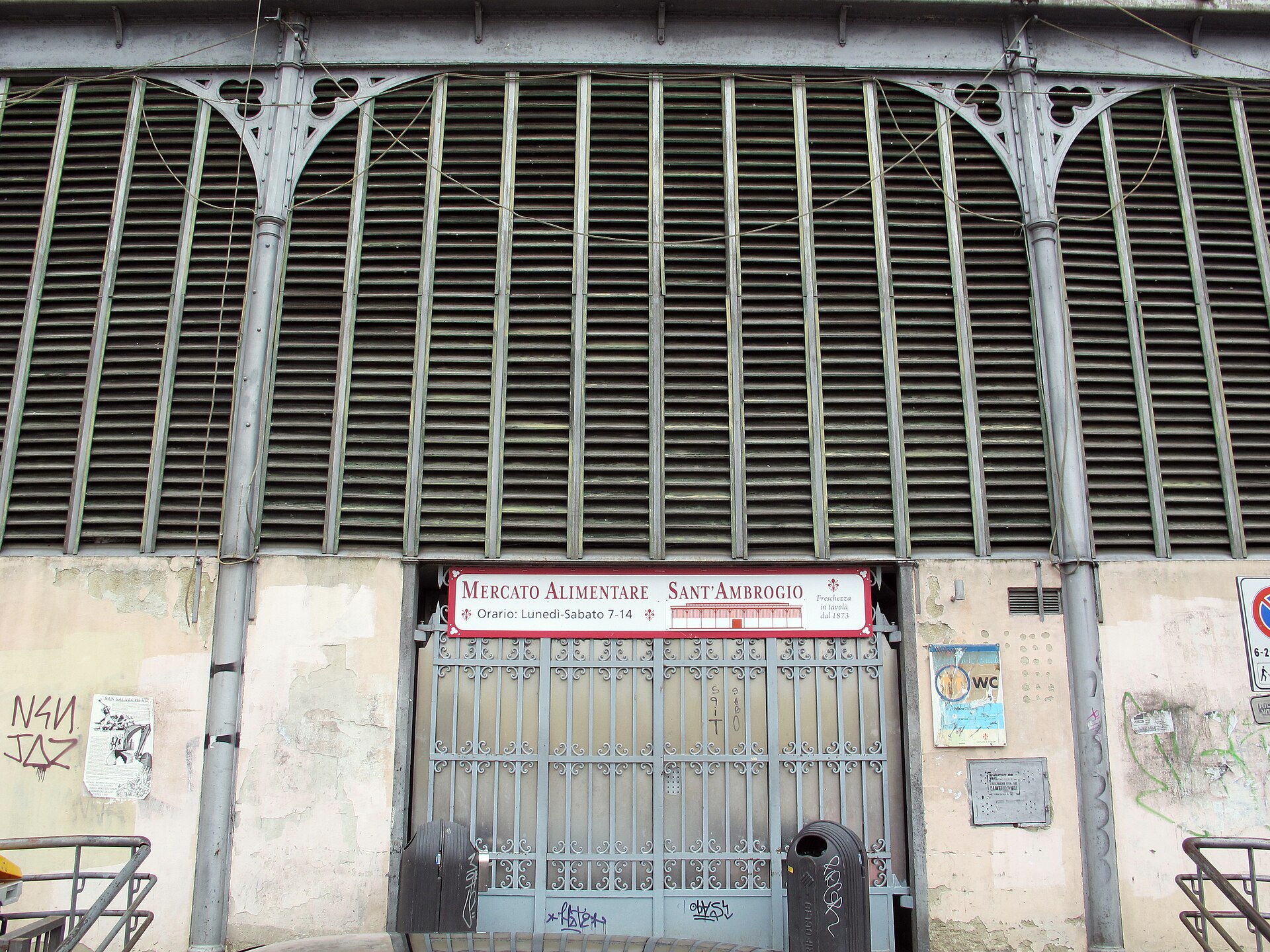
Markets work well in cold weather. Sant’Ambrogio in the morning is the one Florentines actually shop at; San Lorenzo and the Mercato Centrale are busier and more touristed, but the upstairs food hall is a decent rainy lunch.
Out of the city
Day trips are better in March than at almost any other time, because the places that suffer most from crowds suffer least now. Siena in March is a functioning Tuscan city rather than a set. Pisa gets you the Field of Miracles without the corridor of selfie sticks — see the Pisa day trip from Florence. Fiesole is twenty to thirty-five minutes on bus 7 from Santa Maria Novella or San Marco, roughly every twenty minutes, and the Roman theatre on a clear March afternoon is one of the quiet pleasures of Tuscany.
Chianti is a more honest case. The vines are bare and the landscape is brown and structural rather than green and golden — the postcard version is September. But the cellars are open, the tastings are unhurried because you may be the only people in them, and you will not be sharing a road with four coaches. If you want the wine rather than the photograph, March is better than you would think. Our day trips from Florence guide has the full set with times and fares.
What not to bother with in March
- Anything involving the coast. The Tuscan beaches are shut, grey and two hours away. Cinque Terre is doable, but you will be walking wet trails in wind.
- Hop-on hop-off buses. The Fiesole line runs roughly hourly at best and has been suspended on weekdays through recent winters. Check before you buy a 48-hour ticket you cannot use.
- Booking around the wisteria. It is not there yet. See April.
- Rooftop bars. Several are seasonal and most of the rest are indoors-with-a-view until the weather turns. Save it.
Eating in March
March is a transitional month on a Tuscan menu and you can taste the handover. The winter dishes are on their last legs and the spring ones are arriving in ones and twos.
The thing to order is carciofi. Tuscan artichokes are at their peak from February into April, and in Florence they turn up raw and shaved over pecorino, fried whole, or stewed into a tortino with egg. It is the one seasonal ingredient that is unambiguously better now than in summer.
Behind it: the last good ribollita and pappa al pomodoro of the year, both of which become slightly absurd once it is warm; cavolo nero still sweet from the frost; and, in the second half of the month, the first wild asparagus and the first baccelli — young broad beans eaten raw with pecorino, which is a genuinely great thing and gone by June.
If Easter falls in March, the bakeries fill with schiacciata di Pasqua and every butcher in the city sells lamb. In Lent, Friday baccalà — salt cod, usually alla livornese with tomato — appears on menus that do not carry it the rest of the year.
Practically: March is the last month you can reliably walk into a good trattoria at eight o’clock without booking, and it is worth using that. It is also still cold enough that the outdoor tables are theatre rather than comfort — the heaters are not really coping, and the good rooms are inside. Our Florence food guide has the dishes and where to eat them, and Italian dining etiquette covers the coperto, the coffee rules and the things that quietly mark you out.
What to Pack
- Layers, genuinely. An eleven-degree swing between morning and afternoon is normal. A packable mid-layer you can carry from ten until four is the single most useful thing in the bag.
- Something waterproof with a hood. Seven wet days. Umbrellas are awkward in the Uffizi cloakroom queue and useless in a Tuscan gust.
- Shoes you can climb 463 steps in. The cobbles in the centre are uneven, often wet, and polished by eight centuries of feet.
- Covered shoulders and knees for the churches. It is enforced at the Duomo and at Santa Croce, and a scarf in the bag solves it. Details in our guide to the Florence church dress code.
- Not a heavy winter coat, unless you are arriving in the first week. By the last fortnight of March it is dead weight you will carry for six days.
The full seasonal list, including the things people consistently over-pack for Italy, is in our Florence packing list.
Frequently Asked Questions
Is March a good time to visit Florence?
It is the best-value month of the year. Sunshine hours jump by more than a third over February, afternoons average sixteen degrees, museums can still be booked a fortnight out and hotel rates have not yet moved. The first three weeks are the sweet spot. The last week depends entirely on where Easter falls.
How warm is Florence in March?
Average high around 16 °C and average low around 5 °C, with about 61 mm of rain over seven days. That is an eleven-degree daily swing, so the morning and the afternoon need different clothes. Churches stay cold all month regardless of what the street is doing.
Does it rain a lot in Florence in March?
Less than you would expect. At around seven wet days, March is the driest month of the first half of the year — drier than February and noticeably drier than April, which has closer to nine. Autumn is the wet season in Florence, not spring: October and November each get nearly twice March’s rainfall.
Is the wisteria out in Florence in March?
No. The Bardini Garden wisteria tunnel flowers in April, usually mid-month, and in a warm year the very last days of March might show the first few racemes. The Iris Garden below Piazzale Michelangelo opens around 25 April for roughly four weeks. If the flowers are the reason for the trip, book April.
When do the clocks change in Italy?
The last Sunday in March — 28 March 2027, 26 March 2028 — when clocks go forward an hour and sunset moves from around 18:20 to around 19:30. They go back on the last Sunday of October. If your dates are flexible, being in Florence after the change rather than before it materially improves the evenings.
What is the Capodanno Fiorentino?
The Florentine New Year, 25 March. Florence began its civil year on the Feast of the Annunciation from the Middle Ages until 1750. It is marked with an all-day fair in Piazza Santissima Annunziata from 08:00 to 19:30 and a costumed historical procession that leaves Piazzetta di Parte Guelfa at 16:00. It is a civic celebration, not a public holiday — nothing closes.
Do I need to book museums in March?
Yes, but with less notice than later in the year. Reckon on a fortnight for the Accademia and one to two weeks for the Uffizi, and treat any Easter week as though it were peak season and book a month out. The Bargello and the Museo dell’Opera del Duomo rarely need advance booking at all.
Is March better than April in Florence?
For value and space, yes. For weather and flowers, no. April is four degrees warmer, has thirty more hours of sun and delivers the gardens, but it also brings Easter in most years, the 25 April holiday weekend, and the first genuine queues. March is the better trip if you have been to Florence before; April is the better one if you have not.
Keep Reading
- Florence in February — the month before, at the winter price floor, with the Viareggio carnival attached.
- The best time to visit Florence — all twelve months weighed against each other.
- Florence weather by month — full temperature, rainfall and sunshine tables.
- Easter in Florence — the Scoppio del Carro, hour by hour, and where to stand.
- Florence in winter — what March is finally leaving behind.
- Outdoor activities in Florence — what opens up as the weather turns.
- Florence travel tips — the practical things that save time in any month.