This article contains advertising. Booking links on this site can be turned into paid links automatically by our partner Travelpayouts: if you book through one, we earn a commission from the provider, at no extra cost to you. It never affects what we recommend. Affiliate disclosure
Florence in November: The Cheapest Month Worth Booking
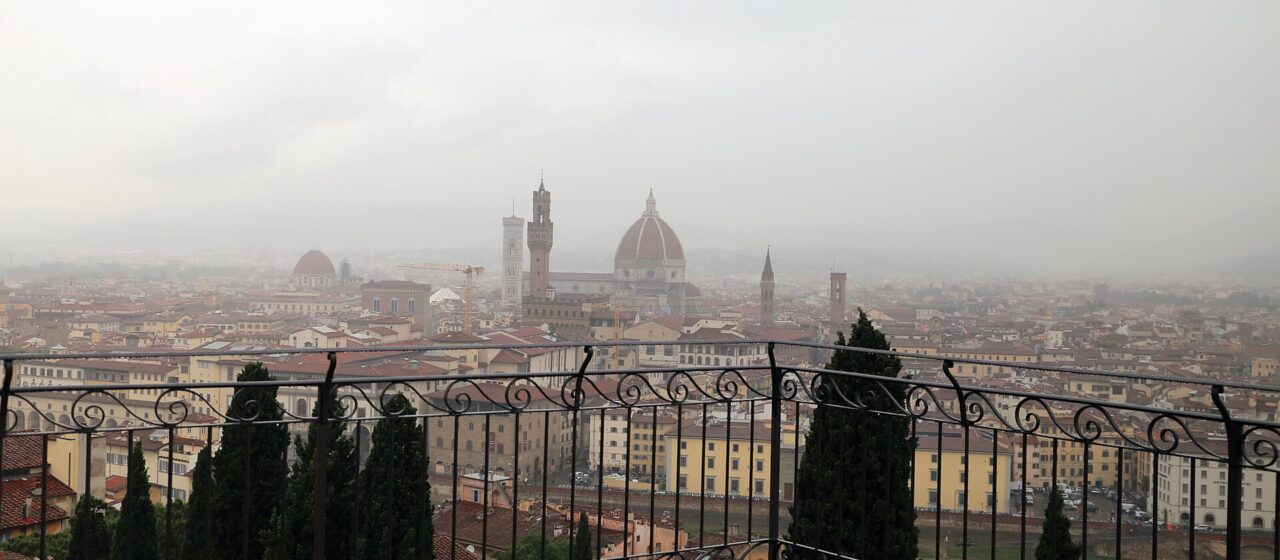
Florence in November is wet, dark by half past four, and the best value the city offers all year. It is statistically the wettest month, with about ten rainy days out of thirty and roughly four hours of sun a day, and in exchange you get an Uffizi you can walk round, hotel rates a third below October’s, new olive oil in every kitchen and truffles on menus that could not have justified them in August. The trade is a good one if you know what you are trading.
Part of our month-by-month series — see the best time to visit Florence for the year at a glance and Florence weather by month for the full averages.
Colder than November but drier, and with the Christmas lights on. Our guide to Florence in December has the weather, the closure days and why 9 to 20 December may be the best-value week of the Florentine year.
The Case for November
Every guide to Florence tells you to come in the shoulder season, and then every guide names May and September, which are shoulder seasons in the way that a Tuesday in July is quiet compared with a Saturday in July. November is the actual off season, and it behaves like one.
The Accademia in mid-November takes a few days’ notice rather than a month. The Uffizi at nine in the morning has rooms in which you are alone with the paintings. Restaurants that would not seat you without a booking in October will find you a table. Hotel rates drop away after the first few days of the month and stay down until the Christmas lights go on.

What you give up is daylight and dryness. That is the entire deal, and whether it is worth it depends almost entirely on why you are coming. If Florence to you means Renaissance painting, cold churches, long lunches and a bookshop, November is close to ideal. If it means sitting outside with a spritz watching the light on the Arno, it is not.
The Weather, Without Euphemism
| Measure | Typical |
|---|---|
| Average high | ~15°C |
| Average low | ~6°C |
| Rainfall | ~115 mm — the wettest month of the year |
| Wet days | ~10 out of 30 |
| Sunshine | ~3.7 hours a day |
| Sunset | ~17:05 at the start, ~16:40 by the end |
| Snow | Rare |
Ten wet days out of thirty means roughly a one-in-three chance that any given day sees some rain. It does not mean it rains for ten full days — Tuscan rain tends to come in blocks of a few hours, often overnight or in the afternoon — but it does mean you should not build a five-day itinerary in which every day requires good weather.
Temperature-wise November is mild rather than cold. Fifteen degrees at midday is fleece weather, not coat weather, and the churches will be colder than the street. The unpleasantness, when it comes, is the combination: fifteen degrees, wet, and dark at quarter to five.
Watch the sky, not the forecast
Tuscan November forecasts are unreliable more than about thirty-six hours out, and a day showing rain will often deliver two hours of it at three in the afternoon and clear evenings either side. Do not cancel a plan on a five-day forecast. Do keep the outdoor items — the dome climb, Piazzale Michelangelo, Fiesole — flexible, and take the first clear morning you get.
Prices: What You Actually Save
This is the part that makes the argument. November is low season in the technical sense that hotels price it as low season, and the difference against October is not marginal.
| Item | Price | Note |
|---|---|---|
| Mid-range hotel | Lowest of the year alongside January and February | Rates drop away after the first week |
| Tourist tax | Paid at your accommodation | Charged per person per night by accommodation type; capped at 7 nights, under-12s exempt |
| Uffizi, booked ahead | €29 | €25 on the day — and in November walking up works |
| Uffizi after 16:00 | €16 | But it closes at 18:30, so you get 2.5 hrs |
| Accademia | €20 + €4 booking fee | Days rather than weeks of notice needed |
| Brunelleschi Pass | €30 | Dome slots available at short notice |
| Firenze Card | €85 / 72 hrs | Add up the museums you plan to see before buying |
| Single bus or tram ticket | €2.00 | €3.00 from the driver |
Note the Firenze Card point, because it runs against the usual advice. The card’s main practical benefit is skipping queues and bundling reservation fees. When you are not fighting queues, it is competing purely on price, and its rough breakeven of three to four paid museums in 72 hours is a demanding schedule for a short dark day. Most November visitors are better off buying individual tickets.
The one thing that is not cheaper is flights, which follow their own logic. Mid-November midweek is usually the low point; the last week starts creeping up as Christmas demand appears.
Empty Museums and Free Sundays
The whole argument for November lives in this section.
Book the 08:15 Uffizi slot. In July that gets you ahead of the crowd; in November it gets you a gallery with staff in it and almost nobody else, for the best part of an hour. Standing in front of the Botticellis in an empty room is a completely different experience from filing past them, and it is available for about six weeks a year.
The Accademia is the same story in miniature — the tribune with the David is never truly empty, but in November it is a room rather than a scrum. The Bargello, the Museo dell’Opera del Duomo, Santa Maria Novella and Santa Croce are all effectively deserted.
The first Sunday catch
State museums are free on the first Sunday of the month. In a quiet month this is genuinely tempting, and it is still the one day you should avoid the Uffizi and Accademia — free entry pulls in a domestic crowd that undoes November’s entire advantage. If you want it, be at the door at opening. If you do not need it, use that Sunday for a church or a walk instead.
Two mechanical notes for the month. The Boboli Gardens close on the first and last Monday of every month, as well as on 25 December. And the dome climb is 463 steps with no lift — excellent in cool weather, miserable in rain, and the viewing gallery in a downpour is a wet, crowded corridor with no view.
Our Uffizi guide and Duomo complex guide cover the booking mechanics in full.
Olive Oil, Truffles and the November Table
November is olive oil month, and this is not a marketing construction — the harvest genuinely runs from late October into early December, and the mills genuinely are pressing.
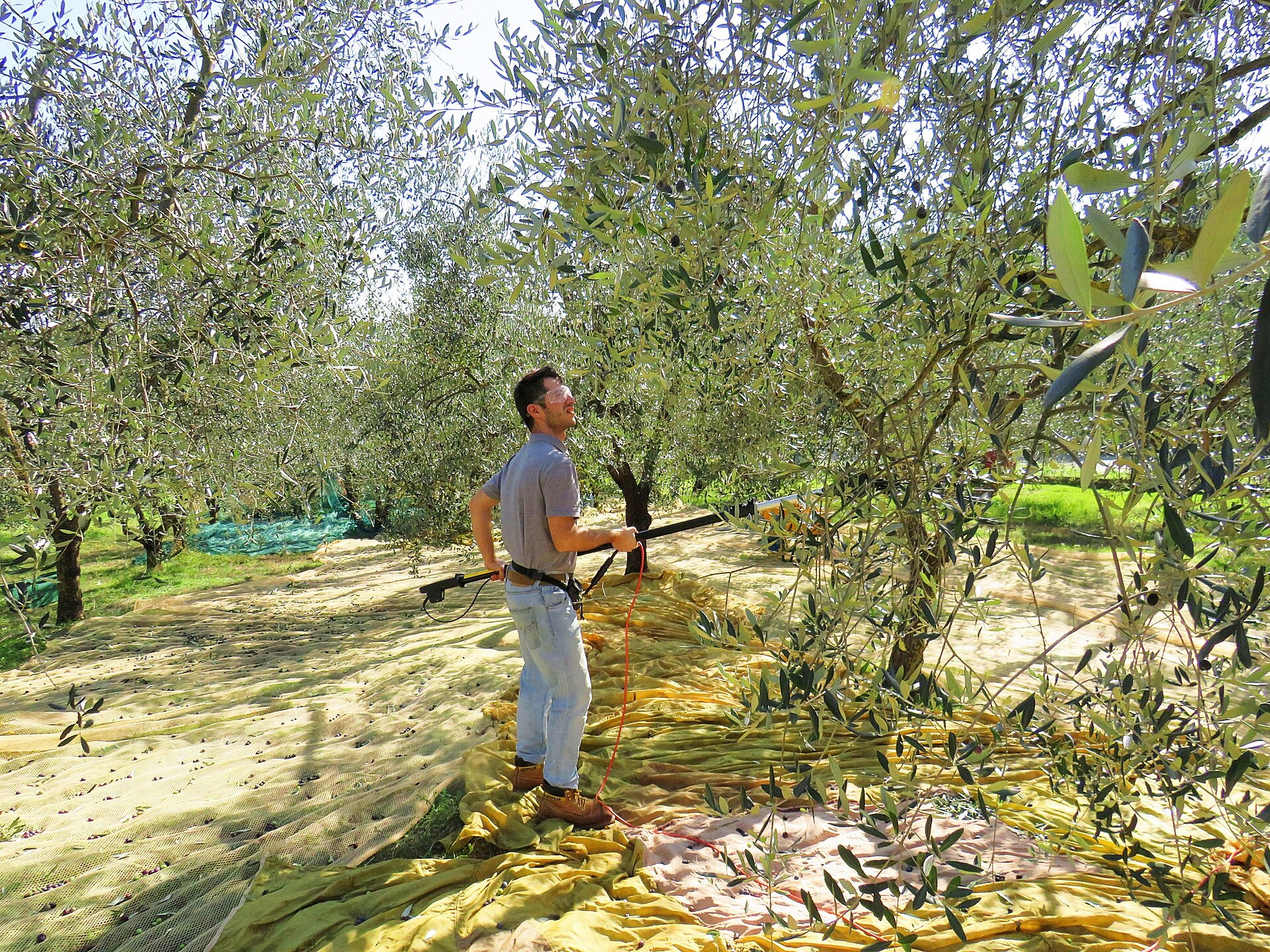
What you want is olio nuovo: oil pressed within days, unfiltered, cloudy, an almost alarming green, and peppery enough at the back of the throat to make first-timers cough. It is available for a few weeks and then it settles into ordinary excellent extra virgin. Ask for it by name; restaurants that have it will bring the bottle to the table.
The dish that shows it off is fettunta — bread grilled over embers, rubbed with raw garlic, salted, and drenched in new oil. Three ingredients, no technique, and it only works when one of the ingredients was made last week.
- White truffle runs through November, and San Miniato, between Florence and Pisa, holds its truffle market across the month. In the city, expect tagliolini al tartufo bianco priced by the gram.
- Ribollita comes back — the thick bread-and-bean soup that is Tuscany’s cold-weather staple, and which nobody serves in August.
- Game and chestnut dishes continue from October: wild boar ragù, castagnaccio, roasted chestnuts on street corners.
- Vino novello is released in the first half of the month. It is a young, cold, simple red drunk within weeks. Try it once; do not build a trip around it.
Our guide to Tuscan wine festivals and the harvest calendar covers the mills, the truffle fairs and how to reach them.
The Dark, and What to Do With It
Sunset at the start of November is about five past five and by the end of the month about quarter to five. That is the hard constraint of the month and it needs planning for rather than resenting.
The practical shape of a November day: museums and outdoor walking in the morning and early afternoon, viewpoints at about four, and then a long evening indoors that starts much earlier than you are used to. Florence is very good at long evenings indoors. The wine bars are warm, the food is heavy, and nobody is rushing you.

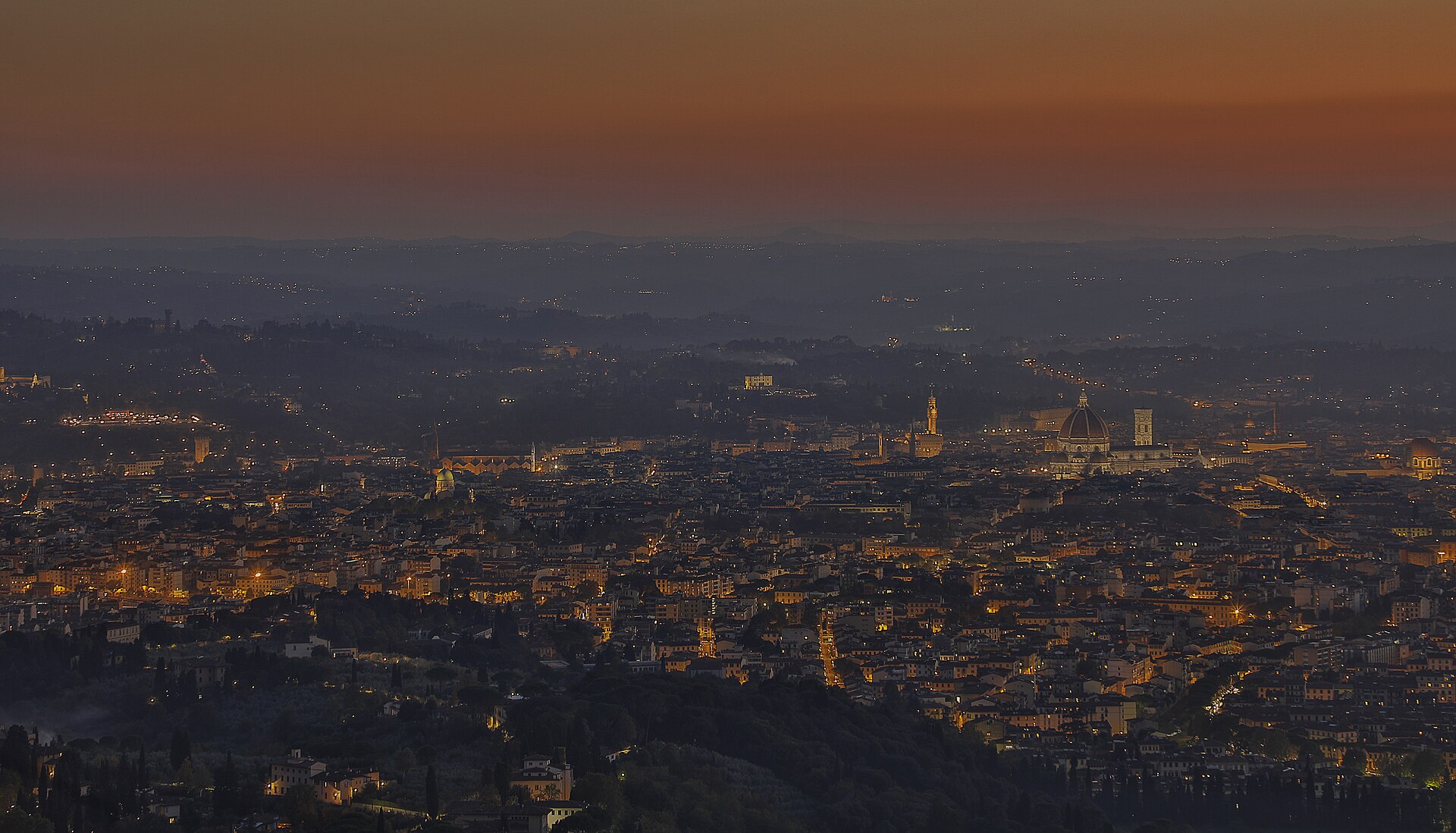
The upside nobody mentions: the city empties of day trippers by six, and a November evening in the centre — wet paving, lit facades, almost nobody about — is closer to what Florence actually looks like than anything you will see in daylight in high season. Walk it. Our after-dark guide covers where to end up.
One thing to note: the Christmas lights are a December event, not a November one. The last edition of Florence Lights Up ran from 6 December 2025 to 6 January 2026, and the next programme appears on the MUS.E and FeelFlorence sites. The German market in Santa Croce gets going earlier: in 2026 it runs from 14 November to 20 December. If you want the festive city, come in December.
The month the lights arrive is covered in Florence in December.
What to Pack
- Waterproof shoes with grip. The single most important item. Around ten wet days on worn stone paving, and the descent from Piazzale Michelangelo is genuinely treacherous in smooth soles.
- A proper waterproof jacket, with a hood, rather than an umbrella. November rain often comes with wind.
- Layers. Fifteen degrees outside, cold inside churches, warm inside museums, and the temperature drops sharply after four.
- A scarf. Does more work than a heavier coat, and covers shoulders in churches.
- A small bag that closes. Not for security reasons particularly — because you will be carrying a folded jacket around all day.
What you can leave at home: an umbrella of any useful size, thermals, and anything for the beach or the pool. What you might not think of: a book, because November evenings are long and start at five.
What Is On
November is the quietest month in the Florentine events calendar and the emptiness is part of the appeal. What there is:
- The indoor cultural season is fully under way. The Teatro del Maggio, the Teatro della Pergola and the smaller venues are all running, ticket prices are reasonable, and there is no competition for seats. A major exhibition at Palazzo Strozzi is usually the best two hours available on a wet afternoon.
- Truffle and oil fairs across Tuscany through the month, San Miniato being the big one for truffles.
- Florence Food Week and similar city food programming tends to land in November; the specifics change year to year, so check what is running when you book.
- The Christmas market in Piazza Santa Croce opens on 14 November in 2026 and runs to 20 December, well ahead of the lights.
The Florence events calendar has whatever the current year is doing.
The month before, warmer and considerably busier, is covered in Florence in October.
4 November and the Flood
On 4 November 1966 the Arno broke its banks and flooded Florence, the water reaching roughly five metres in the worst-hit areas. It killed people, destroyed an enormous quantity of books and paintings, and coated the lower city in fuel oil and mud. The response — thousands of volunteers, many of them foreign students, who became known as the angeli del fango, the mud angels — is one of the defining events of the modern city’s memory.
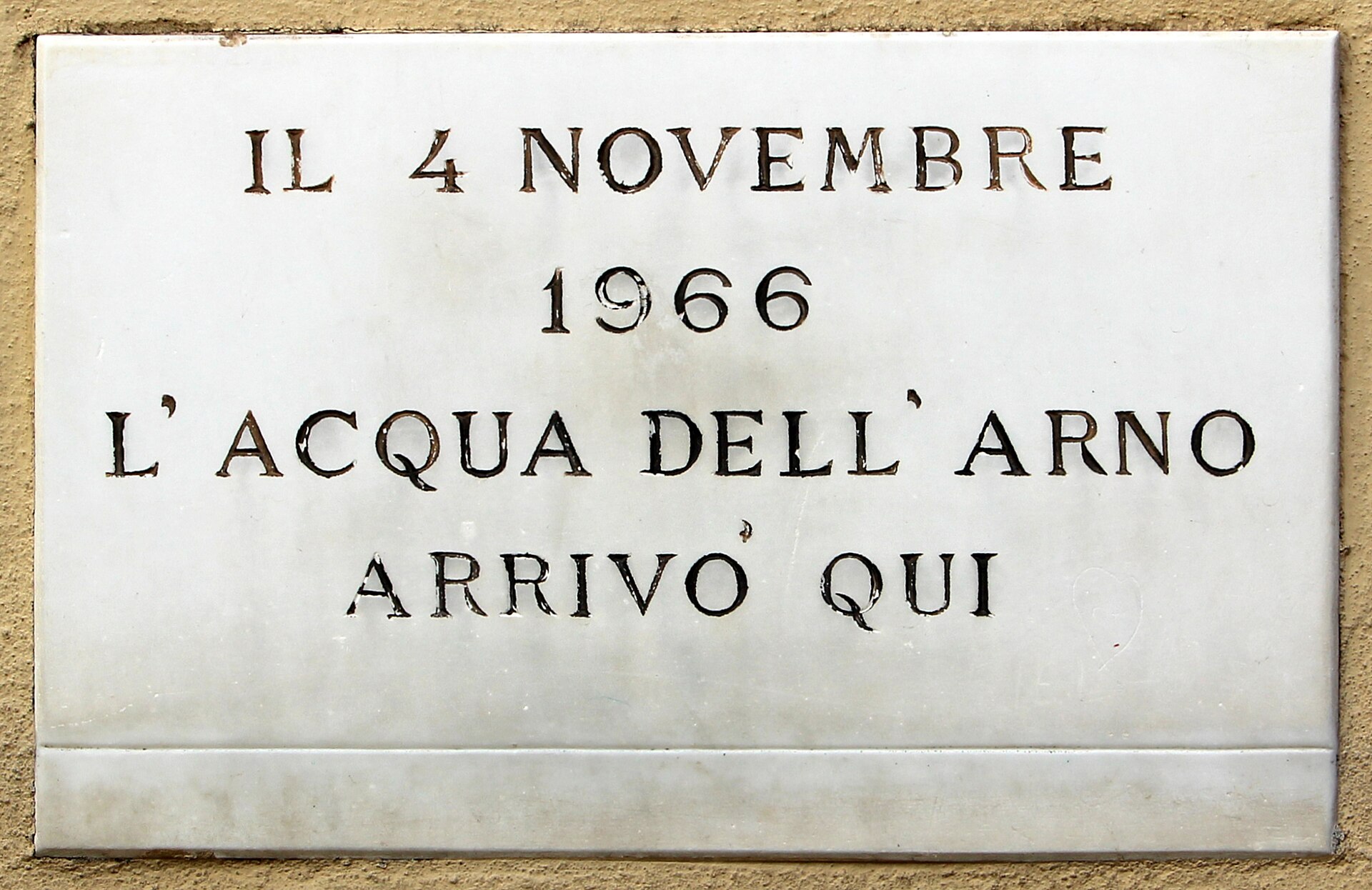
You will see the marks. Small plaques on walls across the centre record the 1966 high-water line, and in many streets it is startlingly far above your head. Other plaques record earlier floods; in Piazza Santa Croce the 1557 mark sits below the 1966 one. Santa Croce, in the low ground by the river, was among the worst affected; Cimabue’s crucifix there was catastrophically damaged and became the symbol of the whole disaster.
Commemorations happen each 4 November. It is worth knowing, if you are here in the month, that the anniversary means something locally, and it is worth looking up at the plaques rather than walking past them.
Who Should Not Come in November
Being fair about it:
- First-time visitors on a tight three-day trip. If you have three days and it rains on two of them, you have lost a large share of a once-in-a-decade trip. Come in a month with better odds.
- Anyone whose plan is outdoor. Day trips to Cinque Terre, hilltop towns, vineyards, walking — all doable, all much worse in the wet, and several will be running reduced winter schedules.
- People who need long days. Dark at quarter to five is a genuine constraint if you want to see a lot.
- Anyone coming for the Christmas atmosphere. Apart from the Santa Croce market, it is not here yet. The lights belong to December; last season they came on on 6 December.
And who should: repeat visitors, anyone whose main interest is the art, anyone travelling on a budget, and anyone who has been to Florence in summer and found it unbearable. Our winter guide covers the season November leads into.
Frequently Asked Questions
Is November a good time to visit Florence?
For repeat visitors and anyone whose priority is the art, yes — it is the cheapest month with real advantages: no queues, hotel rates at their annual low, and museums you can actually walk round. For a first, short trip it is a gamble, because it is the wettest month of the year and dark by quarter to five.
How much does it rain in Florence in November?
About 115 mm across roughly ten wet days, which makes it the wettest month of the year. It usually falls in blocks of a few hours rather than all day. Bring a hooded waterproof and shoes with grip; forget the umbrella.
How cold is Florence in November?
Mild rather than cold: highs around 15°C and lows around 6°C on average. Snow is rare. The discomfort is the combination of damp and early dark rather than the temperature itself.
Do I need to book the Uffizi in November?
Booking is not compulsory: a ticket costs €25 on the day or €29 in advance, the difference being the €4 reservation fee that fixes your entry time. Book the 08:15 slot if you want the galleries genuinely empty. The exception is the first Sunday, when state entry is free and the domestic crowd arrives.
Are the Christmas lights up in November?
No. The lights go up in December, though the date varies: the last Florence Lights Up ran from 6 December 2025 to 6 January 2026, and MUS.E publishes each season’s programme. The German Christmas market in Piazza Santa Croce is the exception, open from 14 November to 20 December in 2026.
What is olio nuovo?
New olive oil, pressed within days of harvest, unfiltered, bright green and strongly peppery. It is available for a few weeks from about the start of November and then settles into ordinary extra virgin. Eat it as fettunta — grilled bread, garlic, salt, oil — and buy a tin for hold luggage.
What are the plaques on the walls marking a line?
Flood markers. The most numerous record the high-water line of 4 November 1966, when the Arno rose to roughly five metres in the worst-hit areas and destroyed a vast quantity of art and books. Others commemorate earlier floods; in Piazza Santa Croce the 1557 plaque is set below the 1966 one. The anniversary is commemorated each year.
Keep Reading
- Best time to visit Florence — the whole year, compared.
- Florence weather by month — the full averages.
- Florence in winter — the season November opens.
- Rainy day Florence — the list you will need about five times.
- Tuscan wine festivals — olive pressing and truffle fairs through November.
- The Uffizi — how to use an empty gallery properly.