This article contains advertising. Booking links on this site can be turned into paid links automatically by our partner Travelpayouts: if you book through one, we earn a commission from the provider, at no extra cost to you. It never affects what we recommend. Affiliate disclosure
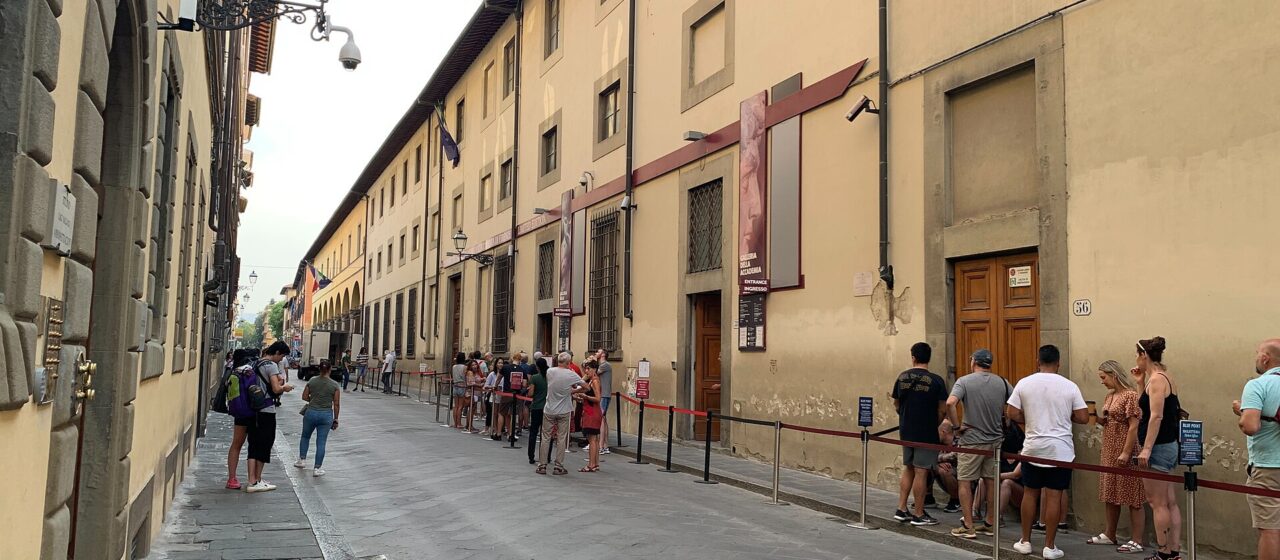
Florence’s most famous museums sell out weeks in advance, and the on-the-day queues at the Uffizi and Accademia routinely stretch past two hours in summer. The good news: every major Florence museum sells timed tickets online, several offer “fast-track” entry options, and a handful of residency-card hacks can save you both money and time. This 2026 guide explains exactly how to skip the line at each major museum, when to book, what shortcuts work, what doesn’t, and how to assemble a multi-museum itinerary that wastes zero hours queuing.
If you plan to visit four or more sites, compare the maths against the city pass in our Firenze Card guide.
The Uffizi has enough ticketing quirks — three doors, two price tiers and a discounted afternoon fare — to need its own page. See our Uffizi tickets guide for the full breakdown before you book.
Tickets are half the question; the other half is which guided experiences earn their fee. Our pillar guide to Florence tours and tickets covers both.
What “Skip the Line” Actually Means in Florence
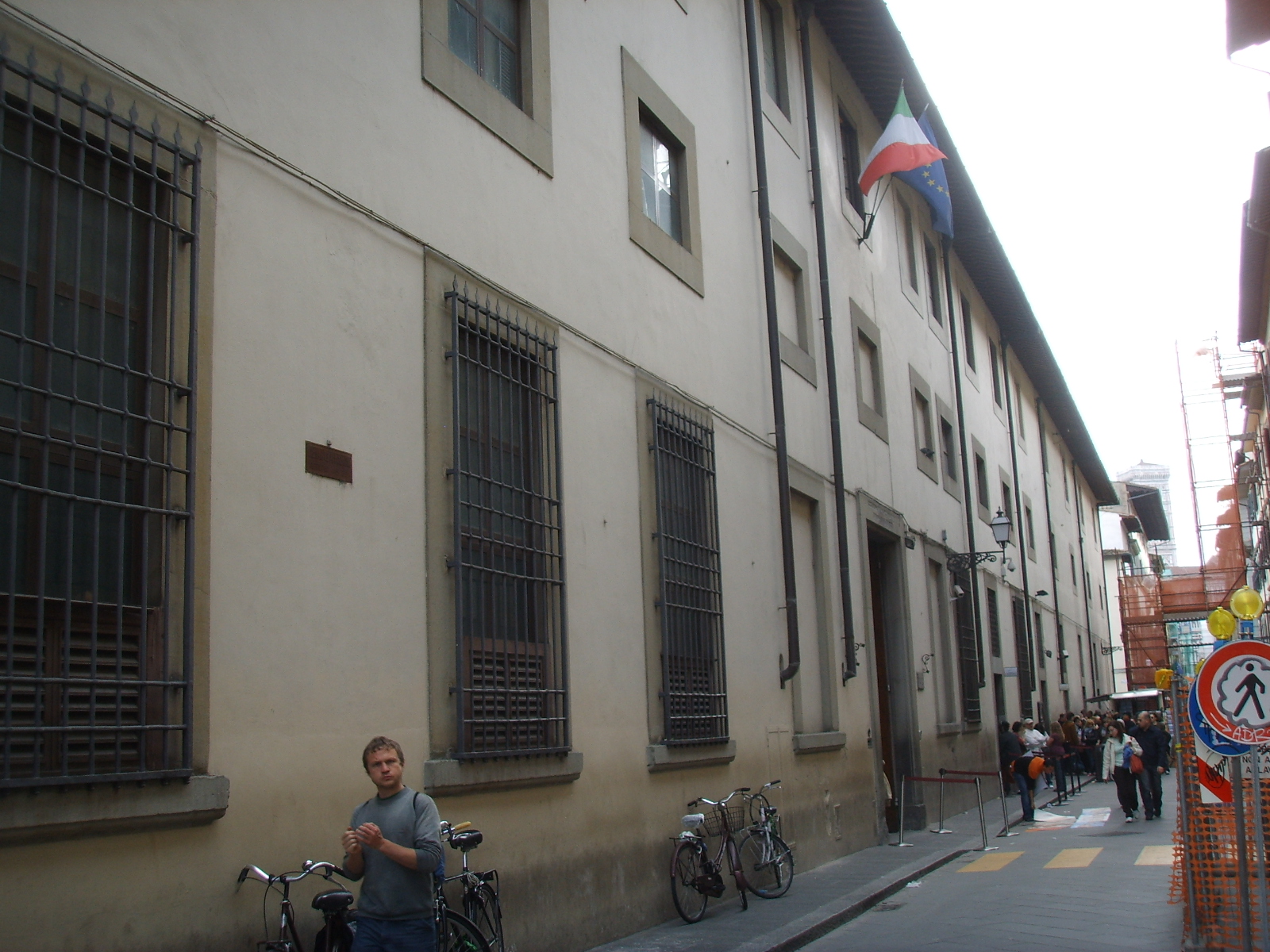
Florence museums have two queues: a ticket-purchase queue (people without reservations buying same-day) and a security and entry queue (everyone, including ticket holders). “Skip the line” almost always means skipping only the first queue. Even with a priority-entry ticket, you still pass through metal detectors, bag scans and ID checks, and at the Uffizi that happens within your timed slot. The big saving is the on-the-day ticket queue, which a reservation lets you bypass altogether.
You will meet three kinds of “skip-the-line” offer in Florence: timed-entry online tickets bought from the museum’s official site (cheapest, no human guide); third-party reseller tickets with a booking fee on top; and guided tours with included museum entry (most expensive but useful when slots have sold out for individual purchase, since tour operators hold separate inventory).
The Big Three, Compared
Three bookings in Florence carry real consequences if you get them wrong, and each one is run by a different institution with its own prices, its own booking platform and its own idea of what a “pass” means. Each now has a page of its own on this site; what follows is the comparison that tells you which to worry about first.
| Uffizi | Accademia | Duomo complex | |
|---|---|---|---|
| Adult price | €25 on the day, €29 booked | €20 plus €4 booking | €30 / €20 / €15 by tier |
| Booking | Strongly advised Apr–Oct | Strongly advised Apr–Oct | Compulsory for the dome only |
| Lead time in season | Book once your dates are fixed | Book as soon as you know your dates | Book early: the dome needs a timed slot |
| Walk-up queue | Can be long in season | Can be long without a reservation | Dome only with a reserved ascent slot |
| Cheap alternative | €16 afternoon ticket from 16:00 | Free copies in Piazza della Signoria and on Piazzale Michelangelo | The cathedral itself is free |
| Full detail | Uffizi tickets guide | Accademia tickets guide | Duomo tickets guide |
Two things fall out of that table. The first is that all three are worth booking the moment your dates are fixed, since none of them publishes a safe lead time. The second is that each of the three has a genuine cheap escape route: the Uffizi’s €16 afternoon fare, the free copies of the David in Piazza della Signoria and on Piazzale Michelangelo, and the fact that walking into Santa Maria del Fiore costs nothing at all.
No official pass spans all three. There is no official ticket, card or pass in Florence that covers the Uffizi, the Accademia and the Duomo together: the Firenze Card takes in the first two but not the Duomo complex, which is run by a separate organisation. Any product claiming otherwise is a tour operator bundling separate purchases and charging you for the trouble.
The Firenze Card: 2026 Pricing & Worth-It Calculation
The Firenze Card costs €85 in 2026 and grants 72 hours of admission to 60+ Florentine and surrounding-area museums, including the Uffizi, Accademia, Pitti, Boboli, Bargello, Medici Chapels, San Marco, Palazzo Vecchio museum, the Innocenti Museum, the Stibbert and most other state-run venues. A €28 “Firenze Card Restart” extends validity by an additional 48 hours.
Critical 2026 caveats: the Firenze Card does not include the Duomo complex. The cathedral itself is free, but the Brunelleschi Dome climb needs a separate Brunelleschi Pass at €30; the cheaper Giotto and Ghiberti passes cover smaller selections of the other monuments. It also doesn’t cover paid temporary exhibitions held inside the Uffizi or Pitti (rare but they happen). And although the card promises “skip the line” status, the Uffizi and Accademia still require a free timed reservation booked in advance via the Firenze Card portal — failing to reserve means you queue with the walk-ups.
Is It Worth It? The Math
Add up the individual peak-season prices for the museums you’d realistically visit in 72 hours. The Firenze Card breaks even at roughly five major museums. A typical “all the heavy hitters” itinerary — Uffizi (€29) + Accademia (€24) + Pitti (€19) + Boboli (€10) + Bargello (€12) + Medici Chapels (€11) + Palazzo Vecchio (€18) — totals €123. That makes the €85 card a clear €38 saving.
By contrast, a lighter itinerary — Uffizi + Accademia + one other museum — costs around €70 individual and the card overpays. For 2–3 museums, skip the card. For 5+ in 72 hours, buy it.
Where to Buy
Buy at firenzecard.it (digital, on phone) or in person at the Cathedral or Palazzo Vecchio info points. The 72-hour clock starts at first museum entry, not at purchase, so buy ahead and activate when you walk into your first venue. Children 0–17 enter free at all state museums regardless, so families don’t need to buy children’s cards.
The Duomo Complex: A Different System Entirely
The Cathedral, Baptistery, Bell Tower, Brunelleschi Dome and Cathedral Museum are administered separately from the state museums by the Opera del Duomo. The Cathedral itself is free, but everything else requires the Brunelleschi Pass (€30 in 2026, includes Dome climb, Baptistery, Bell Tower, Santa Reparata and Cathedral Museum, valid for three calendar days starting on the date you book for the Dome), the cheaper Giotto Pass (€20, without the Dome) or the Ghiberti Pass (€15), which covers a smaller selection.
The Brunelleschi Dome climb works only on a reserved ascent slot, fixed when you buy and not changeable afterwards, even if you buy on site. Book it via duomo.firenze.it as early as you can, above all for July–August. The climb itself is 463 steps.
The Cathedral interior is free and unticketed, open to visitors Monday to Saturday 10:15–15:45 (closed Sundays and religious holidays), though a queue can build at the front entrance. Services are for worship, not a way round the line. The interior is often less impressive than visitors expect (most art is in the Cathedral Museum), so don’t burn your morning queuing.
Other Museums: When to Skip Booking

Palazzo Pitti & Boboli
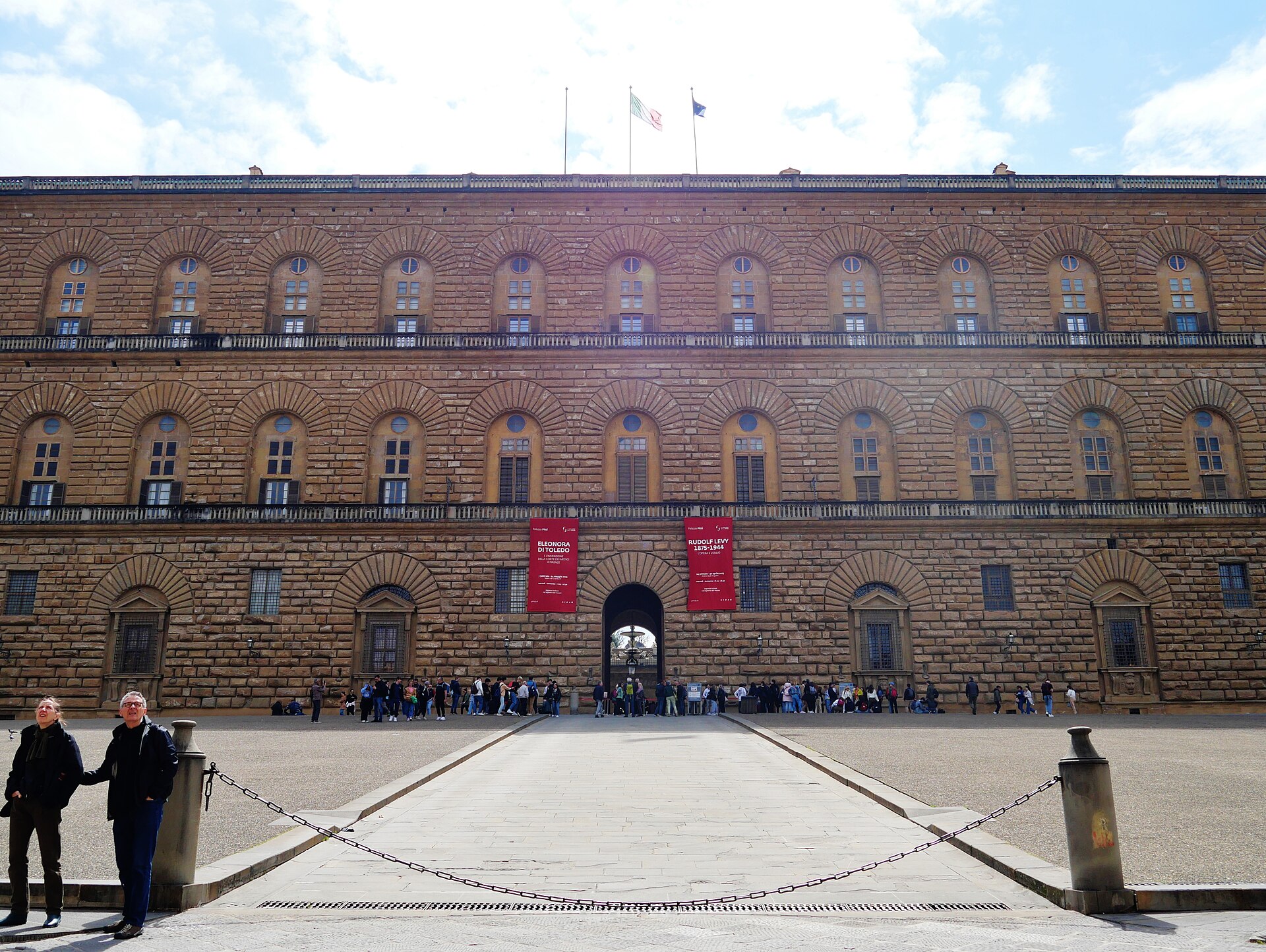
Palazzo Pitti tickets (€16 on the day, €19 booked) are sold in advance on tickets.uffizi.it, and booking saves you the on-the-day window. Boboli rarely needs booking — the gardens are vast enough to absorb crowds — but if you want the combined Pitti+Boboli pass, prebooking is sensible.
Bargello & Medici Chapels
The Bargello and Medici Chapels are walk-in museums even in July. Both close on Mondays, and the Bargello posts any exceptional openings on its operator’s site, so check before you go. Tickets are sold at the door for €12 (Bargello) and €11 (Medici Chapels, with an optional €3 booking).
Palazzo Vecchio
Palazzo Vecchio sells separate tickets for the museum (€18) and the Arnolfo Tower and walkway (€20). The museum rarely has lines; the tower can sell out in summer. Book the tower online on the museum’s official site, musefirenze.it, if you want a specific climb time.
San Marco Museum
One of Florence’s most peaceful museums, San Marco rarely has any line. Walk in, buy your ticket at the desk, climb the stairs to Fra Angelico’s frescoed cells. Closes most Sundays — verify on the day.
Free Days at State Museums (Domenica al Museo)
The first Sunday of every month is free at Italian state museums, which in Florence includes the Uffizi, Accademia, Pitti, Boboli, Bargello and Medici Chapels. There is no booking — entry is first-come, first-served. The trade-off is long waits at the Uffizi and Accademia, and the Accademia has no cloakroom, so leave big bags at your hotel. The smaller Bargello and Medici Chapels are the smart play on free Sunday.
Beyond first Sundays, the Accademia also opened free in 2026 on 25 April and 2 June, with 4 November still to come. Italy’s national Family Day at the Museum (F@Mu) fell on Sunday 11 October in 2026; the next edition and the participating museums’ admission arrangements appear on famigliealmuseo.com.
Firenze Card vs PassePartout vs Single Tickets: Decision Tree
If you’re staying 1–2 days, buy single timed-entry tickets for the Uffizi and Accademia at the official site, plus walk-in tickets for whatever else you visit. Don’t bother with passes.
If you’re staying 3 days and visiting the big three (Uffizi + Pitti + Boboli) but few smaller museums, the €40 PassePartout is unbeatable. Add separate tickets for Accademia and anything else.
If you’re staying 3 days and museum-hopping aggressively (5+ museums), the €85 Firenze Card pays off, especially if you’d otherwise pay peak prices.
If you’re staying 5+ days at a relaxed pace, single tickets give you flexibility (you can change your mind day-by-day) and you avoid the 72-hour Firenze Card pressure. Buy the PassePartout if you’ll see Uffizi+Pitti+Boboli, single tickets otherwise.
When to Book Your Florence Museum Tickets
Two months ahead is the safe horizon for July–August Uffizi morning slots. Each museum releases its own booking calendar, so look at the official booking page as soon as your dates are fixed, and check the Accademia’s separately.
Three weeks ahead is sufficient for shoulder-season visits (April, May, September, October), or for any weekday afternoon Uffizi slot. For the Accademia, check current availability on its official booking page.
One week ahead works for low-season (November–February), midweek visits, or any time you’re flexible about entry time. Both Uffizi and Accademia routinely have slots available within a week in winter.
Day-of bookings can still turn up at the official sites, but availability varies by museum and date, and you take whatever time is left. If you’re booking day-of in summer, expect to choose between joining the free-Sunday crowd and buying a guided tour at €60+.
Resident Discounts & EU Citizens Under 25
EU citizens from 18 until their 25th birthday pay a reduced rate at state museums (€2 at the Uffizi and Accademia; check the Pitti and Boboli rate on their booking page). Bring your passport or national ID to the museum to validate. Tuscany residents have additional discounts on certain weekdays. Children 0–17 of any nationality enter all state museums free.
The Uffizi grants free entry to some education-related groups, and study access authorised by its director; the eligible categories are listed on its free and reduced tickets page, worth reading if you are in Florence to study.
2026 Afternoon Discount
From 1 January 2026 the Uffizi introduced an afternoon-discount window: entry from 16:00 costs €16, against €25 on the day for an earlier slot. The Accademia sets its own fares (€20 plus €4 booking), listed on its visit page. If you have flexibility, the Uffizi afternoon ticket is the cheapest full-price way in and a much quieter time inside the museum.
A Sample Three-Day Skip-the-Line Itinerary
This itinerary assumes you’ve prebooked the Uffizi, Accademia and Brunelleschi Dome (the three reservations that genuinely cannot wait). Everything else is walk-in. Total ticket spend: roughly €80 with the PassePartout, or €120 single-ticket pricing.
Day 1 — Centro Storico: 09:00 Brunelleschi Dome climb (timed). 10:30 Cathedral interior (free). 11:30 Baptistery + Cathedral Museum (Brunelleschi Pass). Lunch at Mercato Centrale. 14:00 Bargello (walk-in). 16:00 stroll Piazza della Signoria. 17:30 aperitivo.
Day 2 — Renaissance Painting: 08:30 Accademia (timed slot). 11:00 San Marco Museum (walk-in, around the corner). Lunch trattoria. 14:30 Uffizi (timed slot). 17:30 sunset on Piazzale Michelangelo or Forte Belvedere.
Day 3 — Oltrarno: 09:00 Pitti Palace (PassePartout). 12:00 Boboli Gardens (PassePartout). Lunch in San Frediano. 15:00 Brancacci Chapel (book ahead, €15). 17:00 Santo Spirito. 18:30 wine bar.
Avoiding Ticket Resellers
Third-party resellers charge €3–10 above face value as a “service fee”, which is harmless if you just want a quick checkout — but they sometimes resell guided-tour tickets as if they were timed-entry tickets, leaving you stuck with a guide you didn’t want. Buy from tickets.uffizi.it, firenzecard.it, or duomo.firenze.it when possible. If you do use a reseller, check that the listing says clearly whether it is “guided” or “self-guided” and what its refund policy is.
If a reseller’s site is in flawless English with stock photos and prices well above €40 for a self-guided Uffizi ticket, close the tab. If you’re targeted by a “Florence ticket” pop-up while at the airport, ignore it.
Last-Minute Strategies When Tickets Are Sold Out
Try a guided tour: tour operators get separate inventory, so a guided visit can still have places after individual slots have gone.
Pivot to an alternative: Bargello, San Marco, Medici Chapels, the Cathedral Museum and Palazzo Vecchio all have world-class Renaissance content and rarely require booking.
Check the Firenze Card: If you’ve nearly enough museums planned to justify the card, buy it and reserve your Uffizi and Accademia slots through the Firenze Card portal.
Skip-the-Line FAQ
Will I really skip the line at the Uffizi with a timed ticket?
You’ll skip the ticket-purchase line, which is the long one. You will still pass through security during your booked slot, so leave some time between your booking time and the first painting.
Do I need to print my ticket?
No. The QR code on your phone is accepted at every Florence state museum. Take a screenshot in case you lose signal. The Brunelleschi Pass (Duomo) and Firenze Card both work via QR on phone.
What if I’m late for my timed entry?
Your Uffizi ticket is for a set entry time, so arrive punctually: turn up late and security may turn you away to the standby queue. The Accademia publishes no grace period and stops admitting visitors 30 minutes before closing, so plan to arrive 10 minutes early to be safe.
Can I buy the Firenze Card after I arrive?
Yes. Buy at firenzecard.it from your phone, or visit the in-person info points at the Cathedral and Palazzo Vecchio (both have short queues). Activation happens at first museum entry, so you can buy on day 1 morning and use across days 1–3.
What about prams, strollers, big bags?
Strollers are allowed at Uffizi, Accademia and Pitti. Large backpacks and oversized bags are the problem: the Accademia has no cloakroom and won’t admit them, so arrange storage before you go, and the other museums each set their own rules. Bring a small daypack instead.
Can I take photos inside?
Yes at Uffizi, Accademia, Pitti, Bargello and most state museums (no flash, no tripod, no selfie sticks). Some temporary exhibitions ban photography — signage at the entrance is enforced.
Can I change my booking date?
Change and refund rules depend on the ticket, and some official tickets are sold as non-refundable, so read the conditions of the one you buy on the official site before you pay. Resellers vary — read each platform’s small print.
The single biggest factor in a stress-free Florence museum trip is timing. Book the Uffizi and Accademia eight weeks before peak summer, choose the new afternoon-discount slot when budget matters, and decide between PassePartout, Firenze Card, or single tickets based on the rough number of museums you’ll actually visit. Do that, and you’ll spend your time looking at Botticelli and Michelangelo rather than at the back of a stranger’s head in a queue.