This article contains advertising. Booking links on this site can be turned into paid links automatically by our partner Travelpayouts: if you book through one, we earn a commission from the provider, at no extra cost to you. It never affects what we recommend. Affiliate disclosure
Florence’s Renaissance heritage—medieval cobblestones, narrow stairways, fortress walls, ancient churches—creates real accessibility challenges for travelers with disabilities or mobility limitations. The good news: the city has invested significantly in improvements over the past two decades. Most major museums are wheelchair-accessible; the historic center is largely flat; tactile paving guides visually impaired pedestrians along major routes; and many hotels offer accessibility-certified rooms. This complete Florence accessibility guide covers what’s accessible, what’s not, where to stay, how to navigate, and resources for travelers with disabilities.
Florence is flat, which helps, but the cobbles and narrow pavements do not. Our guides to walking in Florence, the bus and tram network and taxis and ride services cover the realistic ways of crossing the centre when walking the whole way is not an option.
For anyone who finds twenty minutes on medieval paving hard going, the sightseeing bus is a genuinely useful piece of kit rather than a tourist tax. Our hop-on hop-off guide explains where it helps and where it does not reach.
Late September is the easiest stretch of the year here if heat and queues are the problem: mild, fully open, and emptying week by week. Our guide to Florence in September explains where the crowd curve actually falls.
FLR is compact and essentially single-level, which helps — but with no jetbridges, every boarding needs ambulift assistance, requested through the airline at least 48 hours ahead. Our Florence airport guide covers the terminal in detail.
Florence Accessibility at a Glance
| Area | Accessibility Level |
|---|---|
| Historic center streets | Mostly flat but cobblestoned |
| Major museums (Uffizi, Accademia, Pitti) | Fully accessible with elevators |
| Major churches | Mostly accessible at ground level |
| Brunelleschi dome and bell tower | NOT accessible (no elevators) |
| Public transport (buses) | Most are low-floor and accessible |
| Trams | Fully accessible |
| Taxis | Some accessible vehicles available |
| Hotels (3-star+) | Most have accessible rooms |
| Restaurants | Variable; ground-floor entry common |
| Train stations | SMN main station fully accessible |
Cobblestones: The Defining Challenge

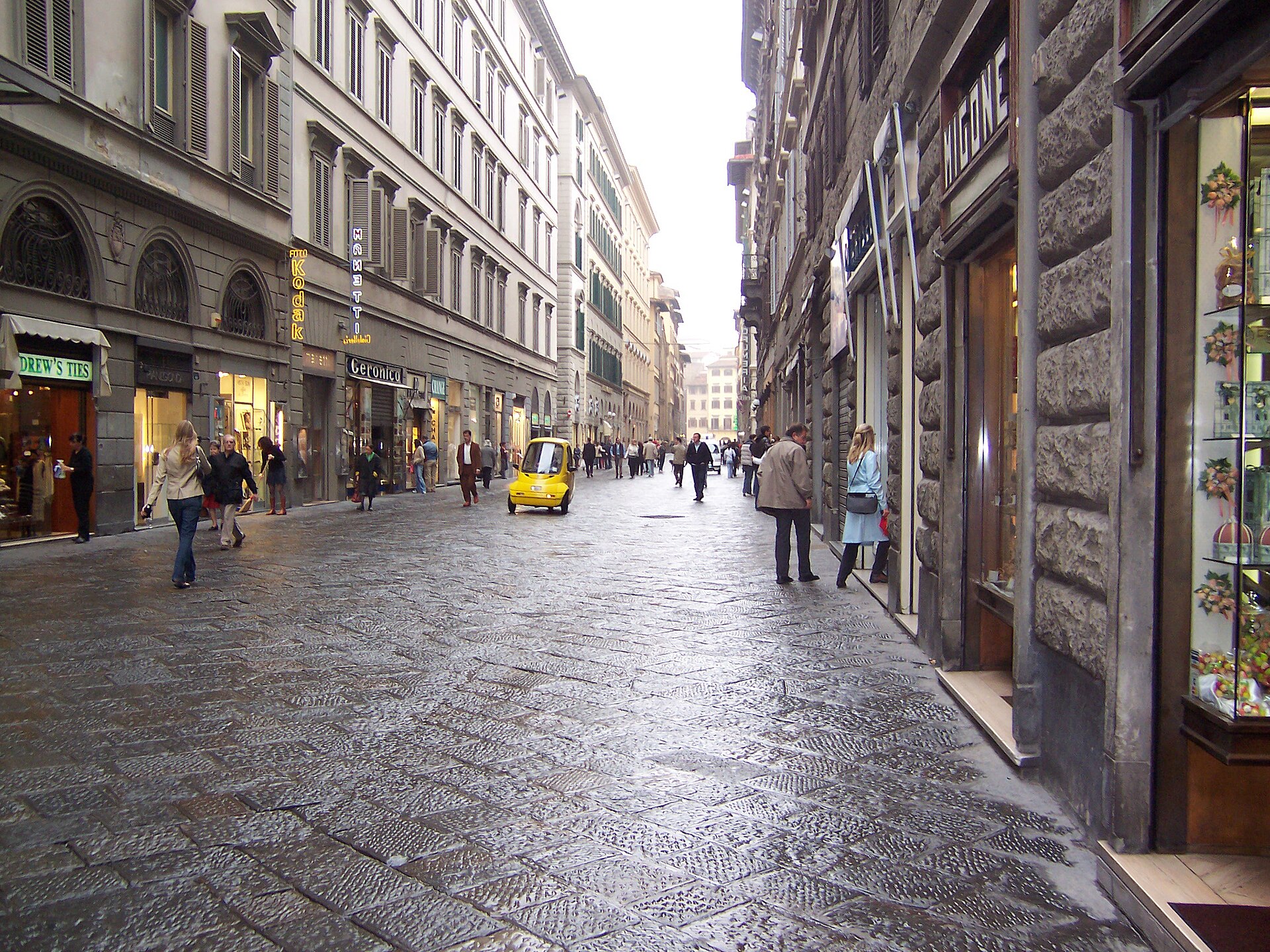
Florence’s historic streets are paved with “pietra serena” cobblestones laid hundreds of years ago. They’re smoothed by foot traffic but still create vibrations and small dips that affect wheelchair, walker, and stroller users:
- Manual wheelchairs: Doable but tiring. The constant vibration adds physical strain.
- Power wheelchairs: Generally manageable; modern wheelchairs handle the surface fine but battery life is reduced by the resistance.
- Walkers and rollators: Functional but watch for catching on edges of stones.
- Canes and crutches: Less affected; just watch for slippery wet stones in rain.
- Strollers: Larger 4-wheel strollers handle better than 3-wheel jogging strollers; lock the wheels carefully.
Some streets are smoother than others. Via Calzaiuoli (Duomo to Signoria) is mostly smooth pavement. Streets in the Oltrarno are rougher. Side streets and alleys can be very difficult.
Accessible Museums and Major Attractions
Uffizi Gallery
Fully wheelchair accessible. Step-free entry at the accessible entrance (look for the wheelchair symbol). Elevators serve all floors. The famous Vasari Corridor is also accessible (since 2024 reopening). Free admission for visitors with disabilities and one accompanying person.
Accademia Gallery
Fully wheelchair accessible. Step-free entry, elevators throughout. The David is approachable from a wheelchair. Free admission for visitors with disabilities and accompanying person.
Pitti Palace and Boboli Gardens
Pitti Palace interior is wheelchair accessible at all levels (elevators throughout). Boboli Gardens have some accessible paths but include many steep, gravel inclines that are difficult for manual wheelchairs. Power wheelchairs with good batteries can handle most of Boboli.
Florence Duomo Complex
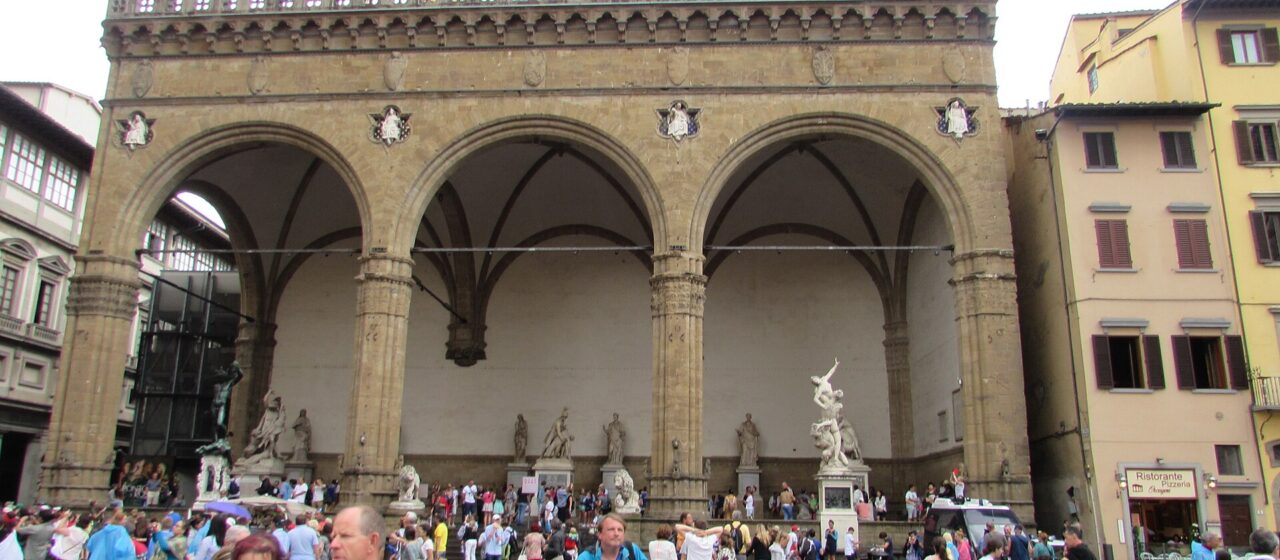
The Cathedral interior, Baptistery, and Cathedral Museum are all wheelchair accessible at ground level. The Brunelleschi Dome climb (463 steps) and Giotto’s Bell Tower climb (414 steps) are NOT accessible—no elevators, alternative routes don’t exist. The Crypt of Santa Reparata has stairs but with a wheelchair-accessible alternative route.
Major Churches
Santa Croce, Santa Maria Novella, San Lorenzo, and Santo Spirito all have wheelchair-accessible main entrances. Some side chapels may have steps. Pazzi Chapel inside Santa Croce has one step. Cloisters and museums attached to these churches have varying accessibility (most have elevators or ramps).
Palazzo Vecchio
Mostly accessible via elevators. The famous tower climb (416 steps) is not accessible. The main museum rooms including Salone dei Cinquecento are reachable by elevator.
Bargello Museum
Mostly accessible via elevators. Some rooms have step access. The medieval prison architecture creates uneven floors in places.
Piazzale Michelangelo
The terrace itself is accessible. The walk up from the city includes stairs, but bus 12 or 13 from Santa Maria Novella station accesses Piazzale directly. Many disabled visitors take a taxi up and walk back via the slightly less steep road.
Public Transportation
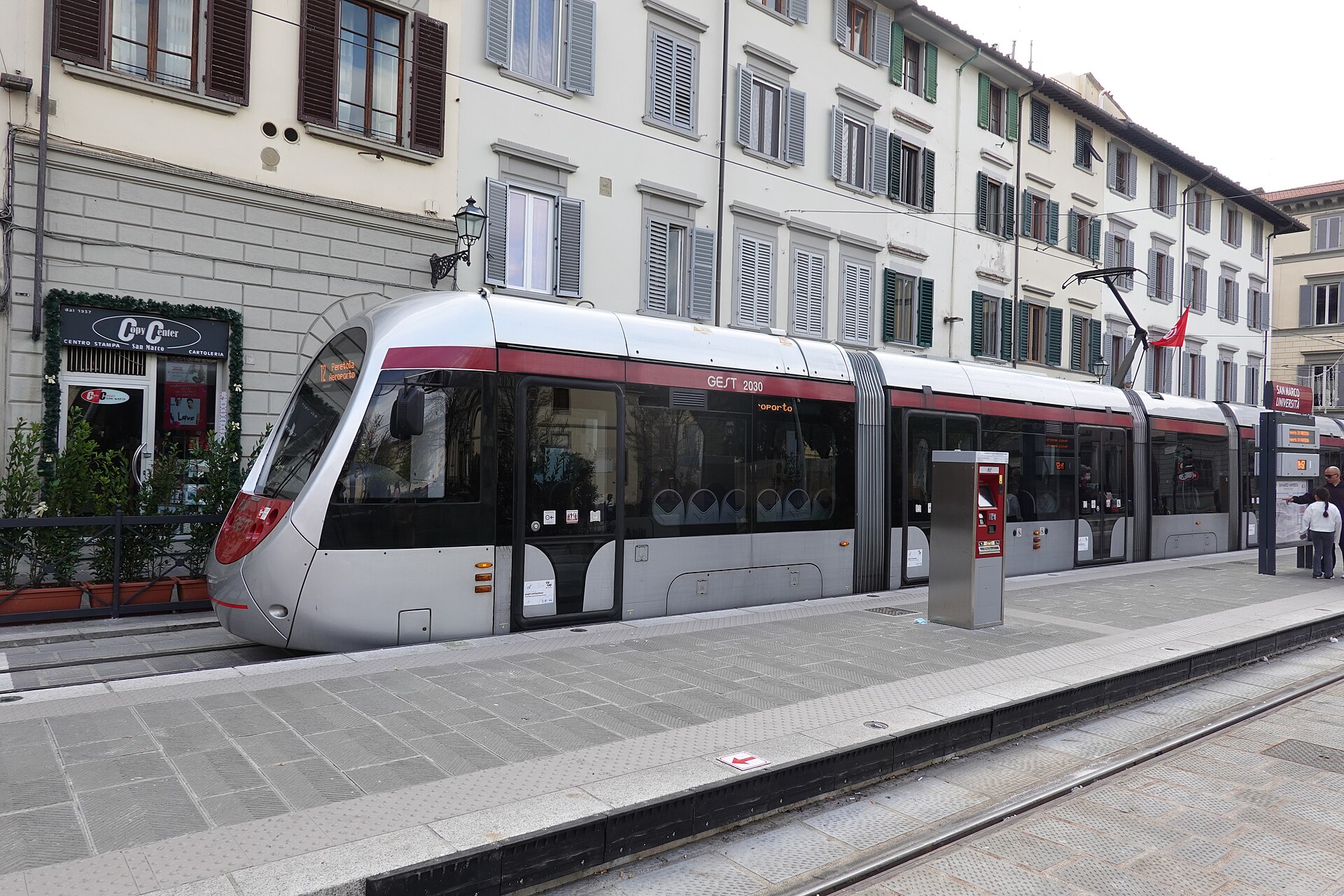
Trams
Florence’s tram system (T1 and T2 lines) is fully wheelchair accessible. All stations have ramps, all trams are low-floor with wheelchair spaces and audio-visual announcements. A single ticket is €2.00 and valid for 90 minutes. T2 connects the airport to Santa Maria Novella station.
Buses
Florence’s buses, run by Autolinee Toscane (formerly ATAF), are largely accessible. Most newer buses are low-floor with wheelchair ramps and dedicated wheelchair spaces. Older buses on some routes may not be fully accessible. Check at-bus.it for accessibility information by line.
Taxis
Florence taxi services include some wheelchair-accessible vehicles. Call 24-48 hours in advance to ensure availability:
- Cooperativa Disabili Firenze: Specialized accessible taxi service. Phone: +39 055 4242.
- Florence Taxi: Major taxi service with some accessible vehicles. Phone: +39 055 4242.
- Free Now app: Lets you request specific vehicle types in some Italian cities; check for accessibility options.
Trains
Santa Maria Novella station (the main Florence station) is fully accessible: elevators to all platforms, accessible toilets, dedicated assistance services. The Sala Blu service run by RFI, the station operator, provides free assistance for travelers with disabilities; contact Sala Blu Firenze on +39 02 32 32 32 or [email protected]. Italo trains also provide assistance via their website.
Where to Stay
Most modern Florence hotels (3-star+) include accessible rooms with:
- Roll-in showers or accessible bathtubs
- Grab bars in bathrooms
- Lower-height beds
- Wider doorways
- Adjustable height counters
However, some boutique hotels and historic buildings have steps, narrow doorways, or elevator restrictions. Specifically request “stanza accessibile” (accessible room) when booking. Ask about:
- Step-free entry from the street
- Elevator dimensions (some old elevators are tiny—check before booking)
- Bathroom accessibility specifics
- Distance to restaurants and attractions
Hotels known for excellent accessibility:
- Hotel Cellai: Modern accessible rooms.
- Hotel Calzaiuoli: Central location with accessibility.
- NH Firenze: Modern hotel chain with reliable accessibility standards.
- Hilton Garden Inn Florence Novoli: Out of historic center but fully accessible.
- Brunelleschi Hotel: Built around an actual medieval tower; modern wheelchair-accessible rooms; central location.
Visual and Hearing Impairments
For Travelers with Visual Impairments
- Tactile paving: Florence has installed tactile paving on major pedestrian routes including the historic center.
- Audio guides: All major museums offer audio guides; some have specific accessibility versions.
- Tactile sculpture tours: The Bargello Museum and some other venues offer tactile tours of select sculptures (touching with permission and gloves).
- Service dogs: Welcome at all public attractions, hotels, and restaurants per Italian law.
- Talking traffic signals: Major intersections have audio crossing signals.
For Travelers with Hearing Impairments
- Subtitled tours: Some major museums offer audio guides with text transcripts. The Uffizi and Accademia have downloadable text guides.
- Sign language tours: Available by special arrangement at some museums; book 1-2 weeks in advance.
- Hotel accessibility: Better hotels offer visual fire alarms, vibrating alarm clocks, and TTY phones.
- Emergency services: Italian emergency 112 supports SMS in many regions; check current arrangements.
Accessible Restaurants
Most Florence restaurants have ground-floor entry but variable accessibility inside:
- Larger restaurants: Generally accessible with wide aisles. Major chain locations and modern venues.
- Traditional trattorias: Often cramped with narrow aisles, particularly between tables. Worth calling ahead to discuss your needs.
- Cellar restaurants (“enoteche”): Some are below street level with stairs. Ask before going.
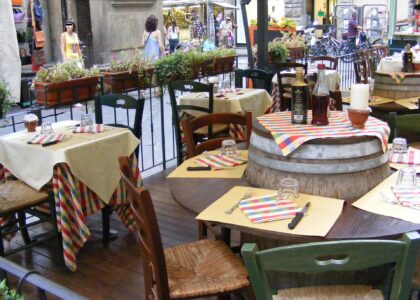
- Outdoor terraces: Generally accessible from the street level.
- Bathrooms: Many small restaurants have basement bathrooms requiring stairs. Ask about accessible facilities at booking.
Restaurants known for accessibility: Mercato Centrale food court (modern facility, fully accessible), Eataly, large modern restaurants, hotel restaurants.
Specific Tour Options
- Florence accessible tours: Several local agencies specialize in accessibility. Search “Florence wheelchair accessible tour” for current options. Companies like Sage Traveling, Walks of Italy, and local Florence-specific operators offer wheelchair-friendly tour routes.
- Adapted Italy: Tour company specializing in accessible Italy travel. They handle planning and assistance.
- Free for disabled visitors: Most state-run museums (Uffizi, Accademia, Pitti, Bargello, San Marco) admit visitors with disabilities and one accompanying person free of charge with appropriate ID/documentation.
Practical Tips
- Book ahead: Accessibility-specific hotel rooms and accessible taxis require advance booking. Don’t expect last-minute availability.
- Request accommodations clearly: When booking restaurants, hotels, tours, specifically request your needs in writing or email so there’s documentation.
- Check elevator dimensions: Italian elevators are often small. Provide wheelchair dimensions to hotels.
- Bring your own equipment: Power wheelchair? Bring spare batteries and a charger that works on Italian electric (220V; most modern chargers handle this).
- Travel companion: Consider traveling with someone who can help navigate the cobblestones, narrow doorways, and assistance situations.
- Pace yourself: Florence rewards leisurely exploration. Plan rest stops every 1-2 hours.
- Italian disability ID: Bring documentation of your disability. Italian museums often offer free or reduced admission for disabled visitors and accompanying persons.
Resources
- Mob Mobility: Italian organization for travelers with disabilities; mob.it
- Florence Tourism Office: Has accessibility resources at official tourism centers.
- Sala Blu (RFI): Free train station and platform assistance; +39 02 32 32 32 or [email protected].
- Accessible Italy: Tour and travel company specializing in disabled-friendly travel.
- Wheelchair Travel Italy: Online community with reviews and resources.
Frequently Asked Questions
Is Florence wheelchair accessible?
Mostly yes, with caveats. The historic center is largely flat but cobblestoned. Major museums have elevators and ramps. Major churches are accessible at ground level. Public transport (trams and most buses) is accessible. The big exceptions: the Brunelleschi dome and Giotto’s Bell Tower climbs (no elevators), some boutique hotels in historic buildings, and some restaurants with cellar levels.
Can I rent a wheelchair in Florence?
Yes. Wheelchair rental services in Florence include local pharmacies, medical supply stores, and some online services. Costs typically €15-30 per day for manual wheelchairs; €30-60 per day for power wheelchairs. Book 1-2 weeks in advance for power chairs.
Are Florence churches wheelchair accessible?
Most major basilicas (Santa Croce, Santa Maria Novella, San Lorenzo, Santo Spirito) and the Cathedral are accessible at the main entrance. Some side chapels have steps. The Brunelleschi Dome and Bell Tower climbs are not accessible. The Cathedral Crypt has alternatives.
Can I see the David in a wheelchair?
Yes. The Galleria dell’Accademia is fully wheelchair accessible. The David is approachable from all sides at ground level. Free admission for disabled visitors and one accompanying person.
How do I get from Florence airport in a wheelchair?
The T2 tram from Florence Airport (Peretola) to Santa Maria Novella station is fully wheelchair accessible. A single ticket is €2.00. Accessible taxis are also available; pre-book by calling +39 055 4242 24-48 hours in advance.
Are restaurant accessibility standards reliable in Florence?
Variable. Larger and more modern restaurants are generally accessible. Traditional small trattorias have cramped interiors and basement bathrooms. Always call ahead to discuss specific needs—Italian restaurants are generally accommodating but rarely advertise accessibility upfront.
Is the David accessible without admission cost for disabled visitors?
Yes. Most state-run Italian museums (including the Galleria dell’Accademia, where the David is displayed) admit visitors with documented disabilities and one accompanying person for free. Bring official disability documentation to verify.
Are service dogs allowed in Florence?
Yes. Italian law permits service dogs in all public spaces, hotels, restaurants, and museums. Bring documentation of your dog’s status.
What about Boboli Gardens accessibility?
Partial. Many of Boboli’s main paths are accessible, but the gardens include steep gravel inclines that are challenging for manual wheelchairs and impossible for some. Power wheelchairs with good batteries handle most of the gardens. Walking aids for accompanying persons may be useful.